


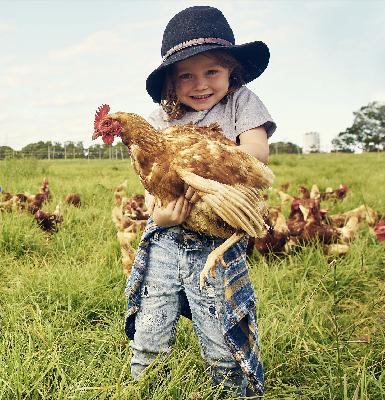
Word of the Year: Affection
Description
"And now we welcome the new year, full of things that have never been." Rilke
Word of the Year: "Affection"
noun
af·fec·tion ə-ˈfek-shən
Synonyms of affection
1: a feeling of liking and caring for someone or something : tender attachment : FONDNESS
She had a deep affection for her parents.
Middle English affeccioun "capacity for feeling, emotion, desire, love," borrowed from Anglo-French, "desire, love, inclination, partiality," borrowed from Latin affectiōn-, affectiō "frame of mind, feeling, feeling of attachment," from affec-(variant stem of afficere "to produce an effect on, exert an influence on") + -tiōn-, -tiō, suffix of action nouns
Referench: https://www.merriam-webster.com/dictionary/affection
philostorgos: tenderly loving
Original Word:φιλόστοργος, ον
Phonetic Spelling:(fil-os'-tor-gos)
Definition:tenderly loving
Usage:tenderly loving, kindly affectionate to
Reference: https://biblehub.com/greek/5387.htm
For the full text of the Jefferson Lecture 2012, by Wendell Barry, please visit: https://www.neh.gov/about/awards/jefferson-lecture/wendell-e-berry-biography
Photo by Guy Mendes
Quoted excerpts from the lecture:
"Because a thing is going strong now, it need not go strong for ever," [Margaret] said. "This craze for motion has only set in during the last hundred years. It may be followed by a civilization that won't be a movement, because it will rest upon the earth.E. M. Forster, Howards End (1910) p.
"The term "imagination" in what I take to be its truest sense refers to a mental faculty that some people have used and thought about with the utmost seriousness. The sense of the verb "to imagine" contains the full richness of the verb "to see." To imagine is to see most clearly, familiarly, and understandingly with the eyes, but also to see inwardly, with "the mind's eye." It is to see, not passively, but with a force of vision and even with visionary force. To take it seriously we must give up at once any notion that imagination is disconnected from reality or truth or knowledge. It has nothing to do either with clever imitation of appearances or with "dreaming up." It does not depend upon one's attitude or point of view, but grasps securely the qualities of things seen or envisioned.
I will say, from my own belief and experience, that imagination thrives on contact, on tangible connection. For humans to have a responsible relationship to the world, they must imagine their places in it. To have a place, to live and belong in a place, to live from a place without destroying it, we must imagine it. By imagination we see it illuminated by its own unique character and by our love for it. By imagination we recognize with sympathy the fellow members, human and nonhuman, with whom we share our place. By that local experience we see the need to grant a sort of preemptive sympathy to all the fellow members, the neighbors, with whom we share the world. As imagination enables sympathy, sympathy enables affection. And it is in affection that we find the possibility of a neighborly, kind, and conserving economy."
"But the risk, I think, is only that affection is personal. If it is not personal, it is nothing; we don't, at least, have to worry about governmental or corporate affection. And one of the endeavors of human cultures, from the beginning, has been to qualify and direct the influence of emotion. The word "affection" and the terms of value that cluster around it—love, care, sympathy, mercy, forbearance, respect, reverence—have histories and meanings that raise the issue of worth. We should, as our culture has warned us over and over again, give our affection to things that are true, just, and beautiful.
It is by imagination that knowledge is "carried to the heart" (to borrow again from Allen Tate).
The faculties of the mind—reason, memory, feeling, intuition, imagination, and the rest—are not distinct from one another. Though some may be favored over others and some ignored, none functions alone. But the human mind, even in its wholeness, even in instances of greatest genius, is irremediably limited. Its several faculties, when we try to use them separately or specialize them, are even more limited.
The fact is that we humans are not much to be trusted with what I am calling statistical knowledge, and the larger the statistical quantities the less we are to be trusted. We don't learn much from big numbers. We don't understand them very well, and we aren't much affected by them."
((Who Owns America? edited by Herbert Agar and Allen Tate, ISI Books, Wilmington, DE, 1999, pages 109–114. (First published by Houghton Mifflin Company, Boston, 1936.)
[Nature] "As Albert Howard, Wes Jackson, and others have carefully understood, she can give us the right patterns and standards for agriculture. If we ignore or offend her, she enforces her will with punishment. She is always trying to tell us that we are not so superior or independent or alone or autonomous as we may think. She tells us in the voice of Edmund Spenser that she is of all creatures "the equall mother, / And knittest each to each, as brother unto brother."
(The Faerie Queene, VII, vii, stanza XIV.)
"To hear of a thousand deaths in war is terrible, and we "know" that it is. But as it registers on our hearts, it is not more terrible than one death fully imagined. The economic hardship of one farm family, if they are our neighbors, affects us more painfully than pages of statistics on the decline of the farm population. I can be heartstruck by grief and a kind of compassion at the sight of one gulley (and by shame if I caused it myself), but, conservationist though I am, I am not nearly so upset by an accounting of the tons of plowland sediment borne by the Mississippi River. Wallace Stevens wrote that "Imagination applied to the whole world is vapid in comparison to imagination applied to a detail."
(Opus Posthumous, edited, with an Introduction by Samuel French Morse, Alfred A. Knopf, New York, 1957, page 176.)
"But we need not wait, as we are doing, to be taught the absolute value of land and of land health by hunger and disease. Affection can teach us, and soon enough, if we grant appropriate standing to affection. For this we must look to the stickers, who "love the life they have made and the place they have made it in."
<p class="CIFvi F607M" dir="au
















 United States
