


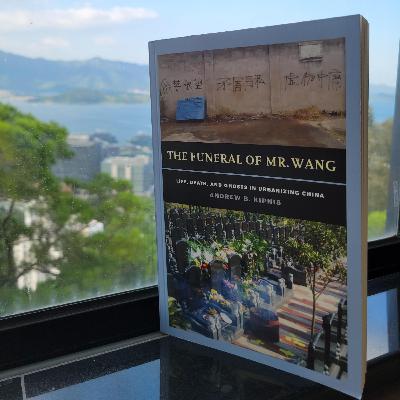
“Funerals in urbanizing China” with Andrew Kipnis 與任柯安談轉變中的中國與喪葬
Description
In a rapidly urbanizing China, funerals have become more and more commercialised. Rituals that used to be taken care of by village and family members are now arranged by funeral service providers who are strangers to the family. How does this reflect the changing conceptions of family and strangers in contemporary China? What is the difference between ghosts and ancestors? And, how are ghosts political? In this episode, we talk to Prof. Andrew Kipnis, chair of CUHK Anthropology, about his encounters with anthropology, his experience of doing research in China over the last few decades, and some interesting findings from his new book The Funeral of Mr. Wang: Life, Death, and Ghosts in Urbanizing China (University of California Press, July 2021).
(This episode is conducted in English.)
在中國,隨着城市化和現代化進程的發展,喪葬儀式愈來愈商業化,從前由村中長老和家人負責的喪禮,改為由殯儀從業者代勞。這些轉變對於人與人之間的關係有什麼影響?喪禮以外,亡靈與政治有何關係?鬼魂和祖先如何區分?誰決定了我們可以或不可以紀念誰?本集,中大人類學系主任Andrew Kipnis教授分享他如何遇上人類學,他自1980年代以來研究中國農村的教育和城市化的故事,以及他的新書The Funeral of Mr. Wang: Life, Death, and Ghosts in Urbanizing China 中的發現。
(本集訪問以英語進行。)
01’30 Introduction to anthropology|如何開始接觸人類學
07’20 First fieldwork experience in a village in Shandong|在山東某村落的第一個人類學研究
17'10 Researching in China|在中國進行人類學研究
28’17 The Funeral of Mr. Wang: Life, Death, and Ghosts in Urbanizing China|關於喪葬的新書
39’08 What is so political about ghosts?|鬼魂為何是政治問題?








 United States
