


 Claim Ownership
LytePod
Subscribed: 7Played: 238
Subscribe

© 627647
Description
Diving into the honest, creative, challenging, and fun human part of how design really happens - all with a little love for light along the way. Featuring creative minds who walk into their own story - from designers to manufacturers, innovators, and professors - unpack their vision, ideas, accomplishments, and habits that make it happen!
137 Episodes
Reverse
What happens when you sit down with someone who's built one of the world's most successful lighting design practices—and ask him what it really takes to turn creativity into a sustainable business without losing the soul of the work?In this episode of LytePOD, host Sam Koerbel sits down with Paul Miles, founder of a global lighting design practice spanning nine studios across four continents, to unpack the philosophy, pressure, and people-first thinking that transformed a passion for connecting people in space into a thriving international firm. This isn't a conversation about business strategy or portfolio highlights. It's a candid, deeply human look at what it means to build something meaningful in a creative industry—why empathy is the foundation of every great design, why clients get the projects they deserve, and why the hardest part of running a design practice isn't the work itself, it's balancing the desire to obsess over every detail with the reality that fees are tight, timelines are brutal, and you still have to keep the lights on.Paul reveals why design starts with people, not products, why interrogating the brief matters more than jumping straight into fixtures, and why the best lighting design often means keeping it simple—even when your instinct is to over-design. He walks through the uncomfortable truth that designers are often undervaluing their experience, the challenge of selling creativity in a world that wants everything quantified, and why sometimes you just have to give the client 450 lux because that's what they need. But he also shares the joy that keeps him coming back: that moment when you walk onto a project, turn off all the lights, and slowly bring each circuit to life—breathing soul into a space and watching people respond without even knowing why.💡 Key topics explored:• Why empathy is the foundation of great design—and how understanding people shapes every decision• The importance of interrogating the client's brief and asking why before jumping into what or how• How to balance creative obsession with commercial reality—and why that tension never goes away• Why designers massively undervalue their experience—and the challenge of pricing decades of knowledge into a two-day project• The myth that lighting design has to be complicated—and why simplicity is often the right answer• How to push back on unrealistic briefs and disconnected scopes—and why it takes courage to do it• The reality of building a global practice: empowering teams, stepping back as a founder, and watching others shine• Why clients get the projects they deserve—and what separates award-winning work from checkbox design• The danger of designing by numbers—and why the industry needs to remember that lighting is about feeling, not just metrics• How AI is starting to challenge creativity in ways that are both exciting and terrifying• Why the lighting industry needs better representation, professionalization, and evangelism—and what's holding it back• The privilege of working at the crossroads of creativity, technology, sociology, psychology, and ecology❤️ Big appreciation for the partners who support this work and trust the vision. They believe in thoughtful conversations, strong community, and letting designers' voices lead. Grateful to build this together.1️⃣ Gotham Lighting - https://watch.lytei.com/gotham2️⃣ Kelvix - https://watch.lytei.com/Kelvix3️⃣ LEDflex - https://watch.lytei.com/LEDFLEX4️⃣ Diode LED - https://watch.lytei.com/diode5️⃣ Targetti USA - https://bit.ly/targettiusa
In this episode of LytePOD, host Sam Koerbel sits down with Chip Israel and Kelly Jones, co-CEOs of Lighting Design Alliance (LDA), to unpack the philosophy, process, and people-first culture that transformed a small firm into one of the industry's most respected design teams—and what happened when they recently merged with a larger technology-focused company to unlock the next chapter of growth.This isn't a conversation about business strategy or growth metrics. It's a candid, deeply human look at what it means to build something together, trust your gut when the path isn't clear, and create opportunities for the next generation—even when that means relinquishing control of the very thing you spent decades building. Chip and Kelly reveal why culture isn't a slogan, it's how you work every day, why showing up matters more than having all the answers, and why the best measure of success isn't the rendering or the award—it's seeing your team grow into leaders themselves.💡 Key topics explored:• Why culture is built through daily actions, not slogans—and how trust and respect create the foundation for everything else• The importance of surrounding yourself with great talent and giving them the freedom to run with opportunities• How to let go of control as a designer and leader—and why trusting your people is the hardest and most essential lesson• What it really means to show up for your team and clients, even when it's inconvenient• Why the marketplace is changing—and how firms need to adapt to design-build, turnkey projects, and new ownership models• The role of mentorship in shaping the next generation of designers—and why giving junior team members client exposure is critical• How Epic Universe became a once-in-a-lifetime project that elevated the bar for themed entertainment lighting worldwide• Why partnerships in business require hard conversations, mutual respect, and complementary skill sets• The decision to merge with a larger firm—what drove it, what it means for the team, and why purpose and culture alignment mattered more than the deal itself• Why enjoying the journey and taking advantage of every opportunity matters more than having a perfect roadmapWhether you're a designer wondering how to build a sustainable practice, a young professional trying to figure out what comes next, or anyone curious about what it takes to grow something meaningful in a creative industry—this conversation offers a rare, honest look at partnership, growth, and the courage it takes to trust the journey even when you can't see where it's going.Listen now to hear what two decades of collaboration, trust, and shared passion reveal about building a lighting design firm that puts people first—and why showing up and enjoying the ride might be the best advice anyone can give.❤️ Big appreciation for the partners who support this work and trust the vision. They believe in thoughtful conversations, strong community, and letting designers' voices lead. Grateful to build this together.1️⃣ Gotham Lighting - https://watch.lytei.com/gotham2️⃣ Kelvix - https://watch.lytei.com/Kelvix3️⃣ LEDflex - https://watch.lytei.com/LEDFLEX4️⃣ Diode LED - https://watch.lytei.com/diode5️⃣ Targetti USA - https://bit.ly/targettiusa(00:00:00) Intro: Lessons Learned and Trusting Your Gut
(00:01:18) Sponsor Spotlight
(00:02:33) The Merger: A Natural Evolution
(00:05:34) Building a Culture of Trust and Empowerment
(00:06:09) The Art of Letting Go: Leadership and Delegation
(00:07:29) What Drives Great Design Teams
(00:08:34) Culture Isn't a Slogan: It's How You Work Every Day
(00:10:00) The Unexpected Merger: How It All Came Together
(00:12:22) Hard Work, Efficiency, and Surrounding Yourself with Talent
(00:13:32) No Roadmap Required: Embracing the Non-Linear Journey
(00:15:19) Complementary Leadership: How Chip and Kelly Work Together
(00:15:50) Endless Opportunities: The Future of Healthcare and Beyond
(00:16:38) Taking Risks: From Disney to Career-Defining Moments
(00:17:22) Risk, Fear, and Making Decisions
(00:19:11) Dealing with Hard Conversations
(00:19:44) Future-Proofing the Firm: People, Legacy, and Showing Up
(00:20:59) Sponsor Spotlight: Kelvix, Leadflex, Diode LED
(00:24:37) Adapting to a Changing Marketplace
(00:26:35) The Scale Question: Small Firms vs. Large Firms
(00:28:46) Giving Back: Education, Mentorship, and Community
(00:30:07) The People Thing: Learning to Let Go When It's Not a Fit
(00:31:42) Sponsor Spotlight: Tarjeti USA
(00:32:33) What Gets Them Pumped: Epic Universe and Beyond
(00:36:18) The Next Chapter: Hiring Friends and Building the Future
(00:37:21) Advice to Your Younger Self: Show Up and Enjoy the Journey
What happens when you sit down with a lighting designer who's spent decades crafting immersive luxury experiences across the Middle East—and ask him what it really takes to turn a journey into an emotion?In this episode of LytePOD, host Sam Koerbel travels to Dubai to sit down with Paul Miles, a veteran lighting designer who has shaped some of the region's most ambitious hospitality projects—from desert resorts where car headlights announce arrivals 15 minutes away, to the monumental facade of Atlantis The Royal, to restaurants where the threshold experience matters as much as the destination itself. This isn't a conversation about fixtures or specifications—it's a deep dive into the philosophy, process, and pressure of designing light that doesn't just illuminate, but immerses.Paul reveals why luxury is different for every client, why the journey matters more than the photo, and why the best lighting design happens when you deliberately don't design around existing products. He walks through the 12-month process of developing a single facade detail, the crude cardboard models built in-office to sell falling leaf effects, and why sometimes you have to convince a client to let you design the back-of-house with the same care as the front lobby—because their staff matters as much as their guests.💡 Key topics explored:• How luxury is defined differently for every client, brand, and geographical context• Why immersive design isn't about spectacle—it's about making people feel comfortable while subconsciously guiding them through space• The critical importance of walking the guest journey before designing a single fixture• How collaboration with architects, interior designers, and landscape designers unlocks 100% success—and why lighting can only achieve 30% alone• Why Paul's team deliberately avoids designing around existing products—and the creative innovation that forces• How crude office models made from foam board and foil help sell complex lighting concepts• Why tight budgets demand double creativity—and why back-of-house design can be just as rewarding as front-of-house luxury• The balance between design perfection and construction reality—and why flexibility is essential in fast-track projects• Why the best measure of success isn't the rendering—it's the expressions on people's faces when the space is lived in❤️ Big appreciation for the partners who support this work and trust the vision. They believe in thoughtful conversations, strong community, and letting designers' voices lead. Grateful to build this together.1️⃣ Gotham Lighting - https://watch.lytei.com/gotham2️⃣ Kelvix - https://watch.lytei.com/Kelvix3️⃣ LEDflex - https://watch.lytei.com/LEDFLEX4️⃣ Diode LED - https://watch.lytei.com/diode5️⃣ Targetti USA - https://bit.ly/targettiusa(00:00:00) Opening: The Power of Collaboration(00:02:06) Sponsor Spotlight(00:03:27) Welcome to Dubai: Defining Luxury Through Light(00:06:50) The Journey: Designing Immersive Guest Experiences(00:15:01) Creativity Beyond Budget: Innovation with Constraints(00:15:15) The 12-Month Process: Atlantis Royal Facade(00:18:10) Sponsor Spotlight: Leadflex, Diode LED, Kelvix(00:20:37) Desert Immersion: Challenging Standards for Context(00:14:13) Probing the Journey: Research, Site Visits, and Discovery(00:29:31) Sponsor Spotlight: Tarjeti USA(00:31:02) Flexibility and Reality: Making It Work On Site(00:33:22) The Pressure and the Process: Trusting the Design Phases(00:35:13) Experiencing the Space: When Design Becomes Feeling(00:38:33) Closing Thoughts: The Journey Continues
What happens when you sit down with a lighting designer who's spent two decades navigating one of the world's most dynamic, culturally complex markets—and ask him how culture, design, and architecture really intersect?In this episode of LytePOD, host Sam Koerbel travels to Dubai to sit down with Siddharth (Sid) Mathur, a veteran lighting designer who has witnessed firsthand the transformation of a city that went from drilling pilings for the Burj Khalifa to becoming one of the most internationally influential design hubs in the world. This isn't a conversation about fixtures or specifications—it's a deep dive into the forces that shape how we design, who we design for, and why understanding people is the single most important skill a designer can have.Sid walksreveals why uniformity is the death of design, why a 70-year-old client and a 25-year-old client want completely different things from their lighting (even if they live in the same city), and why the most important part of any project isn't the rendering—it's the person-to-person connection that makes everything else possible.But this conversation goes deeper. It's about the tension between creative vision and client expectation, the exhausting reality of juggling five different cultural contexts in a single day, and why lighting design—despite all its challenges—remains one of the most rewarding professions for those willing to treat it like the marathon it is. Cedar shares why he pushes the envelope on every project, why lighting is the makeup that keeps the perfect marriage of architecture and culture going, and why one person's sparkle is always another person's glare.💡 Key topics explored:• How culture influences perception, preference, and aesthetic—and why that matters for every design decision• The generational divide in lighting expectations: why older clients want uniformity and younger clients want mood• Why social media is reshaping design trends globally—and what that means for lighting designers trying to stay relevant• The evolution of Dubai's design aesthetic from flashy luxury to contextual, barefoot elegance• Why understanding people is more important than understanding products—and how to read culture on every project• The challenge of designing for international clients who want their home in Dubai to look like a hotel in Miami• Why visualizations and renderings have become essential tools—and the double-edged sword they create• How to balance client expectations with creative vision—and why sometimes you just have to give them 450 lux• The importance of pushing boundaries on every project—even if 99% of it is conventional• Why lighting design is a marathon, not a sprint—and what keeps designers coming back despite the exhaustion❤️ Big appreciation for the partners who support this work and trust the vision. They believe in thoughtful conversations, strong community, and letting designers' voices lead. Grateful to build this together.1️⃣ Gotham Lighting - https://watch.lytei.com/gotham2️⃣ Kelvix - https://watch.lytei.com/Kelvix3️⃣ LEDflex - https://watch.lytei.com/LEDFLEX4️⃣ Diode LED - https://watch.lytei.com/diode5️⃣ Targetti USA - https://bit.ly/targettiusa(00:00:00) Intro
(00:01:42) Sponsor Spotlight
(00:03:06) Welcome to Dubai: Culture Meets Construction
(00:05:10) Culture's Influence on Perception, Preference & Aesthetic
(00:07:25) The Convergence Problem: Uniformity vs. Authenticity
(00:10:16) Social Media, Trends & the Death of Design
(00:13:19) What Developers, Clients & Generations Really Want
(00:14:45) Dubai's Evolution: From Gold to Barefoot Luxury
(00:17:39) Lighting's Role in Culture: Technical vs. Creative
(00:20:14) The Client Brief: Pinterest Boards vs. Professional Vision
(00:23:36) Before We Continue: Sponsor Spotlight
(00:26:01) Service, Not Art: The Designer's Moral Obligation
(00:30:23) Showing vs. Telling: Why Seeing Is Believing
(00:33:45) Context Is Everything: Designing for Maldives, Kenya, Dubai & Beyond
(00:38:28) Reading People: The Secret Skill Design Schools Don't Teach
(00:37:33) Sponsor Spotlight: Tarjeti USA
(00:42:39) The Builder, The Architect & The Culture of Compromise
(00:45:32) The Ironman of Design: Passion, Frustration & Legacy
(00:47:14) Pushing Boundaries: The Outdoor Chandelier Story
(00:50:54) The Perfect Marriage: Culture, Architecture & Lighting
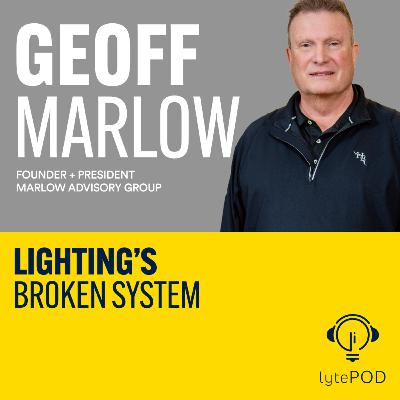
What happens when someone who's spent decades inside the lighting industry's machinery gets straight to it?In this episode of LytePOD, host Sam Koerbel sits down with Geoff Marlow, a veteran consultant and industry strategist who has witnessed firsthand the seismic shifts reshaping architectural lighting—from the rise of LED technology to the relentless wave of consolidation, private equity takeovers, and the erosion of relationships that once held this industry together.Geoff walks through what he calls TTO—the convergence of talent scarcity, technical complexity, and the shift from products to outcomes—and explains why the industry's failure to address these forces is creating chaos across every layer of the supply chain. He reveals why manufacturers, reps, distributors, and designers are all pointing fingers at each other's margins while missing the bigger picture: the process itself is broken. Projects are treated as linear when they're actually iterative. Relationships are treated as poetry when they need to be built on definitive, measurable trust. And consolidation—whether it's reps buying reps, manufacturers buying manufacturers, or private equity rolling up portfolios—keeps failing because purpose is missing.💡 Key topics explored:• Why talent scarcity, technical complexity, and outcome-driven expectations are colliding—and what that means for everyone in the channel• The myth of the linear project process—and why lighting is actually a highly iterative, parallel-processing challenge• How consolidation (reps, manufacturers, PE) keeps failing because purpose and customer clarity are missing• The shift from specification-driven projects to design-build dominance—and what that means for designers and manufacturers• The hidden economics of distribution, rebates, and margin compression—and why salespeople default to what's easiest, not what's best• The danger of regional expansion without local execution—and why customers don't care how many dots are on your map• Why pricing transparency means different things to different people—and how to navigate that complexity• The four things every person needs before they commit: care, clarity on what "good" is, understanding what good gets them, and a sense of purpose• Why the industry needs a think tank—and what happens if we don't create oneListen now to hear why the lighting system is broken—and how a think tank can help us fix it. ❤️ Big appreciation for the partners who support this work and trust the vision. They believe in thoughtful conversations, strong community, and letting designers' voices lead. Grateful to build this together.1️⃣ Gotham Lighting - https://watch.lytei.com/gotham2️⃣ Kelvix - https://watch.lytei.com/Kelvix3️⃣ LEDflex - https://watch.lytei.com/LEDFLEX4️⃣ Diode LED - https://watch.lytei.com/diode5️⃣ Targetti USA - https://bit.ly/targettiusa(00:00:00) Intro(00:01:52) Sponsor Spotlight(00:03:39) The Talent Crisis and the Iterative Reality(00:07:09) COMPASS: Eight Constraints Defining Today's Projects(00:09:15) Deductive vs. Inductive: Why the Industry Builds Backwards(00:12:10) The Relationship Equation: Beyond Poetry to Performance(00:16:08) Getting Local: Why Leadership Must Leave the Building(00:21:48) The Specification Evolution: From Must-Be to Multi-Name(00:25:05) Channel Tension: Does Everyone Like the Members That Are There?(00:26:10) Sponsor Spotlight: DiodeLED, Kelvix, LED Flex(00:28:33) The M&A Problem: Why Spreadsheets Don't Understand Relationships(00:36:36) Margin Dollars Aren't Owed, They're Earned(00:40:21) The 50/50 Market: Spec vs. Commodity(00:43:24) White Goods, Rebates, and Broken Incentives(00:47:15) Sponsor Spotlight: Targetti USA(00:48:07) Design-Build's 50% Future: What's Your Plan?(00:50:37) Respecting the Designer's Palette(00:51:54) This Is Solvable: Finding Those Who Teach You to Get an A
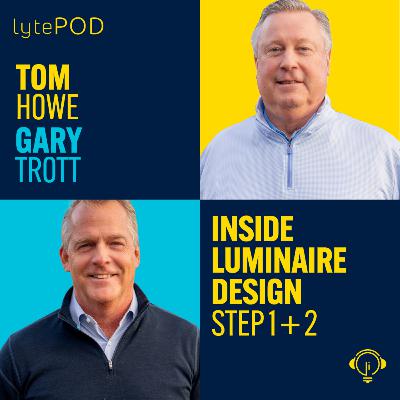
What happens when you pull back the curtain on how architectural lighting actually gets made—from whiteboard sketch to installation—and discover the hidden complexity, creative tension, and human ingenuity behind every luminaire?In this episode of LytePOD, host Sam Koerbel sits down with two veterans from opposite ends of the manufacturing spectrum: Gary Trott from Acuity Brands (one of the largest lighting manufacturers in North America) and Tom Howe from Kelvix (a nimble, specification-focused flexible linear company). Together, they unpack the entire product development journey—the messy, exhilarating, frustrating, and deeply collaborative process that transforms an idea into the light you experience in buildings every day.This isn't a sales pitch or a product demo. It's a rare, candid look at what it really takes to design, engineer, source, manufacture, and deliver lighting in an industry where nothing is standard, every project is different, and the pressure to move fast constantly battles the need to get it right. From the roller coaster of engineering pilots to the art of saying "no" to impossible requests, Gary and Tom reveal the uncomfortable truths about an industry caught between creativity and commerce, innovation and execution, vision and reality.They discuss why service matters more than product, how architectural brands can thrive inside big companies, and why luminaire design is experiencing a Renaissance now that LED technology has stabilized. The conversation goes deep into supply chain strategy, the myth that one person can do it all, the critical role of controls, and why curiosity—not market demand—drives true innovation. Along the way, they bust myths, share war stories, and explain why even a "simple" two-foot change can ripple through an entire manufacturing process.💡 Key topics explored:• The two-part product development process: ideation vs. execution (and why both are brutal)• Why vertical integration vs. horizontal supply chains matter—and what each enables• How flexible linear lighting gets made (spoiler: it's not as simple as it looks)• The role of controls in modern lighting—and why interoperability still isn't solved• Why manufacturers resist the temptation to design too early and start by deeply understanding problems• What happens when market demand conflicts with true innovation• The myth that change is simple—and what really happens when a spec changes mid-project• How machine vision, testing systems, and skilled labor coexist in modern manufacturing• Why human-centric lighting hasn't unlocked yet—and what's holding it back• The future of lighting: modularity, reuse, sustainability, and less waste• What keeps these industry veterans motivated: people, collaboration, and seeing their work come to lifeWhether you're a designer who's ever wondered why a \"simple\" modification takes three weeks, an architect curious about what happens after you hit submit on a spec, or anyone who's fascinated by how the things around us actually get made—this conversation offers a behind-the-scenes look at the craft, complexity, and constancy of purpose required to bring light into the world.Listen now to discover what it really takes to turn an idea into a luminaire—and why the people behind the process matter just as much as the product itself.❤️ Big appreciation for the partners who support this work and trust the vision. They believe in thoughtful conversations, strong community, and letting designers' voices lead. Grateful to build this together.1️⃣ Gotham Lighting - https://watch.lytei.com/gotham2️⃣ Kelvix - https://watch.lytei.com/Kelvix3️⃣ LEDflex - https://watch.lytei.com/LEDFLEX4️⃣ Diode LED - https://watch.lytei.com/diode5️⃣ Targetti USA - https://bit.ly/targettiusa(00:00:00) Intro
(00:01:33) Sponsor Spotlight
(00:02:48) Meet the Guests: Gary Trott and Tom Howe
(00:03:28) What People Get Wrong About Architectural Lighting
(00:05:11) Finding Your Lane: The Art of Specialization
(00:06:57) The Luminaire Design Renaissance
(00:08:38) Step 1: Ideation and Product Specification
(00:13:55) Step 2: The Product Development Roller Coaster
(00:21:16) Supply Chain Realities: Local vs. Global Manufacturing
(00:30:11) The Controls Conversation: Where Are We Now?
(00:40:09) Curiosity vs. Market Demand: The Innovation Dilemma
(00:55:04) Behind the Curtain: The Manufacturing Reality
(00:58:14) Mythbusters: Change Isn't Simple and Everyone Can Innovate
(01:00:54) What Keeps Them Going: People, Passion, and Pride
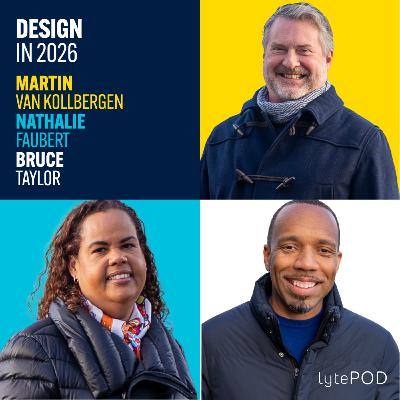
What happens when three of New York City's most accomplished lighting designers sit down to talk about the state of their profession, with the Empire State Building and JP Morgan Tower framed in the window behind them?In this special episode of LytePOD, host Sam Koerbel brings together a powerhouse roundtable of lighting design leaders to unpack the evolution, challenges, and future of architectural lighting. Recorded live in New York City with the iconic skyline as backdrop, this conversation goes deep into what it really means to design light in 2025—and what needs to change. Martin Van Koolbergen (KGM Lighting), Nathalie Faubert (CBB Lighting Desing), Bruce Taylor (Susan Brady Lighting Design) From nurturing new talent to navigating the relentless pace of modern projects, these designers reveal the uncomfortable truths about an industry caught between artistry and data, emotion and efficiency, tradition and trend. They discuss why lighting design is still treated as a luxury rather than a necessity, how LED technology forced the entire profession to evolve, and why the constant demand for meetings and instant gratification is pushing designers to the edge of burnout.The conversation touches on everything from the tension between photo-realistic renderings and hand sketches, to why trust is the number one thing clients can offer, to the surprising ways technology both helps and hinders great design.💡 Key topics explored:• How new talent is reshaping lighting design—and what established firms are learning from them• The battle between instant gratification and thoughtful design process• Why lighting designers have become educators whether they wanted to or not• The difference between sustainability as a mindset versus a checkbox• How trends emerge, evolve, and eventually fade in architectural lighting• Why collaboration between firms matters more than protecting trade secrets• What makes designers feel most alive—and why it spans the beginning, middle, and end of every project• The hope for 2030: better education, broader access to good lighting, and recognition that lighting design isn't a luxury—it's essentialWhether you're a designer navigating the pressures of modern practice, an architect wondering how lighting consultants really think, or simply someone who's ever wondered why some spaces just feel right—this conversation offers rare insight into a profession that shapes how we experience the built environment every single day.❤️ Big appreciation for the partners who support this work and trust the vision. They believe in thoughtful conversations, strong community, and letting designers’ voices lead. Grateful to build this together.1️⃣ Gotham Lighting - https://watch.lytei.com/gotham 2️⃣ Kelvix - https://watch.lytei.com/Kelvix3️⃣ LEDflex - https://watch.lytei.com/LEDFLEX4️⃣ Diode LED - https://watch.lytei.com/diode5️⃣ Targetti USA - https://bit.ly/targettiusa(00:00:00) The State of Lighting Design: Talent, Technology & Evolution(00:06:30) Bridging Generations: Experience Meets Innovation(00:07:51) The Emotion vs. Data Dilemma in Lighting Design(00:12:08) Breaking Out of Silos: Collaboration & Creative Freedom(00:14:30) The Impatience Advantage: How New Designers Are Reshaping the Industry(00:21:40) The Instant Gratification Era: Speed, Pressure & Design Quality(00:01:30) Before We Jump In: Sponsor Spotlight(00:34:55) Trust & Education: What Designers Need Most From Clients(00:37:09) What Hasn't Changed: Timeless Principles from Empire State to JP Morgan(00:43:42) Trends, Technology & the Copycat Culture(00:54:48) The Education Imperative: Designers as Translators of Technology(01:07:52) Sustainability: Beyond the Buzzword(01:19:29) Complacency, Capacity & the Path of Least Resistance(01:27:51) What Makes Us Feel Alive: The Beginning, Middle & End(01:34:30) Looking to 2030: Hopes for the Future of Lighting Design
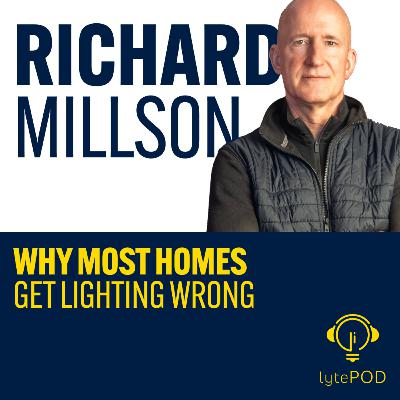
What happens when the people who control your home's technology realize most homes are getting lighting fundamentally wrong?In this episode of LytePOD, host Sam Koerbel sits down with Richard Millson, a master integrator with nearly 30 years of experience creating seamless smart home experiences for luxury residences. Together, they unpack why most homes — even $30 million estates — fail at lighting design, and how the advent of LED technology has forced integrators to become lighting experts whether they wanted to or not.Richard reveals the uncomfortable truth: most residential projects don't have professional lighting designers involved. The architect, electrician, or builder handles it, not out of malice, but because they genuinely believe "four cans and a fan" is fine. Meanwhile, integrators are left to control whatever shows up on site — fixtures that don't dim properly, don't match in color temperature, or literally leave million-dollar artwork half in shadow. This conversation goes deep into how technology is reshaping the entire lighting industry — from fixtures with built-in intelligence to wireless control systems that let you redesign your lighting after your house is built. Richard shares why his company now specifies fixtures themselves (it's not about the money) and how showing clients what's actually possible with modern lighting creates those "I didn't know my house could look like this" moments.💡 Key insights:• Why LED changed everything — and made lighting exponentially more complex• How intelligence is moving from wall switches to the fixtures themselves• The difference between selling technology and creating experiences• Why integrators and designers need each other more than ever• How to create intuitive control systems that guests can use without training• The future of residential lighting and where the industry is heading Whether you're a designer wondering why integrators suddenly care about your fixture selections, an integrator trying to navigate the lighting landscape, or a homeowner who's ever wondered "what does this switch do?" — this episode reveals what it really takes to get lighting right in luxury homes.Where Richard works: https://millson.net/Join the fun - learn more about Lightapalooza (our sponsor) - https://lightapalooza.com/Listen now to discover why lighting might be the most misunderstood — and most impactful — element in your home.(00:00:00) The Problem: Most Homes Get Lighting Wrong(00:01:27) Richard! (00:03:37) The LED Revolution Changed Everything(00:05:50) From Control to Design: Why Integrators Must Evolve(00:07:40) The Art of Collaboration Without Competition(00:16:07) Educating Clients: The Power of Demonstration(00:23:26) Creating Intuitive User Experiences(00:29:35) The Future: Flexibility and Addressability(00:34:24) Industry Evolution and Consolidation(00:38:01) Lighting as the Gateway to Early Project Involvement
![What Developers Really Want (Not Lower Prices) - Jamil Lacourt | L&L Holding Company [IMMERSIVE]](https://s3.castbox.fm/e9/31/2b/fe237dc2ac67342a9a66d0bcbe882a45b7_scaled_v1_400.jpg "What Developers Really Want (Not Lower Prices) - Jamil Lacourt | L&L Holding Company [IMMERSIVE]")
What do billion-dollar developers really think about design — and where does lighting fit in?In this episode, LytePOD host Sam Koerbel sits down with the COO of a luxury real-estate developer in New York City responsible for billions of dollars in projects. Together they unpack the owner’s perspective on budgets, design ambition, and risk — and what happens when lighting becomes the most misunderstood line item on the spreadsheet.This candid, behind-the-scenes conversation reveals how developers make decisions, where designers lose trust, and what it takes to bridge the gap between creativity and construction reality.💬 Topics covered:• How developers evaluate risk, cost, and design value• Why lighting often gets “value-engineered” — and how to prevent it• The balance between aesthetics and ROI in high-end projects• What guardrails and responsibilities do developers have• How a developer can guarantee success on a project (spoiler alert: belief, conviction, and a team that adapts as the market changes)Where Jamil works: https://www.ll-holding.com/Where we recorded this: https://terminalwarehouse.nyc/🎧 Listen now to learn what truly drives billion-dollar development decisions — and how lighting can become the differentiator, not the casualty.(00:00:00) Setting the Stage: What Developers Value
(00:05:15) Jamil's Path: From Construction to COO
(00:11:45) Balancing Cost, Time, and Quality
(00:19:30) Building A Business Plan For New Development
(00:27:15) The Anatomy of a Construction Budget
(00:36:00) Managing Consultants and Contractors
(00:45:30) Choosing the Right Design Partners
(00:54:00) The Lighting Conversation
(01:05:40) Q+A, Sam Answers to Jamil's Questions
(01:40:30) Reflections and Grattitude
In this episode of the LytePOD, host Sam Koerbel sits down with master lighting designer and educator Pete Romaniello live at Lightapalooza, the premier event for custom home integrators learning to adopt lighting as a new design category.With over 30 years of experience, Pete breaks down the fundamentals of great lighting design — from placement and purpose to ethics and education. He shares why lighting should start with the walls, not the fixtures, and how to create spaces that make people say “My house is beautiful,” not “Look at that fixture.”If you’ve ever wondered how to bridge the gap between selling lighting and designing it well, this conversation will change the way you think about every ceiling, wall, and beam of light.Where Pete works: https://www.conceptuallighting.com/Where we recorded this: https://lightapalooza.com/(00:00:00) Introduction: The Problem with Bad Lighting(00:01:45) Introduction to Pete (00:06:09) The Hunger for Lighting Knowledge in the AV Industry(00:09:41) Fundamental Principles of Lighting Design(00:22:37) Understanding Construction Limitations(00:26:30) Getting Clients Excited Without a Showroom(00:30:13) Frank Lloyd Wright and Timeless Design Principles(00:32:40) Collaboration Between Lighting Designers and Integrators(00:38:52) Closing Thoughts: Respect and Collaboration
Do details still serve design, or have they taken over? In this episode, Dan and Srushti of Lam Partners trace the history of lighting details — from Versailles to tape lights — and reveal how we arrived at today’s identity crisis in design.They cover:Why don’t more products mean better workHow culture and politics shape design choicesThe rise (and overuse) of “non-details” like slots, coves, and planesWhat today’s market trends say about the future of lightingStraightforward, sharp, and unfiltered — this is a must-listen for anyone rethinking the role of details in modern design.
What makes a space feel truly luxurious? It’s not more fixtures or bigger budgets — it’s intentional lighting design.In this episode of the LytePOD, host Sam sits down with Garrett Neal of NEAL Lighting to unpack why good lighting doesn’t have to be expensive, how to plan with furniture and architecture first, and why integrators should think like designers to deliver better results.You’ll learn:How lighting shapes atmosphere and vibe (like music in a space)Why contrast, shadows, and restraint create luxury experiencesThe role of a lighting consultant in high-end residential and hospitality projectsPractical advice for custom integrators who want to elevate their workIf you’re an integrator, architect, or designer who wants to add more value to projects — this conversation is your playbook.
LEDs were supposed to last forever. But what happens when they don’t?Host Sam Koerbel talks with Rachel Fitzgerald (Stantec) and Andrea Wilkerson (PNNL) about a growing crisis: the lack of replaceable components in LED systems. From failing fixtures in schools and offices to flickering tubular LEDs and the fluorescent phase-out, this conversation calls for real accountability from manufacturers, reps, and the supply chain.👉 Why listen?Learn why warranties aren’t enoughHear how schools, hospitals, and offices are struggling with maintenanceGet the truth about Type B tubular LEDs and flickerUnderstand how “right to repair” could shape lighting’s futureThis is thought leadership with a challenge: the industry must act before failures pile up.
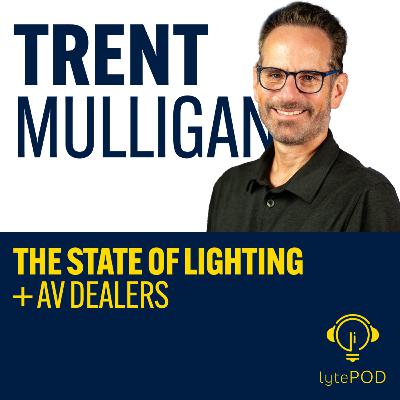
Lighting is the biggest opportunity most integrators aren’t taking full advantage of.In this episode, Trent Mulligan shares how reps and dealers can unlock real revenue, why luxury homes are often underlit, and why education and early involvement are the keys to making lighting work.🎧 Listen now to hear:How to grow without doubling staffWhy “bad light” is still the norm in high-end homesThe power of getting in at the start of a project
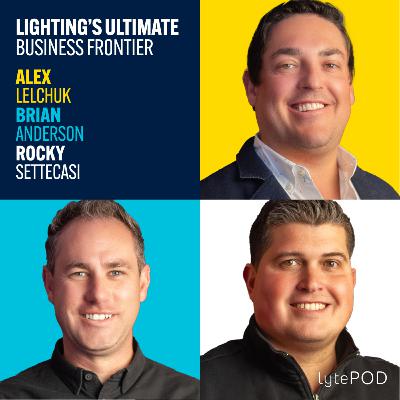
Lighting is the fastest-growing frontier in home tech—and Brian Anderson, Rocky Settacassi, and Alex Lelch share exactly how they’re making it pay off. From building immersive showrooms to mastering LED challenges and collaborating with designers, this episode is packed with insights for integrators, dealers, and designers ready to turn lighting into a thriving part of their business.Whether you're just curious about lighting or ready to build a profitable new division, this conversation offers a step-by-step look at the process, challenges, and opportunities.
The hardest part of buying lighting isn’t the check - it's making sure you get what you ordered. In one of the most eye-opening conversations we’ve had, Justin Streeb, Co-Founder and CSO of 1 LUX, breaks down the behind-the-scenes chaos of actually buying lights. With over 20 years in the industry, Justin went from designing high-end homes in Aspen to founding multiple companies that now sit at the intersection of design, distribution, and strategy.This episode dives into why lighting procurement is so complicated, how the supply chain is fundamentally misaligned with design intent, and what it takes to build a business that truly serves both the specifier and the end client. Justin shares war stories from the 2008 recession, lessons from scaling up, and what still frustrates him about how our industry buys light.Wondering: “why is this so hard?”, This episode will shine a light on the answer.
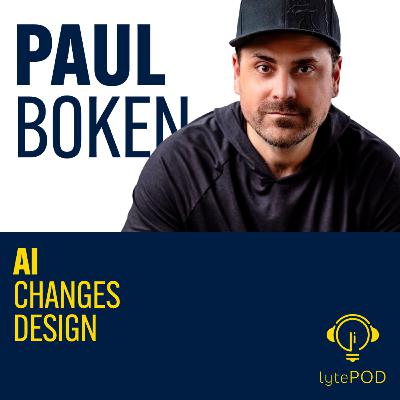
AI is changing design—not by replacing creativity, but by clearing space for it. In this episode, we explore how designers can use AI to save time, improve documentation, and focus more on what matters: ideas. From writing proposals to generating marketing assets, we talk through the real ways AI fits into a design workflow—and why it’s up to creatives to shape how it’s used.
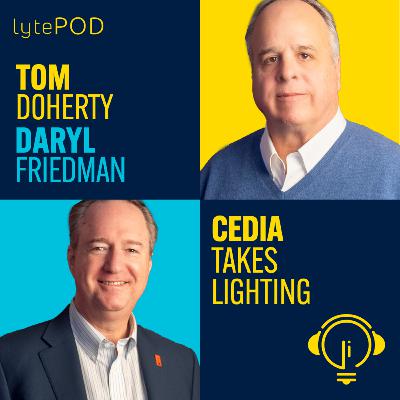
Lighting is no longer just an accessory — it’s becoming a core profit center for AV integrators. In this episode, Sam Koerbel sits down with CEDIA co-founder Tom Doherty and current CEO Daryl Friedman to explore why lighting is now a strategic focus for the custom integration industry.They discuss:Why lighting represents the next big opportunity for integratorsThe challenges of adding lighting to your business modelHow CEDIA plans to educate and support its membersWhat does this shift mean for the future of smart home integrationWhether you're already exploring lighting or still unsure where to start, this episode offers clarity, leadership, and insight into the future of residential technology.
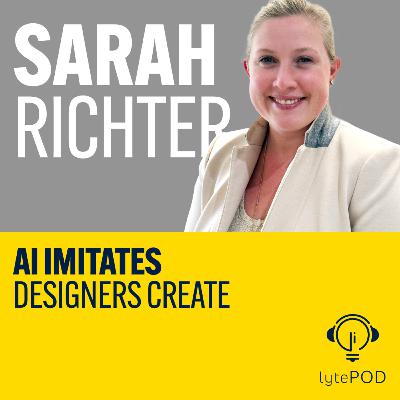
AI is changing the game — but not the designer.In this episode, Sarah Richter shares how she’s using AI to enhance creativity, save time, and stay focused on what really matters: the design.We cover:🎯 Where AI fits in early-stage workflows📬 How it’s helping with client comms + marketing🧠 Why curiosity (not code) is the key to using AI wellIf you’ve been wondering how real designers are actually using AI — this one’s for you.
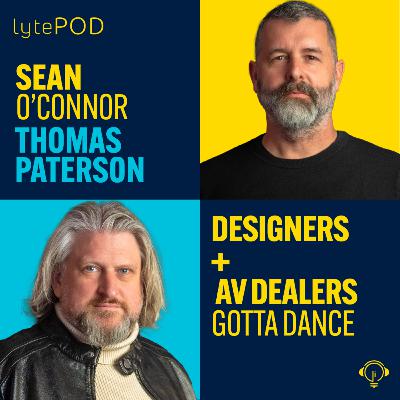
There’s a shift happening in the custom home world—AV integrators are stepping into lighting, but most don’t realize they’re now part of a much bigger story. This episode explores that turning point. It’s about power, partnership, and what happens when two expert worlds—lighting design and technology integration—finally meet.Whether you're trying to add margin through lighting, avoid conflict on job sites, or just figure out what lighting designers actually do—this is your guide.In this episode, renowned lighting designers Sean O’Connor and Thomas Paterson unpack:- What lighting design really is—and why it’s more than fixture plans- How integrators and designers can stop stepping on each other’s toes- Why early communication changes everything- What it looks like to share ownership and still get paid- How to “take care of each other” in a fragmented supply worldThis isn’t about fluff. It’s about real-world collaboration, respect, and helping integrators win in a space they’re just beginning to explore.

Comments

Download from Google Play

Download from App Store
 United States