


 Claim Ownership
RIMScast
Subscribed: 76Played: 2,045
Subscribe

© All content in RIMScast is the exclusive copyright of The Risk and Insurance Management Society, Inc. (RIMS)
Description
The official podcast of RIMS, the Risk and Insurance Management Society. Tune in for weekly discussions about risk management hot topics, interviews with leaders in the profession, and updates on RIMS events and education.
101 Episodes
Reverse
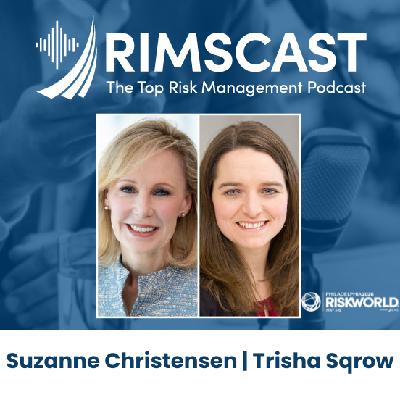
Welcome to RIMScast. Your host is Justin Smulison, Business Content Manager at RIMS, the Risk and Insurance Management Society. In this episode, Justin interviews SERMC members Suzanne Christensen and Trisha Sqrow about the new RIMS Executive Report they co-authored with Joe Pugh, also of the SERMC, "Board Risk Reporting: How to Deliver Insights that Matter." Suzanne and Trisha share tips for preparing to report to your board, how frequent reporting should be, and the difference between the board's oversight and the executive team's management. Trisha also shares descriptions of her two upcoming RISKWORLD presentations on May 6th. Listen for insight on providing the board with the information they need to support the organization's objectives and strategies. Key Takeaways: [:01] About RIMS and RIMScast. [:14] Public registration is open for RISKWORLD 2026, which will be held from May 3rd through 6th in Philadelphia. Visit RIMS.org/RISKWORLD to register. [:27] About this episode of RIMScast. Our topic is board reporting and ERM, and our guests are Trisha Sqrow and Suzanne Christensen of the RIMS Strategic and Enterprise Risk Management Council. They've co-authored a new Executive Report. We're going to talk all about it. But first… [:58] RIMS Virtual Workshops. The next RIMS-CRMP Exam Prep Course will be on April 21st and 22nd, and then again on June 9th and 10th. Registration links are in this episode's notes. [1:14] Webinars. On April 16th, Zurich and World Travel Protection will present "Navigating the New Global Risk Landscape: Lessons for Business Travelers in Unstable Times". [1:24] On May 14th, Origami Risk will return with a new session, "Future-Proofing Your Risk Program: Keeping Pace with Scale, Complexity, and Visibility." Register for webinars at RIMS.org/webinars and through the links in this episode's show notes. [1:39] Folks, for more RIMS content, head over to YouTube and subscribe to @RIMSOfficialChannel. There you will find video podcasts, RIMScast Canada video podcasts, and other informative and entertaining content from RIMS. [1:55] Head over to RMMagazine.com for the Q1 Edition of the Azbee-Award-winning publication, RIMS Risk Management Magazine. [2:06] On with the Show! Our guests are Suzanne Christensen and Trisha Sqrow. As members of the RIMS Strategic and Enterprise Risk Management Council, they co-authored the new RIMS Executive Report, "Board Risk Reporting: How to Deliver Insights that Matter." [2:24] Co-authored by Joe Pugh of the AARP, a RIMS Strategic and Enterprise Risk Management Council member, the report provides practical insights and guidance to risk practitioners who report to their organization's board of directors or overarching governance committees. [2:38] The report provides guidance on aligning this reporting with the board's role and expectations, the steps that should be taken to sustain the alignment, and how to ensure reporting provides the board with the appropriate level of detail. [2:52] The link to the report is available in this episode's show notes. You can also visit the Risk Knowledge section of RIMS.org. If you like what you read and you like what you hear today, be sure to hear Patricia and Joe at RISKWORLD on May 6th at 11:30 a.m. in Room 119-AB. [3:11] They will extend the dialog with the session "From Risk Aware to Risk Savvy: Elevating Board-Level Risk Reporting and Engagement." It will undoubtedly be a fantastic session! [3:21] Let's talk about board reporting right now! [3:23] Interview! Suzanne Christensen and Trisha Sqrow, welcome back to RIMScast! [3:31] Suzanne Christensen and Trisha Sqrow have been carrying the torch for the Strategic and Enterprise Risk Management Council at RIMS for years. Now, they are rejoining us on RIMScast. It's a delight to welcome them both back. [3:57] The new RIMS Executive Report, "Board Risk Reporting: How to Deliver Insights that Matter," was co-authored by Suzanne Christensen and Trisha Sqrow, with Joe Pugh, who is also on the Strategic and Enterprise Risk Management Council. [4:15] This paper is available for a limited time exclusively to RIMS members. It will then be open to the public. There's a lot of great information in it, and it gets right to the point. [4:40] Research shows that while many risk professionals believe their reporting supports board decision-making, most boards are still asking for more information and deeper analysis. [4:47] Trisha says, boards are becoming more interested in understanding the risk profile of the organization, what's being done, and how leadership is managing risk, because we are in a complex time. There are so many risks that are not internal. [5:33] The board is asking: How do we look at this, how can we manage what we can, and prepare for and respond to those things that we can't manage, but that could come and hit us? [5:47] Boards are more interested. They have regulatory concerns and requirements, potential liability, and things of that nature. [6:07] Suzanne agrees with Trisha about the complexity in our post-COVID world with the interconnectedness of risks and the unexpected. Regarding the pace of change, Suzanne says hang onto your seats right now, particularly with AI! [6:30] Boards serve a lot of constituents and stakeholders, and they're feeling pressure. They're looking for more insightful analysis. The report gets into how to figure out what is insightful to a board. Justin notes that each board will have a different definition of insightful. [6:58] One board can change over time as different board members bring different dynamics and expectations to the board. The paper has a point about keeping pace with the board. [7:18] The paper makes the point that effective board reporting is not about what risk teams want to say but about what boards need to hear. [7:43] Suzanne breaks down the difference between the need that the board knows and understands, and articulates, and the things they should also know, to be good board members. That takes exploration. There are things the board might not know to ask. [8:10] Risk professionals have knowledge and context. They need to lean in and say, "You're asking for this, and that's super important, but in addition, here are some other things to be aware of." You need to start with a mutual understanding. There's a process to go through. [8:31] Trisha says the risk practitioner has the largest view of the risk profile of the organization. The board is thinking more of strategic goals and objectives, but they do want to know about the risk. Board risk reporting is a matter of working to connect strategy with risk management. [9:07] The risk practitioner can develop a culture of discussion and openness to discuss risks, mitigations, and possible blind spots. [9:26] Suzanne says one of the primary roles of the board is to make sure the firm has the right strategy and they're executing it appropriately. The biggest risk to the board is becoming irrelevant to constituents and clients. Not all key risks to the organization are equal to the board. [9:59] The board spends more time on the strategic risks. When reporting, you can't forget the operating risks. You can summarize them as "Here are some things to look at that we've got covered. So, let's spend more time over here." [10:46] If you don't first build alignment with executive management before engaging with the board, Suzanne says you'll end up with a modern-day Babylon. You won't end up with support from the key risk owners on the strategic side. The owners of the risk are the decision-makers. [11:02] The decision-makers are management and executive management. It has to be their story, and they have to buy in. Risk practitioners are the facilitators to create that alignment so those conversations can be robust, open, and transparent. [11:44] Trisha says the executive leadership team (ELT) is the liaison and connection to the board. Most risk practitioners may not be in all of the board meetings or interacting with the board regularly. The executive leaders probably are. [12:05] The ELT can bridge the gap. They have the relationships and know the personalities of the board members. They understand how the board likes to receive information and can help the risk practitioner develop reports in that way. They can open the line of communication more. [12:28] Trisha says that in her previous work for DFW Airport and others, they did this through the structure of the Enterprise Risk Management program, having a risk council report periodically to the ELT, so they have the information and can go forth with it. [13:17] Suzanne says the best practice is to spend some prep time to get some baseline knowledge and level-setting across, so when you go into those meetings, the conversations will be richer. You're not educating. You're getting right to what you want to focus on in your report. [13:58] There are different methods for doing that, depending on the organization, with its aptitude and appetite. You can do it in a pre-conversation setting, starting with the ELT, so that they're part of that conversation, helping to drive it. That is ideal. [14:21] A Quick Break! RISKWORLD 2026 will be held from May 3rd through the 6th in Philadelphia, Pennsylvania. RISKWORLD attracts more than 10,000 risk professionals from across the globe. It's time to Connect, Cultivate, and Collaborate with them. [14:41] Public registration is open, and booth sales are still available. Links are in this episode's show notes, and be sure to check out RIMS.org for more information. [14:50] We will kick off Day 1 with a conversation with Adam Grant. He is an organizational psychologist, best-selling author, and a leading influential management thinker. [14:59] The excitement continues with the announcement of the closing keynote speaker. NFL Hall of Famer, Super Bowl Champion, Emmy-winning broadcaster, and entrepreneur Michael Strahan will be on the main stage on May 6th. Justin is super stoked

Welcome to RIMScast. Your host is Justin Smulison, Business Content Manager at RIMS, the Risk and Insurance Management Society. In this episode, Justin interviews Kiersten Cash regarding the May 6th RISKWORLD session that she is co-presenting with Frank Wickersham, a Workers' Comp defense attorney, "Reefer Madness: Still in the Weeds with Medical Marijuana and Workers' Compensation Insurance, Legal, and Regulatory." Kiersten shares the biggest misconception risk professionals have about medical marijuana in Workers' Comp. She discusses the conversation around cannabis and workplace injury. Justin and Kiersten talk about the growing patchwork of state laws on cannabis and what risk managers should be paying close attention to right now. Kiersten explains the concerns about Workers' Comp paying for medical marijuana. She gives a preview of what to expect in her RISKWORLD session. Listen for insights about the problems of marijuana as a treatment option in Workers' Comp. Key Takeaways: [:01] About RIMS and RIMScast. [:14] Public registration is open for RISKWORLD 2026, which will be held from May 3rd through 6th in Philadelphia. Visit RIMS.org/RISKWORLD to register. [:27] About this episode of RIMScast. Our guest is Kiersten Cash. She is the Senior Manager for Workers' Compensation and General Liability at the Children's Hospital of Philadelphia. She's going to talk to us all about medical marijuana and Workers' Compensation Claims. But first… [:58] RIMS Virtual Workshops. The next RIMS-CRMP Exam Prep Course will be on April 21st and 22nd, and then again on June 9th and 10th. Registration links are in this episode's notes. [1:14] On April 15th, we have a virtual workshop covering "Emerging Risks", led by Joseph Mayo. Register today and strengthen your risk knowledge. RIMS members always enjoy deep discounts on the virtual workshops. [1:29] Webinars. On April 16th, Zurich and World Travel Protection will present "Navigating the New Global Risk Landscape: Lessons for Business Travelers in Unstable Times". Register for webinars at RIMS.org/webinars and through the links in this episode's show notes. [1:47] Folks, for more RIMS content, head over to YouTube and subscribe to @RIMSOfficialChannel. There you will find video podcasts, RIMScast Canada video podcasts, and other informative and entertaining content from RIMS. [2:02] Head over to RMMagazine.com for the Q1 Edition of the Azbee-Award-winning publication, RIMS Risk Management Magazine. [2:15] On with the Show! Our guest today is the Senior Manager for Workers' Compensation and General Liability at the Children's Hospital of Philadelphia, Kiersten J. Cash. She's here to discuss what's going on with medical marijuana and Workers' Compensation claims. [2:31] This will serve as a bit of a preview of her session at RISKWORLD on May 6th at 10:15 a.m. in Room 120-BC, "Reefer Madness: Still in the Weeds with Medical Marijuana and Workers' Compensation." [2:43] We will discuss whether cannabis is still an effective treatment for chronic pain due to workplace injury and what could happen if the U.S. Government were to change its schedule from number 1 to number 3. [2:54] We're going to learn about Kiersten's fascinating work and her career. Let's get to it! [3:00] Interview! Kiersten Cash, MBA, welcome to RIMScast! [3:23] Kiersten is with the Children's Hospital of Philadelphia, or CHOP. Kiersten Cash has a session at RISKWORLD, "Reefer Madness." [4:27] Kiersten has been in the world of Workers' Comp for a little over 20 years. She started as an adjuster. She adjusted national market claims and middle market claims for 10 years. Then she went to the broker side. [4:46] She managed the claim program for the broker's largest client at the time, along with 23 other claim programs, covering all lines of insurance. Next, Kiersten worked for Devereux Advanced Behavioral Health, a residential treatment facility. [5:06] Then Kiersten moved to CHOP, where she manages all of Workers' Comp, General Liability, and Auto for the health system. [5:22] Kiersten says Workers' Comp is one of those industries where you kind of fall into it. In the final year of her graduate program, she needed a job. She met someone who worked at Liberty Mutual, who said they were hiring claims adjusters. She took the job. [5:44] Kiersten says she tried to get out of this industry on numerous occasions, but the industry apparently loves her too much. She's glad she stayed because she really likes where she has ultimately landed, CHOP. [6:52] Kiersten is a member of the Delaware Valley Chapter of RIMS, the oldest RIMS chapter. RIMS is 76 years old. The chapter is 75 years old. Chapter President Tom Armstrong was on RIMScast recently, excited about all the cool things the host chapter is doing for RISKWORLD. [7:44] Justin asks what Kiersten feels is the biggest misconception risk professionals have about medical marijuana and Workers' Compensation. She thinks the biggest misconception is that there is a difference between medical marijuana and recreational marijuana. [8:18] Kiersten says, as an employer, we do not want a trace in our employees' system while working, whether prescribed by a doctor or not. Legalizing marijuana for medicinal use does not excuse an employee from being impaired at work. [8:36] Kiersten thinks that, down the pike, this will cause a major conflict as this continues to be a topic of conversation. Kiersten hopes to dispel that misconception in this episode of RIMScast and in her presentation at RISKWORLD. [9:12] Kiersten says she has not had to have this conversation at CHOP from a Workers' Comp perspective, as they have not seen an influx of chronic pain or severe injuries in her tenure. That's good from the employer's perspective, as injuries are under control. [9:38] Kiersten says that when we get into back surgeries, shoulder surgeries, or other major surgeries, she definitely sees this conversation becoming an issue. [9:53] Kiersten says she is very good at interacting with the medical providers involved in her program. If medical marijuana were to become a treatment option, Kiersten would need to sit down with the pain management specialist or physician to talk about it, so it is monitored. [10:29] The goal is not to put an employee on medical marijuana and keep renewing the card so they're just out there, collecting marijuana. There has to be a treatment plan with a target date. [10:53] The goal of Workers' Compensation is always either to get the employee back to work or to their baseline, so they can function in society as a human being. [11:06] Kiersten has not had to deal with prescription opioid claims, thankfully. In her adjuster days, she has seen situations where opioids have been out of control. There were times when she would propose detox programs for employees who were addicted to opioids. [11:32] It would start with something like a back surgery. The employee was still in pain, and instead of addressing the cause of the pain, they would get opioids and end up getting addicted to them to the point that weaning off the opioids was not an option. [11:55] Talking about medicinal marijuana, could marijuana have the same effect? That's one thing we are not sure of right now. [12:25] Justin notes that opioid addiction often leads to huge nuclear verdicts and settlements, some of which are still being litigated. [12:47] Kiersten brings up the socioeconomic factor of the claim. You can't say, this person had back surgery; this is going to be a situation where they're going to be addicted to medical marijuana, or they're going to be addicted to opioids. [13:08] In her 20 years in the industry, Kiersten has seen that the motivation and the socioeconomic status of the employee, and their need to get back to normal, will always play a factor in whether this becomes an issue or is just something they have to do after surgery. [13:48] Kiersten has worked with plenty of employees who have had surgery, used opioids for three to five days, and asked what they can have instead, because they don't like this medication. That's something to take into account when having this conversation. [14:17] Kiersten talks about reimbursement costs and how long the payment would be required for medicinal marijuana, if approved. Is the medical marijuana prescribed for the work accident or for a pre-existing chronic condition that they claim was aggravated by the injury? [15:11] A Quick Break! RISKWORLD 2026 will be held from May 3rd through the 6th in Philadelphia, Pennsylvania. RISKWORLD attracts more than 10,000 risk professionals from across the globe. It's time to Connect, Cultivate, and Collaborate with them. [15:27] Booth sales are open now. General registration and speaker registration are also open right now. Marketplace and hospitality badges are now available. Links are in this episode's show notes, and be sure to check out RIMS.org for more information. [15:45] Our guest today, Kiersten Cash, will be a session speaker at RISKWORLD. We are excited for her and also for our just-announced closing keynote, NFL Hall of Famer, Super Bowl Champion, Emmy-winning broadcaster, and entrepreneur, Michael Strahan. [16:09] Michael Strahan will be on the main stage on May 6th. Justin is super stoked! If you're still on the fence, this is a fine time to smash that Register button and hear from one of the all-time greats. [16:21] The RIMS Western Regional Conference will be held from October 4th through the 7th in Seattle, Washington. Registration is open, and you can also submit a session. Visit RIMSWesternRegional.com and the link in this episode's show notes for more information. [16:41] Let's Return to Our Interview with Kiersten Cash of the Children's Hospital of Philadelphia! [16:49] On May 6th, Kiersten Cash will deliver the session at 10:15 a.m. in 120-BC, "Reefer Madness: Still in the Weeds with Medical Marijuana and Workers' Compensation." Kiersten will co-present with Frank Wickersha

Welcome to RIMScast. Your host is Justin Smulison, Business Content Manager at RIMS, the Risk and Insurance Management Society. In this episode, Justin interviews Anderson Kill Shareholder Joshua Gold on the May 5th RISKWORLD session that Joshua is co-presenting with RIMS Past President Lance Ewing, "Do Not Let Your Cargo Claim Go Down with the Ship: Tips to Improve Marine Insurance Protection." Joshua shares knowledge on two of his areas of practice, cyber and maritime insurance. Joshua offers some insight into these newest and oldest of practice areas, and how they have begun to intersect. Maritime insurance carries special language and rules, and Joshua and Lance will cover those and answer attendee questions in their session. Justin and Joshua discuss current maritime threats in the Middle East that will likely be discussed in the session. Justin and Joshua comment on Law Day, an annual commemoration of law on May 1st. Listen for a greater understanding of maritime shipping insurance and the importance of promptly filing claims. Key Takeaways: [:01] About RIMS and RIMScast. [:14] Public registration is open for RISKWORLD 2026, which will be held from May 3rd through 6th in Philadelphia. Visit RIMS.org/RISKWORLD to register. [:27] About this episode of RIMScast. We will be joined by RIMS Risk Management Magazine contributor Joshua Gold, Shareholder at Anderson Kill. He's making his RIMScast debut to discuss Marine and Cargo Risk. This is timely. But first… [:59] RIMS Virtual Workshops. The next RIMS-CRMP Exam Prep Course will be on April 21st and 22nd, and then again on June 9th and 10th. Registration links are in this episode's notes. [1:13] On April 15th, we have a virtual workshop covering "Emerging Risks", led by Joseph Mayo. Register today and strengthen your risk knowledge. RIMS members always enjoy deep discounts on the virtual workshops. [1:30] Webinars. On April 16th, Zurich and World Travel Protection will present "Navigating the New Global Risk Landscape: Lessons for Business Travelers in Unstable Times". Register for webinars at RIMS.org/webinars and through the links in this episode's show notes. [1:48] Folks, for more RIMS content, head over to YouTube and subscribe to @RIMSOfficialChannel. There you will find video podcasts, RIMScast Canada video podcasts, and other informative and entertaining content from RIMS. [2:03] Head over to RMMagazine.com for the Q1 Edition of the Azbee-Award-winning magazine, RIMS Risk Management Magazine. [2:15] On with the Show! Our guest today is a shareholder at the law firm Anderson Kill. You've seen his byline in RIMS Risk Management Magazine, and you've seen him on RIMS stages regionally, nationally, and globally. [2:30] Joshua Gold is here to discuss marine and cargo risks generally, and how he will be co-presenting a session at RISKWORLD on May 5th, called "Do Not Let Your Cargo Claim Go Down with the Ship: Tips to Improve Marine Insurance Protection." [2:50] He will present that alongside RIMS Past President Lance Ewing. We expect that session to be highly attended. Joshua is here to give you a preview of that session, talk about how cyber can intersect with marine and cargo risk, and offer some practical risk management takeaways. [3:11] Law Day is coming up in the U.S. on May 1st. Joshua has been practicing law for three decades. We'll find out what Law Day means to him in 2026. Let's get to it! [3:24] Interview! Anderson Kill Shareholder Joshua Gold, welcome to RIMScast! [3:51] Joshua says RIMS is an amazing system for sharing information and education. Joshua couldn't be prouder to be speaking at RISKWORLD 2026. [4:13] Joshua has written for RIMS on topics from cyber to marine insurance. Joshua thinks that cyber risk management is fascinating because cyber is new for many policyholders, in terms of implications, perils, how insurance will respond, and what the products are. [5:15] It's fascinating to see the intersection of technology, insurance, and law. It all comes together in cyber. These perils may be getting more perilous over the next few years before we may start turning the corner. [6:00] Joshua's session on May 5th at RISKWORLD is called "Do Not Let Your Cargo Claim Go Down with the Ship: Tips to Improve Marine Insurance Protection." Joshua will present with former RIMS President Lance Ewing. [6:17] Joshua says he is in both the newest thing in insurance and law, cyber, and the oldest thing in insurance and law, marine. Most of his day-to-day focus is on either end of the spectrum. [7:16] As much as Joahua loves cyber, he is intrigued with maritime insurance and maritime law. It's esoteric and old. It has special rules. If you don't deal with this type of insurance and law regularly, it can be challenging. [7:46] The insurance companies are typically very well-versed in the insurance rules and doctrines. Most policyholders are much less so. There's an information imbalance. [8:00] Joshua always looks forward to educating risk managers about this area. It's so detailed and different. Some might say it's antiquated. It's a challenging area, and we couldn't have a better example of that than with recent current events and hostilities in the Middle East. [8:42] Joshua says, as dangerous and harrowing as the situation exists in certain shipping lines and energy channels, we've seen examples of disruptions in recent times with drought conditions affecting the Panama Canal and other shipping lanes. [9:02] Joshua recalls the Suez Canal freighter mishap. The Suez Canal was shut down while an international engineering effort was launched to free the freighter and free up shipping lanes. [9:29] The current shipping disruption caused by an escalating war will present real challenges for both shippers and energy markets. We're watching that in real time. [9:54] Joshua and Lance don't want a current events discussion. They want to educate policyholders on principles that apply, whether they're dealing with a Suez Canal situation, an Iranian conflict, modern-day pirates in open water, or thieves breaking into your warehouse. [10:37] Joshua and Lance will emphasize certain relevant points like detours, delays in shipping, downstream risk, risk to certain types of cargo, cancellations for war risk coverage, and other marine insurance products. [11:06] There can be a real aftermath, and we're not sure where we are, as of this recording. We'll know more in May at RISKWORLD in Philadelphia. Now, we can only brace for the worst. [11:32] Joshua and Lance are looking to educate policyholders on all of these issues, including ones that will be front-burner, given the hostilities now. [11:52] Joshua says marine insurance policy language is cloaked in words of antiquity. Sometimes you'll see a marine policy that looks like a standard property all-risk policy, and sometimes you'll see one that contains 17th-century nautical and piracy terms. [12:32] It's important to make sure that you understand the rights, protections, obligations, and contingencies under insurance. [12:48] Most marine insurance policies will have a one-year provision the insurance company will argue says that if there's a fight over the claim payment, the amount, or the timing of the payment, that has to be brought in a lawsuit commenced within 12 months of the loss event. [13:14] For people who have never had to go through a complicated claim, a year may sound like plenty of time. But these claims can take months or even years for resolution. Sometimes they don't get resolved without some coverage litigation or alternative dispute mechanism. [13:43] Most policyholders are not accustomed to seeing a one-year contractual statute of limitations to bring a fight. You don't want to be in a position where the insurance company will argue you may have forfeited your coverage rights if you didn't act in time. [14:11] Policyholders may not ever get into that realm, because they've never had that problem, but it's a point of being educated and knowing the lay of the land for policyholders in this arena, insuring goods over open water, in warehouses, on docks, or on a truck. [14:58] A Quick Break! RISKWORLD 2026 will be held from May 3rd through the 6th in Philadelphia, Pennsylvania. RISKWORLD attracts more than 10,000 risk professionals from across the globe. It's time to Connect, Cultivate, and Collaborate with them. [15:18] Booth sales are open now. General registration and speaker registration are also open right now. Marketplace and hospitality badges are now available. Links are in this episode's show notes, and be sure to check out RIMS.org for more information. [15:36] Our guest today, Joshua Gold, will be one of the session speakers at RISKWORLD. We are excited for him and also for our just-announced closing keynote, NFL Hall of Famer, Super Bowl Champion, Emmy-winning broadcaster, and entrepreneur, Michael Strahan. [15:55] Michael Strahan will be on the main stage on May 6th. Justin is super stoked! If you're still on the fence, this is a fine time to smash that Register button and hear from one of the all-time greats. [16:07] The RIMS Western Regional Conference will be held from October 4th through the 7th in Seattle, Washington. Registration is open, and you can also submit a session. Visit RIMSWesternRegional.com and the link in this episode's show notes for more information. [16:28] Let's Return to Our Interview with Joshua Gold of Anderson Kill! [16:44] Joshua says don't get fooled by the title of your insurance policy. The devil is in the details. You may have Ocean Marine Cargo Coverage, but you may get endorsements, like a warehouse-to-warehouse endorsement. [17:15] You may be buying a product called Stock Throughput. You're looking for coverages that may apply not just for cargo on a ship, but also for cargo that may be at rest, stored in a warehouse where it's being loaded from the ship onto the dockside. [17:48] There are many areas where you have to be aware of things developi

Welcome to RIMScast. Your host is Justin Smulison, Business Content Manager at RIMS, the Risk and Insurance Management Society. In this episode, Justin interviews Tom Armstrong, a Global Risk Director for Comcast and the President of the RIMS Delaware Valley Chapter. Tom shares what inspired him to pivot from studying music education to studying risk and insurance, and how his professors guided and inspired him into a career in risk management. Tom went directly from graduation into a risk management role, eventually landing at Comcast just as it acquired NBCUniversal, transforming from an ISP and cable supplier into a multimedia and theme park powerhouse. Tom discusses how the Risk Management Department works at Comcast. Tom tries to build long-term relationships with his interns that endure when they move on. The RIMS Delaware Valley Chapter is the host chapter for RISKWORLD 2026, held from May 3rd through the 6th in Philadelphia, Pennsylvania. The chapter is also celebrating its 75th Anniversary. Tom shares his enthusiasm for these events and for a member reception on May 1st, linking the chapter's 75th Anniversary to RISKWORLD. Listen for ideas on advancing in your risk career and in your RIMS chapter. Key Takeaways: [:01] About RIMS and RIMScast. [:14] Public registration is open for RISKWORLD 2026, which will be held from May 3rd through 6th in Philadelphia. Visit RIMS.org/RISKWORLD to register. [:28] About this episode of RIMScast. Our guest is Tom Armstrong. He is a Global Risk Management Director at Comcast. He is also the President of the Delaware Valley Chapter of RIMS, which is celebrating its 75th Anniversary. Lots to discuss! But first… [:59] RIMS Virtual Workshops. The next RIMS-CRMP Exam Prep Course will be on April 21st and 22nd, and then again on June 9th and 10th. Registration links are in this episode's notes. [1:13] On April 15th, we have a virtual workshop covering "Emerging Risks", led by Joseph Mayo. Register today and strengthen your risk knowledge. RIMS members always enjoy deep discounts on the virtual workshops. [1:30] Webinars. On April 16th, Zurich and World Travel Protection will present "Navigating the New Global Risk Landscape: Lessons for Business Travelers in Unstable Times". Register for webinars at RIMS.org/webinars and through the links in this episode's show notes. [1:47] Folks, for more RIMS content, head over to YouTube and subscribe to @RIMSOfficialChannel. There you will find video podcasts, RIMScast Canada video podcasts, and other informative and entertaining content from RIMS. [2:05] On with the Show! Our guest today is a Director of Global Risk Management at Comcast. He oversees construction, crime, contracts, and executive risks. [2:16] We will learn what it takes to be a Global Risk Director for one of the top communications companies in the world, as well as a household name and brand. [2:27] We're also going to talk about all the joviality surrounding the Delaware Valley Chapter as they celebrate their 75th Anniversary. They happen to be the host city for RISKWORLD 2026, so we'll learn what they have in store for us. Let's get to it! [2:43] Interview! Tom Armstrong, welcome to RIMScast! [3:10] Tom says he is fortunate to hold the positions of Global Risk Director for Comcast and President for the RIMS Delaware Valley Chapter. In each case, he is one of a team that makes it happen. [3:47] Tom shares his career path. He went to Temple University intending to major in music education, to learn to conduct high school choirs and marching bands. After two and a half years into his degree, he decided it was not for him. [4:11] Tom transferred to the business school, where he was fortunate to take an Introduction to Risk course taught by Professor Barbara Manaka, now Chairman of the department there. She told him he'd make a great risk manager. [4:27] With help from Professor Manaka, Professor Robert Drennan, and the rest of the wonderful staff at Temple, Tom finished his four-year degree in only five years! He was one of the few to be hired into a risk management role straight out of school. [4:43] He started at CDI. In 2008, the position was eliminated, and Tom moved over to Aramark. He spent about three and a half years at the risk department. Then he got a call that Comcast was looking for someone to help them with the review of insurance language in contracts. [5:01] Tom was a contractor for his first 18 months at Comcast. A new risk manager came on board, Sandy Aspinall, and he brought Tom in-house as a senior analyst to review insurance language in contracts. [5:24] Tom was able to add on some additional scope, supporting construction, property, executive risks, the crime program, and whatever comes up that needs some support. Like the rest of the team, he's happy to step up. [5:57] Tom says that he never had a great talent for music. What he really liked was the community that a marching band or a choir brought to him as a kid in high school. He has found that this industry can give him a lot of the same community. [6:09] Community is why Tom wants to be a part of RIMS. It's why he stepped up to lead a RIMS chapter. It's why he appreciates his peers at Comcast. [6:23] Tom joined RIMS through meeting participation early in his career, in 2009 or 2010. Aramark supported his involvement in visiting and joining certain meetings. In 2017, he stepped up to be Treasurer of the Delaware Valley Chapter. He's been President for about three years. [6:46] Some staffing changes happened in the RIMS and the RIMS Delaware Valley Chapter in 2017 and 2018, opening up positions like Treasurer. Tom mentions former Treasurer Deborah Saunders and former RIMS President Robert Cartwright Jr., now a huge asset to the chapter. [7:53] Tom says he enjoys his work. He is one of six Directors and Senior Directors on the team, each reporting up to Sandy Aspinall. They each have their slice of the business. Tom gets to work on some really cool stuff. [8:03] Comcast deals with cable and internet delivery. Tom says there are some fun elements to it. They deal with theme parks and movie studios. They put solar panels on roofs. When Tom joined Comcast, he thought it was a boring cable company, but it is light-years more than that. [8:42] Tom and his peers sit at the corporate level at Comcast but have responsibilities across almost all Comcast subsidiaries, with a few exceptions that have their own approach to risk. They have no line authority over any of the subsidiaries. [8:58] Tom says everything we do is through demonstrating our value and persuading through convincing arguments. Risk Management doesn't say, "You have to do it this way." [9:14] They say, "You're not going to say Risk Management approved this, unless we work together and we provide you with the advice that we think will let you do your business in a way that protects the organization while letting you do the cool and inventive things that you do." [9:39] From day one, Tom's been involved in the review of insurance language in contracts. His team reviews 1,500 contracts in a year. They care about what they're doing, from the smallest contracts to the biggest engagements. They inform business leaders to make good choices. [10:21] For Tom, contracts are a framework through which he can look at the operations of the business. If contractors are going to enter customers' homes, they need commercial general liability to make any damages right. [10:38] Similarly, for people who handle customer data, design attractions in Comcast parks, or license intellectual property that Comcast distributes. In all of those situations, Comcast cares about how they engage. [11:07] Tom says the nature of the business to which they apply the risk framework has changed again and again. When Tom came on in 2012 as a contractor, Comcast was just starting to acquire NBCUniversal. [11:22] They went from an Internet Service Provider and a cable operator to a multimedia powerhouse with theme parks, movie studios, and TV production. That was a massive shift in how Comcast operates, and Risk Management had to learn to manage a new suite of risks. [11:42] That happened in a different way when Comcast bought and started operating Sky UK a few years ago. Every time Comcast introduces another element of business, Risk Management has to figure out how that fits into how they manage risk. [12:08] Peacock is a huge piece of the puzzle in terms of how Comcast is approaching its consumers and delivering content. [12:16] From a risk perspective, it mirrors what Comcast used to do from a linear distribution, but through very new channels and with less mature partners. Risk Management has to think about how the partners are capitalizing their exposures and how that cascades onto Comcast. [12:32] A Quick Break! RIMS is once again supporting the FERMA Global Risk Manager Survey 2026. [12:43] Now in its second consecutive global edition, the survey, led by FERMA, brings together insights from Europe, the U.S., Latin America, Asia Pacific, and Africa, offering a truly international perspective on how the risk management profession is evolving. [12:58] Surveys are anonymous, and the final report is free. The deadline to participate is March 31st. A link is in this episode's show notes. [13:08] RISKWORLD 2026 will be held from May 3rd through the 6th in Philadelphia, Pennsylvania. RISKWORLD attracts more than 10,000 risk professionals from across the globe. It's time to Connect, Cultivate, and Collaborate with them. [13:25] Booth sales are open now. General registration and speaker registration are also open right now. Marketplace and hospitality badges are now available. Links are in this episode's show notes, and be sure to check out RIMS.org for more information. [13:43] The RIMS Western Regional Conference will be held from October 4th through the 7th in Seattle, Washington. Registration is open, and you can also submit a session. Visit RIMSWesternRegional.com a

Welcome to RIMScast. Your host is Justin Smulison, Business Content Manager at RIMS, the Risk and Insurance Management Society. In this episode, Justin interviews Ralph Exton, Executive Director of the Water Environment Federation, about World Water Day, March 22nd, and the importance of water governance. WEF is a UN Water Partner, focusing on water access and gender equality. Justin and Ralph discuss the Value of Water Campaign and the Circular Water Economy. Ralph mentions other water organizations that the WEF promotes and supports. They discuss how water governance is a board-level issue, along with cybersecurity and financial risk. They explore ways organizations can participate in World Water Day. Listen for ideas on elevating water governance in your organization. Key Takeaways: [:01] About RIMS and RIMScast. [:14] Public registration is open for RISKWORLD 2026, which will be held from May 3rd through 6th in Philadelphia. Visit RIMS.org/RISKWORLD to register. [:27] About this episode of RIMScast. We will be joined by Water Environment Federation Executive Director Ralph Exton. He's here to talk about the circular water economy ahead of March 22nd, which is World Water Day. This is probably my favorite topic! But first… [:59] RIMS Virtual Workshops. The next RIMS-CRMP Exam Prep Course will be on April 21st and 22nd, and then again on June 9th and 10th. Registration links are in this episode's notes. [1:13] On April 15th, we have a virtual workshop covering "Emerging Risks", led by Joseph Mayo. Register today and strengthen your risk knowledge. RIMS members always enjoy deep discounts on the virtual workshops. [1:30] Webinars. The "Hard Hats & High Stakes: Women Leaders Shaping Construction Risk Management" Webinar, spotlighting women leaders in risk and construction, was rescheduled to March 20th. [1:42] The registration link is in this episode's show notes. You will have to register again if you have previously done so. [1:48] On April 16th, Zurich and World Travel Protection will present "Navigating the New Global Risk Landscape: Lessons for Business Travelers in Unstable Times". Register for these and other webinars by visiting RIMS.org/webinars and the links in this episode's show notes. [2:05] On with the Show! Our topic is water risk management, and we are joined by the Executive Director of the Water Environment Federation, Mr. Ralph Exton. He has decades of professional experience with water risk. [2:19] He is here to discuss what the Water Environment Federation refers to as the Circular Water Economy, WEF's Value of Water Campaign, responsible water risk management, and World Water Day 2026, which emphasizes water access and gender equality. Let's get to it! [2:40] Interview! Ralph Exton, welcome to RIMScast! [2:48] Ralph Exton, Executive Director of the Water Environment Federation, joins us for this World Water Day episode of RIMScast. [3:29] Ralph Exton's career started with water. As a newly graduated mechanical engineer, his first assignment was to manage and supervise the water operations at an industrial facility. He says he had no idea what he was doing. He had wanted to work on robots. [4:57] Ralph says it did not take long. Once you understand how important water is to an industrial operation, you realize how important water quality is to the environment. Everyone knows how important water is from a personal standpoint. [5:28] When you understand those bigger factors, it becomes inherent in the way you think about your job and career. Ralph tells people, once you get your hands wet in water, they'll never be dry. [5:55] Ralph's entire career has been water. The early part of the career was operational and industrial. Then he worked for water technology companies, and eventually for the largest water technology and servicing companies in the world. He lists some of the global companies. [6:37] Ralph says that a couple of years ago, he was at a point in his career where he wanted to give back more and be more directly focused on the impact he could have on water and the environment. [6:52] Ralph had spent a lot of time with the Water Environment Federation as a customer, a volunteer, and a board member. All those things throughout his career helped him considerably. It's such an important organization for making connections in the water sector and for learning. [7:24] Ralph says that when the opportunity came up to be part of the organization that has been so important to his career for all those years, he jumped at it and was fortunate to be selected for this position. Ralph joined WEF in mid-2024. [7:47] Ralph says he is thrilled with the opportunity for direct contributions to water and the environment. It has been fantastic. The organization has always done super important things. He gets to be a part of making those things a reality now, and it's great. [8:17] World Water Day, March 22nd, is a big day for Ralph and for the WEF. This year, it emphasizes water access and gender equality. WEF is a strong supporter of water access, criminal justice, and gender equality. WEF is very proud to be a UN Water Partner. [9:06] Access to clean water and sanitation is directly correlated with a higher level of education, gender equality, and economic stability. If you have one, you're going to get the other. [9:24] In particular, ready access to clean water and toilets is crucial for women, especially at school age. If women aren't carting water all day long, they have more hours to spend with access to schooling and to join the workforce. [9:51] Ralph says there's also a very high correlation between women in the workforce and economic well-being, not only of the family, but also economic well-being within the regional and national economies. The theme for this year's Water Day ties it all together. [10:42] This is core to some of the work WEF does. WEF has a program called Charities of Choice. [10:54] WEF supports and promotes several not-for-profit organizations that focus on philanthropic and charity work, domestically and in developing countries, that provide services that ensure that the water environment is enhanced or preserved and public health is protected. [11:20] Ralph shares a couple of examples. Global Water Stewardship works to resolve sanitation issues in the developing world by educating people and engineering sustainable centralized solutions that keep waterways clean and communities healthy. [11:38] Water for People is an international nonprofit based in Denver, Colorado. Their goal is to bring water, sanitation, and hygiene services to everyone and to make the solutions last. [11:55] Engineers Without Borders builds a better world through engineering, through projects that empower communities to meet their basic human needs and equip leaders to solve some of the world's most pressing water challenges. [12:14] Operators Without Borders looks to provide certified volunteer water and wastewater operators who can support utilities in developing countries, following emergency or disaster situations, to ensure that safe drinking water and wastewater services are resumed quickly. [12:48] Ralph says WEF largely provides a platform and access to tens of thousands of people around the world who are part of WEF membership. WEF also has grants for water-related emergencies. [13:42] Ralph says volunteer work is probably the biggest thing people can do to help. Making donations to any of these organizations is super important. Feet on the street is a big cost component of this work. [14:10] The other cost component is training. If you send people to a location to solve a problem, and then they leave and don't provide training to the community, the solution won't last. Volunteers participating in some of these projects are a big help in making projects sustainable. [15:06] Ralph says you can provide someone a meal, or you can teach them how to grow that meal. There are short-term and long-term aspects. Long-term, you have to make sure they have the infrastructure, training, knowledge, and resources to provide for themselves. [15:51] The Value of Water campaign highlights the state-by-state economic benefits of investing in water infrastructure. The campaign is a coalition of the U.S. Water Alliance, the WEF, and other organizations. The WEF is on the Value of Water campaign steering committee. [16:27] We're at a pivotal moment regarding water infrastructure. A recent study was on the U.S. water infrastructure, but the issue is global. [16:46] The U.S. water infrastructure gets scored every couple of years on an A through F system. We don't score very well. The recent research has a powerful message. The funding gap is $1.8 trillion in water infrastructure between now and 2044. [17:30] Ralph says that's an opportunity. The latest report from the Value of Water campaign shows what's possible if we invest in water. Every $1 million directed towards water infrastructure generates $2.5 million in economic growth. There is a return on this investment. [18:13] That kind of return builds stronger communities. It creates meaningful jobs and helps drive innovation. [18:26] The report identifies that implementing circular water principles is going to be key. These strategies help transform linear systems into regenerative systems, where water is reduced and recovered, and constituents can be pulled from the water and recovered. [19:00] WEF is committing to advancing this approach as they help to shape a resilient and inclusive future. [19:14] The 2025 Value of Water Campaign Report is publicly available. The link is in this episode's show notes. [19:36] A Quick Break! RIMS is once again supporting the FERMA Global Risk Manager Survey 2026. [19:47] Now in its second consecutive global edition, the survey, led by FERMA, brings together insights from Europe, the U.S., Latin America, Asia Pacific, and Africa, offering an international perspective on how the risk management profession is evolving

Welcome to RIMScast. Your host is Justin Smulison, Business Content Manager at RIMS, the Risk and Insurance Management Society. In this episode, Justin interviews Kristen Peed, RIMS Ex Officio, and RIMS Board Member, John Kline, about the results of the 2025 RIMS Risk Professional Compensation Survey, covering Risk Professionals in North America. They discuss the growth trend in base salaries for risk professionals in the U.S. and Canada and what this growth represents. They also dig into the median salary of Chief Risk Officers in both nations and how that reflects on the perceived value of the risk profession today. They discuss the worth of experience and certifications for a risk career. They cover the variety of assignments attached to the roles of risk professionals, and the value of expanding the responsibilities of your role over your career. They discuss the rising generation of risk professionals and the need to ensure the transfer of knowledge as the more experienced risk managers retire. Listen for thoughts on incentives for contributing to the long-term stability and growth of your organization. Key Takeaways: [:01] About RIMS and RIMScast. [:16] About this episode of RIMScast. We will review the results of the RIMS 2025 Compensation Survey with Kristen Peed and John Kline. But first… [:40] RIMS Virtual Workshops. On March 17th and 18th, RIMS will align with AFERM for a two-day RIMS-CRMP-FED Exam Prep Course. [:51] The next RIMS-CRMP Exam Prep Course will be on April 21st and 22nd, and then again on June 9th and 10th. Registration links are in this episode's notes. [1:00] On April 15th, we have a virtual workshop covering "Emerging Risks", led by Joseph Mayo. [1:12] Register today and strengthen your risk knowledge. RIMS members always enjoy deep discounts on the virtual workshops. [1:19] Webinars. On March 12th, Global Risk Consultants returns with "Don't Waste the Soft Market: Where to Reinvest Insurance Savings Before the Window Closes". [1:34] We had to reschedule the "Hard Hats & High Stakes: Women Leaders Shaping Construction Risk Management" Webinar that was scheduled for March 6th. Registrants should have received an email about the rescheduling. We will soon confirm the new date. [1:51] Register for these and other webinars by visiting RIMS.org/webinars and the links in this episode's show notes. [2:01] On with the Show! We are delighted to be joined by RIMS Ex Officio, Kristen Peed, and RIMS Board Chair, John Kline, to discuss the findings of the RIMS 2025 Compensation Survey. [2:15] This biannual survey provides detailed compensation analysis for virtually all risk management positions, as well as the impact that education, experience, and other demographic data have on salaries. [2:27] The report also provides data about risk management reporting structures, team size, benefits, and additional cash compensation programs. It's a North American study. There are some positive trends that we're going to explore with Kristen and John, so let's get to it! [2:42] Interview! Kristen Peed, John Kline, welcome to RIMScast! [3:01] As Ex Officio, Kristen hasn't seen the inside of airports as often. Last year, Kristen was on 98 flights. [3:54] John has been on the RIMS Board for five years. He says the Board is a great team of people. It's a privilege to serve. [4:31] As Kristen and John both have a vested interest in RIMS and the future success of the profession, Justin wanted them together on the show to review some of the high-level points of the Compensation Survey. The survey is available through a link in this episode's show notes. [4:51] Justin states that the median salary for U.S.-based risk professionals is now $160,000; it's $140,000 in Canada. Both figures are up over the last decade and since the last survey, in 2023. [5:20] Kristen sees the sustained salary growth as a clear signal that risk management has moved from a support function to a strategic function. Organizations aren't just paying us for insurance placement or procurement but for our insight, foresight, and decision support. [5:42] Kristen says that over the last decade, risk professionals have been pulled into conversations around cyberresilience, operational continuity, regulatory exposure, capital strategy, and reputation. Those are board-level issues. [6:00] When compensation grows steadily and not in spikes, it reflects the recognition that good risk management is necessary to protect enterprise value and enable smarter growth. [6:16] Kristen is seeing that the market is saying risk leaders are not cost managers anymore; they are people protecting the value of their organization and creating that value, as well. [6:29] John agrees with Kristen. He adds that he thinks, as an industry, we have gotten to be more professional. RIMS has worked on this for years: How do we get the people in this profession to be treated as professionals, like an attorney or an accountant, not procurement? [6:58] John thinks the practitioners have upped their game, becoming much more technically competent, participating in professional development, and becoming more involved at an executive level at corporations. [7:27] John also sees practitioners becoming more involved in the industry. Taking roles on advisory groups at insurance companies and brokers. They're getting to be active participants. Management recognizes that these individuals do a good job of representing the company. [7:48] John thinks it's a combination of better technical skills and greater recognition, which allows them to have that seat at the table. It's a host of things. [8:03] Justin recently had Cynthia Garcia as a guest on RIMScast. Cynthia is the Chief Risk Officer for Bernards Construction Company in California. Justin is seeing more folks like her, who have the CRO role, as RIMScast guests. [8:24] With more Chief Risk Officers and VPs of Risk Management in the U.S. now reporting a median salary of $245,000, which is up dramatically from 2023, it seems like the market is catching up with the importance of risk professionals, especially senior-level risk professionals. [8:52] Kristen thinks part of it is market catch-up. When she moved into her role at Sequoia, she upped her game. Leadership came to her and tapped her for things she never thought she would get to experience. Those things increased her responsibilities and shifted her into the CRO role. [9:28] Kristen says the CRO role has matured. The risk leaders are expected to really look at enterprise risk, insurance strategy, capital efficiency, governance, and how they can help their business be more resilient. [9:46] Kristen reports directly to the CEO and works directly with the CFO and CISO. She's not just managing programs; she's being integrated into the decision-making process. [10:04] That level of influence requires judgment, credibility, and the ability to lead cross-functionally. That's what the compensation reflects. Kristen doesn't see it reverting. She sees it stabilizing at higher levels as those expectations remain elevated. [10:27] There are 21 people on the two teams that report to Kristen. [10:42] John says, having been in the industry for several years, people who sit in our chairs probably understand the company as well as anybody else. [10:56] John says part of our job is to look at all the nooks and crannies and understand everything, whether it's property exposure, premises, product, reputation, or Directors and Officers liability. We get engaged in Errors & Omissions. We get engaged in cyber. [11:18] We have become part of the team that understands holistically. John's job is a holding company. He works holistically. He thinks the compensation and the responsibility continue to catch up with each other. [11:50] One area John sees that needs work is corporate risk. We probably need to carve out operational, enterprise, and insurable. If you work at a bank, you have credit risk and capital risk; there are a lot of other risks where we don't have the skillsets. [12:15] John says that in different industries, the CRO or Risk Manager will encompass different things. We probably need to focus on the operational, enterprise, and insurable risk, and carve out the credit risk, the capital risk, and the liquidity risk. [12:48] John is a team of one. Anybody in his position has to have good communication skills and a lot of support. John can't do what he does by himself. He networks within the organization. He has contacts throughout the organization. He has outside business partners. [13:37] John wants to walk together, shoulder-to-shoulder with his business partners. He sees them as more than collaborators. If you want to go far, you go together. [14:22] Kristen says that leadership without direct authority is a critical skill. When you're a team of one, you learn how to direct people when you don't have actual authority over them. Collaborating with them and communicating well are critical to that skillset. [14:45] Kristen says a CRO is just a title. Titles vary across corporations. What someone with the CRO title does is not more important than what a Director of Risk Management does at another company. Functions are different across different companies. [15:17] A Quick Break! RIMS is once again supporting the FERMA Global Risk Manager Survey 2026. [15:30] Now in its second consecutive global edition, the survey, led by FERMA, brings together insights from Europe, the U.S., Latin America, Asia Pacific, and Africa, offering an international perspective on how the risk management perspective is evolving. [15:46] Surveys are anonymous, and the final report is free. The deadline to participate is March 31st. A link is in this episode's show notes. [15:56] RISKWORLD 2026 will be held from May 3rd through the 6th in Philadelphia, Pennsylvania. RISKWORLD attracts more than 10,000 risk professionals across the globe. It's time to Connect, Cultivate, and Collaborate with them. [16:12] Booth

Welcome to RIMScast. Your host is Justin Smulison, Business Content Manager at RIMS, the Risk and Insurance Management Society. In this episode, Justin interviews Randy Nornes, the 2025 Harry and Dorothy Goodell Award Winner, about his career. They talk about uncertainty and a long-term approach to risk. Randy won the 2025 Goodell Award for his lifetime achievements. He is a problem solver. Randy advises risk professionals not to focus on what they did yesterday, but on what is happening today, and to stay current with risks such as AI and cyber risk. Randy talks about how staying with Aon for years has given him the latitude to look across the company and focus on the next risk. Listen for tips on laying the groundwork before the risks. Key Takeaways: [:01] About RIMS and RIMScast. [:16] About this episode of RIMScast. Our guest is 2025 Goodell Award Winner Randy Nornes. We will learn all about his fascinating career and his risk philosophies. But first… [:42] RIMS Virtual Workshops. On March 10th and 11th, we have a two-day course led by John Button for the RIMS-CRMP Exam Prep. [:53] On March 17th and 18th, RIMS will align with AFERM for a two-day RIMS-CRMP-FED Exam Prep Course. [1:01] On March 4th and 5th, we have a virtual workshop, "Facilitating Risk-Based Decision Making", with Joe Milan. On April 15th, we have a virtual workshop covering "Emerging Risks", led by Joseph Mayo. [1:18] Register today and strengthen your risk knowledge. RIMS members always enjoy deep discounts on the virtual workshops. [1:26] Webinars. On March 6th, RIMS presents "Hard Hats & High Stakes: Women Leaders Shaping Construction Risk Management". We'll be joined by a Chief Risk Officer, an underwriter, and a broker. [1:40] They will explore their career paths, risk and safety philosophies, and lend some insight as to why this is the time for the next generation of leaders to rise. [1:51] For a quick preview, check out last week's episode with Cynthia Garcia. She is the Chief Risk Officer from Bernards, who will be joining us on that exciting panel. [2:00] On March 12th, Global Risk Consultants returns with "Don't Waste the Soft Market: Where to Reinvest Insurance Savings Before the Window Closes". Register for these and other webinars by visiting RIMS.org/webinars and the links in this episode's show notes. [2:20] On with the Show! Our guest today, Randy Nornes, is the 2025 Harry and Dorothy Goodel Award Winner. [2:29] Named after the first President of RIMS and his wife, the Harry and Dorothy Goodell Award honors an individual who has furthered the goals of risk management and the Society through outstanding service and lifetime achievement. [2:41] Randy Nornes exemplifies all that and more. He has been with Aon for 38-plus years. Currently, Randy is the Executive Vice President and Enterprise Client Partner for Technology, Media, and the Communications Industry. He has done some volunteer work, which we will talk about. [3:00] Randy has a fascinating career. We're going to learn about it as well as his leadership style, his risk philosophy, and how he is keeping Aon at the forefront of AI innovation. [3:09] [If you've been to RISKWORLD, you've seen Randy in the halls and the educational sessions. He has been an ever-present force there. And he is a highly-regarded member of the Chicago RIMS Chapter. Let's get to it! [3:23] Interview! 2025 Goodel Award Winner, Randy Nornes, welcome to RIMScast! [3:44] Randy is proud of that award. He wonders, after receiving a lifetime achievement award, what's next? Retirement? Should he write a book? [4:11] On the day of the award, Randy was backstage with Martha Stewart and had a chance to visit with her and discuss risk management. [4:21] Randy's wife and one of his sons were in the audience. When Martha Stewart came out and spoke, she referred to their conversation. Randy gained credibility at home that Martha Stewart listened to what he had to say! [4:52] Justin says that RISKWORLD 2025 was fantastic! Randy says he has probably attended three dozen RISKWORLD conferences. He says they get better and are different every time. You can see, decade by decade, what's important. [5:31] There is a wonderful profile on Randy Nornes, written by Russ Banham, in the special Awards edition of RIMS Risk Management Magazine. It is still available online. That's how Justin got to know Randy Nornes before this interview. [5:57] Randy always tries to link up with what the next big thing is. Since late 2025, Randy has been leading Aon's AI infrastructure efforts, from the financing of data centers, to the construction, to the development, to the operation, and to the energy attached to that. [6:28] AI is the next big thing. Randy says that 40% of GDP is coming through the lens of building AI infrastructure. Aon has a big team for it, and that's what Randy does every day. He says it's massive, exciting, and relentless. [7:03] Randy says, Because it's coming so fast and furious, it's not something you have time to sit back and think about. He says we're seeing this thing evolve week by week. It's global. Risk management is at the center of making it all work. [7:27] Randy says there's a different lens depending on where you sit in the AI infrastructure world. Everyone is thinking about the risks of the construction, the operation, the access to power, and the climate. It's all melded into one thing. [7:48] Randy calls the Chicago RIMS Chapter big and vibrant. Chicago is unique in having representation from so many different industries. It's not highly concentrated. People have a lot of lenses to look at risks through. It makes for good conversations. [8:11] Justin notes that last year's Risk Manager of the Year, Jennifer Pack, was from Chicago. The Rising Star, Megan Smalter, was originally from Chicago. Randy has spent time on the West and East Coasts, and he finds the Chicago Chapter unique, with 25 different industries. [8:49] Justin gives a shout-out to Julie Bean, the 2024 Heart of RIMS Award Winner. Justin says Randy is in great company. The talent coming out of Chicago brings something special to RIMS. [9:27] Randy was going to be a banker. A banker manages risk around lending and projects. It's not a huge leap to get to the world of risk management from there. [9:44] In the 1980s, it was a turbulent time for banking. We had just come out of a tough inflationary period, with real estate bankruptcies and banks and savings and loans going under. His advisor told him not to go into banking. [10:18] Randy interviewed someone from Chubb. Chubb was scaling up a new product, Directors' and Officers' insurance. Randy was good at case studies in business school. Underwriting D&O insurance is a case study. Randy thought he could do that job. [10:54] Randy started at Chubb and ended where he is today. In 1987, Randy moved to Frank B. Hall, acquired by Aon in 1992. He was young and a good worker, so he was kept by the company. He says it was a trip working alongside Pat Ryan and learning the business at Chubb. [11:48] Pat Ryan took Randy and others under his wing. He is a great mentor. Randy credits him for access. Randy mentions other early supporters, Al Diamond and Skip Dunn. With Pat Ryan, Randy was always looking for the next big risk to come along or a new framework. [13:00] In the 1990s, governance, Sarbanes-Oxley, and enterprise risk frameworks came to the forefront, following bankruptcies of major companies that had appeared to be successful. [13:28] When enterprise risk became a thing, it needed frameworks. That led Randy to build one of the first enterprise-risk-focused teams to help companies think about it. This was before COSO. [13:55] Randy says a lot of the clients they dealt with in those early days were in industries where someone had already gone through some trauma, and they wanted to make sure they weren't next up. It was a lot of, "Hurry up and make sure we're OK!" [14:26] Randy says, in the 1990s, they were doing risk modeling. The reinsurance teams had risk models that ran on AS400 mainframe computers. They had to book computing time to run a scenario with a set of assumptions. They would run 10,000 simulations in a day. [14:55] If they wanted to change the assumptions, they had to book another time. [15:02] Now it's all on the laptop. The quality of data is significantly higher. They can do it in real time. Risk managers today may not recognize how lucky they are. [15:24] Randy says, We're always trying to decide what problem we're trying to solve for and what we know about that particular issue. The modeling is the entry point to know what to do or what matters. [16:10] Randy thinks risk is a terrible word. We risk professionals have a hard time communicating with people who aren't in our space when we use the word risk. Everyone has a different definition of risk. Randy says everyone can get on board with certainty and uncertainty. [16:34] Randy says, what we're doing with modeling is trying to understand what the distance between certainty and uncertainty looks like. Then, we have to decide what's comfortable and where our tolerance is. Then, decide what to do with the part that we want to get rid of. [16:48] That's at the core of risk management, and it hasn't changed in decades. The tools we have now have changed dramatically. [16:56] Justin cites Christy Kaufman from the profile article, who said that Randy is far more than a traditional broker; he is a thought partner and a problem-solver. Justin asks what allows Randy to move beyond transactional work into a strategic advisory mindset. [17:19] Randy says insurance is a complete waste of money, unless you can show how you're adding value. You can get there by showing this uncertainty spectrum and understanding it. [17:58] Randy says the mindset is, "I've parachuted in. What do we have going on?" If I did that today, I'd be looking at supply chain issues. It's amazing when you have that lens. Early on, he looked at a supply

Welcome to RIMScast. Your host is Justin Smulison, Business Content Manager at RIMS, the Risk and Insurance Management Society. In this episode, Justin interviews Cynthia Garcia about her career journey. She credits mentors and sponsors for paving the way for her success. Justin and Cynthia discuss the demands of the Chief Risk Officer role and how Cynthia works with stakeholders who have competing priorities. Cynthia shares her perspective on construction risk and safety. She is seeing more diversity in the rising generation of risk professionals, with amazing opportunities for all. Cynthia shares how her Confucianist upbringing still makes it a struggle for her to receive recognition. Despite that, she posted on LinkedIn about receiving the 2025 Bill McIntyre Leadership Award at the International Risk Management Institute (IRMI) Construction Risk Conference. That post led Justin to reach out to her. Cynthia speaks of her involvement with the Spencer Educational Foundation, including being a Risk Manager on Campus. Justin and Cynthia talk about the March 6th Webinar, "Hard Hats & High Stakes: Women Leaders Shaping Construction Risk Management", that she joins as a featured panelist. Listen for tips on careers in risk management for construction. Key Takeaways: [:01] About RIMS and RIMScast. [:16] About this episode of RIMScast. Our guest is Cynthia Garcia, the award-winning Chief Risk Officer for Bernards. We will talk all about her career in construction risk and get some "inspirado." But first… [:44] RIMS Virtual Workshops. On March 10th and 11th, we have a two-day course led by John Button for the RIMS-CRMP Exam Prep. [:55] On March 17th and 18th, RIMS will align with AFERM for a two-day RIMS-CRMP-FED Exam Prep Course. [1:02] On March 4th and 5th, we have a virtual workshop, "Facilitating Risk-Based Decision Making", with Joe Milan. On April 15th, we have a virtual workshop covering "Emerging Risks", led by Joseph Mayo. [1:20] Register today and strengthen your risk knowledge. RIMS members always enjoy deep discounts on the virtual workshops. [1:27] Webinars. On March 6th, RIMS presents "Hard Hats & High Stakes: Women Leaders Shaping Construction Risk Management". We'll be joined by a Chief Risk Officer, an underwriter, and a broker. [1:42] They will explore their career paths, risk and safety philosophies, and lend some insight as to why this is the time for the next generation of leaders to rise. [1:53] On March 12th, Global Risk Consultants returns with "Don't Waste the Soft Market: Where to Reinvest Insurance Savings Before the Window Closes". Register for these and other webinars by visiting RIMS.org/webinars and the links in this episode's show notes. [2:14] On with the Show! Our guest today is Cynthia Garcia. She is the Chief Risk Officer for Bernards. [2:22] Cynthia made a big impact on the risk landscape in 2025 when she received the Bill McIntyre Leadership Award from the International Risk Management Institute during its Construction Risk Conference. [2:35] I wanted to learn all about her career and what it's like to be the risk officer for a major construction company. [2:42] Earlier, I mentioned the March 6th RIMS Webinar, "Hard Hats and High Stakes," and Cynthia will, in fact, be the Chief Risk Officer mentioned there. [2:51] If you like what you hear in this episode and want to learn more about career development, construction risk, and why rising risk professionals should seize the opportunities in the construction sector, you can register for that Webinar. [3:04] Cynthia is a fascinating individual, and I am so pleased to present this interview! Let's get to it! [3:09] Interview! Cynthia Garcia, welcome to RIMScast! [3:27] Justin and Cynthia are going to be collaborating on a RIMS Webinar on March 6th, "Hard Hats and High Stakes." It's all about how women have and can continue to thrive in construction risk management. Cynthia is the ideal Chief Risk Officer to have on that panel. [3:46] Justin thanks Cynthia in advance for being on that panel and being a guest on RIMScast. [4:07] Cynthia is the CRO for Bernards, based in California. [4:33] Like many in her generation, Cynthia stumbled into risk management. She started as an administrative assistant for Morley Builders, an amazing employee-owned general contractor in Santa Monica, California. [4:52] She was fortunate to have several sponsors and mentors within the organization. They helped her see that she belonged at the table. They saw something in her that she hadn't seen in herself, which is the beauty of a mentor. [5:16] In spaces she was not in, they advocated for her and said, Why don't we give this to Cynthia? That's the beauty of a sponsor. Cynthia says she was blessed to be in the right place at the right time. She was able to lean in. [5:32] Cynthia says that the thing that attracts her about risk management and what she does is finding the hard yes. Risk management doesn't say, "No." [5:50] Risk management, when practicing its craft, is fully integrated with operations and understanding what the business needs. It is strategically aligned and helps make sure the organization is making those thoughtful business decisions that allow taking risks. [6:11] Then, risk management takes it to the next step to ask how this adds to our shareholder equity, how this aligns with who we want to be as a company and as people. Risk management threads the needle between entrepreneurship and "cowboyism." [6:28] Risk management leads with "Help me understand, and help us get to the hard yes. We can do it, but here are some of the things we need to do to make sure that it's successful." [6:50] Cynthia always likes to start by making sure she is coming in with a lot of curiosity. She asks for help to understand what she's not seeing to try to connect the dots. If Cynthia doesn't understand the needs of her business partners, she's not creating value. [7:11] Cynthia joined Bernards as Chief Risk Officer four years ago next month (March). Bernards created the position for her. She says she's blessed to work with talented people. She credits an amazing group of rockstar individuals. She says a rising tide lifts all boats. [8:00] Cynthia says her team carries the weight and does it beautifully. She says the genius of true leadership is understanding we're paving the way for our replacement. Leaders who are afraid of talent need to pause and rethink what that means. [8:26] Cynthia's Risk and Safety team has 13 staff members. [8:45] Cynthia has a VP of Risk and Safety who is definitely a genius at making the wheels turn. He is Cynthia's only direct report. He does an amazing job setting the tone and the pace. [9:03] Cynthia says, We focus on listening to the voices of our internal and external customers. As an employee-owned company, we try to understand what our business partners need, whether it's accounting, finance, human resources, operations, or estimating. [9:22] Cynthia focuses on what our business partners need from risk management to help achieve mission success. [9:27] Cynthia says, from day to day, it's everything from safety to claims, to insurance issues, to coverage questions, but a fair part of the job is when business teams proactively reach out with questions about issues that have come up. [9:50] Cynthia says the beauty of being in a smaller organization is that Risk Management is not siloed. It's not just insurance and claims but also litigation management and contracts. Risk partners closely with the CHRO on policies and employment practices. [10:13] Risk partners closely with Finance and Accounting on a variety of issues. Cynthia feels it is fortunate that Risk is viewed and valued as an internal resource to its business partners and part of the critical strategy to achieve the company's goals. [10:41] Bernards has a little fewer than 400 employee-owners. Cynthia credits Finance and Accounting for paying vendors on time and treating trade partners fairly. She credits Marketing for helping the brand, highlighting company accomplishments, and creating community buzz. [11:30] Cynthia credits the very customer-centric Tech team, who have helped her a lot, and the Virtual Construction Design team, who help with clash detection and getting ahead of constructability issues early on. [11:59] She notes the estimating team getting ahead of what's out there and making sure we have the right projects to go after. It takes a village. [12:14] Cynthia says we like to think all of us employee-owners have a vested interest in mission success. We're all in construction. [12:27] Quick Break! RISKWORLD 2026 will be held from May 3rd through the 6th in Philadelphia, Pennsylvania. RISKWORLD attracts more than 10,000 risk professionals across the globe. It's time to Connect, Cultivate, and Collaborate with them. [12:45] Booth sales are open now. General registration and speaker registration are also open right now. Marketplace and hospitality badges will be available starting on March 3rd. Links are in this episode's show notes, and be sure to check out RIMS.org for more information. [13:04] Save the dates March 18th and 19th, 2026, for the RIMS Legislative Summit, which will be held in Washington, D.C.! Join us in Washington, D.C. for two days of Congressional meetings, networking, and advocating on behalf of the risk management community. [13:20] Visit RIMS.org/advocacy for more information and to register. Also, check out the prior episode of RIMScast, Episode 378, featuring RIMS General Counsel and Vice President of External Affairs, Mark Prysock, as we discuss the top priorities for RIMS in 2026 and beyond. [13:41] Let's Return to Our Interview with Bernards' Chief Risk Officer, Cynthia Garcia! [13:58] When Cynthia joined Bernards, there were about 10 people on the Risk and Safety team. Then they went into remodel mode, with a different strategic vision. Continuous improvement is a Bernards core value. It's a 52-year-old company with

Welcome to RIMScast. Your host is Justin Smulison, Business Content Manager at RIMS, the Risk and Insurance Management Society. In this episode, Justin interviews RIMS General Counsel Mark Prysock on RIMS Public Policy Focus in 2026. The RIMS Public Policy Committee is focusing on several legislative issues in 2026. These include the reauthorization of the Terrorism Risk Insurance Act, a federal government backstop in the event of a catastrophic terrorist attack. The bipartisan legislation would reauthorize program funding through 2034. The Public Policy Committee is tracking an association tax reform proposal to levy a 21% tax on nonprofits' net earnings. Republicans and Democrats together are interested in the potential tax revenue of this proposal. RIMS serves on the Steering Committee of an association coalition led by ASAE to try stop this new tax from moving forward. Other legislative interests include reforming the National Flood Insurance Program, mandating disclosures around third-party litigation funding of civil lawsuits, and providing the risk management perspective on various cybersecurity and data privacy initiatives. This year's Legislative Summit, scheduled for March 18th and 19th in Washington, DC, will allow RIMS members to meet with their members of Congress to discuss these issues. Registration for the Summit is now open. Justin and Mark discuss these topics and more in today's interview. Finally, if you haven't already done so, please consider contributing to RISK PAC, the Society's political action committee. Key Takeaways: [:01] About RIMS and RIMScast. [:16] About this episode of RIMScast. Our guest is RIMS General Counsel and VP of External Affairs, Mark Prysock. He's here to tell us what's going on with RIMS advocacy efforts and the top items on our legislative agenda in 2026 and beyond. But first… [:47] RIMS Virtual Workshops. On March 10th and 11th, we have a two-day course led by John Button for the RIMS-CRMP Exam Prep. [:57] On March 17th and 18th, RIMS will align with AFERM for a two-day RIMS-CRMP-FED Exam Prep Course. [1:06] On March 4th and 5th, we have a virtual workshop, "Facilitating Risk-Based Decision Making", with Joe Milan. On April 15th, we have a virtual workshop covering "Emerging Risks", led by Joseph Mayo. [1:22] Register today and strengthen your risk knowledge. RIMS members always enjoy deep discounts on the virtual workshops. [1:29] Webinars. On March 6th, RIMS presents "Hard Hats & High Stakes: Women Leaders Shaping Construction Risk Management". We'll be joined by a Chief Risk Officer, an underwriter, and a broker. [1:43] They will explore their career paths, risk and safety philosophies, and lend some insight as to why this is the time for the next generation of leaders to rise. [1:54] On March 12th, Global Risk Consultants returns with "Don't Waste the Soft Market: Where to Reinvest Insurance Savings Before the Window Closes". Register for these and other webinars by visiting RIMS.org/webinars and the links in this episode's show notes. [2:12] The RIMS 2025 Compensation Survey is now available through the link in this episode's show notes. The survey incorporates data from 867 U.S. and 201 Canadian Risk Professionals. Download it today and see how you measure up to your peers. [2:32] RIMScast has its first spinoff, RIMScast Canada! It is a video podcast hosted by RIMS Canada Conference Committee Chair, Aaron Lukoni, with Justin as co-host. Check it out at RIMS.org/canada. This is a monthly series, and we are stoked to share it with you! [2:57] On with the Show! Our guest today is Mark Prysock, the General Counsel and Vice President of External Affairs here at RIMS. It is always wonderful to have him on the show. [3:07] He's here to remind us of the RIMS legislative priorities of 2026 and how they will be addressed during the RIMS Legislative Summit on March 18th and 19th in Washington, D.C., and who qualifies to attend. [3:19] He will also talk about what else we can expect in the way of public policies that RIMS would like to prevent, and those we support. There are lots of links in this episode's notes. You can visit RIMS.org/advocacy, as well. [3:30] Let's learn about the policies that are changing the risk landscape. [3:34] Interview! Mark Prysock, welcome back to RIMScast! [4:15] Mark says the RIMS priorities for 2026 include third-party litigation funding, where third parties, often from other countries, invest in civil litigation. This is of great concern from a national security perspective. [5:22] If a foreign firm wants to invest in a lawsuit against a defense manufacturer, that foreign investor will have access to everything that comes out in discovery. [5:36] There's a lot of information that can be gleaned through civil litigation. That is a national security concern. That's one of the things we are hoping Congress will address. [5:55] Justin notes that RIMS had a couple of webinars about TPLF in 2025. The webinar panelists were incredibly knowledgeable and passionate about prevention. They covered ways to spot it and what to do about it. [6:21] Mark states that there is a strong link between TPLF agreements and nuclear verdicts for substantial amounts of money. [6:34] There's a real risk from a commercial insurance buyer's perspective if you are in an industry that is subject to TLPF arrangements, that the insurance for these types of lawsuits could dry up or become substantially more expensive. This could be extremely problematic. [7:15] Congress is considering reauthorizing the Terrorism Risk Insurance Act (TRIA). There is bipartisan support for it. The full House will be voting on it before too long. This may get wrapped before the RIMS Legislative Summit. The reauthorization would extend through 2034. [7:40] Mark says that overall, RIMS would support a long-term reauthorization of the program. [9:25] A proposal to tax the net earnings of non-profits came up almost two years ago. Some members of Congress feel that non-profits compete with for-profit organizations but don't bear the same tax burdens. Congress is always looking for new revenue streams. [11:08] Congress is not done with budget bills and comprehensive tax bills. If there is a bill that comes forward this year, RIMS will try to make sure that there are no changes in the way that non-profits are taxed. [11:28] Justin points out that RIMS is serving on the steering committee of a broad-based association coalition led by the American Society of Association Executives. It's called the Community Impact Coalition. A substantial number of associations in the D.C. area are involved. [11:50] Being on the steering committee means that RIMS plays a very active role in settling on the legislative strategy in dealing with this issue. [12:01] Mark says it's great to be involved in working with this group. They had a great deal of success last year in making sure none of these new tax provisions were included in the budget reconciliation bill. [12:15] WMark says that we just need to make sure again, for the last half of this session of Congress, that those tax provisions don't rear their ugly heads again. [12:24] Justin states that we love ASAE at RIMS. In 2023, RIMScast won an NYSAE Award for MarCom Excellence. [12:40] Justin asks about the National Flood Insurance Program (NFIP). It is typically funded as part of the Continuing Resolution, a bill that funds the federal government in general. That bill is considered by Congress every three to nine months. [13:22] We often reach a point where the issues regarding the Continuing Resolution are hashed out at the eleventh hour. Sometimes, they're not, and the government experiences a partial shutdown, which, at the time of recording this episode, we are currently in. [13:42] At present, the NFIP is not funded. RIMS advocates for the NFIP to be reauthorized, with enhancements, for an extended time, such as two or three years. However, if it were not part of the Continuing Resolution, it would no longer be considered must-pass, and it might go away. [15:31] Mark talks about attending the RIMS Legislative Summit. You may attend if you are a RIMS member working for a company that does business in the United States. [15:37] Mark says we are looking for RIMS members who represent companies that are constituents of Members of Congress, so you can go in, talk to a Member, say I am here on behalf of RIMS, and I work for a company that has X number of employees in your district. [15:59] Say that these are some risk management issues that my company is facing right now. I'd like to talk to you about those, if I could. [16:08] Quick Break! The RIMS CRO Certificate Program in Advanced Enterprise Risk Management is RIMS' live virtual program, led by James Lam. Great News! A brand new cohort has been announced. Registration closes on April 6th. [16:29] Beginning on April 14th, bi-weekly workshops will be held from 11:00 a.m. to 3:00 p.m. Eastern Time through June 23rd. Register now! A link is also in this episode's show notes. [16:42] February is Insurance Careers Month! That coincides nicely with the Spencer Educational Foundation's 7th Annual Spencer Day, which will be February 23rd. [16:54] Spencer's CEO, Megan Miller, was recently a guest on RIMScast, and we were discussing how everyone can join in this virtual celebration. Spencer is seeking $47 donations in honor of its 47th year. [17:11] The goal on Spencer Day is to raise $7,500 to support an additional scholarship, which will be awarded in the Spring. A link to Spencer Day information is in this episode's show notes. Visit Spencered.org/spencer-day. [17:27] Let's Return to Our Interview with RIMS General Counsel and Vice President of External Affairs, Mark Prysock! [17:58] Mark says the RIMS Legislative Summit will take place in Washington, D.C., on March 18th and 19th. March 18th is Education Day, held at the U.S. Chamber of Commerce Building in D.C. There will be training on the v
Welcome to RIMScast. Your host is Justin Smulison, Business Content Manager at RIMS, the Risk and Insurance Management Society. In this episode, Justin interviews RIMS 2026 President Manny Padilla on several topics, including his first connection with RIMS and his attendance at RISKWORLD on a scholarship. Manny is the first RIMS president of Hispanic descent. This is a historic moment. Manny remarks on the support for diversity he has experienced in RIMS since joining. Manny's background spans corporate risk leadership, military service, and teaching. Manny speaks of his teaching practices and how he links the academic side to real situations and strategies the students will face. Manny shares anecdotes from his military service. Justin and Manny discuss the objectives of the RIMS Legislative Summit in Washington, D.C., on March 18th and 19th, and Manny invites all members to register and participate. Manny continues the interview with reflections on the RIMS-CRMP, other certifications and designations, and how investing in developing yourself will make you stand out as a risk practitioner. Justin and Manny discuss the nature of polycrisis. Manny asks you to participate and become involved in your RIMS chapter and educational events. Listen for career advice for both new risk practitioners and seasoned risk professionals. Key Takeaways: [:01] About RIMS and RIMScast. [:16] About this episode of RIMScast. We are delighted to be joined by RIMS 2026 President Manny Padilla. We're going to learn about his plans for the presidency and his unique career in risk and pre-risk. But first… [:47] RIMS Virtual Workshops. The next RIMS-CRMP-FED Virtual Workshop will be led by Joe Mayo on February 17th and 18th. On March 10th, we have a RIMS-CRMP Exam Prep with John Button, a recent RIMScast guest. [1:04] On March 4th and 5th, we have a virtual workshop, "Facilitating Risk-Based Decision Making" with Joe Milan. Register today and strengthen your risk knowledge! RIMS members always enjoy deep discounts on the virtual workshops. [1:21] Webinars. On March 6th, RIMS presents "Hard Hats & High Stakes: Women Leaders Shaping Construction Risk Management". We'll be joined by a Chief Risk Officer, an underwriter, and a broker. [1:36] They will explore their career paths, risk and safety philosophies, and lend some insight as to why this is the time for the next generation of leaders to rise. [1:47] On March 12th, Global Risk Consultants returns with "Don't Waste the Soft Market: Where to Reinvest Insurance Savings Before the Window Closes". Register for these and other webinars by visiting RIMS.org/webinars and the link in this episode's show notes. [2:07] The RIMS 2025 Compensation Survey is now available through the link in this episode's show notes. The survey incorporates data from 867 U.S. and 201 Canadian Risk Professionals. Download it today and see how you measure up to your peers. [2:25] RIMScast has its first spinoff, RIMScast Canada! It is a video podcast hosted by RIMS Canada Conference Committee Chair, Aaron Lukoni, with Justin as co-host. Check it out at RIMS.org/canada. This is a monthly series, and we are stoked to share it with you! [2:50] On with the Show! I am so pleased to present our guest today! He has been a big supporter of RIMScast for years! I'm thrilled that he is our 70th President here at RIMS. I'm talking about Manuel "Manny" Padilla. [3:05] Manny was RIMS 2025 Vice President. He's been a positive force on the Board. He is also the Vice President for Risk Management & Insurance for MacAndrews & Forbes, Inc. He is a RIMS-CRMP holder. He truly loves risk management! He will be a fantastic RIMS President! [3:26] We're going to talk about his career pre-risk-management and bring us up to the present, what his experience with RIMS has been like, and his perspective on what it takes to achieve success in the profession today. Let's get to it! [3:40] Interview! RIMS 2026 President Manny Padilla, welcome to RIMScast! [4:02] Manny says everyone's energy is up there, and he's looking forward to having a very positive 2026. [4:16] Manny says that being Vice President involved a lot of learning. He says that the RIMS board participation is very much a training program. You learn to see how the organization responds. In the Executive Board, you start to see how RIMS is run. [4:34] Manny says, as you move forward from Secretary to President, you pick up a lot of training. It's a good training program. [5:00] Manny says that on the Board, there's a lot of excitement and a lot to do. There's a lot of information to impart to our professional society. We're very active and motivated to get that information out there. [5:15] Manny is the 70th president of RIMS. In 1992, Manny attended RISKWORLD in New Orleans through the Anita Benedetti Student Involvement Program. The information was on a board at the College of Insurance. He applied for it and was sponsored to attend. [6:30] In the College of Insurance, Manny was sponsored by an insurance company as an assistant junior underwriter, in the days when computers were just meant to write letters and fill out policy forms. He knew just one side of the business. [6:55] Going to RISKWORLD got Manny out of New York for a week. When he learned what risk management was, his eyes opened, and he said, this is what fits best for me. It was looking at risk strategically and doing things to protect the company's assets. That resonated with him. [7:48] When underwriters and brokers answer the phone, often it's with Hello, this is (Company). How can I help you? Manny says that when he answers the phone, it's with Hello, this is (Company), this is Manuel Padilla. I hope you're having a great day! How can I help you? [8:04] That approach made a difference. From the very first, Manny found that this is a relationship business. It's very direct. You know who you're doing business with. People have an open mind and are willing to listen and hear you out. [8:41] Manny has relationships over the years through RISKWORLD; some have become primary vendors. He notes that there has been a lot of change in the last decade, and since COVID, there's a whole new group of professionals. Some are going to RISKWORLD for the first time. [9:20] Manny says, as our technology develops, and as we become more crucial to the companies we manage and represent, he sees it on the floor at RISKWORLD. As risk professionals, you need to step out from behind the table and go into the industry. [9:52] The industry is welcoming and will provide you with a significant number of opportunities. [10:17] Manny Padilla is the first RIMS President of Hispanic descent. He finds that personally meaningful, but says that RIMS has always extended a hand to all. He felt that when he first stepped onto the conference floor. He has met some unique people and friends through RIMS. [11:02] Manny says it's great to get the recognition, but it's secondary. RIMS is a good environment. If you're looking at a career change or looking to expand your horizons, this is the organization that you team up with for development. [11:42] The bigger picture and strategy are built into risk management. Risk managers do better when they raise their hand and say, "This doesn't smell right." They tend to be strategic, forward-thinking, and practical when executing their jobs. Manny speaks up at Board meetings. [12:30] Seeing the big picture comes with a responsibility. Not being able to operate a significant portion of your business or have your product on the shelves sends your customers to your competitor. [13:39] Manny gives a shoutout to all veterans in RIMS and shares some thoughts from his military experience. He was in the Navy 24 hours after he graduated from high school. He has been to every country except those that are sanctioned. He was in the Navy from 1982 to 1988. [14:50] He says it was a wonderful time. The Berlin Wall came down while he was in the military. [15:03] Manny was an Assistant Master-at-Arms for Fighter Squadron 124 in San Diego. The movie Top Gun was filmed on the base at Miramar Naval Air Station. Manny met Tom Cruise and the rest of the crew briefly during the filming. [15:57] Some of the Squadron 124 instructors were in the movie as background in the club scene. The Top Gun character was based on a real pilot, who later went into state government. [17:01] Manny is an adjunct at the Greenberg School of Risk Management. He has some latitude in how he teaches. What he teaches is centered on a set of accepted books and information. There's the technology the students need to know, and the practice that he teaches them. [17:42] Manny links the definitions, structures, and policy designs to real-world situations and his experience on how those situations were handled. A lot of it has to do with the customization of products and policies to address typical risk exposures. [18:01] It goes to the risk management process, RIMS-CRMP issues, and ARM-type approaches. Every policy and program is custom, based on the risk appetite and risk tolerance of the insured company and what they've decided to do. [18:25] Quick Break! RISKWORLD 2026 will be held from May 3rd through the 6th in Philadelphia, Pennsylvania. RISKWORLD attracts more than 10,000 risk professionals from across the globe. It's time to Connect, Cultivate, and Collaborate with them. [18:44] Booth sales are open now. General registration and speaker registration are also open. Marketplace and hospitality badges will be available starting March 3rd. Links are in the show notes. Check RIMS.org for more information. [19:02] The Spencer Educational Foundation will also have a presence at RISKWORLD. Spencer's CEO, Megan Miller, recently joined us on RIMScast. February 23rd 2026, will mark the 7th Annual Spencer Day. [19:19] We believe in celebrating this industry's diverse and talented future and would love for everyone to join us in this virtual celebration. Visit Sp
Welcome to RIMScast. Your host is Justin Smulison, Business Content Manager at RIMS, the Risk and Insurance Management Society. In this episode, Justin interviews Megan Miller, the CEO of the Spencer Educational Foundation, and John Button, ERM strategist and RIMS-CRMP Workshop instructor. The episode is divided into two interviews. Justin and Megan review the Spencer activities coming up around RISKWORLD 2026 and later, with a focus on driving students into insurance and risk careers and on providing risk scholarships to build the industry. Justin and John focus on John's ERM and risk philosophies and the key skills and knowledge the next wave of risk practitioners will need as risk management moves into strategic risk modes. They discuss the RIMS-CRMP virtual workshops that John teaches, and James Lam's RIMS-CRO Certificate Program in Advanced Enterprise Risk Management, which John endorses. They talk about RISKWORLD 2026, which is coming up. Listen for tips on inviting the next wave of students into the risk profession and preparing for upcoming trends in risk. Key Takeaways: [:01] About RIMS and RIMScast. [:17] About this episode of RIMScast. We will be joined by Spencer Educational Foundation CEO, Megan Miller, and ERM strategist and RIMS-CRMP Workshop instructor, John Button. But first… [:47] RIMS Risk Foundations Certificate Program. This beginner program will guide you through the risk landscape and help evaluate the purpose, function, and process of risk management. On completion, you will receive a Digital Risk Foundation certificate and 24 RIMS CE credits. [1:07] Cohort Number One starts on February 10th and 11th, with "Fundamentals of Risk Management," and then, on February 25th, "Risk Taxonomy," followed by two on-demand courses. Register now because the next cohort will be held in August. A link is in the notes. [1:28] RIMS members always enjoy deep discounts on the virtual workshops. [1:32] Webinars The next RIMS webinar will celebrate Women's History Month by exploring the success of women in construction risk on March 6th. We'll be joined by a Chief Risk Officer, an underwriter, and a broker. [1:45] They will explore their career paths, risk and safety philosophies, and lend some insight as to why this is the time for the next generation of leaders to rise. Visit RIMS.org/webinars and check out the link in this episode's show notes. [2:00] RISKWORLD General registration is open for RISKWORLD 2026, which will be held from May 3rd through the 6th in Philadelphia, Pennsylvania. Visit RIMS.org/RISKWORLD or RIMS.org. Register today to take advantage of those sweet advance rates through the end of this month! [2:24] On with the Show! Returning to RIMScast is one of my favorite people, the CEO of the Spencer Educational Foundation, Megan Miller! Spencer Day is coming up on February 23rd. We want to hear all about what she has in store for us this month, and at RISKWORLD 2026. [2:50] Megan Miller will also present a special introduction for the "Hard Hats and High Stakes" Webinar on March 6th. Let's get to it! [3:08] Interview! Spencer Educational Foundation CEO Megan Miller, welcome back to RIMScast! [3:30] Megan says the Spencer Educational Foundation had a great year in 2025. They surpassed their goals. They're riding into 2026 on top of the wave. They are also starting Year 1 of implementing their next Five-Year Strategic Plan through 2030. [3:55] Megan says they have some big growth goals; they're hoping to raise $10 million a year by 2030. They ended last year at just over $4 million. [5:13] Spencer Day on February 23rd is held in conjunction with Insurance Careers Month. The Insurance Careers movement is to get students thinking about careers in insurance. [5:29] Holding Spencer Day during Insurance Careers Month raises awareness about what the Spencer Educational Foundation is doing to help drive more students into insurance careers. [5:36] The Spencer Educational Foundation tries to raise at least $7,500 from individual contributors that day to fund an additional scholarship. If they can raise $7,500, they can give out one more scholarship in 2026 and set one more person on the path to a career in risk. [6:18] At RISKWORLD, the Spencer Educational Foundation holds three events: Pickleball Social on Saturday, May 2nd, with sponsor Optum, the Gallagher Topgolf Golf Tournament on Sunday, May 3rd, and the 5K Fun Run on Tuesday, May 5th, with new sponsor Bold Penguin. [7:59] The 5K Fun Run will take place at Boathouse Row at 6:30 a.m. [8:57] The Spencer Soirée will be held on Monday, May 4th, at 5:30 p.m. It's Spencer's big donor appreciation event. At the Spencer Soirée, Spencer announces the winners of the International Student Risk Management Challenge that takes place all day on Sunday, behind closed doors. [9:16] On Monday morning, you'll have the opportunity to see the top three student teams present. Over 50 teams are competing. They submit their papers online, and the judges select the top eight teams to be flown to RISKWORLD. In 2025, half of the teams were international. [10:01] For some students, it was the first time they had ever been to the U.S. It's an incredible opportunity. In 2024, the team from Hyderabad, India, won. Justin had them as RIMScast guests. [10:20] The 2025 winning team was from the University of Wisconsin-Madison. [10:32] At the RISKWORLD conference, the top eight teams present behind closed doors on Sunday, and the judges select the top three. On Monday, those presentations are open to the public. It's impressive to hear the students talking through their cases. Come and watch! [10:53] On Monday, at the Spencer Soirée donor appreciation event, the first, second, and third place winners are announced, with cash prizes. It's a big audience, and the students answer the judges' questions. Megan says that the students are poised and super bright. [12:08] The 2026 Spencer Funding Their Future Gala will be held on Thursday, September 17th, back at the Waldorf Astoria, which was recently reopened after extensive renovations. Megan says it's stunning. [13:30] There are two honorees for the gala, Sierra Signorelli from Zurich, and Marya Propis from RT Specialty. Marya was one of the earliest RIMScast guests. She has been heavily involved in Spencer. [13:51] Megan says Zurich has been a strong partner of the Spencer Educational Foundation for a very long time. Sierra has taken on an expanded role at Zurich. [14:09] Marya is the former board chair who hired Megan within the Spencer organization. [14:35] For more information about the Funding Their Future Gala, listeners can reach out to Megan Miller or Brianne Kelly-Prensa at the Spencer Educational Foundation. [15:00] Megan mentions some of the new names at the Spencer Educational Foundation. Brianne Kelly-Prensa is the new Development Manager, helping Megan with fundraising and finding new partnerships. Amisha Kitani is the new Program Administrator. [15:31] Amisha was an intern at LVMH through Spencer's internship grant program. [16:10] Megan was a Spencer scholarship recipient. While she was at Swiss Re, she received a Spencer scholarship for the part-time Master's program. Spencer was very instrumental in helping Megan complete her MBA. [16:37] Spencer also has two board members who are Spencer scholarshop recipients: Robin Roeder and Cristina Vigilante. As Spencer grows and impacts more students, he loves to see them come back into the fold. [17:13] Justin shares details about the presenters of the RIMS webinar on March 6th, "Hard Hats and High Stakes: Women Leaders Shaping Construction Risk Management," including a special introduction by Megan Miller. Megan is excited about it. [19:01] The webinar is not only in honor of Women's History Month but also in advance of Construction Safety Awareness Week in May. Justin says this important sector deserves the spotlight. [19:39] If you have any questions for Megan, find her at SpencerEd.org. Justin tells Megan, it is such a pleasure to see you again. [19:56] Our next interview features John Button, CRMP, an Enterprise Strategic and Technology Risk Strategist for American Systems and an Instructor for the UCLA Extension Business School, specifically for implementing their Enterprise Risk Management course. [20:24] John Button is one of the instructors for the RIMS-CRMP Virtual Workshop Series. John will be leading the March 10th and 11th Workshop, and the June 9th and 10th Workshop. [20:39] We are going to get a glimpse into his risk perspective and philosophy. We're going to talk about strategic risk management and where he believes ERM is headed in the short and long term. Let's get to it! [20:52] Interview! RIMS-CRMP Commissioner John Button, welcome to RIMScast! [21:10] John heard about the RIMS-CRMP from other practitioners who were getting certified. John worked with Joseph Mayo on a couple of his books, the latest being Cultural Calamity. Joseph suggested the RIMS-CRMP to John. John looked into it. [21:41] John fell in love with the RIMS-CRMP, as it is a foundational risk management certification. [21:52] Justin adds that John Mayo was the first RIMS-CRMP Story. John says the RIMS-CRMP has been a pretty exclusive club, but it's spreading quickly around the globe, and once you've gotten it, you start to see who else has it. [23:16] Justin asks about strategic risk management. John says when he was studying for the RIMS-CRMP, he was well aware of strategic risk management, and he had been an enterprise risk management advisor at Gartner, but it wasn't practiced as much then as we see it today. [23:45] While studying for the RIMS-CRMP, John learned of the RIMS Strategic Risk Management Framework. He thinks it is one of the clearest ways of thinking about strategic risk management. It started connecting the dots for him about the value chain and benchmarking. [24:21] John says there's been an evolution in business from hazard risk to operational risk to strategic ri

Welcome to RIMScast. Your host is Justin Smulison, Business Content Manager at RIMS, the Risk and Insurance Management Society. In this episode, Justin interviews Susan Hiteshew about her career path, from long-time risk manager to broker, and how her foundation in risk provides her with corporate empathy and understanding of her clients. They cover key principles Susan learned on the way, how she intentionally made a change, and how her risk philosophy helps her as a broker. Susan shares points from her risk philosophy and the benefits she realized from the RIMS-CRMP, as well as from serving on the National RIMS Board. Listen for key factors in a great trisk management team. Key Takeaways: [:01] About RIMS and RIMScast. [:17] About this episode of RIMScast. We will be joined by Susan Hiteshew, a long-time risk professional, to discuss how she successfully transitioned over to the broker side. We will also get her ERM philosophy and how it still guides her to this day. But first… [:47] RIMS-CRMP and Some Prep Courses. The next virtual prep courses will be held on March 110th and 11th and again on April 21st and 22nd. Links to these courses can be found through the Certification page of RIMS.org and through this episode's show notes. [1:04] RIMS Virtual Workshops are coming up. On February 2nd and 3rd, Pat Saporito will host the debut of the two-day course, "Storytelling with Data for Risk Management". [1:18] On February 4th and 5th, Ken Baker will return to deliver the course, "Applying and Integrating ERM". [1:28] The full schedule of virtual workshops can be found on the RIMS.org/education and RIMS.org/education/online-learning pages. A link is also in this episode's notes. [1:39] RIMS members always enjoy deep discounts on the virtual workshops. [1:43] The next RIMS Webinar will celebrate Women's History Month by exploring "Hard Hats & High Stakes: Women Leaders Shaping Construction Risk Management" on March 6th. [1:53] We'll be joined by a Chief Risk Officer, an underwriter, and a broker, who will explore their career paths and risk and safety philosophies, and lend some insight as to why this is the time for the next generation of leaders to rise. [2:08] Visit RIMS.org/webinars and check out the link in this episode's show notes. [2:12] On with the show! Our guest today is the Managing Director and Office Head for Marsh's Washington, D.C. Office. Before accepting that role, she had 16 years of experience in risk management. She was one of the first RIMS-CRMP certificate holders. She's Susan Hiteshew. [2:35] We're going to talk about her career and why she decided to make a transition over to the broker side with Marsh. We'll also talk about her ERM philosophy and how it continues to guide her to this day. [2:47] We will also talk about strategy and the concept of professional empathy. Let's get to it… [2:54] Interview! Susan Hiteshew, welcome to RIMScast! [3:34] Susan can't imagine a better way to start 2026 than getting to be here on RIMScast with Justin! [4:00] For years, Susan was a corporate risk manager. Most recently, she was the VP of Risk at a real estate investment trust. Before that, she was Senior Director of Insurance at a major hotel brand and had filled other risk roles. [4:25] Susan says that before she got started as a risk manager, she began her career in claims. She worked in a specialized unit on the carrier side, analyzing legacy claims for coverage. They printed policies, read them, and manually wrote claims notes on them. [4:57] Susan says it was a great way to learn the coverages and understand the underwriting intent of the policies. That foundation taught her that insurance is technically complex and that there's a policyholder on the other end who will be getting your coverage letter in the mail. [5:19] Susan says insurance is a people business, even though it is very much a technical business. It's a form of strategic finance. [5:28] Susan learned as a risk manager the value in building that downside protection for your company and creating predictability in your cost of risk so that your business can operate with confident margins. [5:44] As a risk manager, Susan implemented that approach into how she thought about ERM. She thinks the most successful ERM programs are very collaborative across different business units and are built upon the spirit that everyone's a risk manager. [6:05] Risk is something we all own for our company. Susan's focus was always on supporting her executive team and board, and giving them information in clear, cogent, and actionable ways. [6:24] Susan speaks of frameworks. Risk and strategy are two sides of the same coin. Some risks are quantifiable and insurable; some risks are not. [6:36] Enterprise risk management is about understanding all risks, creating awareness around them, and mobilizing your company to focus on those risks in every part of your organization, at every level. Susan finds value in both ISO and COSO. She leans more toward COSO. [7:19] ERM was different at every company Susan worked with, tailored to the company and the business. It was collaborative. So much of enterprise risk management is taking who you are as a company, where you're trying to go, and building a framework that makes the most sense. [8:11] Susan was a risk manager for about 16 years. [8:20] Susan had reached the point where she wanted to broaden her impact across the board. Every time she made a change in her career, it was because she wanted to try something new and learn something different. [9:09] The timing felt right. She had had a lot of different in-house experiences, so she could sit across from a client and say she had been in their seat and knows what they are thinking through from an insurance perspective, and she can help them solve their issues. [9:32] At different companies, a risk manager does different things. Susan had had different areas of responsibility in insurance, claims, captive management, and enterprise risk management. What she loved the most was the insurance side. [10:05] Susan asked herself, wouldn't it be great if she could do what she loved most, all the time, for lots of clients? She loves that in her role now, leading the D.C. office for Marsh, she gets to help lots of clients with lots of different problems. She loves supporting risk managers. [10:44] Susan says the reason that she's been able to do what she's done in her career is because of support from others in the industry. She's having a lot of fun, working on helping clients with interesting problems. She thinks professional empathy helps her support clients. [11:23] Quick Break! The RIMS CRO Certificate Program in Advanced Enterprise Risk Management is RIMS' live virtual program, led by James Lam. Great News! A brand new cohort has been announced. Registration closes on April 6th. [11:44] Beginning on April 14th, bi-weekly workshops will be held from 11:00 a.m. to 3:00 p.m. Eastern Time through June 23rd. Register now! A link is also in this episode's show notes. [11:57] Save the dates, March 18th and 19th, 2026, for the RIMS Legislative Summit, which will be held in Washington, D.C. Join us for two days of Congressional Meetings, networking, and advocating on behalf of the risk management community. [12:13] Visit RIMS.org/advocacy for more information and updates and to register. [12:21] Let's Return to Our Interview with Susan Hiteshew! [13:08] Susan says that where her background is most helpful is in her claims foundation. It trained her to interpret coverage, to understand the intent of policy language, and to understand all that goes into resolving complex claims. [13:24] As a risk manager, Susan learned what Accounting needs, what Finance needs, and what a CFO needs when something "has gone bump in the night" and there's a significant claim issue. [13:37] Susan can tie all that together to support a risk manager and say, "You might want to have a conversation with Accounting about this. What do you have budgeted for this? Let's have a conversation with Finance about this. Is Legal involved? Do we have clarity on Operations?" [13:55] Susan's years in-house taught her how to pull all of those different components of the organization together. A good risk manager knows and works with everybody in their company. There are many internal and external stakeholders. [14:19] Susan helps risk managers navigate tough situations and know whom to talk to before needing to get in front of them, to bring a tough situation to a good resolution, with everybody being aware and having the opportunity to give input to bring the situation to a close. [14:41] Justin notes that the risk manager needs to be the point guard for the organization. Susan agrees. She coaches her daughter's basketball team. [15:20] Susan notes that risk managers save the company money, but in most cases, they don't generate income, so it's important to run an efficient risk management team with the resources to work with and support everybody in the company. The team size differs for every business. [16:19] Susan has loved every stop along the way in her career. Each one has been different. She has worked with amazing people. She looked for work where she would be professionally challenged, learn a lot, and work with awesome people she can learn from at every level. [17:06] When Susan was ready to try being on the broker side, she was very intentional about it. She is so grateful for her choice. She has absolutely loved this transition. [17:23] Quick Break! RISKWORLD 2026 will be held from May 3rd through the 6th in Philadelphia, Pennsylvania. RISKWORLD attracts more than 10,000 risk professionals from across the globe. It's time to Connect, Cultivate, and Collaborate with them. Booth sales are open now! [17:45] General registration and speaker registration are also open right now! Marketplace and Hospitality badges will be available starting on March 3rd. Links are in this episode's show notes. Be

Welcome to RIMScast. Your host is Justin Smulison, Business Content Manager at RIMS, the Risk and Insurance Management Society. In this episode, Justin interviews Rich Lenkov, Founder and CEO of SERMA, about the unique aspects of risk management in sports and entertainment, such as stadium security and crowd safety for a big game or event. They look at what SERMA offers to risk professionals in sports and entertainment. Rich speaks of cross-disciplinary collaboration and the specialized content offered by SERMA. Rich shares his thoughts about the Day of the Endangered Lawyer and the importance of the Constitution and international law. Listen for tips on sports and entertainment risk management. Key Takeaways: [:01] About RIMS and RIMScast. [:17] About this episode of RIMScast. Our guest is Rich Lenkov, the Founder and CEO of SERMA, the Sports and Entertainment Risk Management Alliance. [:43] We will talk about all things sports and entertainment risk-related and get his play-by-play on what it takes to succeed in sports and entertainment risk. But first… [:54] RIMS-CRMP and Some Prep Courses. The next virtual prep courses will be held on March 110th and 11th and again on April 21st and 22nd. Links to these courses can be found through the Certification page of RIMS.org and through this episode's show notes. [1:12] RIMS Virtual Workshops are coming up. On February 2nd and 3rd, Pat Saporito will host the debut of the two-day course, "Storytelling with Data for Risk Management". [1:26] On February 4th and 5th, Ken Baker will return to deliver the course, "Applying and Integrating ERM". [1:35] The full schedule of virtual workshops can be found on the RIMS.org/education and RIMS.org/education/online-learning pages. A link is also in this episode's notes. [1:47] RIMS members always enjoy deep discounts on the virtual workshops. [1:51] The next RIMS Webinar will celebrate Women's History Month by exploring "Hard Hats & High Stakes: Women Leaders Shaping Construction Risk Management" on March 6th. [2:00] We'll be joined by a Chief Risk Officer, an underwriter, and a broker, who will explore their career paths and risk and safety philosophies, and lend some insight as to why this is the time for the next generation of leaders to rise. Check out the link in this episode's show notes. [2:23] The RIMS-CRO Certificate Program in Advanced Enterprise Risk Management is hosted by the famous James Lam. This is a live virtual program that helps elevate your expertise and career in ERM. [2:36] You can enroll now for the next cohort, which will be held over 12 weeks from April 14th through June 23rd. Links to registration and enrollment are in this episode's show notes. [2:52] On with the show! Our guest today is Rich Lenkov, Founder and CEO of SERMA, the Sports and Entertainment Risk Management Alliance. Rich is a lawyer by trade, but he is vested in the success of risk management, particularly against the backdrop of sports and entertainment. [3:13] With all the developments, regulations, or lack thereof, Rich has got a lot to say. We'll have a volley of ideas about sports risk management, active shooter preparedness at a stadium, name, image, and likeness rights for college athletes, and other topics. [3:41] Rich is also the host of SERMA's SERMAPod, so it's nice to have a podcasting brother on the show. Let's get to it… [3:49] Interview! Rich Lenkov, welcome to RIMScast! [4:07] Rich tells about hosting the SERMAPod. About 11 years ago, Chicago radio station WGN approached him to do a legal podcast for them, Legal Face-Off. About five years ago, SERMA started the SERMAPod. It's been a lot of fun! This is SERMA's fifth year, too. [4:50] Rich is a Capital Member of Downey & Lenkov. He's a full-time lawyer. This is Rich's 30th year in practice, having started in 1996. [5:16] Downey & Lenkov began in 2001. Rich has been with the firm since 2002. A Midwest-based law firm, Downey & Lenkov primarily handles insurance defense in Illinois, Indiana, and Wisconsin. [5:29] Downey & Lenkov does insurance defense in all its forms, from sports and entertainment law to premises liability, workers' compensation, employment, construction, products, and anything like that. They also do some transactional work and some professional liability. [5:47] That's Rich's day job. They're busy and have lots of clients. There's too much work, and not enough lawyers to do it! Rich says that servicing his clients is really rewarding. [6:07] Rich also has a production company. With that background and having worked in sports and entertainment law, he realized that there were not a lot of resources devoted to sports and entertainment risk management. [6:43] In discussing these issues with clients and colleagues, Rich saw a hole in the market for someone to provide content, networking, resources, and information-sharing. So he thought, why not? That's how SERMA got started. [7:01] Justin gives a shoutout to Emily Buckley, a member of both RIMS and SERMA. SERMA hosted a wonderful event at the RIMS ERM Conference 2025 in Seattle, and Emily invited Justin. [7:41] Rich has been a RIMS member, strong advocate, and supporter for almost his whole career. He finds it to be an incredible resource for knowledge and networking. He says the regional and national events are second to none. Lots of SERMA members are RIMS members. [8:03] Early on, SERMA decided to partner with groups like RIMS and local RIMS chapters. As the new kids on the block, SERMA is indebted to RIMS for inviting them to host events with them. [8:49] Rich says that a lot of the risks in sports and entertainment relate to high-profile companies, teams, leagues, and studios. The whole world is watching. When there's a tragedy or a weather event at a sporting event, it's not limited to the grounds. [9:17] There is a lot of scrutiny. Laws are involved, or legislation is produced. These are frequently ground-breaking losses for high-profile brands. Brand protection is important. Some of the biggest companies on the planet are very concerned about how their brand is perceived. [9:39] Rich says, the types of risks and claims are different from "garden-variety" hospitality or construction claims. You're dealing with unique circumstances. How do you extricate actors from the jungles of Costa Rica in a weather event? How do you protect the Super Bowl? [10:03] Those are not things that risk managers deal with every day. They are unique, specialized risks. Rich says he's learning new things every time SERMA provides content that's not seen anywhere else. [10:17] Justin adds that the teams and athletes themselves are some of the most recognizable brands in history, such as Michael Jordan. [10:32] Rich says SERMA members deal with high-profile claims and risks. SERMA has done lots of content on handling workers' compensation claims from players. A lot of high-profile athletes, making a lot of money, are also pursuing workers' compensation claims. [10:58] Workers' compensation for highly-paid athletes is very expensive. All the teams are very attuned to what they are spending on workers' compensation. [11:11] SERMA brings together lawyers, risk managers, insurers, claims professionals, vendors, outside counsel, and other vendors who support the industry. At the end of 2025, SERMA had around 700 members with a ratio between industry professionals and vendors of seven to one. [11:41] Rich says SERMA consciously makes its environment one where risk managers, claims managers, and general counsel can meet and share resources in a relatively confidential way. [12:02] SERMA is not a space with a lot of salesmanship, but networking is encouraged. SERMA wants everyone to develop relationships. SERMA's priority is to have great, cutting-edge content, rather than just selling products. [12:43] Rich believes cross-disciplinary collaboration is important. We learn from each other. When Rich handles a sports or entertainment claim, he sees it from his perspective; he doesn't know what it's like to have boots on the ground at a venue when they are securing a big event. [13:12] It's important to collaborate with people who handle safety and security. When Rich speaks as an attorney to these folks, they have no idea what effect their initial investigation of a claim will have on discovery or if they go to trial. You have to learn from each other. [13:35] Rich finds that collaboration with risk professionals has been great. SERMA's risk professionals bring a unique perspective to the table. [13:52] A risk manager for a team or venue has to cover everything. A whole world of claims happens on any given sporting event. So much goes on behind the scenes that impacts the risks that the risk manager has to deal with. [14:09] Rich took his son to a Bears game over the weekend; they enjoyed it and went home. The risk manager, for weeks and months before, was dealing with everything from security to food preparation, active shooter drills, player injuries, and claims. [14:29] There is so much that any given game brings on a risk manager. The risk manager starts all over again the next day. It's a challenging environment. Rich says most risk managers would tell you that their jobs are really rewarding. [14:59] Rich was talking to the risk manager for the Boston Celtics. He gets to watch the Celtics every day. Sports risk management is difficult, it's challenging, but it's also a lot of fun. You get to be in spaces that most of us can only dream of. [15:14] Quick Break! RISKWORLD 2026 will be held from May 3rd through the 6th in Philadelphia, Pennsylvania. RISKWORLD attracts more than 10,000 risk professionals from across the globe. It's time to Connect, Cultivate, and Collaborate with them. Booth sales are open now! [15:36] General registration and speaker registration are also open right now! Marketplace and Hospitality badges will be available starting on March 3rd. Links are in this episode's show notes. [15:51] Let's Return to
Welcome to RIMScast. Your host is Justin Smulison, Business Content Manager at RIMS, the Risk and Insurance Management Society. In this episode, Justin interviews Deyna Feng, Director of Captive Programs at Cummins, about her role at the company. They discuss the reality of climate change risks and how Cummins uses captives to address them in the short- and long-term in the U.S. and 36 countries globally. They talk about the various facets of the company, from property to supply chain, to business continuity, to human resources, at risk from climate events. They discuss the variety of regulatory sustainability reporting requirements around the globe. Listen for steps to take to use captives for your climate risk planning and strategy. Key Takeaways: [:01] About RIMS and RIMScast. [:17] About this episode of RIMScast. Our topic today is the interconnection between captives and climate risk. To help me delve deeper into this connection, I've asked Deyna Feng of Cummins to rejoin us. It will be great to catch up with her! [:49] You're going to walk away from this episode with a lot of great ideas for your captive programs. But first… [:55] RIMS-CRMP and Some Prep Courses. The next virtual prep course will be held on March 110th and 11th and again on April 21st and 22nd. Links to these courses can be found through the Certification page of RIMS.org and through this episode's show notes. [1:12] RIMS Virtual Workshops are coming up. On January 21st and 22nd, Chris Hansen returns to deliver the course, "Managing Worker Compensation, Employer's Liability and Employment Practices in the US". [1:26] On February 4th and 5th, Ken Baker will return to deliver the course, "Applying and Integrating ERM". [1:36] The full schedule of virtual workshops can be found on the RIMS.org/education and RIMS.org/education/online-learning pages. A link is also in this episode's notes. [1:47] RIMS members always enjoy deep discounts on the virtual workshops. [1:57] The RIMS-CRO Certificate Program in Advanced Enterprise Risk Management is hosted by the famous James Lam. This is a live virtual program that helps elevate your expertise and career in ERM. [2:10] You can enroll now for the next cohort, which will be held over 12 weeks from April 14th through June 23rd. Links to registration and enrollment are in this episode's show notes. [2:24] On with the show! Deyna Feng is rejoining us for the first time since 2021. She is the Director of Captive Programs at Cummins. [2:38] Cummins designs, manufactures, distributes, and services a broad range of power solutions, from traditional diesel and natural gas engines to advanced electric, hybrid, and hydrogen fuel cell technologies. [2:50] Deyna is here to discuss how climate change has had a huge influence on how she manages captives for Cummins. We're also going to speak a little more broadly about the ways you might think about climate risk as you launch or alter your captive program. Let's get to it… [3:06] Interview! Deyna Feng, welcome back to RIMScast! [3:21] Deyna Feng has been working for Cummins for the past 15 years. She was always with the risk insurance team and, since 2015, she's managed the captive operations, the insurance programming inside it, and the whole insurance company. [3:52] Deyna started with Cummins as Regional Risk Manager for Asia Pacific. Then she joined the company to manage its captive. Deyna has been really passionate about this career path because captive is such a wonderful risk management and risk insurance tool. [4:08] Deyna says Cummins has been using its captive constantly and actively managing different types of risk and profiles. [4:34] A captive is an insurance company. Cummins's captive is a pure captive, or a single-parent captive, so it purely insures the parent company's risks and business. [4:44] The benefit of a captive insurance company is that, instead of buying insurance from the commercial market, you can really tailor your insurance program within a captive. [4:55] They also provide financial benefits like tax benefits and some other things you can manage through the captive. [5:03] For the past few years, it's been hard on the insurance market on the property and the liability side. Cummins uses its captive, proactively, managing the whole program in a really unique way. Everything is tailor-made to your own program, your own risk. [5:21] If you are a good risk management account, you will receive benefits by doing such a self-insurance arrangement. [5:38] Justin recalls from reporting that in 2025, there are hundreds more captives among medium and small businesses than there were 20 years ago. Feng agrees. It's a booming market for the whole captive industry. It's growing for all captive domiciles around the world. [6:01] Deyna and Justin believe that captives are a big part of the future of risk management. [6:09] Justin reconnected with Deyna because of her unique philosophy that climate change can greatly impact a captive and, therefore, a company. [6:38] Deyna thinks everyone is feeling the effects of climate change in the current environment. They see more things happening, more frequently, with more severity; events like wildfires, floods, and hurricanes. [6:53] Deyna says, Before, it's rarely showing anywhere, or a 500-year event, then suddenly, something happens. We experience such dramatic events in different facilities globally. So, we are thinking such events can escalate super quickly and become catastrophic. [7:17] Deyna asks how we can manage such events, especially when you are dealing with a large insurance program, and it involves a big business interruption to your global company. [7:29] Deyna thinks there is a growing concern for global companies like Cummins for a few important reasons. First, frequency and severity are rising. Also, it's less predictable in certain areas, and there will be increasing exposure for large, global facilities. [8:08] Deyna speaks of supply chains. For a large manufacturing company with a global footprint, it's important to manage supply chain risk in a better way. The climate risk is changing globally, so it will impact Cummins's supply chain risk to a large extent. [8:30] Deyna says it also increased the complexity of managing claims, like a hurricane claim. Hurricane Helena is our recent example. It happened over a year ago, but it impacted multiple locations in that area and also impacted Cummins's warehouses and logistics centers. [8:50] It impacted the whole business revenue and the whole area. So, it becomes a much more complex claim to manage and handle. Even now, Cummins is still dealing with the whole impact of that Hurricane Helena flood claim. [9:11] Justin asks about polycrisis and how one event triggers others that the captive manager has to oversee and try to resolve. [9:31] Deyna says, Cummins has suppliers in that area. If those suppliers don't have good insurance coverage, then Cummins helps them out, so they can help Cummins's local business. That impacts a lot. Cummins is still dealing with a business interruption claim from that event. [10:06] Deyna says one important area for climate risk management is dealing with government regulatory requirement reporting changes, not just in the U.S, but worldwide, with international reporting. [10:25] Certain countries are more advanced in regulation development. So, for those countries, Cummins has to make sure to do a proper evaluation and prepare for those government reporting requirements. [10:44] That involves a whole set of reviews from different lenses. To manage the risk more effectively and efficiently, Cummins needs to consider a few options. One is about data. [10:59] The whole risk management and risk insurance program is data-driven, so Cummins makes sure to gather important climate risk-related data and then models it globally in CAD. This way, Cummins can anticipate future risk and business impact. [11:24] The second is the partners Cummins works with. Those are insurance, reinsurance, and brokers. They offer different types of climate risk-related data analysis. [11:38] From there, certain captives can use such data-driven arrangements and cat modelling to plan their parametric solution. That's a unique type of risk, tailor-made. [12:00] Deyna says Cummins's global insurance program has broad coverage, already covering such climate risks. That's useful for specific risks in certain areas. You have the trend, you see the need, and then you use this to pay claims quickly without complex claim procedures. [12:28] The other area Cummins has been doing is leveraging the data it receives and then utilizing the captive to do the strategic planning. That is how Cummins utilizes the captives to structure its global property liability program. [12:46] And then Cummins uses the captive as a fronting mechanism, and then puts more layers within the captive to manage large claims more flexibly. [12:58] Then the other part is using the captive to buy reinsurance to transfer certain catastrophic events or the higher risks to the reinsurance market. So it's a diversified captive strategy. [13:15] Justin asks about business continuity planning. Deyna says that to manage climate risk, business continuity planning is important. Lots of companies use it to manage traditional risks, like a flood or a fire, but it is also important to deal with future climate risk resiliency planning. [13:39] The supply chain risk is part of that, and then when you identify the high-risk area, like a heat wave, or cold stress, or water stress, how can you make sure your local businesses are well prepared to deal with those situations, especially in the long run? [14:00] Quick Break! RISKWORLD 2026 will be held from May 3rd through the 6th in Philadelphia, Pennsylvania. RISKWORLD attracts more than 10,000 risk professionals from across the globe. It's time to Connect, Cultivate, and Collaborate with them. Booth sales are open now! [14:22] General
Welcome to RIMScast. Your host is Justin Smulison, Business Content Manager at RIMS, the Risk and Insurance Management Society. In this first episode of 2026, Justin interviews Morgan O'Rourke and Hilary Tuttle of RIMS Risk Management Magazine. They discuss major cyber events of 2025, court rulings on AI fair use, and what risk professionals should take away about AI training data and intellectual property. They discuss regulations about forever chemicals or PFAS and what to look for in 2026 and beyond as these regulations change. They discuss the U.S. government shutdown of October and its residual effects. Listen for a call for content submissions for RIMS Risk Management Magazine. Key Takeaways: [:01] About RIMS and RIMScast. [:17] About this episode of RIMScast. This is our first episode of 2026. We're going to look forward and back, and who better to do that with than Morgan O'Rourke and Hilary Tuttle of RIMS Risk Management Magazine? [:44] We will discuss some of the top risk management stories of 2025 and what they might mean for 2026. There's so much to discuss, from forever chemicals to AI! But first… [:55] RIMS-CRMP and Some Prep Courses. The next virtual prep course will be held on January 14th and 15th, 2026. These are virtual courses. Links to these courses can be found through the Certification page of RIMS.org and through this episode's show notes. [1:12] RIMS Virtual Workshops are coming up. This is the last call for "Intro to ERM for Senior Leaders". It will be held on January 8th, led by Joe Mayo. [1:24] On January 21st and 22nd, Chris Hansen returns to deliver the course, "Managing Worker Compensation, Employer's Liability and Employment Practices in the US". [1:35] On February 4th and 5th, Ken Baker will return to deliver the course, "Applying and Integrating ERM". [1:45] The full schedule of virtual workshops can be found on the RIMS.org/education and RIMS.org/education/online-learning pages. A link is also in this episode's notes. [1:57] RIMS members always enjoy deep discounts on the virtual workshops. [2:06] The RIMS-CRO Certificate Program in Advanced Enterprise Risk Management is hosted by the famous James Lam. This is a live virtual program that helps elevate your expertise and career in ERM. [2:19] You can enroll now for the next cohort, which will be held over 12 weeks from April 14th through June 23rd. Links to registration and enrollment are in this episode's show notes. [2:34] On with the show! The annual Year in Risk Review edition of RIMS Risk Management Magazine is now available. Visit RMMagazine.com for more information. [2:47] We're going to pick up where we left off with Morgan O'Rouke and Hilary Tuttle of RIMS Risk Management Magazine and the RIMS Publication Department. [2:54] Feel free to check out Episode 371 to get caught up as we discuss natural catastrophes and their impact on the landscape. [3:04] In this episode, we're going to talk about AI, PFAS forever chemicals, and how you can contribute to RIMS Risk Management Magazine in 2026. [3:14] Risk Management Magazine is an Azbee award winner, so you are hearing insights from the best in the business of risk management reporting. Let's get to it… [3:24] Interview! Morgan O'Rourke and Hilary Tuttle, welcome back to RIMScast! [4:01] The Year in Risk 2025 Edition of RIMS Risk Management Magazine has been on digital shelves for a few weeks now. We're going to look a little bit forward and backward. [4:34] Data Privacy Day comes up on January 20th every year. All eyes turn to cyber. At RIMS, all eyes turn to Hilary because she is the cyber guru. Hilary thinks every day of the year is Data Privacy Day. [5:15] Hilary says, in the Year in Risk edition, they talked about 2025's Amazon Web Services outage, which took about 70,000 companies offline. It's a solid example of third-party risk and vendor security risks. [5:31] The economic impact of the outage was estimated to be in the billions of dollars, in terms of lost business and business interruption. Hilary said the AWS outage lasted about 16 hours. [5:53] It's a good reminder of vendor concentration risk in cloud services. The cloud services market has three major vendors; Amazon has about 30% of the market. If Amazon goes down, that's a significant number of clients who are at risk. [6:10] Hilary says insurers are not at real risk for this outage. A lot of cyber coverage has provisions for outages with waiting periods of eight to 12 hours. Your insurer might come in for the end of that situation, but most of it is on the insured. [6:38] For insurers and reinsurers, it was a pretty mild event. It's not going to cause huge changes in capacity or rates. It is a reminder that a lot of the risk is going to be on you, depending on the factors that are involved and the vendors that you pick. [6:58] There was also the Marks & Spencer ransomware incident that impacted their stores and online services. They sell about four million Great British pounds a day of products online. Their website was down for three months because of the ransomware event and recovery process. [7:29] Marks & Spencer had to go to pen and paper for in-store sales, and they operate hundreds of stores. It also caused inventory problems. It was a huge increase in waste because they didn't have ways of tracking or selling all of their inventory of food and other goods. [7:45] The cost to Marks & Spencer was estimated to be about three hundred million Great British pounds. [7:53] 2025 was a big year for cyber. Some other British retailers had some issues that have had retailers around the world taking note. [8:04] Morgan was interested in the Jaguar Land Rover case. Since Morgan was a child, he wanted a Jaguar for the hood ornament. If they're taken offline, how is Morgan ever going to get himself a Jaguar? [8:35] Hilary says, You and a lot of other customers, because they had to take all of their very automated production offline for a while. Parts and Sales were interrupted. They saw quarterly revenues drop around 24%, year-over-year, a difference of several hundred million pounds. [8:58] Morgan says it becomes a little bit the same. It doesn't mean that it's not important. It's one of those things we encounter with perpetual risks, whether it's disasters or cyber. [9:12] When they're always happening, they tend to get overlooked until some marquee event like an Amazon Web Services outage takes down a lot of people, or a company is taken offline for months and has to go back to pen and paper. That's not easy at large volumes. [9:38] The underlying current of the risks you have to deal with still needs to be a part of your day-to-day mitigation exercises. [9:59] Hilary says The more things change, the more things stay the same. [10:18] Morgan says There is a broader perspective to everything. A risk is not just going to affect you; it's going to affect people down the line who are connected to your business. A cybersecurity event that happens over here is bound to have an impact on you, in some way. [10:35] Hilary says concentration risk is an increasing issue, and dependency is an issue. We have allowed some of the market players to become so large that the impact, if anything happens to them, is astounding. [10:50] There are advantages in having a large company as your vendor, but there's also a certain amount of instability in the lack of control you have in what's going on upstream. There's a lot that can happen downstream, to you. [11:26] Hilarity may attend a Black Hat conference this year. From that, she may see what is coming several years down the pike. [12:00] Justin says that AI is omnipresent. Regarding AI, in 2025, courts ruled on Fair Use. Multiple lawsuits were filed, and major settlements were reached. One lawsuit about scrubbing user data came from violating the Terms of Use, rather than copyright infringement. [12:44] Morgan says companies that use AI or are creating an AI should be looking at the emerging liabilities and governance challenges of AI. [12:55] There were a lot of cases. Two cases discussed in the Year in Risk 2025 were about Anthropic and Meta being sued by groups of authors. The courts ruled in both cases that if the AI made substantial changes to the material, they could use it under Fair Use. [13:32] The cases weren't definitive that you have an open free-for-all. Anthropic was guilty of using pirated materials from the authors to train its AI. Anthopic settled by paying $1.5 billion to the authors. The ruling was that you can use material that you get legally, by paying for it. [14:14] There are ways that the AI companies may be held accountable. There are 40 to 50 cases from every manner of media that may be adjudicated differently. It may come down to the sense of the case. There is some precedent set by one case. [14:36] Morgan says, from a content creator perspective, it's heartening that copyright is protected. Hilary says it's disheartening that larger companies like Disney have more negotiating power in what they allow AI to use, but smaller companies may not have as much power. [15:52] Morgan says the New York Times has licensed individual pieces for AI to use. [16:06] If the company creating AI doesn't have an agreement with a content creator, in a lot of court cases, the settlement ends up being a licensing agreement to use the content. [16:19] There's somewhat of an inevitability to the use of AI. You can't do anything about it, so you might as well get on board and get your piece. AI will take a little getting used to. [16:56] Morgan says their future coverage of AI will be less about the promise of AI and more about how to use AI responsibly in your business. What are the risks of AI in your business? [17:37] Everybody's doing it anyway, and risk depends on the level of fact-checking or information verification you are doing when you're putting together anything from an email to an RFP for a new vendor. You don't lose sight of the ball just because

Welcome to RIMScast. Your host is Justin Smulison, Business Content Manager at RIMS, the Risk and Insurance Management Society. In this last episode of 2025, Justin interviews Morgan O'Rourke and Hilary Tuttle of RIMS Risk Management magazine on the most impactful risks of 2025 and what's expected in 2026. They discuss the difficulty of reporting on the rapid pace of risk change. Morgan and Hilary discuss the most impactful natural events of 2025: wildfires in California and Canada, Hurricane Melissa, and flooding. They discuss the economic risks posed by the unusual tariff changes in 2025 and how supply chains and inflation are affected. These risks are covered in the Q4 edition of RIMS Risk Management magazine online now. Morgan and Hilary will return for the first episode of 2026, launching on January 5th. Key Takeaways: [:01] About RIMS and RIMScast. [:17] About this episode of RIMScast. This is our final episode of 2025, and who better to spend it with than Morgan O'Rourke and Hilary Tuttle of RIMS Risk Management magazine? [:44] We will discuss some of the top risk management stories of 2025 and what they might mean for 2026. They will rejoin us for the first episode of 2026! But first… [:55] RIMS-CRMP and Some Prep Courses. The next virtual prep course will be held on January 14th and 15th, 2026. These are virtual courses. Links to these courses can be found through the Certification page of RIMS.org and through this episode's show notes. [1:12] RIMS Virtual Workshops are coming up. On January 21st and 22nd, Chris Hansen returns to deliver the course, "Managing Worker Compensation, Employer's Liability and Employment Practices in the US". [1:26] The full schedule of virtual workshops can be found on the RIMS.org/education and RIMS.org/education/online-learning pages. A link is also in this episode's notes. [1:38] RIMS members always enjoy deep discounts on the virtual workshops. [1:48] The RIMS-CRO Certificate Program in Advanced Enterprise Risk Management is hosted by the famous James Lam. This is a live virtual program that helps elevate your expertise and career in ERM. [2:01] You can enroll now for the next cohort, which will be held over 12 weeks from January through March of 2026. Registration closes on January 5th. Or Spring ahead and register for the cohort that will be held from April through June, 2026. Registration closes on April 6th. [2:20] Links to registration and enrollment are in this episode's show notes. [2:27] On with the show! The annual Year in Risk Review edition of RIMS Risk Management magazine is now available. Visit RMmagazine.com for more information. [2:39] I wanted to dive deeper into some of the pages and the stories that made major headlines in risk management this year. Morgan and Hilary are rejoining us as part of our annual tradition. [2:54] We're not just looking back; we're also going to talk about how these events should be some warning signs and provide some extra insight for risk managers around the world. [3:05] Interview! This is our final episode of the year, and we're going out with a bang with two of my favorite people! [3:12] Morgan O'Rourke and Hilary Tuttle, welcome back to RIMScast! [3:23] Justin saw Morgan and Hilary, just a month ago in Seattle, at the ERM Conference. Morgan says it was raining the whole time, but it was a good conference. It was well-attended, and everybody enjoyed themselves, and the attendees got a lot out of it. It was a great event! [3:51] Hilary also thought it was great! The turnout was fantastic! There was some great feedback on a lot of the sessions. There were some packed rooms! People seemed pleased with the programming. Hilary didn't see the sun until she left, but she enjoyed the city! [5:12] Morgan and Hilary's goal for attending the ERM Conference is to gather good ideas for articles. They look for presenters who might be good content contributors in other formats. They look to get a sense of what is new and what is emerging. [5:24] Morgan and Hilary talk to members about what they're seeing in practice and what's concerning to them. Morgan says if there's a packed room for a session, it's clearly a topic that's resonating, which bumps it to the top of the list of things to pursue, since there's interest in it. [6:17] Justin notes that Morgan's always there in the sessions with pen and paper. He's old school! [7:36] Morgan says the hardest part of reporting on risk is the breadth of the risks they cover. Everything has a lot more nuance and a lot more effect. This incident happened, which had 57 knock-on effects. [7:47] Morgan explains why distilling that down to something that makes sense in article form is a huge challenge and compares writing about risk to the experience risk managers have with everything they deal with. [8:10] Morgan says that, at the end of the year, spotlighting the year in risk coverage is a challenge. How do you get the entire economic, geopolitical situation down to 200 words? [8:37] Hilary says the velocity of change is a challenge when covering risk. Unlike in everyday news coverage, they have to add an amount of value or takeaways for a reader who is looking to do something about risk. Developing that value, at the speed of risk, is particularly challenging. [9:15] Hilary continues. Crises are compounded now. You can't ignore a lot of those factors that make a crisis a bad issue. Hilary cites hurricanes, rapid intensification, which is a knock-on effect of climate change, lax building codes, and people building more in certain regions. [9:38] Hilary says you have to add so many layers to explain why this crisis is happening now. It becomes a lot more challenging to figure out how it impacts insurance. You have to take into account different exclusions or the way the policies are created. There are a lot of moving parts. [10:04] Morgan says, It's not just your picture. It's the picture of your suppliers and your customers, who might be across the country or around the world. All of their risks become your risks or, at least, will impact your business. [10:33] Justin compliments the digital layout of RIMS Risk Manager magazine. He speaks of how Morgan and Hilary go to RIMS events looking for inspiration for content and content contributors. [11:05] Morgan says, We're only as good as the information we've learned through the people we've met, or what we've read. We're not practicing risk managers. Hearing from experts who deal with it every day is the strongest way to get good content that resonates with our readers. [12:17] Morgan says wildfires were probably the most costly insured loss of 2025. Hilary says that earthquakes were the most costly in terms of the loss of life. The LA fire was the largest single economic loss. There are lots of expensive homes in Southern California. [13:26] Canada has had wildfires raging almost non-stop for two or three years. Wildfires are no longer secondary perils. They're a prime source of loss. Severe convective storms, in the aggregate, probably caused more damage than wildfires this year. [14:04] Hilary says severe convective storms have been in the top 10 for seven out of the last 10 years. Morgan says this was one of the top convective storm years. In natural disasters, you're not looking just at hurricanes and earthquakes, but also fires, floods, and more. [14:32] Hilary talks about secondary factors, like tremendous wind events in California, increasing the rate at which fires spread, making containment difficult. Things were moving fast. A lot of buildings were burning. It took three weeks to put out two of the largest fires. [15:05] Canada faced different challenges. All but two provinces had record, above-average fire seasons. Some fires impacted remote areas where getting people out is logistically extremely difficult. Seventy-something First Nations communities had to be evacuated. [15:35] If you're dealing with areas that are largely only accessible by air, getting communities of people out for long periods is logistically very challenging, with a devastating human impact. They're very different fires. [15:52] Hilary says it was quite a year. Morgan ties it back to the impact of climate change. It starts with drought, and it's exacerbated by winds. Then you've got these weird things that pop up where Mother Nature says, Hey, I've got a weird twist for you! [16:13] Quick Break! RISKWORLD 2026 will be held from May 3rd through the 6th in Philadelphia, Pennsylvania. RISKWORLD attracts more than 10,000 risk professionals from across the globe. It's time to Connect, Cultivate, and Collaborate with them. Booth sales are open now! [16:35] General registration and speaker registration are also open right now! Marketplace and Hospitality badges will be available starting on March 3rd. Links are in this episode's show notes. [16:50] Let's Return to Our Interview with Morgan O'Rourke and Hilary Tuttle! [17:11] Some of the fires Canada experienced this year were zombie fires, also called holdover fires, or overwintering fires. They can live in the soil under the snow until it gets warm, the snow melts, and they reignite. Some of the fires of 2025 were started in 2023. [16:23] Hilary believes those holdover fires were in Saskatchewan, Manitoba, the Northwest Territories, and up North. Holdover fires are most common in the Arctic Circle. [18:43] Morgan and Hilary believe that's a good example of things that will happen more frequently with climate change, affecting a larger number of people than before. [19:15] Morgan says convective storms are tornadoes and thunderstorms. Hilary adds that it has to do with the pressure front that leads to forming them. Outbreaks of many tornadoes in a couple of days wreak havoc in the U.S. Midwest. [20:06] Morgan says the highest intensity of a tornado is EF5. There was an EF5 tornado in North Dakota for the first time in 10 years. It touched down in a place where there were not a lot of people. [20:35] Hilary says we
Welcome to RIMScast. Your host is Justin Smulison, Business Content Manager at RIMS, the Risk and Insurance Management Society. In this episode, Justin interviews Joseph A. Milan, Ph.D., about the core philosophy or mindset for risk managers, the definition of acceptable risk, and how acceptable risk changes, depending on the organization's culture, strategy, or industry. Joseph shares his view on common mistakes and how biases can lead to gut decisions that are the least effective solutions. Justin and Joseph discuss Joseph's upcoming two-day virtual seminar, "Facilitating Risk-Based Decision Making", on March 4th and 5th, and how participants should prepare for it. Finally, Joseph shares closing thoughts for those in one-person risk departments. Listen for thoughts on how to keep the gut reaction out of decision-making. Key Takeaways: [:01] About RIMS and RIMScast. [:17] About this episode of RIMScast. Our guest is Joseph Milan, Ph.D. You know him from the RIMS CRMP Insights Series. [:40] As one of our virtual instructors, he's here to discuss his own risk philosophies ahead of the RIMS Virtual Workshop on March 4th and 5th. He'll be leading "Facilitating Risk-Based Decision Making". But first… [:54] RIMS-CRMP and Some Exam Prep Courses. The next virtual prep course will be held on January 14th and 15th, 2026. These are virtual courses. Links to these courses can be found through the Certification page of RIMS.org and through this episode's show notes. [1:12] RIMS Virtual Workshops are coming up. On January 21st and 22nd, Chris Hansen returns to deliver the course, "Managing Worker Compensation, Employer's Liability and Employment Practices in the US". [1:26] The full schedule of virtual workshops can be found on the RIMS.org/education and RIMS.org/education/online-learning pages. A link is also in this episode's notes. [1:38] RIMS members always enjoy deep discounts on the virtual workshops. [1:48] The RIMS-CRO Certificate Program in Advanced Enterprise Risk Management is hosted by the famous James Lam. This is a live virtual program that helps elevate your expertise and career in ERM. [2:00] You can enroll now for the next cohort, which will be held over 12 weeks from January to March of 2026. Registration closes on January 5th. Or Spring ahead and register for the cohort that will be held from April to June, 2026. Registration closes on April 6th. [2:20] Links to registration and enrollment are in this episode's show notes. [2:25] On with the show! Today, we will discuss facilitating risk-based decision-making with our friend Joseph Milan, Ph.D. He is the Principal at J.A. Milan & Associates and is also an Adjunct Professor at the University of Colorado. [2:43] He is a RIMS CRMP Commissioner. You get a lot of his insights from the RIMS CRMP Insights Series. A link is in this episode's show notes. In this dialog, we will get a preview of his upcoming workshop, "Facilitating Risk-Based Decision Making", on March 4th and 5th. [3:02] But we're really going to get into Joe's risk philosophies, which are the sorts of things the RIMScast audience can use as they develop their careers and as they move into higher positions, ascend the corporate ladder, or become a department of one. [3:20] Interview! I've known him for years, and I'm so glad to finally be saying… [3:22] Joseph Milan, welcome to RIMScast! [3:41] Justin notes that he and Joseph have recorded so many things through the years, but not RIMScast. Joseph says it's great to be back with Justin, and on this medium, and he looks forward to sharing more information with Justin and all the RIMS members. [4:21] Joseph shares his RIMS history. It started in the olden times of 2005 when he got involved in a committee Carol Fox set up, called at the time the ERM Development Committee, now known as the RIMS Strategic and Enterprise Risk Management Council. [4:46] Then Joseph started helping with curriculum development and in-person professional development, before COVID. [4:58] After COVID, Joseph has been involved not only in delivering seminars but, as a commission member for the RIMS-CRMP, helped develop that curriculum and governance structure. Joseph has been involved with RIMS in different ways over the years. [5:12] There's a good chance that someone listening to this podcast will think, Hey, I know that guy! I recognize that voice! [5:26] Joseph is an Adjunct Professor at the University of Colorado, Denver. He's been active in the Risk Consulting Space since 2008, doing projects that range from simple commercial insurance placements to complex ERM implementations. He brings a unique perspective. [6:02] Joseph teaches at the University of Colorado Business School. He helped develop a course on Enterprise Risk Management. ERM is truly becoming a mature discipline. Joseph thinks RIMS is establishing a global presence for ERM. Justin credits Joseph, in part, for that. [7:05] When Justin saw that Joseph was going to host a two-day workshop, March 5th and 6th, "Facilitating Risk-Based Decision Making", he said, Let's get Joe on the show and end 2025 with a great interview with him. [7:38] Joseph says the course is, in many ways, the pinnacle of risk management as a discipline. If we think about the domains and components of the RIMS-CRMP, the fifth domain within the CRMP is about supporting risk-based decision-making. [8:06] This is a two-day seminar that takes a deep dive into that space. Joseph says it's the most fun, advanced, and interactive. It's the task that requires the best blend between the technical and the so-called soft skills. It's really exciting. Joseph is looking forward to it. [8:28] Joseph hopes a lot of the audience listening to this podcast will take enough of an interest to spend the 14 or 15 hours — it seems like a lot, but it goes fast! There are breaks. [8:52] When Joseph leads a course, he takes questions live. His approach is dynamic and flexible in terms of making sure that people get what they expect from the seminar. [9:05] Joseph says crunching numbers is super important. The assumption for this seminar is that these are advanced practitioners who can do number crunching or hire somebody to do it. The number crunching is important because it sets the foundation for control limits. [9:23] Number crunching sets the foundation for being able to answer questions about risk philosophy. [9:34] Core philosophy is risk philosophy. Risk philosophy comes from definitions of risk appetite and risk tolerance, and being able to operationalize those definitions in simple statements, in plain language, tied to the control limits that come from the number crunching. [10:00] With a good amount of work, within any organization, a risk professional and a team of people dedicated to risk and ERM should be able to put those definitions into action. [10:31] In the context of an advanced risk management or ERM seminar, when we talk about risk, it's always also about opportunity. [10:46] The simplest definition of acceptable risk is that which fits within the risk philosophy of the organization, within risk appetite and risk tolerance, and supports the organization in terms of its pursuit of objectives. [11:04] It's almost always about higher profitability, more money in for-profit companies. Non-profit companies describe it differently. Maybe it's focusing on providing more service, which is a proxy for getting more money. [11:19] It's about remaining a going concern and achieving goals. That's the simple definition: fitting within risk appetite and risk tolerance. [11:52] Joseph says it's constantly about finding balance. It's not just about the most influential senior leader, the risk leader, or the ERM leader. [12:05] It's also about the risk owners within the organization and how they fit into the strategic direction of the organization: growth vs. stability. Maybe it's an organization in distress and is focusing on retrenchment and building up a balance sheet to be able to redirect itself. [12:27] It's in that space that a lot of times, there is an unintentional lack of organizational risk competency. That can contribute to not just conflict, but also misunderstandings about what's acceptable, in terms of taking on risk in pursuit of objectives. [12:49] Communication is something we focus on in the seminar "Facilitating Risk-Based Decision Making" quite a bit. [12:58] It is in the soft space of actively listening and identifying triggers in terms of perception of risk that have a huge impact on the decisions that an organization takes in risk and opportunity. It is challenging and time-consuming, but done correctly, it's super worthwhile! [13:27] Quick Break! RISKWORLD 2026 will be held from May 3rd through the 6th in Philadelphia, Pennsylvania. RISKWORLD attracts more than 10,000 risk professionals from across the globe. It's time to Connect, Cultivate, and Collaborate with them. Booth sales are open now! [13:49] General registration and speaker registration are also open right now! Marketplace and Hospitality badges will be available starting on March 3rd. Links are in this episode's show notes. [14:04] Let's Return to Our Interview with Joseph Milan! [14:14] Joseph Milan will be hosting a workshop, "Facilitating Risk-Based Decision Making", on March 4th and 5th. Registration closes March 3rd. Justin says there is nobody better than Joseph to host this RIMS workshop. Joseph has a wide range of experience. [15:14] A risk practitioner may focus more on the traditional space, insurance. Joseph says ERM will not supersede traditional risk management. [16:06] A common mistake is that risk practitioners tend to get distracted by what they think are big numbers, but which pale in comparison to the big picture on the balance sheet. [16:36] A good solution to that mistake is to find influential people in the organization who are plugged into financial planning, analysis, and budgeting, with a long connection to the organization, to help put
Welcome to RIMScast. Your host is Justin Smulison, Business Content Manager at RIMS, the Risk and Insurance Management Society. In this episode, Justin interviews Andréia Stephenson, BSc SIRM, Enterprise Risk Analyst at London Metal Exchange, about her shift from a Bachelor of Science in biology to a risk analyst and risk professional. Andréia speaks of her passion for data and the importance of communicating at all levels of your organization. She regards working for different organizations with good leaders as a way to learn risk frameworks and gain foundational knowledge. She shares views on how risk analysts can influence risk culture. She also tells how she uses AI as an assistant. Listen for thoughts on building a risk-aware culture by asking leaders the right questions. Key Takeaways: [:01] About RIMS and RIMScast. [:17] About this episode of RIMScast. Our guest today is Andréia Stephenson, BSc SIRM, Enterprise Risk Analyst at London Metal Exchange. She will discuss her career and the evolving role of the Risk Analyst. But first… [:43] RIMS-CRMP and Some Exam Prep Courses. From December 15 through the 18th, CBCP and RIMS will present the RIMS-CRMP Exam Prep Boot Camp. [:53] Another virtual course will be held on January 14th and 15th, 2026. These are virtual courses. Links to these courses can be found through the Certification page of RIMS.org and through this episode's show notes. [1:07] During the interview with Andréia, you will hear her reference the RIMS CRO Certificate Program in Advanced Enterprise Risk Management, which is hosted by the famous James Lam. Andréia is an alum of the program. [1:23] You can enroll now for the next cohort, which will be held over 12 weeks, from January through March of 2026. Registration closes on January 5th. Or Spring ahead and register for the cohort held from April through June of 2026. Registration closes on April 6th. [1:39] Links to registration and enrollment are in this episode's show notes. [1:46] Justin shares that RIMS suffered a tremendous loss in December. Chief Membership Experience Officer, Leslie Whittet, with RIMS for almost three years, tragically passed away due to injuries she sustained in an accident. She was walking her dog when she was struck by a truck. [2:18] Some of the RIMS staff, including CEO Gary LaBranche, knew Leslie from years prior. We are all shocked and saddened. Leslie was a remarkable association leader with 30 years of experience. [2:33] Gary LaBranche had the privilege of working alongside Leslie Whittet at the Association for Corporate Growth for nine years. For the last three years, Justin has had the pleasure of working with her at various RIMS events and seeing her weekly on our remote calls. [2:50] Leslie was always a source of positivity, inspiration, and creativity. She was just a wonderful person who will be deeply missed. Her memory is certainly a blessing. [3:03] RIMS will celebrate her memory at the Chapter Leadership Forum in Orlando in January. If you have any questions, please contact Josh Salter, jsalter@RIMS.org. Tributes are pouring in on LinkedIn and various networking groups. [3:22] If you have memories and photos you'd like to share, we encourage you to do so to honor her memory. [3:29] It wasn't easy to speak these words or read them, so I want to take a brief moment of silence to honor Leslie before we go any further. [3:44] On with the show! Our guest today is Andréia Stephenson. She comes to us all the way from London, where she's an Enterprise Risk Analyst for the London Metal Exchange. [3:57] You may know her a little bit from some promotional videos we've done on social media, promoting the James Lam CRO Certificate Course. In getting to know her, I was struck by how enthusiastic she was about her role as a Risk Analyst for years. [4:14] Many risk professionals begin as risk analysts; others, like Andréia, can make a thriving career of it. She's here to share some tips on how to do that, where ERM fits into the mix, and where she believes the role of the risk analyst will be going in the near future. Let's get started… [4:36] Interview! Andréia Stephenson, welcome to RIMScast! [4:47] Andréia may sound familiar to you because she did a testimonial on LinkedIn for RIMS for the James Lam CRO Certificate course. Justin says she was great to work with. That's how she and Justin met, and that's why she's here. [5:19] Justin notes that his voice is lower from "shouting" during the ERM Conference. Andréia looks forward to the RIMS ERM Conference 2026. [6:09] Andréia shares an overview of her career. She started at O.R.X., an operational risk data exchange association, where she learned all the principles of risk management. It gave her a strong background in operational risk. [6:36] From there, she went to London to go into a second-line risk management function as an analyst at a wealth management investment firm, then she went to a small investment bank, then to another wealth management firm, and now, to the London Metal Exchange. [7:00] They were all analyst roles, primarily operational risk, but also enterprise risk management. Risk has been part of her life for the last 10 years. The foundation was set by O.R.X. She holds the company close to her heart. [7:28] Andréia loves data. It's incredibly important for driving analysis. She says any analyst who doesn't love data is not an analyst! Data structure and data quality are very important for risk analysis, or any analysis. You need to love data to be able to do good risk management. [8:13] Andréia says that working in different organizations is important for risk management. It helps you connect the dots between the components of a risk management framework. [8:28] When Andréia started at O.R.X., she understood all the components, but she didn't join the dots until she went into the industry, hands-on, in the deep end, trying to figure out an RCSA, a KRI, or a KPI. Then, all the components of risk management started to make a bit more sense. [8:53] Andréia has always been fortunate to have worked with several exceptional leaders, each of whom had a kind of superpower in risk management that influenced her approach and understanding of risk. [9:07] Andréia's first manager at O.R.X. was tough and meticulous. She had a deep understanding of corporate governance and the boundaries between the risk types: strategic, financial, and non-financial. [9:22] At the time, Andréia didn't really appreciate how valuable the discipline was. She didn't understand yet. In hindsight, it gave her a strong foundation. Another CRO she worked with taught her the importance of communication in risk. [9:46] Aside from his technical ability, he understood stakeholder management at every level of the organization and how to translate the risk concepts for different audiences and build alignment. [10:00] Then she had a head of risk who was incredible with data, with an exceptional ability to quantify risk using analytics and evidence. Having a science degree, numbers were not Andréia's strongest area, but working with someone who pushed her helped her to become stronger. [10:25] Andréia thinks that working in risk in different organizations can help you build those thoughts. [10:32] Andréia has a Bachelor of Science degree in biology from the University of Bath in England. She's happy she decided not to pursue biology and took the risk road, instead. [10:55] Justin tells of recently having Kellee Ann Richards-St. Clair on the show. She's on the RIMS Strategic and Enterprise Risk Management Council. Kellee Ann started in Chemistry.l She moved into Energy and Power and became the de facto ERM Manager for her organization. [11:15] Kellee Ann and Andréia channelled other areas of knowledge to apply them to risk. For Andréia, the statistical side of biology has been helpful in risk management. James Lam states in his CRO Certificate program that risk is probability and statistics. Risk management isn't easy. [12:19] Andréia believes that legacy tools and practices fall short when they are disconnected from the organization's purpose, vision, mission, and strategic objectives. GRC systems have different modules: an RCSA module, a budding issue module, and an incident module. [12:49] Andréia hasn't seen a system that can connect the dots well. Risk practitioners don't always know how to connect the dots, either. An RCSA becomes isolated from the risk itself because people don't understand the context of those risks. [13:17] Working with business senior leaders to understand the context of your organization will help you to provide more valuable use of those tools and practices. [13:32] Andréia explains RCSA. It stands for Risk and Control Self-Assessment. It's a thought process. You sit down to understand what's most important to you, how much you care about it, and what you have in place to protect what's most important to you. [13:55] Andréia says the way we try to document that thought process is quite heavy. The industry requires that process to be complicated. Andréia recommends simplifying it. [14:20] To simplify it, have a process that's more sensible. The industry requires you to do assessments for inherent risk and residual risk. First, determine if a risk is important to you. If it's not important, why are you assessing it? [15:09] Andréia thinks the industry makes it difficult by requiring organizations to assess risks in a certain way, when it doesn't actually make sense. Managers have to have the courage to say it doesn't make sense for the organization, let's try a simpler approach. [15:34] Andréia uses screens, but sometimes pen and paper will do. Having that brainstorming session with the business really helps in trying to understand the purpose of what you do for your organization and where you fit in the strategic purpose of the firm. [15:51] What is most important to you, as opposed to thinking of everything that could go wrong? Risk is not only about negative
Welcome to RIMScast. Your host is Justin Smulison, Business Content Manager at RIMS, the Risk and Insurance Management Society. In this episode, Justin interviews two guests who presented at the RIMS ERM Conference 2025 in Seattle, Washington. First, Dr. Gav Schneider, Group CEO Risk 2 Solution Group and Founder, Institute of Presilience Risk 2 Solution, and second, Shreen Williams, Founder & CEO, Risky Business SW, LLC, and a member of the RIMS Rising Risk Professional Advisory Group. Dr. Schneider explained the meaning of Presilience and risk intelligence in ERM. Shreen Williams discussed the cognitive biases that can be mitigated through the six stages of an ERM Framework. Listen for insights into implementing an ERM Framework in your organization. Key Takeaways: [:01] About RIMS and RIMScast. [:17] About this episode of RIMScast. Our interviews were recorded live on site at the RIMS ERM Conference 2025 in Seattle. Our guests are Dr. Gav Schneider and Shreen Williams. We're going to have fun in this episode! But first… [:48] The next Virtual RIMS-CRMP Exam Prep will be held on December 9th and 10th. From December 15 through the 18th CBCP and RIMS will present the RIMS-CRMP Exam Prep Boot Camp. [1:05] Another virtual course will be held on January 14th and 15th, 2026. These are virtual courses. Links to these courses can be found through the Certifications page of RIMS.org and through this episode's show notes. [1:18] RIMS Virtual Workshops! "Managing Data for ERM" will be led again by Pat Saporito. That session will start on December 11th. Registration closes on December 10th. RIMS members always enjoy deep discounts on the virtual workshops. [1:37] The full schedule of virtual workshops can be found on the RIMS.org/education and RIMS.org/education/online-learning pages. A link is also in this episode's notes. [1:48] The RIMS CRO Certificate Program in Advanced Enterprise Risk Management is hosted by the famous James Lam. This is a live, virtual program that helps elevate your expertise and career in ERM. [2:01] You can enroll now for the next cohort, which will be held over 12 weeks from January through March of 2026. Registration closes on January 5th. Or Spring ahead and register for the cohort held from April through June of 2026. Registration closes on April 6th. [2:21] Links to registration and enrollment are in this episode's show notes. [2:25] This episode was recorded at the RIMS ERM Conference 2025. We've covered a lot of ERM ground in the last few episodes, and for those who want to catch up, I've included a link to the RIMS ERM Special Digital Edition of Risk Management magazine in this episode's notes. [2:49] RIMScast ERM coverage is linked as well. Enhance your ERM knowledge with RIMS. [2:54] On with the show! We are following up last week's episode with ERM Global Award of Distinction winner Sadig Hajiyev by featuring interviews with two of the presenters who appeared at the RIMS ERM Conference, Dr. Gav Schneider and Shreen Williams. [3:12] Long-time RIMScast listeners may remember Dr. Gav Schneider from an episode in November of 2023. We were delighted that he made the trip all the way from Australia to join us at the ERM Conference in Seattle. [3:27] Dr. Gav is the Group CEO at Risk2Solution Group and the Founder of the Institute of Presilience. The title of his session on November 17th was "Embedding Presilience and Risk Intelligence into ERM." This harkens back to his prior episode about wicked problems. [3:45] We're going to start there and discuss how presilience takes that thinking to the next level for ERM leaders, and we're going to get some of his risk philosophies and have a great time. Let's get to it! [3:56] Interview! Dr. Gav Schneider, welcome back to RIMScast! [4:24] Dr. Schneider is here at the RIMS ERM Conference for the first time. It's the second-highest-attended ERM Conference in RIMS history. His session, later today, is called "Embedding Presilience and Risk Intelligence into ERM." [4:54] On Dr. Schneider's last visit to RIMScast, he talked about wicked problems. How does presilience take that mindset and thinking to the next level for ERM? [5:08] Dr. Schneider says the core idea of ERM is about getting scalable decision-making, recording, and outcomes, in terms of risk, for your organization. More and more, our organizations are facing these wicked problems. [5:25] We can't function anymore in a world of absolutes. When we plug risk intelligence into the way we think, act, and plan, we become adaptive. We also become opportunity-centric. [5:37] A wicked problem is not easily solved. When you implement a solution, it often leads to more problems. You have to be able to learn. If you can't learn, you can't adapt. [6:17] What are the core components of the Presilience Framework? Dr. Schneider says, simplistically, we think about tackling risk at three levels: the self, the team, and the organization. Then we overlay that with people and process, connected through leadership. [6:34] To make that work, we have to develop a set of core attributes: situational awareness, critical thinking, enhanced decision-making, effective and directive coms, the ability to act and enact, and the ability to learn and grow. [6:46] When you can plug that into your architecture, leveraging insight, hindsight, and foresight, you then can make the right calls about whether or not to do something. It becomes an overlay model for most ERM-type structures, where we can plug the human piece into the system. [7:15] Dr. Schneider says the core aim of ERM turns risk management into a team sport, with everyone across an organization reporting, collaborating, and understanding to make great decisions about where the organization is and where it's going, not where we think it is. [7:32] To do that, we need to plug certain things into the ecosystem of the organization, some of which are policies, procedures, and tech. Most ERM experts do that. The piece that we've ignored is the human part, because it's hard. [7:49] Dr. Schneider has compiled The Organizational Risk Culture Standard. It took about nine months of work. It was a thorough process. Five experts wrote it, 15 peers reviewed it, and 11 organizations have approved it, endorsed it, and are supporting it. [8:09] For years, Dr. Schneider had heard that organizations would not focus on human-centricities that they couldn't measure. [8:17] Dr. Schneider's framework has 10 domains with a maturity model that aligns beautifully with RIMS's ERM Model. It's built to encapsulate and incorporate ISO 31000 and COSO. Dr. Schnieider has just released it, free to download. [8:39] Dr. Schneider is excited about presenting his session in a couple of hours. Everyone tells him that the RIMS ERM Conference is the sharp end of the spear, with the smartest risk people. The session is "Embedding Presilience and Risk Intelligence into ERM." [9:10] Session attendees will learn about risk intelligence. Dr. Schneider's definition is an applied attribute or living skill that enables you to seize upside opportunities while you manage potential negative outcomes. [9:44] When you speak of risk intelligence as a living skill and applied attribute, it becomes an ability to scale great decision-making. You want risk-intelligent people, working in risk-intelligent teams, empowered and structured into a risk-intelligent organization. [10:18] Dr. Schneider says if we can't get those three layers to integrate and work together, you get frustrated stakeholders. Get your ERM team working to get everyone to understand the basics of risk reporting, using the metrics, and sharing information. [10:33] Justin compares it to the gears in a watch. Dr. Schneider agrees; there's not one moving piece, it's a complex ecosystem in most organizations because humans are complex. We're relying on tech and on variables we don't control. [10:46] Dr. Schneider says, in the conference, everyone's accepted how disruptive the current climate is, how difficult it is to forecast, and how uncertainty and volatility are dominating. [10:59] With that in mind, we've got to think of it differently. You can't force people to adopt a system and think it will work. If you want to get a high-performance culture, ERM is an incredibly useful tool, but only if people want it, like it, want to use it, and understand the benefit it adds. [11:17] Dr. Schneider thinks ERM is going to take a massive leap forward because of generative AI and because we've done well in process-based risk management. There are models, standards, and tools we can reference on how to do this. [11:32] Why most organizations fail is that people don't understand people and the drivers people have. The one thing that Dr. Schneider would love people to take away from his session is that "I have to start with me." [11:43] Dr. Schneider continues. If I'm trying to get people to do something, I need to understand the voice in my head, what's coming out of my mouth, and what my actions are. If I can't control that, what makes me think I'm going to change organizational culture? [11:54] It starts with me. Then I can move to us, and we can get this high-performing risk team. If I can get a high-performing risk team, now we are ready to take it through the organization. We can be the real value-add. [12:06] The risk departments of the future are not going to be what they were or what they are now. They're not going to be compliance departments anymore. [12:14] Risk departments of the future are going to be insight, hindsight, and foresight departments. They're going to create understanding of what's happened, what's happening, and what we need to do to capitalize on opportunity, while we manage downside. [12:34] Dr. Schneider points out that if we're looking at the same thing, we see something different. That's great for managing bias, but terrible if we can't align because we'll each think we're right, and pull apart. [12:47] One of the missions is to d
Welcome to RIMScast. Your host is Justin Smulison, Business Content Manager at RIMS, the Risk and Insurance Management Society. In this episode, Justin interviews Sadig Hajiyev, SOCAR Türkiye, Risk & Compliance Group Director, about SOCAR Turkiye and winning the RIMS ERM Global Award of Distinction. Sadig speaks of their ERM transformation that shifted SOCAR Türkiye from a compliance-oriented approach to an integrated, strategy-driven system, and a pivotal change. Sadig explains how they keep the ERM cohesive for business leaders, enabling decision-making. Sadig comments on external shocks that pressure-tested the program, showing the organization's true resilience and how it adapted its ERM approach. He speaks of one innovation with the biggest measurable impact. Justin and Sadig discuss SOCAR Türkiye's maturity jumping from a level-3 "repeatable" program to a level-5 "leading practice" in just a few years, supported by both the RIMS RMM and internal surveys, and how they are sustaining that momentum, having reached the top tier. Listen for words of wisdom and encouragement for risk practitioners. Key Takeaways: [:01] About RIMS and RIMScast. [:17] About this episode of RIMScast. Our guest today is Sadig Hajiyev. He is the Risk & Compliance Group Director for SOCAR Türkiye, and he was one of two recipients of the RIMS Global ERM Award of Distinction. [:47] We will talk about the unique characteristics of his ERM Program and his unique risk philosophies. But first… [:55] The next RIMS-CRMP-FED Exam Prep with AFERM will be held on December 3rd and 4th. The next RIMS-CRMP Exam Prep with PARIMA will be held on December 4th and 5th. These are virtual courses. [1:12] Links to these courses can be found through the Certifications page of RIMS.org and through this episode's show notes. [1:19] RIMS Virtual Workshops! "Managing Data for ERM" will be led again by Pat Saporito. That session will start on December 11th. Registration closes on December 10th. RIMS members always enjoy deep discounts on the virtual workshops. [1:38] The full schedule of virtual workshops can be found on the RIMS.org/education and RIMS.org/education/online-learning pages. A link is also in this episode's notes. [1:50] The RIMS CRO Certificate Program in Advanced Enterprise Risk Management is hosted by the famous James Lam. This is a live, virtual program that helps elevate your expertise and career in ERM. [2:02] You can enroll now for the next cohort, which will be held over 12 weeks from January through March of 2026. Registration closes on January 5th. Or Spring ahead, and register for the cohort that will be held from April through June of 2026. Registration closes on April 6th. [2:22] Links to registration and enrollment are in this episode's show notes. [2:27] This episode was recorded at the RIMS ERM Conference 2025. We've covered a lot of ERM ground in the last few episodes, and for those who want to catch up, I've included a link to the RIMS ERM Special Digital Edition of Risk Management magazine in this episode's notes. [2:50] RIMScast ERM coverage is linked as well. Enhance your ERM knowledge with RIMS. [2:56] On with the show! This special episode was recorded live from Seattle at the RIMS ERM Conference 2025. [3:05] It was one of the best-attended ERM Conferences in RIMS history, with hundreds of ERM practitioners and students from around the world connecting, learning, and celebrating. [3:17] In RIMS tradition, we awarded the RIMS Global ERM Awards of Distinction. This year, there were two winners, one of which was SOCAR Türkiye, a pioneering energy company based in Turkey. The company's ERM program wowed our judges. [3:34] Accepting the award is Sadig Hajiyev. He is the Risk & Compliance Group Director. As you will hear, he took the ERM Program to the next level. Since we were in person, it was the perfect time to sit down and speak with him after receiving his award. [3:49] We're going to learn all about the program and Sadig's unique risk philosophies. Let's get to it! [3:53] Interview! Sadig Hajiyev, welcome to RIMScast! [4:18] Sadig says winning the award is a great feeling! Knowing someone here understands the value of the ERM Program and appreciates it is great! He shared photos and his reflections with his organization and got many congratulations, even though it was almost midnight in Turkey! [5:09] Saig explains that SOCAR is a global company, based in Azerbaijan, with more than 100K people working in Turkey. They have refineries and petrochemical facilities working together. They are also in the energy trading business. They have terminals. [5:34] They have multiple sectors, including fiber optic cables. They are doing so much in Turkey. SOCAR Türkiye is the biggest single-point investment in the history of Turkey, worth around $20 billion U.S. [6:01] Sadig's department is 15 people, including compliance professionals. They have a resource pool of experts and allocate teams as needed. [6:16] In 2022, SOCAR Türkiye shifted from a compliance-oriented approach to an integrated, strategy-driven system. [6:29] SOCAR Türkiye does international business. It is highly dependent on international trade regulations, especially trade sanction regulations. Being compliant is not sufficient for SOCAR Türkiye. Sadig says sanction regulations are very dynamic, and you should be adaptive to them. [6:57] Sadig says adaptation should be risk-based. At that time, SOCAR Türkiye started to implement risk-based compliance studies and approaches to make healthier decisions. They understood that it was the right decision. [7:21] SOCAR Türkiye has a modular ERM framework that spans Scenario Analysis, Risk and Control Self-Assessments (RCSAs), Regulatory Attestation Cycles, the ISO 22301, and the Resilience Maturity Model. [7:42] Justin asks how Sadig keeps them cohesive and digestible so that his leaders in SOCAR know that ERM is enabling decision-making. Sadig says it's not easy. They all met the needs that came up. [8:14] The risk leader needs to understand the context of the company. Being very close to the first line, Sadig does not believe there is value in going to the C-Suite and asking what they expect of risk management. They have no idea. [8:33] Sadig says it's more important to have a smooth discussion with them. At that point, the skill of the risk manager comes in to understand the context there and find out what would work best for this need. By that, you are supporting the company's decision-making. [9:05] Sadig is a boxer. He keeps telling his team that risk management shouldn't be very friendly. Conversations shouldn't be easy or enjoyable. Discussions should be disruptive. Sadig risk is the department asking, if zombies are coming and invading our vault, what will happen? [9:47] Risk leaders are the ones at the table to trigger those discussions and have the tough conversations. At that time, a leader's personality and personal brand are important. Managers should understand you are not doing it just to disrupt. [10:08] You are doing it for the company's sake, to make the decision-makers consider all the aspects, risks, threats, and opportunities. [10:43] SOCAR Türkiye faced significant external shocks in the last couple of years: security incidents, sanctions, and energy price volatility that pressure tested the ERM Program, but the company demonstrated resilience. [11:11] Each of these incidents had its own dynamics that made the ERM Program learn or find a way to adapt. [11:29] Turkey is a country with a very diverse range of uncertainties: political, economic, and geographical. The oil and gas sector is under pressure from international regulations, the climate, and more. There are so many issues going around. [11:51] Facing real-time instances can be disruptive and impactful on daily business. The most important thing is the ability to adapt. It's the top management's job to adapt. Risk management is about the future. If something happens, risk management is there to support. [12:23] Quick Break! RISKWORLD 2026 will be held from May 3rd through the 6th in Philadelphia, Pennsylvania. RISKWORLD attracts more than 10,000 risk professionals from across the globe. It's time to Connect, Cultivate, and Collaborate wth them. Booth sales are open now! [12:45] Registration is open for RIMS members now, as well. General registration and speaker registration will open on December 3rd. [12:53] Links are in this episode's show notes, and this year, when you purchase one Full-Conference Pass by December 2nd, you can add a second Full-Conference Pass at 50% off, through December 31st. [13:07] When an eligible member selects a Full-Conference Pass while registering online, a Promo Code will be generated on the Review step of the registration form. [13:05] This code will also be included in the Confirmation Email. It may be shared with a second eligible member from the same company or same email domain, and receive that 50% discount. Bring a colleague for 50% off. This is available to organizational and individual RIMS members. [13:32] Links are in this episode's show notes. [13:35] Let's Return to My Interview with 2025 RIMS ERM Global Award of Distinction Winner Sadig Hajiyev! [13:46] Justin speaks of SOCAR Türkiye's impressive innovations, dynamic risk appetite metrics tied to EBITDA (Earnings Before Interest, Taxes, Depreciation, and Amortization), an AI Geopolitical Scenario Engine, and a Resilience Scorecard linked to Capital Allocation. [14:10] Justin says he thinks all of this helped drive SOCAR Türkiye's nomination to the winning category. Justin asks which one brought the biggest measurable impact. [14:20] For the biggest financial result, Sadig says it was the assumption studies SOCAR Türkiye implemented to its financial projection. Sadig believes risk managers look at a range of values. [14:50] Sadig says, like quantum physics, it's not one or zero. It can be one or zero in different contexts and times. The assumption st

Comments

Download from Google Play

Download from App Store
 United States