


 Claim Ownership
Wunder Mobility Podcast
Subscribed: 9Played: 272
Subscribe

© All Rights Reserved. Wunder Mobility 2022.
Description
Welcome to the "Wunder Mobility Podcast". Every two weeks we will provide you with exciting insights around the Future of Mobility. Tune in as we invite thought leaders from the mobility sector to share their vision, products, successes, and setbacks.
We cannot solve the challenges facing our industry alone. We must work together — with companies, cities, political organizations, NGOs, and more — to build our future. The Wunder Mobility Podcast provides the space for us to collaborate and learn from one another.
More information is available at www.wundermobility.com/podcast
We cannot solve the challenges facing our industry alone. We must work together — with companies, cities, political organizations, NGOs, and more — to build our future. The Wunder Mobility Podcast provides the space for us to collaborate and learn from one another.
More information is available at www.wundermobility.com/podcast
71 Episodes
Reverse
In this episode of the Wunder Mobility Podcast, Gunnar Froh speaks with Lukas Neckermann, a long-standing voice in the mobility revolution who coined the very term over a decade ago.
Lukas reflects on how his original thesis—built around three zeros: zero emissions, zero accidents, and zero ownership—has held up against a decade of industry turbulence. From early optimism to the current pushback against electrification and autonomy, the conversation traces the arc of an industry caught between legacy structures and radical transformation.
They explore why the automotive industry is resisting change, how globalization is being re-evaluated in the wake of shifting geopolitical dynamics, and what it means for European mobility companies navigating relationships with both US and Chinese players. Lukas argues that despite the complexity, Europe has a unique window of opportunity—particularly in autonomous mobility, where public transport operators and fleet-focused startups are emerging as serious contenders.
The discussion turns practical with a look at where the real business opportunities lie: fleet management, maintenance infrastructure, and the operational expertise that successful car sharing operators already bring to the table. Lukas makes the case that we're still on page one of a much longer story—and that the next chapters will be shaped by those willing to build rather than wait.
The episode closes with the growing ecosystem of events designed to connect the people shaping mobility's next phase.
In this episode of the Wunder Mobility Podcast, Gunnar Froh speaks with Oliver Mackprang, CEO of MILES Mobility, about what it really takes to scale Europe’s largest free-floating car sharing fleet.
While the customer experience may look simple—open the app, book a car, drive—the operational reality is anything but. Oliver explains how seven years of continuous iteration shaped MILES’ growth: refining fleet composition, financing structures, pricing logic, and backend tooling to make marginal gains meaningful across tens of thousands of vehicles.
They dive into the realities of electrification—why EVs are clearly the future, yet still operationally complex and not automatically more profitable. From charging logistics and downtime to policy volatility and residual value risk, fleet electrification requires careful balancing of economics and customer use cases.
Looking ahead, the conversation turns to teleoperations and autonomous vehicles. Oliver shares why he sees teleops as a transitional technology and full autonomy as the real long-term shift—while highlighting regulation as Europe’s biggest bottleneck.
A candid discussion on scale, discipline, and preparing for what’s next in shared mobility.
In the first Wunder Mobility Podcast episode of 2026, Gunnar Froh and Bojan Jukić look back on what defined shared mobility in 2025—and what operators, cities, and platforms should prepare for next. They frame 2025 as a “post-hype consolidation” year: operators exited secondary markets, merged, reduced fleet sizes, and shifted focus from growth metrics to unit economics and profitability. At the same time, investor confidence began to return as more companies reported sustained profitability and improving valuations.
A central theme is the growing role of cities: shared mobility is increasingly treated as urban infrastructure. Municipalities are tightening expectations around service quality—availability, response times, safe parking—and moving toward longer, more exclusive contracts with stricter SLAs. The conversation also highlights a shift in where innovation happens: hardware progress is slower than in earlier years, while software-driven capabilities—predictive maintenance, fraud prevention, demand-based pricing, and operational automation—are becoming the main competitive differentiators. They also note the rise of “unsexy” regional champions: locally focused operators that win through operational excellence, deep city knowledge, and disciplined fleet management rather than global expansion narratives.
On Wunder Mobility’s side, Gunnar and Bojan describe a deliberate refocus: choosing a smaller number of core use cases (notably car sharing and bike sharing), prioritizing regional champions over high-volume turnkey models, and investing consistently in innovation and platform maturity. They discuss the push for both velocity and stability—shipping at high cadence while treating uptime as mission-critical—alongside growing investments in AI. Looking into 2026, they predict tighter regulation without subsidies (public responsibility with private risk), more subscription-style packaging and bundling with public transport, airline-like playbooks centered on yield management and utilization, and further consolidation—potentially including a high-profile operator failure. They also explore how autonomous vehicles may start appearing in small numbers, raising strategic questions about the convergence of vehicle sharing and ride-hailing, and whether AV mobility becomes a largely private market or increasingly governed through public tenders.
In this special German-language episode, Gunnar Froh (Founder & CEO, Wunder Mobility) joins Michael Schrezenmaier for an in-depth conversation on where shared mobility is heading as the market matures and autonomous vehicles begin to reshape the value chain.
They unpack what most end users never see: the operational and technical complexity required to make vehicle sharing feel simple and reliable. Beyond the app interface, the heavy lifting happens in backend systems and integrations with many different vehicle types—covering access control, billing, payments, user management, fleet operations (maintenance, repositioning, in-/out-fleeting), and pricing logic. A central theme is that shared mobility still lives and dies by “availability”—matching supply and demand at street level—while operators increasingly move toward more sophisticated levers such as subscriptions, loyalty, and revenue management.
A major thread is how autonomy changes the economics. If vehicles can reposition themselves, service levels can improve while fleet sizes (and therefore costs) potentially decrease—shifting the industry toward higher utilization and better unit economics. Gunnar also outlines why the market has remained fragmented: mobility is operationally local and highly regulated, with local advantages often outweighing global network effects. As autonomous fleets scale, Gunnar expects further convergence between carsharing and ride-hailing, with specialized operators acting as fulfillment partners while customer-facing platforms focus on loyalty, bundling, and distribution.
Finally, the discussion zooms out: while AVs are a major development, many European cities will continue prioritizing public transport and two-wheelers for efficient urban movement. The episode touches on how modern operators are improving bike-sharing economics through better operations, refurbishment, and smarter commercialization models—showing that profitability is increasingly achievable when execution and data capabilities are strong.
In this episode of the Wunder Mobility Podcast, Matteo Forte, CEO of Switch, discusses the innovative use of AI in urban mobility. He explains how his company transitioned from a shared mobility app to simulating entire cities to optimize urban transport. The conversation delves into the accuracy of their AI predictions, the success of their pilot projects, and the introduction of their products, Urban Copilot and Urbiverse. Matteo also shares insights on their business model, competition, and the future of AI agents in mobility, emphasizing the importance of domain expertise and technology integration.
In this episode of the Wunder Mobility Podcast, Gunnar speaks with Martin Trillig, Managing Director of book-n-drive, one of Germany’s leading car sharing providers. Martin shares how the company evolved from a 70-car startup to a fleet of over 1,000 vehicles, and discusses the operational and strategic challenges of scaling shared mobility. He highlights the importance of collaboration with city-owned partners, maintaining simplicity in the business model, and staying close to customer needs. The conversation also explores how innovation, flexibility, and a focus on user experience are shaping the future of car sharing in Germany.
In this episode of the Wunder Mobility Podcast, Gunnar speaks with Morten Munch-Olsen, CEO of bilkollektivet, Norway's largest non-profit car sharing service. They discuss the unique non-profit model, the loyal user base, and the various membership benefits. Morten explains the pricing models, the challenges of managing demand during peak seasons, and the technological advancements that have modernized operations. They also explore the future of mobility, including the potential for tele-operated vehicles and the importance of emotional branding in car sharing.
Freek was only 16 years old when he started his first business, and straight after University he continued scaling the local gaming platform by the name of Kayzr. The platform then became the biggest in the Benelux with over 100.000 users, mainly due to the use of game-like elements. Kayzr was sold but the know-how of gamification was reused to found StriveCloud, a company that helps any kind of digital service be more successful by integrating gamification.
Robin is the CEO and co-founder of Cogo - Europe's largest shared mobility aggregator. With his vision to simplify the world of shared mobility Cogo is connecting over 500,000 electric scooters, bikes, cars, and mopeds from 300 operators across 70 countries and 700 cities worldwide. Thus, today Cogo empowers users to effortlessly find, ride, and pay for shared vehicles from multiple operators, all through a single platform.
Before embarking on his shared mobility journey, Robin was the driving force behind marketing and growth across 15 markets at momondo where he played an important role for momondo’s success which ultimately led them to get acquired by KAYAK in 2017.
From the early beginning Dennis Brinckmann Co-Founder & CEO of Velocity was an e-bike enthusiast who eventually decided to venture into the sharing economy in 2014.
At the beginning of the project he focused on pursuing local goals such as the establishment of a regional e-bike sharing service with easy-to-use vehicles and low-cost rates, the concept very soon gained national recognition. However with time the concept very soon gained national recognition and became Velocity Mobility ; A technology company that already equips numerous cities with station-based vehicle sharing systems for B2G and B2B applications.
Dennis is educated in Business Administration and Electrical Engineering at RWTH Aachen University. With a strong network to politics and city administrations, he actively seeks to shape the way for the future of urban mobility.
From studying financial engineering to launching a career as a Quantitative Trader at HSBC, Thibault Castagna, the CEO of Vianova, appeared to be quite distant from the world of mobility at the time. However, he later transitioned into the role of an investment manager in the energy & macro fund, where he established and managed the renewable energy investment vehicle. This experience nurtured his passion for energy transition and electric mobility, ultimately leading him to co-found Spark Horizon in 2017. The focus of Spark Horizon was to revolutionize the e-mobility market with an innovative business model, in collaboration with Thibauld Febvre (COO). In 2019, the duo, along with Frédéric Robinet (CTO), went on to establish Vianova.
Caroline Seton is Head of Growth and co-founder of Forest. Caroline joined Forest from Finsbury, where she advised the UK’s largest companies on their public affairs and public relations strategies. Prior to that, Caroline was a commercial lawyer. Caroline holds a LLB, BCom and a Masters of Financial Journalism.
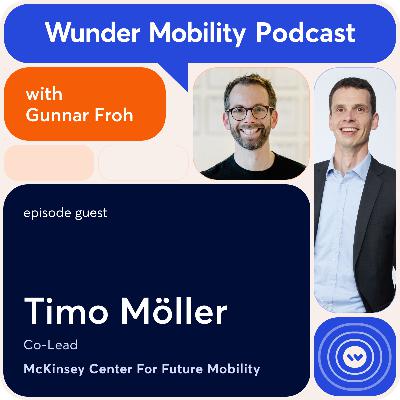
Dr. Timo Möller co-leads McKinsey's Center for Future Mobility, specializing in strategic and operational aspects of disruptive trends in the mobility industry, including connectivity, autonomous driving, electrification, and shared mobility. With two decades of experience, he has played a pivotal role in assisting both scale-ups and incumbents in the transformation of mobility businesses. As a partner based in McKinsey's Cologne office, Timo has led numerous research projects and contributed to the co-creation of various assets during his tenure at the firm. He holds a Diploma in Industrial Engineering and a PhD in Entrepreneurship.
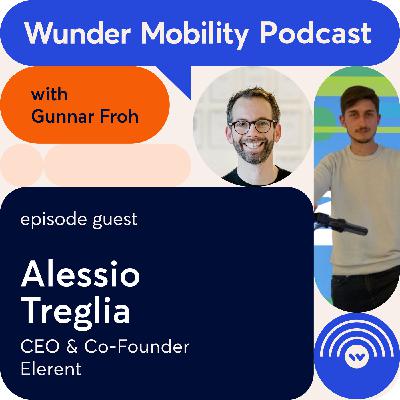
Alessio Treglia is the CEO and founder of Elerent, a shared mobility franchising operating in 60 countries around Southern Europe. By sharing their know-how and promoting the values of sustainability and safety, Elerent enables business owners to become franchisees and bring multimodal sharing mobility in their cities. In this way, mobility services are managed directly by local actors, who are in touch with the municipality, know city initiatives and hot points, and can manage operations faster and more directly. The ideal franchisee manages different businesses in the area, such as restaurants, hotels or other services, so it’s easy to create partnerships, marketing initiatives and offer discounts to riders. Elerent is 90% a franchising, with little operations managed directly from the team. For now, Elerent has no venture capitalists, relying only on their own profitability and franchising partnerships.
Before embarking on his shared mobility journey, Alessio worked for different types of franchising in Italy and Spain, such as food and retail. Mobility was a new thing for him, but an indeed fascinating ground to apply his deep knowledge to create a franchising in the sharing mobility sector.
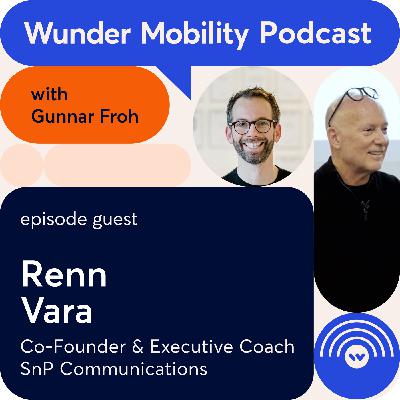
Renn Vara is the Co-Founder of SNP Communications, an acronym for "smart, nice people," a full-service communications agency specializing in high-performing leaders and teams. With over 30 years of experience, Renn is also a seasoned executive coach, having launched his career in 1992 on the staircases of Capitol Hill. Alongside his co-founder and wife, Mo, they have provided coaching to founders from Google to Airbnb, and even Wunder. Throughout the past decade, Renn has played a pivotal role in Wunder Mobility's journey, offering his guidance as he frequently travels to Europe. Presently, he resides and divides his time between San Francisco, New York City, London, and Istanbul.
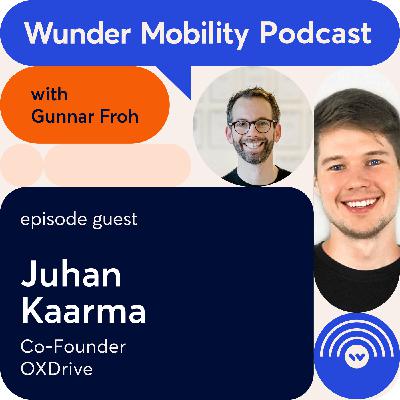
Juhan Kaarma is the Co-founder of OXDrive, an innovative and fast growing car-sharing company based in Latvia with Tesla EV’s in their fleet, among other brands. However, before launching OXDrive with his fellow founding partners, Juhan spent his early years dreaming of one day ending up on tech-crunch and even ended up building 2 SaaS businesses before he discovered his immense love for electric shared mobility.
Today OXDrive has enabled over 4 million km drives on zero emission, doing their part in accelerating the Baltic region to a better and sustainable future.
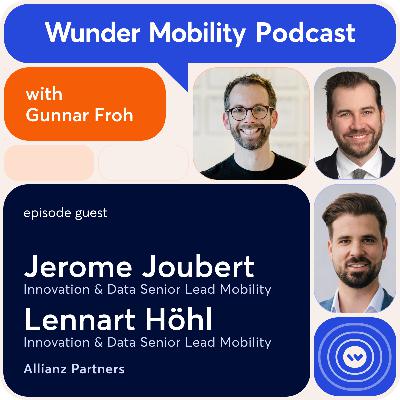
Jerome Joubert oversees Allianz Partners´ Mobility 2.0 initiative that addresses current automotive trends such as electrification, online car sales, telematics, and their impact on motor insurance. Lennart Hoehl is responsible for innovation and data-driven offerings, specifically using connected vehicle and sensor data to develop individualized insurance and services. Together at Allianz Partners, they collaborate to ensure adaptation to the evolving mobility landscape by offering compelling solutions to business partners and end customers.
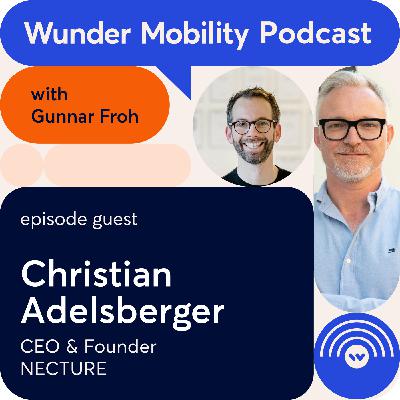
Christian Adelsberger, Founder & CEO of NECTURE, is driven by the belief that climate technology can significantly contribute to a sustainable future. After attending the University of Innsbruck, Christian tackled international challenges, from consulting at Accenture to leading Business Development at EVOLARIS. His passion evolved towards accelerating electric vehicle (EV) adoption among fleets, optimizing vehicle utilization and charging cycles. After 5 years of learning the ins and outs of collaborating with car-sharing clients, NECTURE aims to leverage machine learning and crowd-based operations to predict real-time demand and execute fleet movements efficiently.
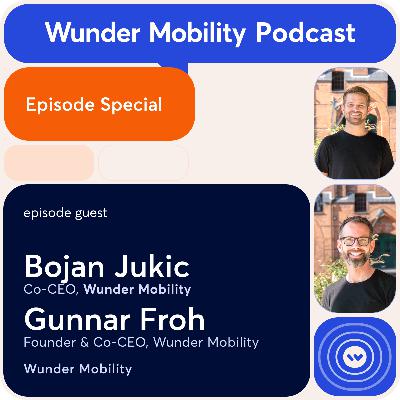
In this special episode of the Wunder Mobility Podcast, CEO Gunnar Froh sits down with GoUrban Founder Bojan Jukic to discuss the recent merger between the two companies. Bojan shares GoUrban's journey from its early days in moped sharing to navigating the challenges of the mobility industry. They also explore how the pandemic reshaped the market, leading to a shift toward efficiency and innovation.
Together, they reveal the reasons behind the merger and what this means for the future of shared mobility. Tune in to hear how their combined strengths will shape the next phase of the industry!
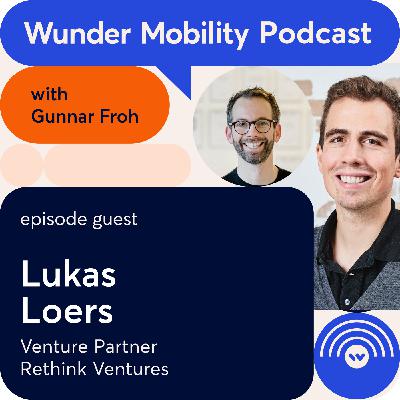
Lukas Loers is a Venture Partner at Rethinking Ventures, focused on investing in early-stage mobility and logistics startups across Europe, with investment tickets ranging from €500k to €1.5M. With over 14 years of experience in high-growth startups, M&A consulting, and venture capital, Lukas brings deep expertise in 2-wheelers, shared mobility solutions, and B2B SaaS models.
Previously, Lukas led corporate development for 2-wheelers at Mobivia and VIaID, and played a key role in scaling Wunder Mobility from 17 to 200 employees. Notable achievements include founding the Wunder Mobility Summit and securing significant venture capital funding. Trilingual in German, English, and French, Lukas is based in Brooklyn, NYC, and is passionate about sustainable, scalable business models.


Download from Google Play

Download from App Store
 United States
it was a brilliant talk with many worth full information.