


 Claim Ownership
Better Relationships After Baby
Subscribed: 10Played: 182
Subscribe

© Chelsea Skaggs
Description
Better Relationships After Baby helps parents nurture their marriage and connection while navigating life with a little one. Hosted by Chelsea Skaggs, each episode delivers expert advice, relatable stories, and actionable tips to improve communication, reignite intimacy, and find balance in your new roles. Whether you're facing sleep deprivation, shifting priorities, or longing for a deeper bond, this podcast is your guide to building a stronger relationship after baby. Tune in to rediscover love and partnership in this wild season of your life as lovers and parents.
116 Episodes
Reverse
Every year after Christmas, the same conversation resurfaces: moms waking up to empty stockings and the internet rushing in with advice to leave, rage, or declare the relationship doomed.But what if the stocking isn’t the real issue?In this episode, we slow the moment down and talk honestly about why this seemingly small disappointment hits so hard for so many moms and what it actually reveals about mental load, visibility, inherited patterns, and modern partnership.We read real posts from moms, talk through the full spectrum of reactions (from “it was an honest miss” to “this has been happening for years”), and explore why the empty stocking often becomes a quiet test of recognition, effort, and shared responsibility.This isn’t a hate-on-men episode.And it’s not a “just get over it” one either.It’s a grounded conversation about:Why this moment feels bigger than giftsHow inherited family patterns show up at holidaysWhen disappointment is information—not a verdictWhy “just tell him what you want” often doesn’t workHow couples can respond without blowing things up or sweeping it under the rugWe also share what actually helped us have one of our most connected Christmases yet and what we see help couples repair moments like this instead of letting resentment calcify.If this episode stirred something up and you want help having the conversation underneath the disappointment, we created a free guide called The Stocking Was the Symptom—a calm, honest conversation guide for couples who don’t want this moment to define their marriage.👉 postpartumtogether.com/stocking-problem-convo-guideIn this episode you'll also hear: A men’s group Mike is hosting on January 12th focused on emotional regulation, visibility, and showing up as a teammate at home👉 Link to men’s group registrationThreads referenced: @eliseoras@crfreund@sidneyraz@sheisapaigeturner@omgskrThis conversation is for parents who feel disappointed but not done—who believe growth is possible and want a better way forward.
Baby’s first Christmas can come with a lot more weight than most people talk about.The pressure to make memories. The logistics. The overstimulation. The quiet grief when it doesn’t look the way you imagined it would.In this episode, Chelsea and Mike talk honestly about what babies are actually learning during the holidays and why it has far less to do with gifts, photos, or traditions, and far more to do with tone, pace, and safety. We unpack how parental calm shapes a baby’s nervous system, why “making it special” often turns into performance, and how couples can protect their energy (and each other) during high-pressure seasons.This isn’t an episode about lowering your standards or forcing gratitude. It’s a permission slip to let this Christmas be real, slower, and more human, and to trust that presence matters more than perfection.If this season is highlighting exhaustion, resentment, or the need for clearer communication between you and your partner, this is exactly the kind of work we support couples with.You can learn more or connect with us at postpartumtogether.com.
The number one way to tank the holidays for your family isn’t burnt rolls, forgotten gifts, or a crooked tree. It’s walking into every room wound tight, resentful, and pretending your energy isn’t affecting anyone.In this episode, Chelsea and Mike break down what kids actually remember about the holidays (hint: not the matching pajamas) and why your nervous system becomes the emotional backdrop of the season. Drawing from Harvard’s Center on the Developing Child, Gottman’s research, and Polyvagal Theory, they explain how kids store emotional memories more deeply than the details of any event.You’ll hear real-life stories, honest confessions, and simple tools to help you pause before you snap, breathe through triggers, and become more of a thermostat than a tornado.Plus, they’ll walk you through practical ways to share the holiday mental load, so you’re not carrying 99% of the invisible prep while resenting everyone else.If the holidays feel heavy, you’re not failing. You’re just carrying too much alone. Let’s change that.In this episode, we talk about:Why the emotional climate of the home matters more than perfect food, outfits, or décorHow kids “remember” holidays in their bodies, not just with their mindsWhat research from Harvard’s Center on the Developing Child, Gottman, and Polyvagal Theory tells us about stress, safety, and childhood memoriesThe difference between being “yourself” and becoming an emotional tornado in a shared spaceWhy moms especially feel pressure to “make it magical” and how that pressure slides into performance modeCommon holiday nervous system triggers:Family dynamics that make you feel like you’re 12 againFinancial strain and gift pressureSchedules being completely off (bedtimes, routines, sugar, travel)A simple nervous system reset you can use in the bathroom, car, or closet in 20–30 secondsHow to take a pause without abandoning the conversation or triggering your partnerUsing micro-plans and 5-minute check-ins to prevent 80% of holiday resentmentHow to share the load before you explode (including using a “mental load brain dump” list together)10-Day Holiday Mental Load Series – short daily videos to help you regulate, set boundaries, and share the load this season.Holiday Mental Load Brain Dump / Template – get everything out of your head and into a shared plan with your partner.Our Current Offers for Expecting and New Parents – coaching, workshops, and resources at: postpartumtogether.com → “Current Offerings.”
You love your baby. You love your partner.But the holidays hit, and suddenly you’re the one tracking gifts, outfits, nap schedules, travel plans, and everyone’s feelings… while your partner is getting praised for bringing one pie.In this episode, Chelsea and Mike break down the mental load of the holidays for new parents—especially moms who are carrying the invisible work of making everything “magical” while feeling unseen, overextended, and resentful. You’ll hear real examples from couples they coach, why this season is so triggering, and concrete ways dads/partners can finally get off the sidelines and step into true teamwork.You’ll also hear exactly how to use our holiday mental load template so you’re not just venting—you’re getting that invisible work out of your head, onto paper, and divided fairly.What the mental load / invisible load actually is for new moms in postpartum and early parenthoodWhy the holiday mental load explodes for new parents (texts from family, travel plans, gifts, outfits, schedules, emotional baggage)How patriarchy and old gender scripts still show up at the holidays—even with “good guys” who want to be involvedWhy new dads often want to help but don’t have a model and get stuck on the sidelinesThe difference between “helping with one sliver” of a task vs. taking full responsibility for an entire category (like groceries, gifts, or travel)The Holiday Huddle: a simple weekly check-in to talk about what’s coming up, what’s stressing you out, and what needs to come off your plateA “power phrase” for the season: talk before you’re tired—so you don’t wait until you’re fried to bring up hard conversationsHow to pick lanes and stick to them (no last-minute surprises, emotional grenades, or hour-before-the-gathering invitations)A practical “one thing that matters most” ritual so every family member gets one prioritized experience instead of trying to do everythingWhy presence matters more than performance: choosing emotional connection over Instagram-worthy perfectionThe “take shifts” strategy at family gatherings so each partner gets time to actually enjoy themselves and have adult conversationThroughout the episode, Chelsea walks you through how to use the holiday mental load template as a conversation starter with your partner—so you can name what’s on your mind, divide responsibilities, and build a holiday rhythm that feels lighter and more connected.Free Holiday Mental Load Template / ChecklistGet your mental load out of your head and onto paper, so you two can actually divide responsibilities and plan your Holiday Huddle together.https://chelseaskaggs.kit.com/abd66c33ba👉 Book your Fewer Fights by Christmas Morning troubleshooting call.Come hang out with us on Instagram.
Modern parenthood wasn’t meant to be a solo project, yet so many new moms and dads are trying to figure it out in isolation. We scroll, read, and listen to every parenting podcast, but at the end of the day, it still feels lonely. The truth is, no amount of information can replace the transformation that happens in community.In this episode of the Better Relationships After Baby Podcast, Chelsea and Mike dig into the power of group connection — why real change happens faster when parents have support, accountability, and belonging. They unpack what science and psychology show us about group learning and why joining a Mom Group or Dad Group can radically shift how couples communicate and cope in early parenthood.Why you can’t self-help your way out of postpartum lonelinessThe science of co-regulation and why community calms your nervous systemHow group learning builds real-life communication skills (thanks, Bandura!)The difference between therapy and postpartum coaching and how they work togetherWhy peer support and accountability make new habits stickHow virtual groups for parents create connection, even when you can’t leave the houseWhat happens when one partner spirals, and how community creates a ripple of healing for the whole familyChelsea and Mike also share personal stories from their own experience running online parent groups for the past five years. From the first-time mom who finally said, “I’m not broken , I just needed other women who get it,” to the new dad who realized that he didn’t have to fix everything, just show up...these are the moments that remind us we were never meant to do this alone.Research continues to show that new parent support groups lower rates of postpartum depression and anxiety for both mothers and partners. Group coaching allows couples to learn and practice new skills in a safe, encouraging environment. Unlike anonymous online threads, a guided virtual group combines real relationships, evidence-based tools, and accountability that actually creates growth.In a season where life can feel like a blur of bottles, diapers, and exhaustion, having a space that’s just for you, one that helps you regulate, reflect, and reconnect, isn’t a luxury. It’s a necessity.Chelsea and Mike explain how postpartum coaching helps couples after baby rebuild their foundation. When stress runs high, our brains go into survival mode — fight, flight, or freeze. But in a group setting, you learn how to interrupt those patterns, communicate effectively, and show up as teammates instead of adversaries. It’s where you can practice the conversations you’ve been avoiding, get feedback from peers who are in the same season, and walk away with language you can use that same night at home.If you’ve ever ended the day back-to-back with your partner, each on your phones, wondering why connection feels so hard, then this episode is for you. Whether you’re an expecting couple, new parents in the thick of it, or a few years in and still trying to find your rhythm, community is the missing piece most families are craving.Chelsea and Mike’s Mom Group (Mondays at 7PM ET) and Dad Group (Tuesdays at 7PM ET) are small, virtual groups designed for real-life parents who want practical tools, a sense of belonging, and conversations that go deeper than social media highlight reels.Week One is free so there's no pressure, no performance, just a chance to see what it feels like to be part of a community built around growth and honesty.Tune in and learn why the future of strong families starts with strong communities.Questions? Email us chelsea@postpartumtogether.comonline parent group | mom group | dad group | new parent support group | virtual parent group | postpartum coaching | couples after baby | postpartum relationship coaching | parenting after baby | online parenting community | group coaching for parents | postpartum connection | support for new dads | support for new moms
When a new baby arrives, the whole family’s nervous system changes. In this episode, we’re talking about what helps families thrive in the postpartum season, especially how dads and partners can become the steady, emotionally present anchor their home needs.We break down:What it means to be anchored, not stoic (emotional presence vs. emotional shutdown)Why nervous system regulation and co-regulation are game-changers for moms, dads, and babiesTwo practical breathing tools (Wim Hof method + 4-2-6-2 pattern) that calm your body fastHow to create a “commute reset” to shift from work mode to family modeMicro-scripts for staying connected instead of defensive in tough momentsThe link between emotionally present partners and lower postpartum depression ratesThis conversation is for dads, partners, and anyone who wants to understand how emotional steadiness and nervous system awareness can transform postpartum relationships.Stay to the end for a short behind-the-scenes chat about how parenting, research, and humanity are evolving (and why this generation of parents has the tools to do it differently.)Resources mentioned: • DadVantage small group for dads • Confident Mom Reset program • Previous episodes on co-regulation & nervous system work • Wim Hof guided breathingpostpartum dads | postpartum relationships | emotional regulation | nervous system | co-regulation | anchored presence | steady partner | postpartum marriage | new parents | fatherhood | emotional connection | postpartum support | relationship after baby | breathing exercises | Wim Hof method | nervous system reset | mindful parenting | present father | postpartum mental health | mom and dad teamwork | emotional awareness | postpartum communication | gentle fatherhood | modern dad | postpartum coach | relationship coaching | family nervous system | calm parenting | parenting after baby | postpartum tips
In this solo episode, Mike Skaggs — co-founder of Postpartum Together — speaks directly to the men stepping into fatherhood, partnership, and purpose in a changing world.He shares a vision for a new kind of manhood—one built not on control or performance, but on presence, steadiness, and love. Drawing from his own experience in the NICU with his daughter, Mike reflects on what it means to protect through presence, to lead through calm, and to anchor your family through the chaos of postpartum life.This episode explores nervous system regulation, emotional safety, and how men can practice the strength that steadies everything else. Because your family doesn’t need a perfect man—they need a present one.Learn about working with Mike + Chelsea:Postpartum Together OfferingsBook a free connection call with us modern fatherhoodpostpartum dad supportnervous system regulation for menemotional safety in relationshipsfatherhood mindsetredefining masculinitymen’s mental health postpartumcoregulation in relationshipssteady partner after babynew kind of manhoodhow to be a present dadmindful fatherhood🔍 SEO Keywords
Early parenthood can fry your nervous system.Hello overstimulation, zero bandwidth, and snapping at your partner or kids. In this conversation, Chelsea and parent coach Manu Brune break down what co-regulation actually looks like between partners and with your baby, and how small, body-based tools help you move from survival mode to a livable rhythm. We name the signs of dysregulation (short fuse, shutdown, spirals), why routines can help or hurt, and how to use simple anchors—breath, movement, flexible rituals—to bring your system back online. We also talk about the pressure to do it all, and why community lets you “borrow calm” when yours is gone. If you’ve thought, “I should be handling this better,” this episode shows you how to build capacity instead of guilt.More about Manu and Beyond Birth Basics:Insta: Beyond Birth Basics: Parenting Reimagined (@beyondbirthbasics) • Instagram photos and videosWebsite:Beyond Birth Basics | Coaching in Columbus, OHPreorder her book: Book | Beyond Birth BasicsWork with Postpartum Together:Insta:Chelsea Skaggs || Relationship Coach for Parents (@postpartumtogether) • Instagram photos and videosCurrent Offerings:Chelsea Skaggs CoachingBook a free connection call : Calendlynervous system regulationco-regulationcoregulation in relationshipsdysregulation after babypostpartum nervous systemoverstimulation momsnapping at your partneryelling at your kidssurvival mode parentingparent burnoutpostpartum anxietyemotional regulation for parentsnervous system support for new parentsnervous system resetnervous system healing after birthrelationship after babyteamwork in parenthoodemotional safety in relationshipscalm communication in marriagerebuilding connection after babyparenting rhythm not routineflexible family routinesgrounding exercises for parentsmindfulness for moms and dadscapacity not perfectionborrowing calmmodern parenting pressureregulating togetherearly parenthood overwhelmpostpartum mental health
Becoming a dad after a baby arrives can shake a man to his core. In this episode, Mike opens up to share fears, emotions, and invisible battles many fathers face in the postpartum season. From feeling like they’re on the outside looking in, to wondering if they’re enough, we unpack what’s really going on behind the quiet moments and unspoken worries.We explore why presence matters more than perfection, how provision without connection can feel like absence, and what it looks like for dads to build their own parenting playbook. Whether you’re a new father, a partner trying to understand him, or someone supporting a growing family, this conversation will give you insight into the emotional landscape of modern fatherhood and how dads can thrive, not just survive, in this new role.Listen if you’ve ever wondered:Why dads often feel disconnected after a babyHow to bridge emotional gaps between partnersWhat it takes to feel confident as a new fatherWhy being present matters more than doing it allIf you’ve ever felt like you’re doing everything you can for your family but still wondering if it’s enough, you’re not alone.A quick connection call can help you figure out what’s really going on under the surface and how to start feeling like a team again.Book your free call here, and let’s talk about what support could look like for you two.Keywords: fatherhood, postpartum, emotional connection, presence, family dynamics, inadequacy, parenting challenges, support for dads, mental load, parenting playbook
In this second part of The Stories We Tell Ourselves series, Chelsea and Mike get into how the stories we carry in early parenthood shape connection, intimacy, and identity.They unpack why emotional disconnection and constant stress make couples feel distant, how to rebuild psychological safety, and why nervous-system regulation is key to closeness.You’ll learn:How to externalize negative stories and stop the spiral of resentmentWhat “matrescence” and “patrescence” really mean for your identity as parentsWhy emotional safety is the foundation for physical intimacy after a babyPractical ways to reconnect and repair when you’re both running on emptyWhether you’re feeling stuck in survival mode or missing the spark in your marriage, this episode offers real talk and practical tools to help you feel like a team again.Keywords: emotional disconnection after baby, intimacy after baby, postpartum marriage help, matrescence, new parent identity, nervous system regulation, relationship coaching, postpartum relationship adviceMentioned past episodes and links: Regulation and the Nervous SystemEmotional or Physical Connection, Which Comes First?MatresenceBook a connection call with us here to learn more about how we support pregnant, postpartum, and current parents in their relationships.
Conflict after a baby is inevitable, but it doesn’t have to break your relationship. In this episode, Chelsea and Mike go deeper than their Babies & Bumps workshop to unpack the real difference between couples who thrive and those who drift apart: Repair.You’ll hear:Why conflict itself doesn’t predict divorce, but failure to repair does (thanks, John Gottman).How rupture in relationships is like a muscle tear — painful, but with repair, it builds strength.The dangerous stories we tell ourselves about our partners and the antidote of curiosity.Practical tools like code words, repair steps, and “the story I’m telling myself…” to stop resentment from spiraling.Why humility and vulnerability matter more than being right.If you’ve ever felt like parenting is heavier because you’re not on the same team or you want to make sure your teamwork is solid before the baby arrives, this episode is for you.🔗 Links & Resources Mentioned:The Invisible Load: How to See it, Share it + Stop Resentment Before it StartsYou Can't Fix a Relationship From Fight or Flight: Conflict, Co-Regulation + Repair Prep for Us Coaching — October Cohort Interest Call
When your newborn goes to the NICU, nothing feels “normal.” In this honest conversation, author and creative director Emily Rosen shares the 16-day NICU journey with her son Max, the grief of leaving the hospital without your baby, and the small lifelines that help you keep going. We talk day-to-day NICU rhythms, supporting partners, what friends can actually do, and why Emily wrote Waiting for Max—a children’s book that helps siblings (and grown-ups) understand NICU life with hope, not fear. If you’re in it now or love someone who is, this one’s for you.Preorder: Waiting for Max Connect with Emily: Instagram @EmilyRosenCreative TikTok @Emily.Rosen.CreativeGuest: Emily Rosen — author of Waiting for Max, creative director, mom of two.Topics we cover:The moment plans change: premature labor, fast decisions, and naming laterWhat a “normal” NICU day looks like (feeds, skin-to-skin, rounds, notes)The partner dance: care, tears, pancakes, and trying to sleepWhat to say (and not say) to NICU parentsTiny practical love: Venmo, freezable food, pump-part helpSelf-compassion after birth trauma + letting go of “should”How Waiting for Max helps siblings process scary environmentsHope for the mom in the uncomfortable hospital chairBook launch details + why representation of NICU stories mattersTimestamps00:39 Intro + Chelsea’s NICU story02:19 Meet Emily + family03:49 Max’s birth + 16 days in NICU (SVT, feeding/growing)06:39 Why write Waiting for Max + who it’s for10:27 What those early hours really felt like14:09 A “typical” NICU day: feeds, hand-washing, rounds16:29 Partnering through stress, pancakes, and naps19:38 How friends can help (specifics that matter)21:32 Therapy, self-blame, and compassion23:39 Deciding to write the book26:46 The lobby moment + grief of not going home together31:38 A message to the mom in the chair33:33 Sunshine, short walks, tiny resets34:30 Where to find the book + who it helps39:15 Max today: DJ, dance parties, tender big brother40:34 What’s next: a “Waiting for…” series (surrogacy story)Schedule a connection call with Chelsea: Calendly.com/chelseaskaggs/connection-call
Ever feel like your brain has 27 tabs open—and none of them can close? That’s the invisible load of parenthood: The endless mental and emotional labor that keeps a family running but often falls on one parent without ever being named.In this episode, Chelsea and Mike break down:What the invisible load actually looks like in early parenthood (hint: it’s more than chores)Why it so often falls unequally, even in good partnershipsThe cycle of resentment it creates when it stays hiddenA simple 3-step framework—See it. Say it. Slay it.—to start redistributing the weight todayWhether you’re pregnant and wondering how to prepare, or already in the thick of diapers and daycare forms, this conversation will help you shift from scorekeeping to true teamwork.👉 Listen in, grab our free Mental Load Brain Dump Template (your new reset button), and if you’re ready to go deeper, book a Connection Call with us to talk about the kind of relationship you want to build.invisible load, mental load, cognitive labor, parental burnout, postpartum marriage, communication after baby, emotional labor, default parent, resentment in relationships, sharing household labor, postpartum relationship help, new parents support, relationship coaching, better after baby, parenting teamwork, marriage after kids, postpartum couples counseling, how to share the mental load, overwhelmed mom, dad involvement after baby
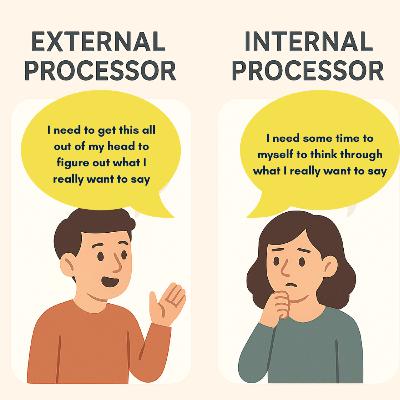
Tired of having the same fight on repeat with your partner? One of you wants to hash it out right now, the other goes silent, and suddenly you’re not even arguing about the actual issue anymore. You’re arguing about how you argue. Sound familiar?In this episode, Chelsea and Mike break down processing styles in marriage after baby—external vs. internal processors—and why these differences get louder when you’re tired, stressed, and stretched thin as new parents. You’ll hear how this dynamic showed up in their own relationship, why stress and flooding make small clashes spiral, and the simple tools couples can use to break the demand–withdraw cycle.Whether you’re an exhausted parent feeling stuck in the same arguments or a couple who wants to grow stronger after baby, this conversation will help you:Understand your own processing style (and your partner’s).Recognize the nervous system’s role in miscommunication.Use 4 practical tools to calm conflict and reconnect as a team.Because your baby deserves parents who don’t just survive parenthood, but thrive together.Book an connection call with us: CalendlyGet our go to questions for a 5-min daily check-in: 5 Questions to Stay Connected to Your Partner — Chelsea Skaggs Coaching👉 Tune in now and start building healthier communication in your marriage after baby.marriage after babycommunication after babyparenting and marriagecommunication styles in relationshipsdemand withdraw cycleinternal vs external processorcommunication breakdown in marriagenew parents communicationmarriage struggles after babyparenting stress and marriagepostpartum marriage struggleshow couples communicateconflict in marriage after kidsprocessing styles in marriagecommunication tools for coupleswhy couples fight after having a babyhow to improve marriage communication as parentspractical tools for better communication after babyhow stress impacts communication in marriageparenting, marriage, and communication tipscommunication hacks for new parents
Early parenthood has a way of putting every crack in your relationship under a spotlight. In this candid conversation, Chelsea and Mike pull back the curtain on the pain points they faced after having kids and the lessons they wish they’d learned sooner. From buried baggage that resurfaces under pressure to communication breakdowns and the mental load that nearly pulled them apart, they share the struggles, the breakthroughs, and the hope that comes with learning to work as a team.If you’ve ever thought, “Why didn’t anyone tell us it would be this hard?” this episode is for you. You’ll walk away with real-life insights and tools to help you save some heartache and start building the kind of connection that lasts through sleepless nights, identity shifts, and big transitions.ResourcesLearn more about our 6-Week Relationship Coaching Program: postpartumtogether.com/welcomeGrab your free Postpartum Planning Checklist: postpartumtogether.com/postpartum-planningBook a Connection Call with Chelsea: calendly.com/chelseaskaggs/connection-callPS: If this episode resonated with you, share it with a friend who’s in the trenches of early parenthood. And if you loved it, please take a moment to leave a 5-star review — it helps more couples find the support they need to thrive, not just survive, after baby.
Are you constantly saying “yes” when you really want to say “no”?In this episode, Chelsea and Mike get honest about people-pleasing, the “eldest daughter” martyr mindset, and how overstuffed calendars and invisible expectations quietly drain your marriage and family life.Together, they share how learning to set boundaries, stop overscheduling, and get clear on your values (instead of everyone else’s rules) can completely change the tone of your home. You’ll hear real stories about:Why saying no feels impossible (and why it matters for your marriage)How filling every blank space on your calendar sabotages connectionWhat happens when you stop living by other people’s rules and start living by your family valuesSimple practices that help couples create more rest, joy, and clarityIf you’ve ever felt stretched thin, stuck in “good mom” or “good spouse” mode, or unsure how to align as a family, this episode will give you a refreshing and practical perspective.✨ Want to go deeper? Join Chelsea and Mike’s Rewrite the Rules Workshop — a live, donation-based virtual event designed to help you uncover your core family values and use them as your compass for time, energy, and money decisions. Reserve your spot in the next workshop here: Postpartum Together EventsLearn more about Postpartum Together Coaching
On this off-the-cuff parenting podcast episode, Chelsea and Mike get real about fatherhood, parenting grief, and the pressure to be present.From crying at the bus stop to reflecting on kids growing up and what it means for your marriage, this conversation covers micro-griefs in parenting, dads and emotions, and communication in parenting.If you’re a mom or dad navigating parenting transitions and wanting to build stronger parent connection in your relationship, you’ll find yourself nodding along.🔗 Book your free parent connection call here: calendly.com/chelseaskaggs/connection-call🎥 And here’s the Kitty High Five we mention: Kitty High Five
Motherhood was never meant to be a solo act.In this episode, Chelsea sits down with Stephanie Fornaro, founder of Hello Nanny, to talk about why accepting help isn’t a weakness, it’s wisdom.We explore the emotional, relational, and practical layers of building your support system, from financial independence and partnership dynamics to the difference between nannies and family assistants. Stephanie shares her personal journey of overcoming guilt around getting help, and how her mission is empowering parents to thrive, not just survive.Whether you’re navigating postpartum, juggling toddlers, or simply craving more presence in your parenting, this conversation is your permission slip to drop the “do it all” mindset and start creating your own village.What You’ll Learn in This Episode:Why accepting help is a strength, not a failureHow financial independence impacts your relationshipThe difference between a nanny and a family assistant (and why it matters)How to build a support system that fits your family’s valuesThe role of one-on-one time with your kids in a busy seasonOvercoming the guilt of asking for helpResources & Links:Connect with Stephanie on the Hello Nanny siteFollow Hello Nanny on Instagram: @hellonannydotcomLearn more about relationship coaching after baby with Chels + Mike at Postpartum TogetherFollow Postpartum Together on Instagram: @postpartumtogether
Is your stress response a sign you're failing, or a sign you're human?In this episode, Chelsea and Mike get real about what stress is actually trying to tell us and how it impacts connection in relationships. We'll explore how everyday tension can become a source of strength if we know how to come back to safety, together.You’ll hear:The psychology of rupture and repair—and why it matters more than “getting it right”Why we break down when one person tries to carry the emotional load for bothHow friendship, co-regulation, and nervous system safety are deeply linkedPlus, the one question that can transform your relationships:“Do you have the capacity for this?”If you’ve been stuck in reactive conversations, missed signals, or simmering resentment, the first step back to each other might be simpler than you think.🎁 Download the Reconnection Kit—with 8 free communication scripts—to make your next hard conversation easier (and more productive).Learn more about working with us here.nervous system regulationco-regulation in relationshipsstress and resilience psychologywhy community matters for mental healthpostpartum nervous systemrepair after relationship conflict
“Let’s just figure it all out right now…”You’ve said it. Or your partner has. And before you know it, it’s 10:30pm, you’re in survival mode, and the ‘solution’ turns into another fight.In this episode of Better Relationships After Baby, Chelsea and Mike get honest about why trying to fix your relationship during fight-or-flight doesn’t work and what to do instead.You’ll learn:What happens in your brain and body during conflictWhy “just talking it out” often backfiresThe neuroscience behind repair and regulationHow to pause a fight without ignoring itTools you can use to come back together in a healthier, more connected wayThis is the next step after last week’s viral episode on feeling touched out. Together, they unpack what stress really does to our relationships and how to build safety, repair, and teamwork in the hard moments.“You can’t fix a relationship in fight-or-flight. But you can come back stronger.”🎧 Missed last week’s episode? Listen to: Touched Out: What Your Nervous System Is Trying to Tell You🔄 Reconnection Kit for Couples: Download Here💬 Work with Chelsea & Mike: Coaching OptionsReferences:Gottman Institute: Physiological Self-Soothing During ConflictNIH Study: Stress and Marital CommunicationKeywords:fight or flight in relationshipsrelationship repair after conflictnervous system and conflict resolutionpostpartum relationship strugglesco-regulation for coupleshow to stop fighting with your partnerstress and communication in marriageparenting and relationship stressemotional disconnection in relationshipsnervous system dysregulation and intimacy


Download from Google Play

Download from App Store
 United States
rubbish, not one piece of advice given. Just advertisement and self promotion.