


 Claim Ownership
The Tread Podcast
Subscribed: 7Played: 93
Subscribe

© Tread Athletics
Description
Tread Athletics
43 Episodes
Reverse

In this episode of the Tread Podcast, John Lantigua, Trey Goodrich, and Zach Warren break down how all three of them increased their velocity post-retirement. The answer comes down to this: years of coaching taught them what actually matters in a throw, and retirement gave them the freedom to fully apply it. The conversation digs into the real reasons behind their gains, simplifying their approach, identifying the three or four things that actually matter in a throw, and training without the pressure of a long season. From leaning into individual body types to hammering the weight room in ways they never did as players, each coach found their own path to throwing harder by finally understanding why certain mechanics work instead of just copying what looked good.
Kenny Serwa sits down with Co-Founder Ben Brewster and his former teammate, now Tread Performance Coach Cody Whitten, to reflect on the past year since signing with the Detroit Tigers. Kenny Serwa signed after participating in Tread Athletics Annual Pro Day in 2025.
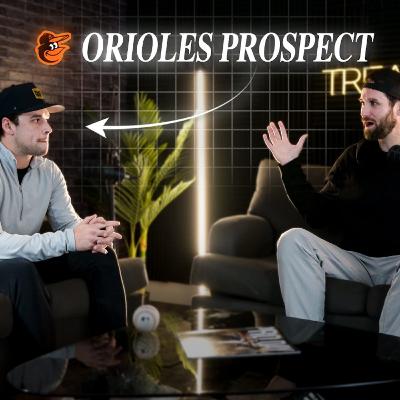
Sayer Diederich went from getting cut in indy ball and nearly walking away from baseball to becoming a prospect in the Baltimore Orioles organization. In this episode of the Tread Podcast, we break down his unconventional path, from velocity struggles and mechanical overhauls to refining an arsenal that finally got him noticed.
Ryan Flippo and John Lantigua sit down with Tread Performance Specialist and VP of Pitching for the Chicago Cubs, Tyler Zombro, for a deep dive into how pitching development really works at the highest level. They break down the difference between training and competing, how college and pro ramp-ups should actually be structured, and why most players peak at the wrong time. The conversation also covers workload management, deload timing, body changes, and how MLB organizations evaluate arms in today’s tighter roster landscape. If you want an honest look at what separates pitchers who move up from those who get left behind, this episode delivers.
What does pitchability actually mean and how do you train it?In this discussion, Tread Athletics coaches Craig Stem, Lucas Still and Chase Cunningham break down what separates pitchers who just throw hard from pitchers who consistently get outs. As velocity continues to rise across all levels of baseball, pitchability continues to be the true separator.This conversation covers how pitchability is developed over time, including command training, reading swings, sequencing hitters, and building effective game plans.
Are taller pitchers always better? Or do shorter pitchers have a hidden edge? In this video, we discussed the differences between tall and short pitchers. We compared delivery, mindset, and development challenges pitchers can go through depending on their height. We also delved into the concept that optimal lifting and power metrics can vary based on a player's size and physical leverage.
We've all seen "velo hacks" on the internet. Here are a handful of variables to experiment with that we have seen add small but significant bumps in velocity with certain pitchers. Don't view these as guaranteed quick fixes - view them as mini-experiments to quickly uncover if they can help clean up various pieces of your delivery. Sizable gains in velocity take time, and everyone has a different genetic ceiling.
Time Stamps:0:00 Intro6:30 How Do We Determine Mobility Targets?15:00 How Matt Marsili Moved As A Tight Mover31:50 How Past Injuries Can Affect Mobility46:16 Mechanical and Mobility Links46:50 The Linear Move51:20 Rotation55:00 Areas To Check Mobility In The Arm57:05 The Block1:00:08 The Arm Acceleration Phase1:05:05 The Arm Deceleration Phase1:07:45 North/South Vs. East/West Pitchers
What does it actually take to become a pro pitcher?In this episode of Around The Mound, former pros and current Tread Athletics coaches John Lantigua, Justin Nicolino, Craig Stem, and Paul Hall sit down to talk about the mindset it takes to make it, and more importantly, to stay.Each of them have a unique background that shapes their coaching philosophies. From affiliate ball struggles to rediscovering the joy of the game in indy ball, each coach shares how failure, adaptability, and relentless self-belief shaped their careers.Some awesome takeaways from this episode:💭 “Failures can’t define you, they’re your life lessons.”💭 “Be obsessed with keeping a jersey on your back.”💭 “Don’t lose that kid who fell in love with the game.”Timestamps0:24 – Backgrounds and Playing Careers2:30 – Paths to Professional Baseball8:25 – Lessons from Early Struggles14:45 – Developing a Pro Mindset21:10 – Mentality and Growth as a Player28:50 – Handling Pressure and Adversity34:30 – What It Takes to Reach the Next Level41:45 – The Grind and Sacrifice Behind the Dream50:20 – Final Reflections and Takeaways
Thanks for watching - it's been a wild ride over the last decade. We appreciate you all for joining us on this journey. Questions or comments? Let me know below.
Why is the back leg such a critical, yet often misunderstood, piece of pitching mechanics?In this episode, Ben Brewster sits down with Tread coaches Lucas Still and Paul Hall to break down the foundations of efficient lower-half movement and how it impacts everything up the chain.We cover:🔹 Why the back leg sets the tone for velocity, command, and arm health🔹 How to convert linear momentum into efficient rotation🔹 What “back-hip tension” actually feels like and how to train it🔹 Drills and cues to build better sequencing from the ground up🔹 How hip structure and foot angle change your ideal loading pattern🔹 Common misconceptions like “pushing off” and triple extensionIf you’ve ever been told to “use your legs more” but didn’t know how, this episode will give you a clear framework for understanding and developing an efficient lower half.
Three former upper 90 mph arms break down the mistakes they've made when they were athletes trying to throw harder and what to do instead.Timestamps: 0:00 The dangers of over-analyzing baseball throws with video3:06 The importance of understanding one's body8:33 The importance of video analysis for pitchers13:17 Long Toss18:40 The importance of training on a mound26:08 Lower Body Mechanics34:34 Implementing new theories41:03 Planning offseason throwing phases44:29 Importance of combining velocity and command training52:20 Mass = Gas?55:58 Weight Gain For Pitchers1:03:52 Balance between strength and mobility The episode was originally posted 5/1/2024.
Can you guess which MLB legend Josh Hader got his signature leg kick from?Learn about his leg kick, crossbody delivery, and how he prepares to close out MLB games in this conversation with Tread remote athlete and one of the best relievers of all time, Josh Hader.
Why do some changeups miss bats at the highest levels while others get hammered?In this episode, Tyler Zombro sits down with Ryan Flippo and Leif Strom to break down what makes elite changeups work, from velocity separation to vertical attack angle.We cover:🔹 Why vertical separation and VAA often matter more than raw movement🔹 Front-to-back velocity differential vs. angle manipulation for high-slot arms🔹 The kick change -- when it plays, when it doesn’t, and how to cue it🔹 Pronator vs. supinator grips and cues🔹 Splitter vs. changeup: trade-offs, finger dominance, and consistency concerns🔹 Common pitfalls like “pushy” catch-play changeups and slot deviations🔹 Practical starting points for remote athletes without advanced techIf you’re chasing a reliable offspeed pitch, this episode will give you a framework to evaluate your changeup, simple grip adjustments to try, and actionable cues that carry into real games.
Are you throwing the wrong fastball or just throwing it too much? We break down everything that goes into building a fastball that actually plays. From dead zone profiles and approach angles to deception, command, and usage. This is a full look at what makes a fastball effective at every level.What we covered:✅ How to fix dead zone fastballs✅ Vertical & horizontal approach angle explained✅ Fastball command vs outlier shapes✅ How fastball usage affects velocity, pitch design & recovery✅ College vs pro usage trends
Why is command so tough to train and why do so many pitchers get it wrong?In this episode, Ben Brewster speaks with Tread coaches Craig Stem and Turner Givens to unpack the mechanics, mindset, and drills that actually move the needle on command.We cover:🔹 Why you can (and should) train velocity and command together🔹 Mechanical red flags: direction, early torso, late/low arm timing🔹 How anatomy and mobility can limit command potential🔹 The role of vision, focal points, and effort level in consistency🔹 Case studies of arms who tightened up their misses without losing velocityIf you’ve ever been told to “just throw strikes,” this episode shows you a practical framework to identify your biggest command leaks, and how to fix them.
Most pitchers lose velo during the season not because they stop training, but because they train the wrong way.In this episode of Around the Mound, Tread coaches Ethan Dyer, Matthew Jordan, and John Lantigua break down how to lift in season without wrecking your performance. They cover how to manage volume, why most pitchers overdo it, and what smart in-season training actually looks like for high school, college, and pro athletes.If you want to stay strong, feel fresh, and keep your velo through the season, this episode is for you.
Why is command such a difficult, often-overlooked part of pitching development?In this episode, Ben Brewster chats with Tread Athletics performance coaches Craig Stem and Turner Givens to unpack the layers of command training, from biomechanics to the mental game.We cover:Why command is harder to quantify (and train) than velocityThe difference between command vs. controlKey metrics (walk %s, in-zone %, competitive location %, race to 2 strikes)Case studies of pros, college, and high school arms who transformed shaky command into consistencyCommon mistakes when blending velocity work with command trainingThe mental side: pre-pitch routines, focal points, and handling pressurePractical drills (bridge pitches, variability training, nine-pocket work)If you’re struggling to throw consistent strikes, this episode will give you a framework to identify your biggest command issues and actionable strategies to fix them.
Insightful interview with Ian MacDonald, the dedicated college recruiting coordinator and pitcher coach at Indiana Wesleyan University. MacDonald shares his passion for the college game, relishing the opportunity to guide players through a transformative stage of their lives. Listen as he delves into the nuances of pitcher recruitment, revealing his key evaluation criteria: control, command, velocity, and the knack for limiting free bases. MacDonald also sheds light on the importance of player development, emphasizing the need for coaches who can provide candid feedback and facilitate player enhancement.
0:00 Current role as a recruiting coordinator.
5:36 Evaluating talent at the high school level.
9:22 What college coaches look for.
19:23 Recruiting at a smaller school.
25:01 The misconception of division one baseball.
28:51 Recruiting
47:04 Red flags for high school players.
50:45 How coaches use high school athletes' social media in the recruiting process.
54:03 Common misconceptions high school players have about college.
1:01:24 Is it worth it to play on showcase teams?
1:08:43 The transfer process.
Carter Hope's journey from being a third baseman in high school to becoming a highly regarded pitcher and getting drafted in the third round by the Royals. Carter's transition to the professional level led to a destructive path fueled by addiction, which eventually led him to rock bottom.
Carter emphasizes the importance of admitting the issue, seeking positive influences, and not waiting for rock bottom to make positive changes.
If you struggle with mental health and addiction, reach out to Carter Hope at carterhope1995@gmail.com
-
0:00 Introduction
6:14 Drafted in the third round
13:43 Drugs and Alcohol
16:40 Strategies for the next generation of players
22:20 Mental Battles for Men and Athletes
25:23 Being a people pleaser vs. being an athlete
32:32 Learning to fall in love with baseball again
35:50 Living a life of purpose and meaning
45:19 Reinventing your mindset

Comments

Download from Google Play

Download from App Store
 United States