


 Claim Ownership
Icons of DC Area Real Estate
Subscribed: 5Played: 82
Subscribe

© 2019 Coe Enterprises, LLC
Description
An interview show with leading commercial and multifamily real estate participants in various disciplines. John Coe, a 41 year real estate finance professional, will interview many of his long time friends and past clients to learn about their backgrounds and what brought them into the income producing real estate business. He will probe into their career paths and what they have learned along the way, highlighting their successes, failures and lessons learned. Each episode will explore the interviewee's individual perspective and offer unique views of their particular expertise and where the trends are leading.
132 Episodes
Reverse
Bio Andrew McGeorge is Senior Managing Director and City Head of the Hines Washington D.C. office, overseeing new business development, acquisitions, asset management, and property management across the Mid-Atlantic. A Naval Academy graduate and Navy veteran, he built a career spanning residential construction at Toll Brothers, commercial office development at Monday Properties, and multifamily development at Fairfield Residential before joining Hines in 2020. He holds an MS in Organizational Dynamics from UPenn and an MBA from MIT Sloan, and is a LEED Accredited Professional and active ULI member.
Hines DC: Legacy & Vision [2:39] Andrew describes his City Head role and the goal to double Hines' Mid-Atlantic AUM over five years. Sitting in Hines' original DC office building—Columbia Square, delivered in 1986—he reflects on inheriting a 40-year legacy built by predecessors Bill Alsop and Chuck Waters and his commitment to being a worthy steward of it.
Background: Naval Academy & Early Life [7:49] Raised in Devon, Pennsylvania, Andrew credits athletics, the military, and academia for shaping his discipline. Lacrosse opened the door to the Naval Academy; he served as a Supply Corps officer in Yokosuka, Japan, then as an intelligence officer at the Pentagon before pivoting to real estate.
Building the Foundation: Toll Brothers, Graduate School & Mundy Properties [13:24] Andrew joined Toll Brothers' PM training program straight from the Navy, then earned an MS at Penn (while still active duty) and an MBA at MIT via the GI Bill—driven by a love of learning, not credential-chasing. A timely pivot to Mundy Properties in 2006 led him through the GFC, including the all-equity development of the LEED Platinum 1812 North Moore tower in Rosslyn with Lehman Brothers as partner.
Fairfield Residential to Hines [27:32] After overseeing Mid-Atlantic multifamily development at Fairfield Residential from 2016–2019, Andrew joined Hines to return to complex mixed-use environments. He reflects on navigating a rising interest rate environment post-May 2022 as the steepest learning curve of his career.
Key Projects: North Bethesda, Walter Reed & CityCenterDC [38:17] Three marquee projects: a transit-oriented data science hub planned for North Bethesda Metro station; the ongoing adaptive reuse challenges at the Parks at Walter Reed; and the "herculean" 2023 CityCenterDC refinancing—a $300M CMBS SASB deal closed with JP Morgan amid the SVB/Signature Bank collapse, the first such transaction in approximately 18 months.
DC Housing Crisis & The Affordable Housing Paradox [57:55] The region needs ~200,000 new homes by 2030 but has averaged only ~12,000 units annually since 2021. Andrew flags a frustrating irony rarely discussed publicly: developers are building affordable units willingly, but severe administrative obstacles are leaving those units vacant at CityCenterDC, Walter Reed, and the Wharf alike.
Growth Mindset, Sustainability & Billboard Message [1:10:17] Andrew discusses Hines' firm-wide LEED commitment and the ethical legacy of the Hines family. On mentorship, he reflects on a 20-year relationship with host John Coe, his original ULI mentor. His billboard: "The magic is in the work that you're avoiding"—a call to lean into discomfort, because nothing ever grows in the comfort zone.
Resources:Andrew McGeorge LinkedIn: https://www.linkedin.com/in/andrew-mcgeorge-62053b3/
Chapters
(00:00:00) - Indivents of DC Area Real Estate(00:02:35) - The Role of the City Head of Heinz Washington D.C(00:05:49) - Heinz D.C. Office: Growth Through Acquisitions(00:07:29) - How the Navy Influenced My Business Decision(00:12:04) - Favorite memory of a Navy pilot(00:12:38) - Real Estate Graduates at Toll Brothers(00:18:08) - Getting Out of College(00:20:00) - Pivot from Toll Brothers to Mundy Properties(00:22:18) - Former Mundy Properties Executives on Lehman Brothers Property(00:25:41) - The Westrights' role in Rosslyn's skyline(00:27:25) - When Brookfield Expands into Multifamily Development(00:32:52) - Chuck Waters on Reinventing the Real Estate Industry(00:37:51) - Heinz Properties' diversification away from office(00:39:49) - Exploring 1050 17th Street: An Interesting Acquisition(00:41:30) - Heinz Development's $15 Million Metro Station Mixed-Use(00:45:05) - Marriott Expands into Washington DC(00:49:22) - Developers on the Army Base Project(00:52:43) - The Hard Work Behind City DC Refinance(00:57:37) - Heinz Property Group CEO Discusses Current Market Conditions(00:59:03) - Would Heinz Be Forming a Home Builder?(01:00:16) - Washington DC Office Sales: Slow Growth Prospects(01:06:53) - Washington, DC Real Estate Investment(01:09:57) - North Bethesda Commercial Partners Lead Accredited Professional(01:11:19) - Leading with sustainability at Heinz(01:15:27) - INTEREST RATE ENVIRONMENT(01:17:40) - How to Balance Work, Family and Personal Well Being(01:20:55) - Marathon Real Estate Executive Advice(01:25:19) - What's the most fascinating part of the real estate industry? That(01:27:44) - Billboard Message: Growth(01:31:28) - A Mentee's Perspective on the Podcast
Bio
Patrick "Paddy" Weeks is co-author of The New Science of Hiring and VP of Operations at Tribunus Health. His career spans Marine Corps advisor teams in Afghanistan, Big Four consulting at Ernst & Young, and launching Sonder's DC market from Series B to 45 global markets and 2,000 employees. A Grove City College graduate and UVA Darden MBA, Patrick has spent five years synthesizing academic research on hiring into a practical framework for business leaders.
The Blank Sheet of Paper Problem [2:58–7:00] Finance, operations, and economics are taught as sciences — but hiring is treated as art. Patrick's MBA sparked the question: where is the science of selection? That gap launched a years-long research obsession and ultimately, the book.
From Midwest to Marine Corps [8:08–18:30] A soul-crushing Wall Street internship sent Patrick toward the Marines. Leading 20-man advisor teams through 125 convoys in Afghanistan taught him that pedigree matters far less than performance — a lesson that shaped every hire he'd ever make.
Military to Civilian – The Career Jungle Gym [18:31–23:49] The transition from machine gun convoys to an E&Y cubicle was jarring. Patrick shares why he views careers less as ladders and more as jungle gyms — and how the GI Bill, a Darden MBA, and strategic "attribute swapping" helped him find his fit.
Scaling Sonder – The Rocket Ship [31:21–40:55] As Sonder's first DC hire, Patrick scaled from 200 to 2,000 employees across 45 markets. He reveals what broke first (processes, always), what he hired for (high agency, low ego), and how a non-traditional banking hire became one of his best decisions.
The Firing That Scarred Him [47:13–50:32] Patrick opens his book with his worst professional moment: terminating a new hire just three weeks in. He ignored his gut, deferred to group consensus, and paid the price. It became the catalyst for learning the actual science of selection.
Proactive Personality & The Hustle Metric [1:02:45–1:10:16] For brokerage, BD, and PM roles, Conscientiousness is overrated. Proactive Personality — testable in a four-minute questionnaire — is the real predictor of who takes initiative without being told. Patrick explains why it's the moneyball metric real estate firms are missing.
Time Kills Deals — In Hiring Too [1:18:47–1:25:44] Every day a process drags, you lose ~10% of your candidate pool. Decision accuracy tops out after 3–5 interviews. The "meet all the partners" gauntlet isn't rigor — it's diffused accountability.
Integrity Testing, Simulations & AI Risks [1:10:42–1:18:21] Integrity testing delivers up to 4,000% ROI for on-site and PM roles. Work simulations outperform polished interviews. And training AI on past hiring data? You're just automating old biases — with new legal liability attached.
Resources: The New Science of Hiring by Patrick Weeks & Joy Giles | thenewscienceofhiring.com
Connect: LinkedIn – Patrick Weeks
Notable Quotes:
"I learned one of the hardest lessons in leadership: never hire someone you don't believe in, just because everyone else said yes. Because when the hammer drops, you're the one swinging it."
"If you don't have a system, you are the system."
"Real estate is complex... You're not buying someone's past, you're buying their future when you hire."
"After the fourth or fifth interview, you're not even changing your mind on any candidates. You're just going through the motions."
"One thing I saw and lived myself is that there's not really a career ladder and I think my conclusion is more like a career jungle gym. There are many different paths you can take, allowing for directional ch...
Chapters
(00:00:00) - Icons of DCRE Real Estate(00:02:31) - In the Elevator With Patrick Weeks(00:04:22) - Why Talent Selection feels like the highest leverage problem in real estate(00:07:53) - Entrepreneurs: Growing Up in the Midwest(00:11:00) - Military service drives men to the military(00:13:13) - Marine Corps Officer in OCS(00:15:10) - Marine Corps Leadership: Character and Experience(00:20:07) - Post-Servicemember MBA Advice(00:23:50) - How to Improve Your Hiring Process(00:31:01) - In the Elevator With Airbnb's DC Market(00:33:32) - How to Get Out of the Startup Job(00:34:46) - What broke first as you scaled? Systems, people, culture(00:36:31) - What was your lens for hiring at that point(00:38:23) - Hiring Dissident Talent(00:40:57) - Decisions Made: Big Four Consulting to Tech Startups(00:46:58) - The New Science of Hiring(00:50:34) - Analytics and Hiring in Commercial Real Estate(00:51:52) - Should Matching Resume Screenings With Worksimulations Be Cons(00:58:20) - Incentives are critical for jobs(01:02:23) - Have You Got What it Takes to Build a Business?(01:04:58) - Proactivity in the Workplace(01:07:24) - Interviewing 101: Polish vs Authenticity(01:10:17) - Should Commercial Real Estate Firms Treat Integrity Testing as Primary Risk Management(01:18:33) - Time Kills Deals in Real Estate(01:20:25) - The 3-to-5 Interview(01:24:38) - Bradley: On-boarding the Right People(01:29:56) - What About Making A Mistake?(01:31:18) - Leadership Lessons from the Marine Corps, Startup Life(01:33:41) - Hiring Mistake No. 1(01:37:17) - A message from Real Estate's Phil Knight(01:38:50) - In the Elevator With Patrick Beaks
Bio
Matt Hard is Senior Managing Director at Trammell Crow Residential (TCR). Previously worked at LCOR alongside his father Bill Hard (previous podcast guest), where he led complex urban developments including Union Market projects. Georgetown graduate (Political Science/English), JD/MBA from USC. Matt joined TCR in August 2020 during COVID while navigating family health challenges.
Show Notes
Introduction and Current Mandate [00:00:00-00:04:30] Matt's role at TCR and current strategy: tying up ground-up multifamily deals for 2029-2030 delivery, betting on supply constraints. Discussion of "untrended yield on cost" versus "trended yield" and underwriting challenges over two-year pre-closing periods.
Risk, Judgment, and Reputation [00:04:30-00:12:30] Managing $3-5M pursuit costs to closing. Timing as the uncontrollable variable in development. Preserving TCR's 75-year culture of integrity: "just because you can do something doesn't mean you should." Prioritizing reputation and repeat business over maximizing every dollar.
Family Legacy and Early Life [00:14:00-00:24:00] Growing up with Bill Hard, who left work at work and was "dad first." Maternal influence: high standards, humor, and grace during cancer battle. Georgetown liberal arts education. No early pressure toward real estate career.
Legal Background and Career Pivot [00:24:00-00:39:00] USC JD/MBA during 2008 crisis. Legal training teaching navigation of "gray areas" and corporate advocacy. Practicing 18 months before transitioning to principal side. Candid "nepotism" conversation joining father at LCOR, driven to "earn the chair."
The Learning Curve: LCOR Years [00:39:00-00:59:00] Construction as steepest learning curve—kept notebook of acronyms. Key deals: Union Market (complex Eden's partnership) and Moore Street (as-is acquisition teaching scrappy problem-solving). Lessons on institutional capital advantages versus entrepreneurial risk.
2020 Transition to Trammell Crow Residential [00:59:00-01:16:00] Joined TCR August 2020 amid intense personal crisis: mother's terminal cancer, wife's cancer diagnosis, COVID. Taking leadership role from Robbie Brooks. Contrasting LCOR's discretionary capital model with TCR's deal-by-deal capitalization and in-house GC advantages.
Corporate Identity and Market Philosophy [01:16:00-01:24:00] Clarifying Crow Holdings (private, family-held) versus Trammell Crow Company (CBRE subsidiary). Avoiding "illusion of self-dealing" with affiliated capital. Generational perspective: entering industry during 12-year bull run leading to potentially "rosy" underwriting.
Key Decisions and Market Outlook [01:24:00-01:39:00] Best deal not done: dropping two 2021 contracts saved seven-figure write-offs when market turned. Market correctly reading current stagnation but missing supply shock coming in 2026-27. Attainable housing challenges: DC regulatory demands suppressing supply despite affordability goals.
Future Trends and Advice [01:39:00-01:46:00] AI cautiously embraced for productivity but concerned about losing critical thinking and "human touch" in placemaking. Advice: "Execution is not a dirty word"—master unglamorous details (permits, utilities) to become credible dealmaker. Value attitude over aptitude; be relentlessly social.
Closing Thoughts [01:46:00-01:48:51] Billboard message: "Being right is not the same thing as being effective"—focus on goals, not proving correctness. Heartfelt tribute to father Bill and wife Alicia.
Chapters
(00:00:00) - Icons of D.C. Commercial Real Estate(00:00:51) - Interviewing Matt Hard(00:02:42) - Idols of D.C. Real Estate: Matt Hard(00:03:33) - Travel Pro Residential Company's(00:04:54) - Reasons to Underwrite Residential Projects(00:06:51) - What decisions carry the most weight right now in your day to day(00:10:55) - What responsibilities do you have for the company's culture?(00:13:01) - Reputation and Client Experience(00:13:42) - A Taste of Trammel Crow Residential Firm(00:14:31) - Bill Crow on Growing Up in a Real Estate Family(00:18:34) - In the Elevator With My Dad(00:19:36) - No Expectations From Parents For Their Career Plans(00:21:30) - Georgetown Law Student Matt McDonough on His College Decision(00:27:15) - Post-MBA Law: Learning the Business of Law(00:28:22) - Post-Law School Advice(00:34:30) - Risk and Leverage in the Law(00:35:58) - How I Transferred From Real Estate to Law(00:38:54) - Making the transition from litigation to real estate(00:40:20) - The Steeper Learning Curve at Alcor(00:42:41) - The Importance of the Entitlements Process(00:47:30) - How the Elcor Deal Changed My Thinking(00:48:16) - Developers Discuss The Union Market Deal(00:52:19) - Mixed Use vs. Retail(00:56:00) - What Discipline Do You Need to Have On Civil and Utilities?(00:59:38) - Exploring Trammel Crow Residential's Union Market Presence(01:01:50) - Tim Wood on Leaving Covid(01:04:04) - Elcor Residential vs Trammel Crow Residential(01:10:18) - Executives on the Mack Truck Pipeline(01:14:17) - What part of Development or Capital is most misunderstood?(01:16:36) - Trammel Crow Residential and Crow Holdings(01:22:32) - Does Gen X Affect Your Underwriting?(01:28:39) - What Risk Did The Moore Street Deal Teach You?(01:30:07) - Cap Rates: Are We Only Reading This Moment?(01:32:03) - Affordable Housing and the Need for More Supply(01:35:54) - Will AI Help or Hurt the Money?(01:40:44) - Excellence in Development: Advice for New Professionals(01:46:24) - How to Manage a Business With Your Dad(01:46:49) - Being More Effective Than You Think(01:48:06) - A Few Words for the Chair
Bio
Bill Norton serves on the Board of Directors for The Chevy Chase Land Company, chairing its Investment Committee. He retired from Northwestern Mutual Real Estate in 2015 after a 41-year career, including 22 years as Regional Director of the Washington D.C. office—the firm's largest, overseeing $9 billion across 13 states. Norton began in Northwestern's Detroit office in 1974 after earning his MBA from the University of Michigan. Known for construction-to-permanent loans and relationships with The Bozzuto Group, Boston Properties, and Macerich. Staunch advocate for "boots on the ground" philosophy.
Key Chapters
Introduction and Detroit Roots [00:00:00-00:04:30] Shared Detroit real estate history from 1979. Norton's fortuitous 1981 DC move, narrowly avoiding Detroit office closure.
Capital Steward Role [00:04:45-00:09:00] Chairing Chevy Chase Land Company Investment Committee. Shifting from deal-making to oversight, staying big picture focused.
Boots on the Ground Philosophy [00:09:00-00:15:00] Real estate remains physical. Truck terminal story where photos deceived but site visit revealed truth, proving digital data can't replace inspection.
Childhood and Education [00:15:30-00:22:00] One of eight children in Elmira, NY. 1972 flood devastation led to Michigan MBA scholarship.
Early Underwriting Era [00:22:10-00:29:30] Green spreadsheets, HP-12C calculators, dial-up connections, rotating fax machines. Pre-computer institutional real estate.
High-Interest Rate Crisis [00:29:45-00:38:00] "Disintermediation" when rates soared. Northwestern out of market 18 months, merged equity/mortgage groups.
Building DC's Largest Office [00:38:20-00:46:00] 22-year Regional Director tenure. Strategy: repeat business with trusted partners versus chasing deals.
Legendary Partnerships [00:46:15-00:55:30] First Bozzuto joint venture at Vienna Metro. $750M Tysons Corner financing with Macerich/Alaska Permanent Fund.
Early 90s Survival [00:55:40-01:05:00] "Stay Alive to '95" mentality. Working with Boston Properties, Charles E. Smith during turbulent years.
Office Conversions Reality [01:05:10-01:15:00] Skepticism on widespread conversions. Park and Ford success story. Wilco's 20th & L project. Floorplate/demand challenges.
Creative Deal Structures [01:15:00-01:30:00] Construction-permanent loans. Jersey City condo conversion. Second mortgage participations. Rate lock stories and relationship banking.
Working with Developers [01:30:00-01:45:00] Bozzuto relationship evolution. Fountains and free libraries. Julie Smith property management brilliance. Jersey City management deal.
Tysons Corner Deep Dive [01:37:00-01:42:00] Ted Lerner ground lease history. Macerich/Alaska partnership. Cross-easements complexity. Boston's most complicated deal.
Data Centers and Land Values [01:27:00-01:35:00] Lerner's Gainesville parcel: $300-400M for data center use. Technology risk concerns. Northern Virginia valuations. Small nuclear power questions.
Today's Bifurcated Market [01:33:00-01:40:00] Flight to quality. $100 triple-net new construction versus $40 older space. Mixed-use future. Trophy malls versus everything else.
AI and Human Judgment [01:43:00-01:50:00] AI's underwriting potential. The irreplaceable: understanding nuances, feeling properties, gut instincts. Wilson building example—smell, sound, presence matter.
Next Generation Wisdom [01:50:00-01:55:00] Learn tools: AI, finance, construction. But interpersonal skills trump everything. Join organizations. Maintain relationships. Avoid burning bridges.
Reclaiming Humanity [01:55:00-01:57:00] Billboard message: "Let's reclaim our humanity. Let's be truthful." Gratitude for 41-year career built on trust.
Chapters
(00:00:00) - Idols of D.C. Real Estate(00:03:50) - Bill Norton on Washington D.C. Real Estate(00:05:25) - Brad Feld on His Role as Capital Steward(00:06:43) - Commercial Real Estate: Too Much Underwriting(00:08:27) - In the Elevating the Business of Trump(00:09:07) - Are We Too Fearful About Office-to-Residential Conver(00:10:13) - Exploring Office Conversion in Alexandria(00:14:25) - Commercial Conversion to Residential Building(00:15:40) - Bill Moyers on Growing Up in Elmira, New York(00:18:52) - Getting your degree during the flood(00:21:31) - Real Estate Profits at Michigan(00:23:53) - The professor who inspired me to get into real estate(00:27:16) - The Good Underwriting at Northwestern(00:28:01) - Mortgage Equity Deals at Northwestern Mutual(00:31:12) - Joint Ventures at Prudential(00:35:16) - What Was The First Real Estate Deal That Humbled You?(00:39:09) - Northwestern Mutual's Hotel Deals(00:39:50) - Washington Mutual Lending Group on Detroit's Growth(00:44:14) - Northwestern Mutual's Washington Real Estate Office(00:48:52) - Real Estate: Cash Flow, Capital Expenditures(00:52:56) - Copley's First Equity Relationship with Tom Bazzuto(00:56:54) - Real Estate: The Cycle(01:03:04) - What Differentiated Prudential from Goldman Sachs?(01:07:11) - One Loan Officer on Too Risky(01:10:37) - How Principal Mutual Underwrote Our Loan(01:15:07) - Mortgage Broker: The Rate Lock(01:21:08) - What's the Decision You Made That Hurt Your?(01:25:50) - Capital discipline versus entrepreneurial necessity in the real estate market(01:28:14) - Real Estate Profits(01:29:32) - The Valuable Land Near Dulles(01:32:18) - Will Office Mixed Use Be Overhyped?(01:35:31) - The Story Behind a Multifamily Development in Washington(01:39:45) - Macerich on the Eden Spot Property(01:43:00) - How AI Is Affecting Commercial Real Estate(01:45:13) - Real Estate: Human Feelings(01:48:01) - Paul Busuto on Pizzuto Property Management(01:52:51) - What Skills Should Commercial Real Estate Professionals Build?(01:55:19) - What Would a Billboard Say on the Capitol Beltway?(01:56:13) - A Farewell Message from Northwestern's Bill Fitz
Bio
John C. Coe is the founder of Coe Enterprises, an advisory and content studio focused on strategic counsel for real estate and civic leadership. For over six years, he has hosted Icons of DC Area Real Estate, conducting thoughtful conversations with industry leaders. Previously, he founded the Iconic Journey in CRE, a nonprofit platform that fostered intergenerational dialogue and community building in the DC commercial real estate sector. As he prepares to relocate to New York's Hudson Valley in 2026, John reflects on structural transitions, legacy, and the difference between scaffolding that serves temporarily and foundations built to endure.
Key Chapters
Scaffolding: The Opening Metaphor [00:00:00-00:07:00] Opening with scaffolding wrapped around buildings—temporary structures enabling permanent growth. Gary Rappaport: "We don't build centers, we build Saturday morning memories." The Iconic Journey in CRE served as scaffolding, holding early confidence, vulnerable questions, and multi-generational dialogue. "Scaffolding is not an insult. It is a compliment of the highest order."
Ripples & Pebbles: Building Networks [00:07:00-00:11:00] Brad Olson: "You don't build networks, you toss pebbles and ripples do the rest." A personal story of an introduction that took five years to become a capital partnership. Brad tosses pebbles as an ethical posture, not a transaction. After enough ripples overlap, bridges form.
Bridge Builders: Carrying Load [00:11:00-00:17:30] "Bridges aren't neutral. They carry load." Tom Buzzuto: "People don't want luxury, they want dignity." Bridge builders absorb conflict, translate perspectives, prevent fractures before anyone knows a fracture was possible. Story of two DC leaders headed toward conflict, resolved by quiet presence. "Structural leaders think in load paths, not headlines."
Load-Bearing vs. Decorative Change [00:17:30-00:24:00] Bob Kettler: "The downturn doesn't change you, it reveals you." Contrast between decorative change (new branding, titles) versus structural change (clear decision authority, simplified reporting, accepted responsibility). Repositioning changes the story; shoring changes the structure. Personal transformation requires shifting from central to foundational roles.
Jane Jacobs & The Soul of Streets [00:24:30-00:28:00] Jacobs' insight: safety and vitality emerge from ground-up human presence through mixed-use development and the "sidewalk ballet" of daily life on thriving streets. Ray Ritchie: "You can't rush a neighborhood." "You can finance buildings, you can't finance belonging."
The Transition: IJCRE to Coe Enterprises & Station DC [00:28:00-00:34:00] Internal transition before external: shifting from center to foundation, from carrying weight to distributing it, from owning identity to stewarding legacy. IJCRE concludes its scaffolding purpose. Coe Enterprises emerges as John's advisory platform. Station DC, led by Sam Glass with "pro patria" ethos (for the good of place, profession, next generation), becomes the new framework. Sam's defining moment: "If we don't know who we're serving, the market will decide for us."
What Endures: Five Commitments [00:34:00-00:37:30] "People always ask what changes, but the wiser question is what doesn't?" Five load-bearing commitments: (1) ethical grounding, (2) relationship-first thinking, (3) intergenerational responsibility, (4) long memory, (5) service over supremacy. For listeners in their "load-bearing season": "You are being prepared for structural responsibility, not decorative accomplishment."
The Scaffolding Comes Down [00:37:30-00:39:40] Workers arrive, bolts loosen, platforms descend. What remains: "A building standing wholly on its own strength." IJCRE completes its purpose. Coe Enterprises refocuses. Station DC rises. Icons interviews resume 2026 at on...
Chapters
(00:00:00) - Icons of DC Area Real Estate(00:02:08) - Jane Jacobs and the Soul of DC(00:03:42) - What remains when the scaffolding comes down(00:07:49) - The Ripple of Bridges(00:14:25) - The Role of Bridge Builders(00:23:03) - What is Repositioning and Shoring?(00:25:05) - Jane Jacobs: The Death and Life of Cities(00:28:50) - The Iconic Journey in CRE: The Structural Shift(00:36:55) - What's Your Load Bearing Season?(00:38:28) - A Moment of Community Building at CO Enterprises
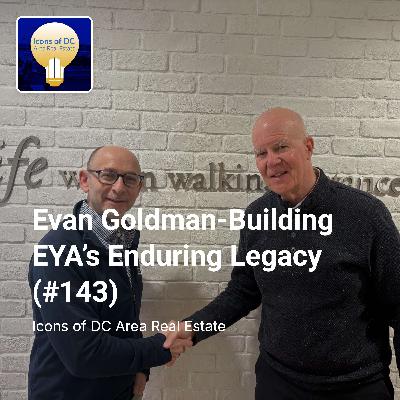
Bio: Executive VP of Acquisitions and Development and part-owner at EYA. MBA from Wharton, Environmental Psychology training from Cornell. Led Pike & Rose development at Federal Realty before joining EYA to continue Bob Youngentob's vision.
EYA's Evolution [00:00:01-00:06:31]: Goldman became EVP when he and partners became part-owners. Recent passing of Founder Bob Youngentob, who created sustainable long-term transition plan five years before illness. Goldman, Jack Lester, Akash Thakkar, and McLean Quinn are four of five owners. Time split: 1/3 acquisitions, rest development, focusing on vision, economic viability, and implementation. Core business remains townhomes (3-10 acre sites with high entitlement barriers), but dramatically expanded into commercial mixed-use, master planning, and substantial multifamily practice over 15 years.
Origin & Education [00:09:34-00:23:45]: Grew up in Suffern, NY in economically unstable household with gambling father (Atlantic City trips as "vacations"). Turned to drawing/sketching houses as outlet and coping mechanism. Early hotel exposure sparked design fascination. Attended Cornell's Design Environmental Analysis program combining interior architecture with Environmental Psychology—studying how spaces psychologically affect people (McDonald's loud, hard-seated quick-turnover design vs. fine dining comfort). Small 11-person cohort provided mentorship and stability.
Career Journey [00:23:45-00:35:48]: BBGM architecture firm → Mandarin Hotel competition (Tishman Speyer) loss convinced him developers drive key decisions → Russian Tea Room $30M renovation as VP of Design at 26 under perfectionist Warner LeRoy (briefly fired, then brought back with scholarship) → Wharton MBA → Tishman Speyer → Holiday Corp → Federal Realty. Advice for young professionals: Get lots of "reps" on different projects early. Leverage your strengths while staying multidisciplinary enough to ask right questions. Be bold, take calculated risks, "go first"—don't wait for permission.
Pike & Rose [00:44:48-01:13:01]: Led Federal Realty's 24-acre Mid-Pike Plaza transformation (original Toys R Us site). Massive entitlement: 29M sq ft approved required 80+ community meetings in one year. Hired political organizers (Dewey Square) to combat opposition and build support through polling and targeted outreach. 2008 recession required phased approach with interim and ultimate plans. Collaboration with Don Wood, Street Works, Sandy Clinton, Paula Reese balanced vision with economics using Federal Realty's corporate debt advantage. Key insight: Retail knowledge and street-level activity are foundation for best mixed-use projects. Created Project Visioning Committee (PVC) meeting bi-weekly for Bob Youngentob knowledge transfer to next generation, ensuring design rigor. Goldman frequently asks "What would Bob do?"
Key EYA Projects [01:18:55-02:37:01]: Montgomery Row: IBM office-to-residential in Rock Spring Park office park. Strathmore Square: Holy Cross Seminary partnership, first geothermal trial. McMillan Reservoir: 15-year effort with JAIR Lynch/Trammell Crow, city handled historic sand filtration restoration, 20-30% affordable housing, overcame legal challenges from external opponents. Graham Park Plaza: Loehman's Plaza retail conversion to attainable smaller townhomes (14-foot units at $600-650K). Robinson Landing: High-end Old Town Alexandria waterfront condos ($1,000+/sq ft), became largest archaeological dig on Eastern Seaboard after discovering three Revolutionary War ships—14-month work stoppage, $7M+ archaeology costs. Providence Reimagined: 25-acre hospital site requiring $30M demolition and complex utility replacement for operating medical office buildings.
Competitive Edge: In-house construction company provides pricing structure competitors lack. Willing to ta...
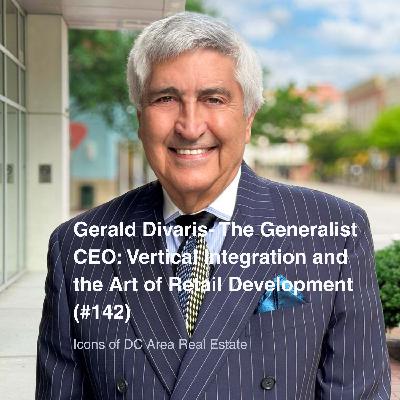
Gerald Divaris is Chairman and CEO of the Divaris Group, a vertically integrated commercial real estate enterprise. Co-founded Divaris Real Estate (DRE) in Cape Town, South Africa (1974), relocating to Virginia Beach (1981). DRE manages 40M+ sq ft across 15-16 U.S. cities. Visionary behind Town Center of Virginia Beach. Inducted into Hampton Roads Business Hall of Fame (2024).
Company Strategy and Structure
Primary Focus [3:25] CEO responsibilities center on exceeding client expectations, ensuring cohesive teamwork embodying company ethos, and platform growth.
National Operations [4:20] Maintains standards across 15-16 cities through personal CEO visits (monthly/bi-monthly) and "Principal in Charge" in each office embodying firm philosophy.
Employee Model [6:24] Unlike industry peers, DRE agents are salaried/on draw vs. independent contractors, ensuring clients receive controllable service rather than commission-driven behavior [7:50].
Vertical Integration [8:55] Retail deeply engrained from family retailer background. Development's longer lead time/higher risk suits stable employee model. Retail is "glue" in mixed-use developments, providing street-level vibrancy attracting office/residential tenants.
Realty Resources Network [12:09] Provides national platform of best-in-class local brokerages for seamless nationwide service. Smaller engaged networks led by "deal junkies" [17:23] outperform large publicly-traded firms with heavy infrastructure costs.
Management [19:32] "Overbalanced on corporate infrastructure" using salaried professional managers, freeing deal-makers to "lead by example."
Origins and Generalist Philosophy
African Origins [22:14] Born in Rhodesia (now Zimbabwe), moved business to Virginia Beach 1981. Smaller South African economy created "generalist" approach [24:22] across product types—essential for mixed-use development.
Retail Family Background [27:21] Greek merchant family from Cephalonia [28:44] owned department stores, liquor stores, groceries. Started working age 10 [30:01], learning customer assessment and merchandising strategy.
Art of Retail [32:45] Store deployment is art, not science. Placemaking engages all human senses—family's florist shops used tuberose scent near door [37:28] to pull customers inside. Experiential retail critical [42:23]—Barnes & Noble survived Amazon through "storytelling" and reading experiences.
III. Town Center of Virginia Beach
Opportunity [45:24] Virginia Beach: largest Virginia city by population but lacked CBD. Strong economy, tourism, minimal national broker competition. "Rough diamond" with suburban sprawl needing heart and soul.
Military Economy [50:40] Hampton Roads houses NATO headquarters, major cyber command, world's largest naval base. Demographics underreported 28% [59:41] due to "hidden economy"—young military retirees with full pensions, free medical, VA loans not counted in salary reports.
Mixed-Use Success [55:31] Town Center became city's "heart and soul," attracting institutions. Westin (40 stories) is Virginia's tallest structure—iconic landmark.
TIF Financing [1:21:10] Public entities own parking garages, Performing Arts Center, roads. Funded through TIF (Tax Increment Financing) above 1999 baseline. Changed city charter (1980s) to permit financing. Free parking key to walkability/density success.
Post-COVID Growth
50th Anniversary & Expansion [1:04:03] DRE celebrated 50 years (2024). Stayed open throughout COVID [1:04:31], viewing it as opportunity. Acquired McGarey Group (entertainment/sports development expertise) [1:08:15].
D.C. Market [1:09:05] Greater Washington expansion (May 2024) services Northern Virginia requi...
Chapters
(00:00:00) - Idols of D.C. Area Real Estate(00:00:51) - Meet Joe Gerald Devares of The Navarros Group(00:03:02) - Top Executive Interview(00:05:12) - Do You Model Your Firm After a Competitor?(00:06:07) - Independent Contractors and their culture(00:08:37) - The Importance of Retail Leasing at Devarus Real Estate(00:11:33) - Devares Real Estate Networks affiliation(00:15:45) - Service of the National Client(00:18:20) - How Do You Manage People?(00:21:48) - Real Estate Lessons Learned from My African Origins(00:24:47) - Real Estate(00:27:13) - Were your parents immigrants to South Africa or your grandparents(00:32:10) - Retailers: Professionalism is Hard(00:32:29) - Walmart Store Deployment: An Art(00:40:04) - On The Evolution of Retail Experiences(00:45:06) - Virginia Beach Realty: The City Center(00:49:07) - Exploring the economy of Tidewater, Virginia(00:52:43) - The Alex Devares Memorial Scholarship(00:55:13) - Exploring Virginia Beach's Town Center(00:57:46) - Virginia Beach Town Center: Hidden Economy(01:01:27) - Hampton Roads Business Hall of Fame(01:05:19) - McGarry & Margarita Real Estate Under the Realty(01:09:15) - The Washington Metro: Devarus Group's National Growth(01:10:37) - Vertical Integration at Navarro's Group(01:11:43) - Rejuvenating a Shopping Center in Newport News(01:17:28) - Retail Experience: Digital and In-Person(01:23:04) - Economy of Mixed Use Centers(01:25:03) - Attracting Employees Back to the Office(01:27:42) - Public Private Partnership for the Town Center Project(01:28:52) - Explained: Tax Increment Financing(01:31:34) - Novara's Commitment to Community(01:33:45) - Billboard Ask: Live Life(01:35:30) - A US Citizen's Message
Bio
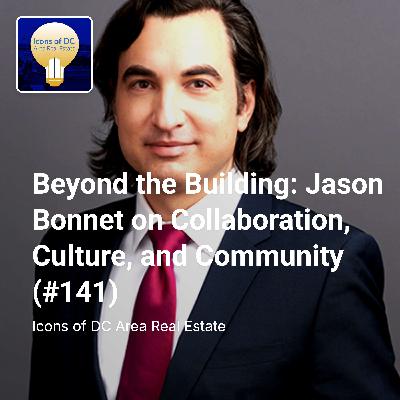
Jason Bonnet is Chief Development Officer at Essen, a next-generation development firm. Previously led East Coast Commercial Development for Brookfield Properties ($7B pipeline) and Forest City Realty Trust. Career spans $5B+ development: 4,000+ multifamily units, 1M sf office, 500K+ sf retail. Started Bonnet Development post-UNC. USC MRed, Harvard Business School alumnus.
Key Discussion Points
[00:00:09-00:04:24] Introduction: Background with Forest City, Brookfield, founding Esen.
[00:04:59-00:09:33] Esen Overview: Team of former Forest City/Brookfield executives. Large-scale mixed-use focus, 5,000+ unit pipeline across NY metro, Southeast, Midwest. Lead project: $1.5B Jersey City waterfront (2-3% vacancy, strong demand, Manhattan views, PATH access).
[00:09:55-00:14:01] Early Life: Silver Spring upbringing on Queen Anne's Drive. Father: electrical subcontractor (construction exposure). Mother: Fortune 100 HR executive (negotiation skills). Film production aspirations (Stanley Kubrick) led to real estate. Springbrook High School, UNC.
[00:17:00-00:23:42] Bonnet Development & Pivot: Started company post-dot-com doing Shaw rowhouse conversions (sub-$2M projects). Partnership accounting dispute taught fiduciary responsibility, when to settle vs. litigate. ULI mentorship (Marcel Acosta) led to USC MRed for institutional scale jump.
[00:31:57-00:44:17] Forest City & The Yards: Joined 2011 via mentors Stan Ross, Brian Jones. Debby Ratner Salzberg valued entrepreneurial spirit. 48-acre Southeast DC mixed-use. P4 partnership (DC, GSA, Navy). Eleanor Holmes Norton championed waterfront access. Complex brownfield remediation - Forest City as government agent. Lessons: team collaboration, coalesced vision, passion. DC renaissance period - competitive but collegial, rising tide lifts all boats.
[00:48:17-00:57:26] Yards Development Strategy: Creating neighborhood not just place. Flexible entitlements framework. Retail strategy: Blue Jacket Brewery opened before Harris Teeter - people knew brewery before "The Yards" name. Chef Michael White's Osteria Morini gave legitimacy. Ice Cream Jubilee (attorney turned businesswoman) first location. Attention to detail, patience choosing tenant partners, commitment to long-term success. Retail foundation critical - most complex, detail-oriented real estate sector.
[00:59:18-01:06:43] San Francisco Projects: Led 5M (Fifth & Mission) and Pier 70 after Brookfield acquisition. Biggest difference: intense NIMBYism - sometimes no win-win possible. CEQA (California Environmental Quality Act) extends entitlements 8-10 years via traffic study challenges. 5M took 10+ years. Pier 70: fastest California entitlement approval in history via transparency, over-communication, hundreds of community meetings, port authority partnership alignment.
[01:09:18-01:13:50] Scale & Affordability Philosophy: Density builds economy of scale, feeds project economics. More eyes on the ground plane = vibrancy,...
Chapters
(00:00:09) - Idols of D.C. Area Real Estate(00:04:25) - Essen Real Estate's New Chief Development Officer(00:06:52) - What Excited Investors to Take on The Jersey City Project?(00:09:35) - In the Elevator With Rich People(00:12:45) - Real Estate Was Always in My Imagination(00:14:03) - Real Estate Developer and Student at UNC Asheville(00:19:39) - What was the biggest challenge in doing a real estate project? Was(00:23:42) - Return to School: Urban Land Institute Program(00:30:12) - Leading the Company: The Ratners' Process(00:37:00) - On The Washington Navy Yard Project(00:44:01) - Top Real Estate Executives on the Forest City Hotel(00:47:50) - The Story of Forest City's The Yards(00:50:38) - The Mix of Mixed Use Projects(00:57:22) - The Future of Mixed-Use Real Estate(00:59:33) - Beyond the Yard: The Evolution of Forest City(01:03:28) - Explained: CEQA and the San Francisco project(01:06:32) - Top Executives: Lessons Learned from the Pier 70 Project(01:08:46) - The Need for New Housing in Denver(01:10:21) - Affordable Housing and Density(01:13:53) - Public-Private Partnerships(01:17:11) - Exploring the Middle East: Essen Real Estate(01:21:30) - What Makes a Development Team So Special?(01:23:00) - Essen Real Estate's Core Team(01:24:59) - Jersey City Infrastructure Project(01:26:16) - Private-public partnerships: Trust and Transparency(01:27:48) - Describing the Process of Creating a Valuable Mixed Use Community(01:30:33) - Real Estate: The Art of Development(01:36:17) - The Vision of a Mixed Use Property(01:42:56) - Essen Real Estate's aesthetic philosophy(01:44:49) - What Does Placemaking Mean to You?(01:48:22) - In the Elevator With Steve Jobs(01:48:51) - Top 10 Rich People: Family, Work(01:51:33) - Have You Learned From Your Proptech Experience?(01:54:43) - Real Estate Development Almanac(01:56:40) - Be Present, Be Yourself(01:58:26) - Democracy in the Elevator
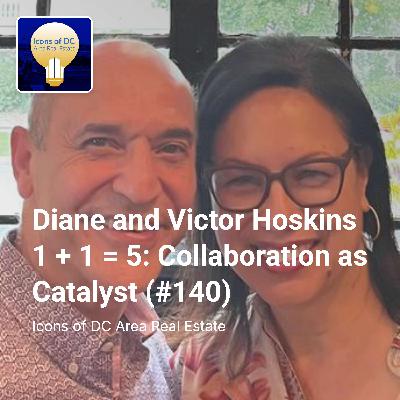
Two of the Washington region’s most influential leaders—architect Diane Hoskins and economic-development visionary Victor Hoskins—share the story of parallel careers that converge around one principle: collaboration compounds impact.
From Chicago’s skyline to the Amazon HQ2 deal, from design constraints to billion-dollar surpluses, the Hoskins demonstrate how empathy, partnership, and systems-level thinking can reshape cities and careers. Their joint mantra—
“Get wisdom, and with all that getting, get understanding.” —anchors a conversation that’s equal parts master class and love story.
Chapter Markers
Time
Segment
Highlights
00 : 00 – 02 : 20
Introduction
John Coe frames the series and today’s guests.
02 : 21 – 03 : 46
Roots & Creative Upbringing
Diane on Chicago’s architecture and her mother’s artistry.
03 : 47 – 06 : 55
First-Gen Philanthropy
The Hoskins on giving back to education.
07 : 00 – 08 : 33
Dartmouth Decision
Challenge as catalyst for growth.
09 : 11 – 11 : 39
Negotiating Across the Table
MIT-trained empathy in public–private deals.
12 : 01 – 24 : 53
Diane’s Arc: SOM → Olympia & York → Gensler
Mentorship, mega-projects, and a developer’s lens.
24 : 54 – 32 : 28
Transforming DC as Business
CityCenter DC, The Wharf, Union Market → $7.5 B investment.
32 : 41 – 35 : 45
Regionalism & Collaboration
DMV economy beyond borders.
36 : 01 – 39 : 31
Amazon HQ2 – Talent as Currency
Education beats incentives; $1 B talent pipeline.
40 : 16 – 41 : 55
Fairfax Digital Hub
7.5 K companies + 100 universities bridging skills.
42 : 07 – 47 : 20
Design Within Constraints
Amtrak Call Center → innovation through limits.
49 : 43 – 55 : 46
Workplace as Destination
Variety, neurodiversity, and WPI metrics.
57 : 03 – 59 : 53
Community in Buildings
Amenities as connection + shared spaces.
1 : 00 : 15 – 1 : 04 : 36
Cross-Disciplinary Leadership
Co-CEO model and latticework learning...
Chapters
(00:00:09) - Icons of D.C. Area Real Estate(00:02:56) - Diane and Victor on the Power of Architecture(00:07:00) - Goat at Dartmouth(00:08:54) - How to navigate complex public-private partnerships(00:12:18) - Gensler's Founder and First Woman Partner(00:21:03) - Working for Gensler(00:24:55) - Deputy Mayor Victor Gray on DC's Transformation(00:30:47) - The City of Washington's role in the District's tax revenue(00:32:53) - Northern Virginia Regional Executive Discusses Regional Collaboration(00:36:01) - How Virginia Secured Amazon's HQ2(00:39:52) - What Keeps Tech Giants in Fairfax County?(00:41:55) - Developers and Architects: The Connectivity(00:49:27) - Gensler on the New Pittsburgh Airport(01:00:15) - Gensler on Multidisciplinary Workforces(01:08:12) - The Common Area of Modern Buildings(01:10:02) - Gensler's one firm, network philosophy(01:12:54) - Northern Virginia Tech's Presidential Innovation Advisory Council(01:19:48) - How Fairfax County Economic Development Leverages Veterans to Fill Cybersecurity and(01:22:40) - Gensler's Commitment to Carbon Reduction(01:28:02) - Gensler on its CO2 Action(01:29:12) - Design Is Not a Luxury, It's for Everyone Everywhere(01:34:19) - Gensler Co-Leaders: Maximizing Time Together(01:38:09) - Gensler on Baltimore's Inner(01:39:36) - How To Build a Prominent Career With Consistency(01:44:38) - How to Lead a Competitive Real Estate Career(01:50:50) - Builders: Internships and Fellowship(01:55:21) - Does Diversity Enhance Commercial Real Estate Talent Pipeline?(01:57:45) - Data Centers: The Challenges(02:03:26) - In the Elevator With Neuroarchitecture(02:04:25) - "Get Wisdom and With All Your Getting..."(02:05:10) - Real Estate Talk: Washington, DC
BIORonnie Gibbons is the Senior Vice President of Development at Carmel Partners, where he leads the DC region for development and investments. His responsibilities encompass sourcing new opportunities, evaluating market feasibility, structuring transactions, and overseeing the entire execution process, while also supporting asset management and collaborating closely with the construction team. Carmel Partners, a vertically integrated firm, specializes in development, asset management, investments, and self-performing construction.
With over 15 years of experience in multi-family residential, mixed-use, retail, and commercial development, Ronnie brings extensive expertise. He holds a Master's degree in Real Estate from Georgetown University (with a finance focus) and a Bachelor of Science in Economics from the University of Maryland.
Before joining Carmel Partners in 2018, Ronnie served as Development Director at Monument Realty and held various roles at Foulger-Pratt, including superintendent and project manager on projects such as the Silver Spring Transit Center. He began his career building houses for Ryan Homes.
Ronnie has spearheaded significant projects like the Annex on 12th conversion in downtown Washington and the Wardman Park development, a massive 867-unit project that repurposed a bankrupt hotel site. His approach to development, influenced by his blue-collar upbringing, emphasizes risk mitigation, feasibility, and considering the end-user. He is also passionate about sustainable building practices.
Key Discussion Points
Current Role [7:35-9:09]
Leads DC development and investments for Carmel Partners
Focuses on pursuits: sourcing opportunities, evaluating deals
Both development and value-add acquisitions
Works closely with vertically integrated construction team
Background Journey [9:20-17:00]
Born/raised Frederick, MD - fourth generation
Father: 40-year maintenance worker at Parkside condos in Bethesda
Mother: ran home daycare
First job at 14: collecting newspapers...
Chapters
(00:00:00) - Icons of DC Real Estate Community Transition to Station DC(00:05:04) - Interviewing Ronnie Gibbons(00:07:21) - Ronnie Carmel Discusses His Role at Carmel Partners(00:09:10) - Growing Up in Frederick, Maryland(00:12:32) - Post-Bacc MS in Economics(00:14:11) - Construction Superintendents at Folger Pratt(00:20:23) - How Starting Your Career at Folger Pratt(00:21:03) - Former Property Engineer at CBRE(00:22:28) - In the Elevator With Folger Pratt's Michael Darby(00:25:16) - Have You Changed Your Approach to Acquisitions and Development?(00:28:01) - In the Elevator Deal,(00:29:47) - Talking to the Monuments Committee(00:31:08) - On Carmel's Investment Committee(00:32:35) - Carmel Partners: Why It Came to Washington DC(00:36:01) - How DC's Property Team Works(00:36:39) - Underpinning Carmel Partners': Construction Division(00:39:17) - Private Equity Companies: The Typical Financing Structure(00:40:48) - Are You Buying Value Added Assets?(00:42:16) - Exploring Douglas Development's Annex on 12th(00:44:35) - Developers Take a Tour of the Smithsonian's New Building(00:49:14) - Greystar delivers 500-unit NOMA project(00:51:44) - Developers Bring Multifamily to Wardman(00:58:33) - How long did it take to get from the conceptual stage to the(01:01:16) - When renovating the Woodman Tower, The Carmel(01:05:58) - What are the green building standards for your building?(01:06:49) - Woodley Park Residential Project, Washington(01:12:29) - Timeline of Lease Up at Embassy Row DC(01:13:39) - Woodley Park 2,000 Unit Comparison(01:17:41) - What is the most misunderstood aspect of the Washington, D.C(01:20:15) - When scanning sub markets, what three signals make you lean in and(01:21:08) - How tight are the submarkets in Washington, DC?(01:22:42) - Why Build 1,000 Units at Once?(01:26:09) - Does the Washington-Baltimore region factor into your deals?(01:29:00) - What Would Your Profession Know That Others Don't?(01:34:21) - Top Executives: Family, Work and Giving Back(01:35:41) - Carmel Partners' CEO on Giving Back(01:36:10) - Projects on the Capital Beltway
Bio
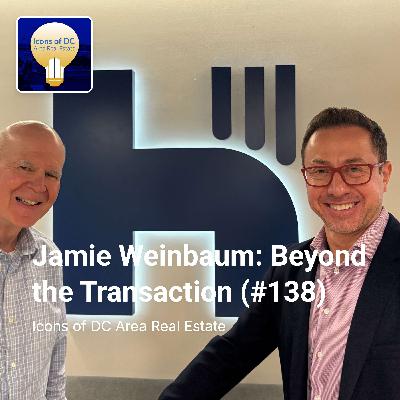
Jamie Weinbaum is President & CEO of Horning, overseeing operations, development, and strategic planning. Previously Executive VP at MidCity (4M sf pipeline), COO at Ditto Residential, development executive at JBG Smith, Director of DC Office of Zoning, and Deputy Mayor for Planning and Economic Development. Former ULI Washington chair. JD from GW Law, BA from Wake Forest.
Key Discussion Points
Career Pivot from Law [00:00-13:17]
Childhood passion for built environment - sketching houses, playing with Legos
2006 revelation with wife: "what you do 9am-7pm doesn't really do it for me"
Marrying passions with profession leads to happier life and more successful career
Started Atlanta home renovations as side hustle while practicing law
Real Estate Entry via AJ Jackson [13:17-25:42]
AJ Jackson instrumental in first development job at EYA in 2007
Developer as "conductor of the orchestra" - coordinating subject matter experts
Ownership side vs. consultant preference: "you're part of the story for years"
2008 downturn layoff after 9 months confirmed industry passion
DC Government Leadership [25:42-37:33]
Became Director of Office of Zoning under Mayor Fenty administration
Crash course in leadership: humility, listening, bringing people along
Technology focus: converting paper zoning maps to online GIS resources
"Level the playing field" philosophy for residents
JBG Development Experience [37:33-51:30]
2011-2014: Twin Brook metro projects, Fort Totten Square (Walmart mixed-use)
Risk mitigation and preserving optionality as core JBG principles
Investment committee meetings: "nobody held back" - heated debates
Real estate development requires communication, analytics, design
Family Business Philosophy [51:30-1:05:15]
Hired business coach specializing in family companies at MidCity
Role as fiduciary working on behalf of family to accomplish their aims
Alignment between personal values and family mission critically important
Multi-generational companies face unique succession challenges
Horning Strategy & Amazon Partnership [1:05:15-1:20:45]
"Mission-driven for profit" organization focused on affordable housing
Chapters
(00:00:00) - iJCRE Community Transition to Station DC(00:05:04) - Meet Jamie Weinbaum, President and CEO of Horning Brothers(00:08:41) - ULI Washington's 'Local Voices' podcast(00:10:06) - Horning Brothers President and CEO Explains(00:12:14) - Jamie Oliver on Starting Out(00:13:11) - George Washington Law Student on His Path(00:17:51) - The Day the Plane Hit the Pentagon(00:20:12) - Law School Graduates Turn to Real Estate(00:21:42) - Turning Down the Career Path(00:25:59) - Real Estate Development and the Need for Ownership(00:28:16) - Real Estate Development Leaders: The Multidisciplinary Approach(00:34:01) - How I Pivot: From Law to Real Estate(00:35:36) - In the Elevator With Bob Young(00:36:38) - Former DC zoning commissioner on the public sector(00:42:27) - Post-White House, what lessons did you learn?(00:47:57) - In the Elevator With Tony Hirsch(00:48:47) - JBG on North Bethesda and the Walmart project(00:52:53) - JBG Cos.'s Ben Jacobs on His Experience(00:56:16) - JBG Capital's Executive Committee(01:00:51) - Real Estate's Low-Risk(01:01:47) - Exploring the Multifamily Market at JBG(01:05:58) - In the Elevator: Mid City Real Estate(01:12:10) - Philip Feist on the DC real estate process(01:18:44) - Building a New Multi-Family Building in DC(01:24:41) - Have You Met the Horning Family?(01:26:58) - Hiring a Coaching Coach(01:28:32) - Under the Horning Brothers: Bringing the Future to Horning(01:31:31) - Horning Real Estate Group's diversified development portfolio(01:36:23) - Top DC Office Developers on the Conversion(01:39:29) - Horning Brothers CEO Explains His Vision(01:42:17) - Affordable Housing for Amazon's Hyattsville Property(01:43:42) - Amazon's Mezzanine Funding(01:45:51) - JBG alum on Amazon's deal(01:46:58) - Exclusive: We're Considering a Multifamily Deal(01:48:36) - Leo Capital on Amazon's Housing Equity Fund(01:50:39) - Would You Submit RFPs for Public-Private Projects?(01:54:03) - D.C. Mayor on the Need for Development(02:00:41) - Northern Virginia perspectives on growth in Montgomery County(02:02:51) - Horning Companies' Commitment to Communities(02:05:53) - President Trump suggests militarizing DC police force(02:09:35) - Jamie Oliver on Living a Life in Balance
BioLen Forkas is founder/CEO of Milestone Towers, a digital infrastructure company building wireless towers on public lands for over 25 years. Adventure athlete who completed the Seven Summits (becoming 5th oldest globally), Race Across America winner, and non-profit founder of Hopecam.org, a charity supporting children with cancer. Author of leadership books drawing from extreme sports experiences.Key Discussion PointsEverest Achievement & 2023 Failure Lessons [0:50-16:00]Key Moment: Len Forkas completed the Seven Summits after a 2023 Everest failure due to pulmonary complications Business Lesson: Deconstructing every decision that led to the failure and meticulous preparation are crucial. Forkas dedicated a year to preparation, including weightlifting, trekking with a 50-lb pack, climbing in Indonesia & Ecuador and hypoxic sleep trainingCrevasse Incident & Systems Validation [33:00-36:00]Key Moment: After a successful summit, Forkas fell into a 70-foot crevasse at 27,000 feet while descending to the South Col.Business Lesson: The importance of safety systems and meticulous preparation. His polar expedition training saved his life.Hopecam Growth & Impact [36:00-51:00]Key Moment: Hopecam doubled its applications from 500 to 1,000 children annually post-COVID and grew hospital partnerships from 60 to 180 in five years. 70% of Hopecam students attend title one schools. Business Lesson: Viewing sponsors as "investors" in mental health outcomes created by the nonprofit rather than as a traditional donors. Milestone Towers Business Evolution [72:00-95:00]Key Moment: Milestone Towers rebranded from Milestone Communications to reflect its real estate asset focus Business Lesson: Strategic niche and barriers to entry protect competitive advantage. AI is optimizing existing equipment efficiency, and use of 5G networks has not hit full stride. Difficult to entitle locations have the highest value for both the tower owner and wireless carriers.
Leadership Philosophy [114:00-125:00]Key Moment: Len Forkas' son Matt joined the company after five years of external experience 15.Business Lesson: Trust and preparation are essential for success in both business and extreme sports. Letting team members own and solve problems is crucialNext challenge: North Pole expedition, but prioritizing family and team presence for now.
RESOURCES:https://www.lenforkas.com/https://coeenterprises.com/podcast/len-forkas-renaissance-man-33/What Spins The Wheel: https://www.amazon.com/What-Spins-Wheel-Leadership-Lessons/dp/0996096906?sr=8-2Cold Hard Truth: https://www.amazon.com/Cold-Hard-Truth-Special-Color-ebook/dp/B09VDY69FC?sr=8-1https://www.hopecam.org/https://youtu.be/D6qjcwEVQYc
Chapters
(00:00:00) - The Iconic Journey and CRE: Expanding our Reach and Impact(00:02:47) - Icons of DCRE Real Estate(00:05:57) - Len Forkas Successfully Summits Mount Everest(00:08:55) - Eve Everest Attempt(00:13:34) - Foldus Climbed All 8,000 Meter Mountains at 59(00:16:37) - Tim Everest on Training for His 7 Summits(00:22:34) - Philanthropist and Mountaineer(00:27:30) - Experienced polar trekkers on(00:31:58) - The Value of Preparing for the Future(00:33:08) - Exploring HopeCam's Growing Need for Cancer Services(00:36:18) - Hope Camp reaches children with cancer through hospital partnerships(00:38:07) - Hope Camp for Kids: Challenges(00:40:01) - Hope Cam and other survivors of cancer(00:42:35) - How do you view your investment in HopeCamp?(00:45:34) - How Leadership Lessons from Your Experiences(00:50:02) - Hope Cam: A Letter from a Cancer Patient(00:51:30) - Hope Camp: Connecting Kids with Cancer(00:53:49) - Hope Camp's journey with cancer survivor(00:55:25) - What kinds of programs does Hope Camp offer to families?(00:56:27) - Milestone Towers Rebrands as Communication & Infrastructure(00:57:56) - Milestone Towers: Public-Private Partnerships(01:01:01) - How Has 5G Impact the Wireless Industry?(01:04:49) - How Is AI Affecting the Cell Industry?(01:11:34) - Is There a Connection Between Data Centers and Cell Towers?(01:13:06) - Are Emerging Trends Threatening the Traditional Cell Tower Business?(01:15:57) - Will Edge Computing Affect Cell Towers?(01:18:25) - Are Regulations Help or Hurt Your Industry?(01:20:29) - Father-Son Partnership at Milestone Towers(01:22:23) - The Legacy of Folger Pratt and Basuto(01:25:17) - Tim Ferriss on Leadership(01:30:46) - Len Forkas on His Heroism(01:32:20) - A Few Words From Len Ayers
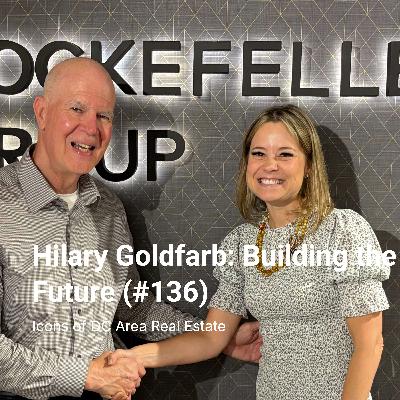
Bio
Hilary Allard Goldfarb is Senior Managing Director and Head of Development for Mid-Atlantic at Rockefeller Group. Native Washingtonian, Princeton graduate, Harvard Urban Planning master's. Previously at Bozzuto Development and ProMark Real Estate. Active in ULI, Federal City Council, Economic Club.
Key Discussion Points
Rockefeller Group Role [00:00-08:38]
Leads D.C. office overseeing development, acquisitions, design, financing
Diverse portfolio: multifamily, industrial, office, mixed-use including "catalytic trophy product"
National platform empowers regional creativity without product ideology
Six regional directors nationally focused on "most compelling deals"
Career Journey [10:01-27:17]
Driven by excellence, hard work, integrity
Strong Japanese investor relations (Mitsubishi affiliates) - visits every 2-3 weeks
Focus on diversity, collaboration, creative problem-solving
"World's greatest colleagues" - no palace politics
Native Washingtonian, Garrett Park/Montgomery County roots
Princeton (with twin brother Nate), Harvard Urban Planning
Corcoran Gallery experience during Frank Gehry expansion
Started at ProMark (Metro-adjacent development with Eisinger family)
Joined Bozzuto (Crown Farm, Chevy Chase Lake projects - met Toby at dentist)
Recruited to Rockefeller Group in 2018 to "start a business" - said no multiple times initially
Major Projects [29:00-53:00]
Boro Tower, Tysons: 437k sq ft trophy office with Meridian Group, stabilized occupancy
1901 L Street NW: First WELL-certified office building in D.C., focus on energy efficiency and tenant experience
600 Fifth Street NW: $375M downtown redevelopment of former Metro HQ, only new office under construction in D.C., 400k sq ft, 50% pre-leased to Crowell & Moring, historic site of DC's first synagogue and Metro's money vault
Port 460 Logistics: 5M sq ft industrial development near Port of Virginia with Matan Companies, leveraging port-centric expertise
Industry Insights [57:00-70:00]
Bullish on D.C.'s resilience despite current challenges, believes in long-term competitive advantages
$2.3B pipeline includes three trophy office, three industrial, two multifamily projects
Development strateg...
Chapters
(00:00:00) - The Iconic Journey in CRE: Expanding our Reach and Impact(00:02:47) - Icons of DCRE(00:06:10) - The Invisibles of D.C. Real Estate Podcast(00:07:51) - Is the Rockefeller platform consistent across the country or does it vary based(00:09:06) - Do you have a global market analysis group that kind of does an(00:10:48) - White House Correspondent on Princeton and His Family(00:13:28) - The Corcoran Gallery of Art and Real Estate(00:18:56) - Real Estate Executive Toby Basuto on Bringing Promark back to Washington(00:22:56) - When I Joined JBG Rosenfeld, I Was Thrown Into(00:24:19) - Exploring Chibi Cheese Lake in Montgomery County(00:26:40) - President Obama on the Rockefeller Property(00:27:25) - Rockefeller's surprise move to Penn Station(00:29:37) - Exploring the Burrow Tower Deal(00:35:08) - Exploring The 1901 Ella Building(00:38:29) - The History of Verizon's Building(00:39:29) - Well-Certified Building(00:43:16) - Private Equity Partners on the 5th Avenue Development(00:45:46) - Top Executives on Metro's Construction Project(00:49:04) - Top Executives Discuss The Port of Virginia Deal(00:55:13) - Rock Property Group's Future(00:59:15) - Exclusive: The Office Opportunity in the DMV(01:03:43) - Golden Triangle President on the Neighborhood's Future(01:10:37) - Mayor Bowser on Place Making in Washington(01:14:46) - ULI President Linda Knows How to Balance Family and Work(01:20:05) - Building a Law Firm's New Home(01:24:17) - Billboard Question
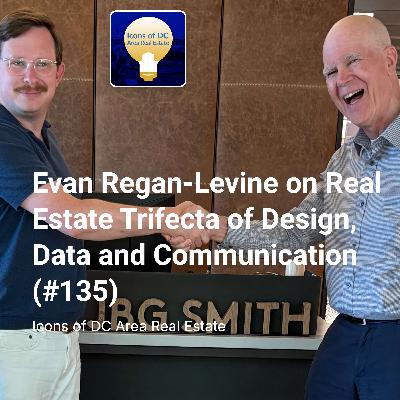
Bio
Evan Regan-Levine is Chief Strategy Officer at JBG Smith, shaping investment approaches through data analytics, strategic initiatives, and investor relations. Key role in National Landing transformation and Amazon HQ2. Previously JLL research analyst and Monday Properties Associate. Georgetown Political Science graduate who pivoted from law school track to real estate after art professor suggested architecture.
Key Discussion Points
Strategic Priorities [3:06-8:35]
National Landing transformation beyond Amazon: residential, retail, infrastructure
Capital allocation focus: maximizing NAV per share for JBGS, targeted acquisitions
Leveraging permanent capital as public company vs. fund life cycles
Career Journey [8:47-32:23]
Academic family: law professor father, first-grade teacher mother
Georgetown, planned law school until real estate internship in Pittsburgh
JLL research exposed him to all verticals: investment sales, leasing, development
In 2013, he joined JBG as research associate working for Matt Kelly
Investment committee exposure from day one with industry veterans
Real Estate Philosophy [20:08-26:00] Success requires: communication, analytics, design
Design undervalued but critical - example: functional dryer vents vs. beautiful facades
Market research informs decisions - Amazon focus groups changed architecture
Multifamily as consumer product requiring research like cars/phones
Hospitality mindset essential across all property types
Crystal Park One [$40M Repositioning] [43:19-52:53]
300-person conference center ("hotel ballroom without hotel")
Ground floor activation with street engagement
JLL operates conference, Episcope handles Food & Beverage
Aviation theme: Constellation café, Altitude vinyl wine bar
Nooks Works partnership for classified meeting space
National Landing Strategy [37:03-43:00] "Regional mall" approach with anchors: Pentagon, Amazon (8K today, up to 38K), Virginia Tech
Demolished excess office, tripled street retail, added multifamily
Chapters
(00:00:09) - The Iconic Journey and CRE: Expanding Our Reach and Impact(00:02:47) - Idols of D.C. Area Real Estate(00:05:25) - Evan To The Iconic Journey In Real Estate(00:06:23) - JBG Smith's Strategic Imperatives for National Landing(00:08:36) - Your dad is a law professor and you grew up all over the country(00:14:01) - Post-Graduation Advice from JLL's Research Group(00:16:10) - Getting Out of The Real Estate Job(00:19:54) - Real Estate: Communication, Design, and Analytics(00:27:07) - Do Office Features Still Matter in Multifamily?(00:30:39) - JLL's Matt Kelly on His Elevation(00:34:00) - JBG Real Estate's Growth(00:36:48) - JBG Smith's National Landing transformation(00:39:19) - The battle for Crystal City's retail(00:41:46) - JBG Smith's Crystal Park repositioning effort(00:45:51) - The National Landing Office Complex(00:51:05) - JBG Property Group on the Conference Facility(00:56:21) - Is the Conference Facility Open to the Public?(01:00:28) - National Landing: The Need for Anchors(01:07:04) - Amazon's return to work policy(01:11:23) - Amazon's Future of Work(01:15:28) - JBG Smith's Approach to Office Demand(01:17:09) - JBG Smith's Development Risk and Opportunity(01:18:33) - Have You Changed Your Capital Allocation Mindset?(01:19:30) - JBG Companies' Urban Propulsion(01:23:00) - JBG Smith's Place Making Approach(01:25:29) - How important is mentorship in real estate?(01:30:19) - Build a cushion for your real estate investments(01:33:58) - JBG Smith Philanthropy's Impact on the Community(01:36:40) - Leo's Giving Back and Philanthropy(01:39:33) - Working Parents' Work-Life Balance(01:41:34) - Have You Turned Down Your Family?(01:43:17) - Real Estate Investors: Evan's Passion for Cars(01:44:49) - Likely Porsche or BMW Drivers?(01:47:16) - BMW and the Detroit Air and Space Museum(01:51:02) - J.B. Smith on the Future of the Firm(01:53:58) - A message on National Landing(01:55:18) - Evan Jones on His Story
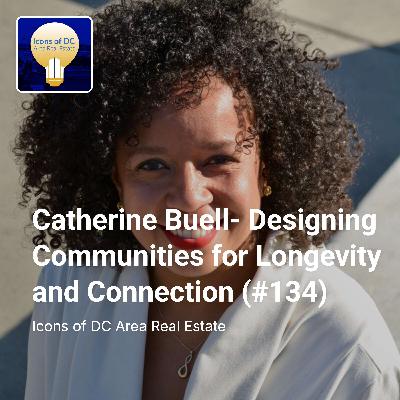
Catherine Buell is founder of Wellness Real Estate Innovations. Previously director of Amazon Housing Equity Fund, president/CEO of Atlanta Housing Authority, chair of DC Historic Preservation Review Board, and executive director of St. Elizabeth's East Campus Redevelopment. Harvard Kennedy School Loeb Fellow.
(00:00) Introduction to second interview. Former Amazon Housing Equity Fund director, Atlanta Housing CEO, Harvard Kennedy School Loeb Fellow.
(03:14) New company Wellness Real Estate Innovations - bringing wellness real estate solutions to diverse urban audiences at intersection of health and housing.
(03:42) Personal motivation: mother's dementia/loneliness during COVID highlighted lack of aging options even in expensive continuum care facilities.
(05:33) Philosophy: housing is healthcare and building with care. Traditional housing continuum has cracks - expensive senior housing, limited diverse options. Beautiful places impact how you feel through social connection, walkability, vibrancy.
(09:05) Amazon lessons: Corporate investments influence markets but can't solve entire spectrum. Healthcare organizations increasingly investing in affordable housing targeting high-cost patients. Innovation gap for aging demographic - need co-housing, shared living, wellness communities.
(15:23) Combat loneliness through intentional community design - new urbanist model plus different housing types, oversized green spaces, shared amenities for organic connection.
(17:06) Alternative models: co-housing, shared living, ADUs. PadSplit's tech approach for $27K income essential workers - streamlined access to furnished shared rooms. Shared models add people without changing community character, help aging in place.
(21:26) Key challenge: lack of documented data on wellness community benefits. Need to document outcomes from 1990s/2000s wellness communities.
(23:37) Global Wellness Institute trends:
Wellness as Infrastructure (WAI) - Bhutan mindfulness city
Wellness as Service (WAAS) - integrated cleaning, nursing, caregiving
Wellness ROI (WROI) - significantly higher returns
Longevity Economy (WRELE) - aging population focus
(27:38) Gap: middle-income households with $80-120K retirement income can't afford elite wellness solutions ($400K-$1M deposits), don't want to leave social networks.
(32:48) Policy needs: data on health/housing intersection, true cost of "do nothing" strategy, economic benefits. Fastest growing DC population is 55+. Loneliness epidemic costs $6.7B annually to Medicaid.
(37:20) Example: dementia village in Ward 7 - 13% of DC seniors have dementia (16% east of river). Netherlands-inspired model with store, pub, church, arts room for quality of life vs traditional memory care.
Chapters
(00:00:09) - Interviewing Icons of D.C. Real Estate(00:00:45) - The Iconic Journey and CRE: Expanding Our Reach and Impact(00:02:47) - In the Elevator With Katherine Buell and Kathryn Bue(00:05:15) - Catherine Polley on Wellness Real Estate(00:08:22) - Seniors' Housing: Health Care(00:11:33) - Alex Jones on Wellbeing and Housing Innovation(00:17:50) - How Co-Housing and Shared Living Can Help Reduce Social Eng(00:24:00) - What's the Wellness Real Estate?(00:26:02) - Will Wellness Real Estate Impact?(00:31:58) - Sip and Solve: Wellbeing and Housing(00:35:24) - Washington DC Mayor on Wellbeing and Intergenerational Communities(00:39:34) - Real Estate News: Wellbeing and Intergenerational Housing(00:47:39) - Wellness Real Estate Innovation(00:50:21) - Wellness initiatives in real estate(00:53:01) - The Need for More Data on Aging and Housing(00:57:07) - Amazon's $2 Billion Housing Fund(01:00:31) - Jeff Bezos on Large-Scale Housing Investments(01:03:47) - The Harvard Loeb Fellowship(01:06:17) - Teaching at Harvard: Health and Housing Innovation(01:07:29) - Will Wellness Real Estate Be an Investment?(01:12:48) - Is Wellbeing a Driving Factor in Hotel Branding?(01:15:44) - Office and Retail: Wellbeing in the Office(01:17:44) - Have We Seen Innovation in Retail for Wellness?(01:20:20) - Wellness in the Real Estate Market(01:23:16) - Top Real Estate Book recommendations for the Wellness Industry
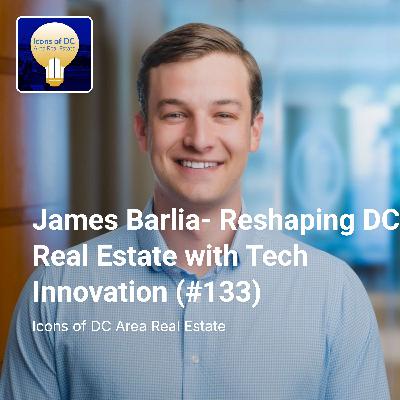
Bio:
James Barlia is Executive Director of Station DC, a private members club for Frontier Tech innovators, investors, and policy makers advancing American national interest. Previously VP at Revolution's Rise of the Rest Seed Fund (Steve Case) investing in startups outside traditional tech hubs. Earlier worked at Greenspring Associates in fund of funds/impact VC. DC native, Tulane graduate.
Key Discussion Points
Station DC Overview [1:11-3:00]
Private members club for frontier tech in DC
13,000 sq ft space in Union Market for work, meetings, events
Mission: Ensure American tech leadership endures with DC at forefront
Focus on economic development, business attraction, diversification from federal government
Background & Journey [3:49-10:07]
Influenced by entrepreneur father's renewable energy work
Failed toothpaste startup in high school led to meeting angel investor
Internship at 1776 DC tech incubator exposed him to impactful founders
Learned "Rise of the Rest" thesis at Greenspring before joining Revolution
Venture Insights [11:02-17:00]
Innovation exists everywhere, not just traditional hubs
Place creates competitive advantage through network effects
Key founder qualities: intrinsic motivation, unique insights, relentless effort
Evaluation requires time, multiple meetings, references
Market Observations
SVB Collapse [21:05-25:02]: Created resilience, highlighted treasury management importance
Amazon HQ2 [26:10-27:00]: Real impact on talent/real estate but job numbers lower than marketed
DC Commercial Real Estate [29:10-34:00]: Tech startups need flexible office space; landlords should offer flexibility and engage directly with founders
DC Tech Ecosystem [40:08-43:00]
Influx driven by critical sectors: space, energy, synthetic biology, AI, defense
Tech companies view DC as ally, not adversary
Has required talent, customers (federal gov't, Fortune 500), knowledge, capital
Major VC firms establishing DC satellite offices
Emerging Trends [63:00-67:00] Beyond AI: data centers, space economy, robotics, autonomy, defense systems. Frontier tech companies need dollars, talent, customers, capital - often found in DC.
Advice for Young Professionals [69:00-95:00]
Bio:
Roberta Liss has launched LNSS Advisors, a commercial real estate consultancy focused on data centers and highest and best use advisory. This new firm is motivated by her vision for her professional "last chapter" and the significant economic impact of AI and technology.
Liss draws on over 42 years of experience, including a decade as President of the Southeast and Mid-Atlantic regions at Cushman & Wakefield. Her career spans key roles at Trammel Crow, CBRE, and BECO Management, executing over 30 million square feet in transactions.
Crucially, she has an early technical background in data center precursors from mechanical contracting, raised floors, and network operating centers. At LNSS Advisors, her expertise covers critical data center aspects like land assemblage, zoning, securing power, and adaptive reuse.
Her foundation includes a B.S. in Architectural Engineering from Penn State University (1978-1983) and data center infrastructure education from IDCA.
Show Notes
Strategic Transition (6:00)
Pivoted from Cushman and Wakefield regional presidency to found LNSS Advisors focusing on data center advisory
Positioned data centers as critical infrastructure underpinning the AI revolution and digital economy
Launched firm immediately after C&W departure, targeting high-growth sector with specialized expertise
Combines commercial real estate advisory with highest and best use evaluations and data center focus
Personal Foundation (9:45)
Atlantic City upbringing provided firsthand exposure to real estate valuation principles
Father's FAA Tech Center background fostered interest in technical systems and early computer modeling
Mother's artistic influence balanced technical perspective with creative problem-solving
Observed demolition of historic Marlborough-Blenheim Hotel, demonstrating highest/best use concepts
Atlantic City's casino redevelopment provided early lessons in market transformation dynamics
Technical Expertise (19:00)
Penn State Architectural Engineering provided technical foundation for complex asset evaluation
Initial interest in architecture evolved toward technical engineering applications
BIO
Owen Billman is the President of Blake Real Estate, managing a 2.5 million sq ft portfolio and eight companies. He previously facilitated over $1 billion in CRE transactions and is a speaker at universities and corporations. Awarded CREBA's 2014 Leasing Transaction of the Year and BISNOW's Top 35 under 35. He chairs the American Heart Association's Greater Washington Region, is a board member of the KCNT1 Epilepsy Foundation, and co-founded the Junior Council supporting Children's National Health System.
REVISED SHOW NOTES
[0:00-1:38] Introduction and Guest: John Coe introduces the "Icons of DC Area Real Estate" podcast and its partnership with Iconic Journey in CRE. Owen Billman, President of Blake Real Estate and Chair of the Golden Triangle BID, is welcomed. His career, Blake’s strategies, and DC's future are discussed.
[1:38-5:11] Owen's Role at Blake: Owen describes his role, focusing on portfolio performance and managing leasing, property management, and construction. He mentions growing third-party management while emphasizing the core portfolio.
[5:11-9:42] Background: Owen shares his upbringing in rural Southern Maryland and working at his father's hardware store, learning customer service and work ethic.
[9:42-14:28] University: Owen recounts his time at the University of Maryland, including the impact of 9/11, and deciding to stay in the DC area.
[14:28-22:14] Starting at Co-Star: Owen details his entry-level job at Co-Star, learning about CRE data collection and analysis.
[22:14-27:02] Market and Blake: Owen reflects on market trends during the Global Financial Crisis and joining Blake in 2010.
[27:02-36:53] Blake's Evolution and Lease Structure: Owen describes learning Blake's unique cash flow model and lease structure. He explains the pros and cons vs. market standards.
[36:53-44:06] Leadership and Rollup Strategy: Owen discusses his leadership transition and Blake's recent rollup strategy to consolidate ownership and flexibility.
[44:06-52:24] Market Adaptability: Owen reflects on Blake’s adaptability during the pandemic, distressed assets, and retailer impact. He shares Blake’s occupancy rate and return to the office.
[52:24-61:44] GSA and Golden Triangle BID: Owen discusses Blake’s GSA leasing experience and his role as Chair of the Golden Triangle BID, advocating for downtown revitalization.
[61:44-78:21] DC's Future: Owen addresses "why DC?" in the context of remote work and strategies to attract new industries, create a 24/7 city, and potential projects.
[78:21-93:23] Change Catalysts: Owen highlights past catalysts for DC's development and the need for a catalyst employer, a new pitch beyond government, and expresses optimism.
[93:23-102:56] John Coe and Community: John Coe discusses Iconic Journey in CRE. Owen shares advice for young professionals and talks about Blake's culture and tech adoption.
[102:56-111:22] Heart Association and Initiatives: Owen discusses the American Heart Association and Blake's initiatives, including collaborative space and flexible work.
Bio
Moiz Doriwala is a seasoned professional with a diverse background spanning real estate finance, investment, and entrepreneurship …. Growing up in Naperville, Illinois, his interest in real estate was sparked by his father’s career as a general contractor and developer.
He pursued higher education, earning a Bachelor of Arts degree in Economics from the University of Chicago and an MBA in Finance and Management and Strategy from Northwestern University’s Kellogg Graduate School of Management. His early career began in the finance sector with a unique rotational program at Bank One (later JP Morgan Chase), where he gained experience in asset-backed securities trading, commercial loan workouts, leveraged leasing, and even worked in a strategic group under Jamie Dimon. He further honed his investment banking skills in the Financial Sponsor Group of J.P. Morgan Securities in New York, focusing on M&A transactions and various financing activities.
In 2005, Mr. Doriwala transitioned to the real estate industry, joining S&R Land Development, LLC in Reston, VA, where he was involved in the development of residential and commercial land. Leveraging his financial acumen and real estate exposure, he later became Vice President of Perseus Realty Capital, LLC, specializing in joint venture equity, preferred equity, and mezzanine financings.
In 2008, Mr. Doriwala formed his own umbrella company, Stirling Realty Advisors, LLC, a boutique real estate investment bank that provides financial advisory services, primarily focusing on raising debt and equity capital for real estate developers and operators nationwide. While initially focused on capital raising, Stirling has evolved into a vehicle for his various investment activities.
Under the Stirling umbrella, Mr. Doriwala manages and invests in several businesses, including:
Bookhill Park: An entity that manages a series of small funds and operates as a finance company, providing opportunistic lending across various industries and geographies
Investments in mental health and behavioral health businesses
Investments in one off LPs in apartment projects
His role as President of Superior Living Foundation Inc., a 501c3 non-profit focused on owning businesses in the healthcare region, such as senior housing and behavioral health facilities1 ….
Mr. Doriwala also has experience in the senior housing sector, having served as Treasurer for Meridian Senior Living …. Additionally, he was involved in the mobile home park business for a number of years through BHP, building and eventually exiting a portfolio of parks.
Throughout his career, Mr. Doriwala has demonstrated an opportunistic and entrepreneurial approach, building strong relationships and a reputation for his ability to navigate complex transactions and provide creative financial solutions. He values strong partnerships, thorough due diligence, and trusting his instincts in his investment decisions.
Show Notes
[6:30] Introduction to Moiz Doriwala and his diverse business background. He manages or participates in managing at least three businesses.
[7:00] Overview of Sterling Realty Advisors. Formed in 2008 as an umbrella company for advising real estate operators and developers on capital raising (joint venture equity, mezz, preferred equity, debt financing). Now primarily a vehicle for personal and business investment activities.
[7:50] Discussion of Sterling as an investor. Investing in individual real estate projects and companies, often as a pass...
Bio
As the founder of Real Estate Financial Modeling (REFM), Bruce Kirsch has trained thousands of students and professionals around the world in Excel-based projection analysis. In addition, REFM’s self-study products, Excel-based templates and its Valuate® property valuation and investment analysis software are used by more than 100,000 professionals. Mr. Kirsch’s firm has assisted with modeling for the raising of billions of dollars of equity and debt for individual property acquisitions and developments, as well as for major mixed-use projects and private equity funds. Mr. Kirsch has also maintained a blog on real estate financial modeling, Model for Success, authoring more than 500 posts, and he is the co-author of Real Estate Finance and Investments: Risks and Opportunities, along with Dr. Peter Linneman.
Mr. Kirsch began his real estate career at CB Richard Ellis, where he marketed highrise New York City office buildings for re-development in the Midtown Manhattan Investment Properties Institutional Group. After CBRE, Mr. Kirsch was recruited to lead acquisitions at Metropolis Development Company, and later joined The Clarett Group, a programmatic development partner of Prudential.
While at The Clarett Group, Mr. Kirsch was responsible for making development site recommendations for office, condominium and multi-family properties in the greater Washington, D.C. metropolitan area. In addition, Mr. Kirsch had significant day-to-day project management responsibilities for the entitlement, financing and marketing of the company’s existing D.C.-area development portfolio.
Mr. Kirsch holds an MBA in Real Estate from The Wharton School of the University of Pennsylvania, where he was awarded the Benjamin Franklin Kahn/Washington Real Estate Investment Trust Award for academic excellence. Prior to Wharton, Mr. Kirsch performed quantitative equity research on the technology sector at The Capital Group Companies. Mr. Kirsch served as an Adjunct Faculty member in real estate finance at Georgetown University School of Continuing Studies. Mr. Kirsch graduated with a BA in Communication from Stanford University.
Show Notes
Introduction and Podcast Format
Introduction of Bruce Kirsch and the podcast format, including a traditional interview followed by a case study and discussion of AI tools. (2:40)
Bruce Kirsch and REFM
Bruce Kirsch’s current role as the founder of REFM (Real Estate Financial Modeling), his 17-year career helping others with financial modeling in Excel, and his various activities including consulting, training, coaching, and creating tools (5:45)
Early Life and Career Path
Bruce Kirsch’s upbringing on Long Island and early influences from his father (a civil engineer) and mother (an interior designer), as well as his childhood fascination with the Manhattan skyline (8:30)
Bruce Kirsch’s pursuit of a

Comments

Download from Google Play

Download from App Store
 United States