


 Claim Ownership
IM Landscape Growth Podcast
Subscribed: 6Played: 77
Subscribe

© IM Landscape Growth Podcast 2023
Description
A landscape growth podcast where entrepreneurs help entrepreneurs grow faster, better, and stronger in leadership, sales, recruiting, and operational excellence.
92 Episodes
Reverse
00:31 – Intro + why Brad’s perspective mattersBrad’s lived experience + coaching across many companies brings “outside-in” clarity.01:18 – Apprentice to CEO (the 20-year climb)Started at ~$600K revenue / ~8 employees, grew into leadership and ownership opportunities.02:15 – Ownership timeline: minority in 2014, partner retired in 2018Treated the company like he owned it before he did—took on what others avoided.03:07 – Coaching + Leanscaper missionAdvises on people/ops; focuses on helping companies get through the $3–5M hump. Uses DISC + Working Genius to place people in the right seats.06:14 – Primary growth constraint: benchmarking (and why it ticks him off)Social media “highlight reels” + inconsistent definitions of profit create false comparisons and self-limiting beliefs.09:17 – The metric he trusts: revenue per personGross/net can be “smoke” depending on what’s above/below the line; revenue per employee gives a clearer gauge.10:54 – Revenue per employee ranges discussed~$150K/person is a “sweet spot.” Higher can be exceptional depending on context.12:32 – Growth through people, process, budgets (real ops fundamentals)Tripled revenue post-2016/2017 by focusing on the boring stuff that works.13:02 – Company today: ~$12M, multiple divisionsMaintenance, construction/design-build, mowing, turf, PHC, trees, snow.14:36 – Crisis story: missing H-2B labor in 2018Lost expected labor right before season; hired heavily; learned through a brutal year—weekly leadership meetings helped them survive.15:53 – Design-build only vs. maintenanceDesign-build looks cooler online; maintenance is stability. Pure design-build can work in the right high-end network—otherwise you need renewable revenue.19:34 – The “two-week activity inventory” exerciseTrack everything you do; circle what drains you; outsource/hire it out.21:27 – The “guilty delegation” problemOwners give away what they love and hoard what they hate. But someone out there loves what you hate.24:48 – Leadership leveling: mentor/coach + humilityYou don’t “arrive” at great leadership; you keep learning. Coach helps you see what you can’t.29:03 – Books that start the shiftRecommends Leadership and Self-Deception; also highlights John Maxwell.31:42 – Core values that actually stick (CIA: Care, Improve, Attitude)Takes years; must be embedded via routines, recognition, hiring/firing/promotion, and weekly meeting habits.36:02 – How to reach BradLinkedIn is best; website form. Mentions Leanscaper as well.37:01 – More resources: Jim Rohn, Simon Sinek, MaxwellCommunication + connection as a leadership multiplier.
00:31–01:20 — Intro + why Willow River Company “means more than people think” 01:20–03:34 — Origin story: family landscaping business → three brothers take over (2006) 03:34–04:45 — Diversification: why “all eggs in one basket” eventually breaks you 04:45–06:03 — Today’s scale: $16.5M sales goal, $15.3M production goal, and the 8% rule 06:03–08:43 — Biggest growth constraint: people (right roles + letting go of control) 08:43–10:14 — “We were sucking at everything”: the pain that forces delegation 10:32–13:04 — The profitability flip: switching to LMN (2015) and learning true costs (overhead, assets) 12:05–12:51 — Building an asset division: internal equipment “rentals” to price reality properly 13:30–16:04 — Hiring a six-figure sales pro: expensive… and one of their best decisions 16:20–18:40 — Sales expectations: 1-year ramp, Year 2 performance; lead flow becomes mandatory past ~$5M 18:51–20:12 — Sales structure: salespeople stay involved through project delivery (relationship continuity) 21:01–27:10 — Culture + leadership: people need visibility, appreciation, and morning presence 24:32–26:46 — Realization: stepping back hurt morale; standing in the yard fixed it 27:48–29:41 — EOS/Traction thinking: visionary vs operator; execs freed from day-to-day at scale 30:31–33:20 — Mentorship reality: local competition vs industry peers; associations unlock real sharing 33:20–34:56 — Learning sources: E-Myth; decision-making by “conference” to avoid blind spots 35:22–37:32 — 2026 plan: “plateau and stabilize” after acquisitions; improve cross-division communication 37:32–37:59 — Wrap + future episode tease (acquisitions + integration)
00:01 – Intro + why Bob stands out: Rob tees up Bob as a rare “actually differentiated” operator. 00:49 – What Fire by Design does: Custom fire features + components; specialty is automated fire and outdoor-ready ignition. 01:10 – Origin story + aviation background: Military F-16s, then United Airlines; post-9/11 dissatisfaction drives career shift. 02:20 – First custom fireplace: One job turns into a niche discovery in Vegas residential fire features. 03:30 – Bigger commercial work: Large-scale condo/restaurant projects; scaling craftsmanship into repeatable builds. 05:06 – The problem that sparked innovation: Restaurant sign asks for remote-controlled fire; indoor furnace parts fail outdoors (wind cycling). 06:30 – “Same parts in a box” moment: Competitors’ systems weren’t purpose-built—triggering Bob to engineer his own solution. 07:30 – The ugly R&D truth: “30 days/$5K” became 10 months/$35K; first boards smoked on power-up; hard lessons. 08:50 – Supply chain failure forces the leap: Honeywell valve sold; quality drops; widespread failures create 600 warranty replacements. 10:12 – AWIS is born (May 2010): 30 days of real-world stress testing (wind + water + waterfalls). 11:10 – Proof wins: Ships 600 replacements; complaints stop; Orlando downpour test validates performance. 12:37 – Differentiation marketing: “Torture videos” (55mph pickup truck demo) become a clear proof-based advantage. 14:50 – Why he didn’t quit: Family as the anchor; stress, long hours, but “I only have one choice: I have to prevail.” 19:22 – Biggest leadership bottleneck: Bob was the constraint; learns to delegate and train so growth can happen. 21:30 – Training the first real hire: In-earshot coaching, technical knowledge transfer, then scaling training through others. 24:00 – Going national with email + design ideas: Uses builder lists, email campaigns; list grows 1,100 → 15,000 in ~3 months. 26:35 – Revenue inflection point: Under $100K → $500K in 12 months; later hits $10M+ around year six. 28:30 – “Make yourself worthless” (in a good way): Trains daughters + team to run company; reduces dependency on founder. 34:30 – Differentiation in the field: Saturday demo tour—remote ignition in truck creates instant demand + sales tools requests. 41:02 – Where to learn more: firebydesign.com; “AutoFire 101” PDF; tech support team; project drawings help. 44:10 – Inspirations: Seven Habits of Highly Effective People; Steve Harvey “The Parachute” talk. 48:04 – Wrap: Call to action + where to find Fire by Design.
00:31 - Intro: Justin White joins the show
01:08 - “Born into it”: early days in landscaping + discovering the sales side
02:52 - 2015 turning point: family divorce forces a leadership shift
03:03 - Growth story: $1M → $10M in ~5 years; COVID turbulence; $10M → $20M (2022–2024)
03:59 - Why JW Group exists + The Disruptors community (peer-based membership)
05:03 - “The answers in the room”: peer groups vs paid gurus
05:44 - Where to find The Disruptors: JWGroup.com, newsletter, free trial, DMs
06:23 - Company founded in 1986; Justin takes over a 30-year-old business
06:41 - Biggest shift: radical clarity around long-term vision (BHAG)
07:48 - Why belief matters more than the goal itself; proving “you can’t do that here” wrong
09:12 - Vision communication: say it constantly (daily, not quarterly)
10:20 - Primary growth constraint: clarity (plus the “you’re not working unless you’re in the field” myth)
12:00 - Survival-mode motivation: needing the business to support multiple households
13:07 - “30 by 30”: simple, memorable, and public
13:51 - 2018 femur break → deep meditation → rewiring mindset through necessity
17:59 - Injury recovery + mind-body connection; philosophy influences (Jung, Hume) + Tony Robbins
21:03 - Translating mindset into business: building belief like startups do
23:42 - Servant leadership: “I serve first, lead second”
24:36 - Rapid growth as a forcing function that develops leaders
26:31 - AI in landscaping: a huge opportunity in a tech-backward industry
27:28 - Brad Jacobs framework + why landscaping fits it (fragmented, recurring revenue, tech-backward)
29:14 - Justin’s 6 levels of AI adoption (tool → coworker → agentic workflows → sci-fi-ish future)
35:09 - Clear vision matters more now to avoid shiny-object chaos
36:48 - Tactical example: automated “unprompted” workflows (trigger-based) for sales clarity
39:20 - Reducing overwhelm: clarity lowers anxiety and improves performance
39:49 - Organic growth vs private equity buy-and-build; big long-term ambition
40:32 - One resource: Good to Great (read it repeatedly; implement before consuming more)
42:21 - Where to connect: Instagram + LinkedIn (@JustinWhiteCEO)
00:01 – Intro + guest setupRob welcomes Scot Eckley and frames Scot as a standout example of strong positioning in landscaping.00:41 – What SEI does (and who it’s for)Scot explains SEI: a Seattle design-build company focused on helping clients unlock small, urban outdoor spaces; team size ~22 (designers/architects, PMs, builders).01:33 – Why Scot’s positioning stands outRob highlights Scot’s specialization: downtown/urban Seattle + a clear “lane” in marketing and services. (Website mentioned: scoteckley.com)03:00 – The primary growth constraintScot’s answer: the bottleneck is the owner specifically shifting from “I am the solution” to building people and systems that create solutions.04:21 – The painful catalyst that forced changeA tough period: cash tight, “robbing Peter to pay Paul,” wife hospitalized before second child’s birth, Scot borrowed money from his mom decides “I don’t want this again.”05:10 – The start of operational maturityScot discovers the concept of open-book management at an industry convention; a speaker/consultant tells him he isn’t ready yet needs to shore up fundamentals first. He begins long-term work with a consultant (Dan Foley).06:15 – “Beautiful hobby” vs businessScot reframes: making beautiful work without profit is “a beautiful hobby, but it’s a painful hobby.” The business lens becomes: stay alive, make profit, build for the next day.07:36 – The real turning point: ADHD awarenessScot shares learning his son had ADHD, then recognizing the signs in himself; he gets tested, discovers ADHD (and confirms dyslexia).13:12 – ADHD types + what “procrastination” really isScot outlines inattentive, hyperactive-impulsive, and combined types. He clarifies: it’s not just procrastination often the “ignition” to start is missing until urgency kicks in.15:15 – The buddy system (body doubling)Rob shares a “work beside someone on Zoom” strategy; Scot agrees and gives an example of a therapist “buddy” moment to complete tasks.17:10 – ADHD isn’t just a limiterRob asks about reframing ADHD; Scot calls it a “superpower” (fast decisions, handling chaos, lots of mental “tabs”).18:47 – Visionary + integrator (Traction reference)Scot connects ADHD leadership style to the visionary role and the need for an integrator with follow-through.20:10 – Scot’s AI playbook starts with one ruleIf you’re serious: buy the paid ChatGPT version for project folders and set instructions per project.21:55 – Why project folders matterScot calls them contextual rule sets: instructions + uploads + continuity so the tool “remembers” the work.22:05 – Dictation > typing (especially with dyslexia)Scot uses the mic to brain-dump responses, then refines fast. What used to take ~45 minutes becomes ~5-10.24:05 – Sales consult system: Zoom transcript → consistent summaryHe records Zoom consults, uses Read AI to transcribe, drops transcripts into a custom ChatGPT setup to:produce standardized summaries flag missing items (budget, permitting, etc.) store in a lead folder so designers/PMs can prep consistently 25:10 – SOP creation on demandScot uses a dedicated SOP folder that asks clarifying questions and outputs either short or long SOPs. He mentions one on gluing pipe (nuances included).26:21 – Tradeoff: writing confidence shiftsScot notices he writes less by hand now and feels slower/more blocked but creative writing is still there.28:24 – Less friction = higher standardsExample: daily build photos show issues; Scot can quickly dictate feedback and send it raising quality by removing the “I’ll deal with it later” drag.29:46 – Extreme Ownership changes leadershipScot reads Extreme Ownership and stops playing the “victim card.” Team failures point back to leadership. He adopts a Navy SEAL-style cadence: pre-plan → execute → post-review.31:49 – Build Team Efficiency: get the right people involved earlierHe pushes PMs + build leaders into pre-construction planning so plans/budgets are approved before clients fewer surprises, better execution.32:05 – “Leadership is seeing around corners”ChatGPT reframes Scot’s leadership goal as anticipating issues Scot adopts the phrase.33:10 – AI helps with hard HR workScot writes a PIP in ~90 minutes with strong framing more coaching “up” instead of defaulting to frustration and fallout.34:39 – Best AI advice: don’t add tasks—subtract weightScot warns against using AI to create new commitments. Use it first to reduce what you’re already doing.36:18 – AI + project folders help ADHD continuityHe can pause work without losing the thread, then restart cleanly.37:10 – Scary (but useful) prompt: ask for blind spotsScot asks ChatGPT to identify his blind spots “without sugarcoating.” It becomes a self-awareness tool.38:25 – 2026 focus: simplify + lead by questionsScot’s goal: stop “being the superhero,” ask questions, let leaders decide because “needing to be needed” is addictive.39:02 – AI as a “coach of the moment”When overwhelmed, he asks ChatGPT for a pep talk + prioritization (drink water, breathe, quick walk, pick 2 tasks).41:31 – Leadership resource recommendationScot recommends Craig Groeschel’s leadership podcast (faith present, but broadly useful). Key lesson: courage often matters more than clarity.43:07 – Wrap-upRob thanks Scot; episode ends.
00:31 – IntroductionMike McCarron, owner of ImageWorks Landscaping, joins the show and shares his background in an ultra-competitive DC-area market.02:48 – The Real Growth ConstraintMike challenges the “labor shortage” narrative and argues most companies don’t truly know their numbers.03:37 – Busy vs. ProfitableWhy being busy doesn’t equal growth and why fewer employees with higher profit wins.05:11 – The Wake-Up CallMike shares how losing his wife in 2010 tested his business systems and leadership.07:01 – Early Systems ThinkingHow peeling off roles and building structure started well before tragedy forced it.09:02 – Equipment vs. EducationWhy most owners chase trucks and machines instead of operations and training.10:24 – The Power of Industry NetworkingWhy learning from non-competing peers accelerates growth faster than going it alone.12:26 – The Entrepreneur Is the ConstraintHow ego, fear, and lack of vulnerability stall companies under $1M.15:00 – Culture and Weekly TrainingInside ImageWorks’ weekly all-hands meetings and how they achieved 100% retention.17:42 – Where to Start with SystemsMike outlines a practical method to establish production baselines using a stopwatch.20:03 – Managing by the ScoreboardWhy crews need to know the “score” every day to win consistently.22:34 – Industry Software ToolsA rundown of landscape-specific software options and why generic tools fail.23:49 – Why Mike Gives BackThe $400k–$700k gap most consultants ignore and why Mike focuses there.29:10 – Final AdviceDon’t wait, don’t downplay yourself, and don’t be afraid to ask for help.
00:00–01:30 – Introduction to Karol Wyman and the concept behind Outdoor Coffee Shop01:30–04:45 – What Outdoor Coffee Shop is and how it connects fragmented industries04:45–06:50 – The biggest growth constraint for contractors: not prioritizing marketing06:50–09:30 – Why “we’ve never needed marketing” works… until it doesn’t09:30–11:45 – The real issue: no planning, knee-jerk promotions, and broken follow-up11:45–15:00 – What a real marketing + sales process actually looks like15:00–16:50 – Why marketing doesn’t end at the sale (customer journey + case studies)16:50–18:45 – The mindset difference between stuck businesses and $10M+ companies18:45–22:30 – Case study: Walsh Construction and the power of unified branding22:30–25:15 – Succession planning, consolidation, and branding in contractor businesses25:15–29:15 – What’s next for Outdoor Coffee Shop and upcoming industry events29:15–31:30 – Influencers, resources, and where contractors should plug in31:30–32:00 – Final thoughts and wrap-up
00:00–01:55 — James Hatfield’s BackgroundBlue-collar upbringing, early entrepreneurship in painting and power washingStruggles with bookkeeping led him to business schoolCo-founded Sageworks, scaled it to Inc. 500 and eventual sale to KKR01:55–03:27 — From Sageworks to LiveSwitchTransition back into tech with a focus on practical tools for the tradesPhilosophy: technology must be usable, not theoretical03:27–07:05 — The Real Constraints to Business GrowthGrowth constraints differ by market, region, and service typeSpeed matters most in competitive marketsMargins, team retention, and quality matter more in less competitive markets07:05–09:31 — Recurring Revenue vs One-Off JobsMaintenance and recurring services create predictability and stabilityInstall-only businesses must optimize heavily for marginAnalogy: selling cars without offering service is leaving money on the table09:31–12:47 — What LiveSwitch Actually Does“FaceTime + ChatGPT built for the trades”Instantly connect with customers via one-tap video linksAI observes, listens, and generates estimates, contracts, CRM entries, and material lists12:47–15:57 — Speed to Lead and Cost of Free EstimatesDeals are lost simply due to waiting days to visit a siteLive video eliminates unnecessary site visitsGas, time, and labor costs of “free” estimates are rarely accounted for15:57–17:56 — Training & Field Support Use CasesRemote experts can guide junior techs in real timeSessions are recorded and turned into internal training librariesReduces repetition and improves consistency17:56–19:19 — AI as a Field AssistantTechnicians can ask AI what to do when they’re stuck on-siteHelps compensate for talent shortagesImproves quality without needing senior staff everywhere19:19–21:16 — Pricing & AccessibilityStarts at ~$160/month ($80 per licensed user)Not required for every employeeAnyone can join sessions via QR code21:16–23:17 — Why Waiting Is a MistakeAI is becoming infrastructure, like electricityData and documentation will define future business valueVideo data increases acquisition multiples23:17–24:28 — Recommended ResourceBook: Making Money Is Killing Your BusinessFocus on actually working on the business, not just talking about it
00:31 — IntroRob welcomes Mark Sedgley and tees up his multi-decade journey leading software companies.01:35 — Mark’s Origin StoryFrom helping build MemberClicks to steering SingleOps and acquiring LMN—how Mark ended up leading Granum.03:05 — Lessons from Early Exits & IntegrationsWhy Mark realized he wasn’t built to work for someone else, and what he learned rolling up companies across industries.04:30 — Entering the Green IndustryThe call that brought him to SingleOps, falling in love with tree care, and realizing landscape ops needed deeper focus.05:55 — The Birth of “Granum”How the SingleOps + LMN + Granius integration led to one mission, one brand—and why “Granum” (meaning seed) matters.07:18 — The Tech Gap in LandscapingOnly ~40% of the market has adopted software—massive whitespace ahead.08:35 — The #1 Growth Constraint: TimeMark explains why lack of perceived time—not talent or capability—is the biggest limiter for landscapers.09:54 — A Reality Check on Industry ComplexityLandscaping isn’t simple: precision, logistics, people, expectations—Mark breaks down why owners underestimate their own skill.11:34 — Owners Need to Stop ApologizingWhy landscapers shouldn’t downplay their work—and why Mark is obsessed with giving them time back.12:47 — Developing Yourself as a LeaderIntentionality, micro-learning, and carving out “development time” even if it’s just 30 minutes a week.16:32 — The Work-Life Balance MythMark’s spicy take: balance is fake, seasons are real, and chasing equilibrium creates more stress than work.20:18 — Work as a Meaningful Human ExperienceRob and Mark on why meaningful work matters, and why leaders must choose what kind of environment they create.22:11 — Why Doing More Doesn’t ScaleThe mindset shift needed to move from operator → executor → manager → leader → executive.23:47 — Case Study: Hidden CreekHow implementing EOS early helped them break through growth ceilings—long before they became a “big” business.27:06 — What a Bottleneck Actually IsMark defines bottlenecks using “The Goal” and real landscape examples (change orders, expectations, communication).29:02 — How to Work On the Business in 45 MinutesMark's five daily 45-minute practices competitor research, sales call reviews, skip-levels, inbox pattern analysis, and product observation.32:18 — Market → Customer → Delivery LoopMark’s simple leadership filter for decision-making and product development.39:15 — What’s Next for GranumMassive product investment, AI-powered improvements, better customer journeys, and building software only for green industry pros.42:23 — Why Choose GranumNot because it’s perfect but because they’re the most focused, most invested partner in the industry.45:52 — Events & Growth Opportunities26+ boot camps, facility tours, industry events, plus partnerships like Techo-Bloc.46:55 — Recommended BooksThe Obstacle Is the Way and The Goal, plus daily journaling and leadership reflections.48:05 — Connect with MarkLinkedIn or email: mark@granum.com.
00:00 — The core problem: obsession with outputs over inputsRichard opens with the danger of short-term financial pressure and how it erodes learning and long-term thinking.00:52 — Welcome to the show + technology hiccupsRob introduces Richard with jokes, sports banter, and podcast foibles.02:23 — Richard’s origin story: ValleyCrest to SperberHow he grew up in the business, scaled ValleyCrest to $1B+, merged into Brickman/BrightView, and eventually rebuilt Sperber.04:12 — The consolidation era & the modern growth constraintRichard explains consolidation, culture clashes, and why people — still today — remain the #1 growth lever.05:47 — Why landscapers stay small: micromanagement & lack of trustMany owners hold everything, stunting team growth and company growth.07:04 — The “app-ification” of landscaping & why Richard hates itToo many apps → less learning, less accountability, no teamwork, and weaker client understanding.08:33 — Why real estimating requires walking the jobTech shortcuts eliminate the “shared learning walk” that develops real decision-makers.10:32 — Mentorship, in-person interaction & lost tribal knowledgeWhy remote work and tech tools rob junior people of accelerated learning.11:33 — Inputs vs outputs: the mistake of PE-backed urgencyShort-termism destroys craftsmanship, growth, and culture.13:15 — Organic growth vs acquisition: which is harder?Hint: mergers are way harder — because people resist change.14:35 — Getting leaders to take ownershipWhy Sperber pushes decisions down and expects managers to behave like owners.16:29 — Empowerment + accountability, minus fearRichard: “You can’t fire people for making mistakes. That’s how they learn.”18:31 — The bike analogy: letting people wobbleWhy leaders must let people ride, crash, and re-ride.19:11 — Why firing after a mistake is dumb“If they leave, your competitor gets the benefit of their education.”21:23 — The growth inflection points (AM → Branch → Multi-Branch)When and how to hire account managers and build scalable structure.23:38 — Promoting from within vs hiring externallyThe Peter Principle is real — especially in sales leadership.27:00 — Loyalty vs performance: firing with contextWhy you must think about the impact on everyone who stays.30:06 — The linchpin: everything is peopleCustomers, employees, vendors — the entire business is human.32:59 — Data overload & why most metrics don’t matterLeaders drown teams in useless outputs instead of focusing on the vital few.34:33 — AI, automation & the power of personal presenceYou can’t AI your way out of dead grass or broken trust.37:10 — Bringing ValleyCrest culture into SperberPatience, high standards, shared learning, and real human relationships.42:20 — The 8 simple metrics (without listing them)Richard refuses to name them — but drops hints: margins, retention, enhancements, collections.43:25 — Legendary ValleyCrest rituals (truck giveaways!)How they drove safety, loyalty, and life-changing employee impact.46:47 — Richard’s real education: boardrooms, mentors & hard lessonsWhy he never needed business books — he lived the MBA.49:42 — The bright future of the green industryMore passionate entrepreneurs than ever; real opportunity ahead.53:40 — Trade shows, global trends & European inspirationRichard has his eye on Dreamscapes and massive European landscaping expos.
00:00 – Welcome & introRob introduces the IM Landscape Growth Podcast and guest Martin Tirado, CEO & Executive Director of the Snow and Ice Management Association (SIMA).01:09 – What is SIMA and who do they serve?Martin explains SIMA’s role: education, certification, best practices, legislative work, and the annual Snow & Ice Symposium that many just call “SIMA.”02:33 – The unsung heroes of winterConversation about snow contractors as essential workers keeping transportation lines, parking lots, and entries safe when everyone else is inside.03:14 – Member base & where they areMartin shares SIMA’s 1,200 members across the U.S. and Canada, with major concentration in urban areas like Toronto and commercial-focused operators.04:31 – The #1 growth constraint in snow & iceRob asks the core question: what’s the primary growth constraint for snow/ice entrepreneurs? Martin splits it into controllables vs. non-controllables.05:03 – You can’t control weather, but…Martin talks about fluctuating winters as a real but uncontrollable constraint—and why the real game is what you can control:Systems People Company culture 05:54 – Culture as the ultimate leverMartin defines culture as: efficient operations, updated equipment, technology, and people who actually like working there and feel rewarded.06:53 – Profitability: real numbers from the industryMartin shares SIMA Foundation’s profitability study: the average snow & ice company is at 19% profitability, with many growing double digits annually when run well.07:41 – The SIMA benchmark study (and where to get it)They dive into SIMA’s in-depth benchmark study:150+ companies Requires real financial data Covers expenses, structure, comp, equipment, contract types→ Available at sima-foundation.org (free for members, paid for non-members). 09:30 – Why benchmarking mattersMartin explains how owners use the benchmark report to sanity-check things like:Sales & marketing spend Insurance and equipment costs Payroll as % of revenue Org structure and profit per employee 10:29 – Workforce & compensation dataThey touch on SIMA’s workforce study: pay ranges, benefits, trucks, health care, retirement, and how that feeds into retention—especially in the U.S.12:43 – Systems, people, culture: which comes first?Rob asks Martin to rank systems, people, and culture.Martin: culture is the umbrella—systems and people sit underneath it.13:33 – What culture actually looks like day-to-dayMartin breaks it down simply:Do your people like coming in? Is there camaraderie and healthy competition? Are leaders creating energy and real connection (knowing people’s families, lives, goals)? 15:31 – The tech stack every serious snow company needsDiscussion of the “tech stack”:Payroll & HR Operations and routing tools CRM for sales and account management Weather tracking and service reporting tools (critical for slip-and-fall protection). 16:51 – Protecting yourself in slip-and-fall claimsMartin explains how service logs, weather data, and software help companies prove they did their job when claims inevitably show up.18:20 – Fixing low-energy crews & dragging cultureRob asks: how does an owner actually inject energy if crews are just “show up, coffee, truck, go”?Martin suggests: small incentives, knowing your people, flexible support, and clear expectations.19:55 – The “right people on the bus”Martin references the classic idea: right people, right seats, properly supported—with practical incentives (money, time, flexibility).21:28 – Retention bonuses for sidewalk crewsMartin gives a concrete example:Sidewalk crews are high-turnover and brutally hard work Some companies pay retention bonuses at the end of the season if people show up for all events—simple, powerful, and effective. 22:48 – Compensation aligned with company goalsThey discuss rewarding behavior that supports reliability, consistency, and performance (instead of just “hours showed up”).24:17 – Production rates & paying for efficiencyMartin mentions using production rates (e.g., time per acre) and paying more when crews hit or beat those benchmarks.24:59 – How top companies recruit differentlyMartin shares how strong culture companies:Are always recruiting Tap into community networks (church, sports, ethnic communities, schools) Turn employees into a referral engine. 26:25 – “We’re basically a training company that does X”Rob connects the dots to top entrepreneurs in many industries who see themselves as training companies first, service providers second—and how that applies to snow & ice.26:29 – Looking outside the industry for comp benchmarksMartin shares a story of a member who benchmarks comp not just against snow & landscape, but against insurance, construction, manufacturing so account managers don’t get easily poached.28:21 – Who SIMA is really forMartin clears up a misconception:Big companies think SIMA is for small ones Small companies think SIMA is for big onesReality: SIMA serves the whole snow & ice community, from boutique specialists to massive fleets. 29:43 – What big and small companies can learn from each otherBig learn from small: customer service and relationship depth.Small learn from big: how to scale from $250K → $1M+ and beyond.31:03 – How to get more value as a SIMA memberMartin’s quick list:Write for Snow Business or SIMA’s digital content Speak or join a panel at the Snow & Ice Symposium Join committees (standards, best practices, legislative) Use your $200 training credit each year for certification. 32:44 – Membership ROI and “gym membership” analogyMartin compares SIMA to a gym: it only pays off if you actually use it—log in, download tools, use the training, join the community.33:21 – Best management practices & legal protectionSIMA’s Best Management Practices are:Built by 10–15 subject matter experts Reviewed every few years A powerful tool when lawyers or insurers ask, “Did you follow industry best practices?” 34:34 – Training programs: CSP, ASM & safetyMartin outlines SIMA’s main training tracks:Certified Snow Professional (CSP) – highest level Advanced Snow Manager (ASM) – core training for field/ops leaders Safety training for sidewalk crews and equipment operators. 36:20 – How to connect with SIMAWhere to start:Website: sima.org Resource center with free downloads Contact form and membership team 24/7 chatbot (with real humans behind it during business hours). 37:33 – Snow & Ice Symposium detailsMartin plugs the upcoming Snow & Ice Symposium in Cincinnati, always held in the 3rd or 4th week of June.38:08 – Closing gratitude & final thoughtsRob wraps with appreciation for Martin’s 18+ years leading SIMA and serving the snow & ice industry.
00:00 – IntroWelcome and introduction to Dominick Mondi.01:25 – Early Lessons in GrowthDominick shares experiences that shaped his approach to scaling teams.06:05 – Building Repeatable SystemsWhy documenting processes is key to consistent results.11:30 – Leadership Habits That WorkCommunication and alignment strategies that keep teams performing.17:10 – Reducing Friction in WorkflowsOperational changes that improved collaboration and efficiency.23:45 – Turning Points in ScalingThe critical decisions that drove sustainable growth.30:20 – Advice for LeadersDominick offers practical guidance for leaders looking to scale effectively.34:15 – Closing ThoughtsKey takeaways and encouragement for the audience.
00:31 – Intro. Why Chris Dyer’s lifelong pursuit is improving the human experience at work. 01:17 – Origin story. Entrepreneur, “accidental author/speaker,” and the belief that humans are the greatest asset when work isn’t broken. 03:24 – The constraint today. Convergence of Apple‑level UX expectations + AI‑era overwhelm = buyers freeze; existing clients expect better while prospects can’t decide. 06:21 – Two jobs of a modern leader. Be the sense‑maker (simplify buying/doing) and guide people through change. 06:50 – Sell simply first. Let the customer say “yes” to mowing; upsell other services later—don’t overload the first decision. 08:54 – “Shrink the loop.” Define start to finish, empower decisions, cut approvals, and remove delays so progress actually happens. 10:26 – Pace = decisions. The speed of your decisions sets the speed of your company. 11:14 – Kill meeting bloat. Build team charters (clear hours/boundaries), meeting rules, roles, and do a quarterly meeting audit (what dies, shortens, or loses attendees). 15:13 – One truth, not 100 inboxes. Establish a single source of truth (e.g., Slack/Teams) so info is searchable and async—without after‑hours anxiety. 17:31 – The experiment mindset. 2009 culture reset → CEO becomes Chief Experiment Orchestrator. Meetings were the #1 complaint; created named meeting types with different rules. 22:19 – Why it’s worth it. After fixing culture/meetings, the company won Best Place to Work awards and landed on Inc.’s Fastest‑Growing list—then growth compounded. 24:40 – The weekly one‑question survey. Ask 1 question each week, close the loop in 5 business days, review monthly. 29:24 – The gutsy question. Quarterly: “How am I, as your CEO, getting in your way?”—and act on it. 31:22 – Why experiments work. If it helps people, they’ll adopt it; keep what works, throw away what doesn’t. 34:44 – From in‑business to on‑business. Delegate low‑joy/low‑ROI work (e.g., finance/CFO) to free your highest value. 37:49 – Growth vs. fix. Fix friction and growth follows; if you’re the rainmaker, keep selling and appoint someone to run the experiments. 39:50 – Resources & where to start. Text CHRIS to 33777 for meeting types + 25 starter survey questions; books and site. 44:33 – Close. Book recs and why clarity of purpose matters before you ask your team to row faster.
(00:00) – Welcome back: Rob introduces Frank Bourque, business coach and former landscape company owner.(01:00) – Why mindset matters more than systems in long-term growth.(03:00) – The biggest bottleneck in most businesses: the owner’s thinking.(04:50) – The 5 mindset shifts that change everything:In vs. On the business Scarcity vs. Abundance Perfection vs. Progress Control vs. Empowerment Fear vs. Curiosity(10:00) – How fear limits creativity—and how curiosity unlocks innovation.(12:00) – Journaling and peak-state habits: how to solve problems before breakfast.(19:30) – Using your calendar to reflect your priorities (and sanity).(24:00) – “Flip Day”: the small habit hack that builds mental flexibility.(28:00) – Why disorganization kills team happiness and focus.(32:00) – Systems reduce emotional stress—how to create stability and free bandwidth.(38:00) – Time-blocking vs. time-stacking: multiply results without working more.(39:00) – Book recommendation: Chess Not Checkers by Mark Miller.(40:30) – Where to find Frank next and how to connect.
00:31 – Rob introduces guest Darren Oostdyk, founder of Doverscape Design & Build.01:33 – Darren shares his journey from mowing lawns to running a thriving design-build company.03:37 – The biggest growth constraint? The owner. Darren dives into how self-awareness changed his leadership.05:57 – Realizing 70-hour weeks aren’t sustainable—what pushed Darren to rethink his workload.08:12 – Shedding hats: why he let go of design (his favorite part) to focus on sales and management.11:23 – The art of delegation: maintaining brand quality while empowering others.15:00 – How Doverscape’s strong brand attracts both clients and top talent.17:20 – Creating a work culture where employees feel valued and respected.21:49 – The power of planning and pricing right—Darren’s methodical approach to profitability.24:58 – How budgeting and buffers create freedom and reduce stress.28:11 – Staying profitable with fewer people and focusing on what really makes money.30:46 – Darren’s take on AI in design—and why it’s not replacing human creativity anytime soon.33:59 – Inspiration from West Coast designers and why passion still drives his work.
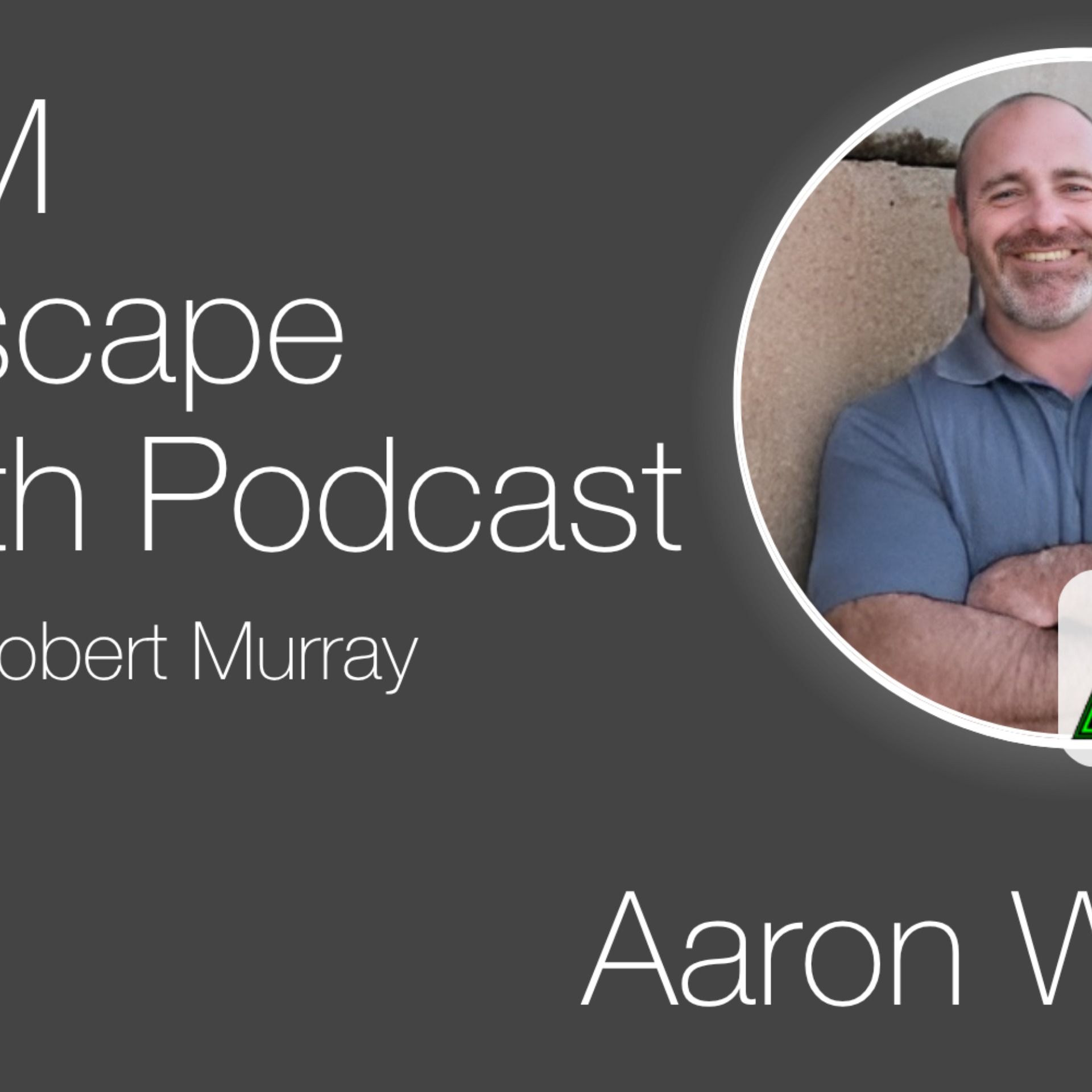
00:31 – 02:30 | Intro + OriginsRob and Aaron reminisce about meeting on a beach in Mexico. Aaron shares his start cutting grass at 16 and how a side hustle became a 24-year career.03:00 – 04:30 | Today’s ACE Outdoor$14 million revenue, 150 employees, 3 locations in southeast Michigan—primarily commercial lawn and snow services.04:30 – 06:00 | Biggest Growth ConstraintRelationships are everything — with clients and employees. Longevity of relationships beats short-term wins.06:30 – 08:30 | Breaking the Muddy MiddleAaron explains the shift from solo operator to team builder. Pain and determination pushed him past the “middle trap.”09:00 – 10:30 | When You Can Hire Real LeadersAround $3 million is the inflection point where you can bring in true leadership talent — not just task doers.11:00 – 13:45 | Hiring People Smarter Than YouAaron’s big breakthrough came from bringing in leaders who told him what he needed to do, not the other way around.15:00 – 17:30 | Clarity + Vision“Figure out what you want and learn to ask for it.” Aaron shares how he documents a 3-year vision and reviews it with his team annually.17:30 – 21:00 | Gratitude and MindsetAaron credits faith, gratitude, and perspective for keeping him grounded through chaos and success.21:00 – 25:00 | Family vs Team CultureA family loves you no matter what; a team requires you to add value. Everyone has a role and shared goal.25:00 – 29:30 | Vision, Metrics & MoneyACE ties clear vision to measurable KPIs and bonuses based on division and company-wide performance.29:30 – 33:30 | Open Financial LeadershipMonthly budget-vs-actual reviews for the top 20 %. Aspire software gives real-time gross-margin visibility.32:30 – 34:45 | Continuous Learning & FaithAaron leans on church, podcasts, books, and industry events to keep growing as a leader.35:00 – 38:00 | Building Relationships with StaffMicro-moments matter — say hi, ask about the weekend, remember names. Trust is built in small interactions.38:30 – 41:20 | Vision Takes TimeVisioning is a weeks-long process of reflection, not a one-hour meeting. Start with the 20-year goal and work backward.41:20 – 42:45 | Final Thoughts + Book ShoutoutsAaron cites Gino Wickman’s Traction and EOS as core frameworks for clarity and execution.
TimestampTopic01:04From Hobby to CEO: Tiffany Sergi's journey to leading Landscapes by D&J after quitting nursing school to take over the business.02:27The Primary Growth Constraint: Leaders themselves being a bottleneck is the biggest thing holding entrepreneurs back in the green industry.03:10Changing Culture: How self-reflection and implementing core values changed the company culture, starting with the leader.03:59The Core Values "FEATT" Acronym: Fun/Family, Excellence, Accountability, Transparency, and Teamwork.07:19Authentic Reinforcement: Creating a weekly core value winner who receives $20 to reinforce desired behavior.09:56Business Scale: Landscapes by D&J is currently around $4 million in revenue, aiming to flip to 70% commercial.10:30Personal Hurdles: Overcoming imposter syndrome as a female leader in a technical industry and hiring a fractional CFO to manage financial analysis.11:47The Superpower of Support: Acknowledging weaknesses and bringing in strong support (SME, fractional CFO) is a critical leadership style.13:20Fighting Imposter Syndrome: Reflecting on past successes and the team created to shift the framework and focus on the mission.14:49The Delegation Hurdle: The next biggest constraint is still being the bottleneck by having a hard time delegating ("I can do it quicker").17:47Balancing Profit and Capacity: How adding administrative salaries (heavy G&A) is an investment that frees up the CEO for higher-leverage, revenue-capturing activities.20:48The Accountability Chart Exercise (EOS): Placing roles and tasks in buckets, not people, to identify where tasks fall and reveal necessary new positions (like Director of Operations).24:49The Hard Part of Leadership: Tiffany walks through the difficult process of terminating employees, grounding the decision in the company's core values.27:52The Arrogance of Cocooning: The flawed thought process of keeping someone for the sake of "not messing up their life" at the expense of the whole company.29:30The Biggest Lesson: "Look in the mirror and not through the window." The culture is a reflection of the leader.30:36Resource Recommendations: Traction, How to Be a Great Boss (Gino Wickman/EOS), and Leaders Eat Last (Simon Sinek).Export to Sheets
“I was the bottleneck. The biggest growth constraint was me learning to get out of the way.” - Burt LabutteResources Mentioned in This Episode:Todd Services - Kurt LaButte's companyPeer Group: Jeffrey Scott Consulting – growth-focused landscape peer groupsBooks/Authors:Simon Sinek – leadership and “Start With Why” principlesAI and leadership books (unnamed, referenced as part of Kurt’s learning path)Game and Business: Referenced as a recommended resource for understanding measurement in businessTopics Discussed:00:01 – Intro: Rob welcomes Kurt LaButte of Todd Services01:13 – The origin story: mowing lawns with rowboats and the “Todd” name04:03 – From small beginnings to $28M and 180 employees07:28 – Biggest growth constraint? Himself—learning to get out of the way08:24 – Surviving the 2008 crash: $10M down to $4M and losing his brother10:18 – The turning point: realizing he was the bottleneck12:09 – Joining a peer group and embracing lifelong learning13:25 – Shifting from dictatorship to open leadership culture15:44 – Tactical advice: sharing numbers, goals, and listening to staff18:23 – Helping employees align personal goals with company direction21:06 – Building for second generation and long-term retirements23:33 – Why stepping away empowers teams and strengthens culture28:28 – The fear of taking time off and advice for small business owners30:24 – Learning numbers early and why metrics matter34:36 – The value of patience, brand, and consistency in growth37:24 – The power of peer groups for accountability and growth39:16 – Books and resources: Simon Sinek, Jeffrey Scott Consulting, AI leadership titles41:00 – Closing thoughts and gratitudeActionable Key Takeaways:Get out of your own way – Leaders often create bottlenecks by micromanaging. Growth requires trust and delegation.Know your numbers – Don’t rely on guesswork; margins, costs, and metrics are non-negotiable for scaling.Embrace learning – Books, peer groups, and outside resources are critical, even if you’re an “old dog.”Share goals openly – Transparency with numbers and objectives boosts accountability and team motivation.Prioritize culture – People thrive when they feel safe making mistakes, voicing ideas, and aligning personal goals with company goals.Play the long game – Brand reputation and consistency compound over decades, not months.Step away sometimes – Taking time off creates space for your team to step up and develop autonomy.
"Just like you wouldn’t expect to change the culture with just one person, the same goes for landscaping—true transformation comes when we embrace diverse perspectives at the leadership table." – Scott GramsResources Mentioned in This Episode:Landscape Illinois: https://landscapeillinois.org – the main association for the Illinois landscape industry.Unreasonable Hospitality by Will Guidara: Amazon link to the book – A book focused on going above and beyond in customer service, offering insights for the landscaping industry.Malcolm Gladwell's books and podcasts: Malcolm Gladwell's website – Known for his books and the podcast Revisionist History, where he explores social behavior and culture.Perplexity AI: https://www.perplexity.ai – An AI tool recommended by Scott for conducting deep dives into regulations and laws.Topics Discussed:(00:02) - Introduction to Scott Grams and Landscape Illinois(02:06) - Scott’s background and current focus as Executive Director(04:23) - Scott discusses the primary growth constraint in the landscape industry today(06:05) - The impact of private equity and the rise of middle management demand(09:42) - How companies are retaining middle management through flexibility and benefits(13:33) - The landscape industry’s openness to sharing and collaboration(16:19) - The value of association engagement and niche demographic groups(19:57) - The importance of networking and mentoring in landscape growth(21:58) - Insights into legislative efforts and lobbying within the landscape industry(29:21) - AI and its growing role in landscape industry operations(33:49) - Educating the landscape community on AI adoption and its potential benefitsActionable Key Takeaways:Middle management is the most crucial but hardest-to-find tier in the landscaping industry today.Flexibility, better benefits, and team-building efforts can significantly improve retention of middle managers.Engagement with industry associations like Landscape Illinois provides a direct path to professional growth and knowledge sharing.Cultivating a strong professional network early in your career can be a game changer for long-term success.Industry growth often hinges on the collaboration and shared knowledge between competitors in the landscape design-build sector.Adopting AI tools in everyday operations, from communication to research, can save time and boost efficiency.Lobbying and legislative engagement are critical to protecting the landscape industry from restrictive regulations.
"Recruiting is like shaving. If you don't do it all the time, you're going to look ugly." - David Whittaker - quoting Tennesee Football Coach Phillip FulmerResources Mentioned in This Episode:Books: "The Energy Bus" by John Gordon, "Traction" by Gino WickmanPodcast: Equiscape Insider, Grass to GratitudeWebsite: Equiscape Business AdvisorsTopics Discussed:00:00 - Introduction to David Whittaker and his background in the green industry.05:15 - David's journey from Gibbs Landscape to Equiscape Business Advisors.12:30 - The role of financial strategy in landscape business success.18:45 - Challenges in recruitment and the importance of a strong team.25:00 - Mindset shifts for entrepreneurs in the green industry.32:15 - The significance of continuous learning and adaptation.40:00 - Closing thoughts and how to connect with David Whittaker.Actionable Key Takeaways:Embrace a financial strategy that aligns with your business goals and market conditions.Prioritize recruitment and continuously build a strong team to drive growth.Shift from a transactional to a transformational mindset for long-term success.Invest in continuous learning and adapt to industry changes.Understand the value of collaboration and resource sharing within the industry.Balance owner's pay with business needs to ensure sustainable growth.Leverage data and analytics to make informed business decisions.

Comments

Download from Google Play

Download from App Store
 United States