


 Claim Ownership
Mass Appeal
Subscribed: 1Played: 17
Subscribe

© 2023 adjoe Mass Appeal
Description
Mass Appeal is a podcast connecting you with the top players in the mobile app economy. App marketing and monetization trends are everywhere, all at once. Our guests break down the winning strategies for how to build apps that monetize, market, and appeal to the masses.
This industry just got noisier! Subscribe and join us every other week as our host Tommy Yannopoulos talks to leaders, CMOs, and CEOs of successful mobile apps. The Mass Appeal podcast is brought to you by adjoe, mobile app monetization and growth specialists. Available on adjoe.io/blog/.
This industry just got noisier! Subscribe and join us every other week as our host Tommy Yannopoulos talks to leaders, CMOs, and CEOs of successful mobile apps. The Mass Appeal podcast is brought to you by adjoe, mobile app monetization and growth specialists. Available on adjoe.io/blog/.
31 Episodes
Reverse
CRM today is much more than sending an email or push notification. It’s about predicting user behavior, understanding their motivations, and finding ways to support them on their journey. In this episode, Tommy chats with Alejandro Hernandez, the Senior CRM Notifications Manager at Babbel, the renowned language-learning app. They discuss what his role looks like today, including the collaborative work being done with data scientists, data engineers, and product teams to develop deep learning models that enhance customer communication. They also dig into CRM strategies to reduce churn and re-engage lapsed users. Questions Alejandro answered in this episode:How much of what you learned in school translated to real-world experiences?What does CRM mean to you today? What is the main objective that you have within your role of CRM?In terms of CRM, what information are you looking for to understand how to communicate with someone?What other information are you looking for to leverage machine learning? And when you leverage machine learning, how does that affect your day-to-day work?Can you tell us about your strategy for reducing churn and reactivating users?What kind of details do you include in a push notification to prevent someone from churning?What are you looking forward to doing with CRM in the future?Timestamp:2:08 Intro to Alejandro6:18 What does CRM look like today9:10 Mapping out the learning journey12:08 Leveraging deep learning15:00 Strategies for reducing churn18:16 Reengaging dormant users24:25 The future of CRMMentioned in this Episode:Alejandro Hernandez’s LinkedInBabbel
Trishul Patel is the VP of Product at EmberFund, an app that allows you to play popular sweepstakes casino games, learn about crypto investing, and earn Bitcoin for free. Trishul focuses on keeping their product fun. In this episode, he touches on EmberFund’s evolution from a crypto fintech app to a gaming app, what drives product development, and what keeps their users coming back to engage with their app.Questions Trishul answered in this episode:Tell us about your background prior to joining EmberFund.What was the first opportunity you noticed at EmberFund that you could impact when you joined?Why don’t you tell everyone how you see EmberFund and what you think it is?How do you point your attention to what's next within a superapp?What does the app landscape look like for your industry?Where do you spend the most time drawing influence from?What’s got you excited in terms of new features?Timestamp:2:54 Trishul’s background8:21 The Google survey test10:29 What is EmberFund?15:52 Product development within a superapp product18:06 EmberFund within its market20:02 Players we pay attention to23:38 What our users want25:05 What’s to comeMentioned in this Episode:Trishul Patel’s LinkedInEmberFund
Ian Chen is the CEO of discotech, an app for booking live events and nightlife amenities. In recent years, nightlife demographics have shifted, and Gen Z doesn’t party in the same ways Millennials did. In this episode, listeners learn how discotech adapted its mobile marketing strategies to appeal to the next generation. Questions Ian answered in this episode:How did you arrive at creating discotech?How do you create value for customers and vendors?How do you identify and acquire the right customers?What changes have you noticed in your industry over the last few years?How does discotech meet the needs of Gen Z?What does the experience look like when booking tickets to Cirque du Soleil?How do you determine what kind of events might be interesting for Gen Z?Timestamp:2:15 discotech’s origin story4:36 What is discotech?8:22 UA for nightlife goers11:38 Nightlife culture: Millennials vs Gen Z16:26 Appealing to Gen Z19:15 Partnerships strategyMentioned in this Episode:Ian Chen’s LinkedInDiscotechSocials: @discotechapp
Questions Rodney answered in this episode:Tell us about your background.How did you go from brand management at P&G to co-founding SoLo Funds?At what point do you realize you’re ready to go full-time into your endeavor?How does SoLo Funds benefit working-class people?How did you grow SoLo Funds to where you are today?What are you looking forward to this year?Timestamp:2:45 Rodney’s entrepreneurial beginnings8:07 From P&G to SoLo Funds19:35 What is SoLo Funds?27:00 The network effect for organic growth32:12 Big things comingMentioned in this Episode:Rodney Williams’s LinkedInSoLo FundsSocial handle: @rodneybwilliams
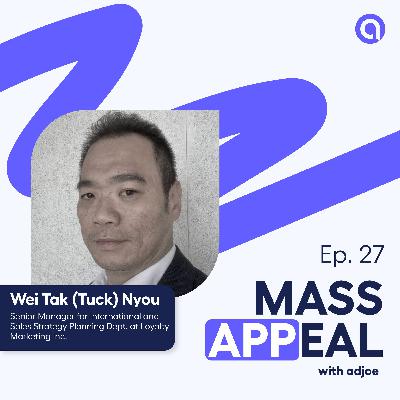
In this episode, Tommy interviews Wei Tak “Tuck” Nyou, the Senior Manager of Loyalty Marketing at Ponta, a loyalty rewards coalition in Japan with over 200 brands and 120M Japanese members – more than 90 percent of Japan’s population. You’ll learn some of the reservations brands commonly express about joining such coalitions, as well as the value proposition for brands. You’ll also learn Ponta’s perspective on what makes a brand attractive to acquire. Finally, you’ll hear about the challenges and opportunities of expanding their loyalty rewards coalition overseas to Taiwan, Vietnam, and Hawaii, the potential for new verticals, and integrating mobile games with their reward program.Questions Tuck answered in this episode:Can you tell us a little about your background?Why did you want to shift your career from B2B to B2C?Can you tell us about Ponta and Loyalty Marketing?Why would a brand not want to join a loyalty coalition? What are the challenges of getting brands to join Ponta, for example?Is there an element of customer acquisition built into these programs?How do you determine which new brands would be most valuable for you to add to your coalition?Is there anything unique about the loyalty market in Japan? Does that make it difficult to expand into new regions overseas or are there opportunities to expand?Were there any challenges you encountered when you expanded to either Taiwan, Vietnam, or Hawaii?Are there new verticals you’re considering expanding into?Has your team considered integrating mobile games into your rewards program?Timestamp:2:20 Tuck’s professional background7:18 What does Ponta do?11:11 Common fears with loyalty coalitions15:20 Determining what brands to acquire17:24 Ponta research members18:50 Expanding our point system overseas20:23 Challenges to expansion23:01 New verticals26:17 Integrating mobile gamesMentioned in this Episode:Wei Tak “Tuck” Nyou’s LinkedInPonta’s Loyalty Marketing, Inc.Ponta’s Loyalty Marketing, Inc. (in Japanese)
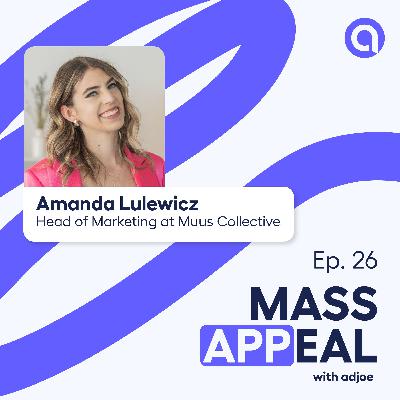
Questions Amanda answered in this episode:Were you a gamer or what prompted you to take the huge leap from PR to mobile games?What’s been the biggest challenge you’ve faced since joining Muus Collective in your role as Head of Marketing?How are you leveraging partnerships with BELLEMINT? What do you think makes a good partnership with game studios?How are Bellemint users interacting with Revolve?What role do community and social experience play in BELLEMINT?What’s your strategy for UA?Timestamp:5:00 Amanda’s background11:06 Fundraising challenges in Silicon Valley14:50 Approaches to partnerships20:21 Bellemint and Revolve’s partnership25:30 Who are the “gamers”?28:19 UA for fashion gamers and loversMentioned in this Episode:Amanda Lulewicz’s LinkedInMuus Collective
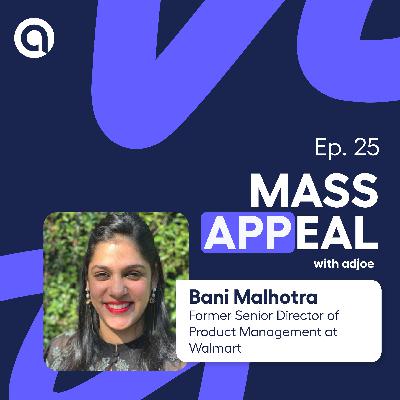
It’s no secret: AI has been all the buzz lately. But, what is it, really? In this episode, Tommy talks to Bani Malhotra, the former Senior Director of Product Management for Site Experiences and Omnichannel Personalization at Walmart U.S. eCommerce, who demystifies the many terms we hear related to artificial intelligence, including machine learning, deep learning, LLMs, SLMs, and Generative AI. She covers its many use cases for marketers and product managers to advance efficiency, productivity, creativity, and even business development. She also touches on some of her concerns about the technology regarding its drawbacks. Questions Bani answered in this episode:What was your first foray into a product role from your finance and strategy background, and what was one of the biggest challenges in making that leap?Were you implementing AI to help tackle some of the challenges you faced in your role at Walmart?When does a decision go from a logic tree to AI?How do outlier consumer purchases affect AI predictions?Could you define SLMs and LLMs?Where do you see AI benefiting marketers the most?Do you have any fears of what AI may threaten?Timestamp:2:38 Bani’s background9:58 Bani’s role at Walmart17:42 Use cases of AI for user experiences at Walmart21:10 The difference between heuristics and AI23:52 The spectrum of machine learning28:20 AI model confidence scoring31:10 What is AI? Defining AI-related terms41:00 Benefits of AI for marketers54:45 Concerns for AIMentioned in this Episode:Bani Malhotra’s LinkedIn
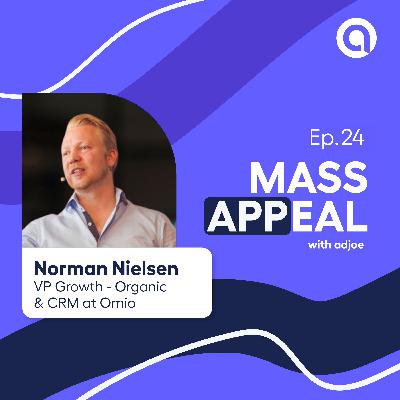
Questions Norman answered in this episode:Tell us about your background in growth.What is Omio?Do you have localized marketing support in each market? Or are you able to centralize most of what you do in Berlin?What are some of the biggest hurdles you face when penetrating a new market?Why are you a big proponent of AI? How do you use it?What is AI incapable of helping you with today?How is your team leveraging AI around engagement and loyalty?How do you port data into AI models?How do you discern what is a good AI solution from others?How much is this about training your employees how to effectively prompt AI?Timestamp:3:13 Norman’s background8:24 What is Omio?10:03 The future of localization for foreign markets12:18 Hurdles to breaking into new markets14:00 5 ways AI enables his life15:45 Limitations of AI (it’s not creativity)19:15 AI for engagement and loyalty21:55 Tools to port your data into AI Solutions24:29 The 5 foundational AI models25:55 A/B testing AI content and training LLMs28:28 Training your employees to prompt AIMentioned in this Episode:Norman Nielsen’s LinkedInOmioLeaderz of the New School Podcast
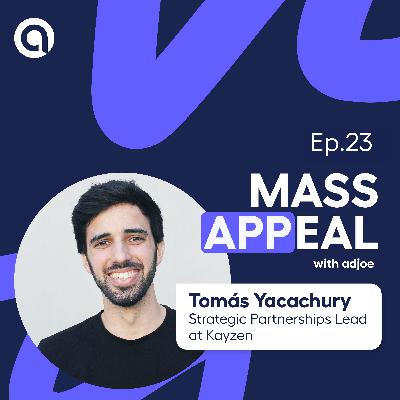
Questions Tomás answered in this episode:Tell us about how you got into programmatic advertising.Does your mathematics degree still play a role in what you do today?What is Kayzen? And what sets it apart in the marketplace?What does the democratization of programmatic mean to you? And how are you doing it?Do you see ad inventory changing marketing strategies for your customers?Are you seeing creatives being tailored to specific apps?Timestamp:4:32 Tomás’s background8:20 About Kayzen9:53 How we “democratize” programmatic advertising16:00 Kayzen School of Programmatic19:54 What marketers can learn from ad inventory indexes25:45 Customizing creatives to app gameplay27:15 Misconceptions around games for app advertising31:10 Clicks and engagement in programmaticMentioned in this Episode:Tomás Yacachury’s LinkedInKayzenKayzen’s 2024 Mobile Programmatic Inventory IndexCase study: AlbertsonsCase study: Maniko Nails
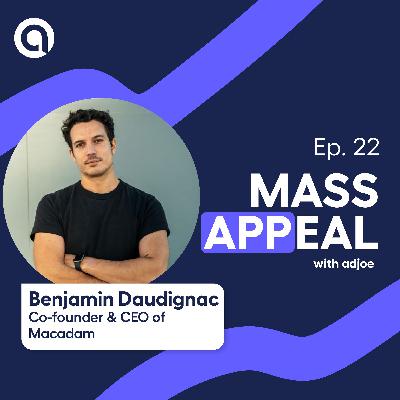
Benjamin Daudignac is the co-founder and CEO of Macadam, a European app that pays people to walk. Since its launch two years ago, the app has gained 2 million daily active users. In this episode, Tommy digs into Benjamin’s entrepreneurial journey creating Macadam, the challenges Macadam faced coming to market, and the strategies they use to keep app users engaged—and walking more! Questions Benjamin answered in this episode:What brought you to Barcelona?Why escape Paris?Where did the idea for Macadam originate? Tell us about the story of starting it.What was your biggest challenge in getting this product into the market and having it adopted by consumers?How do you leverage the community you’re growing within your app to deliver more engagement?How are you thinking about keeping users engaged in the future?How do you decide where to expand your business?Timestamp:3:08 Choosing an environment for entrepreneurship10:07 Ben’s entrepreneurial start14:27 Macadam’s origin story19:15 Bringing Macadam to market22:12 Leveraging community24:20 Gamifying walking to drive engagement29:32 Considering where to expandMentioned in this Episode:Benjamin Daudignac’s LinkedInMacadam
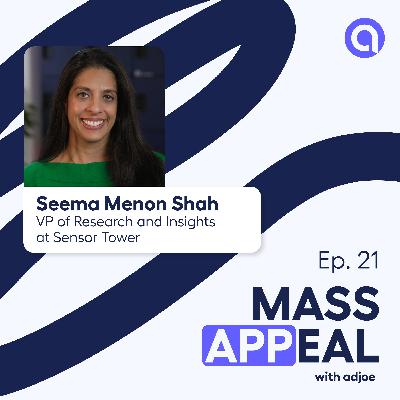
Questions Seema answered in this episode:Do you have a sense of why a platform like Sensor Tower gets labeled as “alternative” data?What attracted you to pivoting to the mobile space, for a company like Sensor Tower?I assume the most resurrected users are in streaming and dating spaces. Am I on point or way off?What evolutions have you been seeing in advertising within social networks?Heading into the holiday season, what do you expect will happen with large e-commerce brands? Where will they be investing their mobile advertising?Timestamp:5:14 Seema’s background9:53 What is Sensor Tower?14:55 Where are the most resurrected users?20:17 Trends in-app advertising on social networks31:33 Holiday advertising for e-commerce brandsMentioned in this Episode:Seema Shah’s LinkedInSensor Tower
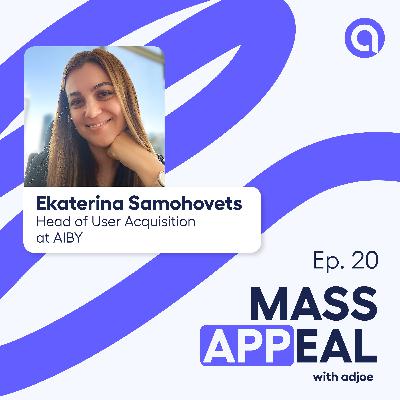
Ekaterina Samohovets is the Head of User Acquisition at AIBY, a company building businesses that specialize in mobile app products. With over 50 apps and more than 2 billion downloads across their portfolio, Ekaterina shares insights into her approach to managing performance marketing across a team of 25 people. Questions Ekaterina answered in this Episode:What is AIBY?What kinds of apps are in your portfolio? What are some of your biggest hits?How do you organize managing growth strategies for such a large portfolio?How do you help people on your team get up to speed with channels that they’re not as familiar with?What else is key to your success?Timestamp:2:45 Ekaterina’s performance marketing background6:30 What is AIBY?9:47 A look inside AIBY’s UA team structure13:00 Internal sharing system18:00 Tips for successMentioned in this Episode:Ekaterina Samohovets’s LinkedInAIBY
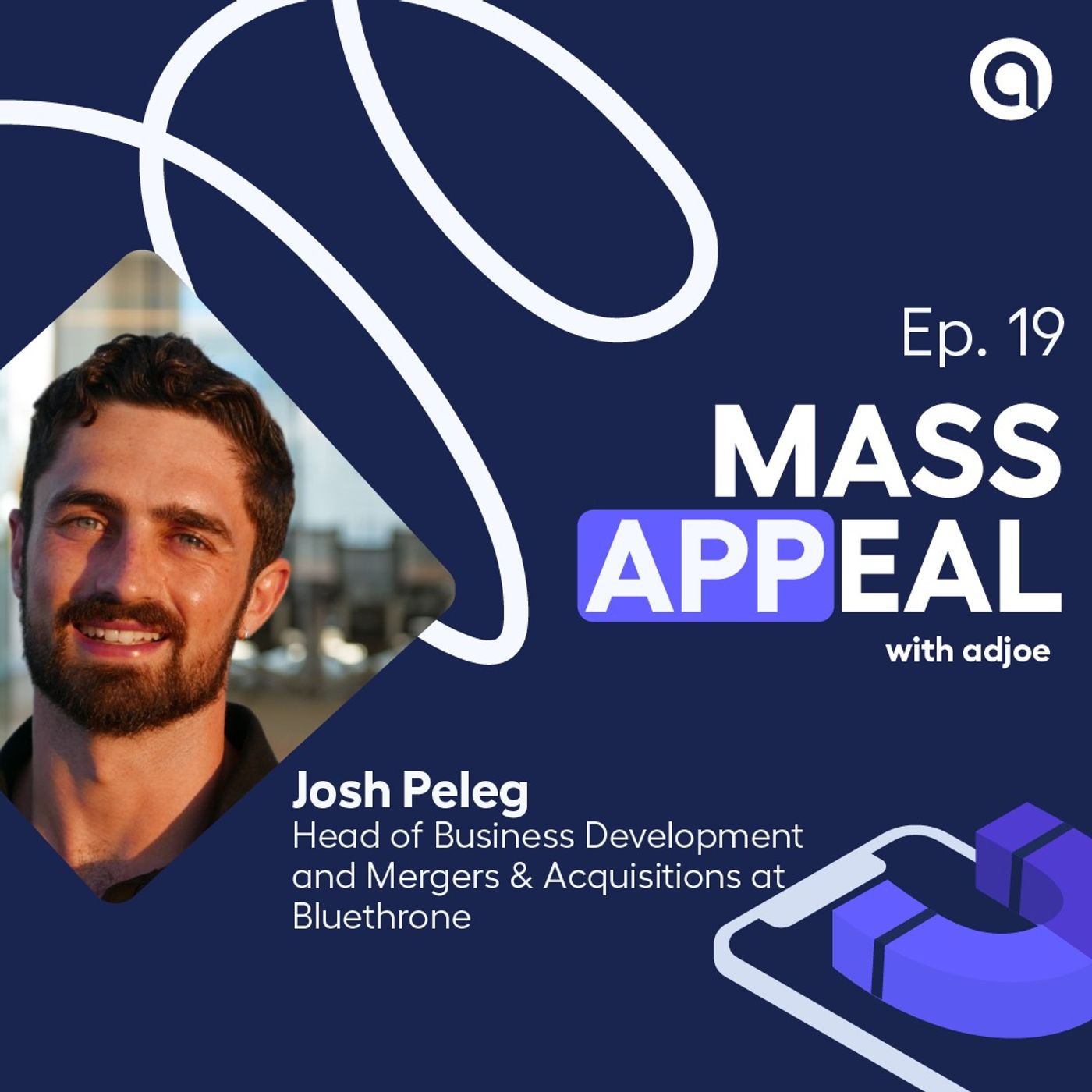
BlueThrone acquires great apps and takes them to the next level. Josh Peleg is the Head of the Business Development and Mergers & Acquisitions department responsible for building relationships with app developers and overseeing the acquisition of apps to their portfolio. In this episode, you’ll learn what app metrics are most interesting to venture capitalists and app acquirers, macro trends in the app M&A market, and how to present your app for a successful exit. Questions Josh answered in this Episode:What’s more common for BlueThrone, partnerships or acquisitions?How and where do you draw the line of distinguishing which niche apps have even potential to grow?When are you considering M&As, are you looking at the metrics of an app or are you looking at the macro trends of the verticals they’re in?How do app developers present their apps to potential acquirers such as BlueThrone?What app metrics are venture capitalists and acquirers more interested in?What metrics matter most for the gaming vertical?How important is the experience level of app developers to you?What’s an app or vertical that surprised you in its ability to produce fantastic results for you all?Timestamp:1:34 Josh’s background4:50 What makes an app interesting to acquirers7:00 How are app ratings used as a signal?9:00 Pros and cons of niche apps10:48 Where the dating app market is growing17:14 Consideration of macro trends for M&As20:27 Presenting your app for an exit23:09 What metrics matter26:28 Gaming industry: what’s most important31:20 Why experience level matters33:13 Virality: what worksMentioned in this Episode:Josh Peleg’s LinkedInEmail: josh.p@bluethrone.ioBlueThrone

What do mobile jigsaw puzzles have to do with tugging on human heartstrings? In this episode, Anastasia Zaiceva, the Chief Communications Officer at ZiMad, a reputable mobile game developer and publisher, reveals how branding can be used as a tool to evoke emotions and build relationships around mobile games. Questions Anastasia answered in this Episode:Why has ZiMad put a big emphasis on communications?Where do you put most of your energy? Is there a particular initiative you’ve been focused on over the last year in communications?With something like a jigsaw puzzle, how do you approach the idea of emotion? And how do you separate it from entertainment?Timestamp:6:21 Anastasia’s background in mobile gaming13:50 About ZiMad15:58 Communications vs user acquisition17:50 Building community around games21:48 Puzzle packs & love stories28:30 In-game features that connect peopleMentioned in this Episode:Anastasia Zaiceva’s LinkedInZiMad

In this episode, Tommy interviews Diego Kafie, the Co-Founder and CEO of Playbite, an arcade app where players can win real prizes or earn money by creating games. They discuss taking the leap of launching a startup, monetization strategies, and the three-way relationship between app developers, players, and users who can learn how to make games through Playbite’s creator platform. Questions Diego answered in this Episode:Was leaving your job and jumping into venture funding for Playbite scary for you? What was the learning curve like?What is Playbite and how did you get backers to believe in Playbite?What models do you use to monetize Playbite?How do you overcome the obstacle of teaching aspiring creators how to code games?Timestamp:4:54 Diego’s background & origin of Playbite11:17 Launching Playbite12:54 Chuck E Cheese to Playbite17:53 Creator platform: a symbiotic relationship25:00 Monetization models30:30 Coaching aspiring game creatorsMentioned in this Episode:Diego Kafie’s LinkedInPlaybite
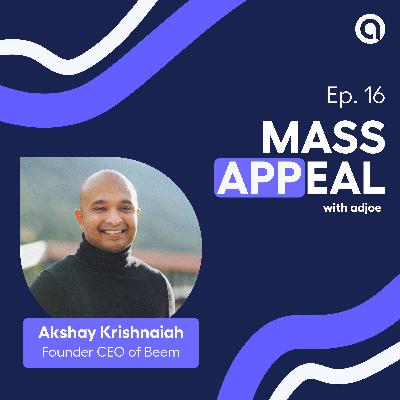
Learn the story of Akshay Krishnaiah, the founder and CEO of Beem, an app harnessing the power of AI to improve the financial wellbeing of the world’s working population. Unlike most fintech apps focused on markets that will produce a profit, Beem intentionally serves people regardless of income, immigration status, or credit score. Five million downloads later, find out how Beem has grown organically, thanks in part to their pressroom that cranks 400 to 500 pieces of content every week. Before founding Beem, Akshay was the Global Product Head of Research Labs at PayPal, where he led a team of innovators and filed 75 consumer fintech patent publications in areas such as digital wallets, identity platforms, and hybrid tokens. He is based in San Francisco. Questions Akshay answered in this Episode:What drives you to be an entrepreneur?What were some of the transformative experiences you had on your way to founding Beem?How do you go about educating people about your product?How is AI exemplified in your product?How did you get 5 million downloads organically?Timestamp:2:50 Akshay’s background and first hustle10:20 Akshay’s path to founding Beem15:18 Beem’s origin story22:18 Beem’s approach to financial empowerment27:35 Finding Beem’s market31:07 Bringing good intention to AI36:10 Growing Beem’s millions organicallyMentioned in this Episode:Akshay Krishnaiah’s LinkedInBeem

Do you understand your customer’s needs and how to satisfy them, at the right time? Alex Saul, an expert and consultant with 25 years of experience in customer loyalty, joins the podcast to talk about loyalty. He distills the essence of any effective loyalty program – hint: it centers around the customer – as well as ways that loyalty programs can help brands meet their strategic objectives, including monetization. You’ll learn how variable rewards can increase user engagement, how retail media can generate revenue, and how loyalty programs can help change user behavior, track omnichannel traffic, and bring valuable customer insights.Questions Alex Answered in this Episode:What experience was most important to your career?How do you go about understanding what a customer’s needs are?How have you seen the way loyalty brands view monetization change?What are variable rewards?What monetization strategies do you see work well in addition to variable rewards?Timestamp:2:00 Alex’s background5:43 Challenges in the loyalty industry7:55 Learning the true meaning of loyalty10:05 Understanding the customer12:00 The science behind loyalty14:30 How loyalty can support monetization18:00 Variable rewards23:35 What is retail media?25:23 How loyalty can help brands track omnichannel traffic28:37 Responsible retail media31:45 Consumer insights help monetizationMentioned in this Episode:Alejandro “Alex” Gonzalez Saul’s LinkedIn
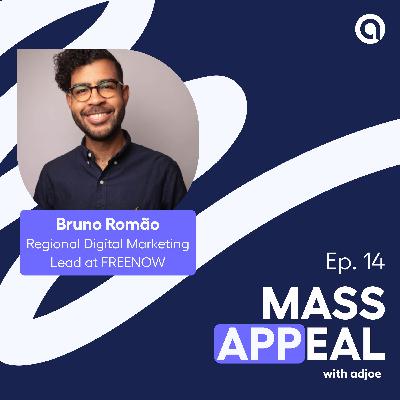
In this episode Tommy chats with Bruno Rodrigues, the Regional Digital Marketing Lead at FREENOW, to learn about the European transportation super app’s approach to re-engaging users and measuring the incremental uplift of their campaigns in one of the mobile app industry’s most competitive verticals. Questions Bruno Answered in this Episode:How do you approach engagement and what importance does your business put on engagement as a strategy?How do you develop your audience clusters?How do you communicate with customers to re-engage them with your app?How do you measure incremental uplift? What challenges do you have working with different platforms that have different methodologies for measuring incrementality?Timestamp:2:14 Bruno’s background8:10 Bruno’s approach to engagement 9:45 Developing audience clusters11:38 Re-engagement communication tactics13:30 How FREENOW approaches incrementality19:07 Extensive creative testing is keyMentioned in this Episode:Bruno Romão Rodrigues’s LinkedInFREENOW
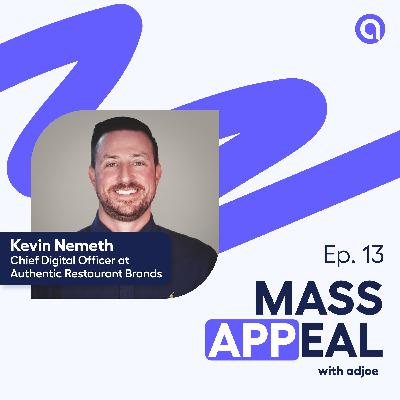
In this episode, Tommy interviews Kevin Nemeth, the Chief Digital Officer for Authentic Restaurant Brands, about the evolving landscape of digital loyalty programs for quick-service and casual dining restaurants. You'll learn how Kevin’s team differentiates their loyalty programs by offering value to their customers through special offers, ease of sign-up, and personalized experiences -- without disrupting the established brand's identity. Don’t miss this deep dive into leveraging first-party data to drive customer engagement and create compelling digital strategies for restaurant brands that keep customers coming back.Questions Kevin Answered in this Episode:What staying power did Covid’s effects on restaurants have?Is there a cost benefit to bringing customers to your website or app?How do you translate in-person restaurant experiences into a digital environment that’s useful for customers?How do you drive adoption to your loyalty program?Timestamp:2:58 Covid’s lasting impact: ordering food through apps6:00 Economics of driving customers to first-party platforms10:10 Overview of Authentic Restaurant Brands12:20 Regional Fortress Brands strategy16:33 Translating in-restaurant experiences to digital21:51 Importance of differentiation in loyalty programs22:02 Overcoming barriers to loyalty program sign-ups22:35 The success of PJ Whelihan's loyalty program25:20 The value exchange in modern loyalty programs27:27 Customer data is currency30:59 Gamification and brand recall strategies37:10 Building digital capabilities for restaurant brands40:17 What's aheadMentioned in this Episode:Kevin Nemeth’s LinkedInAuthentic Restaurant Brands
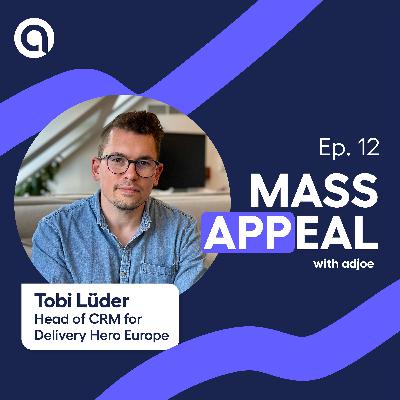
Tobi Lüder is the Head of CRM at Delivery Hero, a food and grocery delivery app operating in over 70 countries. In this episode, Tommy and Tobi talk about how to keep customers engaged with your app and converted into subscribers. You’ll learn how to win the loyalty of your customers, the difference between heavy users and loyal users, how to measure the incremental lift of your marketing efforts, and more!Questions Tobi Answered in this Episode:Does CRM strategy change significantly from one country to another?How do you keep customers engaged with the Delivery Hero brand?What is the process for identifying your heavy users that require less incentives?How are you measuring the incremental lift of your marketing efforts?Are your customers actively engaged in your loyalty program? Is that an important tool for them?How do you determine who to heavily market your subscription to and articulate the value proposition?Is frequency the most important metric when segmenting your audiences?Timestamp:2:40 Tobi’s background5:16 Changes to CRM strategies in different countries6:40 About Delivery Hero9:38 How to win the loyalty of your cusomters14:40 Heavy users vs loyal users18:12 Measuring results with control groups20:48 Attracting customers to our loyalty program15:25 Acquiring subscribers in the app28:09 Importance of frequency as a metricMentioned in this Episode:Tobi Lüder’s LinkedInDelivery Hero

Comments

Download from Google Play

Download from App Store
 United States