


 Claim Ownership
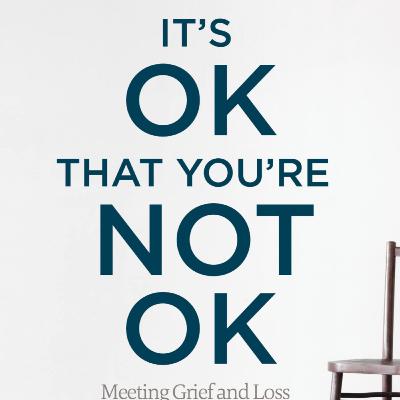
IT'S OK THAT YOU'RE NOT OK in English
Subscribed: 6Played: 23
Subscribe

© Raja Babu
Description
There is a twin paradox in being human. First, no one can live your life
for you—no one can face what is yours to face or feel what is yours to feel—and
no one can make it alone. Secondly, in living our one life, we are here to love
and lose. No one knows why. It is just so. If we commit to loving, we will
inevitably know loss and grief. If we try to avoid loss and grief, we will never
truly love. Yet powerfully and mysteriously, knowing both love and loss is what
brings us fully and deeply alive.
for you—no one can face what is yours to face or feel what is yours to feel—and
no one can make it alone. Secondly, in living our one life, we are here to love
and lose. No one knows why. It is just so. If we commit to loving, we will
inevitably know loss and grief. If we try to avoid loss and grief, we will never
truly love. Yet powerfully and mysteriously, knowing both love and loss is what
brings us fully and deeply alive.
18 Episodes
Reverse
APPENDIX
How to Help a Grieving Friend
My essay on how to help a grieving friend is among the top three most
shared posts I’ve ever written. A lot of what I’ve mentioned in part 3 is
summarized in this essay, so I’ve reprinted it here. To give it to friends and
family who want to help, you’ll find a printable copy at
refugeingrief.com/help-
grieving-friend.
LOVE IS THE ONLY THING THAT LASTS
How do we end a book on loss if we don’t lean back on the expected
happy ending? If we don’t search for a tacked-on transformation, or a
promise
that everything will work out in the end?
I end this book with love because love is all we’ve got. It’s neither up-note
nor doom. It simply is.
We grieve because we love. Grief is part of love.
There was love in this world before your loss, there is love surrounding
you
now, and love will remain beside you, through all the life that is yet to
come. The
forms will change, but love itself will never leave. It’s not enough. And it’s
everything.
PART IV
THE WAY FORWARD
15
THE TRIBE OF AFTER
Companionship, True Hope, and the Way Forward
Companionship, reflection, and connection are vital parts of surviving
grief. As I mentioned at the beginning of this book, attachment is survival.
We
need each other.
RALLYING YOUR SUPPORT TEAM
Helping Them Help You
Our friends, our families, our therapists, our books, our cultural
responses—they’re all most useful, most loving and kind, when they help
those
in grief to carry their pain, and least helpful when they try to fix what isn’t
broken.
Most people want to help; they just don’t know how.
There’s such a huge gap between what people want for us, and what they
actually provide with their support. It’s no one’s fault, really. The only way
to
close that gap is to let people know what works, what doesn’t, and how we
can
all improve our skills in caring for each other.
PART III
WHEN FRIENDS AND FAMILY DON’T
KNOW WHAT TO DO
13
SHOULD YOU EDUCATE OR IGNORE
THEM?
If you’re like most grieving people, the response from people around
you has been clumsy at best, and insulting, dismissive, and rude at worst.
We
talked about the deep roots of pain avoidance and the culture of blame in
earlier
parts of this book. It’s also important to bring it all back to your personal
life, to
help you understand—and correct—the unhelpful support of the people
around
you.
FIND YOUR OWN IMAGE OF “RECOVERY”
Talking with people in new grief is tricky. During the first year, it’s so
tempting to say that things get better. I mean, is it really a kindness to say,
“Actually, year two is often far harder than year one”? But if we don’t say
anything, people enter years two and three and four thinking they should
be
“better” by now. And that is patently untrue: subsequent years can actually
be
more difficult.
WHAT DOES ART HAVE TO DO WITH
ANYTHING?
I want to tell you that the creative process will be healing for you, in
and of itself. But I’m a terrible liar.
I can’t bring up the creative process without being honest about my own
path. The arts, or any artistic practices, were hard for me in the early days
of
grief. I resented words and writing for a really long time. I resented any
creative
process for a really long time. Even as I needed them.
GRIEF AND ANXIETY
Calming Your Mind When Logic Doesn’t Work
Grief changes your body and your mind in strange ways. Cognitive
capacity isn’t the only brain function that gets wonky. Anxiety—whether
it’s
new to you, or you experienced it before your loss—is a huge issue in grief.
I used to struggle a lot with anxiety.
WHAT HAPPENED TO MY MIND?
Dealing with Grief’s Physical Side Effects
Descriptions of the many ways grief impacts your body and mind are
not always easy to find. This chapter covers some of the most common—
and
strange—effects of grief and offers tools to help support and nourish your
body
and mind as you navigate the new landscape of life after loss.
HOW (AND WHY) TO STAY ALIVE
Using tools to reduce your suffering is one of the few concrete actions
to take inside grief. Reducing suffering still leaves you with pain, however,
and
that pain can be immense.
Surviving early grief is a massive effort. Forget getting through the day;
sometimes the pain is so excruciating, the most you can aim for is getting
through the next few minutes. In this chapter, we review tools to help you
bear
the pain you’re in, what to do when that pain is too much, and we explore
why
kindness to self is the most necessary—and most difficult—medicine.
YOU CAN’T SOLVE GRIEF, BUT YOU
DON’T HAVE TO SUFFER
Living inside grief, you know there is nothing to be fixed: this can’t be
made right. While most grief support (and well-meaning friends and
family)
encourages you to move through the pain, that’s simply the wrong
approach.
The way to live inside of grief is not by removing pain, but by doing what
we can to reduce suffering. Knowing the difference between pain and
suffering
can help you understand what things can be changed and what things
simply
need your love and attention.
WHAT TO DO WITH YOUR GRIEF ON RIGHT TIMING: A NOTE BEFORE WE GET STARTED I devoured books on grief and loss when Matt first died. I hated most of them. I would flip to the back of a new book to see if the widowed author had remarried. If they had, I wouldn’t read the book—clearly, they did not understand what it was like to be me. I would get all excited reading the first few chapters of a new book on loss, only to hurl it away in disgust when subsequent chapters started talking about rebuilding my life and all the great things I might do as a result of this loss.
THE NEW MODEL OF GRIEF
Having traveled down into the cultural roots of grief avoidance, how do
we find our way back out? How do we become, not only people, but a
whole
wider culture, comfortable bearing the reality that there is pain that can’t
be
fixed? How do we become people who know that grief is best answered
with
companionship, not correction?
EMOTIONAL ILLITERACY AND THE
CULTURE OF BLAME
There’s such a pervasive weirdness in our culture around grief and
death. We judge, and we blame, dissect, and minimize. People look for the
flaws
in what someone did to get to this place: She didn’t exercise enough. Didn’t
take
enough vitamins. Took too many. He shouldn’t have been walking on that
side of
the road.
IT’S NOT YOU, IT’S US
Our Models of Grief Are Broken
When someone you love has just died, why does it matter that our
cultural models of grief are broken? I mean—who cares? This is about you,
not
everyone else. Except that, especially in early grief, everyone thinks you’re
doing it wrong. The reflection you get from the outside world can make
you
think you’ve gone crazy on top of everything else.
THE SECOND HALF OF THE SENTENCE
Why Words of Comfort Feel So Bad
It’s incredibly hard to watch someone you love in pain. Those who love
you tell you you’re strong enough to get through this. You’ll feel better
someday.
It won’t always be this bad. They encourage you to look to your much
brighter
future, to a time when you aren’t in so much pain.
PART I
THIS IS ALL JUST AS CRAZY AS YOU THINK IT IS
1
THE REALITY OF LOSS
Here’s what I most want you to know: this really is as bad as you think.
No matter what anyone else says, this sucks. What has happened cannot be
made right. What is lost cannot be restored. There is no beauty here, inside
this
central fact.
INTRODUCTION
The way we deal with grief in our culture is broken. I thought I knew
quite a bit about grief. After all, I’d been a psychotherapist in private
practice for
nearly a decade. I worked with hundreds of people—from those wrestling
with
substance addiction and patterns of homelessness to private practice
clients
facing decades-old abuse, trauma, and grief
Comments

Download from Google Play

Download from App Store
 United States