


 Claim Ownership
Barbary Lane Dispatches Podcast
Subscribed: 4Played: 16
Subscribe

© Armistead Maupin
Description
Pull up a chair on the porch of 28 Barbary Lane—tales, truth, and tea from Armistead Maupin.
armisteadmaupin.substack.com
armisteadmaupin.substack.com
36 Episodes
Reverse

Here’s a transcript of the video: When I was a little boy, I had a terrible recurring nightmare. It wasn’t about a specific thing—it was just a kind of feeling, a sort of thrumming in my head that scared the hell out of me. And inevitably I would end up going into my parents’ bedroom and crawling in between them to feel safe from that nightmare.Then I developed the technique of telling myself a story at bedtime to get to sleep. It’s really where my serial fiction began in that form. I would tell a story and then make it continue the next night. I’d usually have a couple of stories going at the same time.I remember one was set in Florida, in Tarpon Springs—or at least that’s where the movie was set. I saw something called Beneath the 12 Mile Reef that really affected me in terms of making me fascinated by the undersea world. It was about these Greek-American fishermen who were going underwater with those big steel diving helmets, and it just made me think about the whole world of the undersea.The other one was something I called The Secret Crossroads, which was inspired by the Hardy Boys, really. A lot in those days was inspired by the Hardy Boys.I still tell myself stories sometimes at night. It’s an old habit, and I haven’t broken it easily. But that’s where most of my stories came from—from that habit of putting myself to sleep, a sort of self-hypnosis when I was a little boy.So storytelling really came first. Writing kind of crept up on me.I kept a diary when I was nine years old in which I recorded all sorts of useless information—but I still have that diary somewhere. I would write about movies I had seen and what I’d had for lunch. It was all over the place, really.I would write about my friend Bobby Ballance who, on the bus with me, would make up stories about mysterious murder cases and how we were going to solve them. Bobby was the only person I knew who had a tape recorder—a reel-to-reel recorder—and we would go over to his house and record the clues on the tape recorder.About the same time, I took shirt cardboards from my father’s shirts and used them as things I could write on, and I created a comic book called Little Tallulah, which was a merger of the two things I loved most: Little Lulu, the comic, and Tallulah Bankhead.As a child I would hear Tallulah Bankhead on the radio doing her “Big Show”, and I loved her. She had a voice that was as deep as a man’s, and a very warm way about her that was appealing to me as a little boy.At Ravenscroft School—which is where I went to grade school—I had a teacher named Mrs. Robertson. She brilliantly gave us an assignment called Word Pictures, where she would give us a postcard and ask us to describe what we saw in the postcard.She gave one to me which evoked a whole story about the Old West—a saloon at night with lights coming out of the window—and I built a story around it. I wrote about a piano tinkling at night, footsteps on the path, and a mysterious stranger coming into town. It started to build my imagination.I count her as one of my first really serious influences when it comes to telling stories—to writing. She read my story aloud to the class, which thrilled me and made me very proud.I wrote a story in the seventh grade about a boy that’s fixating on a girl—a beautiful girl in his class—and he thinks of her as a goddess, really, until he discovers that she has a vaccination mark, you know, a sign of her human nature. I was obviously trying to talk myself out of having a romance with anybody… I must have been dealing with that.But the person who really made a difference to me was Mrs. Phyllis Peacock, who was my senior English teacher.We’ve all had one of those teachers—or if we were lucky, you’ve had one of those teachers—that you remember all your life, and who changed the way you think and work and create.A lot of people thought she was kind of a loony because she was melodramatic. She would jump on a chair to make a point. But I thought she was charming—and the fact that she liked me had something to do with it, I suppose.She had two other students, Anne Tyler and Reynolds Price, both of whom became famous writers, and she was always telling me that she thought of me in the same way—that I could do that.She singled me out, in other words, and paid special attention to me. And while it must have annoyed the hell out of some of the other students, it charmed me and made a difference.I think she sensed that I was a bit of a wallflower—maybe even a prude—and so she gave me an assignment to explain the origins of the maypole.I had no idea what that meant, but I went home and asked my parents and saw great embarrassment in their faces… they couldn’t talk about it. So my mother left an Encyclopaedia Britannica on my bed with it open to “Maypole,” where it explained that it was a phallic symbol.So I went in to talk to Mrs. Peacock the next day, and she sat there, eyes twinkling, while I explained about penises and whatever symbolism was involved. She knew exactly what she was doing. She wanted to get that out of me—I look at it as an act of benevolence now.So the big finale for the year was a stage performance that we would do in the theater of the high school. I was comfortable with this because I had already been in the production of The Desperate Hours at the Raleigh Little Theatre—a grown-up play where I was the little boy on stage. The hardest part about being in that play was coming in with a football and throwing it around as if I knew what to do with it.So Sarah Pierce and I, a classmate, were assigned to do this performance that I called Sleep in Literature. We dressed all in white. We made columns out of Pine State Creamery ice-cream cartons—made Corinthian columns—and we read “The Lotus Eaters” by Tennyson.At the end of the reading, I looked out into the audience to see what kind of response I was getting, and Mrs. Peacock was feigning sleep. Her head was over to one side… and then she very melodramatically woke up.It was her way of telling me that it was doing exactly what I thought it would do—that she had fallen asleep in the course of listening to my poem.She was one of those rare teachers who really inspired me to do better—to create, to write, really.She died when she was in her nineties in 1998, I believe. And I certainly didn’t keep up with her at that point, but she lives in my memory so vividly. And a lot of other writers as well—not just writers, but people who loved her—remember what she was like, how inspirational she was, and how much she cared about what she did. It was an amazing thing to be a part of.The last time I saw her was when I went back to Raleigh for a book signing. I was signing a book for a couple of leather queens in full regalia when I looked up and there was Mrs. Peacock behind them, sort of twiddling her fingers at me and letting me know that she was there.It’s a perfect last memory of her, really.I was so blessed to have her—as well as my English grandmother—to be a kind of fairy godmothers to me in my youth. I don’t know what I would have done without them. They made a difference.So the person I turned out to be, for better or worse, was greatly due to those women, and I shall always be grateful that I had them in my life.Thank you all for coming along, and I’ll see you next time.A bit more about Phyllis Peacock (1904-1998):Reynolds Price who won the National Book Critics Circle Award for Fiction wrote of Mrs. Peacock- “She was a formidable guardian at the gates of good old censorious, rule-ridden, clear English and a magical teacher who worked a sort of inexplicable voodoo on her students.”Anne Tyler who won the Pulitzer Prize for her novel Breathing Lessons, dedicated her first novel - “To Mrs. Peacock, For everything you've done. Anne.” This is a public episode. If you'd like to discuss this with other subscribers or get access to bonus episodes, visit armisteadmaupin.substack.com/subscribe
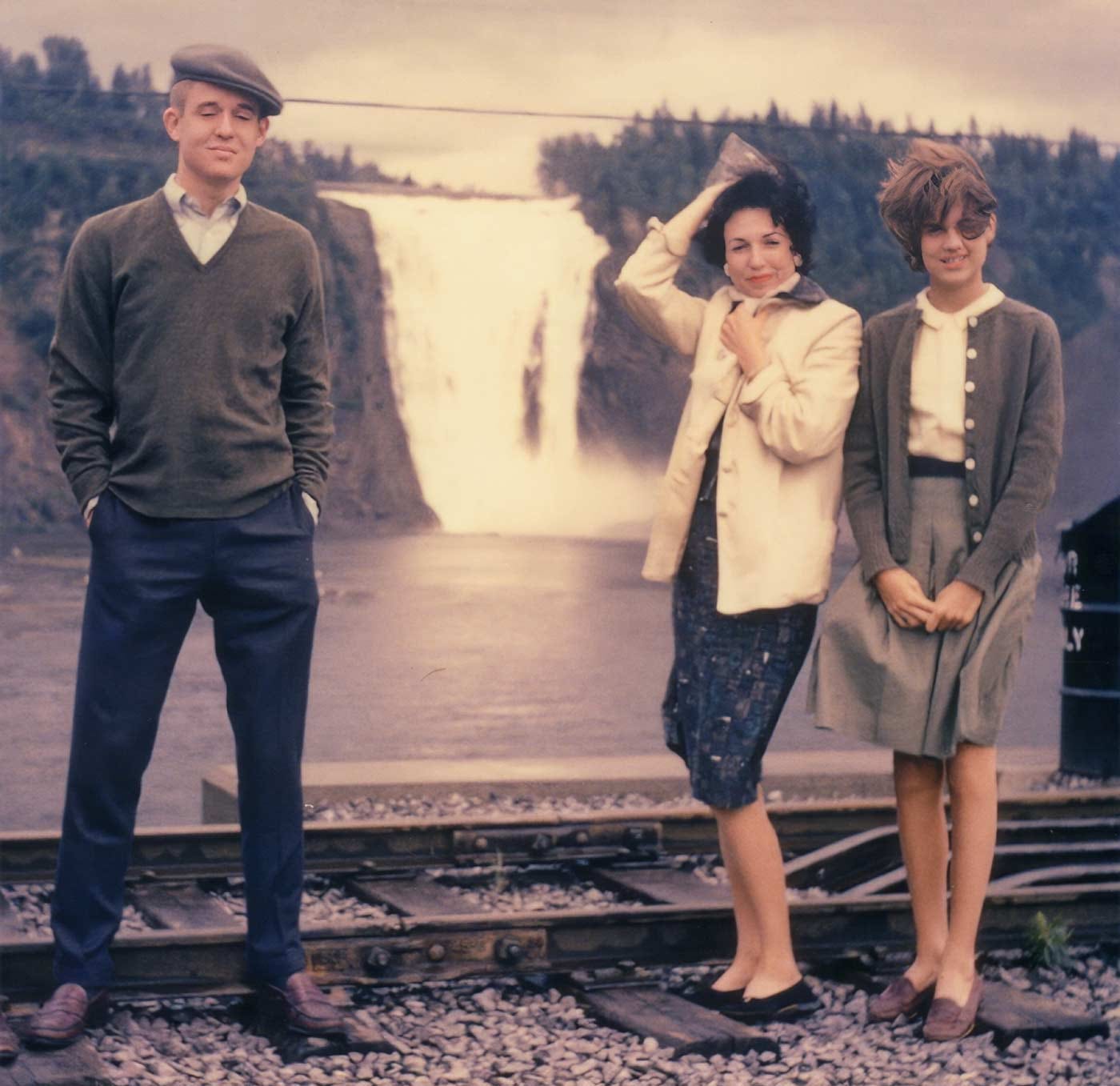
Here’s a transcript of the video: When I was a teenager, my best friend was a guy named Eddie Russell.My parents didn’t approve of him, and I always assumed that was because he was a Yankee. He’d come from elsewhere and had lived in Miami, so he was very suspect.But I didn’t fully understand until my mother pulled me aside one day and said,“I think you should hang out less with your friend Eddie… because he’s a little bit sissy, so people might get the wrong idea.”This is a theme in the South. People are always worried that somebody’s going to get the wrong idea about something. In Eddie’s case, I didn’t see the sissy part. I saw him as simply another boy who liked movies the way I did and loved to talk about them.Because of this Southern mentality, my mother never stopped worrying about how I appeared to the world. I had bad skin at the time, so she was always on a hunt for blackheads. She would creep up on me sometimes and say, “Let me get this one right here,” which was hideously embarrassing to me.And she knew that I walked funny—like a duck with my feet turned out. It’s the way I still walk, by the way. So she would constantly say, “Straight—turn your feet straight.” I remember going up to the mountains of Virginia once with her, and she had a chance to be with me all the time then. She would practically follow me as I walked and give me that instruction:“Straight. Go straight.”I read a Dear Abby article when I was sixteen where Abby said that a parent should be concerned if their sixteen-year-old child has not kissed a member of the opposite sex. So I made that my project. One evening I took a girl I knew just slightly—a sixteen-year-old girl—out to Roy’s Drive-In, and we kissed a bit.When I’d done it, I felt that I had completed a merit badge. It was an assignment that had been given to me by Abby, and I had come through with flying colors, because I could no longer be suspected of being gay.I was certain at the time that I was mentally ill, because I had read somewhere that homosexuality was a mental illness. I knew I needed to tell my parents if I was to be cured of this terrible thing. But I couldn’t bring myself to do it.Then I decided that the way to save myself from shame would be to become paralyzed from the waist down, so I couldn’t act on those desires. It’s hard to say this, really. I can’t believe that I ever thought that, but I did. I don’t know whether I even considered ways that I could become paralyzed that weren’t too bad—in a minor car accident, for instance. Also, if I became paralyzed, there wouldn’t be any expectations from my future wife that I was bound to have. I would have an excuse for not performing.The afternoon I realized that I was beyond saving, I took my grandmother—Mimi—to her beauty parlor to get her hair done. It was in the Old Carolina Hotel, which had a newsstand in the lobby.When I walked in there, I saw this magazine that leapt out at me. It had a man on the cover who was clearly there for me and me alone. I felt like he wanted me. It wasn’t like your standard bodybuilding magazine or anything else. This was a man who was—well, I thought—very desirable. He was sitting behind satin sheets in bed and giving me a look.Well, I didn’t have the nerve to pick up the magazine, which is ironic since the guy who ran the newsstand was a blind man. But I even worried that his other senses might be heightened because of his blindness. He might be able to hear where I had walked. I was completely paranoid about the whole thing, so I left it alone.The magazine was called Demigods, and that name was emblazoned in my head so much that it lasted for years. I would remember the name of that magazine.When I went back out to my car in the hot summer afternoon—a little red Volkswagen, my first car—a song came on the radio called “Walk on the Wild Side.” It wasn’t the Lou Reed version. It was another one used in connection with the movie of that name. It starred Jane Fonda, and she played a hooker.It was a very smoky, sultry song.“You know the odds are against going to heaven six to one.”And I felt that I had finally reached my complete downfall, that I had been condemned to this life of sordid whatever.At the time in North Carolina, homosexuality was referred to officially as “the unspeakable crime against nature.” I had this illustrated for me when I was a high school student at Broughton High School in Raleigh. I had this really vile trigonometry teacher, a guy who was quite sadistic in his need to torture his students. I remember he told us very early on that many of us weren’t going to get this thing, and if we didn’t, watch out—because we were going to be out of there.Then one day we got word from the front office that the teacher was not going to show up for work that day. We were all delighted, because we figured he’d been fired for being cruel or something. But it turned out that he had been arrested for “crimes against nature” in the woods at William B. Umstead State Park.He was the first person who made it clear to me how terrible it would be to follow my desires. That was the lesson I brought out of that. I was glad to see him go because I didn’t have to take that class anymore, but he had been caught for unspeakable crimes against nature.And that was it for me. That was the only example I needed to shut down my life. I did not want to become a ho-mo-sex-ual… that war chant that so thrummed in my head at the time. So I didn’t. I made up my mind not to.Of course, I did come out. San Francisco helped, as I’ve said before, in a big way. It gave me a place to feel safe and to be myself.But it wasn’t until years later that my friend Nick Hongola heard this story from me. I told him the magazine was called Demi-Gods.And he said, “Oh my God, I think I’ve got one of those.”He had known some old gay man who had left him, in a sense, all his early porn. And the porn was very mild stuff, but one of them was called Demi-Gods.He showed up at my house the next day and said, “Is this the magazine?”And I said, “Nick, that’s not just one—that is the one.”So I had this chance many years later—thirty years later, maybe forty—to look at the magazine that I didn’t have the nerve to pick up on the stands.The guy on the cover that I was so in love with was named Larry Kunz. I hope that’s not the way it’s pronounced, but it looks like that: K-U-N-Z. He was wrapped in a shower curtain—a rather cheesy-looking shower curtain—and he was sitting on the edge of a bathtub, not in bed at all.But I paged through the magazine, and it was this time capsule of ’60s gay life. Everybody was in posing straps. It was really kind of wondrous, after all those years, to sit there and look at it and feel no guilt, no shame, no embarrassment—just to observe it for what it was.What struck me most about this fading artifact was how profoundly innocent it seemed. The guilt that it had once provoked in me wasn’t there at all. It was kind of silly in many ways. I flipped through it and found people whose names were Troy Saxon—which is about the most ’50s made-up name you can think of—and another one called Mr. Mike Nificent.There were ads in the back like the ones I remembered from my childhood—the ones where you’d buy sea monkeys and other such things. But these were for gay-themed things that the reader might enjoy. A pith helmet… what else? Anyway, you get the point. It was very silly. And I felt very silly for having ever feared this thing.I wish that I could go back and tell that terrified sixteen-year-old that this thing I had feared the most would be the source of great inspiration to me, and would inspire my life’s work—which is exactly what happened. Being a gay man has been my greatest joy. Letting go of that shame was the most important thing I ever did.And I hope that nobody out there—well, I know some of you are still living with that kind of shame—but don’t. Just don’t. You don’t have to. You can let it go. You can be yourself and not be punished for it.So thank you for coming along, and I’ll see you next time. This is a public episode. If you'd like to discuss this with other subscribers or get access to bonus episodes, visit armisteadmaupin.substack.com/subscribe
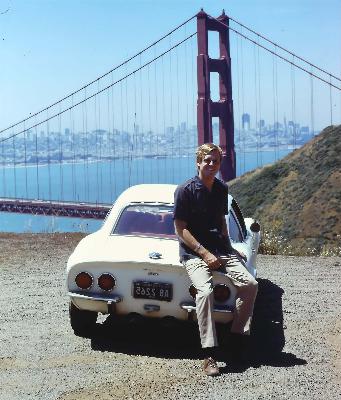
Here’s a transcript of the video: I moved to San Francisco in 1971. I got a job with the Associated Press. They first offered me Buffalo, and I had several people tell me that Buffalo was one place you don’t want to shuffle off to. So I turned them down. I was very disappointed, but I didn’t think I could handle Buffalo.A few days later they came back and said, “We’ve just had an opening in San Francisco. Would you like to go there?” So I leapt at that one, of course.I drove across the country in my little Opel GT — a ridiculous car, very tiny. You practically had to lie down to drive it. Along the way I stopped in Clinton, Iowa, to visit my friend Tom Nielsen, who had been in what we called “the commune” in Vietnam. While we were having dinner with his parents, a call came in from the White House saying they wanted Tom to come there for an event, a meeting with the president. And by the way, did they know where Armistead Maupin was? So they got two birds with one stone. It was very exciting that I was going to be invited to the White House.I guess I was just full of myself. I went to Washington to meet with Richard Nixon and bragged about it when I got back to San Francisco to anybody who would listen — which was not many people. They were mostly horrified. It would be like saying today that you’d met with President Trump. It was just that bad.I was a young conservative. I’d grown up that way. I didn’t realize how different it was in San Francisco, how people didn’t feel that way there, for the most part. I had never been around a liberal community, and I didn’t realize how much I was about to change because of living there, because of knowing the people who lived there.I found a place off Lafayette Park in a little Victorian. A pretty little place. I had a parrot at the time — I’d forgotten about that parrot — a real pain in the ass. He could say about two things: “How are you?” And I think that was about it. He drove me crazy, constantly taking my temperature.I discovered that Lafayette Park was a place where gay men hung out at night, and I had a few adventures there because it felt so random and anonymous. Eventually I found a more permanent place to live over on Russian Hill. I had the top-floor flat — I called it the “pent shack”, because it was a little house on the roof. Very small, but it had this breathtaking view.There in the pent shack I came to the realization that I had landed in a beautiful place, a magical place, where the people were really nice and I felt quite free all of a sudden. I hung a picture of me shaking hands with Nixon on the wall, and it was amazing how many people came in and looked horrified. What was I doing with that? How did I have this nefarious connection?I had people who helped me adjust to the new city in a very nice, understanding way. Peggy Knickerbocker was one — still my friend after all these years. She showed me places, we did things together, and she was so funny and sweet. Another was Jan Fox, this flaming redhead who, in a way, inspired Mona Ramsey. I was picking little pieces out of the air as I was there, trying to find my story.I remember making a vow to myself that I would not go into a gay bar. That didn’t last very long. I discovered the town was full of queers, and I wanted to meet some of them. At first the bars were on Polk Street. I didn’t get over to the Castro for a number of years.In Charleston I had had sex a couple of times — well, maybe more than a couple — with people I picked up on the Battery. But I’d never really marched into a gay bar and had a good time. It was always about how do you meet people and how do you keep it quiet. San Francisco was a revelation. There were bars everywhere on Polk Street, and it was easy to meet people. I quickly began to realize it wasn’t something I needed to keep quiet.When I stammered and was hesitant about the secret I had to tell Jan Fox, I said, “I’m gay.” And she said, “Big f*****g deal. Half of our friends are gay.” That was the biggest eye-opener of all. I needed to relax into myself. And that’s what I began to do.Talk about born again — I was born again in the sense that I was really feeling like a human being for the first time. Truth would set me free. Pretty soon I was confessing to everybody. Cab drivers would hear my story because I wanted to be honest, wanted to be truthful.Very early on I made up my mind that I wanted to have a lover, some permanent person in my life. I didn’t let go of that for the longest time, and it took the form of making some bad choices. They tended to be kind of stuffy and conservative — not the kind of person I’d want to be with anymore. It didn’t matter in the long run that I was unsuccessful at falling in love. I could find sex, and that was a brand-new substitute for everything.It was as if I had landed in a world where everything was possible. Sometimes there were rude awakenings, but most of the time it was a grand adventure because everybody was out looking — for somebody for the night or for life. We were all looking at the same time. It was exhilarating to be part of.There were a lot of people like me, agreeing that they could change the world by telling the truth about themselves. There was great power in that — and power in the numbers we had. It was less a scary proposition than coming out in the Midwest, for instance. It was gay heaven, and it inspired most of us to do something about it.There was a freshness then to a gay pride march. It wasn’t about commercial enterprises showing up. It was fresh and new and inspirational. We felt we were inventing our freedom. I don’t want to exaggerate it, but it was pretty great. I think it’s inspired marches ever since.I think back on the people I knew — Gilbert Baker was one. I used to buy pot at his house. He invented the gay pride flag, which we see everywhere now. And of course there was Harvey Milk, who really put a brave face on being a queer. He wore suits and ties and knew he had to be an example from the very beginning. Harvey and I used to do events together — anything that required a queer to be present, we’d both be there. We had him for such a short time. Such a short time. Among my lesbian friends were Del Martin and Phyllis Lyon, pioneers of the movement. But it has to be said that for a long time gays and lesbians weren’t in the same boat together. We simply weren’t. I knew that wasn’t a good thing. I was building a story in the Chronicle in which lesbians figured prominently. It took AIDS, really, for the communities to come together.Many lesbians were heroic about stepping into the breach and supporting dying brothers. It was amazing to see, and I think it inspired many of us to get rid of any reservations we had. I didn’t have any at all. I think I understood what lesbians were and I wanted to celebrate them in my work. But it took that crisis to bring us all together and to get over ourselves.We tend to break into little camps and see a narrow version of the world as opposed to the inclusive one we claim to believe in. I think lesbians stepping forward in support of dying gay men touched many people and helped them see what was important.That was a special time. We had a lot to learn about ourselves, but you could feel the movement growing. Even though it was taken away from us with AIDS, it wasn’t really. Many people felt they were being punished because of the good times we had. That breaks my heart to think that anybody ever took that route.I’m grateful to have had that time and that place and that experience because it helped shape me. I learned what I could be and what I had to do to keep on being that. Those few euphoric years before AIDS showed me how beautiful life could be. And I still believe it, in spite of everything that fucked us in the end. I still believe in our goodness, in the rightness of what we’re fighting for.And I know that the work we did then has paved the way for everything today. These gay-straight alliances in high schools, for heaven’s sakes. The way the culture has changed, in terms of understanding who we are. It all started with people wanting to tell the truth back then, and who kept on telling it in spite of the fact that a terrible epidemic came along. The exhilaration we felt has infected everything in modern life. We are better because of those early days of ultimate freedom.I’m so grateful I moved to San Francisco when I did, that I hit that moment in history to be a gay man. If it hadn’t happened, I would be quite a different man today. I probably would have found my way out one way or another — maybe not in North Carolina. San Francisco taught me who I could become, and I’ve lived in that joy and freedom all these years.I was a lucky b*****d to have found San Francisco when I did. It changed who I became completely. It affected my work. It affected so many things in my life. I was very, very blessed to have come along when I did.So thank you for coming along on this visit. I appreciate it very much. I’ll see you soon. This is a public episode. If you'd like to discuss this with other subscribers or get access to bonus episodes, visit armisteadmaupin.substack.com/subscribe
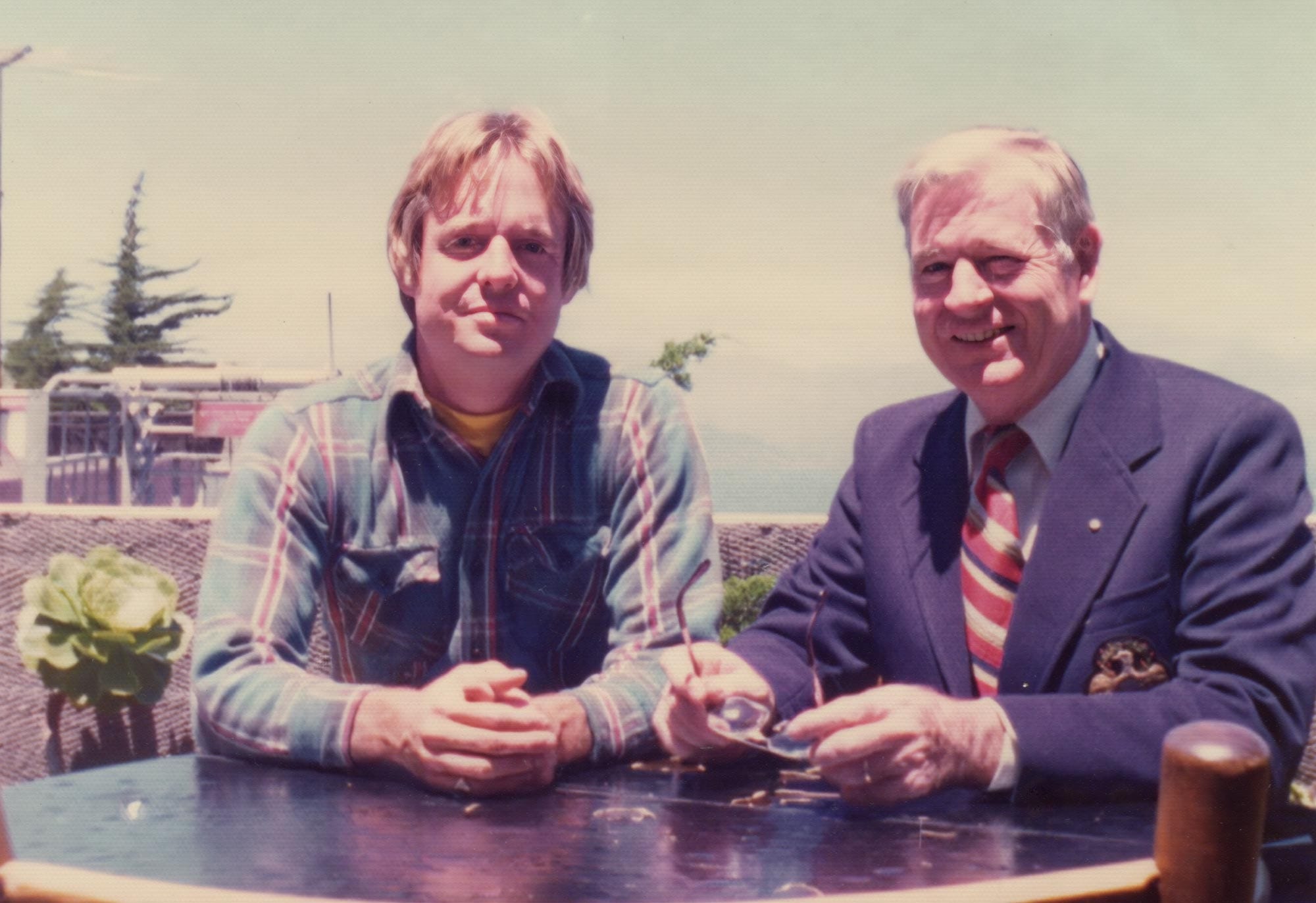
Here’s a transcript of the video: “I lived with a secret, but didn’t know it was a secret. I didn’t even know I was living with it for many, many years.My grandfather died about ten years before I was born, and the circumstances of his death were so not discussed that I simply assumed he had died of cancer or something. It wasn’t until I was a teenager that my friend Clark Crampton told me what I needed to know — that my grandfather had killed himself, had taken a shotgun and offed himself in the family home.This was shocking to me because I couldn’t imagine why no one had ever told me. But now that I look back on it, it’s really clear to me what it was. It was just part of that ailment that Southerners have of needing to keep things secret. Always.The interesting part of this is that everybody knew that this had happened. I found some letters in my grandmother’s bedroom one time — very kind but too-gushy letters about what a fine man my grandfather was. They were clearly meant to reassure my grandmother in some way. And I knew something was off, but I couldn’t tell what it was.Years later, mostly in reference to the closet and my being out and all of that, I made the statement: ‘the world changes in direct proportion to the number of people willing to be honest about their lives’. Chris has always told me that this quote was his favorite of mine over the years. And I thought recently about how it applies to everything — not just being in the closet, but about telling the truth about yourself whenever it’s possible.And it’s always possible.“The world changes in direct proportion to the number of people willing to be honest about their lives.”Don’t have any secrets. Secrets are what get you in trouble. And that was what happened with the treatment of my grandfather’s suicide. My family didn’t talk about it, but everybody gossiped about it. And it was a source of great pain, I’m sure, for my grandmother. And it’s just not necessary.I think that coming out of the closet taught me that. That was one of the great gifts of being an openly gay man and being free to talk about it — and unintimidated by the silences that were mandated at the time. So I think that that aspect of my coming out helped in every aspect of my life.I don’t understand people who have secrets about themselves. I just don’t understand it. I feel like this Southern obsession with keeping up appearances and keeping quiet and being discreet comes directly from England, from the UK. I feel that more and more as I live here in London — that there are people who just keep their discreet silences, and it always gets them in trouble. It’s an Anglo-Saxon disease, I suppose — this business of ‘stiff upper lip’ and shut your mouth. It’s very English, and it translates very nicely to the South, as I experienced at the time.In modern times, though, it’s gotten better. We’re not afraid to talk about mental health. We’re not afraid to talk about what’s beyond the norm. We’ve begun to celebrate people who do.I have realized that the current anti-woke movement is just a new version of that old-timey shut up and get on with it attitude. And that’s another reason why I’m so impatient with it. It’s just the modern way of saying, ‘be quiet. That’s none of your business. You shouldn’t talk about that.’ It’s a way of silencing people — to make something bad about being woke, about evolving as a human being, to make that something that should be mocked.That movement is a way of shaming people who have the courage to speak out and say who they are when it violates the laws of white Anglo-Saxon behavior.Some of the most courageous people I know — trans people, queer people speaking their truths — are heroes to me. Their job is much harder than mine, this old garden-variety queer just saying what he thinks. They are the brave folks.And by extension, these anti-woke people are cowards who don’t have the courage to be themselves and want to punish anybody else who does.You know, I wish my father had been able to tell us about his father’s suicide. I wish he’d been able to discuss it. I think I could have put his mind at ease. He told me years later that that wasn’t such a big deal to him, but I didn’t believe it at all. It obviously was a big deal. He lived with it all his life and tried to keep the secret, and punished my grandmother — and, well, the entire family, really — by not being honest.It takes courage to be yourself, whatever that might happen to be. And I wish that people in these repressed conservative areas would see that, and would realize what an improvement it could make on their own lives if they confront their own truth.It was Chris who encouraged me to pursue this line of thought. I was a little hesitant because I thought maybe I’d already delivered the message. It’s one I believe in, and there’s never too much truth.Sadly, truth is a scarce commodity these days.So I want to celebrate it — in every one of you who has the courage to speak your own truth.Thank you for coming along, and I’ll see you soon.” This is a public episode. If you'd like to discuss this with other subscribers or get access to bonus episodes, visit armisteadmaupin.substack.com/subscribe
Here’s a transcript of the video:“Well, I’m back.As some of you may already know, I fell down those stairs over there on Christmas Eve — fifteen stairs — and it’s taken me a while to recuperate. I had three weeks in the hospital — the lovely hospital, NHS care — and then another nine days in the Cotswolds. Chris was scheduled for a ski trip out of town, and I didn’t want him to miss out on that. So I went up there, which is not a bad place to be. It’s really beautiful. My sister’s there, so we would go out and have lovely meals in pubs three or four times that week.Then I came back here, and I’m gradually on the mend. I’m told that the bones — the ribs that were broken — are getting better. So yes, I don’t want to bore you with that anymore. But I’m glad to be back, and I’m glad to be telling you a few more stories.It’s nice seeing signs of spring here in London. The bluebells and the daffodils are poking their heads up, and that’s an encouraging sight. I really have looked forward to this time of year living here, because it’s different. You can really feel the departure of winter. Not completely yet — it’s still cold as hell, especially in this house, which isn’t very well insulated — but anyway, it’s nice to be back and have your company again.I really appreciate everybody who contacted me with concern after my accident. That was really appreciated. I’m glad you’re here, and I’m glad I’m here.I’m grateful, too, to the friends who came just to hang out with me here at the house. Among them were Lord Cashman — Michael Cashman — and Richard Lloyd Morgan, our friend the vicar, who was very sweet and easy to be with.And of course, my husband, Christopher, who was just a marvel during all of this, anticipating my needs. He still is, as a matter of fact, because some of the aches haven’t gone yet. But it’s wonderful having someone who’s so tuned in to how I’m feeling. It’s one of the great joys of having a husband, I suppose.So thank you so much for being here and keeping me company in your own way, allowing me to do these talks. You’ll be hearing a lot more from me — and from Chris. We’re so happy to be back.I’m happy to be back.And thanks for tuning in.” This is a public episode. If you'd like to discuss this with other subscribers or get access to bonus episodes, visit armisteadmaupin.substack.com/subscribe
Here’s a transcript of the video:“Hey there.I just want to give you a bit of an update here. I know Chris let you know that I fell down the stairs on Christmas Eve.I don’t do anything halfway. I fell down 15 stairs and landed on my back, fortunately. I think that’s better than landing on your face. And I was out for about two minutes.I was in the hospital for a couple of weeks, receiving care from the NHS. I have a wonderful memory of being awakened at various hours of the night to be given medication by the lovely people who were so tender and sweet and professional. It was a real eye-opener to see how the NHS works.And now that I’m home, Chris is taking marvelous care of me. I worry sometimes that it’s occupying him too much, but we work it out. So I’m on the mend, and I hope I’ll be up to speed in another two weeks or so.It’s hard to state what this all meant to me, because it really was a wake-up call in many ways. Not because I fell down the steps, but because I was very aware of my mortality and my fragility. It’s an interesting thing to encounter at a certain age. I’m 81 now, so everyone’s expecting me to fall down the stairs, but I wasn’t. In a way, it was an eye-opener in terms of reminding myself that I don’t have that long on this planet.I’m grateful for the people in my life who’ve rallied to take care of me, the chief among them being Chris. I’m grateful that I’m still alive.I know that we live in this crazy, fucked up world. We all know that. We’re all conscious of what’s wrong in the world today. But what’s right for me is that I’m still alive, that I’ve seen love in my life and continue to see it. I know the people that are important to me. And that’s a huge, huge benefit.I think it’s important for all of us to keep focusing on kindness during these difficult times. You can find a refuge in kindness, and I think you should. It doesn’t matter whether you fell down the steps or not. Just focus on kindness. It will get you through every time. That’s really what I have to say: kindness, love. That’s all we have.I’m grateful to still be here. And I’m grateful for you who are listening to this. And I’m grateful for my dog, who just walked into the scene.Thank you for being here. Thank you so much for being here.” This is a public episode. If you'd like to discuss this with other subscribers or get access to bonus episodes, visit armisteadmaupin.substack.com/subscribe

Here’s a transcript of the video: Well… it’s that time of the year again, when we’re all being forced into a state of jollity and merriment, whether we like it or not.I have done that myself in Tales of the City, celebrating a Christmas spent at Barbary Lane. I’m less likely to do it nowadays because I see it as the myth that it is. It’s not… it’s not what I need.What I need is what I get right now, which is love and peace and a state of overall contentment, because I’m with the people I love. That’s all that matters.And if you don’t have any people to love—if you’re just sitting at home right now—rest assured that I’m with you. I’m here with you right now, wishing you the best. And not because it’s Christmas or Hanukkah or anything else, but because that’s what we deserve this year, because of all the torture that’s happened in the world.It’s hard enough to do anything these days but complain, so I’m trying not to do that. My complaints will come later—probably—but right now I just wish you a peaceful, happy, and joyful part of the year.We all deserve that. And we all should believe in that. Whoever we are, whatever religion we are, there’s a time here for us to find peace in the world.It’s the coldest time of the year in most places, and that’s one of the reasons for the holiday—to stave that off. The lights, the colored lights, all of that. It’s wonderful to see them here in London when we drive into town. It’s not what I rely on, but it’s nice to have.What we need to have, no matter what, is a sense of peace and contentment with the life we’ve been given.Christopher Isherwood, my old mentor, once said, “I’m not afraid of death. I’m afraid of not having lived.” And that is very much my philosophy. I’ve tried to live my life to the fullest and not complain about things so much. Sometimes I’ve succeeded; other times I haven’t—but that’s what I aim for.Especially in these times, it’s easy to become paralyzed, to shut down completely because of all the wickedness in the world. And we must not do that. We must hang on to something we believe in and not succumb to the instinct to shut up, to be quiet.There are a lot of people who would love people like me to shut up and be quiet—but I’m not going to do it. As long as I’ve got a breath in me, I’ll be saying what I believe and wishing the same for others.What I wish for you right now is a lovely holiday of some sort. You don’t have to leave home to do it. You don’t have to be with somebody else to do it. You can be by yourself at home and still celebrate.The main thing is to find peace in your heart, and rely on that.Pet your dog.Pet your cat.Go out and buy a dog or a cat.I’m a great believer in the therapy of animals.And know that there’s love coming in your direction from me. Know that I’m here right now wishing you the best of times.That’s all, really.Love you. This is a public episode. If you'd like to discuss this with other subscribers or get access to bonus episodes, visit armisteadmaupin.substack.com/subscribe
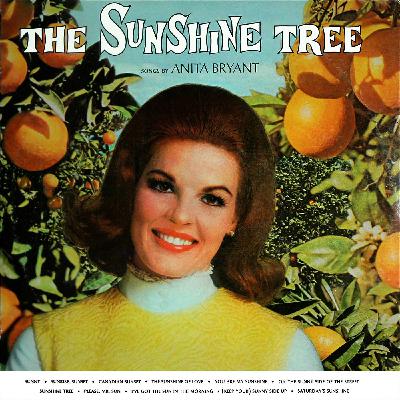
Here’s a transcript of the video: I want to talk to you today about Anita Bryant.That name will mean everything to some of you, probably a small minority of you. Most of you don’t know who she was, so let me tell you.She was a Florida beauty queen who sold orange juice publicly, who decided in 1977 that she was going to oppose a resolution in Miami-Dade County supporting gay people. She was horrified that such a thing was being done.She was a Christian—born-again Christian, as a matter of fact, whatever that means—who took the stand that gay people were a menace and that children must be protected from them. So she started something called the Save Our Children campaign to protect children from homosexuals.I was so enraged on the spot that I didn’t know what I was going to do about it. And then I realized I had a perfect voice in Michael Tolliver, the gay character in Tales of the City.Michael gets a letter from his parents saying how thrilled they are that they’re supporting this wonderful woman, Anita Bryant, in her campaign. And he has to tell them that he’s gay himself.So I wrote this coming-out letter that was part of my series, which was the easiest thing I’ve ever written. It came out of me in less than an hour, I think, sitting at my desk at the Chronicle.I realized that I had said something important when I had done it, because it was so personal. Even though it was Michael talking and not me—I wasn’t brave enough to do that with my parents—but they were getting the newspaper, and they would know, I presume, who I was talking about.I had not come out to my own parents at this point, so this letter was two birds with one stone, I thought.I read the letter at a gathering—something called the Moon Over Miami Benefit—which was an immediate response to Anita Bryant’s fag-baiting. That was the following weekend, as I remember. It was before it had appeared in the newspaper.It was an amazing moment for me. I went up to the front of the Castro Theatre and read the letter. At the end of it, you could have heard a pin drop. I could hear people crying. I think I might have been crying myself at that point.I sat down in my chair, and suddenly there were all these hands on me—men and women—just touching me in various places, to be a part of my comfort, I suppose.When I reflect on this letter, and on the number of people who’ve said it was their reason for coming out—and some very famous people who read the letter publicly—I realize that it’s probably the most significant thing I’ve ever written.This thing that I did in forty-five minutes. I was speaking truth, I guess, at a time when it needed to be spoken, and many people responded to it.Anita Bryant ended up being successful in her campaign to overturn the ordinance, but she galvanized the gay community in a way that she could never have expected. So many of us all over the country were reacting to her.And it basically cursed her for the rest of her life, because people only thought of her as the woman who was against gay rights in Florida. I think she suffered a little because of it. It makes me a little sad to even think of that—that she was so wrongheaded, so stupid in her Christian beliefs, what she thought were Christian beliefs, that she couldn’t let go of this issue for the rest of her life.She died this year, by the way. I don’t want anybody cheering that on, because I think that’s ugly. She paid the price for her foolishness, for her stupidity.She got hit by a pie in the face once upon a time, and that made publicity. I always wondered if her husband might have been part of the… I just wonder if he was actually gay, and that had been part of her opposition to the concept.She never got out of her ignorance—never climbed out of that pit.I’m not sorry about what happened to her, because it had to happen to her. She was so obstinate in her refusal to see our humanity that she couldn’t end up doing what would have been the Christian thing: accepting the reality of gay life.It’s interesting to note that opposition—the opposition—is often the thing that causes marginalized people to stand up and fight. That’s what happened with her, and that’s what must happen now with the people who are opposing trans rights across the world.This is no time to get quiet, especially if you’re gay—in the old sense of the word, gay. We owe it to our trans brothers and sisters to fight for them at this point.So, having said that, I want to end this little diatribe by reading Michael’s letter to you from many, many moons ago—1977.Dear Mama,I’m sorry it’s taken me so long to write. Every time I try to write to you and Papa I realize I’m not saying the things that are in my heart. That would be O.K., if I loved you any less than I do, but you are still my parents and I am still your child.I have friends who think I’m foolish to write this letter. I hope they’re wrong. I hope their doubts are based on parents who loved and trusted them less than mine do. I hope especially that you’ll see this as an act of love on my part, a sign of my continuing need to share my life with you. I wouldn’t have written, I guess, if you hadn’t told me about your involvement in the Save Our Children campaign. That, more than anything, made it clear that my responsibility was to tell you the truth, that your own child is homosexual, and that I never needed saving from anything except the cruel and ignorant piety of people like Anita Bryant.I’m sorry, Mama. Not for what I am, but for how you must feel at this moment. I know what that feeling is, for I felt it for most of my life. Revulsion, shame, disbelief - rejection through fear of something I knew, even as a child, was as basic to my nature as the color of my eyes.No, Mama, I wasn’t “recruited.” No seasoned homosexual ever served as my mentor. But you know what? I wish someone had. I wish someone older than me and wiser than the people in Orlando had taken me aside and said, “You’re all right, kid. You can grow up to be a doctor or a teacher just like anyone else. You’re not crazy or sick or evil. You can succeed and be happy and find peace with friends - all kinds of friends - who don’t give a damn who you go to bed with. Most of all, though, you can love and be loved, without hating yourself for it.”But no one ever said that to me, Mama. I had to find it out on my own, with the help of the city that has become my home. I know this may be hard for you to believe, but San Francisco is full of men and women, both straight and gay, who don’t consider sexuality in measuring the worth of another human being.These aren’t radicals or weirdos, Mama. They are shop clerks and bankers and little old ladies and people who nod and smile to you when you meet them on the bus. Their attitude is neither patronizing nor pitying. And their message is so simple: Yes, you are a person. Yes, I like you. Yes, it’s all right for you to like me, too.I know what you must be thinking now. You’re asking yourself: What did we do wrong? How did we let this happen? Which one of us made him that way?I can’t answer that, Mama. In the long run, I guess I really don’t care. All I know is this: If you and Papa are responsible for the way I am, then I thank you with all my heart, for it’s the light and the joy of my life.I know I can’t tell you what it is to be gay. But I can tell you what it’s not.It’s not hiding behind words, Mama. Like family and decency and Christianity. It’s not fearing your body, or the pleasures that God made for it. It’s not judging your neighbor, except when he’s crass or unkind.Being gay has taught me tolerance, compassion and humility. It has shown me the limitless possibilities of living. It has given me people whose passion and kindness and sensitivity have provided a constant source of strength. It has brought me into the family of man, Mama, and I like it here. I like it.There’s not much else I can say, except that I’m the same Michael you’ve always known. You just know me better now. I have never consciously done anything to hurt you. I never will.Please don’t feel you have to answer this right away. It’s enough for me to know that I no longer have to lie to the people who taught me to value the truth.Mary Ann sends her love.Everything is fine at 28 Barbary Lane.Your loving son,MichaelI get a kick out of reading that, I have to admit, because it reminds me of the truth that I saw forty years ago and still see: that being gay has been the best thing that’s ever happened to me. It’s been the light of my life.As I approach the end of my life—not immediately, I hope, but certainly the last scary decade—I know that I believed that then, and I believe it now.Even though the words change—there are more queers now than gays—that’s fine. I’m happy with that. I like queer. Christopher Isherwood used to say queer.I’m so grateful that I’ve been part of this community and this world, which is filled with compassion and decency and goodness. I’ve seen it all the time, and it makes me pity the people who have not experienced the goodness of gay life.So thank you for coming along today. I do appreciate it, and I’ll see you soon. This is a public episode. If you'd like to discuss this with other subscribers or get access to bonus episodes, visit armisteadmaupin.substack.com/subscribe
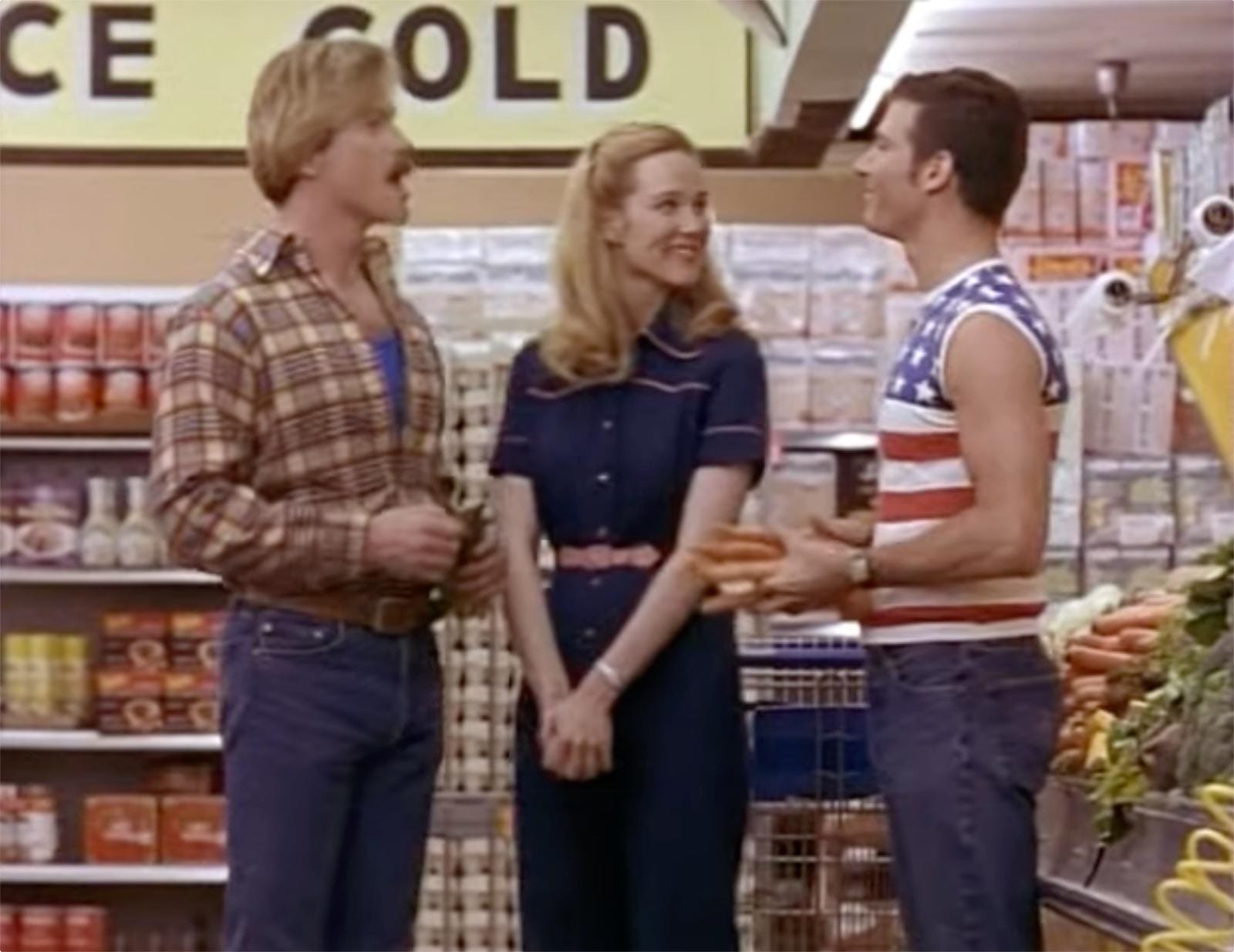
Here’s a transcript of the video: “Hey there.I recently read that the Marina Safeway in San Francisco is about to be demolished—not by Trump, who seems to be a specialist in this—but by an equally greedy corporation that wants to put up a 790-unit apartment building, 85 of which are designated for low-income people.That’s good news. But the plan they’ve put in place is this enormously high thing right there on the waterfront.And I admit that my attachment to a grocery store is sentimental as much as anything, because Tales of the City began—the very first episode of Tales, the one that appeared in the Pacific Sun before I started writing for the Chronicle—hinged on a young woman going to the Marina Safeway, trying to pick up a guy, and ending up meeting a gay man there: Michael Tolliver.So it’s got a very sentimental attachment for me. I mean, you know, over the years I’ve celebrated the Marina Safeway.Some people are divided, rather, in San Francisco. Some people say, ‘Well, we need it. We need affordable housing,’ especially down there where you can’t get anything for less than $3,000 a month. And others are saying it’s a monstrosity that’s too big and too ugly and doesn’t need to happen.I tend to side with people who don’t like greedy developers. I’ve learned that over the years. When they come in to do something, they can f**k up a place very badly.On the other hand, Chris and I moved to London because the rental properties had gotten so out of hand. It’s far, far cheaper to live in London than it was to live in San Francisco. Londoners don’t believe that, but it was true for us.So that was part of our motivation for leaving, and I sympathize with people who want more affordable housing in San Francisco.It’s up to you to figure out what that means—especially those of you who live closer to the Marina Safeway than I do these days.Ezra Klein tells us that he believes one of the problems with liberals—and I consider myself one, and he’s one too—is that we oppose housing projects. And one of the big issues we have is that there’s not enough affordable housing.So there has to be an answer to that somehow or other, and for all I know, this could be it.I’m not asking you to have a sentimental attachment to the Marina Safeway, but I think it’s worth discussing the whole thing. It is a bit of a monstrosity, from the pictures I’ve seen.And so I’d like to know what you think. If you want to pipe up on that subject—if you’re a San Franciscan especially—let me know.”Here’s an article on the proposed development: Marina Residents Erupt Over Giant 25-Story Tower Plan for Beloved Safeway This is a public episode. If you'd like to discuss this with other subscribers or get access to bonus episodes, visit armisteadmaupin.substack.com/subscribe
Here’s a transcript of the video: This is the third Ask Me Anything feature we’ve done.So I’ve got some questions here from people who are asking me anything.This is from John Hemm.Oh—hi, John. I know this person from many years ago.“What is yours and Chris’s favorite holiday, and how do you spend it?”Well, we don’t really have favorite holidays. I’ve found that living in England—if you ignore Christmas—it kind of comes to you. Years ago, I asked my cousin John if they did Christmas in England, and he laughed at me. Boy, do they do it here. It’s amazing—and it’s nice. Just driving down the street brings it to you.We also like Thanksgiving, mainly because there’s some good eating involved and we don’t have to do anything except be grateful for what we have. So yeah—those are the two.Dave Taylor-Bocanegra asks: “I hope I’m not too late. Wondering if you believe Mona of the Manor will ever be brought to film. I absolutely adored it.”Well, thank you, Dave. I’m proud of that book, and I’m glad you liked it. I have no idea whether it’s ever going to be a film. I never know. Things happen in my life kind of serendipitously. People call up and say, “What about maybe The Moon?” after years of ignoring it.And that may happen with Mona of the Manor. I would like to think it will. I think it’s a fun story.Neil Sechan says:“I started reading your daily posts in the Chron in 1976 and was active in the campaign against the Briggs Initiative in 1978, where I met my husband of 47-plus years…Oh, that’s sweet.… I would be interested in finding out your thoughts about the politics of that era and how it compares and contrasts with the current difficult political situation.”Well, I think it’s worse now—mainly because of Trump and the sort of fascist regime he’s brought into power. There were ugly things going on back then, like the Briggs Initiative, but I don’t quite know what to tell you except that it’s worse—and better in some ways. A lot of us are speaking out and making our voices heard, and I’m not afraid to do that.It’s surprising how many people were afraid to speak out in those days, even though we had leadership—people like Cleve Jones—who really got people riled up in a good way.Yeah, we’re still going to have to fight the battle. They’re still trying to get trans people, in one way or another, and I’m not going to desert the fight until we’ve dealt with that.Okay, next.Joseph Tay Wee Teck writes:“I was 23 in 1996 in Galway, Ireland, and just out when I encountered the Tales of the City stories and somehow every word, line and chapter felt as real and tangible to me as if I had lived through it all. When you wrote these amazing stories Armistead, could you have known of the timelessness and relevance of your words across the years and generations?”No, I didn’t dream that such a thing would happen. It’s the great joy of my life that it did—and that people still find things to love in the books.You don’t set out to write something that’s going to survive across the ages. When I started writing Tales, I really didn’t know what I was doing. They didn’t know what I was doing at the Chronicle either. It just sort of emerged from me, and suddenly there was a gay character.I knew that I had to allow my own politics to come to the fore, so Michael Tolliver became as vocal as I was in many ways. I couldn’t have dreamed it would last this long, and I’m very happy that it did.You never really know when you start creating something. You just try to live in the moment—which is what I did. And because I did, it had resonance, I think, and still does.Thanks for the question, Joseph Tewi Tek. That must be Irish stuff if you were living in Galway.Beatrice writes:“How big was Rock Hudson’s dick, and was he circumcised? Do not use my name. I have enough problems already.”Oh dear. I just did. You have a good sense of humor, Beatrice. I’ve dealt with this in other places, so you know it was big and kind of gnarly. I honestly don’t remember if he was circumcised—it may have been partial.It’s ridiculous to even be talking about this, but I promised I would answer questions.All right, here’s one from Mike:“I remember every week dropping a quarter into the yellow SF Chronicle newspaper vending machines to see the latest Tales. When the books came out, I bought them all. Read each one. Curious: do the books exactly mirror the Chron installments of Tales? I seem to recall some differences, but I’m not sure of it.”Well, I did have a chance to rewrite and tidy things up. It’s better in the form you’ve read in the books. I don’t think you’re going to find some lost gem by tracking down the old Chronicle copies.I was flying by the seat of my pants back then. I just had to get it on the page while I could.You might like to know that when it came time to compile the episodes into a book, I went down to Palm Springs—where all good things happen. My friend Kirk Frederick became my typist. We had the newspaper clippings spread out on the floor, and he very kindly acted as my stenographer.A doctor friend of my parents actually prescribed me some sort of speed to help me write. I wrote like crazy—but by the end of it, I was suicidal. I was very upset, accusing friends who’d gone off to party of deserting me. I was a mess.This was at Rock Hudson’s house, by the way. I don’t think I’ve mentioned that before. He kindly lent me his Palm Springs house to write the damn thing.So—yeah. What more do you need to know?Jonathan L writes:When you returned to the Tales universe starting with “Michael Tolliver Lives,” do you feel you were influenced in writing the characters by the actors who portrayed the characters onscreen, specifically Laura Linney and Olympia Dukakis?Funny you should say that—Laura became Mary Ann for me almost immediately. She understood every nuance of that character, and I began to hear her voice in my head as I wrote. To a lesser degree, Olympia influenced the writing as well.When the producers were casting Tales, they sent me a videotape of Laura reading for another role and asked if she might work as Mary Ann. I took one look and said, “Work for her? She is Mary Ann.”That led to a great professional collaboration and a wonderful friendship. Laura later named her son Bennett Armistead Shower, which still moves me deeply. She’s someone I treasure. She understands me, always has, and we laugh at the same things. Her kindness is one of her greatest qualities—though she also has a wicked little cackle that lets you know you’re really laughing.I’m not being very eloquent here because I’ve never tried to define exactly what I love about Laura. But I do love her with all my heart.Olympia, of course, was a great, great actress. She knew exactly what to do with Anna Madrigal. Today people might say she shouldn’t have played the role because she wasn’t trans—but she owned it, completely. In some scenes she would say, “I’m going to let the man out now,” referring to Anna’s past. She was sensitive, intuitive, and brought real joy to the role.I’ll always be grateful to her for establishing Anna in everyone’s mind—and she did it as a straight woman. Go figure.Olympia was also a close friend. She would call me on my s**t sometimes, which you can imagine. I miss her terribly. She was something primal in my life, not just as Anna but as a person, and I wish I could still spend time with her.So thank you, Jonathan, for letting me celebrate some very special people.And thank you to everyone who tuned in today. I really appreciate it—and I’ll see you next time. This is a public episode. If you'd like to discuss this with other subscribers or get access to bonus episodes, visit armisteadmaupin.substack.com/subscribe
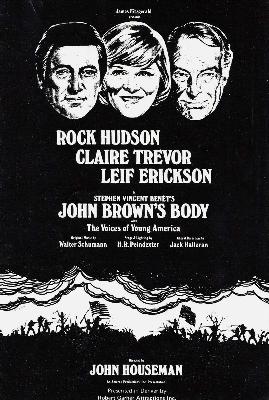
Here’s a transcript of the video:Today I’d like to tell you about my friendship—relationship, whatever you want to call it—with Rock Hudson.It began, as many gay stories begin, with a friend of a friend introducing us. I had met Jack Coates in the desert in Palm Springs when I went down for what I thought was a gallery opening in which Rock would be in attendance. A friend of mine and I thought that would be a good thing to go to. And he wasn’t there.We ended up in the desert with everybody but Rock Hudson—all these people who knew him and many who loved him. And I fell in the sack with a guy named Jack Coates, who had been Rock’s partner for years—lover, I think we called him back then. He’d been his lover for four or five years, and I could see why. Jack was an amazingly charismatic guy: very charming, balding—maybe even bald at that point—and he had chest hair that was architectural in its swirliness.We became friends. I thought I was in love, and he was very tactfully making it clear that we weren’t. He was actually dating a diver from the Berkeley swim team, whom I met subsequently through him. Anyway, you don’t need to know all this—stream of consciousness here.Jack took me to San Bernardino to see a production of John Brown’s Body that Rock was starring in. Even then I thought it was pretty awful. Rock was supposed to die, and when he hit the stage it was like a timber falling. He was just this big, loud whomp. It was not the best play, and I think he was told it was an artistic thing and he should do it, so he did it.Afterwards there was a line to meet him. Jack led me back into this interior hallway leading up to Rock’s dressing room. At the moment I got to Rock and shook his hand, the lights went out. The only thing I could think to say was, “Well, this is certainly the opportunity of a lifetime.” He laughed in the dark. And that’s where our friendship began. That was the moment for me. I don’t know whether he felt anything at all.Some months later I got the call that Rock was coming to San Francisco, and he put together a group of men to hang out with him. I was among them, and he really surprised me by standing up and saying, “I have a little reading I want to do.”He had been down to the newsstand at the Fairmont Hotel and obtained a copy of the Bulldog edition of the San Francisco Chronicle—the one that came out the night before. He stood up and read the first chapter of Tales of the City. He knew I had written something, and he went through the trouble of figuring out what it was. He was a little drunk at the time, but it was charming. And I think he kind of figured it would get me into bed—and it did.The next night, as a matter of fact, he and his partner, Tom Clark, invited me to join them at La Bourgogne, this very fancy restaurant in the Tenderloin. We talked about—he knew I was an activist, a gay activist—and the subject came up of when and how he was going to come out. I offered to write the story for him. I said, “I could do it. I’m the guy to do it, really, because I’m out and I know you.”His partner got a terrible look on his face and said, “Not until my mother dies.” That was a peculiar thing to say, I thought. Anybody who was f*****g Rock Hudson would be very proud for his mother to know it.At the end of that evening we headed up the hill to the hotel. Tom kind of flaked out and said he was too tired and was going to bed. So Rock and I caught a cable car together. It was fascinating to watch how the crowd reacted when they saw who he was. They were like, “It’s Commissioner McMillan,” which was the role he was playing at the time on McMillan & Wife.We got back, found Tom already passed out in the bedroom, and Rock and I sat at opposite ends of the living room making conversation. Finally he said, “Well, I should be over there or you should be over here,” which was the only signal I required.We were having a grand old time making out, but I wasn’t up to the task in any way. It was just too intimidating. There was too much clouding it all for me. Finally he came over and sat next to me and said, “You know, I’m just a guy like you.” And I said, “No, you’re not, and I’m Doris Day.”We had a bit of a laugh. It wasn’t the first time he’d heard that, but it was the first time I’d gotten a chance to say it.We had better success on subsequent visits—to his home in L.A., which was called The Castle, and at the house in San Francisco. Chris was surprised to hear this. He thought my only part of the story was that I couldn’t get it up and that was that. But we had several other shots at it, and we did pretty well.He did have a legendarily large penis. It wasn’t the prettiest one I’d ever seen, but it was the biggest.Most of all, what you need to know about Rock was that he was a very sweet man. He seduced the world by being so kind and attentive. He thought everybody should have a lover. He had Tom Clark, who I thought was the world’s worst lover because he was such a b***h—so grumpy and bossy with Rock.Rock made it his mission to see that I found a lover. Back in those days, a lover was a husband. That’s what he wanted for me. When he heard that I’d met somebody and gone on a Princess cruise—on The Love Boat, no less—he insisted on meeting me at the dock. He drove down to San Pedro and met us there.I’ll never forget the look on this woman’s face when she asked who was meeting me. I pointed and said, “That tall guy down there.” And she said, “Oh my God, that’s Rock Hudson.” I won’t pretend I didn’t enjoy that. I did.He felt like confirmation of what I’d always believed gay life could bring you. It had brought me Rock Hudson, at least as a friend. I had been a fan of his for many years—from Giant to Pillow Talk and Lover Come Back. Those Doris Day movies all made me love him.To find myself in a frisky friendship with him was astounding. I wrote about it in my diary—what it felt like to be at the Castle and to be his confidant. He had famous pool parties with gorgeous men—never too young; he liked men over 30, thank God. I was 32, and Jack Coates was 32.At one party a PR man named Warren Seabury showed up with Michelle Phillips, thinking he could crash it. Rock said, “He’s brought a woman with him.” I had to go deal with it. When I realized it was Michelle Phillips, I was dumbstruck. I told her the truth—that Rock had asked to have the thirty most gorgeous men in town meet him. She was a great sport and said she’d given those instructions herself.Despite all this, I was troubled by the Hollywood closet and what it required of him. I was often asked to leave when Liz Taylor or Nancy Walker came by. His closest friends—his logical family—were George Nader and Tom Clark. They went out in odd numbers with briefcases so it looked like a business meeting.My world was San Francisco, where people were out and unashamed. Rock and his circle were terrified of exposure, especially with Confidential magazine always circling. His agent even sold out other stars to protect him. It was an evil place to be.Eventually it strained our friendship. I stopped calling and let it go. I was becoming more famous myself and didn’t want a secret friendship.When he was diagnosed with AIDS, Randy Shilts asked me to comment. I did, saying he was a good man and that everyone in Hollywood knew he was gay. I didn’t realize how much backlash I’d get. People accused me of breaking a code. The word “outing” didn’t even exist yet.But Chris has told me that hearing the news as a teenager made a huge difference in his life. It gave him strength. That’s what I hoped would happen.Later I learned that when Rock hired a biographer, he told her I was the first person she should visit. That meant everything to me. I never saw him again. But he received tens of thousands of fan letters saying they loved him just as he was.He became a pioneer. He owned his truth in the end. I’m grateful I knew him, and I still get a shiver watching his movies—now with an understanding that makes all those jokes make sense.I treasure that memory, and I’d like to think I made a difference in his life, even if it wasn’t the way he planned.Thanks for coming along today, and I look forward to the next time we meet. This is a public episode. If you'd like to discuss this with other subscribers or get access to bonus episodes, visit armisteadmaupin.substack.com/subscribe

Here’s a transcript of the video:“Well, it looks like there’s some possibly good news on the horizon.Most of you know that Marjorie Taylor Greene has left MAGA, which is really indicative of a rift that’s occurring within Trump’s administration—within MAGA itself.I saw a piece by Rachel Maddow the other day where she couldn’t stop grinning because she was reading Trump’s numbers at the polls, where he’s down to 30% everywhere, including with immigration, which is something he courted—something he based his life on, really—trashing immigrants.So the question is: how close are we to the end of this man?Numerous news sources are reporting this fracture within MAGA. There’s no question that this is a good thing, because we’ve been living under a fascist government. And no, I don’t mind saying that term. It is fascist. Everything about Trump’s regime has indicated that.Under MAGA, there’s been an unprecedented rise in anti-queer legislation all across the country, and that should tell us where we’re supposedly heading under MAGA.There’s an opportunity now for Democratic lawmakers to really step up and have a backbone—which they haven’t had for as long as Trump has been in power. They’ve cowered under him. This is the chance for them to make a move.The fact that Marjorie Taylor Greene has left is very indicative—well, she’s a crazy woman—but it’s indicative of how things are going in general within MAGA.So I’m hoping we’re going to get some powerful people stepping forward. I like Gavin Newsom. I know Gavin Newsom slightly, and I think he’d be great to lead the fight. I don’t know whether he’s unimpeachable—my friend said this morning he might not have a record that holds up—but I think he’s saying all the right things right now and showing some balls. And that’s all we need Democrats to have: show some viable solutions to our problems.Because we all agree the world is fucked up right now—especially in America. And we need some leadership. That’s what we need. And I think we’re going to see people coming forward.I saw this morning that Bernie Sanders is proposing a tax on CEOs who are getting away with monstrously large sums of money. They’re just robber barons. And that sort of thing could be supported by the man in the street—by people who know they’re being fucked over by the CEOs.So speak up. Ask your lawmakers to be accountable, because this is a time when we really need to fight.We have the opportunity right now, with Trump’s numbers being so low and him basically going crazy in front of us. We have the opportunity for other leaders to step forward. But they have to step forward. And I’m presuming they’ll come from the Democratic Party, but they might not. We just need them. We need somebody to step forward and have the balls to speak out.I’m cautiously optimistic when we see this horrible man’s coalition falling apart. It’s hard not to be, really. I think we’ve earned that cautious optimism.So hopefully we’ve got some brighter days ahead. I really want to believe that, and I think if we do believe it, it will spur us to do the right thing in terms of everything.Thank you so much for listening to me babble on here, but it’s what I feel—optimistic and cautious. And I think we’ve got better days ahead of us. I really do.”Info on the Sanders, Tlaib bill to “End Outrageous CEO Pay”: https://www.help.senate.gov/dem/newsroom/press/news-sanders-tlaib-introduce-bill-to-end-outrageous-ceo-pay-and-combat-corporate-greed This is a public episode. If you'd like to discuss this with other subscribers or get access to bonus episodes, visit armisteadmaupin.substack.com/subscribe
Here’s a transcript of the video: Welcome back to our second Ask Me Anything feature.The questions we didn’t get to the first time around, I’m going to try to answer now.This one comes from Steve Zack:“I’d enjoy hearing Armistead recount a bit his experiences/memories/thoughts on being young and living in San Francisco in the heyday of gay pride and dating and sex and fun and friendship.”Well, you kind of summed it up right there. But we’re going to do a longer feature where I talk about all these things. It really was a golden age — that little window before AIDS came, and when I was out of the closet. So we’ll do a separate video on that.This is from Richard Jones:“Will there be any more adventures from Mona and Wilfred?”No. Easy answer. I’m done with them. I’m done with the whole thing, actually.I built Mona of the Manor so it could fit into the middle of the whole series and answer those questions that people had about Mona, and I feel like we know what they are now.Frankly, I’m getting to the point where I feel like I can’t write anymore. It’s not that anything’s happening to me mentally, but I’m just burned out on it, and I don’t want to do it anymore.That’s why I’m here right now, talking to you over this machine. I have trouble typing, and I have trouble seeing. I have cataracts that have got to be worked on sometime very soon. And so that leaves me in close-up with Netflix.I wish I could help, but that’s the way it is.This one’s from Bill Moore from Columbia, PA:“Until Mona of the Manor it really seemed like you’d dropped Mona cold from Tales. Was she based on someone from your life? Was there a reason that Mona faded the way she did? What made you decide to give her a new chapter after all? Chloe Webb really nailed it for me. Did she personify Mona for you? Was there a reason she didn’t return as Mona in the second two series?Sorry for the Monapalooza!”Oh my God — my motives on Mona. I had no motives whatsoever. I didn’t mean to leave her out in the cold and was happy to bring her back in.Chloe Webb did a wonderful job. She created Mona in a way — the Mona that everybody remembers. She could be a pain in the ass, I must say that. I can’t give you specific reasons why she sometimes was, but we thought it was worth it to put up with her because she did such amazing stuff.I wish she’d come back. I really wanted Chloe back for the second series, but we just couldn’t work it out. For starters, she wanted more money than any of the other actors were paid. She felt she deserved that because of her position, having made a couple of movies. But we couldn’t accommodate that. We didn’t want to accommodate that.I begged her to work with us, but it just wasn’t going to happen. She was having a hard time in her life at that point, and it just didn’t happen. I missed having her there a lot — but that’s the deal with television. Actors come to you with all sorts of demands.Mona has always been one of my favorite characters, if not my favorite, because she embodies… well, she does so many things that I do. You can figure out what those are. I was really happy to have Mona come back for Mona of the Manor because there are so many things about her that remind me of me. I get to be cranky sometimes, as she does. That was fun.She’s always been one of my favorite characters, so thank you for asking about her.Here’s a more serious question from Pablo Simon in Manchester, UK:“Just wondering how you feel about the rise of the far-right in the UK?”Well, I think you can guess what my feelings are about Nigel Farage and company. It’s really disturbing — especially since it echoes things that are happening in the States, and I suppose worldwide. We may be in for a hard one.I hope Britain comes to its senses and doesn’t follow in the steps of the U.S. right now, but who knows? We have to keep fighting the good fight no matter what. So that’s my answer.And now from Philippe Metge:“Hello from a French fan!Just knowing what’s happening in your country, do you think the LGBTQ should fight harder, leave if they can or grit their teeth, arch their backs, hoping that it goes away fast! How do you keep humour and wits in such an atmosphere? Here in Europe we fear for all our gay friends in US to be honest!”Well, that’s lovely to hear from a French person. I do too. I fear for friends back home that are still there.You don’t get to escape it by moving to another country — it’s pretty much everywhere. We’re seeing it on the Tube. We keep up with things, in other words, and you can sweat the dangers and try not to let them rule you.Chris and I are doing political pieces precisely because we want our voice to still be heard. This is the only voice I have left, really — doing these Substack pieces and letting my thoughts be heard as an 81-year-old queer who fears for his brothers and sisters.We need to make our voices heard, and that’s what we’re trying to do in the little way we can. Everybody else out there can do the same.In the end, we have to just let it go. The reason it’s scary is that they’re trying to scare us — they’re trying to make us back down. And we cannot do that. We cannot cave in to that fear. Just make our voices heard whenever we can. Speak out. Act up. Whatever.This is from Michel Dumont in Thunder Bay — which I assume is Canada.He writes:“In the early 90s I found in Thunder Bay an autographed copy of Maybe the Moon at my local book store. I’ve always cherished this book but I’ve always wondered how a signed copy ended up way up north ? Did you have multiple signings and then distribute them? Your novels were in our gay and lesbian center where I volunteered as a phone line counselor in ‘86. Thanks for this chance to ask a question I’ve had for decades. Big gay mukwa hugs.”I don’t know how it got there. That’s the wonderful thing about books — they’re mobile. You can stay in a motel where somebody leaves it in a bedside table and pick it up and read it.Most likely, whenever I do a book signing, the bookstores ask me to sign extra copies. It must have been one of those books that made its way to Thunder Bay. I can’t even begin to theorize about it, and I won’t.So thank you, Michelle from Thunder Bay — and thank you to everyone else who’s tuned in. That’s such an old-fashioned term, isn’t it? “Tuned in.” I can’t help it.I talked to a reporter today. She asked me what “nelly” meant, and I said, “You don’t know what nelly means? It’s an effeminate gay man.” She said she’d never heard that. I asked her how old she was. Twenty-seven. So there’s our failure to communicate.But I like to think there’s enough in Tales for people to relate to that I don’t have to do that.Thank you for tuning in, and I’ll see you next time. This is a public episode. If you'd like to discuss this with other subscribers or get access to bonus episodes, visit armisteadmaupin.substack.com/subscribe
Here’s a transcript for Armistead’s introduction before the reading: Today I’m going to read to you from one of my favorite books. It was when I was a boy—or a teenager, rather—and it still is. I love it very much, and I think you can see the ways in which it influenced my writing of Mona of the Manor.It’s by Dodie Smith, who was a twentieth-century—well, her life spanned the twentieth century—English playwright. I was always rather sorry in the ’80s that, when I heard she was living in England, I didn’t get out to see her, because I would have had lots of adoration for her. But I didn’t.I did have a connection with her in that she and her husband, Alec Beesley—he was a conscientious objector, and they thought they’d have a better chance of that happening in America than in England. That’s how much things have changed.So they settled in Malibu and several places in California, and at the time met my friend Christopher Isherwood. Chris remembered them running on the beach with their dogs. Their dogs were Pongo and Perdita, which—if you know 101 Dalmatians, one of Dodie Smith’s most famous novels—you know are the names of the dogs.Of course, I was friends with Christopher Isherwood, but sadly I never had the opportunity to get an introduction to Dodie Smith. I’m sure I could have gotten one. She died in 1990, and she was herself ninety-something, I think.At any rate, she was a famous English playwright, among other things. At one point she had three comedies in production in the West End at the same time. And her most famous books, because of the movies made from them, were 101 Dalmatians and—less so, because I didn’t like the adaptation—I Capture the Castle. It didn’t seem to capture the essence of the book to me, but I think that was about ten or fifteen years ago that that happened.So anyway—without further ado—I’m going to read to you a good part of the first chapter of I Capture the Castle, so you can get something of a flavor.I Capture the Castle is supposedly a series of notebooks that Cassandra Mortmain, the heroine, keeps herself. So it’s a kind of diary. This first one is called “The Sixpenny Book,” because she wrote it in a cheap notebook, I think.It has a first paragraph that is one of the more memorable in literature and one of the reasons I love this book…Here’s the opening paragraph: “I write this sitting in the kitchen sink. That is, my feet are in it; the rest of me is on the draining-board, which I have padded with our dog’s blanket and the tea-cosy. I can’t say that I am really comfortable, and there is a depressing smell of carbolic soap, but this is the only part of the kitchen where there is any daylight left. And I have found that sitting in a place where you have never sat before can be inspiring – I wrote my very best poem while sitting on the hen-house. Though even that isn’t a very good poem. I have decided my poetry is so bad that I mustn’t write any more of it.”You can hear Armistead reading more of the first chapter in the video. “I Capture the Castle” by Dodie Smith was first published in 1948. This is a public episode. If you'd like to discuss this with other subscribers or get access to bonus episodes, visit armisteadmaupin.substack.com/subscribe
We weren’t able to answer all of your questions in this first segment, but we’ll get to more in next week’s AMA video. Stay tuned Steve, Richard, Pablo, Philippe, and Michel — your answers are coming soon, with even more to follow the week after (Joseph, Mike, Randy and more). Here’s a transcript of this video:We’ve started a new Ask Me Anything feature on the Substack thingy, and we’ve gotten some questions from people out there in the great beyond. Thank you to all of you who’ve sent things in. This will be a regular feature, so you’ll have other opportunities to ask. I hope there are some rude questions.This first one is from Monica in Macon, Georgia.“I’m putting together a panel on his work for the Society for the Study of Southern Literature’s spring conference. Inspired by the exchange in the Netflix series, when Anna Madrigal says she has practically memorized Flannery O’Connor’s A Good Man is Hard to Find, I’d like to know if Armistead enjoys the southern gothic—whether Flannery O’Connor or others. Does he consider his writing as part of this tradition? It certainly has had its gothic moments!”Well, yes it does — and I’d be honored to be considered part of that tradition. I’ve never particularly thought of myself as being Southern Gothic in the way those great writers are, but I’ve certainly been influenced by them. I’ve felt them in my life. The presence of Tennessee Williams has always been there, and I think all Southerners have something in common with him in that way.Do I enjoy it? Yes. Do I consider myself part of that tradition? Well… it certainly has its Gothic moments — yes, it does. And I suppose I got that from Southern Gothic writers. I don’t know. It’s hard to attach yourself to a tradition that’s rooted in another place.I suppose some of my Gothic stuff came from the South. I’m from the South, so it’s certainly part of who I am, and it must come out in my writing somehow.I actually wrote an essay when I was in high school decrying these writers — hating them — because they felt like traitors to the South to me because of the stories they told. That’s how far gone I was.Years later, it was wonderful that I had an opportunity to meet Tennessee Williams. We were both invited to some gallery south of Market Street in San Francisco. I remember it being very over-lit — painfully.The look on his face was astonishing to me. He was surrounded by people who all tried to get in a picture with him, who wanted some of that glory, and he looked stricken. I thought: That is not an enviable position to be in.I went out into the parking lot and lay on a car there. It was a handy place to lie down. Tennessee Williams entered shortly thereafter and came over and joined me.He said, “Do you mind if we share your car?”And I said, “Well, it’s not my car.”We talked about nothing — the beauty of the moon and the sky and the temperature of the evening. It was really a non-conversation. But at the end of it all, I felt like I had met the soul of the man. That was a wonderful thing to have happen. I loved that he could strike up a conversation with a stranger like he did with me. I don’t think it had anything to do with my age… but it might have.Chris reminds me that I smoked a joint with Tennessee Williams — which does seem a noteworthy thing to say, to brag about — and maybe it made it easier for us to be in the moment. I don’t know.Chris asks (off camera): You mentioned earlier in your response that you railed against those writers as a young man? Was that because they were too liberal for you when you were a young conservative?Armistead: Yes — exactly. That’s what it was.I came to understand what he was writing about. I was unbearable, I think, in my youth — just unbearable.Thank you, Monica, for that question from Macon, Georgia. I wish you luck in your pursuits, and thank you for writing.The next one is from Alison Barrow, who’s a friend of mine — and also, by coincidence, my publicist at Penguin. We’ve known each other for many, many years now, and I feel quite close to her.“I would love to ask you about a favourite (anonymous) story from the many encounters with your fans over the years. I recall meeting a couple of beautiful men in line for an event with you about 10 years ago. I was chatting with a few people as they waited for their books to be signed. These two told us that they had first met while waiting to meet you at another event over five years previously. They had not known each other before. The queue was over an hour long. In that time they talked, shared their love of your writing, swapped stories. Five years on they were in line again. They had married the summer before. The most heart-tilting story. It has lived with me since that day. Can you share another?”God, that makes me a little misty. That’s very sweet. I love when people share their love for each other with me.Alison also asks if I have any other similar stories.I hesitate to talk about these because it just sounds kind of grand, but I do hear from a lot of people who say how much the books meant to them — that they came out of the closet, they became their true selves, that I saved their lives. I hear that a lot. I’m embarrassed already, but I do appreciate that, and I enjoy it when it happens. It’s amazing what it feels like. It’s quite exhilarating.I have a funny story for you — at least I think it’s funny.I met a couple of Frenchmen, as one tends to do when you hang out in a bar in the Marais, and we got drunk on pastis together. I invited them back to my hotel. I remember getting there was a bit of an ordeal because they were trying to avoid the Princess Diana tunnel — what they call the Princess Diana Tunnel, where she died, of course.But we got to my place, and we had a frolic, the three of us. And when it was over, one of them looked at the other and said, “You ask him.”The guy replied, “No, no, no — you ask him.”And it was back and forth like that. Finally I said, “For God’s sake, will one of you ask me what it is you want to ask me?”And one of them finally said:“Why did Mary Ann become such a b***h?”That is something fans of the books have always asked me. I don’t think she became a b***h. I liked her, actually, at the end — but she’s seen that way by some people.I feel like Mary Ann was a cautionary tale to myself — to not be enticed by fame or anything, to not be seduced by the world. And she sort of was, for a while there. So I was talking to myself, really.Thank you, Alison, for the question.And here’s the next one, from Gerald Wilkie in Charleston, South Carolina.“I’m enjoying BL Dispatches very much as well as Chris’ yoga instruction. Thanks for both!I’m curious about your decision to live in London and what, if anything, do you miss about the USA. I live near Charleston, SC, am disillusioned about our unending corrupt politics which does not respect anything but $$$ and try to understand how it came to be this way.”I loved Charleston myself when I lived there. It was a wonderful, beautiful place — a real charm.The decision to move to London was something Chris and I agreed on very early on. We had both spent time here. We both had happy memories — different eras of living here. And we wanted a new adventure — something we could do together that would be new and special and fresh. And I had old friends here anyway, so that made it even better.Part of our reason to move here was political. I did not like what was happening in the United States, and I didn’t want to spend my remaining years — I’m 81 now — living in that poisonous atmosphere.It was easy to live here because it’s a beautiful place. There are many beautiful people here. I love realizing that when I go down to the Sainsbury’s on the corner I can meet people of every race who are all friendly and have the basic gentility of Londoners in dealing with each other. It’s amazing to me.One of the things that affected the decision was the fact that both Chris and I have family members that have become vocally homophobic after years of knowing us. So that was all I needed to see. I don’t need to be part of that anymore. I don’t even need to cultivate those friendships — even if it is with family members, especially if it’s with family members, because they should know better.We’re very happy to be here, but we’re constantly hoping for a better America. I can do that from a distance.Next one: Andrea Stoeckel.“I have recently done a complete reread of all your books ( yes I am a huge fan like forever). Outside of Tales, what is your favorite of your books. And...which was better in your opinion: PBS or Netflix version of Tales”The Netflix version relied on a writer’s team, and they invented new storylines — some of which I think are wonderful, others of which didn’t land well with me, but I kept my mouth shut.My favorite book outside of Tales in my canon is Maybe the Moon. I think it was successful in a way the other books were not. It really nailed a feeling. You’ll have to read it yourself to see whether you think that’s true, but there’s a chance it’s going to be a movie soon — there’s some talk of it. I’m always dubious until these things come through, but there’s serious interest.Thank you, Andrea, for that question.We’ve discovered there may be more questions here than I can answer in one video, so we’re going to do a second video and try to answer the rest then. Thank you so much for writing in. I’ve enjoyed talking to you. This is a public episode. If you'd like to discuss this with other subscribers or get access to bonus episodes, visit armisteadmaupin.substack.com/subscribe
Here’s a transcript of the video:“About fifty years ago — I can’t believe I’m saying that — when I started writing Tales of the City for the San Francisco Chronicle, I created a chorus of men, obnoxious gay men, that I called the ‘A-gays.’ They were definitely meant to be obnoxious.When we came around to filming it for television, I insisted that only out-of-the-closet actors play those roles — because of the heinous nature of those people. Consequently, Ian McKellen was in it, and Lance Loud, and a number of other actors who were known to be gay and were open about it.I was kind of horrified to read a recent New York Times article by Shawn McCreesh about the A-gays who are part of Trump’s coterie in Washington. There are some interesting names there — Richard Grenell, an openly gay Republican who held senior roles as ambassador and special envoy in the Trump orbit; and Scott Bessent, cited as one of the most powerful gay men in the Trump administration, working at the Treasury Department.There are others. Anyway, I don’t really want to write about these a******s. I don’t want to give them credit. There are lots of gay men who are willing to sell their soul, move to Washington, and worship at the feet of that man — and they’re referred to in the piece as A-gays.I can understand certain people — well, dumb rednecks, if I may use that term (and I think I will) — who support Trump. But the thought that there are a group of pissy queens in Washington riding on the glory of being protégés of Donald Trump really does me in. This would be a good place to insert the vomit emoji.It’s boring to keep on stating your position on things, but I must — because it has to be clear that whoever these queers are in Washington, the ones getting mileage out of being handmaidens to Trump, need to be mocked as much as possible.We’re fighting against a guy who wants to destroy democracy — who’s planning to destroy democracy. And the people on his side are bigots and pissy queens. Those two things.“I don’t care if they’re queer — it only matters that they’re indecent human beings following the instructions of a very indecent man.”I can understand the bigots — they’re always going to be here, probably illiterate, probably falling for everything Trump says. But the idea that a bunch of rich A-gays — if we must call them that — are supporting him and getting mileage out of it in Washington just disgusts me to my core.We know who these people are. We know what they’re like. We know what their selfishness is like. And those of us who are still fighting for some degree of humanity mustn’t put up with them — mustn’t give them legitimacy in any way.I don’t care if they’re queer. It doesn’t matter to me. It only matters that they’re indecent human beings following the instructions of a very indecent man.Now, I know that most queers are on the side of decency. I know that about our people, if I must call them that, because we’ve lived with each other for a long time — and I know that decency is prevailing.We must not listen to the voice of these so-called A-gays, because they’re on the wrong side of history — and everyone who is a Trump supporter is on the wrong side of history.It’s as simple as that. There’s no voting about this attitude. If you’re helping that monster, you are on the wrong side of history — and eventually, you will be shown out.”Here’s the New York Times article that Armistead mentions: https://www.nytimes.com/2025/08/26/style/gay-men-trump-administration-republicans.html This is a public episode. If you'd like to discuss this with other subscribers or get access to bonus episodes, visit armisteadmaupin.substack.com/subscribe
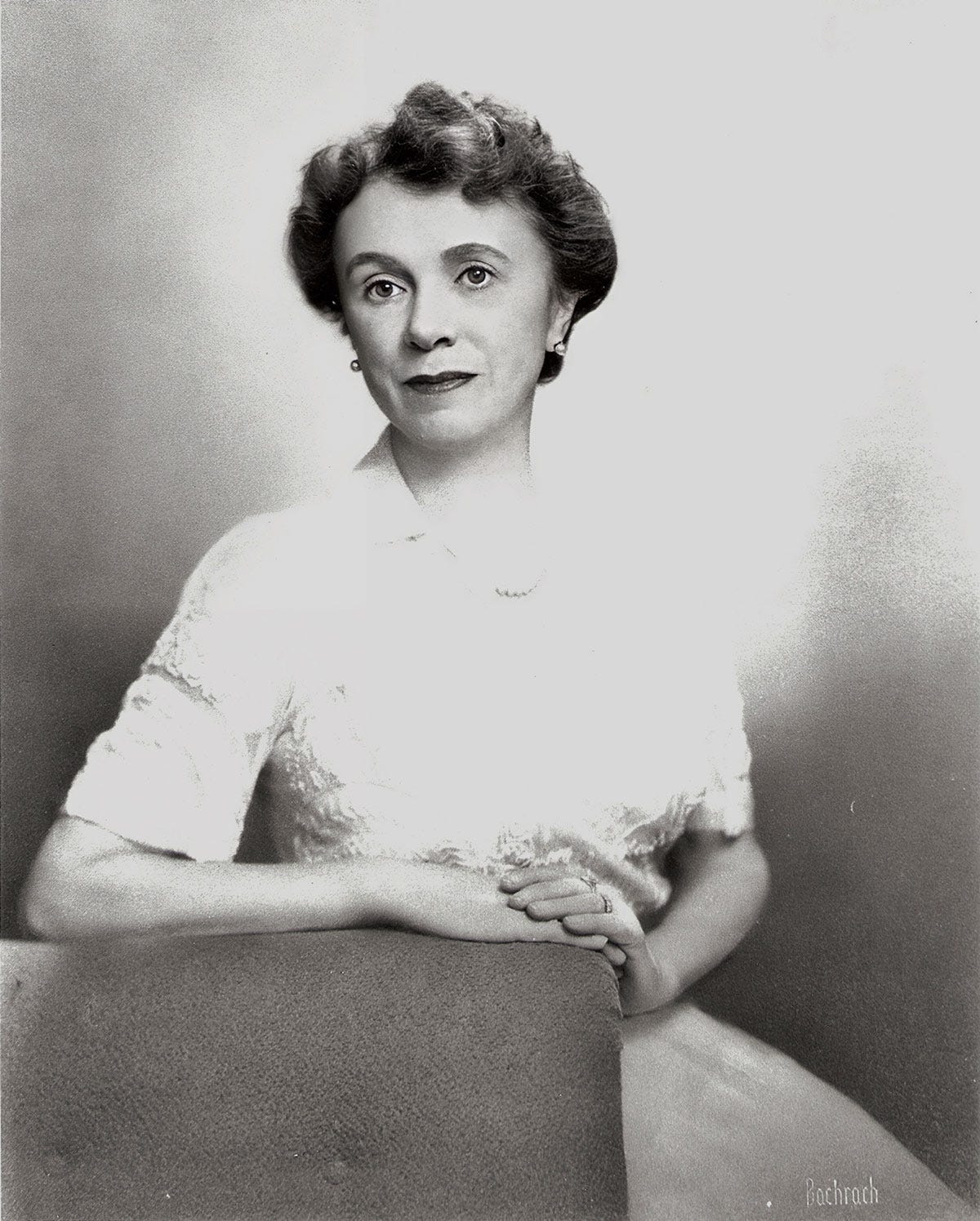
Here’s a transcript for Armistead’s talk: “The inspiration for Anna Madrigal was initially a trans woman I discovered while living in Charleston, South Carolina. Well, I didn’t exactly discover her—she was a local character—but that’s where the concept first came to me. When it came time to actually create the character, though, I relied on someone else entirely: my grandmother, Marguerite Barton, whose spirit was very much that of Anna.When I knew her, my grandmother lived in Arlington, Virginia, in a little apartment complex. My parents would sometimes send me up to stay with her for a week or two when they went on holiday, and I was always glad they did, because I got a full dose of my Grannie—who was a very airy-fairy kind of person.She was an Episcopalian — an Anglican — but she believed in reincarnation and various other beliefs that were prevalent in the early part of the twentieth century in England. I loved being with her because she made all things seem possible to me. She read palms — she read my palm frequently — and would often tell me what was going on, though she was a little mysterious about it too. She told me she thought I was the reincarnation of her cousin Curtis — her bachelor cousin Curtis — her very creative bachelor cousin Curtis. Without actually spelling it out, she let me know that she knew where I was heading.I have very distinct memories of Grannie asking me what I wanted to be in life. I told her I wanted to be a lawyer like Daddy. She knew that was a lie from the beginning. She knew I didn’t have it in me. But she sort of closed my hand — she was reading my palm at the time — and patted it, saying, “We’ll get back to that, don’t you worry.” She knew me before I knew me. That’s the best thing I can say about her.The last time I saw her was in her rest home in Alexandria. I’d been warned she might not recognize me, and she didn’t—not at first. I said, “It’s Teddy, Grannie,” and she made polite conversation, but I could tell she didn’t know who I was. I dwelt, in a very morbid way, thinking I’d lost her finally.When words failed me completely, I put my hand out for her to read — because she knew what that meant. She took a look at my hand and said, “Teddy, you’re in your thirties now.” That was the best thing I ever heard her say. She knew me. And she knew me through my hand — amazingly.I shall never forget her. I never have. I’m not alone in that, either — there were a lot of kids. I was the oldest of her grandchildren, so I was one of the few to really remember her. But there were others who loved her just as much as I did, for their own reasons — because she sussed out what everybody wanted and needed, and she gave support.She gave me permission to be who I was going to be. I wasn’t even aware myself that I was queer, but she seemed to know it early on. I’ll always be grateful to her for giving me permission to be myself at a time when I lived under very rigid rules at home in North Carolina, with a conservative father. She was the person who showed me the way into the light, really.She’d been a suffragist in England, actually touring the country for women’s rights. I didn’t realize until near the end of her life that she had never married my grandfather. He left behind a wife and family in England to be with her in America. I can understand it—I’d have left anyone for her too. But it must have been a traumatic thing for everybody at the time. They settled in the mountains of North Carolina, which is how my father came to meet my mother. Later, after my grandfather died, Granny lived in Alexandria and took a job teaching elocution to Episcopal priests at the university there. I think she was perfectly suited for that — she was a brilliant public speaker, and she knew how to tell people how to do it.So when I had to create Anna Madrigal, I went for the sweetest person I knew — my grandmother. So many things about her were handy in creating Anna: the fact that she read my palm, did spooky things like that, and read the Bhagavad Gita, for heaven’s sake — which Anna did too. There are many, many similarities between my grandmother and Anna.So yes — I relied on my Grannie completely for the creation of that transgender character. I learned a little bit about transgender people from Dawn Langley Hall in Charleston, but Grannie was the heart and soul — the spirit — of Anna.It was easy, because I knew there had to be some trans people out there who would feel the same way she would, and behave the same way she did. I didn’t have to rely on a character who was unpredictable or unknown to me. She was the source of love for me — Grannie — and remained so throughout her life.Now that I live in England, I feel another connection with her — that I’m in the place where she started out. My entry into England was through an Exceptional Talent visa — such an embarrassing name — and I’m fond of teasing Chris that he’s an “Exceptional Talent Spouse,” which is what it says on his papers.But it was because of Grannie that I was able to get citizenship. When I was sworn in, I felt that connection to her.On that last visit, Grannie told me she knew she was on her way out. She said, “When I die, if you feel a little breeze in the room, you’ll know that’s me.” Well, I’d like to say I felt that breeze — I never did. But I connected with her to such a degree that I feel she’s always with me.She’s especially with me in the character of Anna Madrigal. She makes herself manifest in that character — and I’m really happy about that, because it means I’ll never lose her. It’s also the way I’ve been able to share my grandmother with the world.It makes me feel especially good that people know what she would do under any given circumstance.”Many thanks to Armistead’s sister, Jane Maupin Yates, for providing us with so many wonderful images of their grandmother to use in the video and this post. This is a public episode. If you'd like to discuss this with other subscribers or get access to bonus episodes, visit armisteadmaupin.substack.com/subscribe
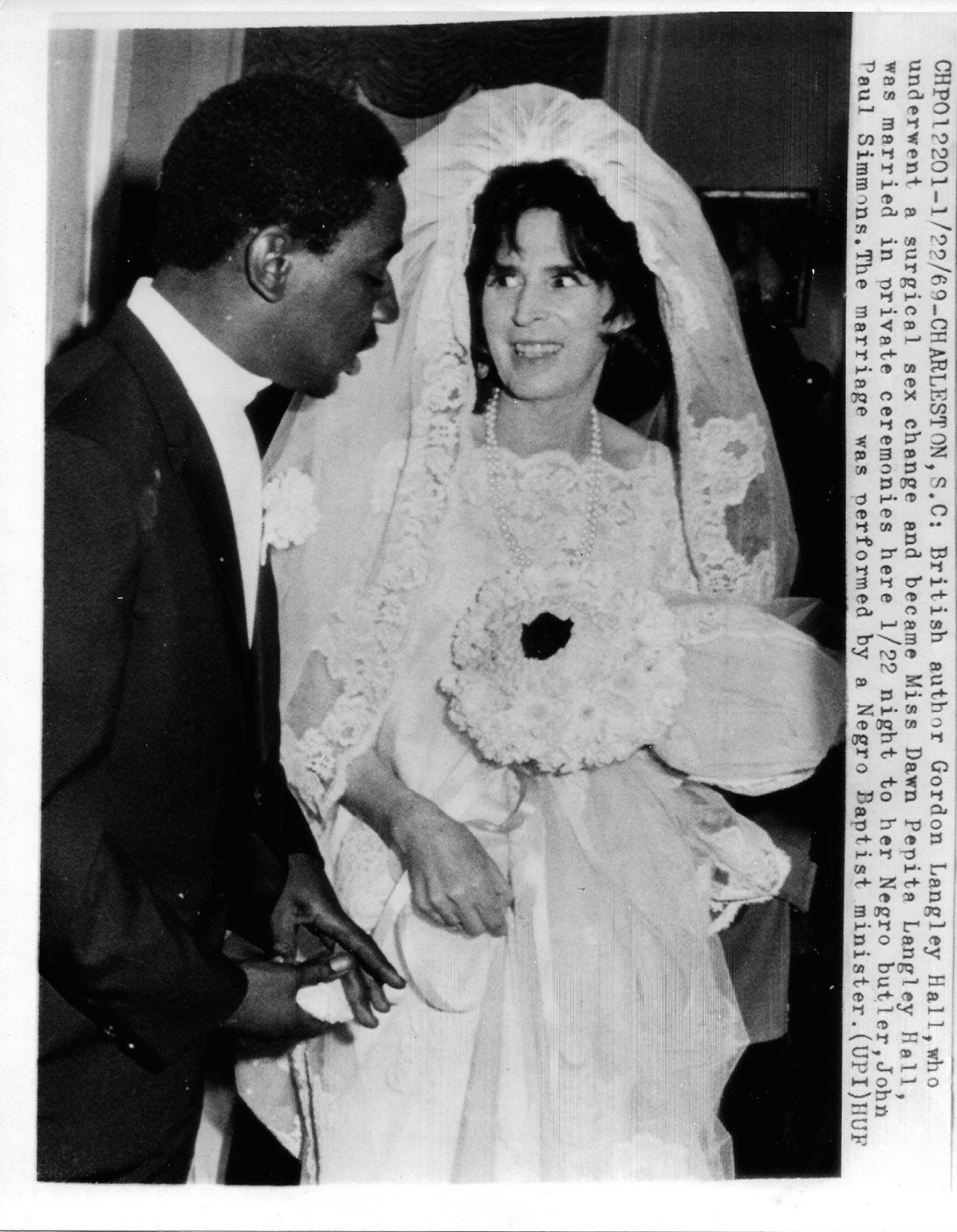
Here’s a transcript of Armistead’s talk:”When I graduated from Officer Candidate School in the late 1960s, I was stationed in Charleston, South Carolina — which I had actually requested, because I always thought Charleston was the most beautiful American city. Lucky me, I got sent to a destroyer tender based there.I didn’t count on how hot it would be, or how stinky it could get down at the ship. There were a lot of things about it I didn’t like, including the fact that I was living on a ship for the first time. But I loved the city. I loved seeing everything about it — the live oaks, the moss. If you’ve been there, you know what I’m talking about. It’s a spectacular place. Not so much politically these days, but still beautiful.One of the local characters at the time was someone named Gordon Langley Hall, who had arrived in Charleston to some fanfare. He came from a prestigious family — his mother was from British high society, and his father had been a chauffeur for Vita Sackville-West — so he had bohemian credentials that impressed people in Charleston.What didn’t impress them was that shortly after he arrived, he announced he was going to undergo gender-change surgery at Johns Hopkins. That news cooled the city’s enthusiasm for him rather quickly. And once he became a she — Dawn Langley Hall — she announced that she was marrying an African-American shrimp boat fisherman. That pretty much finished her reputation in Charleston. People could embrace a certain bohemian attitude, even queers, but this was too much for them.I saw her once, in a movie theater, and was fascinated by her. I always wondered what it would have been like to know her, but I never did. Still, she was the first person who introduced me — just by existing — to the idea of a transgender character. And I used that inspiration when I created Anna Madrigal.You’ve heard me say before that my grandmother was the chief inspiration for Anna — and that’s true for her spirit: the loving, kind, accepting person that Anna became was very much my grandmother. But the notion of a transgender person — that came from Charleston, and from Dawn Langley Hall.Dawn was a fascinating person. She’d been the adopted child of Margaret Rutherford, the great British actress who played Miss Marple — that sort of jowly old Englishwoman, very funny and formidable. When Rutherford learned that Dawn was marrying a Black man, she reportedly said, “Well, I have no problem with that — I’m just disappointed he’s a Baptist.” Which, frankly, would have disappointed just about anybody.Dawn’s marriage was significant for many reasons. She was the first transgender person to marry in South Carolina — and it was the first interracial marriage in South Carolina. Believe me, everybody talked about it. I remember hearing reverberations about it the whole time I lived there. Many people did so with a kind of grudging respect for this individual who was determined to be herself.As a young man, I was deeply impressed by that courage. At the time, I wasn’t yet out of the closet — not even to my friends in the Navy. I think there was one man I came out to, not even a sailor, but someone I liked and trusted. He was very understanding, and saw no reason to end our friendship.I even had my first sexual experience in Charleston — on the Battery, where the first shots of the Civil War were fired. That seemed appropriate in some ways.So when I began writing Tales of the City years later, Dawn was in the background of my imagination — not as a direct model, but as the spark that introduced me to the idea of a transgender character. I thought it would work beautifully in a story to have someone with a secret that no one knew about.But when I sat down to write in San Francisco, my grandmother kept showing up. Her spirit was the same as Anna’s — loving, accepting, and a little airy-fairy. Those qualities led me along as I wrote her story, and she stayed with me the whole time.I’ll tell you more about how my grandmother influenced Anna Madrigal in the next episode. I hope you’ll join me.”Armistead also told me when Dawn died in September 2000, some Charlestonians expressed regret for how they’d treated her. While local coverage didn’t frame it as a city-wide apology, accounts of her funeral describe an uncommon gathering—white gay elders and Black churchgoers side by side—which feels like a late, quiet acknowledgment of her courage. She was a trailblazer. This is a public episode. If you'd like to discuss this with other subscribers or get access to bonus episodes, visit armisteadmaupin.substack.com/subscribe

Here’s a transcript of his talk: I’d like to have a few words today with my gay and lesbian brothers and sisters.I have noticed — on my page on Facebook and elsewhere — that there have been people who identify as gay or lesbian, but who think that entitles them to exclude trans people from the equation. I came from a time and a place where we were all talking about “LGBT,” and that meant including trans folk.Now, there are people who are telling me — oh, what is the line they use? “It’s not a binary situation.” You know… all of this is gobbledygook for people who want to exclude some people from the right to exist. And it would be shameful, on the part of anybody I know, to support that thesis.I can’t remember a time — since the beginning of the gay rights movement — when we weren’t in this together. It was not an alien thing to me to support trans folk. In fact, it made sense on some level, because they were a variation of our own experience that I couldn’t personally experience. But I understood their right to be who they are. And I realized that we were fighting against the same foes — the same people that hate us, hate the trans community.And, you know, Nigel Farage wants to eliminate the Equality Act in England. And in doing so, he would take away all of our rights. I mean — I shouldn’t have to appeal to your self-interest here. The point is that we are stronger together — always have been — and to settle back into some cozy, middle-class sense of what we are as a gay or lesbian person, and not include trans people, is a really bad mistake. And it’s an unkindness, frankly, that you can’t be guilty of.“We are stronger together — always have been — and to settle into some cozy middle-class sense of what we are as gay or lesbian people, and not include trans folks, is a really bad mistake.”I don’t want anybody to be left out of the picture.And so here I am — this 81-year-old queer — asking you to do the same: to stand up and fight for trans people. And not just because we’re in it together, but because it’s the decent thing to do.The noise against trans folk has been greater than it’s been in years. And I think that’s why some gay men and lesbians are sort of chickening out and want to abandon trans people. We cannot do that. We have to stand up for everybody. And we have to realize that that’s where our strength comes from.So I hope we can fight this battle together — basically because that’s the only way we’re going to win. And I’ve long ago stopped worrying about winning, because I’m 81 years old, and who knows — there’ll still be a fuss going on after I’m dead — but I hope we’ll stay on the side of the good guys, our own side, and support trans folk whenever it’s necessary.It’s often necessary right now. That’s why I’m even saying this — because it’s the one fight that seems to be still up for grabs, and that is not the time to leave these people behind.We cannot do that. We must be good guys. We must be good queers. This is a public episode. If you'd like to discuss this with other subscribers or get access to bonus episodes, visit armisteadmaupin.substack.com/subscribe

Isherwood was not only a literary hero of Armistead’s (as you’ll note from the earlier episode on Isherwood), he was a dear friend and mentor. A Single Man, which was published in 1964, is often regarded as his best work. It follows a single day in the life of George, a gay man who is mourning the loss of his longtime partner. I imagine most of you will also know of the wonderful 2009 film adaptation by Tom Ford. What are your thoughts about the book (or movie)? Please feel free to share your comments so we can continue the conversation together. This is a public episode. If you'd like to discuss this with other subscribers or get access to bonus episodes, visit armisteadmaupin.substack.com/subscribe

Comments

Download from Google Play

Download from App Store
 United States