


 Claim Ownership
Future of Consumer Marketing
Subscribed: 0Played: 13
Subscribe

© Copyright 2024 All rights reserved.
Description
The future of consumer marketing is brought to you by The Global Talent Co.
147 Episodes
Reverse

In this episode of The Future of Consumer Marketing, host Andres Figueira interviews Andrew Maffettone, Founder of BlueTuskr, a full-service e-commerce marketing agency that operates at the intersection of Amazon marketplaces and direct-to-consumer strategies. With 15 years in e-commerce marketing and multiple agency exits under his belt, Andrew has built BlueTuskr into a 55-60 client operation that serves as an outsourced marketing department for e-commerce brands. BlueTuskr's differentiation lies in its ability to bridge the traditionally siloed worlds of marketplace and D2C marketing, creating truly omnichannel strategies through specialized sub-departments that function like seven agencies under one roof.
Topics Discussed:
Building a full-service agency structure with specialized sub-departments
Qualifying clients through an investor lens: treating agency partnerships like investment decisions
Navigating the tension between being embedded in client teams while maintaining agency culture
Developing new service offerings through complimentary pilot programs with early clients
Scaling operations with a global team across US, LATAM, and Philippines
Integrating AI tools strategically to improve efficiency without sacrificing quality
Managing omnichannel marketing strategies that bridge Amazon marketplaces and D2C platforms

In this episode of The Future of Marketing, host Andres Figueira interviews Lin Sällström, Head of Sales & Marketing at Hickap, a 9-year-old Scandinavian vegan beauty brand. Hickap is carving out space in the highly competitive beauty market by building an inclusive community-first brand that treats customers like friends rather than transactions. Operating with a lean team of just nine people, Hickap has become one of the fastest-growing vegan beauty brands in Scandinavia through a marketing approach centered on consistency, authenticity, and deep customer relationships. Their strategy demonstrates how smaller brands can compete against legacy players like Max Factor, Lancôme, and Maybelline by leveraging proximity to customers and cultural relevance.
Topics Discussed:
Building an inclusive, warm beauty brand for Gen Z and Gen Alpha first-time beauty users
Operating a lean, high-performing marketing team in a competitive category
Leveraging consistency as a competitive advantage and growth accelerator
Creating community through customer-influencer integration at events and campaigns
Using customer feedback to drive product development and category expansion
Launching culturally-relevant seasonal campaigns in Nordic markets
Expanding from makeup brushes into skincare, makeup, and hair care categories
Competing against legacy beauty brands with significantly larger marketing budgets

In this episode of The Future of Consumer Marketing, host Andres Figueira interviews Jordan Malara, owner of Adventure Inn Durango and The Ridge Hotel (rebranding to The Outrider Hotel). Jordan is building a boutique hotel brand in Colorado's competitive hospitality market by recognizing a fundamental insight: guests don't search for hotels first - they choose destinations, then look for places to stay. By marketing the destination alongside the property and focusing on authentic local experiences over sterile accommodations, Jordan is creating a scalable hospitality brand that stands apart from both traditional hotels and the fragmented short-term rental market.
Topics Discussed:
Marketing destination experiences rather than room amenities
Leveraging user-generated content and influencer partnerships for authentic storytelling
Building brand consistency while maintaining local authenticity across multiple properties
Creating operational efficiency through centralized management structures
Using seasonal marketing strategies to balance revenue across peak and off-peak periods
Developing partnerships with local businesses to enhance guest experience
Training staff to embody brand culture and deliver insider local knowledge
Applying AI to guest communications, bookkeeping, and market research
Transitioning from short-term rental management to branded hotel operations

In this episode of The Future of Consumer Marketing, host Andres Figueira interviews Tyson Hill, Vice President of Content, Marketing and Communications at Phoenix Rising Football Club. Phoenix Rising operates in one of marketing's most challenging environments: a second-division soccer team competing in a crowded sports market dominated by NFL, NBA, and major university programs—while also competing globally against Premier League and international soccer broadcasts. Rather than trying to convert existing soccer fans, Phoenix Rising has carved out a unique positioning by marketing live experiences to non-traditional audiences, turning accessibility and atmosphere into their competitive advantages. Through hyper-targeted creative, experience-first messaging, and a lean but highly skilled team, they're building a community-driven sports brand in a market that didn't know it existed.
Topics Discussed:
- Marketing a second-division sports team in a saturated major market
- Competing against global sports broadcasting for local attendance
- Building community and camaraderie as the core product experience
- Converting non-soccer fans through live experience marketing
- Operating with lean, expert teams in resource-constrained environments
- Creating accessible sports experiences versus premium league paywalls
- Leveraging broadcast partnerships for brand awareness without major budgets

In this episode of The Future of Consumer Marketing, host Andres Figueira interviews Hal Smith, Founder of H Street Digital, a performance marketing agency that guarantees to 2x digital advertising revenue for eight-figure DTC brands in 90 days. After a decade of scaling multiple performance marketing agencies and working across presidential campaigns, Fortune 100 banks, and DTC brands, Smith identified the systematic bottlenecks that prevent most brands from scaling efficiently. His agency's approach differs radically from the typical agency model: they audit brands across five core performance levers, identify the single biggest constraint using theory of constraints methodology, and commit to specific, measurable outcomes through 90-day sprints with full refund guarantees if they don't deliver.
Topics Discussed:
- Applying theory of constraints to identify the biggest growth bottleneck in DTC brands
- Building a performance marketing audit framework across thousands of data points Using 90-day outcome-based sprints with measurable KPIs and refund guarantees
- Leveraging AI for creative research and customer insight extraction Testing product-market fit through systematic persona and pain point matrices
- The five core performance levers: offer strategy, creative systems, media buying, CRO, and attribution
- Why tactical advice on social media often delivers low-impact results Building a lean, profitable agency model focused on accountability over growth
- Preparing for agentic commerce and AI disruption in the DTC ecosystem

In this episode of The Future of Consumer Marketing, host Andres Figueira interviews John Tabis, Founder and Chairman of The Bouqs Company. The Bouqs Company transformed the floral industry by eliminating the traditional five-to-six layer supply chain and shipping flowers directly from eco-friendly farms in Ecuador, Colombia, and beyond to consumers across the United States. Starting with just $13,000, Tabis and his co-founder grew the company from $2 million in year one to $32 million by year four—all by rejecting commodity positioning and building a premium brand in one of the most emotionally charged but underserved consumer categories. Through strategic storytelling, aggressive PR tactics, and ruthless focus on customer experience optimization, The Bouqs Company carved out a new position in a market dominated by players competing solely on price.
Topics Discussed:
Disrupting traditional supply chains by shipping directly from farms to consumers
Finding the "Holy Shit Moment" (HSM) in brand storytelling to break through noise
Leveraging guerrilla PR tactics to secure celebrity endorsements and media coverage
Evolving brand narrative and product offerings based on customer feedback
Transitioning from growth-focused founder to strategic chairman role
Building subscription models that balance flexibility with customer lock-in
Expanding from pure e-commerce to omnichannel retail strategy
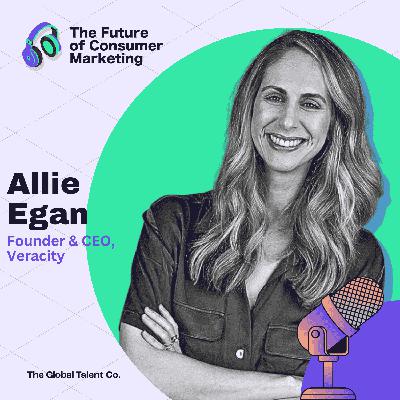
In this episode of The Future of Consumer Marketing, host Andres Figueira interviews Allie Egan, Founder and CEO of Veracity. After reversing her own autoimmune thyroid disease through functional medicine, Allie built Veracity into a doctor-recommended, clinically-backed metabolic health brand that's achieved 40x growth in two years. Operating in the increasingly crowded natural alternatives to GLP-1s market, Veracity has differentiated itself by combining rigorous Western scientific validation with plant-based ingredients, while riding the wave of consumer education created by the prescription weight loss medication boom. Through strategic product development driven by biological data from tens of thousands of hormone tests, Veracity pivoted from a broad wellness brand to focus exclusively on metabolic health - a decision that 4x'd their business in a single year.
Topics Discussed:
Using proprietary biological data to identify product-market fit and category opportunities
Positioning against prescription medications without directly competing
Leveraging market education created by pharmaceutical competitors (GLP-1s)
Building scientific credibility through physician partnerships and clinical testing
Pivoting from broad wellness to category-specific focus based on customer data
Balancing founder authenticity with scalable content production
Maintaining brand principles throughout manufacturing and supply chain decisions

In this episode of The Future of Consumer Marketing, host Andres Figueira interviews Andres Gimeno, Director of Growth Marketing at Hyperice, the world's leading recovery technology company. Hyperice has mastered the art of building premium brand authority through professional athlete validation while simultaneously scaling to everyday consumers. Born from a courtside observation of Kobe Bryant's recovery routine 12 years ago, Hyperice now partners with every major professional sports league globally - NBA, NFL, MLB, PGA, UFC - and has recently launched the groundbreaking Nike x Hyperice boot collaboration. With just over 100 employees operating across 65+ countries, Hyperice demonstrates how a lean team can execute sophisticated global expansion through strategic partnerships, localized market intelligence, and a product-first marketing philosophy that lets results speak louder than campaigns.
Topics Discussed:
Building brand authority through professional athlete validation before scaling to mass market
Translating premium product positioning from elite athletes to everyday consumers
Leveraging UGC content to bridge the gap between professional and amateur use cases
Executing global expansion with cultural localization across 65+ countries
Using AI to accelerate creative prototyping and market-specific insights at scale
Navigating payment infrastructure differences in emerging markets
Partnering with Nike to launch category-defining products (Hyperboot)
Focusing on endurance sports communities as primary adoption channels

In this episode of The Future of Consumer Marketing, host Andres Figueira interviews Sangwook Park, Chief Executive Officer at Laughland. Laughland is disrupting the oral care category by bringing dentist-level personalization to teeth whitening at an accessible price point. Starting from a consumer growth equity background at a fund investing in brands like Olaplex and Curology, Park identified a critical gap: oral care lacked the innovation and fun that had transformed skincare and beauty, while remaining clinically credible. With over 200,000 customers across 25+ countries and a lean team of nine, Laughland has proven that personalization doesn't require sacrificing accessibility, achieving double-digit growth while actually reducing prices through supply chain optimization.
Topics Discussed:
Building a personalized oral care brand in a commoditized category dominated by legacy players
Scaling internationally from day one through organic press coverage
Leveraging dentist expertise and authority to educate consumers on product differentiation
Optimizing team productivity through AI tools to maintain lean operations while scaling rapidly
Transitioning from premium positioning to mass-market accessibility through strategic pricing and product expansion
Balancing clinical credibility with brand personality in a traditionally boring category
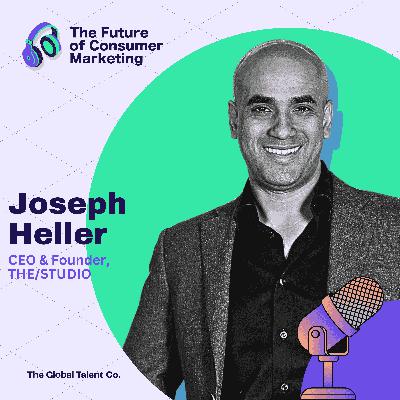
In this episode of The Future of Marketing, host Andres Figueira interviews Joseph Heller, CEO & Founder of The Studio. The Studio has quietly become one of the most essential manufacturing platforms for consumer brands, serving over 100,000 customers across 14 years by solving one of the hardest problems in consumer business: finding the right manufacturer. Rather than competing on price or technology features, The Studio built its business around curation and trust—acting as the critical bridge between brands and the world's manufacturing infrastructure. Their approach to marketing reflects a fundamental understanding that sophisticated customers don't buy software or platforms; they buy solutions to specific problems delivered with speed and clarity.
Topics Discussed:
Building trust in a market where manufacturers have poor reputations
Evolving marketing strategies as customer acquisition costs increase
Curating manufacturing partners rather than simply connecting buyers and sellers Using AI to compress design iteration cycles from days to hours
Expanding beyond China to build global manufacturing networks
Translating complex B2B services into simple, compelling marketing messages Leveraging organic growth and word-of-mouth in the early stages
Adapting to social media-driven product trends and customer inspiration

In this episode of The Future of Consumer Marketing, host Andres Figueira interviews Phil Cohen, COO and Co-Founder of Simplifyber. Simplifyber is tackling one of manufacturing's most entrenched challenges: making sustainable materials compete directly with plastics at scale. Rather than positioning themselves as a premium alternative that costs more, they've engineered a platform technology - combining proprietary liquid natural fiber slurries with custom manufacturing equipment - that can produce everything from flexible shoe uppers to rigid automotive interiors. By starting with high-margin durable goods rather than commoditized packaging, and by designing for scale from day one, Simplifyber is building a razor-and-blades business model where their technology diffuses globally through equipment sales and consumable material contracts.
Topics Discussed:
Designing sustainable materials companies for scale from inception
Competing with plastics through strategic product positioning in high-margin categories
Re-engineering industrial equipment to create proprietary manufacturing advantages
Building platform technologies that enable unforeseen applications
Maintaining ruthless team accountability in venture-backed environments
Navigating complex technical decisions with multiple stakeholder voices

In this episode of The Future of Consumer Marketing, host Andres Figueira interviews Ankur Goyal, SVP of Growth at Coterie. Coterie is disrupting the baby care category dominated by legacy CPG giants through a relentless focus on product superiority, demand generation marketing, and leveraging direct-to-consumer advantages that traditional competitors simply cannot replicate. In four years, Ankur has scaled the company 15x while taking it from unprofitable to highly profitable, culminating in an acquisition by Mammoth Brands. Through sophisticated use of AI, hyper-personalized customer experiences, and creative that prioritizes demand generation over demand capture, Coterie has proven that even in commodity categories, digital-native brands can command premium pricing and build defensible moats.
Topics Discussed:
Disrupting legacy-dominated CPG categories with demonstrably superior products
Building a demand generation-first paid acquisition strategy
Leveraging AI for customer segmentation, personalization, and CX automation
Creating digital product experiences as competitive advantages in physical product categories
Structuring lean growth teams with specialized creative pods
Extracting customer insights to drive messaging breakthroughs
Balancing premium positioning with accessible brand communication

In this episode of The Future of Consumer Marketing, host Andres Figueira interviews Ajay Prakash, Co-Founder & CEO of Rinse. Since 2013, Rinse has been building a technology-enabled dry cleaning and laundry service that's tackling one of life's most universal pain points through strategic category creation. Operating across 11 major North American markets with expansion into Canada, Rinse has built a trusted brand in an industry that hasn't innovated in decades. Rather than relying on viral campaigns or growth hacks, Ajay shares how Rinse has achieved market leadership through relentless focus on customer experience, strategic channel selection, and the compounding effect of trust-building at every touchpoint.
Topics Discussed:
Creating a new category in a legacy industry resistant to innovation
Building trust as the foundation for considered purchases
Evolving marketing strategy from early-stage to scale-stage
Channel-specific customer acquisition and the power law of marketing effectiveness
Leveraging AI to enhance operational productivity in a complex, multi-market business
Managing distributed teams across physical and remote operations
Scaling while maintaining culture and institutional knowledge

In this episode of The Future of Consumer Marketing, host Brett Stapper interviews Gary Spittle, Founder and CEO of Sonical. Sonical is pioneering the "Headphone 3.0" category—building hearing computers that transform how consumers interact with audio technology. Rather than accepting the fixed functionality of traditional headphones and earbuds, Sonical created a platform that lets users customize their audio experience through downloadable apps, applying the smartphone model to wearable audio devices. Gary shares how his team navigated the challenge of building both a B2B licensing platform and a direct-to-consumer hardware product, using crowdfunding, ecosystem development, and mission-critical user targeting to carve out a new market category in the competitive audio technology space.
Topics Discussed:
Building a dual-business model: B2B platform licensing and D2C hardware
Targeting mission-critical end users (DJs, audio professionals, construction workers, enterprise users)
Using crowdfunding as both capital and marketing strategy
Creating a developer ecosystem to drive platform adoption
Simplifying complex technology through familiar mental models (smartphone app concept)
Positioning a new product category ("Headphone 3.0") in an established market
Leveraging trade shows and conference speaking for investor marketing

In this episode of The Future of Consumer Marketing, host Brett Stapper interviews Lou Lentine, CEO and Founder of Echelon. Echelon has built a distinctive position in the crowded connected fitness market by designing products around consumer pain points rather than technology first. While competitors focused on premium positioning and professional installation, Lou's team created equipment that consumers could set up in 30 minutes without tools - a critical differentiator during COVID when in-home installation became impossible. The company has evolved from a single spin bike with 100 pieces of content to a global fitness platform producing 2,000 pieces of content monthly across studios in Chattanooga, Miami, and soon Dubai. With a multi-channel strategy spanning DTC, major retailers like Costco and Dick's Sporting Goods, and a rapidly growing commercial business, Echelon demonstrates how to scale authentic community engagement while maintaining profitability across diverse distribution channels.
Topics Discussed:
Building a content ecosystem before launching hardware products
Designing consumer products with retail distribution and home assembly in mind
Navigating the connected fitness boom during COVID and subsequent market correction
Managing multi-channel distribution across DTC, major retail, and commercial segments
Leveraging AI and AWS partnerships to create personalized workout experiences
Making strategic pivots in content production (closing London studio, opening Dubai)
Building authentic community engagement without celebrity endorsements

In this episode of The Future of Marketing, host Brett interviews Sarah Meller, CEO of Saatchi Art. Saatchi Art operates at the intersection of technology and the art world, running a global online art marketplace alongside The Other Art Fair and a hospitality art advisory business. Sarah discusses the unique challenge of marketing a premium product category that most consumers don't yet know they want—original artwork—while competing against mass-produced wall art and fighting the perception that art collecting is only for the wealthy. Through democratizing access to original art and leveraging technology to solve discovery challenges, Saatchi Art is creating a new category of everyday art collecting.
Topics Discussed:
Marketing category creation versus demand capture in luxury markets
Balancing democratization with premium brand positioning
Navigating UGC-based marketplaces and discovery challenges
Building IRL experiences in an increasingly digital world
Leveraging AI for content creation and visual merchandalization
Evolving from marketing leadership to CEO in a DTC business

In this episode of The Future of Marketing, host Andres Figueira interviews Daniel Perales, Head of Digital Marketing at Baskonia-Alavés Group. Daniel oversees digital marketing for an unprecedented sports conglomerate that includes a EuroLeague basketball team, a La Liga football club, gyms, sports academies, and residential facilities. Operating from Spain's Basque Country, Daniel navigates the unique challenge of marketing to fans rather than customers—a distinction that fundamentally changes how sports organizations approach digital strategy. From gamification campaigns that generated 10x normal lead volume to building unified data systems across multiple brands, Daniel shares tactical insights on marketing in an industry where Monday's strategy depends entirely on Sunday's game results.
Topics Discussed:
Marketing to fans versus customers in professional sports
Managing digital marketing across multiple sports properties and brands
Implementing gamification strategies to drive engagement and lead generation
Building unified data systems for cross-selling across sports teams and facilities
Adapting marketing tone and messaging based on game outcomes
Demographic differences between basketball and football fan bases
Creating sponsorship value through promotional campaigns
Using in-stadium technology for real-time fan engagement

In this episode of The Future of Consumer Marketing, host Andres Figueira interviews Ari Tulla, CEO and Co-Founder of Elo Health, a smart nutrition company pioneering the concept of "food as medicine" through personalized supplements, AI-driven insights, and at-home blood testing. Elo Health is building nutrition products that act as multipliers for medical treatments and lifestyle interventions—where one plus one equals three. After analyzing data from 10,000 users, they've evolved from direct-to-consumer personalized supplements into a B2B/B2C platform partnering with fertility clinics, weight loss programs, and wellness brands. Drawing on lessons from pioneering mobile gaming at Nokia and building healthcare companies following personal tragedy, Ari shares the marketing playbook for launching category-defining health products in a market that doesn't yet know it needs them.
Topics Discussed:
Building consumer trust for products in categories that don't yet exist
Pivoting from D2C blood-test-based personalization to B2B/B2C platform partnerships
Leveraging AI to operate a 10-person company doing the work of 40
Creating supplement products as "companion treatments" for existing medical protocols (IVF, GLP-1 drugs)
Marketing to two distinct demographics: health-awakened 35-40 year-olds and proactive Gen Z
Navigating healthcare data regulations across markets to enable product innovation
Using founder story and mission as recruiting tools for talent acquisition from big tech
Transitioning from exclusive blood-test model to accessible Amazon distribution
Building authentic brands rooted in purpose rather than promotional messaging
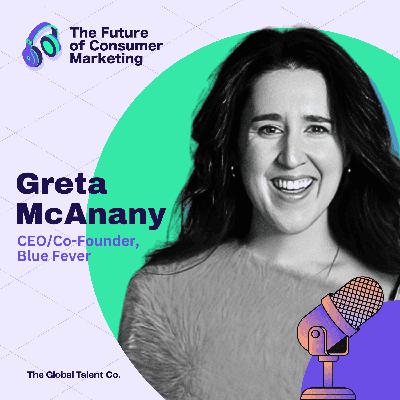
In this episode of The Future of Marketing, host Andres Figueira interviews Greta McAnany, CEO and Co-Founder of Blue Fever, a youth-centric mental health platform that's bridging the gap between social media and clinical care. Blue Fever has grown from a simple text message service to a sophisticated AI-powered companion app serving nearly half a million young people, backed by investors including Amazon and Serena Williams. Through innovative positioning between social media and clinical mental health care, Blue Fever is creating a new category of preventative mental wellness that meets Gen Z where they are—while building sustainable business models through municipal partnerships rather than traditional consumer monetization.
Topics Discussed:
Building a mental health platform that sits between social media and clinical care
Evolving from SMS-based service to AI-powered community platform
Creating guardrails and safety protocols for youth-focused AI
Monetizing youth mental health tools through B2G (business-to-government) partnerships
Developing clinically-informed AI that knows when to escalate vs. support
Understanding Gen Z's relationship with technology and mental health
Navigating the policy landscape for digital mental health tools

In this episode of The Future of Consumer Marketing, host Brett Stapper interviews Sarah McNabb, Chief Marketing Officer at GigaStar. GigaStar is pioneering a new asset class in the creator economy by building the first SEC-registered crowdfunding platform that allows YouTube creators to raise capital by offering investors a share of their future AdSense revenue—without sacrificing creative control or IP rights. Operating with a lean team in a highly regulated fintech environment, Sarah shares how GigaStar is simplifying complex securities offerings, targeting the right creator profiles, and building what they call "the Wall Street of the creator economy" through both primary and secondary markets for creator-backed securities.
Topics Discussed:
Democratizing capital access for YouTube creators through revenue-sharing securities
Building trust in a regulated fintech environment with SEC compliance
Evaluating creator investment potential based on engagement, consistency, and revenue thresholds
Operating lean marketing teams in complex, regulated industries
Leveraging in-person events to build relationships in the creator ecosystem
Developing both primary and secondary markets for creator securities
Balancing AI efficiency with human relationship building in B2B creator marketing

Comments

Download from Google Play

Download from App Store
 United States