


 Claim Ownership
Stoicism: The Unconquerable Mind
Subscribed: 7Played: 25
Subscribe

© Copyright 2025 All rights reserved.
Description
Welcome to Stoicism: The Unconquerable Mind, the podcast that brings ancient Stoic wisdom to modern-day problems. Each week, we dive into the teachings of the great Stoics to give you practical tools for building resilience, finding calm, and living a better life. No jargon, no fluff—just timeless strategies for a stronger mind. Follow us now to get started.
101 Episodes
Reverse
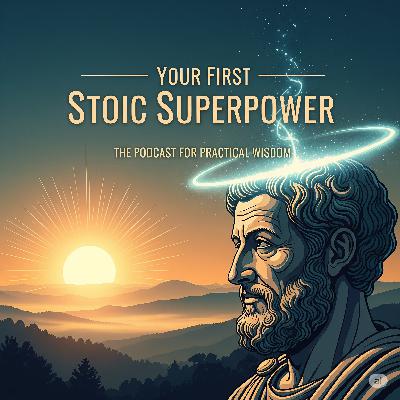
This episode introduces the foundational Stoic principle of the dichotomy of control, presented as a practical "superpower" for navigating life's challenges. It explains that true tranquility and an unconquerable mind are achieved by understanding and applying this fundamental distinction. The core idea is that some things are within our control—our judgments, intentions, and actions—while most things, such as our bodies, reputations, and external events, are not. The episode delves into the teachings of the ancient Stoic philosopher Epictetus, who emphasized that our primary task in life is to consistently differentiate between these two categories. By focusing our energy exclusively on what we can control, we can avoid unnecessary frustration, anxiety, and suffering.
The discussion highlights how misplacing our focus on external factors leads to a sense of powerlessness and emotional turmoil. The episode provides clear examples of what falls into each category: our internal world of choices and reactions is up to us, whereas the actions of others and the outcomes of events are not. It reframes the concept of success to be about our effort and character rather than external results. This shift in perspective is presented not as a passive acceptance of fate, but as a proactive way to build inner resilience and freedom.
To make this principle actionable, the episode offers a simple yet powerful exercise: the "Circle of Control." This involves visualizing or writing down the things within and outside of our control in a given situation. By consciously directing our attention and energy only to the inner circle—what we can directly influence—we can cultivate a state of calm and purpose. The episode concludes by positioning this "first Stoic superpower" as the essential starting point for developing an unconquerable mind, capable of facing any challenge with grace and equanimity.

This episode explores the lives of three of the most influential Roman Stoic philosophers: Epictetus, Seneca, and Marcus Aurelius, showcasing the universal applicability of Stoicism across vastly different life circumstances. It begins by posing a puzzle: what could a slave, a powerful political advisor, and a Roman emperor possibly have in common? The answer lies in their shared devotion to Stoicism, a philosophy they used not as an abstract theory but as a practical guide for living. Their stories serve as powerful testaments to the resilience and inner strength that Stoic principles can provide in the face of extreme adversity.
The episode details the remarkable journeys of these three "Stoic superstars." Epictetus, born a slave, endured immense hardship yet emerged as one of antiquity's most respected philosophical teachers, emphasizing the power of our inner will. Seneca, a wealthy and influential statesman who advised the tyrannical Emperor Nero, navigated the treacherous world of Roman politics, ultimately facing a forced suicide with Stoic courage. Finally, Marcus Aurelius, the most powerful man on Earth, used his personal journal, "Meditations," to apply Stoic principles while grappling with the immense pressures of war, plague, and personal loss.
Through these compelling narratives, the episode demonstrates that Stoicism is not a philosophy for a specific social class or situation but a robust operating system for life. It provides practical tools for anyone, regardless of their station, to cultivate tranquility, resilience, and virtue. The lives of the slave, the senator, and the emperor powerfully illustrate that true freedom and strength are not determined by external conditions but by the mastery of one's inner world, making Stoicism a timeless and profoundly relevant philosophy for anyone seeking to navigate life's challenges.
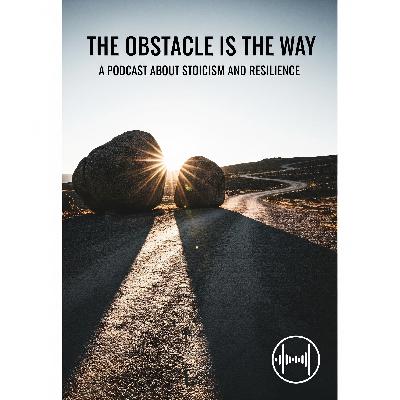
This episode delves into the transformative Stoic concept that challenges and obstacles are not merely impediments but can be the very path to growth and advantage. It centers on Marcus Aurelius's profound insight: "The impediment to action advances action. What stands in the way becomes the way." The episode unpacks this seemingly paradoxical idea, showing how it can shift our perspective from seeing difficulties as sources of frustration to viewing them as tailor-made opportunities for practicing virtues like patience, courage, and creativity.
To illustrate this principle in action, the episode recounts the harrowing story of James Stockdale, a US Navy pilot who was a prisoner of war in Vietnam for over seven years. Facing unimaginable torture and hardship, Stockdale consciously entered "the world of Epictetus," using his Stoic training to endure and even find meaning in his suffering. This modern example is complemented by the story of Zeno of Citium, the founder of Stoicism, who embarked on his philosophical journey only after a shipwreck cost him everything he owned. Both stories powerfully demonstrate how profound adversity can become a catalyst for inner strength and purpose.
The episode explains that the key to this transformative process lies in the "discipline of perception"—learning to see events objectively, stripped of our initial emotional judgments and preconceived notions. By applying this discipline, we can reframe any challenge, from a minor annoyance to a major life crisis, as a chance to develop our character and strengthen our resolve. It's a powerful call to action, urging us to stop fighting against our circumstances and instead learn to work with them, transforming every obstacle into a stepping stone on the path to a more resilient and virtuous life.

This episode explores the Stoic practice of Memento Mori, or "remembering death," revealing it not as a morbid preoccupation but as a powerful tool for living a more vibrant and meaningful life. It challenges the common perception that thinking about death is depressing, arguing instead that a conscious awareness of our mortality is the key to appreciating the present moment. The Stoics believed that by contemplating the impermanence of all things—our lives, our relationships, our possessions—we can cultivate a profound sense of gratitude and urgency, freeing ourselves from the tyranny of trivial concerns and distractions.
The episode explains the practical application of this principle through the technique of "negative visualization." This involves regularly and intentionally imagining the loss of things we value. By doing so, we counteract the human tendency to take things for granted. When we remember that our time is finite, we are more likely to use it wisely, focusing on what truly matters and not putting off important actions or conversations. This practice, far from inducing sadness, actually enhances our joy and appreciation for the simple pleasures and precious relationships we have right now.
Ultimately, Memento Mori is presented as a life-affirming philosophy. It's about living with an awareness of the bigger picture, which helps to put our daily anxieties and frustrations into perspective. By embracing the reality of our mortality, we are empowered to live more fully, with more purpose, and with a deeper sense of connection to the present. The episode encourages listeners to see this practice not as a somber duty, but as a liberating secret to a richer, more engaged, and ultimately more joyful existence.
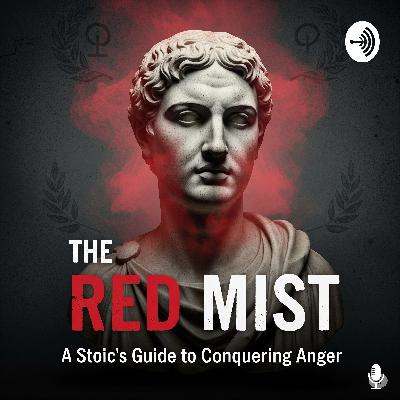
This episode tackles the powerful and often destructive emotion of anger, offering the Stoic perspective as a practical guide to understanding and managing it. It introduces Seneca's striking description of anger as "brief insanity," highlighting the Stoic view that anger is not an uncontrollable force of nature but a temporary madness that hijacks our reason. The core insight presented is that anger is a choice, an internal response stemming from our judgments about external events, rather than an inevitable reaction. This reframing is the first step toward gaining control over this potent emotion.
The episode delves into Seneca's practical techniques for "taming the red mist." The most crucial of these is delay. By creating a pause between the trigger and our response, we give our rational mind a chance to intervene and prevent an impulsive, often regrettable, outburst. Other strategies discussed include considering the source of the anger, visualizing the negative consequences of lashing out, and shifting our goal from punishment to constructive correction. These tools are designed to prevent the fire of anger from starting in the first place, rather than just trying to extinguish it once it's raging.
The Stoic approach to anger is not about suppression or becoming emotionless; it's about responding to situations with reason and virtue. The episode emphasizes that by mastering our judgments, we can choose a more effective and tranquil path. It's a practical blueprint for transforming a destructive emotion into an opportunity for self-control and wisdom, allowing us to navigate interpersonal conflicts and frustrations without losing our inner peace or compromising our character.

This episode explores one of the most challenging and profound Stoic concepts: Amor Fati, or the "love of fate." This isn't just about passively accepting what happens; it's about actively, even joyfully, embracing every event in our lives as if we had chosen it ourselves. The Stoics believed that the universe is governed by a rational principle called the Logos, and therefore everything that occurs, even things that seem negative to us, is a necessary part of a larger, coherent whole. To fight against this reality is to create our own suffering.
The practice of Amor Fati is deeply connected to the dichotomy of control. Once we have truly internalized what is and isn't up to us, we can learn to love the things we cannot change. Instead of wishing for circumstances to be different, we can find opportunity and purpose within them. The episode uses the examples of Stoic figures who faced immense hardship, like Epictetus and Marcus Aurelius, to show how this mindset can transform suffering into a source of strength and virtue. A setback is no longer a tragedy but a "catalyst" for growth.
Ultimately, Amor Fati is presented as a powerful tool for achieving an unconquerable mind. It's a radical act of acceptance that liberates us from the exhausting cycle of resentment, frustration, and complaint. By choosing to love our fate, we are not giving up our agency; rather, we are directing our energy toward what truly matters—our own response. This mindset allows us to find peace and even joy not in spite of our circumstances, but because of them, turning every moment of life into a chance to live virtuously.

This episode introduces a powerful Stoic meditation technique known as the "View from Above," a mental exercise designed to provide radical perspective and cultivate an unconquerable mind. This practice involves consciously zooming out from our immediate situation to see ourselves, our communities, and eventually the entire Earth from a vast, cosmic vantage point. The goal of this "flight of the soul" is to understand the relative scale of our personal problems against the immense backdrop of the universe, thereby diminishing their emotional weight.
The discussion explains how this shift in perspective works on multiple levels. Firstly, it fosters humility and a sense of interconnectedness, or sympatheia. From this high-up view, the boundaries that divide us and the conflicts that consume us appear insignificant, revealing our shared place in the cosmos. Secondly, it helps us re-evaluate what truly matters. As Marcus Aurelius, a frequent practitioner of this exercise, noted, the bustling affairs of humanity can look like the scurrying of ants from a great height, putting our own anxieties and ambitions into a much larger context.
The "View from Above" is presented not as a form of escapism, but as a practical tool for emotional regulation and wise decision-making. By regularly engaging in this mental zoom-out, we can detach from the immediate emotional charge of our problems and respond with greater clarity and reason. It's a technique for building the "inner citadel"—that fortified, tranquil part of the mind that remains unshaken by external chaos, allowing us to navigate life's challenges with a calm, expansive, and unconquerable spirit.
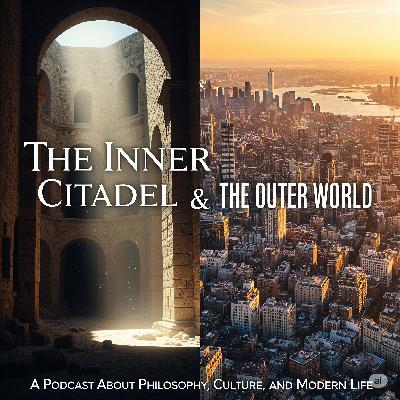
This episode directly confronts the modern stereotype of the Stoic as a detached, emotionless, and withdrawn individual, arguing that this is a fundamental misunderstanding of the philosophy. It asserts that the true aim of Stoicism is not to escape from the world, but to build the inner strength necessary to engage with it more effectively, virtuously, and compassionately. The Stoic "inner citadel" is not a bunker to hide in, but a secure base of operations from which to act in the world with purpose and resilience.
The episode explores key Stoic concepts that highlight this call to action. The idea of cosmopolitanism, or being a "citizen of the world," emphasizes our shared humanity and inherent duty to one another. This is further developed through the concept of oikeiosis, the understanding that our natural sense of concern should expand outward in concentric circles—from ourselves to our family, our community, and ultimately, all of humanity. These principles demand active participation and a sense of responsibility for the common good, directly contradicting the image of the isolated, uncaring Stoic.
By examining the lives of prominent Stoics like Marcus Aurelius, Seneca, and Cato the Younger, the episode shows that they were deeply involved in the messy, often dangerous, realities of public life. They were emperors, statesmen, and leaders who used their philosophy to navigate immense challenges, not to run from them. The core message is that Stoicism is a philosophy for "doers," providing the tools to maintain inner peace not by avoiding life, but by fully and virtuously participating in it.
This episode investigates the remarkable resurgence of Stoicism in the 21st century, exploring why this ancient philosophy is resonating so deeply in our modern, often anxious, world. It posits that Stoicism's popularity stems from its highly practical and actionable nature, offering a robust "operating system for the mind" in an age of information overload, constant distraction, and overwhelming choice. The ancient wisdom of figures like Seneca, Epictetus, and Marcus Aurelius provides a timeless toolkit for navigating the chaos of contemporary life.
The discussion highlights several key reasons for this revival. In a world where traditional sources of meaning may be less influential, Stoicism offers a powerful, non-dogmatic framework for living a virtuous and fulfilling life. Furthermore, its principles show a striking parallel to modern psychological approaches like Cognitive Behavioral Therapy (CBT), with its emphasis on challenging and reframing our own distorted thoughts and judgments. This connection gives Stoicism a contemporary scientific credibility, making it accessible to a wide audience.
The episode also points to the influence of modern authors and entrepreneurs, like Ryan Holiday and Tim Ferriss, who have translated these ancient ideas for a new generation. They have successfully framed Stoicism not as a dry academic subject, but as a practical blueprint for resilience, productivity, and inner peace. Ultimately, the modern Stoic revival is driven by a collective hunger for a philosophy that is not just thought about, but lived—one that provides clear, effective strategies for finding tranquility and purpose amidst the pressures of the modern world.

This episode serves as a practical conclusion to the series, translating the core principles of Stoicism into a concrete daily blueprint for building a more resilient and tranquil life. It moves beyond theory to offer an actionable routine, demonstrating that Stoicism is not just a set of ideas but a lived, daily practice. The goal is to provide listeners with a simple yet powerful structure for integrating Stoic wisdom into their everyday existence, from the moment they wake up to the moment they go to sleep.
The proposed daily routine is anchored by two key practices. The morning routine involves a form of premeditatio malorum, or the premeditation of evils, where one anticipates potential challenges and frustrations of the day ahead. This isn't about pessimism, but about mental preparation, rehearsing how to respond with virtue and calm. The evening routine is inspired by Seneca's practice of a daily review, where one reflects on their actions, judgments, and progress, asking what they did well, where they fell short, and how they can improve tomorrow.
Throughout the day, the episode encourages the on-demand use of other Stoic tools, such as the "View from Above" to gain perspective on overwhelming problems and practicing the dichotomy of control to distinguish what is and isn't up to us. The emphasis is on consistency and effort, not perfection. This daily blueprint provides a clear, manageable path for anyone to begin actively practicing Stoicism, transforming philosophical knowledge into a tangible, life-improving habit for building a truly unconquerable mind.

This episode delves into the core of Stoic ethics, presenting virtue as the ultimate and sole good—the "North Star" for a tranquil and flourishing life. It challenges the common assumption that external factors like health, wealth, or reputation are what truly matter. Instead, the Stoics argued that these things are "indifferents," neither inherently good nor bad. The only thing that is truly good, and therefore the only thing worthy of our ultimate pursuit, is a virtuous character. This radical shift in perspective is the foundation of the Stoic path to tranquility, as it places our well-being entirely within our own control.
The episode unpacks what the Stoics meant by "virtue," defining it as excellence of character, expressed through four cardinal virtues: wisdom, justice, courage, and temperance. It explains that these are not just abstract ideals but practical skills for living well. This concept of virtue as the "sole good" leads to a profound redefinition of happiness, or eudaimonia. True happiness is not a fleeting feeling based on external circumstances, but a stable inner state achieved by consistently acting in accordance with reason and virtue.
The practical implication of this philosophy is a call to focus our energy on what we can control: our judgments, intentions, and actions. By making virtue our primary goal, we become less vulnerable to the inevitable ups and downs of life. The episode concludes by emphasizing that this is not a philosophy of passive acceptance but an active, moment-to-moment commitment to being the best version of ourselves. Virtue, as the unshakable North Star, provides a constant guide, allowing us to navigate any of life's storms with inner peace and integrity.
This episode focuses on phronesis, or practical wisdom, the first and arguably most important of the four Stoic cardinal virtues. It clarifies that this is not just about accumulating knowledge, but about developing the "skill of living"—the ability to see situations clearly and make sound, virtuous judgments in the real world. The Stoics saw wisdom as the master virtue that informs and guides all the others. It's the rational faculty that allows us to distinguish between what is truly good (virtue), what is truly bad (vice), and what is merely indifferent (everything else).
The episode explains that this practical wisdom is like a moral GPS, constantly helping us navigate complex human situations. It provides the clarity to act with courage when needed, with justice towards others, and with temperance in our own desires. This is not an innate talent but a skill that must be cultivated through constant practice and self-reflection. The episode contrasts the wise person with the fool, who is driven by unexamined impressions and false beliefs, leading to a life of emotional turmoil and poor choices.
Ultimately, the episode presents practical wisdom as the key to unlocking the Stoic art of living. It's about developing a keen, discerning mind that can cut through the noise of external events and our own often-distorted perceptions. By honing this skill, we can move from being reactive to being proactive, from being a passenger in our own lives to being a skilled and intentional pilot. This is the essence of seeing clearly, which, for the Stoics, is the first step toward living a good and tranquil life.
This episode explores the transformative Stoic insight that our suffering comes not from external events themselves, but from the judgments, or "impressions," we form about them. It identifies these initial, often automatic, thoughts and perceptions as the true "enemy" of our inner peace. The core idea is that we have the power to examine and challenge these impressions before we "assent" to them—before we accept them as true. This creates a crucial gap between stimulus and response, a space where our reason can intervene and choose a more rational and less distressing interpretation.
The episode explains the process of interrogating these impressions, a practice central to Stoic psychological training. When a negative thought or feeling arises, we are encouraged to pause and ask critical questions: Is this impression based on objective reality, or is it a subjective story I'm telling myself? Is this situation truly within my control? What would a wise and virtuous person think or do in this situation? This act of "cognitive distancing" allows us to separate the bare facts of an event from the often-destructive emotional narrative we layer on top.
This practice is presented as a powerful, time-tested tool for gaining mastery over our internal reactions and significantly reducing anxiety and emotional turmoil. By learning to be the gatekeeper of our own minds, we can prevent fleeting negative impressions from solidifying into deeply held beliefs that cause us misery. The episode empowers listeners with the understanding that they are not at the mercy of their feelings, but have the ability to transform their inner world through the diligent and rational management of their own thoughts.
This episode delves into the Stoic practice of premeditatio malorum, or the premeditation of evils, a technique that involves regularly and intentionally contemplating potential future misfortunes. Far from being a morbid exercise in pessimism, this is a powerful psychological tool designed to build resilience and, paradoxically, increase our appreciation for the present. By mentally rehearsing for adversity—from minor inconveniences to major losses—we can inoculate ourselves against the shock and emotional devastation that often accompany unexpected setbacks.
The episode explains that this "negative visualization" serves a dual purpose. Firstly, it acts as a kind of emotional fire drill, preparing us to respond to challenges with calm and reason rather than panic. By considering what could go wrong, we are less likely to be blindsided and more likely to have a thoughtful plan of action. Secondly, and perhaps more profoundly, this practice enhances our gratitude for what we currently have. When we contemplate the loss of our health, our relationships, or our possessions, we are reminded of their preciousness and are less likely to take them for granted.
Ultimately, premeditatio malorum is revealed as a life-affirming strategy. It's not about dwelling on negativity, but about using the thought of potential loss to live more fully and appreciatively in the present. By confronting the possibility of hardship, we develop a deeper sense of perspective, recognizing the true value of the good things in our lives and building the inner fortitude to face any future challenge with an unconquerable spirit.

This episode unpacks the concept of the Stoic Sage, the theoretical ideal of a perfectly wise and virtuous human being. It acknowledges that this figure is presented as an "impossible ideal," a person who has achieved complete mastery of their inner world and is immune to the passions and misfortunes that plague ordinary people. The Sage is a person of flawless judgment, perfect virtue, and unshakable tranquility. While this may seem like an impossibly high bar, the episode clarifies that the true value of the Sage is not as a literal goal to be achieved, but as a guiding North Star for our own moral and psychological development.
The discussion then shifts to the more practical and encouraging concept of the prokopton, or the "one who is making progress." This is the individual who, while not a perfect Sage, is consciously and diligently on the path of self-improvement, consistently applying Stoic principles in their daily life. The Stoics placed immense value on this journey of progress, recognizing that the effort and intention to become better are what truly matter. This focus on the process, rather than the perfect outcome, makes the philosophy accessible and motivating for everyone.
The episode concludes that the power of Stoicism lies in this dynamic between the ideal and the practical. The Sage provides the ultimate direction, while the path of the prokopton offers a realistic and rewarding way to live. It's a philosophy that celebrates progress over perfection, encouraging us to see our own journey of self-improvement as a worthy and meaningful end in itself.

This episode re-examines the Stoic virtue of justice, moving beyond a narrow legalistic definition to reveal it as a profound principle for living a connected and ethical life. For the Stoics, justice was not merely about following rules or punishing wrongdoing; it was about recognizing our inherent social nature and our deep interconnectedness with all of humanity. This understanding is rooted in the concept of cosmopolitanism—the idea that we are all citizens of a single, universal community, the "cosmopolis."
The episode explains that this sense of shared citizenship creates a natural duty of care and responsibility towards others. Stoic justice, therefore, is about acting with fairness, kindness, and goodwill in all our interactions. It's about treating others not as separate, competing individuals, but as fellow members of the human family, deserving of our respect and support. This perspective transforms justice from a cold, abstract concept into a warm, relational practice.
Ultimately, the episode presents Stoic justice as a radical call to engaged, compassionate living. It's about understanding that our own well-being is inextricably linked to the well-being of the whole. By acting justly, we not only fulfill our ethical duty but also contribute to a more harmonious and flourishing society. It’s a powerful reminder that our individual actions, guided by this expansive sense of justice, have a ripple effect that extends far beyond ourselves.
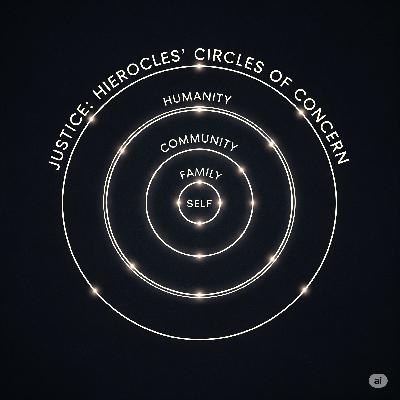
This episode introduces Hierocles' powerful Stoic concept of the "Circles of Concern," a visual metaphor for understanding and expanding our natural sense of care and empathy. The practice begins by imagining ourselves at the center of a series of concentric circles. The innermost circle contains our own mind and body. Subsequent circles, moving outward, encompass our immediate family, then extended relatives, neighbors, fellow citizens, and finally, the outermost circle, which includes the entirety of humanity.
The episode explains that our natural inclination is to care most deeply for those in the inner circles. The Stoic ethical task, however, is to consciously and deliberately work to draw the outer circles inward, to treat those who are more distant with the same level of care and concern we naturally feel for those closest to us. This is an active, imaginative exercise in expanding our sense of "what is mine," blurring the lines between self and other.
This practice radically redefines empathy and justice, transforming them from abstract principles into a tangible, daily discipline. It's a powerful tool for cultivating a true sense of cosmopolitanism—of being a citizen of the world. By consistently working to contract these circles, we can move beyond the narrow confines of self-interest and develop a profound, rational, and all-encompassing sense of connection and responsibility for the entire human family.

This episode offers practical Stoic wisdom for one of life's most common challenges: dealing with difficult, annoying, or even malicious people. It begins with Marcus Aurelius's famous morning meditation, where he would prepare himself by anticipating the uncharitable, treacherous, and envious individuals he would likely encounter throughout his day. This was not a pessimistic exercise, but a form of mental preparation designed to prevent being emotionally hijacked by the negative actions of others.
The episode unpacks the core Stoic strategy for this challenge: recognizing that the wrongdoing of others is ultimately not within our control and stems from their own ignorance of what is truly good. This perspective allows us to respond with a degree of empathy and understanding, rather than with reactive anger or frustration. Furthermore, the Stoics remind us that we are social creatures, made for cooperation. Even difficult people are part of our shared humanity, and our task is to find a way to work with them, or at least endure them, without compromising our own inner peace and virtue.
The ultimate goal is to maintain our own tranquility and integrity, regardless of how others behave. This involves applying the "discipline of assent"—choosing not to be harmed by an insult or injury, because the true harm lies not in the external act, but in our own judgment about it. By mastering these internal responses, we can navigate even the most challenging interpersonal situations with an unshakeable sense of calm and a steadfast commitment to our own ethical principles.

This episode delves into the often-overlooked Stoic concept of Kathekon, which translates to "appropriate actions" or, more simply, our daily duties. It explains that these are the concrete, specific actions that are fitting for us to perform in our various roles in life—as a parent, a child, a citizen, a professional. The Stoics believed that by fulfilling these daily duties with diligence and virtue, we find a practical path to a meaningful and flourishing life. This focus on our everyday responsibilities grounds the lofty ideals of Stoicism in the tangible reality of our day-to-day existence.
The practice of Kathekon is about bringing intention and excellence to the ordinary. It's not about seeking out grand, heroic deeds, but about performing our given tasks, whatever they may be, with the utmost care and integrity. This concept is closely tied to the idea of living in accordance with nature. By fulfilling our roles in a way that is rational, social, and virtuous, we are acting in harmony with our own human nature and with the larger cosmic order.
Ultimately, Kathekon is presented as the Stoic secret to finding purpose in the mundane. It transforms our daily routines from a series of chores into a continuous opportunity for practicing virtue. By focusing on doing the next right thing, in whatever role we find ourselves, we can build a life of character, substance, and deep, abiding satisfaction. It’s a powerful reminder that a good life is built not in grand gestures, but in the consistent, mindful execution of our everyday duties.

This episode explores the Stoic view of gratitude, revealing it not as a mere polite sentiment but as a fundamental component of justice and a key to building a "bulletproof mind." It introduces Seneca's striking idea that ingratitude is an "unseen crime," a subtle but deeply corrosive vice that weakens the very fabric of human society. For the Stoics, justice is not just about refraining from harm, but also about actively acknowledging and reciprocating the good we receive from others. Gratitude, in this sense, is the positive, proactive side of justice.
The episode explains that the practice of Stoic gratitude is deeply intertwined with the concept of "indifferents" and the dichotomy of control. By recognizing that all external things—our health, our relationships, our possessions—are ultimately gifts of fortune and not things we are entitled to, we can cultivate a profound sense of appreciation for them. The practice of negative visualization, or imagining the loss of these things, further heightens our gratitude for their presence in our lives right now.
This deep, rational gratitude is what helps to build a "bulletproof mind." It shifts our focus from what we lack to what we have, fostering contentment and reducing the power of desire and envy. By seeing every good thing as a bonus, rather than a given, we become more resilient to loss and less prone to the emotional turmoil that comes from unfulfilled expectations. It’s a powerful mental discipline that not only strengthens our character but also enriches our experience of life itself.

Comments

Download from Google Play

Download from App Store
 United States