


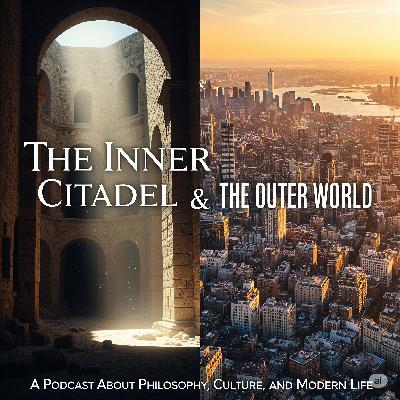
Episode 8 – The Inner Citadel & The Outer World
Description
This episode directly confronts the modern stereotype of the Stoic as a detached, emotionless, and withdrawn individual, arguing that this is a fundamental misunderstanding of the philosophy. It asserts that the true aim of Stoicism is not to escape from the world, but to build the inner strength necessary to engage with it more effectively, virtuously, and compassionately. The Stoic "inner citadel" is not a bunker to hide in, but a secure base of operations from which to act in the world with purpose and resilience.
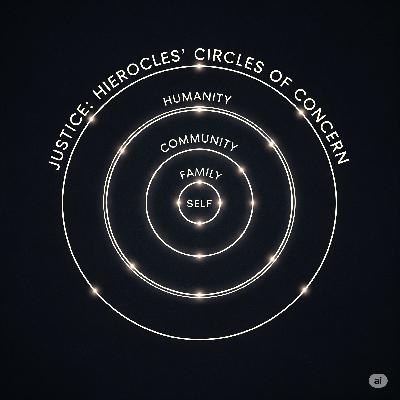
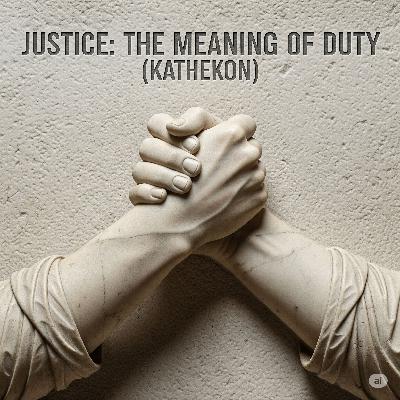
The episode explores key Stoic concepts that highlight this call to action. The idea of cosmopolitanism, or being a "citizen of the world," emphasizes our shared humanity and inherent duty to one another. This is further developed through the concept of oikeiosis, the understanding that our natural sense of concern should expand outward in concentric circles—from ourselves to our family, our community, and ultimately, all of humanity. These principles demand active participation and a sense of responsibility for the common good, directly contradicting the image of the isolated, uncaring Stoic.
By examining the lives of prominent Stoics like Marcus Aurelius, Seneca, and Cato the Younger, the episode shows that they were deeply involved in the messy, often dangerous, realities of public life. They were emperors, statesmen, and leaders who used their philosophy to navigate immense challenges, not to run from them. The core message is that Stoicism is a philosophy for "doers," providing the tools to maintain inner peace not by avoiding life, but by fully and virtuously participating in it.








 United States
