


 Claim Ownership
Finding Common Ground
Subscribed: 1Played: 2
Subscribe

© Copyright ROC Vox Podcast Network
Description
Many families feel like they're treading water, especially those living with autism and other developmental differences. As your hosts, we get it, and we know this frustration all too well.
In response, we've created tried-and-true strategies that help everyday people achieve extraordinary things. Even those who might have doubted themselves can borrow our confidence, follow one of our "blueprints," and with a supportive community cheering them on, make the impossible happen.
Each success inspires those coming up behind us, creating a ripple effect of positive change—Which is why we'll never run out of content!Our podcast tackles tough issues head-on with unfiltered conversations focused on solutions.
We won't avoid "the elephant in the room"—in fact, we'll invite it to dinner! Our unique format appeals to people from across the globe, offering strategies that turn efforts for one into advocacy for the greater good. We breakdown topics like innovative housing, effective self-advocacy, and healthcare complexities, guided by our audience on what to cover next.
Each episode offers fresh perspectives, featuring many guests you won't find on mainstream platforms. We intentionally invite differing viewpoints because finding common ground with those we see as obstacles is the surest way to create new and innovative solutions.
Join our Supporter's Club and check out our merch. Let’s ensure the A/I/DD community's voice is heard. If you want to dig deeper, schedule a session with us. We happily work one-on-one, develop trainings, and offer public speaking engagements to assist individuals and organizations in promoting things like inclusivity and equity.
Join our community, plant seeds of positive change, and before you know it, you'll be moving mountains with us! Want to support our mission and access exclusive content? Join our Supporter's Club and check out our merch.
Become a supporter of this podcast: https://www.spreaker.com/podcast/finding-common-ground--6199849/support.
In response, we've created tried-and-true strategies that help everyday people achieve extraordinary things. Even those who might have doubted themselves can borrow our confidence, follow one of our "blueprints," and with a supportive community cheering them on, make the impossible happen.
Each success inspires those coming up behind us, creating a ripple effect of positive change—Which is why we'll never run out of content!Our podcast tackles tough issues head-on with unfiltered conversations focused on solutions.
We won't avoid "the elephant in the room"—in fact, we'll invite it to dinner! Our unique format appeals to people from across the globe, offering strategies that turn efforts for one into advocacy for the greater good. We breakdown topics like innovative housing, effective self-advocacy, and healthcare complexities, guided by our audience on what to cover next.
Each episode offers fresh perspectives, featuring many guests you won't find on mainstream platforms. We intentionally invite differing viewpoints because finding common ground with those we see as obstacles is the surest way to create new and innovative solutions.
Join our Supporter's Club and check out our merch. Let’s ensure the A/I/DD community's voice is heard. If you want to dig deeper, schedule a session with us. We happily work one-on-one, develop trainings, and offer public speaking engagements to assist individuals and organizations in promoting things like inclusivity and equity.
Join our community, plant seeds of positive change, and before you know it, you'll be moving mountains with us! Want to support our mission and access exclusive content? Join our Supporter's Club and check out our merch.
Become a supporter of this podcast: https://www.spreaker.com/podcast/finding-common-ground--6199849/support.
42 Episodes
Reverse
“Our brains process the sounds for emotion before we process the words for understanding.”In this episode, Heather and Steve sit down with Google technologist and autistic advocate Tim Goldstein, whose late-in-life diagnosis rewired how he sees communication, work, and autism itself. Tim shares how he went from being “the kid who kept getting fired” to someone who now coaches others on using voice, story, and language to actually get results in a neurotypical world—without selling themselves out.You’ll hear them dig into:Why how you say something often matters more than what you sayThe difference between “masking” and simply adapting to shared social normsWhy Tim hates the word “neurodivergent” and prefers “neurodistinct”How the words we use with managers can accidentally make them feel stupid… and sabotage our own accommodationsHeather’s daughter’s powerful mic-drop: “I’d rather you not define me by what I can’t do.”Eye contact, notifications, and the fine line between “the world should change” and “I want better outcomes, so what can I tweak?”Dating, loneliness, and why so many autistic adults miss subtle signals of interestIf you’re autistic, love someone who is, or work in education, healthcare, or HR, this conversation will change how you hear every interaction—and how you talk about autism from here on out. Learn more about Tim: https://www.timgoldstein.com/Become a supporter of this podcast: https://www.spreaker.com/podcast/finding-common-ground--6199849/support.
How many times have you had to educate the people trying to help your child with autism?In this episode of Finding Common Ground, Steve talks with Matt Yelton, a paramedic, flight medic, and autism dad who lives and breathes this reality every day. When emergencies happen, Matt has been on both sides — the parent advocating for his child, and the first responder called to help.He shares how his personal experiences inspired him to train first responders across New York to recognize when behaviors are rooted in autism, not defiance and how families can prepare before a crisis ever happens.“The best thing you can do at the start of the school year is figure out who these kids are and talk to their educators, talk to their families, learn what makes them tick.”You’ll also hear:What to do before a crisis so first responders are ready to help your childWhy dads need to be part of the advocacy conversationHow real change happens when parents and professionals learn from each otherThis one will leave you better prepared and more hopeful about the helpers who show up when it matters most. Listen now on YouTube, Spotify, or your favorite podcast app, and join us in Finding Common Ground between families and first responders.Become a supporter of this podcast: https://www.spreaker.com/podcast/finding-common-ground--6199849/support.
Only one in four adults has a will, and for families in the disability community, that gap can change everything. We may not know who will take over when we’re gone, but if we never start the plan, how will anyone know what mattered most about the people we love?In this DadAbility episode, Steve goes solo to talk straight with dads about stepping up at home and beyond. It’s real talk about juggling the day-to-day while keeping an eye on the future. Dads feel that pull to take care of things. Estate planning isn’t flashy, but it’s one of those jobs that feels good once it’s done. Getting it handled brings calm, confidence, and a sense that you’re truly showing up for your family.Steve is joined by attorneys Kevin Barone and Ted Perry, co-founders of VLAWsity, a do-it-yourself online platform that helps families create wills, powers of attorney, and special needs trusts from home. Their mission is to make the process affordable, accessible, and manageable on your own schedule.Together they unpack what a special needs trust really does, how it protects eligibility for programs such as SSI and Medicaid, and why families in the disability community need to act now rather than later.Steve shares candid reflections as a dad of an autistic adult son and foster/adoptive parent, while Kevin and Ted explain how taking time to plan ahead can prevent courts or the state from making decisions that should stay within the family.If you have ever thought, “I know I should do this, but I don’t know where to start,” this conversation is your roadmap and your reminder that estate planning is not about fear. It is about love, peace of mind, and the kind of steady leadership that helps dads protect the people who count on them most.👉 Learn more or start your will today at VLAWsity.com#FindingCommonGround, #PodcastWithPurpose, #ChangingTheWayAdvocacysDone, #EmpowermentAdvocacy, #UnfilteredConversations, #FocusedOnSolutions, #InviteTheElephantToDinner, #DadAbility, #DadsWhoCare, #ModernFatherhood, #DadAdvocate, #StrongDads, #FamilyFirst, #FatherhoodJourney, #ParentingWithPurpose, #LegacyPlanning, #EstatePlanning, #PlanForTheFuture, #ProtectYourFamily, #FinancialWellness, #FatherhoodMatters, #MenWhoLead, #RealTalkForDads, #DadLifeUnfiltered, #NextGenDads, #BuildingLegacy, #SecureTheFuture, #DadCommunity, #EmpoweredParenting, #FamilyAdvocacy, #DisabilityDads, #SpecialNeedsDads, #CaregiverDads, #DadsSupportingDads, #PlanningWithPurpose, #HonestConversations, #ProtectWhatMatters, #StrongerTogetherBecome a supporter of this podcast: https://www.spreaker.com/podcast/finding-common-ground--6199849/support.
What happens when a former guest takes the mic and flips the script? In this hilarious and heartfelt episode, Kathy Caruso returns to Finding Common Ground — but this time, she’s running the show.Host Steve Gonyea finds himself in the hot seat as Kathy digs deep into his story, his “why,” and what drives his advocacy as a dad. With Heather chiming in from the sidelines (and occasionally fanning the flames), this takeover turns into one of the most revealing and entertaining episodes yet.Expect laughter, honesty, and a few moments that’ll make you think twice about what happens when we let go of control and truly open up. Tune in, share your favorite quote from the episode, and tag us with your thoughts — we love hearing how these conversations resonate with you!Become a supporter of this podcast: https://www.spreaker.com/podcast/finding-common-ground--6199849/support.
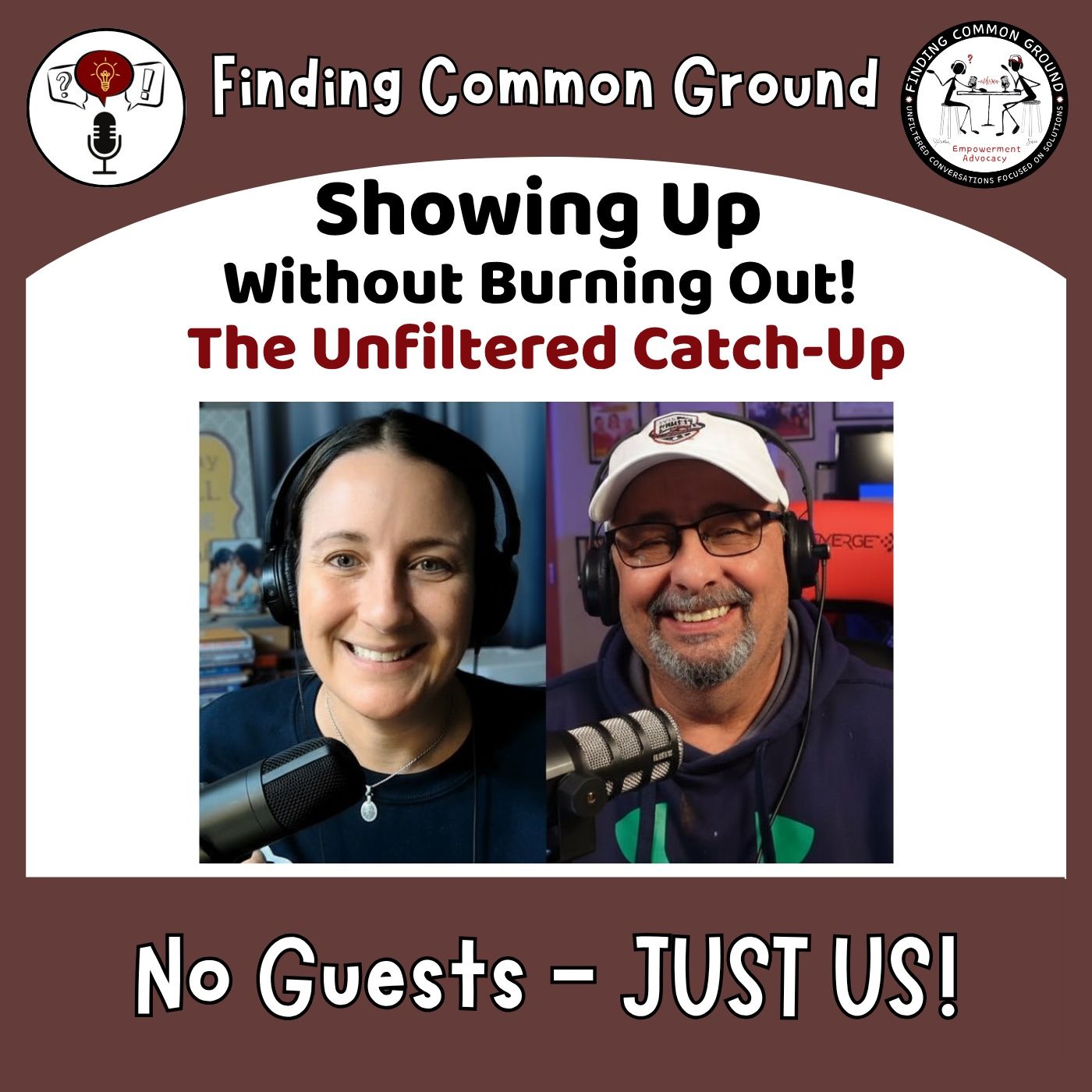
What happens when two advocates hit pause on the chaos and just talk it out?Heather and Steve take a breather from the headlines and just talk. In this unfiltered catch-up, they open up about juggling life, advocacy, and everything in between — from Heather’s upcoming trip to the First Place Global Symposium to Steve’s work with the National Council on Severe Autism.They trade stories, laughter, and strategy on how to keep showing up without burning out, diving into transition challenges, teasing their upcoming guest lineup, and showing how the right conversation can make all the difference. Listen now for a real, no-guest look behind the movement they’re building together.Become a supporter of this podcast: https://www.spreaker.com/podcast/finding-common-ground--6199849/support.
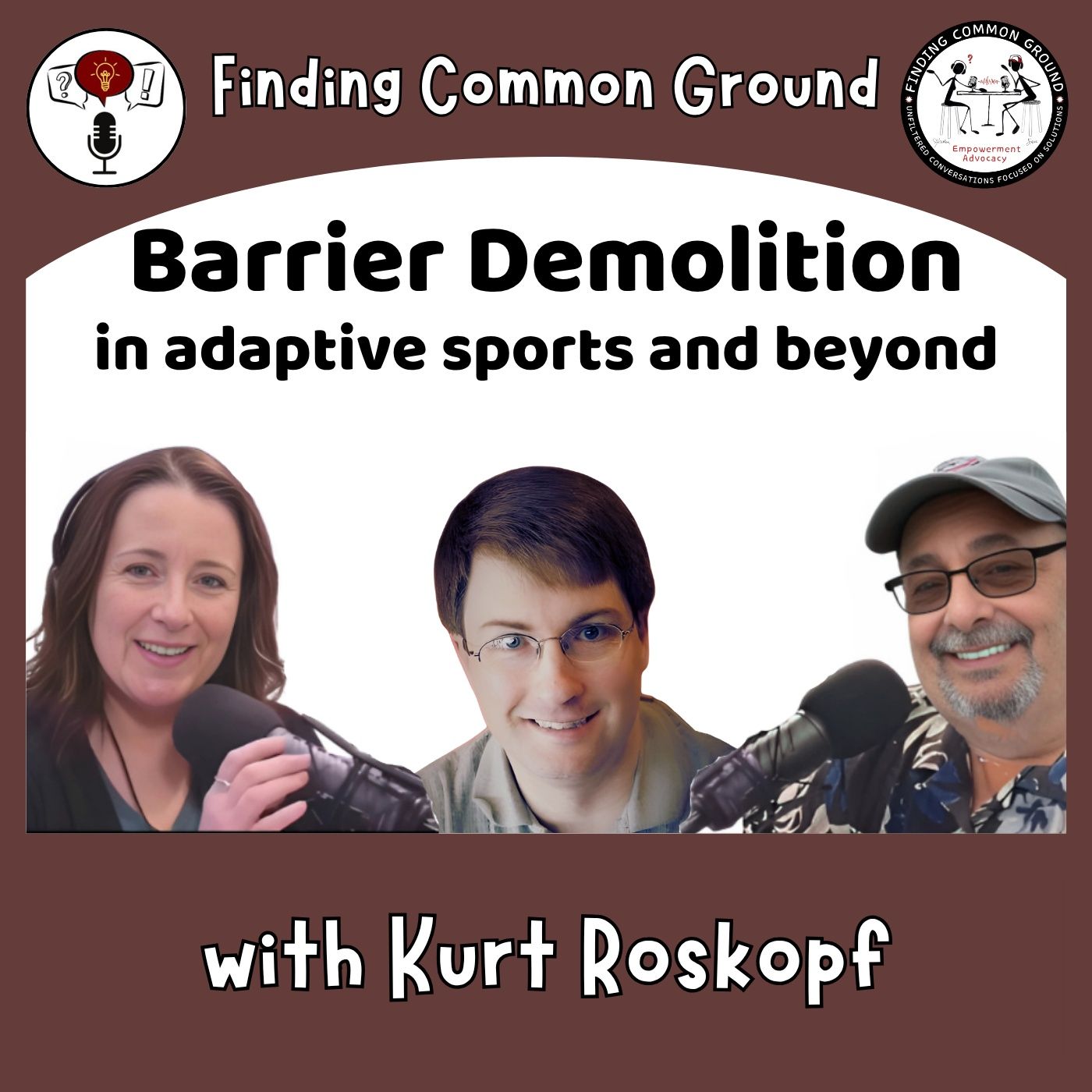
What happens when we stop patting ourselves on the back for “special” inclusion—and start building communities where accommodations are normal, and leadership is shared?In this episode, Heather and Steve talk with Kurt Roskopf, disability ally and founder of the Everybody Skis program. When a skier who needed some accommodations was sent home dry, Kurt felt awful—and that moment reframed how he approached every day after that. It set in motion a movement that redefined inclusion across Wisconsin and beyond.Steve first met Kurt through the Helpipedia initiative—a national collaboration connecting families, educators, and professionals to disability resources. We discuss this as well as what real inclusion looks like. Moving from symbolic gestures to structural change. which gives you a blueprint for rethinking belonging in your own community.Blueprint for Barrier DemolitionKurt’s journey reveals lessons that can reshape how we approach everything—from the way we build teams and plan community events to how we design classrooms, businesses, or neighborhood spaces. The blueprint that emerges isn’t about following exact steps, but about rethinking how we show up and realizing that small shifts can spark big change.Listeners will leave asking themselves:What would true inclusion look like in my space?How might I remove one barrier this week?Who could I invite to lead beside me instead of waiting to be invited?Kurt’s reflections remind us that we’re not just making room for people—we’re rebooting the way our communities work. Real inclusion isn’t a one-time act of kindness; it’s a redesign of how we live, learn, and lead together.You’ll hear moments that stay with you:“When people with disabilities lead, they teach us how to move mountains.”“We’re not just opening doors—we’re rebooting the whole planet so everyone can walk through.” Learn More Helpipedia.org kurt@spiritofthegame.org Text or call: (262) 372-1754If you're ready to move beyond the feel-good photo-op and build true belonging in your own hometown, this episode is your invitation to start.Become a supporter of this podcast: https://www.spreaker.com/podcast/finding-common-ground--6199849/support.
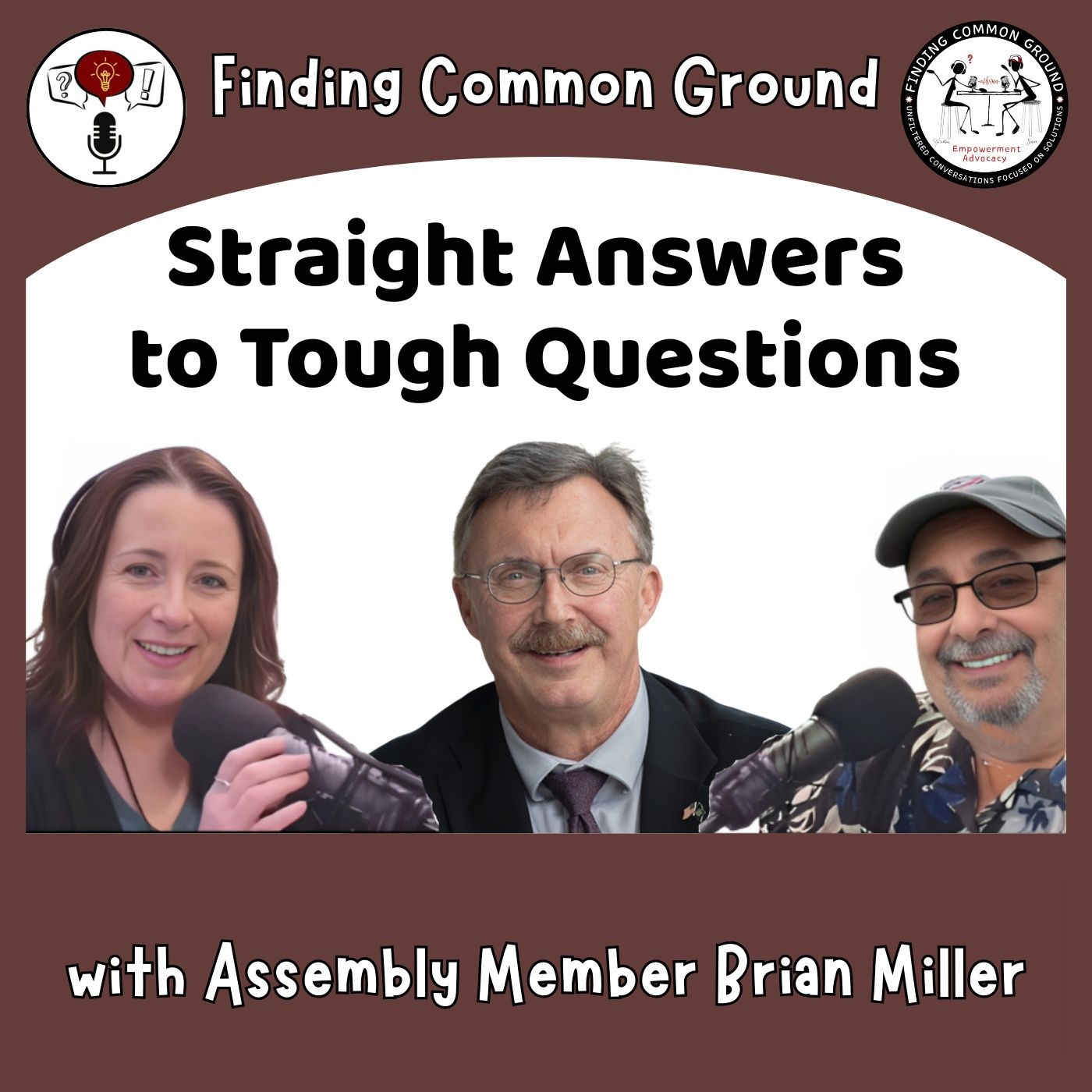
What if the fastest way to protect disability services this year isn’t a viral post—but scheduling a meeting now, before legislators head back to Albany? In this episode, AM Brian Miller gives straight answers and a playbook you can use now—from timing your outreach to crafting testimony that actually moves votes.Why listen: Unlike many politicians, Miller doesn’t dodge the tough stuff. He leans in. Listen as he dives into the 35th anniversary of the Americans with Disabilities Act (ADA), looming Medicaid reforms (including the CDPAP rollout), DSP wages, the red tape that blocks common-sense partnerships, and how to make your voice count before this legislative session begins.You’ll learn practical moves:Perfect timing: While summer is a great time to connect with legislators, fall works too—and it’s not too late. Now is the moment to book longer, substantive meetings that won’t be possible once session starts, so your stories can shape bills before legislators are back in Albany.How to advocate: Replace mass emails with personal letters/calls that get read and get returned.Testify like a pro: Use a 5-minute structure (personal story → crisp facts → clear ask) and always follow up with the panel afterward.Unstick the system: Pair innovative pilots with smarter funding routes (Veterans, Aging, Education, Medicaid) and identify one word or phrase that could be tweaked in law/reg so that solutions aren't blocked.Policy focus areas: ADA/Olmstead compliance, DSP wage action, pausing/assessing rushed reforms, and making oversight reports accessible to the public and legislators.Standout quotes:“Really get involved and understand how the different funding streams and different groups can work together to help our loved ones because this could be a difficult chapter coming up, but it’s not the end of our story.” — Heather M. Burroughs“Don’t rely on a form letter. Try to connect in person and be precise, but also personal.” — AM Brian MillerWhat Brian Miller models: Bridge-building, engineering-style problem solving (root-cause → corrective action), and a consistent record of showing up for disability families, on the record and in the room.Listen if you’re:Parents & caregivers, self-direction leaders, DSPs and providers, advocates preparing testimony, or anyone ready to trade outrage for outcomes. Hit play to grab the blueprint—and pass it to a friend who needs it.Become a supporter of this podcast: https://www.spreaker.com/podcast/finding-common-ground--6199849/support.
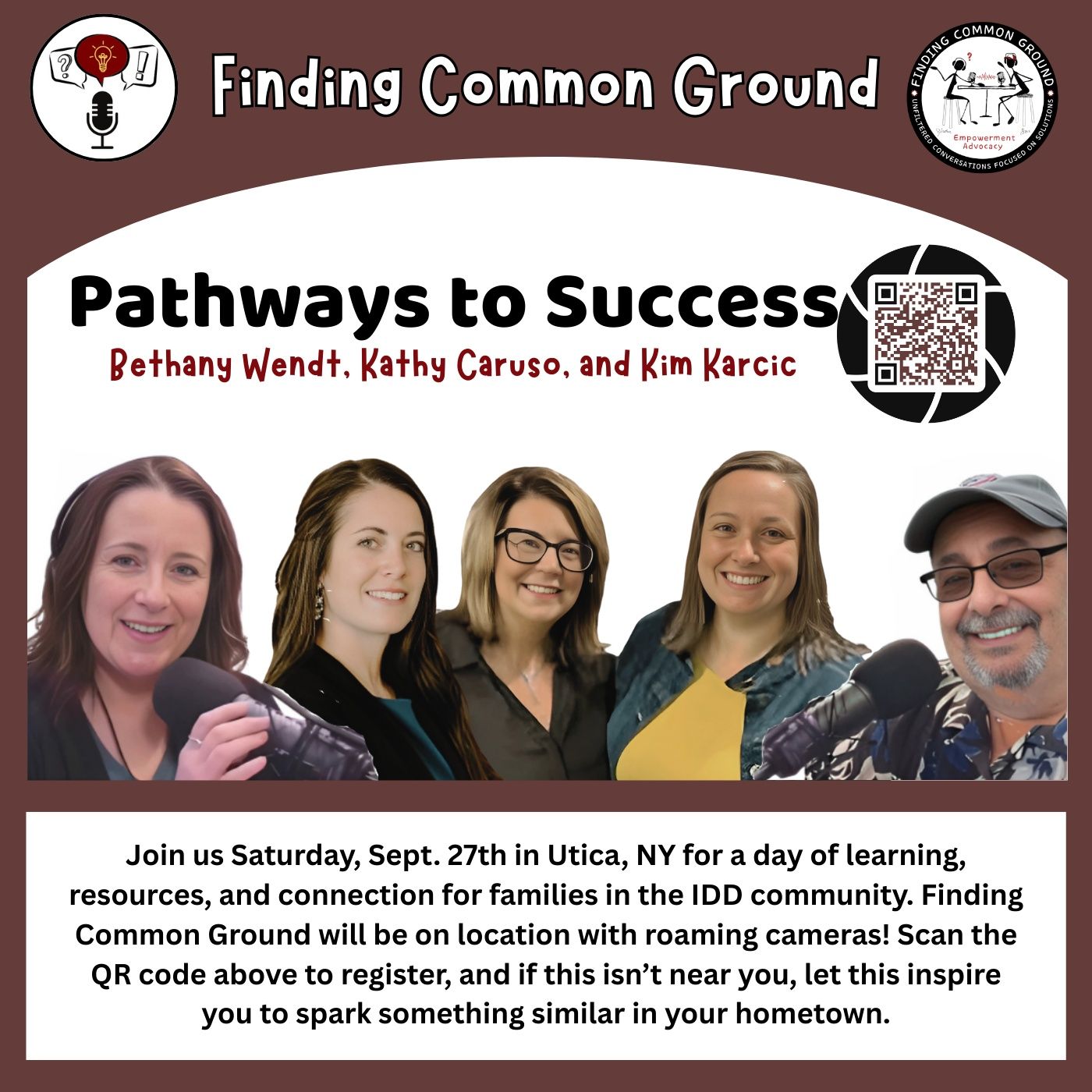
In this episode, we sit down with three incredible women—Bethany Wendt, Kathy Caruso, and Kim Karcic—to talk about Pathways for Success: Together We Thrive, a powerful event happening in Utica, NY.Each guest shared why they felt called to be part of this initiative and how families of individuals with disabilities often feel lonely, overwhelmed, and unsure where to turn. Their stories highlight the importance of coming together, building community, and making sure no one walks this journey alone.GuestsBethany Wendt – Director of Community Relations at the Kelberman CenterWebsite: https://www.kelberman.org/family-connect/family-education-and-training/Kathy Caruso – Mom & Lead Facilitator for Better Together: Support and AdvocacyFacebook: https://www.facebook.com/p/Better-Together-Support-and-Advocacy-100057210018852/Kim Karcic – Family Member, Teacher, and AdvocateAbout the Event Saturday, Sept. 27 9:00 a.m. – 3:00 p.m. The Parish on Broadway, 730 Broadway, Utica, NY Parking available at City HallWho should attend?Parents & caregivers of individuals in the Intellectual and Developmental Disabilities (IDD) community.What to expect:Sessions on Early Intervention, School-Age Supports, Adult Services & Transition PlanningOPWDD Resources & Future PlanningQ&A Panel + Resource Tables featuring OPWDD, ARC, Life Plan, Kelberman & moreLight refreshments provided A full day of learning, connecting, and finding support—together. Register here: https://forms.office.com/r/KLFtaUPGG9 If this event isn’t happening near you, but you think your community could benefit from something like this—consider this your blueprint!Be inspired, and reach out to any of these women to learn how you can make it happen in your hometown.Visit us at www.fcgadvocacy.org, follow us on social media, and help us grow our audience and impact.Together, we can build stronger pathways for success everywhere.Become a supporter of this podcast: https://www.spreaker.com/podcast/finding-common-ground--6199849/support.
What do families do when every call for help is desperate, every door seems to slam shut, and the only thing longer than the waitlist is the list of hoops to jump through—especially when their loved one with profound autism needs support now?In this episode of Finding Common Ground, we sit down with Kristina Cope—Michigan mom of three on the spectrum, RN, and founder of Flawless Farms. She’s on a mission to create an intentional community that welcomes families with profound needs instead of shutting them out.Together we explore housing deserts, “boarding” in hospitals, transportation gaps, and the growing crisis of catatonia. Kristina’s vision is clear: bring people together, secure land, build the first home, and create a model of community life where meaningful work, recreation, healthcare, and belonging are part of every day. If you’ve ever thought, “someone should build this,” this conversation will show you how to start—right where you are.Quotes that stay with youKristina captures the urgency of the housing crisis when she says, “We could have a Benjamin’s Hope in every county and every state—and it would not be enough.”Steve reminds us that solutions won’t come from waiting on the system: “The cavalry is coming—it’s us.”And Kristina doesn’t shy away from the hard truth how sometimes “the model of inclusion then excludes them.”This episode is raw, inspiring, and practical. If you need hope and a path forward, you won’t want to miss it. Support the show by subscribing on your favorite podcast app, leaving a review, sharing it with a friend, and subscribing on YouTube. Every click helps other families find the solutions they’ve been searching for. Learn more and connect with us at www.fcgadvocacy.org and explore Kristina’s work at www.flawlessfarmsmi.com.Become a supporter of this podcast: https://www.spreaker.com/podcast/finding-common-ground--6199849/support.
“It’s not a job, it’s a way of life.” Kathleen Hayes didn’t just take a position at the Neighborhood Center—she found her purpose. In this powerful episode of Finding Common Ground, we explore how one small organization in Utica, NY is reimagining what mental health and family support can look like when systems get out of the way and people are met where they are.Kathleen shares her journey from frontline provider to program supervisor, opening up about the real-life impact of community-based treatment, in-home therapy, and 24/7 crisis response teams. You’ll learn about Kindred Connections, a trauma-informed support system for adoptive and guardian families that helps combat isolation and build resilience—with birthday parties, family fun days, and intentional peer connections at its heart.But this isn’t just a feel-good story about one organization doing good work—it’s a blueprint. As Steve puts it: “If I was an executive director anywhere else and I knew this service was needed, I’d be looking to replicate it.”If you’ve ever wondered what’s actually working in youth mental health, how to prevent crisis before it happens, or what real trauma-informed care looks like outside a hospital or institution, this conversation is a must-listen.Whether you’re a parent, policymaker, therapist, advocate, or just someone trying to make your corner of the world better, this episode will give you hope—and a few ideas worth stealing. Tune in now to learn:Why group therapy is giving providers new insight into kids’ needsHow mobile crisis teams are preventing hospitalizationsWhat makes adoptive family support stickWhy Kathleen says the work is hard—but worth itDon’t miss this glimpse into what’s possible when community leads the way and PLEASE check out our new website: https://www.fcgadvocacy.org/Become a supporter of this podcast: https://www.spreaker.com/podcast/finding-common-ground--6199849/support.
What if an autism diagnosis wasn’t the end—but the spark that ignites a journey toward connection, advocacy, and growth?In this deeply moving episode of Finding Common Ground, Heather and Steve welcome LaShona Johnson, whose dual roles as a parent and disability community advocate uniquely inform her insights. Together, they explore how LaShona’s experience raising her son with autism evolved into a mission—and ultimately, a guidebook—for others navigating the path ahead.LaShona's journey is full of moments that feel too familiar—to be real, raw, and hopeful all at once:“I just kept feeling like…something is not quite right. Something is off.”— On trusting that gut when early signs emerged“It was relief and grief all at the same time.”— On the emotional paradox of finally receiving a diagnosis“If this door isn’t open, let’s call another person until we find somewhere for him to go.”— On the power of persistence and relentless advocacy“He can tell you all about model trains… that’s his special interests.”— On how a child’s passion can become a powerful bridge“This diagnosis isn’t the end. It’s just a shift in perspective … instead of focusing on fixing, let’s focus on connection, advocacy, and growing together.”— On reframing the narrative for familiesIn this episode, Heather, Steve, and LaShona cover:Early signs and the complicated road to right-fit diagnosis and interventionNavigating preschool, reading challenges, and the tough school-system pivotshow writing The Autism Roadmap: From Early Diagnosis to Academic Success became LaShona’s way of lighting the path for families just getting startedTips for building a vital support network—3 to 5 people who serve as your crewReimagining success: supporting fathers, blending professional knowledge with parental emotion, and moving toward adult services with creative strategiesIf you’ve ever searched for practical tools to move beyond overwhelm, this episode delivers—with warmth, transparency, and hope. LaShona’s experience isn’t just inspirational—it’s a blueprint you can test in your own backyard. LaShona’s book is available now: https://a.co/d/iPiEiwK Give it a listen for honest conversation, real wisdom, and a roadmap that reminds us: the journey continues, and it can feel like home.Become a supporter of this podcast: https://www.spreaker.com/podcast/finding-common-ground--6199849/support.
What happens when families stop waiting for the system to fix itself—and start building what their loved ones need?In this episode of Finding Common Ground, Heather and Steve sit down with Dawn O’Hara, a mother of two adult children with disabilities, to explore what it really takes to support independence, dignity, and inclusion. From leaving behind one system in Pennsylvania to navigating New York’s evolving landscape, Dawn shares what she’s learned and why she refuses to sit on the sidelines.Early in the episode, Dawn shares a moment no parent forgets: watching her daughter work hard for a paycheck—only to lose her benefits because of it. It’s a gut‑punch that too many families know too well, and it raises critical questions about what we’re really incentivizing in our systems. Dawn reflects, “You are your children’s strongest advocate and their loudest voice.” Her honesty speaks directly to those who may feel defeated or unsure—reminding us that staying quiet doesn’t serve our kids.Steve adds his own challenge to the status quo: “If OPWDD didn’t exist, families would still find a solution. They’d fix it.” It’s a powerful reminder that waiting for change isn’t the same as creating it—and families have always led the way when the system came up short.Family Support Services (FSS) is a New York State program that provides limited but essential help—like respite, reimbursement, and recreational opportunities—for families caring for a loved one with a developmental disability at home. Learn more and explore how to get involved with a local FSS Advisory Council here: https://app.box.com/s/4rlpx9opnrwgm44ywo33064mw4t7wg5pWhether you’re just beginning your journey or facing the hard questions of what happens after you're gone, this episode will remind you: we are the cavalry we’ve been waiting for—because, as Heather says, “we can’t afford to wait for the people in boardrooms to save us.” There’s power in linking arms with others who get it. Tune in now to feel seen, supported, and recharged.Become a supporter of this podcast: https://www.spreaker.com/podcast/finding-common-ground--6199849/support.
In this urgent and deeply personal episode of Finding Common Ground, Heather and Steve welcome Larissa Martin — a self-advocate who has relied on New York’s Consumer Directed Personal Assistance Program (CDPAP) for 17 years. Larissa’s voice is raw and real as she shares why this program has been her lifeline, how the rushed transition to Public Partnerships LLC (PPL) has shaken the system, and why now is the moment to speak up. Over 70,000 people have already been forced into more expensive agency-based care. Thousands more have lost their caregivers altogether — often because aides quit after wrong, delayed, or missing paychecks. This isn’t just inconvenient; it’s led to declining health, hospitalizations, forced institutionalization, and, tragically, preventable deaths. One of CDPAP’s greatest strengths is the ability to hire people we trust — not strangers an agency assigns. Larissa puts it simply: “Even if we don’t know a caregiver well at first, many become like family over time. That’s why it was so painful for consumers to see New York hire a company with a record of payroll violations. Like Senator Rivera has said, the harm is no longer hypothetical. PPL is repeating their pattern. They are driving down enrollment by forcing our caregivers to quit.” One of Larissa's own caregivers, already stretched thin with five kids, now worries every payday if she’ll be paid correctly. This constant stress is unnecessary, inhumane, and dangerous. In just 20 weeks, PPL has caused more chaos, potential fraud, and harm than our previous Fiscal Intermediaries did in the decades since CDPAP began — which is why CMS, the DOJ, and the FBI are now involved. But where is our own Department of Labor? Felony-level wage theft on this scale demands their attention, yet there has been no public acknowledgment that one of the largest workforces in our state is being exploited in plain sight. Every day they stay silent, more families lose the care they depend on, and more workers pay the price for a crisis they didn’t create. The DOH Commissioner promised the transition would make it easier for caregivers to get paid and save the state money. In reality, people are losing care, being pushed into costlier options, and facing devastating consequences. Anger is justified — but Larissa challenges all of us to go further: share our stories, put the harm on record, and be part of the solution. If you’ve been affected by the CDPAP transition, you have until Monday, August 18th to submit written testimony. It doesn’t have to be long or perfect — just honest. Your voice matters. Without it, change may never come. How to Submit Testimony:Write about your personal experience with CDPAP and the impact of PPL’s takeover.Share specifics: payment delays, insurance issues, caregiver shortages, or disruptions.Keep it respectful but real — your lived experience is powerful.Email your testimony to steen@nysenate.gov. If you choose to be anonymous, sign as “Jane Doe.”Whether you’re a CDPAP consumer, caregiver, family member, or concerned New Yorker, your testimony matters to the 700,000 people who were connected to CDPAP before PPL’s monopoly. When someone told Larissa she should move to another state that would treat her better, she replied: “I want to stay and fight not just for me, but for other people in the program that don’t have that option to leave.” Listen now to hear Larissa’s powerful story — and learn how you can make yours heard before the deadline.Become a supporter of this podcast: https://www.spreaker.com/podcast/finding-common-ground--6199849/support.
On this episode of Finding Common Ground with Heather and Steve, we talk with Craig and Sally Benoit, a remarkable couple who’ve fostered over 50 children and adopted 13—each with their own story, needs, and quirks. From the first few minutes, you’ll feel their blend of grit and humor. Whether it’s juggling allergy lists, remembering who hates peas this week, or managing bedtime with over a dozen different routines, they’ve seen it all. Craig joked that just loading the dishwasher feels like a military operation—because in their house, even the spoons have backstories. It’s funny, it’s chaotic, and it’s completely real. A peek into the kind of parenting that will make you laugh and nod in recognition, whether you’ve raised one kid or twenty.This episode is full of laugh-out-loud funny moments, balanced with some deeply moving ones too. The Benoits speak candidly about navigating the foster care and disability systems, and what it really takes to build a stable, loving home when the systems around you are broken. From setting boundaries to learning how to advocate for special education services and adult supports, their insights will hit home for anyone trying to raise children in complex circumstances.This episode isn't just about their extraordinary family—it’s about what happens when everyday people refuse to give up on kids society often overlooks. The Benoits didn’t wait for a perfect system. They did what they could with what they had, and they’re not done yet. One moment that cuts through the noise: When Craig and Sally agreed to meet a boy who had once lived with Steve, they expected the "usual pitch" that minimized the difficulties and were stunned and grateful when they received honesty instead. Steve placed a bag of torn, chewed-up shirts on the table. "He chews every collar," he said. Not dramatic. Just real. A behavior that others might’ve hidden to make the placement happen. But Steve didn’t hide anything and the Benoits didn’t run.“We aren’t afraid of hard things,” Sally said. She explained that knowing where the pain points are helps them figure out which children will thrive in their home and which may need a different path. They lovingly joke that their full house isn’t for everyone, but what makes this conversation unforgettable is that nothing was sugar coated. They let us backstage into the chaos, the love, and the realities most people never see.Fostering isn’t about perfection—it’s about showing up, even when it’s hard. This episode delivers honest insights, unexpected laughter, and maybe... the push you need to take that first step.Become a supporter of this podcast: https://www.spreaker.com/podcast/finding-common-ground--6199849/support.
In this powerful episode of Finding Common Ground with Heather & Steve, we sit down with Alexandra Fernandez, a devoted mother of 10-year-old twins with profound autism. Alexandra bravely shares what it’s like to care for children with such intensive needs—and what happens when the right supports simply don’t exist.After speaking up at OPWDD’s first Listening Tour session in Central New York, Alexandra's heartfelt testimony caught the attention of Commissioner Willow Baer. The result? Real action—and real change. Her twins will soon be coming home! While it’s a dream come true, Alexandra knows that the challenges that existed before their hospital stay haven’t magically disappeared. More work is needed to ensure that this time is different—that the family is truly wrapped in the supports and safety nets they need to make this a lasting, sustainable solution.This conversation reminds us that advocacy works, that one voice can ripple outward, and that sometimes the win we desperately need is closer than we think. A few highlights:What makes profound autism different—and why the system isn’t built to support itAlexandra’s practical solutions: from in-home potty training programs to behavioral crisis linesA behind-the-scenes look at the Center for Discovery’s new specialty hospital"To have the opportunity to tell our story is rare—and when you’re caring for someone with profound autism, the isolation can be overwhelming. The level of care required, the services that are missing, the boundaries we’re not allowed to cross—these are things most people don’t see, but they define our everyday." – AlexandraIf you've ever wondered whether your voice matters, this episode proves it does. This podcast is a personal mission. We’re not funded by big sponsors—we grow through shares, likes, comments, and subscriptions. Help us spread stories that make a difference:Subscribe on your favorite podcast platformLike, comment, and follow us on YouTubeShare this episode with someone who needs a little hope todayBecome a supporter of this podcast: https://www.spreaker.com/podcast/finding-common-ground--6199849/support.
What happens when someone who lives the challenges of the IDD system also leads efforts to change it? You get a conversation like this.In this powerful episode, Heather and Steve sit down with Nick Cappelletti, CEO of Life Plan and ACA—two organizations serving over 47,000 families across New York State.But Nick isn’t just an executive—he’s a dad who gets it. His personal connection to disability services brings a rare and refreshing blend of empathy, insight, and urgency to the table.Together, we explore the shift from Medicaid Service Coordination to Care Coordination Organizations (CCOs), the growing importance of integrated healthcare, and how the Whole Person Supports Coalition is reimagining what care could and should look like.Nick doesn’t shy away from the tough stuff—funding inequities, staffing struggles, and overly rigid regulations—but he also leaves us with a sense of possibility and purpose. Quote Worth Sharing:“If a child with autism can’t find a psychiatrist, a behavioralist, or even just basic health care—then no amount of IDD services will matter. That person won't fully benefit unless we treat the whole person.” — Nick CappellettiAnother Mic-Drop Moment:“We have to ask: Are we really spending our money wisely? Or is there a better way to allocate resources, assess need, and give people more options, more choices?”If you care about improving systems for people with disabilities—or if you just want to hear from a leader who actually listens—this episode is for you. Tune in for:The backstory of how care coordination evolved in NYHow pandemic-era disruptions still ripple through the systemWhy Nick believes regulation must balance risk with quality of lifeThe inside scoop on what the Whole Person Supports Coalition is working towardA heartfelt discussion on parenting, partnerships, and the path forwardThis one’s equal parts policy deep-dive and heart-centered advocacy. We left inspired—and you will too.Become a supporter of this podcast: https://www.spreaker.com/podcast/finding-common-ground--6199849/support.
Guest: Karen Korotzer, CEO of ARC Oneida-LewisAt Finding Common Ground, CDPAP was a spark—but not the full story. That crisis reminded us how fragile our systems really are. What brought people to our platform wasn’t just one bad policy, it was the toxic mindset behind it, and the fear that mindset would spread. Families needed a safe space to process how it was affecting them. Together, we created that space—a community where people uplift one another, even if their views don’t always align, because we know how to find our common ground and honor where our values overlap.We are carrying that same energy, strategy, and determination into every system that touches our lives. In this episode, we pull back the curtain on Medicaid’s shifting foundation and what happens when the music stops for those who rely on it most.Special guest Karen Korotzer, CEO of ARC Oneida-Lewis, joins Heather and Steve for a candid, eye-opening conversation about how disability services have survived—not because of strong systems, but often in spite of them. With federal Medicaid reforms looming and New York’s long history of budget manipulation, this episode breaks down what’s really happening behind the scenes and why families should never be gaslit into silence.We asked families: “What keeps you up at night?” The answer echoed loudly: caregivers. Whether it’s a professional who chose this work or an unpaid family member doing it out of love, caregivers are undervalued, unsupported, and trapped in a system that labels them essential while treating them as expendable. It’s time we call caregiving what it is: a profession that deserves Department of Labor recognition, an occupational code, and real protections that reflect real respect for this honorable career.Karen doesn’t just describe the problem—she shares real examples of what’s working, what’s broken, and what comes next:Why Medicaid “reform” always sounds better on paperHow the disability sector survives on budget scraps and why that must changeWhat really keeps DSPs in the field (hint: it’s not just the paycheck)Why exhausted parents often make the most powerful advocatesWhat you can do right now to shape what happens nextIf you’ve ever found out about a major policy shift after it was already decided—without your input—this episode is for you.Become a supporter of this podcast: https://www.spreaker.com/podcast/finding-common-ground--6199849/support.
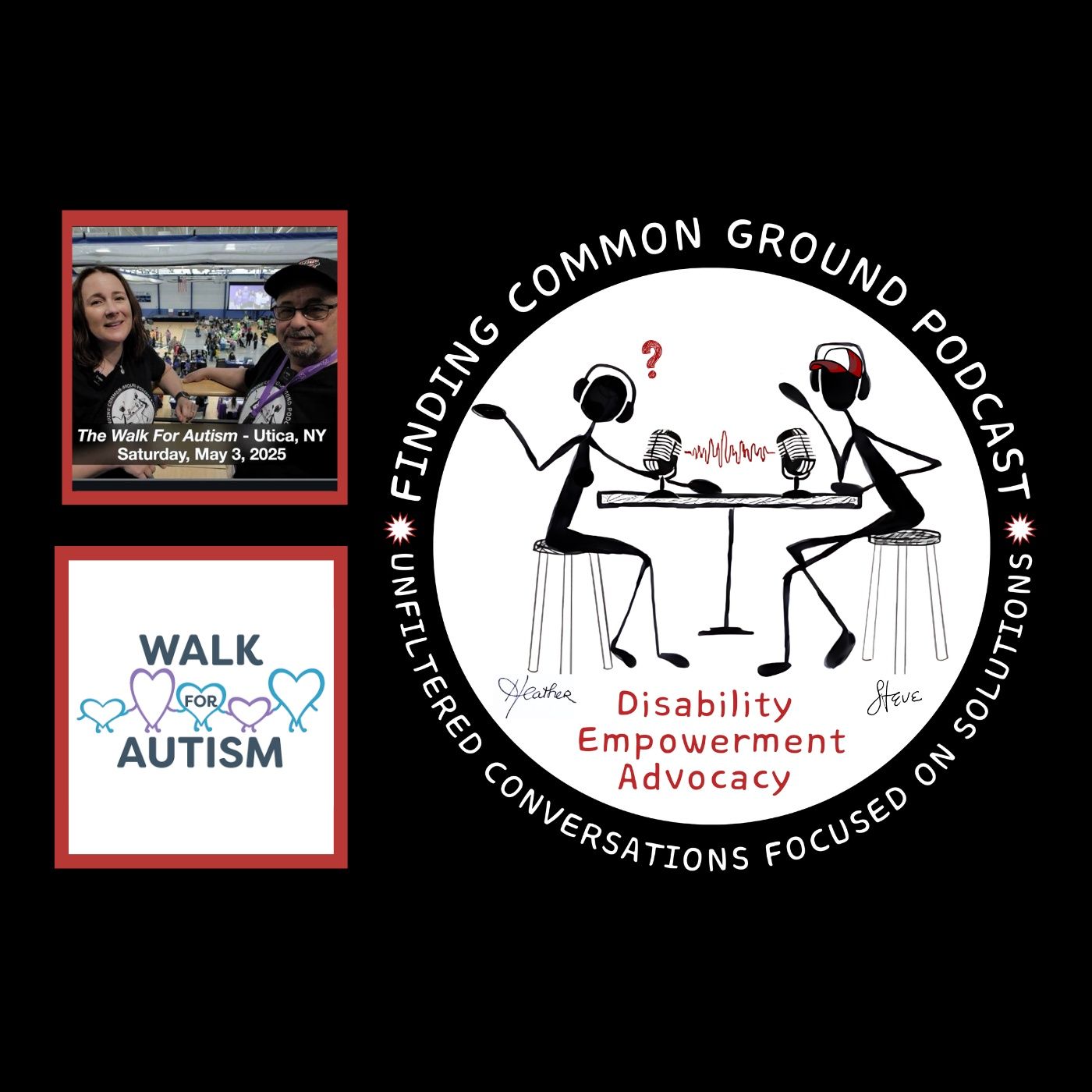
Join hosts Heather and Steve as they take Finding Common Ground on the road to Utica, New York for the annual Autism Walk. Despite drizzly skies, the energy was electric—over 50 resource tables, $150,000 raised, and hundreds of families, self‑advocates, service providers, and local leaders coming together in solidarity.In this special on‑location episode you’ll hear:Personal Journeys: A conversation with an author who has turned his lived experience with autism into a series of children's books.Advocacy in Action: Diane Tanner of Healthy Minds, Healthy Kids on mental‑health funding and Assemblyman Miller’s vision for policy change.Community Impact: Dr. Kelberman reflects on 20 years of grassroots growth and future plans.Self‑Advocate Voices: Christian and Veronica share how they’re forging independence through employment and peer‑led initiatives.Local Innovation: Highlights from Books, Art & More and LifePlan/ACA on creative supports and care management.Whether you’re an ally, a family member, or simply curious, this episode captures the resilience and unity of the autism community—and shows why our work continues year‑round. Tune in to discover inspiring stories, practical resources, and how you can help keep the momentum going. Subscribe now and be part of the conversation!Become a supporter of this podcast: https://www.spreaker.com/podcast/finding-common-ground--6199849/support.
Today, as the perpetrator (Garnet Collins) is sentenced for his crimes, we release this episode to stand in solidarity with Anil and Shalini Babbar’s family and amplify their fight for justice and protection. Their journey from heartbreak to hope explains the development of Guardian Watch AI and how technology—combined with community involvement—can not only hold perpetrators accountable but also prevent future abuse.Impactful Quotes from the ParentsShalini Babbar: "To get a call from a strange number and shortly thereafter receive a video of my son's physical and sexual abuse has been by far the most devastating thing I've ever experienced. My son screaming in pain, howling in agony, saying he wants to call his mommy. It echoes in my head all the time. A selfless whistleblower staff member could no longer tolerate the abuse he was witnessing and felt compelled to alert us. We will forever be grateful to him. This man took matters into his own hands and if not for his courage, my son would still be a victim."Anil Babbar: Listen as we put to rest the tired argument that "privacy rights" are why cameras should not be permitted in group homes. The truth is, cameras are already in place in many settings to protect us. Those who cannot testify to the abuse they’ve endured deserve the same safeguards as everyone else, not less. "We need to create a grassroots campaign to ensure cameras are installed in these facilities. It's the only way to protect our most vulnerable."The Shocking Reality of AbuseThe prevalence of abuse in care facilities is staggering:The Justice Center investigates 90,000+ cases of potential abuse or neglect each year in the state of New York.80% of abuse goes unreported.Disabled children are 5 times more likely to be sexually assaulted.4 out of 5 disabled females have experienced sexual violence.Many vulnerable victims cannot testify, making convictions difficult without video evidence.Taxpayer money funds facilities where abuse goes unchecked for decades.The System Needs to Change: In other care sectors, like nursing homes, facilities are penalized for abuse—through fines and adjustments to reimbursement rates when patterns of abuse are identified. Why doesn’t this happen in residential facilities for people with disabilities? Medicaid dollars should not fund abuse. If facilities were required to repay Medicaid for timeframes when abuse occurred, it would create a powerful incentive to improve safety protocols and oversight.Learn how this wasn't the first time the Anderson Autism Center has faced scrutiny. Twenty years ago, at the same residential option for children under 21, unchecked abuse resulted in the death of Jonathan Carey. How are these tragedies still happening decades later? This podcast digs into why we need systemic change to protect our loved ones.A Call to Action: Be Part of the SolutionParents, caregivers, and advocates can actively participate in this mission. By submitting video footage of behaviors—like stimming or common reactions—families can help train Guardian Watch AI to distinguish between typical movements and potential signs of abuse. Your contributions will help protect countless vulnerable individuals from harm.This isn’t just about detecting abuse but proactively creating an ecosystem that prevents it. Imagine an AI system that detects elevated heart rates or distress signals, allowing for early intervention, alerting staff, and calling for backup. It’s not just a documentation tool—it’s a safety net that supports the staff as much as the disability community. In cases where staff are falsely accused, video footage can serve as a safeguard, providing context and proof of proper conduct.This platform has the potential to protect everyone involved. Many staff members feel undervalued and disrespected, which makes it harder for them to step forward when they witness travesties. Guardian Watch AI can help document events accurately, providing clarity in ambiguous situations and ensuring that the truth prevails. Law enforcement and The Justice Center have acknowledged that having video evidence would be extremely helpful in clarifying cases where witnesses have difficulty communicating and/or fear retaliation.Visit the official website to learn more and get involved: https://app.guardianwatch.ai/Learn More: For more about the case and the family’s journey, watch the news coverage here: https://www.fox5ny.com/news/autism-facility-faces-abuse-allegations-after-shocking-video-surfacesThis episode is more than just a story—it’s a call to action. Be part of a movement to create safer environments for our most vulnerable. Listen to this powerful episode, hear Anil and Shalini’s story, and find out how you can join the effort to protect those who cannot protect themselves. Together, we can ensure that our loved ones are safe, respected, and protected—even when we are no longer there to advocate for them.Become a supporter of this podcast: https://www.spreaker.com/podcast/finding-common-ground--6199849/support.
Pull up a virtual backstage chair—this episode is just Heather & Steve, nearly one year in the making. No guests, no scripts, just two advocates who refuse to let the conversation end at “cut.” We revisit our most powerful moments, unpack the “quiet parts” that echo long after the camera stops rolling, and give you the inside scoop on what’s coming next. A heartfelt thank you to everyone for rallying around CDPAP topics lately. We know this platform has been CDPAP-heavy—and we appreciate your understanding. Remember, every issue matters here: home care, federal funding, community innovations, and more.In this free-wheeling episode, you’ll:Relive Standout Moments: Revisit some of the debates that have shaped Finding Common Ground and hear why they still matter: “On his 21st birthday, every single program stops. There is no fallback, no transition to adulthood for these same kinds of programs that he still needs. It took quite an undertaking trying to get him somewhere. At the very last minute we got the miracle, and he moved in yesterday.” Explore the Camera Conundrum: Why aren’t group homes outfitted with the same camera technology we see in every other sector? “If you’re in a hospital, there are cameras. If you’re in a school, on a bus, if you’re in a store, if you’re in a nursing home, we even use cameras to keep our cars safe. Why not our most vulnerable?” We dismantle the tired privacy arguments and sketch out how we could make it work for everyone’s safety. Meet Our Newest Allies: Learn how a horrifying abuse case at the Anderson Autism Center forged Heather’s bond with Shalini (the boy’s mother) and led to a collaboration with his Dad, Anil. Their pioneering AI platform will not only document and expose abuse, it aims to prevent it before it happens. Stay tuned for a deep-dive episode on how you can help train this technology, so it’s designed with your family’s needs in mind.Follow Steve’s Foster-to-Family Mission: After welcoming nearly 200 children into their home, Steve and his wife are finalizing their last adoptions—and you’ll be astonished by the stories they’ll share once their family is complete. Buckle up for an upcoming mini-series of eye-opening revelations and groundbreaking solutions they couldn't discuss until now.Why Listen to this Episode?Respectful Dialogue: We tackle the issues blowing up other platforms. Just last month, nearly 80,000 people engaged with our RFK Jr. autism post with only three comments that "crossed the line" with a disrespectful tone. Which shows us what’s possible when we welcome raw truths and diverse perspectives.Common Ground = Real Change: Every voice matters. By sharing honest stories from every side, we pave the way to solutions that last long after we are gone.Your Voice Matters: Tune in, then dive into the discussion. Tell us which topics you want us to explore next—home care, housing, policy, or something entirely new. Listen now on your favorite podcast app or watch on YouTube. The backstage door is open—come join the conversation that keeps going long after the cameras are off.Become a supporter of this podcast: https://www.spreaker.com/podcast/finding-common-ground--6199849/support.

Comments

Download from Google Play

Download from App Store
 United States