


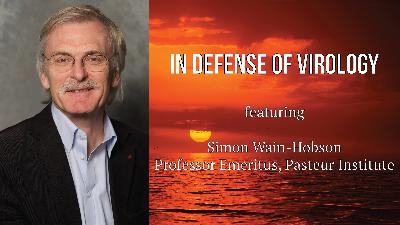
'In Defense of Virology' featuring Simon Wain-Hobson (Episode 2: No Upside)
Description
In the second episode of In Defense of Virology, Genetics Professor and Science From the Fringe host Bryce Nickels engages virologist Simon Wain-Hobson in a nuanced discussion on how recent advances in biotechnology have amplified both the promise and the perils of modern virology research.
Building on Episode 1, Simon delves deeper into the dangers of gain-of-function (GOF) research, this time focusing on how today’s biotechnology makes it possible to build entire viruses from digital genetic sequences—blueprints that can be transmitted and replicated worldwide in seconds.
Simon is blunt in his assessment: there are no redeeming benefits to dangerous gain-of-function experiments. To better describe the risk, he introduces the concept of “single-use research of concern” (SURC), a term for studies that generate genuine hazards without any plausible public good. This contrasts with the more familiar idea of “dual-use research of concern” (DURC), which acknowledges that some experiments carry risks but may also advance valuable scientific or medical progress.
Reflecting on his career during the HIV/AIDS era, Simon recounts helping organize a landmark 2000 Royal Society meeting that addressed verboten questions about whether the oral polio vaccine played a role in HIV’s origins. That experience, he says, underscored the value of humility, transparency, and open communication between scientists and the public. From past vaccine mishaps to the careless publication of viral genome data, Simon warns that the real threat to virology isn’t skepticism from outside—it’s hubris and secrecy from within.
(Recorded October 20, 2025)
Timestamps00:31 — Welcome and introduction to Episode 201:26 — Recap of Episode 1’s themes on dangerous GOF research02:42 — How modern DNA synthesis allows viruses to be recreated05:12 — The global risk of publishing viral blueprints online08:45 — Dual-Use Research of Concern (DURC) versus “Single-Use” research that serves no public good15:24 — Why creating novel pathogens without benefit undermines public trust17:17 — Lessons from HIV/AIDS and the importance of public engagement21:07 — Inside the 2000 Royal Society meeting on HIV origins23:54 — Mad-cow disease and the costs of poor risk communication33:42 — Historical “close shaves”: contaminated polio vaccines37:40 — A call for humility and openness in virology
intro and outro by Tess Parks
Get full access to Science From the Fringe at sciencefromthefringe.substack.com/subscribe







 United States
