


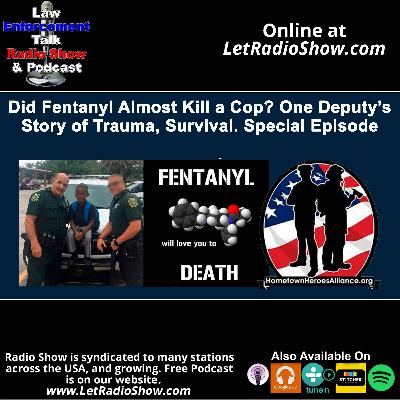
Did Fentanyl Almost Kill a Cop?
Description
Did Fentanyl Almost Kill a Cop? One Deputy’s Story of Trauma, Survival, and a Mission to Help Others. Special Episode. For years, fentanyl has dominated headlines as a driving force behind America’s overdose crisis. What’s discussed far less often is how this drug impacts the first responders who encounter it in the line of duty. For Deputy Jeff Brown, a long-serving law enforcement officer, accidental fentanyl exposure didn’t just spark a frightening moment, it caused permanent injuries, ongoing trauma, and a new mission focused on helping others. The Law Enforcement Talk Radio Show and Podcast on social media like their Facebook , Instagram , LinkedIn , Medium and other social media platforms.
By any measure, Jeff Brown is a law enforcement hero. But one accidental fentanyl exposure nearly ended his life, and forever changed it. This special episode is streaming for free on the Law Enforcement Talk Radio Show and Podcast website, on Apple Podcasts, Spotify, YouTube, and most every major Podcast platform
This is not just a story for the news-cycle. It’s a story meant to be shared on Facebook, Instagram, YouTube, and across platforms like the Law Enforcement Talk Radio Show and Podcast website, Apple Podcasts and Spotify, because it speaks to the hidden cost of service, the reality of trauma, stress, PTSD, and the lasting injuries many heroes carry long after the call ends. Supporting articles about this and much more from Law Enforcement Talk Radio Show and Podcast in platforms like Medium , Blogspot and Linkedin .
Accidental Fentanyl Exposure Almost Claimed His Life
Jeff Brown had built a distinguished law enforcement career when one routine encounter with drug abusers turned into a life-threatening emergency. During the incident, Jeff and his backup deputies were accidentally exposed to fentanyl.
The effects were immediate and terrifying.
Had it not been for department-issued Narcan and the training the deputies received, Jeff believes he and others would not have survived. In a matter of minutes, deputies were forced to save each other’s lives. Did Fentanyl Almost Kill a Cop? One Deputy’s Story of Trauma, Survival, and a Mission to Help Others. Special Episode. Look for The Law Enforcement Talk Radio Show and Podcast on social media like their Facebook , Instagram , LinkedIn , Medium and other social media platforms.
They lived, but not without consequence.
For Jeff, the exposure caused permanent damage to his heart, altering his health and his future. What should have been just another shift became the defining moment of his life.
The Aftermath: Injuries, Recovery, and a Broken System
Surviving the incident was only the beginning.
Jeff openly talks about:
The physical recovery and lingering medical issues
The emotional toll and ongoing stress
Battles with Worker’s Compensation
The lack of understanding surrounding first responder injuries
The rarely discussed crime problem in a tourist-driven resort area
Like many first responders, Jeff learned that surviving the job does not guarantee support afterward. The system often struggles to recognize invisible injuries, especially when fear, misinformation, and stigma surround incidents involving fentanyl. Did Fentanyl Almost Kill a Cop? One Deputy’s Story of Trauma, Survival, and a Mission to Help Others. Special Episode. Available for free on their website and streaming on Apple Podcasts, Spotify, Youtube and other podcast platforms.
Fentanyl Misinformation and First Responder Trauma
In 2016, the U.S. Drug Enforcement Administration (DEA) released advisories warning that simply touching or inhaling fentanyl could be fatal within minutes. Images of tiny, allegedly lethal doses circulated widely, reinforcing fear among first responders.
At the time, the narrative felt plausible. Illicit fentanyl was flooding the streets, and officers had limited information.
Later, medical experts, including the American College of Medical Toxicology and the American Academy of Clinical Toxicology clarified that incidental exposure leading to overdose is extremely unlikely. Other countries adjusted their guidance accordingly. Special Episode. The Law Enforcement Talk Radio Show and Podcast episode is available for free on their website , Apple Podcasts , Spotify and most major podcast platforms.
But misinformation lingers, and it carries consequences.
Officers who believe they’ve been exposed can experience panic attacks, hyperventilation, vertigo, and racing heart rates. These symptoms are real and distressing, yet often misinterpreted as fentanyl toxicity. In a culture where fear is seen as weakness, these events can go under-reported or misdiagnosed, potentially leading to delayed or inappropriate medical care.
We stand by this critical point:
Accidental fentanyl exposure can have drastic effects when combined with preexisting health conditions, particularly involving the heart. These incidents deserve serious, compassionate, and accurate medical evaluation. Did Fentanyl Almost Kill a Cop? One Deputy’s Story of Trauma, Survival, and a Mission to Help Others. Special Episode. The special episode can be found on The Law Enforcement Talk Radio Show and Podcast website, on Apple podcasts, Spotify, Youtube and on LinkedIn, Facebook, Instagram, and across most podcast platforms where listeners will find authentic law enforcement stories.
The FDA Warning: When Fentanyl Exposure Is Truly Deadly
While incidental exposure myths persist among adults, there is one area where the danger is undisputed.
The FDA warns that accidental exposure to fentanyl patches continues to be deadly to children.
Fentanyl patches are prescribed for opioid-tolerant patients and release fentanyl through the skin over several days. Tragically, children have died after:
Putting used or unused patches in their mouths
Sticking patches onto their skin
Even used patches can contain enough fentanyl to be fatal.
The FDA urges caregivers to:
Store patches securely
Dispose of them properly
Keep naloxone readily available
If a child is suspected of exposure, call 911 immediately.
Trauma, PTSD, and the Cost of Service
Jeff’s story highlights a truth many don’t want to face: trauma doesn’t end when the sirens stop.
First responders routinely carry:
Cumulative stress
Psychological trauma
PTSD
Chronic health problems
These issues affect not only their careers but their families, hobbies, and identities. For many even the simple joys of fishing and hunting, once outlets for peace, were impacted by his injuries and recovery. Did Fentanyl Almost Kill a Cop? One Deputy’s Story of Trauma, Survival, and a Mission to Help Others. Special Episode. The full podcast episode is streaming now on their website, on Apple Podcasts, Spotify, Youtube and across Facebook, Instagram, and LinkedIn.
Turning Pain Into Purpose: Hometown Heroes Alliance
Instead of walking away, Jeff chose to give back.
He now dedicates his time to Hometown Heroes Alliance, a nonprofit organization that supports wounded, injured, and disabled first responders, those who are often left financially and emotionally vulnerable after serving their communities.
Hometown Heroes Alliance focuses on:
Raising awareness for injured first responders
Providing financial, physical, and emotional support
Hosting benefit events, including concerts
Producing brand-funded television and digital media to amplify impact
From hurricane-stricken areas in Florida and Texas to less-publicized tragedies across the country, the organization helps heroes who lost homes, suffered disabling injuries, or sacrificed everything while protecting others. Did Fentanyl Almost Kill a Cop? One Deputy’s Story of Trauma, Survival, and a Mission to Help Others. Special Episode. On the Law Enforcement Talk Radio Show and Podcast website on Apple Podcasts, Spotify, Youtube, Facebook, Instagram, LinkedIn, and most major podcast platforms.
As long as there are heroes answering the call, there will be a need for compassion—and action.
A Story That Needs to Be Heard
Jeff Brown’s journey is more than a headline. It’s a reminder that behind every badge is a human being who absorbs trauma so others don’t have to.
This story belongs on every platform, Facebook, Instagram, YouTube, Apple, Spotify, and Podcast networks, because awareness saves lives, corrects misinformation, and honors those who continue to serve, even after the job nearly takes everything















 United States
