



Is Germany Previewing America's Speech Future?
Description
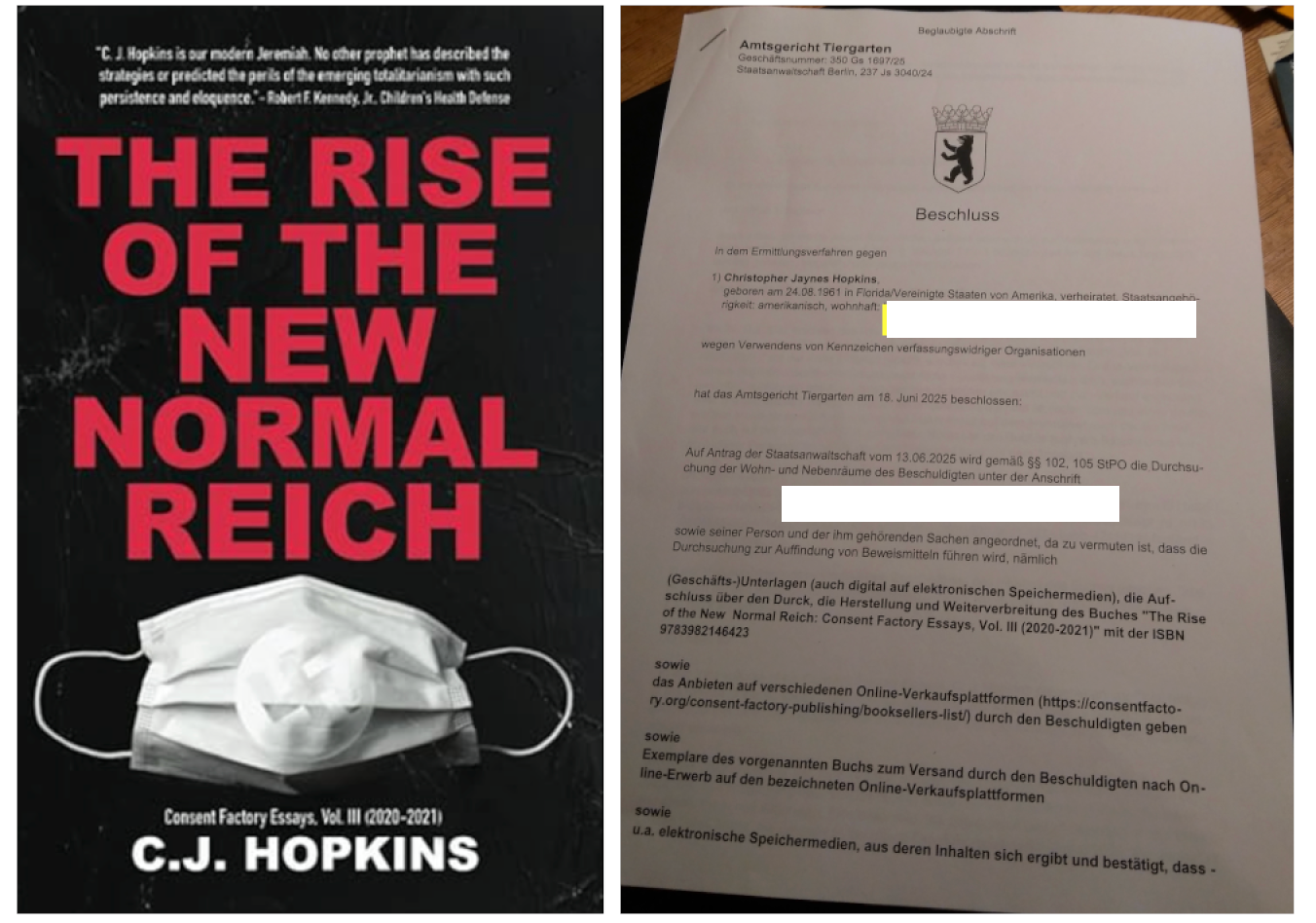
On November 26th, three armed police officers in Berlin showed up at the door of American playwright and author C.J. Hopkins brandishing a search warrant. Having already charged and issued a “punishment order” to Hopkins two summers ago essentially over the satirical use of a swastika on the cover of his book The Rise of the New Normal Reich — it’s in a white-on-white medical mask, mocking pandemic authorities — officials returned with a new theory. After questioning him and his wife, they searched the place for evidence that Hopkins is indeed the publisher of his book and the operator of his Consent Factory blog, where the book is promoted.
“Basically, distributing and promoting my book is a crime in Germany, at least according to the District Prosecutor,” Hopkins explains.
Europe made headlines yesterday by issuing a $140 million fine to Elon Musk’s X platform, but financial and political media for weeks now have been trumpeting a “digital simplification” plan that would ostensibly mean “rethinking its crackdown” on content. To spur investment, supposedly, President Ursula von der Leyen and EU officials are hinting at a less regulated tech future. Things have grown so confused in speechville that some human rights advocates oppose the plan, worried that less oversight would lead to more hate and discriminatory corporate surveillance. If it even happens, will “simplification” impact individuals, or just companies?
As C.J.’s case shows, it’s not clear changes are coming at ground level, at least in terms of policing of speech offenses. “Nothing has changed in Germany or the UK as far as I know,” he said yesterday. “If anything, it’s gotten worse.” He pointed to two other loud cases, a recent raid of Die Welt columnist and media studies professor Norbert Bolz, and the September sentencing of Bremen-based artist Rudolph Bauer to a €12,000 fine for “use of symbols of unconstitutional and terrorist organizations.”
Both cases would strike Americans as absurd parodies of police overreach. The conservative Bolz’s trouble stemmed from a tweet in January 2024, in which he poked fun at the left-leaning newspaper Taz by quoting one of its headlines. “Good translation of ‘woke’: Germany, wake up,” Bolz wrote. Taz had published a piece saluting a ban of the right-wing AfD party that contained the headline, “AfD ban and Höcke petition: Germany is waking up.”
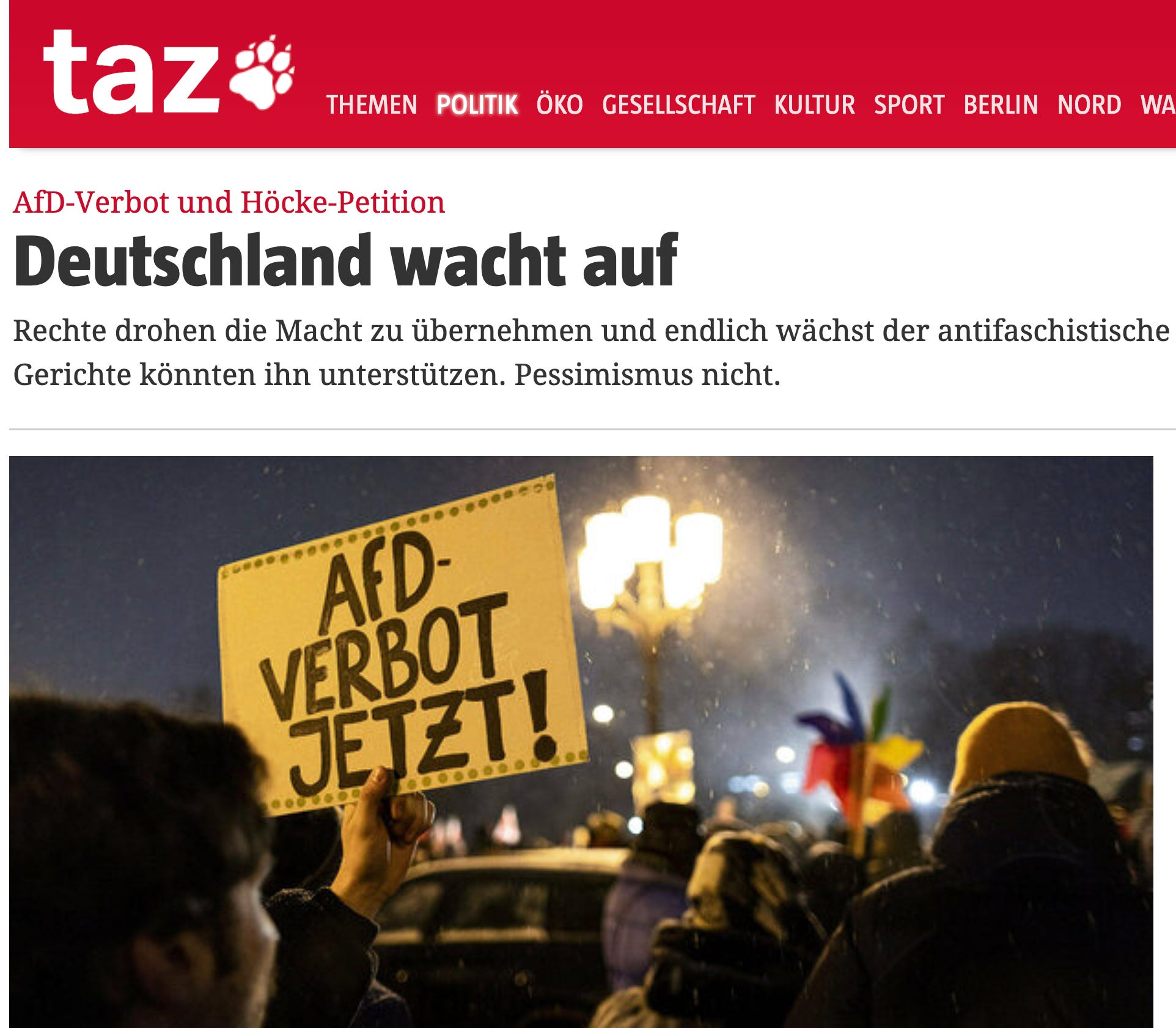
The phrase Deutschland wacht auf recalled a line from the second stanza of the “Sturmlied” anthem, so Bolz essentially was raided fo


 United States
