


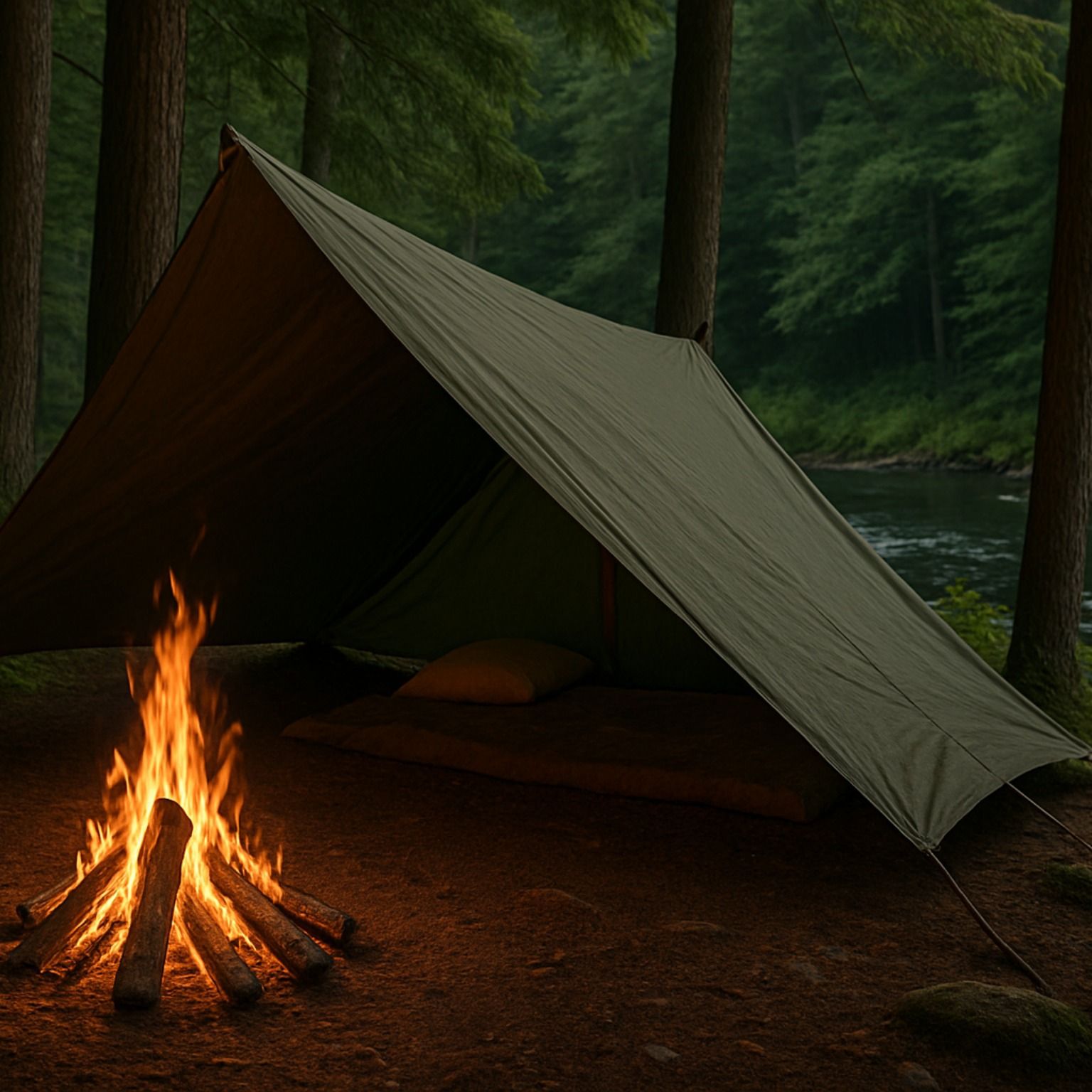
Shelter Done Right
Description
In this Fundamental Friday lesson we break down shelter from the inside out. Chris starts with clothing as your first layer of protection and how fabrics behave in heat, cold, and wet conditions. From there we move into shelter site selection using U.S. Army standards: finding level ground, spotting widow makers, judging water levels, avoiding rockslide or avalanche zones, and positioning yourself near resources without exposing yourself to predators or biting insects.
Next we move into the hands-on builds.
Lean To
Attach the tarp to the ridgeline using two prusik loops and toggles. Stake the back corners tight to the ground to form a sloped wall. Angle the wall into or away from the wind depending on the weather. Simple, fast, and sheds rain well when tightened correctly.
A Frame
Lay the tarp lengthwise over the ridgeline so both sides hang evenly. Attach the center tie-out on each side with prusik loops and toggles. Stake down all four corners to create a triangular shelter with better wind and rain protection than a lean to.
Diamond Fly
Turn the tarp diagonally and drape one corner over the ridgeline. Fasten that corner using a prusik and toggle. Pull the opposite two wings down and stake them to the ground. This creates a tight diamond shape that works well over hammocks or on the ground, giving more coverage and airflow.
Adirondack
Lay one corner of the tarp over the ridgeline and attach it with a prusik and toggle. Go behind the tarp and stake out the tie outs directly opposite the toggle points to form the back wall. Fold the far corner inward for a small groundsheet. Stake the front corners to create angled side walls. Flip the top panel over the front and tie it off to a tree to add headroom. This setup reflects heat from a fire straight into the shelter and is excellent for cold weather.
Plow Point
No ridgeline needed. Take one corner of the tarp and tie it up to a tree about seven feet high. Stretch the opposite corner out behind you and stake it tight. Stake the remaining two corners to the ground to form a low sweeping triangle that sheds wind and water and sets up in under a minute. Great for fast shelter or sudden weather.
Explore More from Primitive Camping & Bushcraft
All my links, gear, community, and content in one spot:
www.primitive-camping.com
Stay Connected
📖 Book: Primitive Camping & Bushcraft
☕ Coffee: Primitive Camping Roast
Follow my Speir Outdoors Channels:
Youtube - www.youtube.com/@speiroutdoors
Facebook - www.facebook.com/primitivecamping
Have questions or want to connect?
📩 Email: info@primitive-camping.com










 United States
