


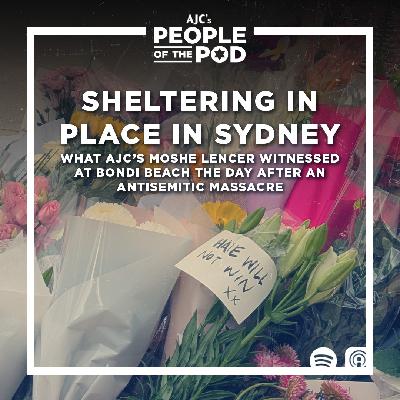
Sheltering in Place in Sydney: What AJC's Moshe Lencer Witnessed at Bondi Beach the Day After an Antisemitic Massacre
Description
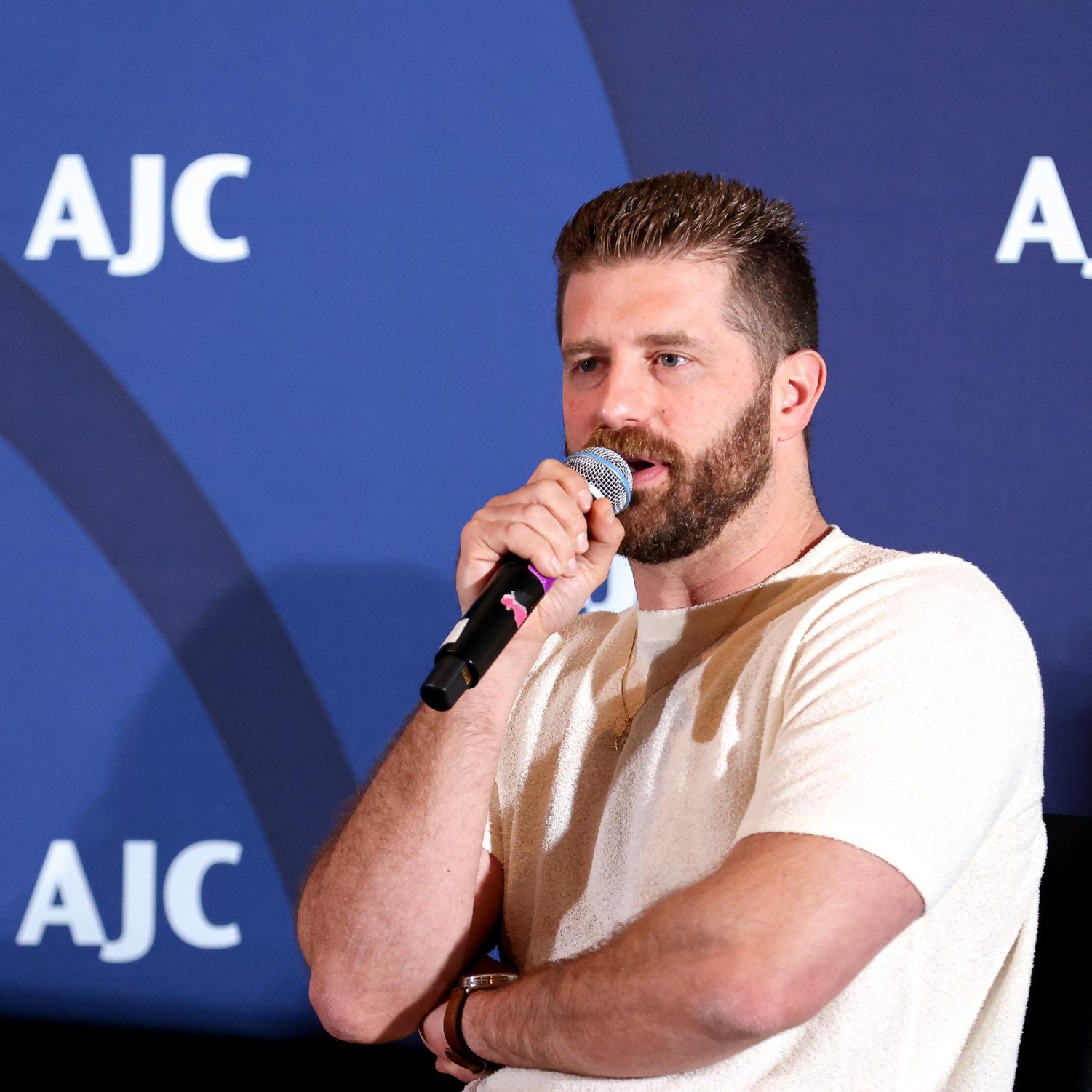
AJC Director of Campus Affairs Moshe Lencer was on his first visit to Australia when the unimaginable happened. Hours after he enjoyed the sun at Sydney's Bondi Beach, it became the site of an antisemitic terrorist attack, leaving 15 people, including a child and a Holocaust survivor, dead.
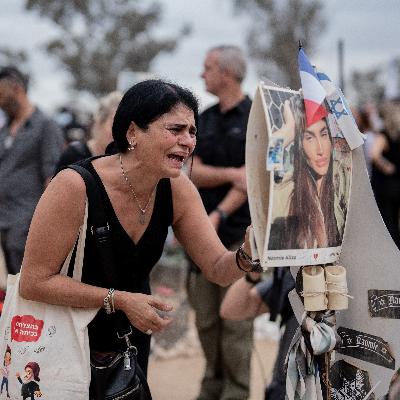
Moshe recounts attending a student leadership shabbaton, in partnership with Australia's Union for Jewish Students (AUJS), and the immediate aftermath on the ground—a mix of helplessness and resolve—and the powerful scene at Bondi Beach the following day, as Jews and non-Jews gathered to mourn and show solidarity.
Reflecting on the rise of antisemitism in Australia, Moshe—speaking as an outsider to the community—underscores the guiding principle of Australian Jews at this moment: "If we stop celebrating Jewish identity, it means they won."
Read Full Transcript: https://www.ajc.org/news/podcast/ajcs-asia-pacific-institute-on-how-australias-government-ignored-the-warning-signs-before
Resources:
-What To Know About the Antisemitic Terror Attack in Sydney
-Take action: Urgent: Confirm U.S. Special Envoy to Monitor and Combat Antisemitism
Listen – AJC Podcasts:
Follow People of the Pod on your favorite podcast app, and learn more at AJC.org/PeopleofthePod
You can reach us at: peopleofthepod@ajc.org
If you've appreciated this episode, please be sure to tell your friends, and rate and review us on Apple Podcasts or Spotify.
Transcript of the Interview:
Manya Brachear Pashman:
As the sun began to set in Australia on Sunday, more than 1000 gathered on Bondi Beach in Sydney to celebrate the first night of Hanukkah by the Sea, but at about 6p m, terrorists fired into the crowd, killing at least 15 and wounding dozens more. Students with the Australasian union of Jewish students had just wrapped up a Shaba tone before they headed to Bondi Beach and our own AJC, Director of Campus affairs, Moshe Lencer, whom we affectionately call Moosh, was there with him shortly before the attack, and he's with us now. Moosh, welcome to people of the pod.
Moshe Lencer:
Thank you for having me.
Manya Brachear Pashman:
Well, I wish it were under very different circumstances. How are you doing and how are the students doing that you are spending time with there?
Moshe Lencer:
It's a wonderful question, and the more I think about it, the less I have a clear answer. It's a combination of helplessness, and in the same time, desire towards hope and trying to figure how to move through this very dark time. The last 24 hours, a little bit more than that have been very interesting is this has been my first time ever in Australia. I landed here Friday morning. Right now, for context, it's Monday night, and until about 6pm on Sunday, it was a very pleasant, positive experience, filled with moments of Jewish pride and joy. The reason I'm in Australia, even in this moment, is time, is AJC has a partnership with the Austra Asian union of Jewish students known as AJUS. Which is the student organization that focuses on Leadership for Jewish students in Australia and New Zealand.
And I was invited to take part in a shabaton that was held just outside of Sydney with student leaders from both Australia and New Zealand. The weekend was filled with laughter and joy and happiness, and we were making edible chanukias before the holiday, we were talking about ways to advocate for what students needs and for what they need. We even finished the day with kayaking, and there was a lot of happiness and a lot of desire, because, as I learned recently, and I should have understood before by being in the southern hemisphere. This is the beginning of summer. This is the first few weeks when people finish the school year and they're enjoying it. They're celebrating. And that's why the dates were chosen.
So it's like beautiful and it's sunny, and we were expelled and everything. And as we were about to start celebrating a holiday that's all about our community and resilience, our resilience was tested again, and now as just over a day into it, we're still trying to see what we can do and how to move forward and support the community right now as it's hurting.
Manya Brachear Pashman:
You were actually at Bondi Beach shortly before the attack. Can you kind of describe the environment and why you were there in the first place?
Moshe Lencer:
Yeah, of course, as mentioned, we were doing the shabbaton, and the programming ended around 3pm and it's summer. It's the first few days of summer. If you Google, what can you do, or what should you do and see in Sydney, the first few things people will see will be the Opera House, which is, I think, the most iconic place in the city. And then the second thing is go. It says, Go to Bondi Beach. It's such a big piece of the community here and where people go. It's also super close to where most of the Jewish community lives. So we were saying, okay, the shabbaton is done. A lot of the people are now local. What can we do in between? Before people hop on trains and flights and everything? Let's go to Bondi Beach. We all met up at the frozen yogurt location that's very iconic there very that chain itself was very connected to Sydney, and the participants just went there as an unofficial thing. I got there a little bit after just exploring. I said, my first time in Australia, like, Okay, what do I do? I go to Bondai beach. I walked around there. I was seeing this. It's the first week of summer school. Just ended. The beach was packed. It was sunny, beautiful, everything. I don't think there was a person in Sydney that wasn't at the beach yesterday, and I left the beach at around 510, ish, heading towards dinner with the student leaders at the Opera House. Because if I'm already there, I need, I should see everything else.
Manya Brachear Pashman:
And so why having, having walked that beach, why was there a Hanukkah celebration there? Can you tell our listeners who may not be familiar with who organized it, and why was the first night celebration? Operation scheduled for that, but that Hanukkah by the sea?
Moshe Lencer:
Yeah, of course, Hanukkah by the Sea was one of several events that were held yesterday by the Jewish community. Here. It had over 2000 people, but and it wasn't the only one. There were many events that were designed to celebrate, to have joy. Hanukkah is a holiday of lights, the community here, the geography here is that for a lot of us, Hanukkah, as a holiday, happens in the cold, in the winter, and this is the beginning of summer. You know, it's summer we go to the beach. I was joking with them that their Christian friends do Christmas in July, just so they can have snow or cold associated with the holiday. And just to think about it, right? So going to the beach, going to the where that's part of their culture, the culture here. So there were other events not even far from it. It was the best way to celebrate it. And Chabad of Bondi is a community that's growing, and it's community. It's beautiful, and it's using different aspects of of the tapestry that is the Jewish community of Sydney. So it's more of like, why not do it here? Why not have it there? It's, you know, it's the most connected to what's going on. It's, would have been surprising if they weren't doing something here.
Manya Brachear Pashman:
Was there in a giant menorah on the sands of the shore? Or how did they have it set up there?
Moshe Lencer:
I will be honest that I missed the preparation. But from what I've seen, though, you know, it's Chabad. They bring giant menorahs wherever they go. I even today they brought a giant menorah to light right there, because this is the core of what Chabad is, is to bring the light, to bring the essence of Judaism, where everyone might go. I walked also today by another location that wasn't far, which had another Hanukkah event yesterday with rides and everything. And they still had the hanukkiah there. That also was a huge Hanukkah. It was, there wasn't hiding of what is going on. You know, the people saw the flyer for what was going on. It was very public. There wasn't a feeling that this holiday should be celebrated in closed doors and hidden from the public.
Manya Brachear Pashman:
So you had mentioned earlier offline that you went back to Bondai Beach with the students that you were there to observe the Shabbaton with. Can you tell me what the scene













 United States
