


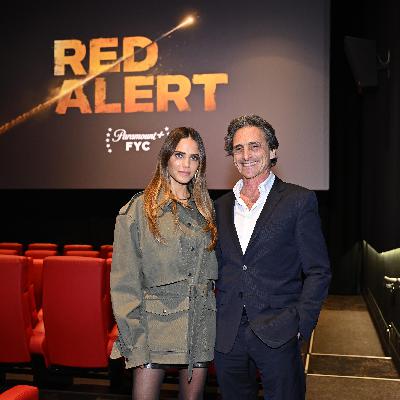
The Producer of Pulp Fiction on His New 10/7 Docu-series Red Alert on Paramount+
Description
Join host Manya Brachear Pashman for a powerful conversation about Red Alert, the Critics Choice Award-nominated Paramount+ docu-series that confronts the October 7 Hamas massacre with unflinching honesty. Producer Lawrence Bender (Pulp Fiction, Good Will Hunting) shares why this project couldn't wait—launched in real time to push back against denial, disinformation, and a world struggling to absorb the scale of the tragedy.
Bender reflects on the courage and trauma of the ordinary Israelis whose stories anchor the series, including survivors like Batsheva Olami, whose resilience changed the production team forever. Hear how filming during an active war shaped the storytelling, the emotional toll on everyone involved, and why capturing these true accounts is essential to ensuring October 7 is neither minimized nor forgotten.
Key Resources:
-
AJC.org/Donate: Please consider supporting AJC's work with a year-end gift today. Right now, your gift will be matched, dollar-for-dollar, making double the impact. Every gift matters. Every dollar makes a difference in the fight for a strong and secure Jewish future.
Listen – AJC Podcasts:
Follow People of the Pod on your favorite podcast app, and learn more at AJC.org/PeopleofthePod
You can reach us at: peopleofthepod@ajc.org
If you've appreciated this episode, please be sure to tell your friends, and rate and review us on Apple Podcasts or Spotify.
Transcript of the Interview:
[Clip from Red Alert]
Manya Brachear Pashman:
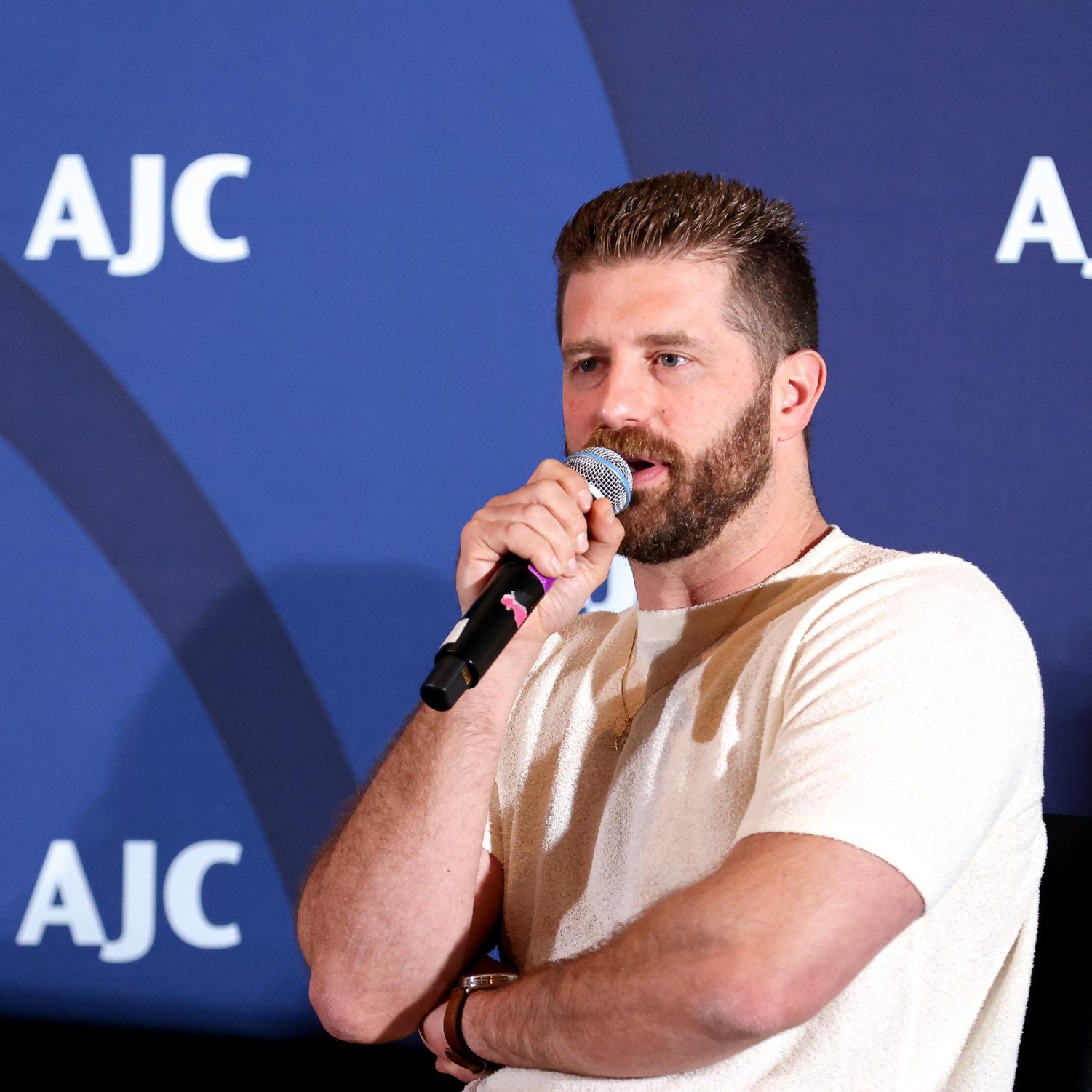
Academy Award nominated film producer Lawrence Bender has quite a repertoire for both feature films and documentaries: Pulp Fiction, Inglorious Bastards, Good Will Hunting and Inconvenient Truth. In fact, his works have earned 36 Academy Award nominations.
His most recent TV miniseries is a more personal project on the second anniversary of the October 7 Hamas terror attacks on Israel, Paramount Plus began streaming a four episode series called red alert about the attack on festival goers, innocent passers by and families waking up to terrorists inside their Israeli homes that day, a tragedy that many of us, either on this podcast or listening have watched with overwhelming grief for the last two years. Lawrence is with us now to talk about how he grappled with this attack on Israel and the rise of antisemitism that followed.
Lawrence, welcome to People of the Pod.
Lawrence Bender:
Thank you, Manya, it's good to be here.
Manya Brachear Pashman:
So that clip that we played at the top of this episode, it's one of the few clips in English. Most of the dialog in this show is in Hebrew with subtitles. But that scene is a woman, Bathsheba and her two daughters. They're walking across a field trying to return home, and her son has been taken. Her husband is gone. This series weaves together her story and three or four other ordinary civilians fighting for their lives on October 7, 2023. You know, as someone personally who's been immersed in this subject matter for two years, to be honest, I had to muster the energy to watch this, and I'm so glad that I did. But why are, I mean, as we're still waiting for the last hostage to be returned, why was it important for this show to air now?
Lawrence Bender:
Well, thank you so much for doing this with me, and thank you for playing that clip. I have to tell you first, I love that clip. I love that scene because one of the things about the show and the stories that we portrayed is that even with the horrific things that happened on that day, people still were able to fight back. People were still able to be strong. A mother with her daughter and her infant stood in the face of a terrorist and stood him down in real life, this happened.
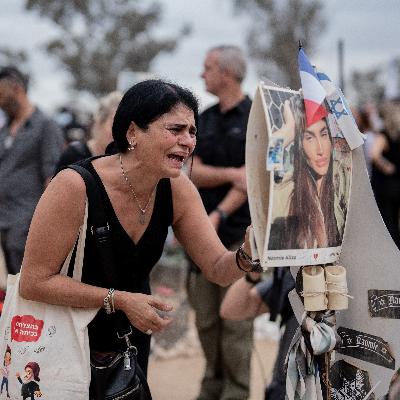
Now, not everybody was so fortunate, and her husband Ohad was not fortunate, and her son was taken hostage, as you mentioned, but it does show her personal power in this horrific situation. And I just thought, you know, this woman is a real hero. I've spent a lot of time with her, Batsheva Olami, she's really an extraordinary human in all ways. So thank you for playing that clip.
So in terms of the show, I felt on October 8, it's just amazing how quickly, before Israel did anything, the entire world quickly turned against the very people who were the victims and having spent subsequently, a lot of time with people on the set, because, as you mentioned, this show was about real people, and those real people spent a lot of time on the set with us. And the very people that were traumatized, felt isolated, they felt alone, and they're the very ones that need to be loved, that need to be hugged, they need to be supported. Anyway, I just felt like I needed to do something fast to try to show the world what really happened. AndRed Alert is the result of that.
Manya Brachear Pashman:
Do you fear that the world has already moved on?
Lawrence Bender:
Oh, that's a good question. It feels like we've passed a tipping point, actually, in terms of Jew hatred and anti-Israel and antisemitism. Even as we are now trying to have a peace process, right, that somehow we are stumbling forward, and if that's going to happen, people need to understand why we're here and why we're here happened on October 7. And if you watch the show, hopefully you're pulled into the show, and you have a, you know, you have an emotional journey, and then you understand, oh, this really happened. And you understand that's the truth. And only when you really understand the truth of October 7 do I really think that you can really get some sort of peace.
Manya Brachear Pashman:
So is this different from other historical events? You know, a lot of movies and television shows commemorate historical events, like the Holocaust, for example, but they happen years later. They're made years later. I kind of call it the never forget genre. But is October 7 unique in that it's not a question of whether people will forget or move on. It's a question of whether they believe that this present is actually true.
Lawrence Bender:
That's right, there's the deniers. There's people that just don't know. There's people that forgot, maybe you know, there are people who I know that I had to explain. Like, you know, it's interesting. As an example, when you see the show and you see all these Hamas terrorists invading the kibbutz, and Ohad says to her, his wife, Bathsheva, he whispers in her ear, I just saw about 20 terrorists, and someone said to me, who's not unintelligent, I didn't realize there are that many. I didn't realize that. And if you're not really paying attention, maybe you don't really know. And look, they're the haters, haters which are never going to change. But I think there's a large group of people that just don't really understand, and they're the ones that I feel we have a shot at showing this to and having a conversation with.
Manya Brachear Pashman:
In fact, are you actually introducing or experimenting with a new genre of truth or facts in the face of fiction.
Lawrence Bender:
I guess that's true. I mean, this just happened. And some people ask over this last, you know, when I released, and we were paramount, released the show. You know, I've been asked a question, is it too soon? And my answer is, I feel like it's not soon enough. And I felt like immediately I needed to work on something, and this is the result of that. For me, personally, there are many collaborators of people on this show that incredible Israeli partners, my American partners. I mean, there's a lot of amazing people that came together to work on this, to make this show, but we really felt like time was of the essence, because the world was shifting so quickly, we wanted this to get out there, to show the world what really happened.
Manya Brachear Pashman:
One of the reasons I'm pressing you on this, this was not a fiction film. This was based in reality. You said you met Bathsheba, the actors prepared for their roles by meeting with the very real people who they were portraying in this show whose stories they were recreating. I'm curious what some of the takeaways were for you, for your colleagues, from your encounters with these victims, with these survivors, and did anything about the production ever change after they got involved?
Lawrence Bender:
It was truly a life changing experience for myself, but really for everyone involved, of course, myself and my partner, Kevin Brown and Jordana Rubin, and we were basically the only non Israelis that were full time producing the show. And everyone else was a citizen of the country. Everyone else, you know, was affected dramatically, everything but from like our key grips brother ran the kibbutz Raim, where we filmed that area that was a kibbutz overrun by terrorists, right? His brother surviv














 United States
