


Survival Mode: How to Calm a Brain That Is Fueled with Stressful thoughts, Insecurity and Pain
Description
What if your migraine isn’t just about pain—but about a nervous system that never got the signal it’s safe to rest?
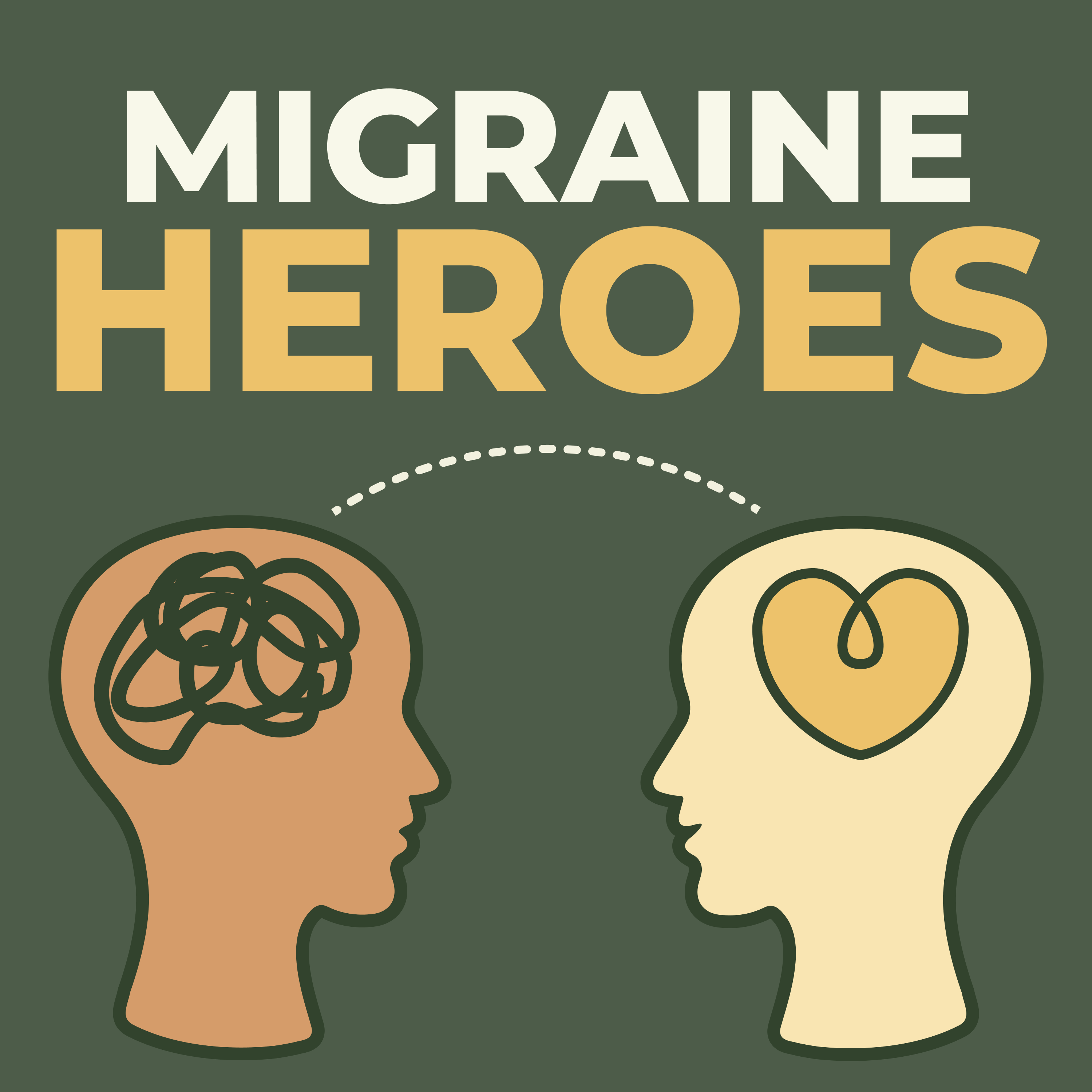
In this episode of Migraine Heroes Podcast, host Diane Ducarme explores how the migraine brain can get “stuck” in survival mode—always scanning, bracing, and protecting. Through the lens of neuroscience and Traditional Chinese Medicine, you’ll learn what it takes to move from constant vigilance to calm flow.
You’ll discover:
💡 How chronic alertness drains your brain’s energy and increases pain sensitivity
💡 What the vagus nerve and neuroplasticity teach us about rewiring the stress loop
💡 Eastern tools and daily habits that help your body remember safety again
It’s not just about avoiding triggers—it’s about teaching your nervous system to trust life again.
🎧 New episodes every Monday and Wednesday
🔗 Discover our work on migraineheroes.com
References:
- Neurovascular Mechanisms of Migraine and Cluster Headache — Frontiers in Neurology (Akerman S., Holland P.R., & Goadsby P.J., 2019):Akerman, Holland and Goadsby outline how the trigeminovascular system, vascular signaling, and neuroinflammatory pathways interact to drive both migraine and cluster headache pain, highlighting key overlaps in brain and autonomic function. Read more here.
- Vagus Nerve Stimulation in Clinical Practice — Headache Medicine (Farmer A.D. et al., 2016): Farmer A.D. and colleagues review how vagus nerve stimulation modulates brainstem circuits, reduces pain signaling, and supports autonomic balance—offering a non-pharmacological tool for migraine and headache disorders. Read more here.
- A Model of Neurovisceral Integration in Emotion Regulation and Dysregulation — Journal of Affective Disorders (Thayer J.F. & Lane R.D., 2000):Thayer and Lane describe how vagal regulation links emotional processing, autonomic balance, and brain–body communication—offering a foundational framework for understanding stress-sensitive migraines and nervous-system dysregulation. Read the abstract here
- Differences in Treatment Response Between Migraine With Aura and Migraine Without Aura — Lessons From Clinical Practice and RCTs — The Journal of Headache and Pain (Martelletti P. et al., 2019):Martelletti and colleagues summarize how patients with migraine with aura respond differently to preventive and acute treatments compared with those without aura, highlighting distinctions in pathophysiology, drug efficacy, and personalized migraine management. Read more here.
- Comprehensive Treatment of Migraine With Traditional Chinese Medicine Based on New Pathophysiological Mechanisms — A Review — Chinese Journal of Integrative Medicine (Li N., Xu M., Zhang Y. et al., 2024): Li, Xu, Zhang and colleagues review how modern migraine mechanisms—CGRP signaling, neuroinflammation, vascular dysregulation and brain–gut interactions—map onto TCM patterns such as Liver Wind, Qi stagnation and Internal Fire, outlining a comprehensive integrative approach to treatment. Read the full article here.
- The Polyvagal Theory — Norton (2011): Porges S.W. outlines how the vagus nerve shapes emotional regulation, threat sensitivity, social engagement, and how these mechanisms influence migraine vulnerability. View the book here.
Disclaimer: This podcast is for informational purposes only and does not substitute for providing medical advice. Always consult your healthcare professional before making any health-related decisions.
For women, men, and children who suffer from migraine disease, Migraine Heroes is your go-to resource for understanding, managing, and overcoming migraine attacks.
We cover all types of migraines and related headaches, including primary and secondary migraines, chronic migraines, and cluster migraines. We dive deep into the complexities of migraine with aura and migraine without aura, as well as rarer forms like hemiplegic migraine, retinal migraine, and acephalgic migraine (silent migraine). Our discussions also extend to cervicogenic headaches, ice pick headaches, and pressure headaches, which often mimic migraine or contribute to overall migraine burden.


 United States
