


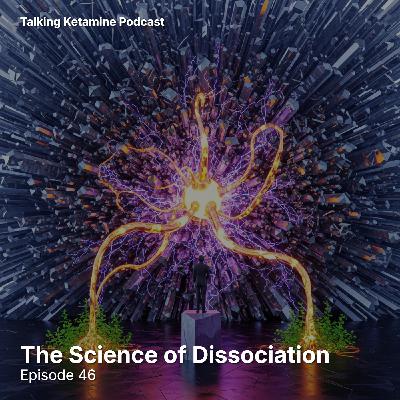
The Science of Dissociation
Description
For decades, the “trip” caused by ketamine—sensory detachment, time warping, and out-of-body experiences—was seen as a nuisance, a “bug” to be tolerated during anesthesia. But a groundbreaking 2025 review paper by Berra and colleagues asks a provocative question: What if dissociation is actually the point?
In this episode, we dive into the “Science of Dissociation,” exploring the spectrum from simple “checking out” (daydreaming) to profound depersonalization and derealization. We analyze the “switch” in the brain—how ketamine blocks NMDA receptors on inhibitory interneurons, unleashing a glutamate burst that disrupts the Default Mode Network (DMN). This disruption forces the brain into a “chaotic” state of higher entropy, breaking rigid, depressive thought loops and allowing the mind to form new, healthier connections.
We also look to the future of “non-hallucinogenic” alternatives like hydroxynorketamine (HNK), which promote neuroplasticity without the trip. This raises a fundamental philosophical and clinical question: Is the conscious experience of an altered state the “price of admission” for healing, or can we bypass the mind to fix the brain?
Reference:
Bera, K., Looger, L. L., Proekt, A., & Cichon, J. (2025). Cortical mechanisms contributing to ketamine-induced dissociation. The Neuroscientist, 1–17. https://doi.org/10.1177/10738584251403946
The post The Science of Dissociation appeared first on Talking Ketamine Podcast.






 United States
