


 Claim Ownership
60-Second SoTL
Subscribed: 4Played: 32
Subscribe

© 2022 Center for Engaged Learning, Elon University
Description
60-Second SoTL shares snapshots of recent scholarship of teaching and learning (SoTL). Each brief, 1- to 4-minute episode offers a quick annotation of one or two recent SoTL publications. Show notes link to the article or chapter and, when applicable, related scholarship. 60-Second SoTL is produced by the Center for Engaged Learning at Elon University. Learn more at www.CenterForEngagedLearning.org
76 Episodes
Reverse
See our full episode notes at https://www.centerforengagedlearning.org/exploring-genais-potential-as-a-sotl-partner/.
What might it look like to treat generative AI as a partner in scholarship of teaching and learning? This episode features an open-access article that examines how SoTL scholars can integrate large language models—tools like ChatGPT, Claude, and Copilot—into research in ways that strengthen, rather than erode, scholarly integrity:
Miller-Young, Janice, Lauren Hays, and Brett McCollum. 2026. “Exploring GenAI’s Potential Contributions as a Partner in SoTL Research: The Practice Model.” Teaching & Learning Inquiry 14: 1-19. https://doi.org/10.20343/teachlearninqu.14.7
This episode was hosted, edited, and produced by Jessie L. Moore, Director of the Center for Engaged Learning and Professor of Professional Writing & Rhetoric.
60-Second SoTL is produced by the Center for Engaged Learning at Elon University.
Music: “Cryptic” by AudioCoffee.

See our full episode notes at:
Can ungrading work in a fully asynchronous online course? This episode features an open-access article that examines how an alternative grading approach shaped students’ motivation, stress, and learning in a fully online course:
Emerson, Kerstin Gerst. 2026. “‘It Honestly Made Me Want to Work Harder’: Student Evaluation of Using Ungrading in an Online Asynchronous Course.” Teaching & Learning Inquiry 14: 1–15. https://doi.org/10.20343/teachlearninqu.14.3
This episode was hosted, edited, and produced by Jessie L. Moore, Director of the Center for Engaged Learning and Professor of Professional Writing & Rhetoric.
60-Second SoTL is produced by the Center for Engaged Learning at Elon University.
Music: “Cryptic” by AudioCoffee.
Image in episode art is by pch.vector on Freepik.

View our full episode notes at https://www.centerforengagedlearning.org/learning-contracts-as-equity-blueprints-in-undergraduate-research-mentoring/How can learning contracts support more equitable undergraduate research mentoring? This episode features an open-access article that explores how learning contracts can operationalize equity in undergraduate research mentoring by centering shared expectations, partnership, and transparency:McSweeney, Jill M., and Eric E. Hall. 2026. “The Use of Learning Contracts as Potential Equity Blueprints in Undergraduate Research Mentorship.” Teaching & Learning Inquiry 14: 1–10. https://doi.org/10.20343/teachlearninqu.14.4This episode was hosted, edited, and produced by Jessie L. Moore, Director of the Center for Engaged Learning and Professor of Professional Writing & Rhetoric.60-Second SoTL is produced by the Center for Engaged Learning at Elon University.Music: “Cryptic” by AudioCoffee.Image in episode art is by fanjianhua on Freepik.
See our full episode notes at: https://www.centerforengagedlearning.org/considering-time-in-students-as-partners/How does time—including age, career stage, and historical moments—shape students-as-partners work in higher education? And what do we miss when we don’t explicitly account for it? This episode features a secondary qualitative analysis drawing on three prior case studies connected to SoTL and Students-as-Partners work at a Canadian university:Harvey, Kelsey, Katherine R. Cooper, Stephanie Hatzifilalithis, Elisa Do, Julia Cerminara, and Jacob Krone. 2026. “Students as (Intergenerational) Partners: Considering Time in the 4M Framework.” Teaching & Learning Inquiry 13: 1–17. https://doi.org/10.20343/teachlearninqu.14.2This episode was hosted, edited, and produced by Jessie L. Moore, Director of the Center for Engaged Learning and Professor of Professional Writing & Rhetoric.60-Second SoTL is produced by the Center for Engaged Learning at Elon University.Music: “Cryptic” by AudioCoffee.Image in episode art is by pch.vector on Freepik.
See our full episode notes at https://www.centerforengagedlearning.org/the-agility-imperative-for-career-readiness/.What do employers actually think about higher education’s role in preparing students for an uncertain future? This episode features the latest employer report from the American Association of Colleges and Universities:Finley, Ashley. 2025. The Agility Imperative: How Employers View Preparation for an Uncertain Future. American Association of Colleges and Universities. https://www.aacu.org/research/the-agility-imperativeThis episode was hosted, edited, and produced by Jessie L. Moore, Director of the Center for Engaged Learning and Professor of Professional Writing & Rhetoric.60-Second SoTL is produced by the Center for Engaged Learning at Elon University.Music: “Cryptic” by AudioCoffee.Image in episode art is by katemangostar on Freepik.
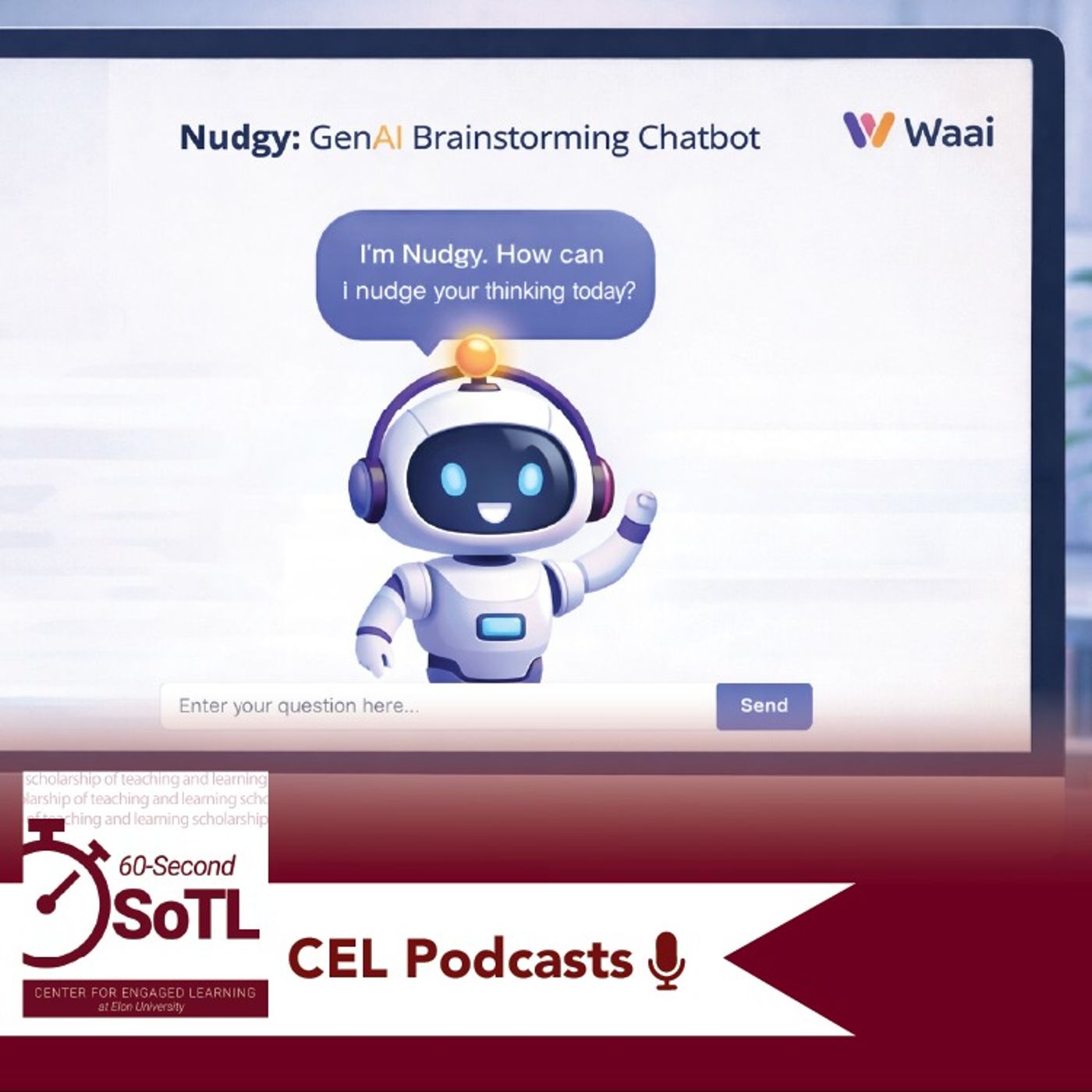
See our full episode notes at https://www.centerforengagedlearning.org/student-engagement-with-genai-brainstorming/.How can generative AI support student brainstorming without replacing thinking, voice, or agency? This episode highlights an open-access article about a GenAI-enabled brainstorming app used in an interdisciplinary writing course:Chia, Joanne, and Angela Frattarola. 2025. “A Design-Based Approach to Analysing Student Engagement with a GenAI-Enabled Brainstorming App.” Computers and Education: Artificial Intelligence 9. https://doi-org.elon.idm.oclc.org/10.1016/j.caeai.2025.100468This episode was hosted, edited, and produced by Jessie L. Moore, Director of the Center for Engaged Learning and Professor of Professional Writing & Rhetoric.60-Second SoTL is produced by the Center for Engaged Learning at Elon University.Music: “Cryptic” by AudioCoffee.Image in episode art was created by ChatGPT 5.2, using the prompt, "Please create a landscape-orientation image depicting what 'Nudgy,' the GenAI tool described in this article, might look like." Feedback prompted ChatGPT to "Please revise to reduce the text on the screen, and the center Nudgy and his speech bubble on the computer screen."

See our full episode notes at: https://www.centerforengagedlearning.org/student-project-ownership-in-vertically-integrated-projects/How can Vertically Integrated Projects—VIPs—be designed so students don’t just participate in research, but feel genuine ownership of it? This episode features an article that explores how a biology VIP courses supported undergraduates in developing project ownership through agency, mentorship, and problem-solving:Wozniak, Kasey L., Anna S. Grinath, Heather J. Ray, and Devaleena S. Pradhan. (2025). “Cultivating Student Project Ownership: Recommendations for VIP Instructors.” Scholarship and Practice of Undergraduate Research 8 (3), 38-48. https://doi.org/10.18833/spur/8/3/5This episode was hosted, edited, and produced by Jessie L. Moore, Director of the Center for Engaged Learning and Professor of Professional Writing & Rhetoric.60-Second SoTL is produced by the Center for Engaged Learning at Elon University.Music: “Cryptic” by AudioCoffee.Image in episode art is by Freepik.
See our full episode notes at: https://www.centerforengagedlearning.org/re-imagining-an-exam-as-a-podcast/What happens when you re-imagine a high-stakes exam—not as an essay, but as a podcast? This episode highlights an open-access article that explores decolonizing assessment with alt-assessment strategies. Read the full article:Godsell, Sarah. 2025. “Decolonial Impulses for Assessment: Re-Imagining an Exam As a Podcast.” Scholarship of Teaching and Learning in the South 9 (2): 43-73. https://doi.org/10.36615/reweaw33.This episode was hosted, edited, and produced by Jessie L. Moore, Director of the Center for Engaged Learning and Professor of Professional Writing & Rhetoric.60-Second SoTL is produced by the Center for Engaged Learning at Elon University.Music: “Cryptic” by AudioCoffee.Image in episode art is by DC Studio on Freepik.

See our full episode notes at: https://www.centerforengagedlearning.org/navigating-sotl-alongside-discipline-based-research/How do academics decide whether—and how—to engage in the Scholarship of Teaching and Learning, especially when time is limited and institutional reward structures still privilege disciplinary research? This episode highlights an open-access article that explores this question in the Global South—with implications for SoTL scholars around the world:Bisschoff, Christo, Dane Coetzee, Jacobus Johannes Oosthuizen, Cornelia Schreck, Alretha Du Plessis, and Samantha Kahts-Kramer. 2025. “Navigating SoTL: Identity, Time, and Transformation in Academic Decision-Making.” Scholarship of Teaching and Learning in the South 9 (2): 126-45. https://doi.org/10.36615/h86dgy43.This episode was hosted, edited, and produced by Jessie L. Moore, Director of the Center for Engaged Learning and Professor of Professional Writing & Rhetoric.60-Second SoTL is produced by the Center for Engaged Learning at Elon University.Music: “Cryptic” by AudioCoffee.Image in episode art is by Freepik.
See our full episode notes at: https://www.centerforengagedlearning.org/multi-semester-undergraduate-research-experiences/What challenges do students encounter in a multi-semester, capstone undergraduate research experience, and what supports do they need to navigate those challenges? This episode highlights an open-access article that examines STEM graduates’ reflections on a three-semester capstone research sequence. Read the full article:Colclasure, Blake C., and Tyler Granberry. 2025. “Challenges and Supports Experienced by Students Completing a Multi-Semester Capstone Undergraduate Research Experience: Reflections from Program Graduates.” Teaching and Learning Inquiry 13 (December): 1–17. https://doi.org/10.20343/teachlearninqu.13.57.This episode was hosted, edited, and produced by Jessie L. Moore, Director of the Center for Engaged Learning and Professor of Professional Writing & Rhetoric.60-Second SoTL is produced by the Center for Engaged Learning at Elon University.Music: “Cryptic” by AudioCoffee.Image in episode art is by Freepik.

View our extended episode notes at https://www.centerforengagedlearning.org/generative-ai-and-the-future-of-the-scholarship-of-teaching-and-learning/.How might generative AI reshape course design, faculty development, and the scholarship of teaching and learning? This episode highlights an open-access article that poses three questions about advocating for human-centered teaching and learning in an AI-enhanced future. Read the full article:Wymer, Kathryn C. 2025. "Generative AI and the Future of the Scholarship of Teaching and Learning: What Do We Stand to Gain or Lose?" International Journal for the Scholarship of Teaching and Learning 19 (2): Article 2. https://doi.org/10.20429/ijsotl.2025.190202This episode was hosted, edited, and produced by Jessie L. Moore, Director of the Center for Engaged Learning and Professor of Professional Writing & Rhetoric.60-Second SoTL is produced by the Center for Engaged Learning at Elon University.Music: “Cryptic” by AudioCoffee.Image in episode art is by DC Studio on Freepik.
See our full episode notes at https://www.centerforengagedlearning.org/students-experiences-with-the-syllabus/.What if most syllabus “best practices” are built on limited evidence or studies with inauthentic contexts for how students experience these course documents? This episode features on open-access article that explores what students tell us about the syllabi they’re actually encountering in their courses. Read the full article:Pliego, Diego, and Abby Kaplan. 2025. "Community College Students’ Experiences with the Syllabus: A Qualitative Study." International Journal for the Scholarship of Teaching and Learning 19 (2): Article 10.https://doi.org/10.20429/ijsotl.2025.190210This episode was hosted, edited, and produced by Jessie L. Moore, Director of the Center for Engaged Learning and Professor of Professional Writing & Rhetoric.60-Second SoTL is produced by the Center for Engaged Learning at Elon University.Music: “Cryptic” by AudioCoffee.Image in episode art is by DC Studio on Freepik.
See our full episode notes at: https://www.centerforengagedlearning.org/re-thinking-sotl-for-the-age-of-genai/How might the Scholarship of Teaching and Learning evolve when humans and generative AI are deeply entangled? This episode highlights an open-access article that offers five propositions, each paired with GenAI prompts, to help SoTL scholars experiment with context-aware approaches to inquiry in AI-enhanced learning environments. Read the full article:Mills, Jennie, Tina Beynen, Ivy Chia Sook May, Rachel Fitzgerald, Kimberly A. Hall, Evelyn Lai, Jon Mason, and Samantha Newell. 2025. “Re-Thinking SoTL for the Age of GenAI: Diffracted, Entangled, and Human.” Teaching and Learning Inquiry 13 (October): 1–19. https://doi.org/10.20343/teachlearninqu.13.49.This episode was hosted, edited, and produced by Jessie L. Moore, Director of the Center for Engaged Learning and Professor of Professional Writing & Rhetoric.60-Second SoTL is produced by the Center for Engaged Learning at Elon University.Music: “Cryptic” by AudioCoffee.Image in episode art is by DC Studio on Freepik.
Access our full episode notes at https://www.centerforengagedlearning.org/knowledge-surveys-for-student-self-assessment-of-learning/.How can knowledge surveys strengthen students’ self-assessment and metacognition? This episode highlights a multi-semester study from the U.S. Air Force Academy on using knowledge surveys to help students better gauge their understanding and direct their learning. Read the full study in this open-access article:Sloan, Joel, Timothy Frank, Lauren Scharff, and Karin Becker. 2025. “Knowledge Surveys: An Effective and Robust Student Self-Assessment and Learning Tool.” Teaching & Learning Inquiry 13: 1–20. https://doi.org/10.20343/teachlearninqu.13.47This episode was hosted, edited, and produced by Jessie L. Moore, Director of the Center for Engaged Learning and Professor of Professional Writing & Rhetoric.60-Second SoTL is produced by the Center for Engaged Learning at Elon University.Music: “Cryptic” by AudioCoffee.Reflection image in episode art by Freepik.
See our extended episode notes at https://www.centerforengagedlearning.org/professional-learning-needs-of-university-teachers/What do university teachers say they need from professional development related to teaching and learning? This episode focuses on an open-access article on participants' self-identified learning needs in a professional development program for professors, senior scientific staff, and doctoral teaching assistants:Brown, Karin, Sara Petchey, Katarina Mårtensson, and Kai Niebert. 2025. “Self-Identified Learning Needs of University Teachers: Recommendations for Generic and Role-Based Professional Development.” International Journal for Academic Development, September, 1–14. https://doi.org/10.1080/1360144X.2025.2553193The episode was hosted, edited, and produced by Jessie L. Moore, Director of the Center for Engaged Learning and Professor of Professional Writing & Rhetoric.60-Second SoTL is produced by the Center for Engaged Learning at Elon University.Music: “Cryptic” by AudioCoffee.Feedback image in episode art by Freepik.
Extended notes for this episode are available at https://www.centerforengagedlearning.org/allocating-time-for-multiple-choice-tests/How much time should students have to take online, multiple-choice tests? That’s the focus of the open-access Teaching & Learning Inquiry article featured in this week’s 60-second SoTL:Kennette, Lynne N., and Dawn McGuckin. 2025. “Best Practice for Online Tests: How Long Do Students Actually Need?”. Teaching and Learning Inquiry 13 (July):1–11. https://doi.org/10.20343/teachlearninqu.13.35.This episode was hosted, edited, and produced by Jessie L. Moore, Director of the Center for Engaged Learning and Professor of Professional Writing & Rhetoric.60-Second SoTL is produced by the Center for Engaged Learning at Elon University.Music: “Cryptic” by AudioCoffee.Multiple-choice test image in episode art by Freepik
See our full episode notes at https://www.centerforengagedlearning.org/building-trust-through-feedback/.This episode features an open access article on building trust through feedback with relationship-building conditions and agency-promoting practices:Bayraktar, Breana, Kiruthika Ragupathi, and Katherine A. Troyer. 2025. “Building Trust Through Feedback: A Conceptual Framework for Educators.” Teaching and Learning Inquiry 13 (January): 1–19. https://doi.org/10.20343/teachlearninqu.13.7This episode was hosted, edited, and produced by Jessie L. Moore, Director of the Center for Engaged Learning and Professor of Professional Writing & Rhetoric. 60-Second SoTL is produced by the Center for Engaged Learning at Elon University.Music: “Cryptic” by AudioCoffee.Feedback image in episode art by rawpixel.com on Freepik
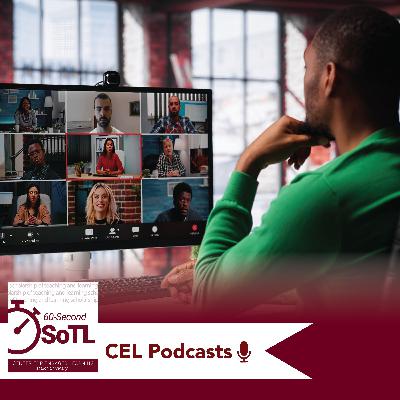
See the full episode notes at https://www.centerforengagedlearning.org/class-size-and-students-perceptions-of-instructor-presence/.This episode features an open access article exploring how class size impacts university students' perceptions of instructor presence in online courses:Carozza, Linda, and Hilary Davis. 2025. “Large Online Courses: A Constraint on Instructor Presence and Higher-Level Thinking.” Teaching and Learning Inquiry 13 (August): 1–17. https://doi.org/10.20343/teachlearninqu.13.38.This episode was hosted, edited, and produced by Jessie L. Moore, Director of the Center for Engaged Learning and Professor of Professional Writing & Rhetoric.60-Second SoTL is produced by the Center for Engaged Learning at Elon University.Music: “Cryptic” by AudioCoffee.Online meeting image in episode art by DC Studio on Freepik.
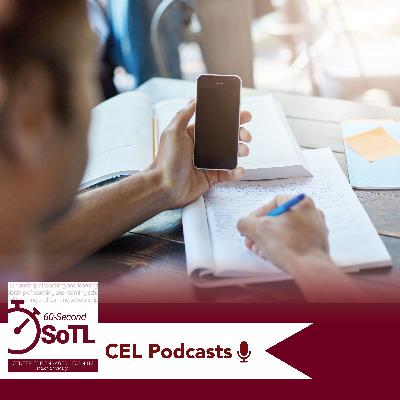
See our full episode notes at https://www.centerforengagedlearning.org/classroom-architecture-pedagogical-strategies-and-cell-phone-use/This episode features an open access article exploring how classroom architecture and instructor pedagogical strategies impact students' cell phone use in class:Harris, Isabel, and Melinda Lanius. 2025. “The Impact of Classroom Architecture and Pedagogical Strategies on University Students’ Disruptive Phone Usage in Calculus.” Teaching and Learning Inquiry 13 (August):1–16. https://doi.org/10.20343/teachlearninqu.13.39This episode was hosted, edited, and produced by Jessie L. Moore, Director of the Center for Engaged Learning and Professor of Professional Writing & Rhetoric at Elon University.60-Second SoTL is produced by the Center for Engaged Learning at Elon University.Music: “Cryptic” by AudioCoffee.Cell phone image in episode art by wayhomestudio on Freepik.
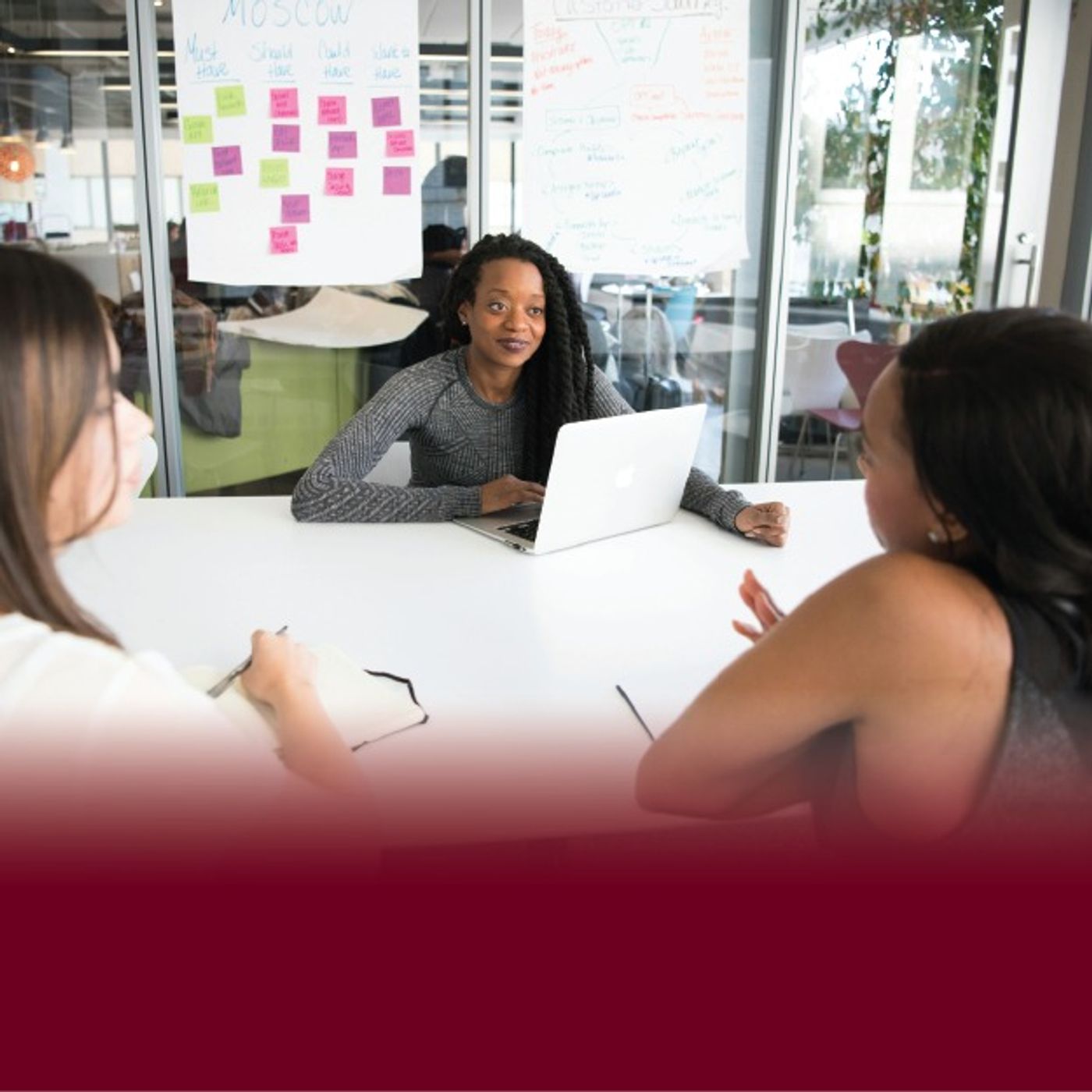
See our full episode notes at https://www.centerforengagedlearning.org/the-role-of-trust-in-peer-support-programs/.This episode features an open access article exploring how peer support initiatives can facilitate meaningful relationships and sense of belonging when they attend to social connection, shared experience and culture, and interpersonal trust:Hamshire, Claire, Mimi Benjamin, and Alan Soong Swee Kit. 2025. “What Is the Role of Trust in Peer Support Schemes for Underrepresented Students?” Teaching and Learning Inquiry 13 (January): 1–16. https://doi.org/10.20343/teachlearninqu.13.8.This episode was hosted, edited, and produced by Jessie L. Moore, Director of the Center for Engaged Learning and Professor of Professional Writing & Rhetoric.60-Second SoTL is produced by the Center for Engaged Learning at Elon University.Music: "Keep Going" by AudioCoffeePhoto in episode art by Christina @ wocintechchat.com on Unsplash

Comments

Download from Google Play

Download from App Store
 United States