


 Claim Ownership
Mental Health Bites with Dr. Judy Ho
Subscribed: 15Played: 161
Subscribe

© Dr. Judy Ho
Description
Welcome to Mental Health Bites with Dr. Judy! In just 10 minutes, we dive into a hot topic, answer your burning questions, and leave you with a practical tip to improve your mental wellness. 🌟
drjudyho.substack.com
drjudyho.substack.com
73 Episodes
Reverse

The first week of December is the time for holiday lights, long lists, and (frequently) more pressure than presence. You’ve got disrupted sleep, extra sugar, unpredictable travel, and emotional triggers everywhere.From a brain perspective, all of that equals uncertainty, and uncertainty is fuel for your threat system—the amygdala lights up, cortisol rises, and executive functions in the prefrontal cortex dip. That’s why you forget simple tasks, feel snappy, or lose motivation halfway through the day.But I have an idea: What if, instead of pushing through December on fumes, you used this month to restore your energy?Today, I’ll introduce you to something I’ve developed - a tradition of sorts over the past several years: The Wellness Advent Calendar. It’s made up of thirty-one small, science-backed actions to calm your nervous system, boost your focus, and reconnect you to yourself before the year ends. They take minutes, but they can change the way your brain handles stress.As always, for a deeper dive, you can listen to the latest episode of Mental Health Bites here or on Apple Podcasts. You can also find more short clips and helpful tips at my YouTube channel. The Science of Tiny WinsInstead of waiting for the New Year to come around to set giant resolutions, I encourage you to start building your micro-resilience now. And The Wellness Advent Calendar will help you do just that.Your brain loves small, predictable rewards. Each micro-habit gives a dopamine pulse. Even though it’s tiny, it’s enough to say “safe, controllable, achievable.”Neuroscientists call this reinforcement learning. When repeated daily, these small loops reshape your baseline stress response.The Wellness Advent Calendar rests on three evidence-based pillars:* Minimum Viable Effort. Start ridiculously small. Don’t worry. Momentum matters more than magnitude. The smaller the step, the faster the start, and the stronger the habit.* State → Trait Shift. Each quick regulation practice moves your nervous system from threat to safety. Repeat that enough, and “calm” stops being a rare state and becomes part of who you are.* Habit Chaining. Tie each daily action to something you already do. It can be your coffee ritual, brushing your teeth, or unlocking your phone. By connecting these tiny wins to something you already do there won’t be any extra willpower required.Here’s a sneak peak of what’s in store. If you’d like the full explainer of each wellness advent activity, plus access to my December 3 Day Jumpstart program, become one of my elite subscribers here.The Holiday 3-Day Jumpstart is a gentle reset to help you enter December with nervous system calm and emotional clarity. Paid subscribers receive:* A short guided video each day* A 2-minute micro-practice you can use immediately* A written breakdown of the science behind each tool* A reflection prompt to integrate the lesson* A downloadable mini-worksheet for each day* A bonus grounding audio you can replay all season* 5 Fast Body-Based Resets* 7 Hidden Cognitive Drains and How to Cope* A December “Energy Map”If you want a calmer, more intentional December — or if you want to end the year feeling connected, grounded, and proud of how you showed up — I’d love for you to join us inside the paid community.Upgrade here to get both the 3-Day Jumpstart & Advent CalendarHow to Establish Healthy Habits in 1-2-3To end this year on a high note, try to anchor this month with a simple 1-2-3 system to incorporate some of these habits into your life.* One Breath, One Action (OB-OA). Inhale through your nose for four counts, exhale for six to eight. Immediately follow with one quick action from the day’s tile; it might be a 90-second body scan or a two-minute brain dump. Taking a breath helps because it drops your arousal just enough to make action frictionless.* The 2-1-1 Rule. Two minutes. One minute. One minute. In the morning, take two minutes, choose your tile from the calendar and visualize exactly when and where you’ll do it. In the middle of the day, take sixty seconds and do a quick state check. Rate your stress on a scale of one to five. Then run a quick down-shift: a long exhale, unclench, and orient. In the evening, write out one sentence: What worked today? This primes reward circuits and improves follow-through tomorrow.* Anchor the Habit. As mentioned, attach your daily practice to an existing routine. This will help turn intention into automation. After I pour coffee → 90-second breath. After I park the car → 3-item brain dump. After I brush teeth → 2-minute stretch.When you weave these three tools together—One Breath, One Action, the 2-1-1 Rule, and Habit Anchoring—you’re giving your brain exactly what it needs: predictability, simplicity, and consistency. With just a few minutes a day, you’ll feel steadier, clearer, and more grounded as you move through the busiest month of the year.If you found this helpful, consider turning it into a shared journey. Send it to someone who might need this routine before the holiday. When you build these tiny wins together, you’re creating accountability and connection that can make these new habits even easier to sustain.Order The New Rules of Attachment here: https://bit.ly/3MvuvvFCheck out my TEDxReno talkVisit my websiteTake my attachment styles quizFollow me on LinkedInFollow me on InstagramFollow me on FacebookFollow me on TikTokAbout me:Dr. Judy Ho, Ph. D., ABPP, ABPdN is a triple board certified and licensed Clinical and Forensic Neuropsychologist, a tenured Associate Professor at Pepperdine University, television and podcast host, and author of Stop Self-Sabotage. An avid researcher and a two-time recipient of the National Institute of Mental Health Services Research Award, Dr. Judy maintains a private practice where she specializes in comprehensive neuropsychological evaluations and expert witness work. She is often called on by the media as an expert psychologist and is also a sought after public speaker for universities, businesses, and organizations.Dr. Judy received her bachelor’s degrees in Psychology and Business Administration from UC Berkeley, and her masters and doctorate from SDSU/UCSD Joint Doctoral Program in Clinical Psychology. She completed a National Institute of Mental Health sponsored fellowship at UCLA’s Semel Institute. This is a public episode. If you'd like to discuss this with other subscribers or get access to bonus episodes, visit drjudyho.substack.com/subscribe

The holidays are supposed to be a time of joy, connection, and reflection. But for many of us, the moment we walk through that familiar front door, something shifts.Your shoulders tense. Your heart rate quickens. You hear a certain tone in your parent’s voice, and suddenly you’re a fourteen-year-old again, trying not to roll your eyes or cry at the dinner table. You tell yourself you’ll stay calm, but within ten minutes your mom starts to criticize how you raise your kids and then you snap and feel guilty and sad for days.It may not be this exact scenario, but many people go through their own version of something like this.It can be a strange experience. You spent years building confidence, independence, and emotional regulation, yet all it takes is one holiday meal to send your nervous system into a tailspin.So, why does this happen? And why can the people who love us most also make us feel the most triggered?In this piece we’ll unpack this, and I’ll share a step-by-step reset you can use this Thanksgiving to stay calm, kind, and grounded no matter what happens.For a deeper dive, you can listen to the latest episode of Mental Health Bites here or on Apple Podcasts. You can also find more short clips and helpful tips at my YouTube channel.The Neuroscience of Family TriggersYour brain is a memory keeper. But it doesn’t necessarily remember events as you might think. Instead, it remembers states.This happens to all of us. Even if you’re 40, successful, and self-aware, your amygdala can pull up emotional “snapshots” of how it used to feel to be around your family in an instant—moments when you felt criticized, dismissed, unseen, or pressured to perform.This is because when you’re around people who shaped your earliest emotional experiences, your amygdala (the part of your brain responsible for threat detection) lights up like a fire alarm. The hippocampus, which stores context and narrative memory, works alongside the amygdala.So when your mom makes that same comment she’s been making for decades, your brain doesn’t process it as “just a comment.” Your brain links it to a cascade of similar moments. And with every eye roll, sigh, and unmet need, your body reacts as if you’re back there again.At the same time, the rational part of your brain that manages impulse control and perspective, gets temporarily hijacked. When that happens, your adult self fades and your inner child grabs the wheel. This is why even a small family comment can feel like a deep wound.The Attachment Angle: The Why Behind These ReactivationsAttachment theory helps explain the “why” behind those reactivations.If you grew up with inconsistent caregiving, such as love mixed with criticism or attention paired with pressure, your body learned to anticipate rejection even in closeness. So when you visit home for the holidays, your body sees family but also the potential for disapproval, comparison, or shame.When the family reconvenes, it’s like stepping back into a play that’s been rehearsed for decades. And everyone instinctively remembers their lines. One person becomes the peacemaker, smoothing every conflict. Another becomes the achiever, trying to earn approval through success.These dynamics can be stressful, but the hopeful truth is that awareness gives you power. While you can’t erase the past conditioning, thanks to neuroplasticity, you can rewire your nervous system’s response in the present and form new, healthier patterns.The “Table Reset” Technique: A Practical TakeawayThis is a neuroscience-based, four-step grounding method I teach to patients for use in high-stress family interactions. It helps you re-engage your prefrontal cortex, regulate your nervous system, and step back into your adult self calmly, confidently, and compassionately.* Step 1: Name What’s Happening (Silently). When you notice your body reacting, say to yourself, “This is a trigger. My chest feels heavy. My body remembers this feeling.” This is called affect labeling; it’s a technique that reduces amygdala activation. When you name your emotion or physical state it brings online the rational, calming parts of your brain.* Step 2: Engage Your Vagus Nerve. This will signal your nervous system to exit “fight or flight” and return to “rest and digest.” To do this breathe in for four seconds then exhale for six. When you make your exhale slightly longer than your inhale, that tells your vagus nerve, “We’re safe.” If you can, hum quietly or even touch your throat as you exhale; this vibration further activates parasympathetic calm.* Step 3: Re-anchor in the Present. Look around. Name one thing you can see, one thing you can touch, and one thing you can hear. These micro sensory check-ins reorient the hippocampus to now, not then. It’s your way of saying to the body:“I’m not that child anymore. I’m sitting at a table, not in danger.”* Step 4: Respond, Don’t React. Once you feel a bit more grounded, choose your next step intentionally. If you want to speak up, use calm, clear language that sets a boundary and preserves connection. You might say something like, “Mom, I know you care, but I’d love to just enjoy dinner tonight without advice.” Or “I appreciate that you want to help, but I’ve got this handled.” If it’s not the right moment to engage, internal boundaries count too. Tell yourself: “This comment doesn’t define me. I can let that pass and still protect my peace.”Every time you take any of these steps, you’re building a new neural pathway that teaches your brain that safety and self-respect can coexist.If You Want Additional Support This December…If the holidays tend to feel emotionally heavy, overstimulating, or complicated, I want to make sure you have tools that actually help you in real time, not just in theory.That’s why next month I’m releasing two exclusive subscriber resources:The Holiday 3-Day Jumpstart (December 1–3)A gentle reset to help you enter December with nervous system calm and emotional clarity.Paid subscribers receive:* A short guided video each day* A 2-minute micro-practice you can use immediately* A written breakdown of the science behind each tool* A reflection prompt to integrate the lesson* A downloadable mini-worksheet for each day* A bonus grounding audio you can replay all seasonIt’s designed for busy, overwhelmed schedules — high-impact, minimal effort.The Mental Wellness Advent Calendar31 days of simple, evidence-based practices (1–5 minutes each) to help you:* Set boundaries without guilt* Reduce stress and emotional reactivity* Stay grounded during gatherings* Find small, meaningful moments of joy* Keep your nervous system steady through the holidaysPaid subscribers get:* The full printable calendar* The digital daily version* Audio guidance for selected practices* A December “Energy Map” to track what drains and replenishes you* Extra reflection prompts + Sunday resetsIf you want a calmer, more intentional December — or if you want to end the year feeling connected, grounded, and proud of how you showed up — I’d love for you to join us inside the paid community.Upgrade here to get both the 3-Day Jumpstart & Advent CalendarRemember This for the HolidaysYou can’t control who brings the drama or which family patterns resurface, but you can choose how you meet them.Calm is not passive. It’s power. And when you regulate your nervous system, you’re healing yourself and changing the emotional legacy for everyone at that table.If you found this helpful, please share it with someone who might need it before the holiday. Order The New Rules of Attachment here: https://bit.ly/3MvuvvFCheck out my TEDxReno talkVisit my websiteTake my attachment styles quizFollow me on LinkedInFollow me on InstagramFollow me on FacebookFollow me on TikTokAbout me:Dr. Judy Ho, Ph. D., ABPP, ABPdN is a triple board certified and licensed Clinical and Forensic Neuropsychologist, a tenured Associate Professor at Pepperdine University, television and podcast host, and author of Stop Self-Sabotage. An avid researcher and a two-time recipient of the National Institute of Mental Health Services Research Award, Dr. Judy maintains a private practice where she specializes in comprehensive neuropsychological evaluations and expert witness work. She is often called on by the media as an expert psychologist and is also a sought after public speaker for universities, businesses, and organizations.Dr. Judy received her bachelor’s degrees in Psychology and Business Administration from UC Berkeley, and her masters and doctorate from SDSU/UCSD Joint Doctoral Program in Clinical Psychology. She completed a National Institute of Mental Health sponsored fellowship at UCLA’s Semel Institute. This is a public episode. If you'd like to discuss this with other subscribers or get access to bonus episodes, visit drjudyho.substack.com/subscribe

Do your thoughts ever get louder the moment the world gets quiet?Your phone finally stops buzzing and you’re off your emails, but your mind starts to replay everything you tried to ignore.You think about that awkward text. You worry about your future. You begin to catastrophize every small thing.Well, if this is happening to you, you’re not alone. It happens to all of us, and powerful neuroscience is at work behind this phenomenon.In this piece, we’ll explore the science behind night thinking, and you’ll learn a practical tip you can use to make your nights restful and restorative. For a deeper dive, you can listen to the latest episode of Mental Health Bites here or on Apple Podcasts. You can also find more short clips and helpful tips at my YouTube channel.What Your Brain Does After DarkYour internal clock that governs sleep, mood, and hormones (i.e., your circadian rhythm) is tightly linked to emotional regulation. Around 10 p.m., most people experience a natural dip in cortisol. While cortisol gets a bad reputation, we need some of it to keep perspective. This stress hormone helps regulate alertness and mood stability, so when it drops too low, your emotional brakes loosen.At the same time, your brain’s default mode network, the system involved in self-reflection and memory, becomes more active. That’s great for creativity… but not so great when you’re tired or stressed. It’s like your brain opens the “file cabinet” of unresolved emotions, but your prefrontal cortex — the part that keeps things logical and balanced — is clocking out for the night.Add to that a rise in melatonin and reduced serotonin activity, and it becomes a perfect storm: your mind becomes more inwardly focused and emotionally charged. That’s why sadness, anxiety, or regret can feel amplified after dark.Research even shows that negative thoughts and suicide-related ideation peak between midnight and 3 a.m., which is when the brain’s emotional centers are active but its regulatory systems are impaired. This doesn’t mean nighttime is dangerous in itself, but it highlights how biological timing can distort perspective.And then there’s what psychologists call “revenge bedtime procrastination.” You’ve had no time for yourself all day, so you stay up doom-scrolling or binge-watching as a form of rebellion. The irony is that this worsens the very mood issues you’re trying to escape. Chronic sleep deprivation lowers emotional resilience, making those late-night thoughts even more catastrophic the next day.So if your mind starts to spin at night, relax. Don’t take it too seriously. It’s just your brain doing, well… brain things.Practical Tip: The Nighttime Reset RoutineWhen your brain shifts into “night mode,” it becomes more emotionally sensitive and less logical—so you need a routine that actively helps your nervous system downshift. This one is designed to do exactly that.Each step of this routine targets a different part of the nighttime cascade: 1) physical tension, 2) emotional overwhelm, 3) attentional loops, and 4) physiological arousal. When you address all four, your brain stops interpreting nighttime as a threat and begins to associate it with safety and restoration.* The 3R Reset: Release, Reflect, Reframe. Release: Do a quick body shake or stretch. This helps because physical tension fuels mental tension. Reflect: Write one sentence about what went well today. Reframe: If a negative thought appears, respond with, “That’s a nighttime thought — not a truth.”* Light Hygiene. Lower overhead lighting an hour before bed; blue light delays melatonin release and keeps the brain alert.* Clock Distance. Move your phone or alarm clock out of direct sight. Constantly checking the time keeps your brain in performance mode.* Temperature Drop. Aim for a cooler room — around 65°F. A mild drop in body temperature helps signal sleep onset and emotional calm.* Perspective Check. Tell yourself, “I’ll think about it tomorrow.” This phrase isn’t avoidance, it’s emotional regulation. Studies show that sleep actually helps the brain process emotional memories more adaptively.Nighttime is not your enemy. It’s an opportunity for emotional recalibration. And when you learn to protect it, your nights will become restorative instead of ruminative.If this episode resonated with you, try the 3R Reset tonight and let me know how it goes. If you know anyone who has trouble sleeping, I encourage you to send this to them. Although, if you’re reading this at night, maybe schedule it to go out in the morning.P.S. If you’d like access to even more resources, private Q&As, and my entire back catalogue of techniques and tools, I encourage you to check out my paid subscriber option.Order The New Rules of Attachment here: https://bit.ly/3MvuvvFCheck out my TEDxReno talkVisit my websiteTake my attachment styles quizFollow me on LinkedInFollow me on InstagramFollow me on FacebookFollow me on TikTokAbout me:Dr. Judy Ho, Ph. D., ABPP, ABPdN is a triple board certified and licensed Clinical and Forensic Neuropsychologist, a tenured Associate Professor at Pepperdine University, television and podcast host, and author of Stop Self-Sabotage. An avid researcher and a two-time recipient of the National Institute of Mental Health Services Research Award, Dr. Judy maintains a private practice where she specializes in comprehensive neuropsychological evaluations and expert witness work. She is often called on by the media as an expert psychologist and is also a sought after public speaker for universities, businesses, and organizations.Dr. Judy received her bachelor’s degrees in Psychology and Business Administration from UC Berkeley, and her masters and doctorate from SDSU/UCSD Joint Doctoral Program in Clinical Psychology. She completed a National Institute of Mental Health sponsored fellowship at UCLA’s Semel Institute. This is a public episode. If you'd like to discuss this with other subscribers or get access to bonus episodes, visit drjudyho.substack.com/subscribe

Have you ever looked at the clock, only to discover that hours have flown by?Somehow you’re going to be late again, even though you swore you had enough time.If so, you’ve probably heard the term “time blindness.” It’s trending on TikTok and Reddit, with millions of people saying:“It’s not that I’m lazy; my brain just doesn’t sense time the way yours does.”And they’re not wrong.Although time blindness isn’t a formal diagnosis, it is a very real psychological phenomenon that results in a distorted perception of how time passes. It’s often linked with ADHD, but it can also show up in trauma, anxiety, depression, or chronic stress.In this piece, we’ll explore time blindness, what causes it, and you’ll learn a practical tip that you can use to recalibrate your internal clock. For a deeper dive, you can listen to the latest episode of Mental Health Bites here or on Apple Podcasts. You can also find more short clips and helpful tips at my YouTube channel.Let’s jump in.The Science Behind Time BlindnessOur brain has an internal timing system that is mostly governed by areas like the prefrontal cortex, basal ganglia, and cerebellum. These regions help us estimate durations, anticipate deadlines, and transition smoothly between tasks.But when your nervous system is dysregulated that internal clock goes haywire.People with time blindness might:* chronically underestimate how long things take,* get lost in “time warps” of hyperfocus or dissociation, or* experience the opposite, the feeling that every second drags on when you’re anxious or bored.For trauma survivors, time can feel fragmented — moments stretch or collapse without warning. In anxiety, the mind runs ahead of the present, always scanning for what’s next.And in ADHD, dopamine irregularities make it harder to feel the emotional weight of the future — which is why “five minutes” can feel like forever one moment and vanish the next.Neuroscientists sometimes call this “temporal dysregulation,” meaning the brain’s ability to track and emotionally engage with time is disrupted.When this happens, time either becomes too fluid (slipping away unnoticed) or too rigid (feeling painfully slow).So when someone says, “I’m not bad with time — I just don’t feel it like others do,” they’re expressing something very real about their nervous system.And if that’s you, take heart. This isn’t a moral failing or a lack of discipline — it’s a pattern your brain has learned, often in response to stress, overwhelm, or years of self-blame.The good news? With awareness and practice, it can be rewired.How to Recalibrate Your Internal ClockOne of my favorite tools for time blindness is something I call the Time Anchoring Reset — a simple, neuroscience-informed practice that helps your brain reconnect to the rhythm of real time.These three steps work because they target both the cognitive and physiological sides of time perception — helping you not only know what time it is but feel it again..* Ground in the present moment. Before you start a task, take 30 seconds to orient to where you are. Notice the sounds around you, feel your feet on the floor, and name the time out loud: “It’s 2:45, and I’m beginning this project now.” It might sound small, but this act of marking the moment signals to your brain, “We are starting now.” This strengthens temporal awareness and activates the prefrontal cortex — the same region responsible for planning and focus.* Externalize time. Don’t rely solely on your brain’s internal clock — give it something concrete to work with. Timers, visual countdowns, and even Spotify playlists with set lengths can become your allies. For instance, say to yourself: “I’ll check emails for two songs.”By connecting your task to an external rhythm, you train your brain to perceive duration accurately again. Over time, these external cues start to re-teach your nervous system how to feel time intuitively..* Bridge your “future self.” Before wrapping up an activity, imagine yourself 15 minutes from now. What will that version of you need? Water? Your keys? A sense of calm before the next task?This exercise strengthens prospective memory — your ability to remember to do things in the future — and helps reduce the “temporal cliffs” that make transitions so jarring for people with time blindness. You’re teaching your mind to think beyond now without losing your grounding in the present.Over time, these practices will help you internalize time cues naturally. And it will start to feel less and less like you’re living in fast-forward or rewind.So if you’ve blamed yourself for being “bad with time,” it’s time (no pun intended) to show yourself compassion. You’re not broken. You just need to recalibrate the clock inside your mind.If you know someone who you think would tell you they don’t have the time to read this, I encourage you to send it to them. Order The New Rules of Attachment here: https://bit.ly/3MvuvvFCheck out my TEDxReno talkVisit my websiteTake my attachment styles quizFollow me on LinkedInFollow me on InstagramFollow me on FacebookFollow me on TikTokBonus:If you’d like access to even more resources, private Q&As, and my entire back catalogue of techniques and tools, I encourage you to check out my paid subscriber option.About me:Dr. Judy Ho, Ph. D., ABPP, ABPdN is a triple board certified and licensed Clinical and Forensic Neuropsychologist, a tenured Associate Professor at Pepperdine University, television and podcast host, and author of Stop Self-Sabotage. An avid researcher and a two-time recipient of the National Institute of Mental Health Services Research Award, Dr. Judy maintains a private practice where she specializes in comprehensive neuropsychological evaluations and expert witness work. She is often called on by the media as an expert psychologist and is also a sought after public speaker for universities, businesses, and organizations.Dr. Judy received her bachelor’s degrees in Psychology and Business Administration from UC Berkeley, and her masters and doctorate from SDSU/UCSD Joint Doctoral Program in Clinical Psychology. She completed a National Institute of Mental Health sponsored fellowship at UCLA’s Semel Institute. This is a public episode. If you'd like to discuss this with other subscribers or get access to bonus episodes, visit drjudyho.substack.com/subscribe

Have you ever caught yourself missing someone you know wasn’t good for you?Maybe an ex who caused chaos? A friend who constantly drained your energy? Or a family member whose approval you still crave, despite years of hurt?When thoughts like this begin to fill your brain you might start to think: What’s wrong with me? Why do I still feel this way?But let me assure you, if you’ve ever felt this way before, you’re not broken. Your brain is doing exactly what it was wired to do: hold on to attachment, even when it’s painful.In this post, we’ll unpack the hidden psychology behind these feelings and explore why toxic connections can feel addictive. Then I’ll share a step-by-step “emotional detox” framework to help you rewire your attachment system for peace and freedom. For a deeper dive, you can listen to the latest episode of Mental Health Bites here or on Apple Podcasts. You can also find more short clips and helpful tips at my YouTube channel.Let’s dive in.The Science Behind Missing the Wrong PeopleAttachment is at the core of this experience. Our brains are designed to bond. In childhood, that bond ensures protection and safety. But in adulthood, those same neural pathways can make us cling to relationships that recreate early familiar patterns, even if they’re unhealthy.When you’re in a toxic relationship, your body often cycles between stress and reward. It can be helpful to think of it like a slot machine where unpredictable attention, affection, and validation keep your dopamine system hooked. Although the highs might feel euphoric, the lows can be devastating.That pattern of intermittent reinforcement is the same mechanism behind gambling addiction; and it’s why your brain keeps checking for emotional “payouts.”Neuroscience research shows that heartbreak lights up the same brain regions as physical pain. This is why when a relationship ends, you can feel like you’re going through withdrawals. Your system craves that chemical cocktail of dopamine, oxytocin, and cortisol that once defined the relationship.This is why logic alone doesn’t cut it. You can know someone isn’t good for you, but your body still remembers the rush.The Attachment TrapFrom a psychological perspective, the kind of person you miss can reveal a lot about your attachment style.If you have an anxious attachment, you might idealize the connection, remembering only the good moments. If you lean avoidant, you may long for control or independence but still feel haunted by “what ifs.” And for many people, the relationship was a trauma bond, which is a deep connection built on shared pain or instability that your nervous system mistakes for love.That bond can feel intoxicating because it mirrors early experiences of inconsistent care. Part of you believes, “If I can just fix this person, maybe I can finally fix what happened back then.” So the longing isn’t really for them. It’s for the unresolved story your mind still wants to complete.A Practical Tip: The Emotional Detox FrameworkMy Emotional Detox Framework is a simple, research-backed way to break the cycle of missing someone who wasn’t good for you.* Pause and Name It. When you feel the urge to text, scroll, or reminisce, pause. Label what’s happening: “I’m having an attachment craving.” Naming it activates your prefrontal cortex and brings logic back online.* Replace the Reward. Your brain craves the dopamine hit. So give it a new source—exercise, music, social connection, or even learning something new. The goal is not to suppress emotion, rather you want to redirect your energy toward real safety.* Reframe the Story. Instead of asking, “Why do I miss them?” ask, “What did this relationship teach me about what I need to heal?” When you turn pain into insight you break the shame loop and transform attachment grief into growth.* Reset Your Nervous System. Practice grounding daily: deep breathing, cold water on your wrists, or five minutes of mindful stillness. For many people, peace initially feels foreign, and this exercise retrains your nervous system to tolerate your newfound calm.It’s important to remember that missing someone who wasn’t good for you doesn’t mean you want them back. It just means that your system is still healing from what they represented. This is something that everyone goes through at some point in their lives. And with awareness, patience, and consistent self-regulation, you can retrain your brain to attach to safety, not struggle.If you know someone who is currently navigating these feelings, I encourage you to share this with them. It might help more than you know.Order The New Rules of Attachment here: https://bit.ly/3MvuvvFCheck out my TEDxReno talkVisit my websiteTake my attachment styles quizFollow me on LinkedInFollow me on InstagramFollow me on FacebookFollow me on TikTokBonus:If you’d like access to even more resources, private Q&As, and my entire back catalogue of techniques and tools, I encourage you to check out my paid subscriber option.About me:Dr. Judy Ho, Ph. D., ABPP, ABPdN is a triple board certified and licensed Clinical and Forensic Neuropsychologist, a tenured Associate Professor at Pepperdine University, television and podcast host, and author of Stop Self-Sabotage. An avid researcher and a two-time recipient of the National Institute of Mental Health Services Research Award, Dr. Judy maintains a private practice where she specializes in comprehensive neuropsychological evaluations and expert witness work. She is often called on by the media as an expert psychologist and is also a sought after public speaker for universities, businesses, and organizations.Dr. Judy received her bachelor’s degrees in Psychology and Business Administration from UC Berkeley, and her masters and doctorate from SDSU/UCSD Joint Doctoral Program in Clinical Psychology. She completed a National Institute of Mental Health sponsored fellowship at UCLA’s Semel Institute. This is a public episode. If you'd like to discuss this with other subscribers or get access to bonus episodes, visit drjudyho.substack.com/subscribe

Think about the last time you felt goosebumps. At a concert? Staring up at the night sky? Watching a child experience something for the first time?That feeling—part wonder, part vastness, part humility—is awe.Awe is an emotional response to something vast that transcends your current frame of reference. It’s an ancient and cutting-edge emotion that usually makes you rethink your place in the world. But it is far more than a fleeting feeling. It’s a biological reset button for your brain and body, with measurable effects on your nervous system, mood, and even your sense of meaning in life.People often believe that awe can be difficult to find in daily life. But awe is all around us.In this piece, we’ll explore awe, the science behind it, and how to find more of it in your life. For a deeper dive, you can listen to the latest episode of Mental Health Bites here or on Apple Podcasts. You can also find more short clips and helpful tips at my YouTube channel.Let’s dive in.The Science of AweWe used to think awe was just poetic or spiritual. But now, scientists like Dacher Keltner and his colleagues at UC Berkeley have mapped out awe’s effects in the lab.* Awe provides a nervous system reset. Awe activates the parasympathetic nervous system. (That’s your rest-and-digest mode, the opposite of fight-or-flight.) Awe slows your heart rate, lowers blood pressure, and helps your body shift into calm.* Awe reduces rumination. When you’re in awe, your brain’s default mode network—the one responsible for self-referential, looping thoughts—quiets down. That means fewer “what ifs” and “should haves.” Awe literally shrinks your inner monologue.* Awe boosts meaning. Awe expands your sense of time and space. People report feeling more connected to others, more inspired to help, and more satisfied with life after awe experiences.* Awe promotes humility and perspective. Awe makes you feel small, but in a good way. Psychologists call this the “small self.” When you feel small in relation to something vast, you stop obsessing over little irritations and zoom out to see the bigger picture.Awe Is All Around UsThere are plenty of common myths about awe that can keep us stuck in the belief that adding more awe to our lives is impossible. These are myths like:* Awe requires travel.* Awe takes too much time.* Awe is rare.But these aren’t true.Natural wonders can spark awe, but so can art, music, or even meaningful human interactions. And you don’t need hours to find a moment of awe. Awe micro-moments, in fact, are some of the most effective. Even one to two minutes of intentional observation—like noticing light streaming through a window—can shift your mood.. While it’s rare if you don’t look for it, awe isn’t hard to find.* Awe is found in listening to a live choir or even your favorite song through good headphones.* Awe is found in watching time-lapse videos of plants blooming or galaxies expanding.* Awe is found looking into your child’s eyes when they learn something new.* Awe is found standing in front of a tall skyscraper and really noticing the scale.* Awe is found in reading or hearing a story of human resilience.I personally experience awe every time I travel by plane and see the earth from above. It never gets old.Once you train yourself to notice awe, you’ll start to find it almost everywhere.Adding Awe to Your Life: A Practical TipIf you’re caught in cycles of overthinking or worry, if life feels flat (like the days are blending into one another), if you feel disconnected from others or from a sense of purpose, or if you’re constantly in “doing” mode, with no pause to just observe, you might be in need of a shot of awe.To add more awe to your life, try an awe walk. Here’s how it works:* Set the intention. Go for a walk, but instead of focusing on errands, focus on finding awe.* Slow down. Walk at half your normal pace. This shift alone changes your awareness.* Look for novelty. Search for things vast, surprising, or beautiful. This could be architecture, trees, the sky, even patterns on the sidewalk.* Pause and feel. When something sparks wonder, stop for a moment. Notice how your body feels. Goosebumps? Chills? Maybe even tears?* Reflect afterward. Ask: How do I feel now compared to before?If a walk isn’t possible, listen to music that gives you chills, watch a documentary about the universe, or enjoy some art, either in person or online.Awe is a SuperpowerAwe is a superpower, and we all have access to it. It doesn’t require money or travel, just attention and openness.When you cultivate awe—whether through walks, art, music, or micro-moments—you give your nervous system a reset, you quiet the mental noise, and you reconnect to meaning in life.If you know someone who’d benefit from a shot of awe, share this piece with them. It might help more than you know.Order The New Rules of Attachment here: https://bit.ly/3MvuvvFCheck out my TEDxReno talkVisit my websiteTake my attachment styles quizFollow me on LinkedInFollow me on InstagramFollow me on FacebookFollow me on TikTokBonus:If you’d like access to even more resources, private Q&As, and my entire back catalogue of techniques and tools, I encourage you to check out my paid subscriber option.About me:Dr. Judy Ho, Ph. D., ABPP, ABPdN is a triple board certified and licensed Clinical and Forensic Neuropsychologist, a tenured Associate Professor at Pepperdine University, television and podcast host, and author of Stop Self-Sabotage. An avid researcher and a two-time recipient of the National Institute of Mental Health Services Research Award, Dr. Judy maintains a private practice where she specializes in comprehensive neuropsychological evaluations and expert witness work. She is often called on by the media as an expert psychologist and is also a sought after public speaker for universities, businesses, and organizations.Dr. Judy received her bachelor’s degrees in Psychology and Business Administration from UC Berkeley, and her masters and doctorate from SDSU/UCSD Joint Doctoral Program in Clinical Psychology. She completed a National Institute of Mental Health sponsored fellowship at UCLA’s Semel Institute. This is a public episode. If you'd like to discuss this with other subscribers or get access to bonus episodes, visit drjudyho.substack.com/subscribe

You know that voice in your head that constantly tells the story of your day?Maybe you’re walking into a meeting thinking… Here we go, I’m probably going to mess this up again. Or you might be replaying a memory with a twist: See, this proves I can’t trust anyone.That’s not just idle chatter. Psychologists call this narrative identity.Narrative identity is the internal story we weave about who we are, where we came from, and where we’re headed. And this self-narration is powerful.It’s not only a description of your life, but also it creates the lens through which you experience it.In this piece, we’re going to explore self-narration and how it can help and hurt you. And I’ll share a practical tip for re-writing your narrative when it doesn’t serve you. As always, for a deeper dive, you can listen to the latest episode of Mental Health Bites here or on Apple Podcasts. You can also find more short clips and helpful tips at my YouTube channel.Let’s jump in.The Science Behind Self-NarrationHumans are wired for narrative, and our brain is a storyteller.Neuroscience shows that when we recall events, our brain isn’t replaying a video of the event, rather it’s reconstructing the story. Each time we retell it, we edit slightly, adding emphasis and trimming details. And, over time, our stories become our truths.These stories, in turn, shape our identity. Research by psychologist Dan McAdams shows that people who create “redemption stories”—where setbacks are reframed as growth opportunities—tend to have higher resilience, stronger relationships, and better mental health. In contrast, “contamination stories”—where positive events are overshadowed by negativity—are linked with depression and hopelessness.Are You Caught in a Problematic Storyline?A problematic storyline, or self-narrative, can lead to self-sabotage. Consider the storyline you find yourself in. Are you the “responsible oldest child”? The “black sheep”? The “late bloomer”? These archetypes guide how you see yourself, even if you never consciously chose them.Signs you might be caught in a problematic storyline include:* you repeat the same self-criticism daily,* your memories replay with a negative “moral of the story,” and* you notice you narrate ahead, predicting failure before things happen.However, just as your self-narration can fuel self-sabotage, it can also spark transformation. That’s why learning to recognize and rewrite your inner storyline is one of the most powerful psychological tools we have.Rewriting Your Self-Narrative: A Practical TipThis technique, which I like to call “The Story Swap,” is a great way to actively rewrite your inner storyline.Here’s how to do it:* Catch the Narration. The next time you notice your inner voice narrating something like, Of course this went wrong, I’m cursed, catch yourself, pause, and name it. Tell yourself: That’s a story I’m telling.* Check the Genre. Ask yourself: Is this a redemption story? (think: growth, resilience, meaning, etc.) or Is this a contamination story? (think: failure, shame, hopelessness, etc.)* Swap the Frame. Write a new version of the story. For example, a contamination story (my relationship ended because I’m unlovable) becomes a redemption story (my relationship ended, and while it hurt, I’m learning what I need in love and building a healthier future).* Practice Out Loud. Say your new story to yourself. Or write it down. The more you rehearse it, the more your brain encodes this as your “default version.”Try this once a day for a week. You’ll be amazed at how quickly your brain starts to reach for redemptive narratives instead of contaminated ones.Everyday Is A New Paragraph In Your Story — Make This One a Turning Point.The narratives we tell ourselves are an important part of our lives. When you start to re-write your narrative, at first it might feel uncomfortable—like you’re faking positivity—but you’re not; you’re telling the fuller, more empowering truth of your life.We all have our rough days, where a less than ideal self-narrative starts to sneak in. So, if this piece resonated with you, I’d love for you to share it with someone who might need to hear it. You never know how much it might help.If this piece resonated with you, I’d love for you to share it with someone you think might benefit.Order The New Rules of Attachment here: https://bit.ly/3MvuvvFCheck out my TEDxReno talkVisit my websiteTake my attachment styles quizFollow me on LinkedInFollow me on InstagramFollow me on FacebookFollow me on TikTokBonus:If you’d like access to even more resources, private Q&As, and my entire back catalogue of techniques and tools, I encourage you to check out my paid subscriber option.About me:Dr. Judy Ho, Ph. D., ABPP, ABPdN is a triple board certified and licensed Clinical and Forensic Neuropsychologist, a tenured Associate Professor at Pepperdine University, television and podcast host, and author of Stop Self-Sabotage. An avid researcher and a two-time recipient of the National Institute of Mental Health Services Research Award, Dr. Judy maintains a private practice where she specializes in comprehensive neuropsychological evaluations and expert witness work. She is often called on by the media as an expert psychologist and is also a sought after public speaker for universities, businesses, and organizations.Dr. Judy received her bachelor’s degrees in Psychology and Business Administration from UC Berkeley, and her masters and doctorate from SDSU/UCSD Joint Doctoral Program in Clinical Psychology. She completed a National Institute of Mental Health sponsored fellowship at UCLA’s Semel Institute. This is a public episode. If you'd like to discuss this with other subscribers or get access to bonus episodes, visit drjudyho.substack.com/subscribe
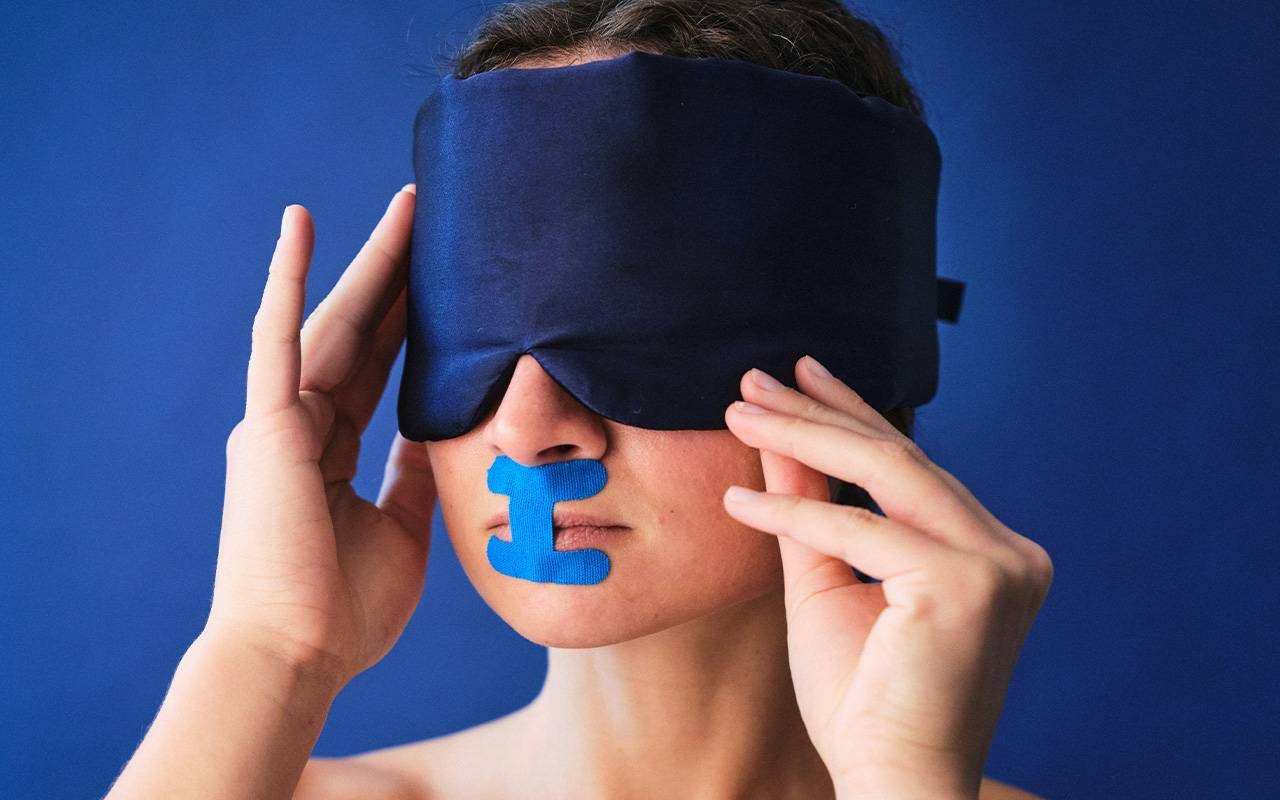
You might’ve noticed a trend that’s sweeping TikTok and Gen Z culture: sleepmaxxing.It’s the idea that you can, and should, optimize your sleep in every possible way. People are building elaborate nighttime routines, buying gadgets, tracking their cycles, and sharing hacks for how to squeeze out that “perfect” night of rest, all in the name of optimization.On one level, this is great. Sleep is an important factor in brain health, mental health, and emotional regulation; however, there’s a dark side to sleepmaxxing.In this piece, we’ll explore sleepmaxxing and how to avoid its shadow. For a deeper dive, you can listen to the latest episode of Mental Health Bites here or on Apple Podcasts, and you can find more short clips and helpful tips at my YouTube channel.Let’s dive in.The Shadow Side of SleepmaxxingIt’s no wonder people want to sleepmaxx. Sleep has many benefits. It helps regulate your mood, strengthen memory, and boost problem-solving. It even resets your stress response system. However, there’s a dark side.The dark side of sleepmaxxing is orthosomnia. While admittedly it has a less catchy name, it’s just as important to your health.Orthosomnia is when you worry about your sleep to the point that it actually prevents you from sleeping.You’ve probably been there before, lying awake in bed thinking: Am I asleep yet? Am I doing it right? Will I feel awful tomorrow if I don’t hit my eight hours?That anxiety itself is enough to spike your nervous system, flood you with stress hormones, and keep you awake. And this is where sleepmaxxing starts to backfire.When we over-optimize rest, we turn it into another performance goal, and sleep becomes something to achieve rather than something to allow. This can lead to a sleep performance anxiety loop, where our worries about sleep keep us up. This happens because sleep is deeply influenced by our mindset and stress levels, and the more pressure we put on ourselves to sleep “perfectly,” the harder it becomes.One way to break this loop is to shift your goal from I need to get exactly eight hours to I’m giving my body the chance to rest. You can also try to focus more on the environment you’re creating, rather than the outcome. Consider if your room is dark enough or if you’re giving yourself time to wind down without screens.Similarly, anxiety about sleep can creep in during the morning. I use an Oura Ring, for example. It’s an incredible tool. I get to see my heart rate, my deep sleep, REM, and a whole range of other biomarkers. But I have to be careful. Sometimes I’ll wake up feeling pretty good, but once I check my Oura score and see that I only got 73 out of 100, I start to worry that I’m going to have a bad day. When this happens, if I’m not careful, I can let the data override how I actually feel in my body. To account for this, I’ve had to train myself to check in with my intuition first. I notice my energy, mood, and focus before I look at the numbers.The Three R’s Sleep Reset: A Practical Tip to Escape the Sleep Anxiety LoopIf you want to balance sleep optimization with intuition, here’s a tool I recommend. I call it the three R’s Sleep Reset.* Routine. Pick two or three bedtime cues that tell your body it’s time to wind down. That could be dimming the lights, making a cup of tea, stretching, or reading a physical book. Keep those consistent.* Relaxation. Focus on calming your nervous system, not just shutting off screens. Try breathwork, journaling, or even a warm shower. The goal is to transition your body into a relaxed state.* Reality Check. Each morning, before you check any app or device, ask yourself: How do I feel? Do I feel alert? Focused? Or do I feel sluggish? This trains you to trust your body’s signals first. Then you can look at your sleep data if you want. But at that point, the data is information, not judgment. For example, imagine you wake up feeling refreshed, but your app says you only got a “low sleep score.” Instead of immediately believing the app, pause, notice how good you feel, and remind yourself: I feel fine, and that’s what matters most. Over time, this retrains your brain to prioritize lived experience over perfection metrics.The Bottom LineTechnology can be an incredible support, but intuition is just as valuable. To improve your sleep, don’t seek perfection and beat yourself up when you (as we all will) eventually slip up. Instead, practice consistency, and while you should trust the data, you should also build trust in yourself.If you know someone who sleeps (I’m guessing you do), and if this piece resonated with you, I’d love for you to share it with someone you think might benefit from a good night’s rest.Order The New Rules of Attachment here: https://bit.ly/3MvuvvFCheck out my TEDxReno talkVisit my websiteTake my attachment styles quizFollow me on LinkedInFollow me on InstagramFollow me on FacebookFollow me on TikTokAbout me:Dr. Judy Ho, Ph. D., ABPP, ABPdN is a triple board certified and licensed Clinical and Forensic Neuropsychologist, a tenured Associate Professor at Pepperdine University, television and podcast host, and author of Stop Self-Sabotage. An avid researcher and a two-time recipient of the National Institute of Mental Health Services Research Award, Dr. Judy maintains a private practice where she specializes in comprehensive neuropsychological evaluations and expert witness work. She is often called on by the media as an expert psychologist and is also a sought after public speaker for universities, businesses, and organizations.Dr. Judy received her bachelor’s degrees in Psychology and Business Administration from UC Berkeley, and her masters and doctorate from SDSU/UCSD Joint Doctoral Program in Clinical Psychology. She completed a National Institute of Mental Health sponsored fellowship at UCLA’s Semel Institute.If this piece resonated with you, I’d love for you to share it with someone who might need to hear it. If you’d like access to even more resources, private Q&As, and my entire back catalogue of techniques and tools, I encourage you to check out my paid subscriber option. This is a public episode. If you'd like to discuss this with other subscribers or get access to bonus episodes, visit drjudyho.substack.com/subscribe

You might have seen it on TikTok and Instagram: people romanticizing their lives.You’ve probably seen the videos…someone lighting a candle before bed, sipping coffee slowly while reading a book, arranging flowers on a desk, or even turning a trip to the grocery store into something cinematic.At first glance, it might seem like nothing more than an aesthetic or even a bit of a social media performance. Underneath this, however, powerful psychology is at work.Romanticizing your life is actually about how we pay attention, how we savor, and how we find meaning in the everyday.In this piece, we look at the science behind romanticizing your life, and how you can start to do this too.For a deeper dive, you can listen to the latest episode of Mental Health Bites here or on Apple Podcasts. You can also find more short clips and helpful tips at my YouTube channel.Let’s jump in!The Science Behind Romantizing Your LifeOne reason why I think this trend is exploding right now is that we live in a time of heightened stress, political polarization, and economic uncertainty.Because of this people frequently search for small ways to take control of their inner worlds. Whether through a morning ritual or turning chores into a mindful practice, romanizing daily life is one way to do this, it’s a way to reclaim agency and create calm.Psychologists have known about this for a while. They call this savoring.Fred Bryant and Joseph Veroff, two pioneers in savoring research, define it as the capacity to attend to, appreciate, and enhance positive experiences. Their studies show that people who savor regularly report greater happiness, stronger relationships, and even better coping with stress.What’s particularly nice about this is that savoring doesn’t require big moments like a wedding or a vacation. The most powerful form of savoring, in fact, often comes from ordinary experiences— think of the warmth of sunlight streaming through a window, the crisp sound of biting into an apple, or the feeling of clean sheets at night. When you slow down enough to notice (and savor) the world around you, your brain encodes these as rich, positive memories.There’s also a neurological layer at play. When we savor, the brain releases dopamine and oxytocin (neurochemicals that boost mood and social connection). Over time, deliberately savoring strengthens neural pathways for positivity, helping shift your baseline mood upward.Finally, there’s the meaning-making element. Romanticizing your life invites you to view the mundane as symbolic or poetic. Washing dishes becomes an act of cleansing and not a chore. Walking to work becomes a ritual of transition. These small reframes add richness to our lives in a way that pure productivity never could.A Cinematic Way Forward: The 3x3 Savoring MethodOne of my favorite ways to romanticize life is what I like to call the 3x3 Savoring Method.* Step 1: Pick three micro-moments each day. Look for the small things. The smell of coffee beans, the laughter of a coworker, the comfort of a hot shower. They don’t have to be picture-perfect, just moments you can lean into.* Step 2: Spend at least 30 seconds with each one. This is crucial. Most of us rush through positive experiences so quickly that the brain doesn’t have time to register them. Linger for half a minute. Pay attention to the textures, colors, sounds, and feelings. For example, if you’re savoring your morning tea, notice the warmth of the cup in your hands, the steam rising, and the flavor on your tongue.* Step 3: Share or reflect. The research shows savoring is amplified when you share it. That could mean telling a friend, snapping a photo, or writing a quick note in a journal. By naming it, you reinforce the memory and increase its impact.These steps might seem small, but they’re deeply impactful. Mood repair doesn’t usually come from big, dramatic interventions, rather it comes from stacking small moments of joy, over and over, until they build into resilience.If you follow the 3×3 Method for one week, you’ll collect 21 distinct positive moments. Imagine doing that for a month, a year, a lifetime. That’s how romanticizing your life turns from a social media trend into a sustainable practice for well-being.You’ve got this!The next time you see someone post a dreamy montage of their morning, know that you’re not just watching a trend, you’re seeing positive psychology in action. When you romanticize your life, you’re making the choice to savor, to notice, and to find beauty in what’s already here.If this piece resonated with you, I’d love for you to share it with someone who might need to hear it. If you’d like access to even more resources, private Q&As, and my entire back catalogue of techniques and tools, I encourage you to check out my paid subscriber option.Order The New Rules of Attachment here: https://bit.ly/3MvuvvFCheck out my TEDxReno talkVisit my websiteTake my attachment styles quizFollow me on LinkedInFollow me on InstagramFollow me on FacebookFollow me on TikTokAbout me:Dr. Judy Ho, Ph. D., ABPP, ABPdN is a triple board certified and licensed Clinical and Forensic Neuropsychologist, a tenured Associate Professor at Pepperdine University, television and podcast host, and author of Stop Self-Sabotage. An avid researcher and a two-time recipient of the National Institute of Mental Health Services Research Award, Dr. Judy maintains a private practice where she specializes in comprehensive neuropsychological evaluations and expert witness work. She is often called on by the media as an expert psychologist and is also a sought after public speaker for universities, businesses, and organizations.Dr. Judy received her bachelor’s degrees in Psychology and Business Administration from UC Berkeley, and her masters and doctorate from SDSU/UCSD Joint Doctoral Program in Clinical Psychology. She completed a National Institute of Mental Health sponsored fellowship at UCLA’s Semel Institute. This is a public episode. If you'd like to discuss this with other subscribers or get access to bonus episodes, visit drjudyho.substack.com/subscribe

From chatbots that act as friends to virtual partners that say “I love you,” artificial intelligence is quickly weaving itself into the fabric of our emotional lives.The big question is: What does this mean for our relationships, for attachment, and for the way we understand intimacy itself?In the last few years, AI companions have exploded in popularity. Apps like Replika let people design an AI “friend” or even a romantic partner. There are platforms that advertise AI girlfriends, boyfriends, or companions who will be available 24/7, never judge you, and always give you validation.At first glance, this might seem harmless or even fun. But psychology tells us something important: we form attachments not just with people, but with anything that feels responsive and safe. That’s the foundation of attachment theory, which suggests that our earliest experiences with caregivers create patterns that shape how we connect to others as adults.In this piece, we will explore how your attachment style shapes the way you connect with technology and what that means for your relationships. For a deeper dive, you can listen to the latest episode of Mental Health Bites here or on Apple Podcasts. You can also find more short clips and helpful tips at my YouTube channel.Let’s dive in.AI and AttachmentDifferent attachment styles may actually predict who is most drawn to AI relationships:* Anxiously attached individuals (those who fear abandonment) might love AI because it’s endlessly available. No unanswered texts, no “ghosting,” no risk of rejection.* Avoidantly attached individuals (those who fear too much closeness) might find AI appealing because it offers a sense of connection without the vulnerability or demands of a real partner.* And people with secure attachment may be curious about AI, but less likely to substitute it for real human relationships.These views are reflected in current research.A national study from the Kinsey Institute found that 61% of singles consider sexting or falling in love with an AI to be “cheating.” That tells us something important: people view AI connections as real enough to threaten actual relationships.And yet, millions of people download these apps, with some even reporting that their AI “saved their life.”My take: It’s not automatically harmful, but it can’t replace the richness of human relationships.A Reality Check Ritual for AI and AttachmentThis small exercise helps you stay grounded. The next time you interact with an AI chatbot, companion, or assistant, pause for a moment and ask yourself three quick questions:* What am I getting from this emotionally? Is it comfort, validation, or distraction?* Could I seek at least one of these needs from a human today? Maybe reaching out to a friend, a family member, or even just chatting with a coworker.* How can I use this interaction as practice for secure attachment? For example, if the AI validates you instantly, remind yourself: In real life, people need time to respond, and that doesn’t mean they don’t care.You can enjoy the benefits of AI while remembering that real intimacy comes from the unpredictable, sometimes challenging, but deeply rewarding connections with other humans.You’ve got this!If this piece resonated with you, I’d love for you to share it with someone who might need to hear it. If you’d like access to even more resources, private Q&As, and my entire back catalogue of techniques and tools, I encourage you to check out my paid subscriber option.Order The New Rules of Attachment here: https://bit.ly/3MvuvvFCheck out my TEDxReno talkVisit my websiteTake my attachment styles quizFollow me on LinkedInFollow me on InstagramFollow me on FacebookFollow me on TikTokAbout me:Dr. Judy Ho, Ph. D., ABPP, ABPdN is a triple board certified and licensed Clinical and Forensic Neuropsychologist, a tenured Associate Professor at Pepperdine University, television and podcast host, and author of Stop Self-Sabotage. An avid researcher and a two-time recipient of the National Institute of Mental Health Services Research Award, Dr. Judy maintains a private practice where she specializes in comprehensive neuropsychological evaluations and expert witness work. She is often called on by the media as an expert psychologist and is also a sought after public speaker for universities, businesses, and organizations.Dr. Judy received her bachelor’s degrees in Psychology and Business Administration from UC Berkeley, and her masters and doctorate from SDSU/UCSD Joint Doctoral Program in Clinical Psychology. She completed a National Institute of Mental Health sponsored fellowship at UCLA’s Semel Institute. This is a public episode. If you'd like to discuss this with other subscribers or get access to bonus episodes, visit drjudyho.substack.com/subscribe

Have you ever noticed that even when something good happens, it doesn’t hit the way it used to?You land the promotion. You buy the new gadget. You finally go on that trip you’ve dreamt about. And then…instead of lasting joy, it feels like just…another thing.Well, there’s a name for this. It’s called emotional inflation. And if you’re wondering if this phenomenon is similar to financial inflation—when the value of money decreases and you need more of it to buy the same goods—you’d be correct.With emotional inflation, the value of your positive experiences decreases, and you need more, bigger, faster, shinier things to feel the same level of satisfaction you once got from something small.In this piece, we explore how to tell if you might be experiencing emotional inflation, then I share a practical technique you can use to start to turn things around today.For a deeper dive, as always, you can listen to the latest episode of Mental Health Bites here or on Apple Podcasts. You can also find more short clips and helpful tips at my YouTube channel. Now, let’s dive in.The Science Behind Emotional InflationIf you constantly need “the next thing” to feel excited, if you experience a sense of restlessness or boredom during enjoyable activities, if you feel like your gratitude practices don’t stick anymore, or if you compare your wins to others and quickly dismiss your own you might be experiencing emotional inflation.The good news is that the problem isn’t that you’re ungrateful or broken, rather your nervous system is simply running on overdrive.Hedonic adaptation tells us that after a peak experience, our emotional system naturally resets to baseline. However, over time, that baseline can slowly shift. On top of that, constant overstimulation from social media scrolling, dopamine-chasing entertainment, and comparison culture desensitizes our brain’s reward pathways.Think about how a new iPhone is hyped up like a life-changing event but within weeks, most people barely notice what’s in their hand. Or consider celebrities who live in excess who constantly upgrade their cars, homes, vacations all the while talking openly about their struggle with emptiness.The result of all of this is that small joys don’t “register” the way they once did. The good news is that this adaptation works both ways; we can recalibrate and rediscover pleasure in simpler experiences.Your Antidote: The Small Joy ResetHere’s a practice I like to call the Small Joy Reset. It’s designed to recalibrate your brain so that ordinary pleasures feel meaningful again.Step 1: Subtract before you add.Pick one overstimulating input to cut back on for a week, maybe late-night TikTok scrolling, constant news alerts, or that third cup of coffee. When you remove that constant stimulation, your brain starts to regain sensitivity to smaller rewards.Step 2: Micro-dose joy.Every day, choose one small activity you enjoy. It might be a five-minute walk, your favorite tea, listening to one song with your full attention. The trick is not to multitask. Just do that one thing, and savor it. Research on savoring and mindfulness shows this rewires your reward circuits to respond to smaller, more accessible pleasures.Step 3: Name it, claim it.After each small joy, take 30 seconds to label the experience out loud or in writing. For example:“That five-minute walk gave me energy. I felt calm when I listened to that song.”Neuroscience tells us that labeling enhances encoding; it literally makes the brain remember and register the experience more deeply. Over time, this reset makes the “small joys” start to feel big again. And that’s the antidote to emotional inflation.Joy Can Be RelearnedYou can teach your brain to find richness in everyday life.So, if you’ve been feeling like nothing is enough anymore, know that you’re not alone. Emotional inflation is a real phenomenon in our fast-paced, overstimulated culture, but with intentional resets, you can reclaim the joy in simple things.If this piece resonated with you, I’d love for you to share it with someone who might need to hear it.For more like this, please subscribe to Mental Health Bites. If you’d like access to even more resources, private Q&As, and my entire back catalogue of techniques and tools, I encourage you to check out my paid subscriber option.Order The New Rules of Attachment here: https://bit.ly/3MvuvvFCheck out my TEDxReno talkVisit my websiteTake my attachment styles quizFollow me on LinkedInFollow me on InstagramFollow me on FacebookFollow me on TikTokAbout me:Dr. Judy Ho, Ph. D., ABPP, ABPdN is a triple board certified and licensed Clinical and Forensic Neuropsychologist, a tenured Associate Professor at Pepperdine University, television and podcast host, and author of Stop Self-Sabotage. An avid researcher and a two-time recipient of the National Institute of Mental Health Services Research Award, Dr. Judy maintains a private practice where she specializes in comprehensive neuropsychological evaluations and expert witness work. She is often called on by the media as an expert psychologist and is also a sought after public speaker for universities, businesses, and organizations.Dr. Judy received her bachelor’s degrees in Psychology and Business Administration from UC Berkeley, and her masters and doctorate from SDSU/UCSD Joint Doctoral Program in Clinical Psychology. She completed a National Institute of Mental Health sponsored fellowship at UCLA’s Semel Institute. This is a public episode. If you'd like to discuss this with other subscribers or get access to bonus episodes, visit drjudyho.substack.com/subscribe

Your body runs on clocks.Some are daily (your 24-hour circadian rhythm) while others are seasonal, shaped by changes in daylight length, temperature, and routine.Those clocks tug on neurotransmitters, hormones, sleep timing, immune activity, and even how quickly your brain’s alarm system fires.That’s why the texture of anxiety can change by month or light level, not just by stress load.In this piece, we’ll explore the seasons of your nervous system, and how you can identify these patterns and use them to your advantage. For a deeper dive, you can listen to the latest episode of Mental Health Bites here on Substack or on Apple Podcasts. You can also find more short clips and helpful tips at my YouTube channel.Let’s jump in!Why Your Nervous System Has SeasonsIn healthy humans, the brain’s serotonin transporter (the protein that clears serotonin from synapses) tends to be higher in fall and winter. This corresponds to lower serotonin availability in the brain.Many people don’t feel “sad” so much as “keyed up,” more jittery, or more prone to rumination when daylight drops; that can be a serotonin story as much as a mood story.At the same time, melatonin rhythms shift later in winter by roughly half an hour on average, this adds grogginess in the morning and a “wired-but-tired” feeling at night. If your work and parenting schedule doesn’t budge, that small delay can magnify anxiety simply because your body and calendar are moving out of sync.Stress Hormones Have Seasons TooLarge datasets suggest measurable seasonal variation in cortisol. Though not every study agrees on the exact timing, many show higher levels in cooler, darker months.What matters clinically is that your baseline arousal can drift with the season even if nothing “bad” is happening, which makes everyday bumps feel larger.One more piece to remember is that your immune system cycles across the year, with winter-weighted increases in inflammatory signaling for many people. Because inflammation can heighten threat sensitivity and interoceptive “noise,” winter tends to be a period when somatic anxiety (heart-pounding, tight chest, air hunger) shows up more readily.Practical Tip: Map Your Anxiety SeasonsWhen you put all this together, you get the central idea: Your anxiety isn’t random and it isn’t a personal failing;iIt’s often a mismatch problem, your biology shifting with the season while your routines stay fixed.The fix is timing the right supports and challenges to the right season, much like athletes periodize training for peak performance and recovery. I suggest you think of it as though you are building your own Anxiety Season Map. To do this, you don’t need an app or a graph. All you need is a notes app or paper.* Take a 60-second daily snapshot. Every evening, jot down for quick items: “Anxiety today: __/10.” // “Sleep: ____ hours; bedtime/waketime.” // “Daylight outside: about __ minutes.” // “Notables: work load high/medium/low; allergies yes/no; hormones or cycle notes if relevant.” (Keep this under a minute so you’ll actually do it.)* Do a 5-minute weekly review. Once a week, skim your notes and answer three questions out loud: When did anxiety tick up? What changed in light, sleep, or schedule before that? What helped on better days? Circle any repeating duo, like “low daylight + later bedtime = higher anxiety.”* Mark your “yellow” and “red” months. Looking back 4–8 weeks, or using your memory for last year, label months as: Green (baseline resilience), Yellow (you trend a little more anxious), Red (you reliably spike). If you’re unsure, pick the two months you suspect are hardest and treat them as red for a trial season.* Pre-load supports two weeks early. Create a two-week runway before each yellow/red month. Choose two of these guardrails and commit. Morning light: get outside within an hour of waking for 10–20 minutes, eyes in daylight (no sunglasses if comfortable). // Sleep guardrails: fixed wake time (±30 min), dim lights/screens an hour before bed. // Movement minimum: 20 minutes of any movement daily. // Social anchor: schedule two supportive check-ins per week. // Exposure “maintenance”: 10 minutes, 3 days a week, of a mild exposure relevant to your anxiety (e.g., a short drive on a route that makes you uneasy; sending one imperfect email). // Say it like a rule: “Starting September 15th, morning light + fixed wake time for 14 days.”* Time your challenges to your season. Use Green months for bigger pushes (harder exposures, presentations, crowded drives) because your baseline is steadier. In Yellow, keep momentum with small reps and more recovery. In Red, simplify: protect sleep, keep morning light, and downshift exposures to maintenance so you don’t disappear from the ladder. If an unexpected spike hits, use a 90-second reset: lengthen your exhale, do a quick 5-4-3-2-1 grounding, and then take the smallest action toward your value—send the message, step outside, start the drive timer. The goal isn’t perfect calm; it’s staying in motion in a way that respects your biology. * Close the loop every quarter. Glance at your notes, update your color map, and adjust the two-week runways. In one season you’ll know your pattern; in two, you’ll be steering into it.When you honor the clocks inside you (light, sleep, hormones, immune signals) you stop fighting the tide and start surfing it.If this helps, I encourage you to subscribe, leave a review, and share it with someone who gets “seasonal jitters.” For extra tools and the Anxiety Season Map checklist, head to my Substack at drjudyho.substack.com.If you’d like access to even more resources, private Q&As, and access to my entire back catalogue of techniques and tools, check out my paid subscriber option.Order The New Rules of Attachment here: https://bit.ly/3MvuvvFCheck out my TEDxReno talkVisit my websiteTake my attachment styles quizFollow me on LinkedInFollow me on InstagramFollow me on FacebookFollow me on TikTokAbout me:Dr. Judy Ho, Ph. D., ABPP, ABPdN is a triple board certified and licensed Clinical and Forensic Neuropsychologist, a tenured Associate Professor at Pepperdine University, television and podcast host, and author of Stop Self-Sabotage. An avid researcher and a two-time recipient of the National Institute of Mental Health Services Research Award, Dr. Judy maintains a private practice where she specializes in comprehensive neuropsychological evaluations and expert witness work. She is often called on by the media as an expert psychologist and is also a sought after public speaker for universities, businesses, and organizations.Dr. Judy received her bachelor's degrees in Psychology and Business Administration from UC Berkeley, and her masters and doctorate from SDSU/UCSD Joint Doctoral Program in Clinical Psychology. She completed a National Institute of Mental Health sponsored fellowship at UCLA's Semel Institute. This is a public episode. If you'd like to discuss this with other subscribers or get access to bonus episodes, visit drjudyho.substack.com/subscribe

Hustle culture. Main character energy. Your brand must be bold. Chaotic. Unapologetically loud. Over the last decade, we’ve been told this is how it had to be. But you’ve probably noticed a shift happen about how we talk about power, confidence, and self-expression. Lately, something different is taking hold.A calmer and more grounded kind of influence has become increasingly popular, the kind that doesn’t scream for attention but commands it. In a world that constantly pulls us into chaos and reactivity, the ability to remain calm, connected, and intentional is a radical strength.This is a phenomenon that many call “quiet control,” and it’s a skill you can develop.For a deeper dive, you can listen to the latest episode of Mental Health Bites here on Substack or on Apple Podcasts. You can also find more short clips and helpful tips at my YouTube channel. What is Quiet Control?Quiet control is what happens when someone walks into a room and regulates it just by being. They don’t need to dominate the conversation. They have no need to prove themselves. Their energy feels stable, their words are thoughtful, and their presence is magnetic in a very different way.So what exactly is happening here, and why is this shift so powerful?As nervous system education becomes more mainstream, especially in trauma recovery and mental wellness spaces, we have seen more people prioritize what psychologists call nervous system regulation. You might have heard of polyvagal theory, a term that’s now exploded across social media. At the heart of polyvagal theory is the vagus nerve, a critical communication line between your brain and body that helps regulate your heart rate, digestion, and stress response.When your nervous system is dysregulated, you flip into fight, flight, or shut down. When it's regulated (especially in what’s called the ventral vagal state) you feel safe, engaged, open, and in control. You’re calm, but alert. Relaxed, but present.This relaxed, present state is not only good for your health, but also it has become a new standard for personal power. This is why quiet control has gained so much momentum. It’s a personality trait in addition to a psychological state. It’s one that says: I know how to self-soothe. I can be grounded in chaos. I respond, not react. I trust myself.The Three Anchors of Quiet ControlFor those who grew up in environments where love had to be earned, where attention was only given for performance, or where emotional chaos was the norm, being calm might feel unfamiliar or even unsafe. For many people, drama felt more real than stability. But with healing, we learn that peace is not boring. Here are some techniques that anyone can use to build a stronger relationship with their nervous system and embody grounded leadership, whether you're in a difficult conversation, navigating stress, or simply trying to feel more stable inside your own body.* Anchor One: Breathe Low and Slow. This is the fastest way to signal safety to your brain and body. Inhale through your nose for a count of four, and exhale through your mouth for a count of six. Repeat this for one to two minutes. This simple pattern of slow exhale breathing activates your vagus nerve, shifting you into that calm, connected state.* Anchor Two: Speak in Tempo. We often don’t realize how much our speech pattern affects not only others but also ourselves. When you speak more slowly and intentionally, you calm your own nervous system and signal leadership to others. Try to add deliberate pauses when you speak. Lower your voice just slightly. When you do this, it tells your brain, “I’m not in danger. I have time. I’m in control.”* Anchor Three: The Leadership Pause. This one is big. Before you respond (especially to something triggering) pause for five seconds. Then ask yourself: What would the grounded, self-respecting version of me say right now? This one practice alone can change relationships, emails, arguments, and inner dialogue.The real power is not the suppression of emotion, it is to hold it wisely.Until next time, stay grounded, stay curious, and own your quiet power. If you’d like access to even more resources, private Q&As, and access to my entire back catalogue of techniques and tools, check out my paid subscriber option.Order The New Rules of Attachment here: https://bit.ly/3MvuvvFCheck out my TEDxReno talkVisit my websiteTake my attachment styles quizFollow me on LinkedInFollow me on InstagramFollow me on FacebookFollow me on TikTokAbout me:Dr. Judy Ho, Ph. D., ABPP, ABPdN is a triple board certified and licensed Clinical and Forensic Neuropsychologist, a tenured Associate Professor at Pepperdine University, television and podcast host, and author of Stop Self-Sabotage. An avid researcher and a two-time recipient of the National Institute of Mental Health Services Research Award, Dr. Judy maintains a private practice where she specializes in comprehensive neuropsychological evaluations and expert witness work. She is often called on by the media as an expert psychologist and is also a sought after public speaker for universities, businesses, and organizations.Dr. Judy received her bachelor's degrees in Psychology and Business Administration from UC Berkeley, and her masters and doctorate from SDSU/UCSD Joint Doctoral Program in Clinical Psychology. She completed a National Institute of Mental Health sponsored fellowship at UCLA's Semel Institute. This is a public episode. If you'd like to discuss this with other subscribers or get access to bonus episodes, visit drjudyho.substack.com/subscribe

Whether you panic at the thought of public speaking, dread the sight of spiders, or feel irrationally nervous in a crowd, phobias can quietly shape our choices and our lives. They’re something that almost everyone has experienced at some point in their lives. These fears can feel embarrassing, especially when they seem “silly” or hard to explain to others. The truth, however, is that phobias are more common (and more treatable) than you might think.A phobia is more than a fear. Phobias are intense, persistent, and irrational fears of specific objects, situations, or activities that provoke an immediate anxiety response, which can often lead to avoidant behavior. They’re patterns that your brain learned to protect you. The beautiful thing about this is that your brain can learn something new. With compassion, evidence-based tools, and support, you can absolutely move past your phobias and regain control of your life.For a deeper dive, you can listen to the latest episode of Mental Health Bites here on Substack or on Apple Podcasts. You can also find more short clips and helpful tips at my YouTube channel. Why Phobias Form (and What They Really Are)According to the National Institute of Mental Health, more than 1 in 10 adults in the U.S. will experience a specific phobia at some point in their lives. There are several mechanisms from which phobias can emerge.* Trauma and direct negative experience. A person might develop a fear of driving after being in a serious car accident. This is what we call classical conditioning, which is when the brain pairs the traumatic experience with the activity or object and registers it as dangerous.* Observational learning. This is especially common in childhood. If a parent screams every time they see a spider, a child may learn that spiders are terrifying even if they’ve never been harmed by one. We internalize those fear responses, often unconsciously.* Avoidance reinforces fear. The more you avoid the thing that scares you, the more your brain is tricked into the belief that it must truly be dangerous. That sense of relief you get from avoidance—say, if you cancel a flight or skip a crowded party—acts like a reward which solidifies the fear pathway in your brain. (In psychology, we call this negative reinforcement.)* Evolutionary psychology plays a role. Some researchers, like Martin Seligman, suggest that we’re biologically prepared to fear things that once posed survival threats. So even if you’ve never been bitten by a snake or fallen from a cliff, your nervous system might still go into high alert in those situations.The Most Common and Uncommon PhobiasI’m going to share with you an exercise you can use to work through phobias, but first I want to break down some of the most common and uncommon ones, and what they actually look like in real life.* Social Phobia, also known as Social Anxiety Disorder, is a fear of judgment, embarrassment, or rejection in social or performance situations. This could be giving a presentation, eating in public, or even making small talk, where the fear of humiliation becomes so intense that the person avoids social settings altogether.* Agoraphobia is the fear of situations where escape might feel difficult (or help unavailable). This is especially true if a panic attack might occur. Agoraphobia is often misunderstood as a fear of “open spaces,” but it can also include fear of public transportation, large crowds, or even being outside alone.* Claustrophobia is the fear of enclosed spaces, such as elevators, small rooms without windows, or even crowded trains. The fear can trigger panic symptoms, such as a racing heart, breathlessness, or dizziness, because the person feels trapped and unable to escape.* Acrophobia is the fear of heights. This can occur when someone stands on a balcony, crosses a bridge, or even watches videos of high places. Anxiety that stems from acrophobia isn’t always about falling; it’s often about the overwhelming sense of danger and disorientation that accompanies it.* Emetophobia is a lesser-discussed but very common phobia—the intense fear of vomiting. People with emetophobia often avoid certain foods, social gatherings, or public transportation, just in case they (or someone else) gets sick.* Trypanophobia is the fear of needles or injections. While many people feel uneasy around needles, this phobia can prevent people from receiving necessary medical care, vaccines, or blood tests, out of overwhelming fear or fainting responses.* Arachnophobia is the fear of spiders. While some evolutionary theories suggest this fear is rooted in survival instincts, for many people, even seeing a photo of a spider can lead to intense panic.* Aviophobia, or fear of flying, is a fear not only of the flight itself but often of the lack of control, turbulence, or the idea of being far from help while in the air.Now let’s talk about a few lesser-known phobias that may surprise you but are very real and valid.* Nomophobia is the fear of being without your phone or losing signal. With the rise of constant digital connection, this fear has become increasingly common. It is often tied to anxiety around being unreachable or losing access to vital information.* Trypophobia is the aversion or fear of clustered holes or repetitive patterns, like a lotus pod or honeycomb. For many people, these patterns trigger a visceral reaction, even nausea or itching.* Pogonophobia is the fear of beards. This can be triggered by negative associations, cultural factors, or sensory discomfort, like the texture or unpredictability of facial hair.* Ablutophobia is the fear of bathing or cleaning oneself. While rare and more commonly seen in children, this phobia can be connected to trauma, sensory processing issues, or OCD-related fears.* Chirophobia is the fear of hands, either one’s own or others’. This can stem from sensory issues, past injury, or symbolic associations tied to touch, boundaries, or vulnerability.Even if some of these sound unusual, remember: Your brain doesn’t distinguish between "rational" and "irrational." If it perceives danger, it reacts. Your goal should not be to mock the fear, but to understand it and treat it compassionately.How to Know if It’s a Phobia, and What You Can Do About ItBefore we get into how to work with phobias, it’s worth asking: How do you know if what you’re feeling is a true phobia—or just a normal fear?Here are a few ways to tell the difference:* Intensity. A phobia is more than discomfort. A phobia is a strong, disproportionate fear response that often leads to panic symptoms, such as a racing heart, sweating, dizziness, shortness of breath.* Avoidance. If you're going out of your way to avoid a situation, object, or place, and that avoidance is limiting your life, that's a sign it may be a phobia.* Interference. Is the fear affecting your daily functioning, relationships, or career? For instance, refusing a job because it involves flying, or avoiding medical care due to needle fears.* Duration. True phobias tend to be persistent (lasting six months or longer) and don’t fade with logic or reassurance alone.If you recognize yourself in some of these patterns, you’re not alone. And there are evidence-based ways you can treat it.Practical Tip: Exposure LadderOne of the most effective tools from Cognitive Behavioral Therapy (CBT) is called an Exposure Ladder. It’s a wonderful tool and one of the first I ever learned during my doctoral program training. In fact, I had a minor fear of heights myself years ago, which I overcame by taking up trapeze classes (yes, that’s me here in these photos). I did a rapid exposure ladder (sometimes called flooding) by showing up at a trapeze class and just throwing myself into it. I ended up falling in love with the flying trapeze and it’s one of my favorite hobbies.💡Pro tip: I created a printable bonus workbook just for paid subscribers to help you put this into action.It’s called The Phobia Reset Toolkit and includes a step-by-step Exposure Ladder template, guided anxiety rating scale, and the exact relaxation techniques to use at each step—so you’re not just learning about phobias, you’re working through them with support.➕ Already a paid subscriber? This is coming straight to your inbox this Friday!➕ Not yet? [Upgrade now] and get immediate access to the toolkit and all past mental health bonuses.An Exposure Ladder (also known as a fear ladder) is exactly what it sounds like: a step-by-step sequence that gradually exposes you to the feared situation. It starts with the least scary piece and then builds up over time. The goal is to desensitize your fear response, reduce avoidance, and help your brain re-learn that the situation is safe.Step 1: Build your ladderList situations related to your phobia that range from mildly stressful to intensely distressing. Rank them from easiest to hardest. This becomes your exposure ladder.Let’s say you’re working on a fear of flying. Here’s how a basic exposure ladder might look:* Start by looking at photos of airplanes.* Watch videos of planes taking off and landing.* Listen to airplane cabin sounds while sitting comfortably at home.* Drive past the airport or walk inside the terminal.* Sit in a grounded plane or a flight simulator.* Book a short, supported flight and practice coping strategies.* Fly solo, maybe even journal during the trip to reflect on your progress.The key is to move to the next rung only once the current one feels manageable. You don’t need to rush. This gradual exposure rewires the brain’s threat detection system, building confidence and reducing panic over time.You can build your own ladder with the support of a therapist, or start by journaling situations related to your fear and rating them from 0 to 10 in terms of anxiety. That becomes your roadmap.Step 2: Rate the anxietyFor each rung, ask yourself: On a scale of 1 to 10, how anxious does this make me feel right now? This helps you track progress and keep the experien

You’re overwhelmed.Again. Sure, it’s because you took on three assignments this week, but you had to; no one else was going to step up. And you’re drained from managing your kid’s classroom outburst, but of course you’ll also be the one to soothe them about their exclusion from their friend group later, and to help your significant other with their problems, and your friend is calling about their latest breakup…Overwhelmed, emotionally drained, constantly putting out everyone else’s fires…if this sounds like you, you may feel like a magnet for chaos. But, cold or harsh as it may sound, you may actually be making yourself available to chaos. Before you resist the idea, pause and consider: Are you partly responsible for attracting and allowing chaos in your life? It’s not a problem if you’re partly responsible for this. What it means is that you have the power to lessen, or even eliminate it. So together, let’s explore what it really means to protect your peace, why so many of us are drawn to chaos in the first place, and how to create a boundary-based life that’s rooted in secure attachment, rather than survival mode. For a deeper dive, you can listen to the latest episode of Mental Health Bites here on Substack or on Apple Podcasts. You can also find more short clips and helpful tips at my YouTube channel. But now, let’s start with a tough but honest question. Why You Attract Chaos and Where It Comes FromYou swear you want more calm in your life, more peace in your relationships, a routine, a solid career. Yet you find yourself again and again in perpetual crises, romantic crash outs, and missing out on opportunities for advancement that you should have been prepared for. Are you simply cursed by the universe? Unlikely. More likely, despite avowedly hating chaos, you are subtly inviting it in. Our popular culture doesn’t necessarily help in modeling non-chaotic lives of stability and ease. In addition to a work culture that places a priority on a go-go-go pace, our music and TV thrive on conflict. This is to a degree unavoidable, as drama is inherently interesting. The difficulty lies in how prevalent and inevitable interpersonal drama is made to seem. Consider Rue from HBO’s Euphoria, played by Zendaya. Rue is a teenager with a traumatic past and ongoing addiction. She’s drawn to a newcomer to her high school, Jules, played by Hunter Schaefer, not just for romantic reasons, but because Jules represents emotional intensity. The unpredictability of their relationship—the highs and lows, the volatility—all mirrors Rue’s internal state. Instead of calming her nervous system, the relationship heightens it. It’s familiar chaos dressed up as love.So then, perhaps the solution is to avoid chaos like this at all costs? Not quite. Take the character Beth Harmon from The Queen’s Gambit. Her hyper-independence initially looks like strength, but it’s actually emotional self-protection. She doesn’t trust others to regulate or support her, so she avoids intimacy altogether. She distances herself from chaos at the cost of connection. It’s only when she begins setting healthy boundaries and allowing safe relationships into her life that she finally starts to heal.The difficulty in finding popular examples of non-chaotic lives and relationships is that we repeat what seems normal as if it is healthy. If we expect love to be painful and volatile, and for the only solution to extreme relationships to be no relationships, we aren’t given models of how not to inadvertently draw it towards us.The Real Life RollercoasterIn our own day-to-day lives, things may not be so extreme as they are for Rue and Beth. Chaos might not show up as you shut everyone out, or engage in shouting matches. Often they show up more subtly. For example, you’re always the one people vent to, even when you’re overwhelmed. You can’t relax until everyone around you is okay. You replay conversations in your head, wondering if you said the right thing. You feel guilty when you say no, or you even silently wish people would stop leaning on you but you never say anything. If this sounds familiar, don’t just chalk it up to burnout. That’s your nervous system reenacting old attachment wounds and your brain trying to earn safety through emotional labor.The reason why lies deep in our attachment systems and early childhood experiences. For many of us, the habit of over-involving ourselves in other people’s messes didn’t come from nowhere; it was learned.If you grew up in a home where love felt inconsistent, where emotions were unpredictable, or where your needs were often overlooked in favor of keeping the peace, you may have become hyper-attuned to other people’s emotional states. This is especially common in those with anxious-preoccupied or disorganized attachment styles.In these environments, children often take on what researchers call pseudo-adult roles. They become the fixer, the soother, the peacemaker. Why? Because if everyone else is okay, maybe they’ll feel safe too.And this becomes deeply wired into the brain. Neuroimaging studies show that children raised in chaotic or emotionally volatile homes develop heightened activation in the amygdala (the brain’s fear center) and reduced connectivity in the prefrontal cortex, which helps us regulate emotions and make rational decisions. The result? A nervous system that constantly scans for threat and overreacts to emotional intensity, whether it's yours or someone else’s.So as adults, we may say we want calm, stability, and peace, on a subconscious level, we’re drawn to the familiar. And for many of us the familiar equals chaotic.But the truth is: Being constantly available to chaos doesn’t make you a better friend, partner, parent, or colleague. It just makes you exhausted. And ultimately, resentful.The good news? You can unlearn this. The Power of the “Chaos Filter”The primary way we make ourselves available to chaos is by not having firm boundaries in place. We may believe we’re helping everyone and being our best self by constantly giving and reacting, but in reality, we are contributing to a continual frenzy wherein no one is able to manage their own emotions, The Chaos Filter exercise helps you decide—in the moment—whether to get involved, step back, or set a boundary.Step 1: Pause and LabelWhen someone brings you chaos—a crisis, a dramatic text, a problem to fix—don’t jump in. Pause. Take a breath. Then say to yourself: “This feels urgent, but is it truly mine?” This tiny pause is essential. It activates the prefrontal cortex, the decision-making part of your brain, and reduces amygdala reactivity. You’re creating space between stimulus and response—a hallmark of emotional regulation.Step 2: Check Your Inner ChildAsk yourself: Is this reminding me of something from my past?Maybe you’re feeling that old panic: If I don’t help, I’ll be rejected. Maybe your nervous system is lighting up like it did when your parents were in a bad mood, and you had to make everything better. This moment of awareness is gold. Because once you name it, you can unhook yourself from it. Say to yourself: This is old wiring. I don’t have to play that role anymore.Step 3: Filter the ChaosHere’s where the “Chaos Filter” comes in. Ask yourself three questions:* Is this urgent?* Is this mine?* Can I help without over-involving myself emotionally?Let’s break these down:* If it’s not urgent, you don’t need to respond immediately.* If it’s not yours, you can hold space without taking it on.* If you can’t help without absorbing it, you need a boundary.Let’s try a real-life example:Your friend calls you in a panic about a breakup. You just finished work, you’re exhausted, and your instinct is to go into full therapist mode.Here’s what the Chaos Filter might help you say instead:“I hear how hard this is. I care about you so much. I don’t have the emotional bandwidth to fully support you right now, but I’m thinking of you. Can we talk tomorrow when I can really listen?”Boom. Boundary set. Relationship preserved. Nervous system protected.This is what it means to be unavailable to chaos. Not unkind. Not avoidant. Just clear.When you use the Chaos Filter regularly, you’ll begin to notice something incredible:People stop expecting you to fix their problems. You then discover how many fewer problems you have, and you now have the resources to deal with them. The Subtle Art of Sustainable EmotionsYou can love deeply and still set boundaries. You can care without carrying. In fact, the less weight you carry that isn’t yours, the more you have to give when you care. You don’t have to be the emotional sponge in every room. You can be the anchor. The calm center. And that starts by protecting your peace, one boundary at a time.How do you set boundaries for yourself? Please share in the comments. You never know who your experiences might help.If you’d like access to even more resources, private Q&As, and access to my entire back catalogue of techniques and tools, check out my paid subscriber option.Order The New Rules of Attachment here: https://bit.ly/3MvuvvFCheck out my TEDxReno talkVisit my websiteTake my attachment styles quizFollow me on LinkedInFollow me on InstagramFollow me on FacebookFollow me on TikTokAbout me:Dr. Judy Ho, Ph. D., ABPP, ABPdN is a triple board certified and licensed Clinical and Forensic Neuropsychologist, a tenured Associate Professor at Pepperdine University, television and podcast host, and author of Stop Self-Sabotage. An avid researcher and a two-time recipient of the National Institute of Mental Health Services Research Award, Dr. Judy maintains a private practice where she specializes in comprehensive neuropsychological evaluations and expert witness work. She is often called on by the media as an expert psychologist and is also a sought after public speaker for universities, businesses, and organizations.Dr. Judy received her bachelor's degrees in Psychology and Business Administration from UC Berkeley, and her masters

So you have a big and inspiring goal, one for the ages. Maybe you want to write a book, start your own business, move to a new city, or change your career. But instead of taking action, you stay busy with lower-stakes tasks, telling yourself you’ll start "once things settle down" or "when I feel ready."But what if “ready” never seems to come? How do you know if you’ve stretched the preparation phase so far you’re full on procrastinating on your dreams? Here are some clues: * You spend more time planning, researching, or tweaking than actually doing. * You keep refining your website, rewriting your business plan, or outlining chapter after chapter but you never hit publish.* You need to watch just one more YouTube video, and then you’ll finally figure out the perfect workout plan.You get the picture. This pattern often feels safe, but it’s actually self-sabotage.Here we’re going to explore self-sabotage, and how you can break free from it. For a deeper dive, you can listen to the latest episode of Mental Health Bites here on Substack or Apple Podcasts. You can also look for more short videos and insights at my YouTube channel.Let’s dive into what procrastination is, why you do it, and how to stop the sabotage and start living your dreams. Procrastination Regulation: The Science of Why we Shy AwayWhen we put things off, we often then take ourselves to task for perceived laziness. But procrastination isn’t laziness; it’s a problem of emotional regulation. In the book The Procrastination Equation by Dr. Piers Steel, he shares research which argues that procrastination is about avoiding negative emotions like fear of failure, fear of judgment, and self-doubt.As you begin to think—and maybe stress—about a highly coveted goal, your brain’s limbic system (which handles emotion and survival instincts) kicks in and hijacks your prefrontal cortex (the part responsible for planning and rational decision-making). When faced with a big, meaningful goal, your brain perceives risk and discomfort, and instinctively seeks immediate relief. That’s why you suddenly decide to clean your entire closet instead of working on your dream; it feels soothing in the short term but keeps you stuck long-term.High Achievers Also Hide: How the Successful Feel about ProcrastinationThink those with high success and prolific output are immune to the procrastination equation? Think again. Shonda Rhimes, creator of hit shows from Grey’s Anatomy to How to Get Away with Murder, wrote in her book Year of Yes that she avoided taking big creative and personal risks for years out of fear — until she decided to start saying “yes” to opportunities that scared her. She explained that the fear never went away, rather she just made a decision to say yes to projects without the psychological safety of feeling ready. Remember that procrastination isn’t a personal flaw; it’s a protective pattern. And it’s one we can overcome.The Roots of Procrastination: How Early Patterns Spring Us Forward or Set Us BackOur early relationships shape how we handle setbacks and risks. If you learned that mistakes led to punishment or withdrawal of love, you might now avoid big goals to protect yourself from that emotional pain. Anxious attachment styles might obsessively prepare and seek reassurance, never feeling ready. Avoidant styles might disengage completely to avoid vulnerability.These approaches were probably beneficially adaptive if as children the risks of mistakes or revealing vulnerability were genuinely high. But as adults with goals and dreams, we have to find ways to accept that risk is an inherent aspect of reaching for anything worthwhile. Whether it’s an artistic aspiration, a higher paying job, or making a commitment like a marriage, we have to accept the prospect of failure exists. The way forward is not to look for a risk-free path, but a protocol to propel us forward regardless of our fear. How to Get Unstuck: The Micro-Win Momentum PlanSo what procedures can we put in place when our internal motivation is hijacked by fear circuitry? One way is by breaking down your big, weighty goals, into small, achievable wins. This way, you avoid overwhelm and can use the momentum of each smaller win to propel you forward. To begin, define your big dream clearly. Write it out, confining it to one, bold sentence: I want to start a podcast about mental wellness or I want to write and publish my first novel.Next, break that big dream into micro-wins, wins that are so small they seem almost silly. Not "write a chapter," but "write one paragraph."Not "launch the business," but "brainstorm three possible names." You want them to be so easy you can’t find an excuse not to be able to do them. Now, put into practice the “implementation intention” strategy. Research by Dr. Peter Gollwitzer of NYU into the science of goals has shown that when you specify when and where you’ll take an action, you’re far more likely to follow through. For example, instead of setting a goal “to write tomorrow,” instead set “tomorrow at 9 a.m., in my kitchen, I will write one paragraph." Leave no room for excuses.Once you have achieved the first goal, track it and celebrate! Use a sticky note on your mirror, a checkmark on a whiteboard, or a simple app. Every completed micro-win activates the release of dopamine in your brain, reinforcing action over avoidance. It gives your brain the literal psychological “juice” to keep going. Finally, make sure to share your wins with a supportive person. Tell a friend, coach, or online community, just make sure it’s someone who matters to you, and who will genuinely be happy for your success. Accountability amplifies momentum.Starting small shifts your brain from fear to action. Over time, micro-wins compound into massive progress. And each win tells you on the other side of procrastination is success. Your dreams are not meant to stay on a shelf for “someday.” You deserve to live them now.What tricks do you use to get yourself unstuck? I’d love to know. And if you found this helpful, please share it with someone you think would enjoy this read.If you’d like access to even more resources, private Q&As, and access to my entire back catalogue of techniques and tools, check out my paid subscriber option.Order The New Rules of Attachment here: https://bit.ly/3MvuvvFCheck out my TEDxReno talkVisit my websiteTake my attachment styles quizFollow me on LinkedInFollow me on InstagramFollow me on FacebookFollow me on TikTokAbout me:Dr. Judy Ho, Ph. D., ABPP, ABPdN is a triple board certified and licensed Clinical and Forensic Neuropsychologist, a tenured Associate Professor at Pepperdine University, television and podcast host, and author of Stop Self-Sabotage. An avid researcher and a two-time recipient of the National Institute of Mental Health Services Research Award, Dr. Judy maintains a private practice where she specializes in comprehensive neuropsychological evaluations and expert witness work. She is often called on by the media as an expert psychologist and is also a sought after public speaker for universities, businesses, and organizations.Dr. Judy received her bachelor's degrees in Psychology and Business Administration from UC Berkeley, and her masters and doctorate from SDSU/UCSD Joint Doctoral Program in Clinical Psychology. She completed a National Institute of Mental Health sponsored fellowship at UCLA's Semel Institute. This is a public episode. If you'd like to discuss this with other subscribers or get access to bonus episodes, visit drjudyho.substack.com/subscribe

In today’s hyper-connected world, we rarely sit in silence. Even when we’re physically alone, we scroll, stream, text, or talk. We equate being alone with being left out, and solitude is often mistaken for loneliness.But solitude, when embraced with intention, is one of the most powerful mental health tools we have. It allows us to pause the noise, reconnect with our inner world, and replenish our emotional energy.In this post, we’ll explore:* What solitude actually is (and isn’t)* The psychological benefits of solitude* When solitude becomes self-protection* How to create a personalized “Solitude Ritual” to support your mental health🧠 Want to go deeper? Listen to this week’s Mental Health Bites episode right here on Substack or on Apple Podcasts. You’ll also find supporting video content on my YouTube channel.Solitude ≠ LonelinessLet’s start with the distinction.* Loneliness is the ache of disconnection. You might feel lonely in a crowded room, on social media, or even in close relationships.* Solitude is the active choice to be alone for restoration, reflection, and inner clarity.Solitude is not about isolation or avoidance. It’s about making space to meet yourself without distraction—space where you can process thoughts, regulate emotions, and access creativity.Yet, our culture often treats solitude as suspect. Messages like “never eat alone” or “always be available” keep us chasing constant connection. But in our effort to always be “on,” we often lose connection with the most important relationship of all: the one with ourselves.The Science of SolitudePsychologically, solitude offers a cascade of benefits. It’s linked to:* Enhanced creativity* Improved concentration and decision-making* Emotional regulation and clarity* Activation of the default mode network — the brain’s introspection system, which supports memory consolidation and self-reflectionA study in Personality and Individual Differences found that people who intentionally seek solitude—because they value it, not because they’re avoiding others—report higher well-being and lower stress.Researchers at the University of Buffalo found a similar effect: people who genuinely enjoy their own company tend to be more emotionally stable and less reliant on external validation.In short, solitude teaches us how to self-soothe, self-direct, and self-discover.When Solitude Becomes Self-ProtectionBut solitude isn’t always healthy.For those with avoidant attachment styles, solitude can become a mask—justified as “independence,” but actually a way to avoid intimacy and vulnerability.If you frequently tell yourself:* “I just prefer being alone.”* “People are exhausting.”* “I don’t need anyone.”—take a moment to reflect. Are these preferences… or protective mechanisms?Solitude should be replenishing, not numbing.Ask yourself:* Do I feel refreshed after time alone? Or empty and disconnected?* Am I using solitude to connect with myself—or to avoid connection with others?When chosen with clarity, solitude heals. When used to hide, it can prolong the very wounds we’re afraid to face.Build a Solitude Ritual: A Simple Practice to Rewire Your BrainYou don’t need to go off the grid or retreat to a cabin in the woods. A few intentional minutes a day can radically shift your nervous system.Here’s how to create a Solitude Ritual that helps your brain associate “alone time” with nourishment, not threat.Step 1: Choose Your SpacePick a place that feels comforting and safe—your favorite chair, a quiet corner, even your car parked in a scenic spot.Step 2: Set a TimerStart with just 5–10 minutes. Your brain loves predictability. Rituals build emotional safety through repetition.Step 3: Choose a Gentle ActivityPick something that promotes presence without numbing you. Examples:* Journaling* Drinking tea mindfully* Deep breathing* Watching trees or clouds* Light stretching or doodlingAvoid using your phone or multitasking.Step 4: Eliminate DistractionsPut your phone on silent. Let others know you’re unavailable. Use a timer so you’re not clock-watching.Step 5: Set an IntentionBefore you begin, remind yourself: “I am doing this to nourish myself.” This simple mindset shift can change how your brain interprets the experience.Step 6: Do the TaskBe present for the full duration. If emotions come up, just notice them. No judgment.Step 7: ReflectAfterward, ask: How do I feel? Even discomfort is data. Over time, you’ll likely feel more grounded, calm, and connected to yourself.Solitude Creates the Space for WholenessIn a world that equates busyness with worth, solitude is a radical act of self-respect.We are social beings—but to show up fully in our relationships, we need to know who we are outside of them. Solitude gives us that knowing. It reminds us that we are whole, even in silence.And as you build your solitude ritual, you may find that external validation loosens its grip. You’ll no longer seek yourself in other people’s reflections—you’ll find yourself already within.Want More Tools for Inner Growth?📌 Listen to the full Mental Health Bites episode on solitude wherever you get your podcasts.📌 Join thousands of readers by subscribing to my weekly newsletter here on Substack.📌 Explore video tips and mini-practices on YouTube.📌 Share this post with a friend who struggles with alone time—you might just help them build a new relationship with themselves.Until next time, take care of your mental health.Warmly,Dr. Judy HoTriple Board-Certified Clinical and Forensic NeuropsychologistAnd one last thing: I also have a paid subscriber option where you can get even more resources, access to private Q&As, and access to my entire back catalogue of techniques and tools.Order The New Rules of Attachment here: https://bit.ly/3MvuvvFCheck out my TEDxReno talkVisit my websiteTake my attachment styles quizFollow me on LinkedInFollow me on InstagramFollow me on FacebookFollow me on TikTokAbout me:Dr. Judy Ho, Ph. D., ABPP, ABPdN is a triple board certified and licensed Clinical and Forensic Neuropsychologist, a tenured Associate Professor at Pepperdine University, television and podcast host, and author of Stop Self-Sabotage. An avid researcher and a two-time recipient of the National Institute of Mental Health Services Research Award, Dr. Judy maintains a private practice where she specializes in comprehensive neuropsychological evaluations and expert witness work. She is often called on by the media as an expert psychologist and is also a sought after public speaker for universities, businesses, and organizations.Dr. Judy received her bachelor's degrees in Psychology and Business Administration from UC Berkeley, and her masters and doctorate from SDSU/UCSD Joint Doctoral Program in Clinical Psychology. She completed a National Institute of Mental Health sponsored fellowship at UCLA's Semel Institute. This is a public episode. If you'd like to discuss this with other subscribers or get access to bonus episodes, visit drjudyho.substack.com/subscribe

We live in a world obsessed with the idea of finding your one true purpose. You know the story: you’re supposed to discover that one big calling — the singular passion that defines you now and forever.It’s everywhere — in self-help books, social media quotes, graduation speeches. “Find your passion.” “Live your calling.” “Do what you were born to do.”But today, I want to challenge that myth.What if we’re not meant to have just one calling?What if the belief in a singular purpose is actually preventing us from embracing all the beautiful, messy, evolving parts of ourselves?Let’s talk about a more expansive — and natural — way to think about purpose. For a deeper dive, you can listen to the latest episode of Mental Health Bites here on substack or Apple Podcasts. You can also look for more short videos and insights at my YouTube channel.Where Did the “One True Purpose” Myth Come From?Modern Western culture tells us that happiness and success depend on identifying a single, unwavering life purpose — one that stays static across your lifespan. The rise of individualism and hustle culture only intensified this narrative: that you must discover and relentlessly pursue your “calling” or risk falling behind.But historically, purpose wasn’t framed that way.In most cultures, people took on many roles across their lifetime — hunter, gatherer, caregiver, healer, teacher. Identity was shaped by community and necessity, not a single internalized mission.Your sense of purpose evolved depending on your season of life, your environment, and your relationships. It was fluid — not fixed.The Psychological Cost of the “One True Purpose” MythWhile the idea of having a calling can be inspiring for some, for many it becomes a source of pressure, shame, and paralysis.People who strongly believe in a singular life purpose often experience higher distress when they can’t identify it. They may feel anxious, stuck, or like they’re falling behind everyone else.Psychologists have even coined the term “purpose anxiety” — the stress, shame, and indecision people feel when they believe they’re supposed to have one true purpose... and haven’t found it.This mindset can narrow your vision and discourage you from trying new things. You may avoid exploring your interests because they don’t feel “big enough” or “on track.” You might fear wasting time, making the wrong choice, or not looking committed enough.But here’s the truth: experimentation is one of the best ways to grow. And you don’t have to choose just one thing to be successful.The Power of Being a MultipotentialiteThere’s a term for people who thrive by following multiple interests and evolving callings: multipotentialite.Popularized by writer Emilie Wapnick, a multipotentialite is someone who has many passions, creative pursuits, and areas of curiosity over their lifetime.Instead of focusing on a single “purpose,” multipotentialites weave their experiences together to create something entirely unique.They don’t follow a straight line — they build a tapestry.Let’s look at a few real-life examples:* Oprah Winfrey started as a local news anchor, then became a talk show host, producer, actress, author, and philanthropist.* Donald Glover (Childish Gambino) is an actor, writer, musician, comedian, and director.* Maya Angelou was a poet, singer, dancer, professor, civil rights activist, and memoirist.* Even Steve Jobs, who dropped out of college and took a calligraphy class for fun, ended up using that exact inspiration to revolutionize design at Apple.None of these individuals had just one purpose. They evolved, experimented, and created extraordinary impact by following their curiosity — not a predetermined path.Purpose Isn’t a Star — It’s the Whole SkyPurpose doesn’t need to be rigid or all-consuming.It can be a series of meaningful callings, each building on the last.Your purpose is not a single star — it’s the entire night sky.Instead of asking “What’s my one purpose?”, try asking:✨ What excites me right now?✨ What lights me up?✨ What’s one small step I can take toward that interest today?These questions help you connect with your evolving sense of meaning — and bring your purpose constellation into view.The Purpose Constellation ExerciseThis is one of my favorite tools to help people reconnect with their passions — especially if they’ve been feeling stuck or uncertain.It’s called the Purpose Constellation Exercise, and it helps you visualize how your multiple interests, strengths, and experiences are connected.Here’s how to do it:1. List Your Passions.Write down all the activities, projects, and interests that make you feel alive. Nothing is too small, weird, or “off track.”2. Say Why Each Passion Matters.Next to each one, write down why it matters to you. Does it fulfill a need for creativity? Connection? Freedom? Problem-solving? Service?3. Put Yourself at the Center.Draw a large circle labeled “Me” in the center of a blank page. Place your passions around it like stars.4. Identify Connections.Draw lines between passions that fulfill similar “whys.” Do multiple interests connect to helping others? Building things? Creating beauty?5. Reflect on What You See.You’ll start to notice patterns. Are there passions you’ve been neglecting? Interests that intersect in surprising ways? Are there themes — like storytelling, leadership, curiosity — that pop up again and again?This is your constellation.It’s uniquely yours.And it evolves as you do.Admire the Starry Night Within YouWhen you release yourself from the pressure to “be one thing,” you give yourself permission to become fully you.You’re not meant to be one fixed identity — you’re meant to grow, change, explore, pivot, and begin again.You can be many things over a lifetime.You can build something meaningful from every chapter.And you’re allowed to do so joyfully.I’d love to hear what’s in your constellation.What passions and interests light up your sky?Leave a comment or reply to this email — I read every one.And if you found this helpful, share it with someone who might be feeling stuck or pressured to find “the one thing.” Let’s normalize curiosity, reinvention, and multidimensional lives.And one last thing: I also have a paid subscriber option where you can get even more resources, access to private Q&As, and access to my entire back catalogue of techniques and tools.Order The New Rules of Attachment here: https://bit.ly/3MvuvvFCheck out my TEDxReno talkVisit my websiteTake my attachment styles quizFollow me on LinkedInFollow me on InstagramFollow me on FacebookFollow me on TikTokAbout me:Dr. Judy Ho, Ph. D., ABPP, ABPdN is a triple board certified and licensed Clinical and Forensic Neuropsychologist, a tenured Associate Professor at Pepperdine University, television and podcast host, and author of Stop Self-Sabotage. An avid researcher and a two-time recipient of the National Institute of Mental Health Services Research Award, Dr. Judy maintains a private practice where she specializes in comprehensive neuropsychological evaluations and expert witness work. She is often called on by the media as an expert psychologist and is also a sought after public speaker for universities, businesses, and organizations.Dr. Judy received her bachelor's degrees in Psychology and Business Administration from UC Berkeley, and her masters and doctorate from SDSU/UCSD Joint Doctoral Program in Clinical Psychology. She completed a National Institute of Mental Health sponsored fellowship at UCLA's Semel Institute. This is a public episode. If you'd like to discuss this with other subscribers or get access to bonus episodes, visit drjudyho.substack.com/subscribe

You’re not imagining it. Your brain is working behind the scenes while you rest, and those late-night “aha” moments aren't just happy accidents—they’re the result of powerful neurobiology.In this post, we’re going to explore bedtime brain and how you can intentionally prompt these moments of inspiration every night with a little practice. For a deeper dive, you can listen to the latest episode of Mental Health Bites here or Apple Podcasts. You can also find more short clips and helpful tips at my YouTube channel.Why Do Our Brains Spark Creative Ideas at Night?Sleep is an incredibly active period for the brain. While you drift off, your mind continues to sort, filter, and process the flood of information you've absorbed during the day.The real magic often begins as you transition into the hypnagogic state, that dreamy in-between moment when you’re not fully awake but not quite asleep either. During this time, your brain temporarily loosens its grip on logical, linear thinking. Instead, it allows far more abstract, unexpected connections to surface.Your brain cycles through different sleep stages throughout the night, including REM sleep, the phase most associated with vivid dreaming and creative problem-solving. During REM, your brain processes emotional experiences, consolidates memories, and integrates information in new ways.Sleep Might Be Your Secret Weapon Against the Hustle Culture TrapIn a culture obsessed with hustling, grinding, and pushing through mental blocks, sleep is often undervalued or viewed as a weakness. But rest is the ultimate productivity tool.Your brain is still “on” when you sleep, but in a different, free-flowing mode that allows you to consider problems from new angles. When you stop forcing solutions and invite your subconscious to participate, you gain access to insights you could never find by sheer willpower alone.In fact, studies find that people perform better on creative tasks after REM-rich sleep or naps.A Bedtime Brain Ritual: Tap Into Your Creative SubconsciousIf you want to actively engage this hidden brain power, try this bedtime brain ritual. It involves asking yourself a question or setting an intention before you go to sleep.Research shows that setting intentions before sleep can influence your dreams. It's like planting a seed for your subconscious to nurture overnight.How to Do the Bedtime Brain RitualThere are just four steps to this to practice:* Set the Intention. About 30 minutes before bed, write down a question or challenge you're facing. Make it specific, such as What’s a unique angle for my presentation? or How can I reconnect with my friend in a meaningful way?* Trust Your Subconscious. Close your journal or note and say to yourself, I trust my brain to explore this overnight.* Wind Down. Go through your usual wind-down routine—maybe some calming music, gentle stretches, or a warm shower. The key is to avoid obsessing over the problem once you’ve set the intention.* Wake and Reflect. In the morning, before you check your phone or jump into the day, pause and reflect. What’s the first thing on your mind? Any new thoughts or images? Write them down, no matter how random they might seem.Here's an example to walk you through the Bedtime Brain Ritual:* Imagine you’re working on a new business idea but feel stuck on the branding. You write, What name feels bold and authentic for my brand?* You close your journal and trust your brain.* You do your bedtime routine and sleep.* In the morning, the phrase Wild Roots comes to you out of nowhere. It might not be the final answer, but it gives you a fresh direction to explore and refine.Embrace Your Bedtime BrainRemember: Your brain wants to help you, even while you rest. By trusting it, you might discover your best ideas are waiting for you just beyond the edge of consciousness. So instead of seeing sleep as a waste of time, think of it as a powerful collaborator in your creative process. If this resonated with you, feel free to share the bedtime brain ritual with someone you know who’s often stuck or could benefit from embracing their hidden partner in problem-solving.And if you feel comfortable sharing, tell us about your experiences with the bedtime brain ritual in the comments or reply to this email.And one last thing: I also have a paid subscriber option where you can get even more resources, access to private Q&As, and access to my entire back catalogue of techniques and tools.Order The New Rules of Attachment here: https://bit.ly/3MvuvvFCheck out my TEDxReno talkVisit my websiteTake my attachment styles quizFollow me on LinkedInFollow me on InstagramFollow me on FacebookFollow me on TikTokAbout me:Dr. Judy Ho, Ph. D., ABPP, ABPdN is a triple board certified and licensed Clinical and Forensic Neuropsychologist, a tenured Associate Professor at Pepperdine University, television and podcast host, and author of Stop Self-Sabotage. An avid researcher and a two-time recipient of the National Institute of Mental Health Services Research Award, Dr. Judy maintains a private practice where she specializes in comprehensive neuropsychological evaluations and expert witness work. She is often called on by the media as an expert psychologist and is also a sought after public speaker for universities, businesses, and organizations.Dr. Judy received her bachelor's degrees in Psychology and Business Administration from UC Berkeley, and her masters and doctorate from SDSU/UCSD Joint Doctoral Program in Clinical Psychology. She completed a National Institute of Mental Health sponsored fellowship at UCLA's Semel Institute. This is a public episode. If you'd like to discuss this with other subscribers or get access to bonus episodes, visit drjudyho.substack.com/subscribe

Have you ever spent countless hours tweaking a project until it felt "just right," only to still feel disappointed?Or maybe you’ve avoided starting something altogether because you were afraid you couldn’t do it perfectly?f you answered “yes” to either of these questions, you’re not alone. In this post, and in my most recent episode of Mental Health Bites, we dive into a mindset that so many people silently struggle with — perfectionism. You can listen right here in Substack or on Apple Podcasts. You can also check out some videos of actionable exercises on YouTube.The Perfectionism Trap: Why “Perfect” is Hurting YouPerfectionism might look like an admirable trait on the surface — a sign of high standards and drive. But it can quietly undermine your mental health, creativity, and happiness.I see it all the time in my practice and in my own life. It’s that little voice that says, "If it’s not perfect, it’s not worth doing at all."Sound familiar?Why are we so obsessed with being perfect?At its root, perfectionism is a survival strategy. Thousands of years ago, social belonging meant survival. Early humans relied on their group for protection and resources. Standing out too much, making mistakes, or appearing weak could mean exclusion from the group — which was literally life-threatening.As a result, we developed strong social monitoring systems in our brains that made us hypersensitive to rejection and mistakes. Because our ancestors had to stay in the tribe to stay alive, so acceptance and avoidance of mistakes was critical. While we no longer live in caves, our brains still react to social rejection as if it’s a threat to our very existence. When we receive praise or recognition, our brain releases dopamine — a reward chemical that feels really good. Over time, we crave this feeling and mistakenly believe that if we’re perfect, we’ll keep earning that validation and stay “safe.”We start to associate perfection with this dopamine rush, creating a vicious cycle of striving for unattainable standards just to feel momentary relief. But that relief is fleeting, so we soon crave another fix.Thankfully, in modern life, we don’t have to worry about saber-toothed tigers, but our brains still act like social rejection is a threat to survival. That’s part of why we become perfectionistic; we believe that if we’re flawless, we’ll be safe and loved.The Heavy Costs of PerfectionismPerfectionism is linked to increased anxiety, depression, burnout, and even suicidal thoughts. One large 2017 study found that rates of perfectionism among college students have significantly increased since the 1980s, largely driven by social media pressures and rising societal expectations.Perfectionism is like a moving finish line. You think you’ll finally feel worthy when you hit a certain goal — but when you get there, the goalposts move again. You never truly arrive.How Do You Know if Your Perfectionism is Going Overboard?Perfectionism is often mistaken for healthy high standards, but they’re not the same.Healthy high standards come from a place of growth, curiosity, and joy. Perfectionism, on the other hand, is driven by fear: fear of failure, fear of judgment, fear of not being enough.Your perfectionism might be going overboard if:* You constantly criticize yourself, even over small mistakes.* You procrastinate or avoid starting projects because they might not turn out perfectly.* You feel your value depends on your achievements.* You rarely feel satisfied, even after major accomplishments.If you recognize yourself in these patterns, don’t worry — you’re not alone, and there is a way forward. Let me tell you about one of the most effective strategies I teach to help break this cycle.The Good Enough Principle: How to Start Breaking FreeOne of the most powerful tools I teach is called the Good Enough Principle.When you’re about to start a task, instead of aiming for an illusion of perfection, define what "good enough" looks like in advance. Aim for something functional, aligned with your values, and doable.Here’s how to try it today:* Define "good enough" up front.Before starting, ask: What does a solid, finished version look like without the endless tweaking? Write it down and keep it visible.* Check in with your body.Notice if you’re clenching your jaw, holding your breath, or tensing your shoulders. These are signs perfectionism is creeping in — pause, breathe, and return to your "good enough" goal.* Speak to yourself with compassion.Instead of saying, "This isn’t good enough," try, "I did my best with what I had today."Practicing self-compassion doesn’t lower your standards; it frees you from impossible ones. Research shows self-compassion actually improves resilience, motivation, and long-term performance more than harsh self-criticism ever could.If you found this helpful, please share this with a friend who you think would benefit from this. I’d also love to hear what sort of “good enough” goals you set for yourself. Please share them in the comments below.And one last thing: I also have a paid subscriber option where you can get even more resources, access to private Q&As, and access to my entire back catalogue of techniques and tools.Order The New Rules of Attachment here: https://bit.ly/3MvuvvFCheck out my TEDxReno talkVisit my websiteTake my attachment styles quizFollow me on LinkedInFollow me on InstagramFollow me on FacebookFollow me on TikTokAbout me:Dr. Judy Ho, Ph. D., ABPP, ABPdN is a triple board certified and licensed Clinical and Forensic Neuropsychologist, a tenured Associate Professor at Pepperdine University, television and podcast host, and author of Stop Self-Sabotage. An avid researcher and a two-time recipient of the National Institute of Mental Health Services Research Award, Dr. Judy maintains a private practice where she specializes in comprehensive neuropsychological evaluations and expert witness work. She is often called on by the media as an expert psychologist and is also a sought after public speaker for universities, businesses, and organizations.Dr. Judy received her bachelor's degrees in Psychology and Business Administration from UC Berkeley, and her masters and doctorate from SDSU/UCSD Joint Doctoral Program in Clinical Psychology. She completed a National Institute of Mental Health sponsored fellowship at UCLA's Semel Institute. This is a public episode. If you'd like to discuss this with other subscribers or get access to bonus episodes, visit drjudyho.substack.com/subscribe

Comments

Download from Google Play

Download from App Store
 United States