


 Claim Ownership
The Micromobility Podcast
Subscribed: 1Played: 17
Subscribe

© 2025 Micromobility Industries
Description
Welcome to Micromobility, a podcast exploring the disruption that comes from new lightweight utility vehicles. Using the history of computing as a framework, we unpack what business models and impacts we’re likely to see in transport in cities.
237 Episodes
Reverse
In this founder focused episode, Prabin sits down with San Kim, Founder and CEO of SWING, one of the few profitable micromobility companies in the world and one of the most underestimated operators in the industry.SWING scaled from a tiny team with less than 1 million dollars in initial capital to more than 100,000 vehicles, more than 64 million dollars in yearly revenue, and profitability from year one. San shares, in rare detail:How SWING became profitable from day oneWhy Korean culture helped them achieve five year vehicle lifespansThe hidden math behind franchise successHow SWING kept HQ costs extremely low while growing fastWhy shared scooters collapsed in KoreaHow SWING pivoted into subscription, motorcycle leasing, shuttle software, and roboticsWhy a global micromobility merger is extremely difficultHis long term vision: micromobility to roboticsThis is one of the most transparent and insightful founder conversations in mobility. It is packed with real numbers, failures, pivots, and future bets.🎧 Hosted by: Prabin Joel Jones📍 Presented by: Micromobility Industries🌐 Learn more: https://micromobility.io🎟️ Micromobility Europe 2026 will take place in Berlin - get your tickets at www.micromobility.io.

Welcome back to the Micromobility Podcast! In this special episode, host Prabin Joel Jones sits down with Horace Dediu, the OG host of the show and co-founder of Micromobility Industries, who coined the term "micromobility" back in 2018.Seven years after the first episode of the Micromobility Podcast where Horace introduced micromobility as vehicles under 500kg, Horace reflects on how the industry has evolved, what he got right, what surprised him, and why he believes micromobility will ultimately win over automobility. From Paris to Helsinki, cities are transforming—and the revolution is happening beneath the radar.Key Topics:The original definition of micromobility and why it still mattersHow COVID, capital swings, and regulation shaped the industryWhy women riders are the key indicator of successThe "Jobs to Be Done" framework applied to mobilityParis, London, and Brussels: Case studies in urban transformationWhy persistence and patience matter more than hypeUpcoming Event: Micromobility Europe - Berlin, June 2-3, 2025 Get tickets at micromobility.ioConnect:Follow the Micromobility PodcastVisit micromobility.io for more resourcesKey Talking Points & Takeaways1. The Definition Still HoldsMicromobility = vehicles under 500kg (excludes cars, includes everything from skateboards to L6E microcars)The weight limit was chosen to deliberately exclude cars while allowing innovationAlternative definitions: "negative space around the car" or "vehicles that lean into corners"2. The Pendulum Has SwungThe industry experienced extreme cyclicality: capital enthusiasm → depression → recoveryCOVID, regulation changes, and political shifts created volatilityDespite media silence, micromobility is thriving at the local level3. Watch the OutliersWomen, children, and elderly users are key indicators of healthy ecosystem adoptionHorace sees women with children on scooters, elderly couples on e-bikes—signs of mainstream acceptanceFood delivery workers enabled by two-wheelers represent utility validation4. Cities Are TransformingParis (Rue de Rivoli), London, Brussels (Grand Place), and small European towns show dramatic changeCars are being slowly pushed back through parking restrictions, speed limits (30 km/h), and congestion charging"As parking goes, so goes the car"5. Jobs to Be Done FrameworkPeople don't travel to minimize cost—they travel to meet lovers, help parents, get educationMicromobility enables higher trip frequency with lower friction than carsPotential for "surfing" in physical space: spontaneous redirection and discovery6. The Long Game"To survive is to win" - persistence matters more than growthSmall, undercapitalized companies have disruption advantageBe hungry for profit, patient for growthSubstance and customer focus beat hype7. Non-Consumption OpportunityMicromobility can unlock mobility for billions without motorized transportSimilar to how bicycles unleashed mobility 120+ years ago in wealthy countriesElectric drive accelerates this potential globally
Amit Gupta, Co-Founder & CEO of Yulu, joins Prabin Joel Jones on the Micromobility Podcast to share how Yulu became India’s largest shared electric vehicle platform and one of the few micromobility companies worldwide to achieve EBITDA profitability.From surviving the toughest years in mobility to building a battery-swapping network and scaling a fleet of 50,000+ vehicles, Amit walks through Yulu’s incredible journey and why EBIT profitability is key to unlocking non-dilutive growth capital and scaling to 1 million EVs.We cover Yulu’s early pivots, partnership with Bajaj, the rise of gig mobility in India, COVID resilience, and the company’s vision to become the “AWS of Mobility.”Talking PointsHow Amit Gupta went from co-founding InMobi, India’s first profitable unicorn, to launching YuluThe early days of shared bicycles and Yulu’s pivot to electric vehiclesWhy India’s traffic and infrastructure made Yulu’s design choices uniqueSurviving COVID and finding product-market fit through delivery use casesHow Yulu built a battery swapping network with 99.9% uptimeWhy profitability is the key to unlocking “infinite capital”Scaling from 50,000 to 1 million EVs and beyondLessons for founders on balancing growth and profitability in emerging markets🎧 Hosted by: Prabin Joel Jones📍 Presented by: Micromobility Industries🌐 Learn more: https://micromobility.io🎟️ Micromobility Europe 2026 will take place in Berlin - get your tickets at www.micromobility.io.
Bike Club CEO & Founder James Symes joins host Prabin Joel Jones to share how a side hustle renting kids’ bikes turned into one of Europe’s fastest-growing mobility subscription companies. From maxed-out credit cards and home deliveries to 70,000 members across the UK and Germany, James breaks down Bike Club’s business model, lessons from scaling, the realities of profitability, and why circularity works when done right.Bike Club founder and CEO James Symes shares the remarkable journey of turning a weekend side hustle into a leading subscription platform for children’s bikes - now serving 70,000 members across the UK and Germany.In this candid conversation with Prabin Joel Jones, host of the Micromobility Podcast, James talks about:Founding Bike Club while working full-time at KPMGBuilding an MVP on Squarespace and personally delivering bikes across EnglandGrowing through the challenges of fundraising, supply chain, and profitabilityExpanding to Germany and Spain — and what he learned from shutting Spain downHow circular economy principles really work in practiceWhy Bike Club could one day merge with companies like Swapfiets or DanceThe future of kids’ bike subscriptions, cashflow profitability, and the path to 100,000 members🎟️ Micromobility Europe 2026 will take place in Berlin - get your tickets at micromobility.io
Brussels has been one of the most progressive European cities in embracing shared mobility, bike lanes, and urban redesign. In this episode, Prabin Joel Jones, CEO of Micromobility Industries & Mayten, sits down with Martin Lefrancq, New Mobility Policy Advisor at Brussels Mobility, to unpack how the Belgian capital went from free-floating chaos to a model for thoughtful regulation, multimodality, and behavior change.We explore Brussels’ early micromobility boom, the evolution of regulations, the pedestrianization of the city center, tensions with public transport, the new licensing framework, and what the future of urban transport might look like by 2030.Key TakeawaysBrussels was one of the first cities to regulate shared mobility back in 2018.The city built 40 km of new bike lanes during COVID, permanently reshaping streets.Shared scooters once hit 25,000 units - now capped under a structured tender.The pedestrian zone near Grand Place became one of Europe’s largest.“Mobility Changers” proved behavior change is possible with the right incentives.New debate: Should cities tax or support shared micromobility operators?By 2030, micromobility will be a permanent part of Brussels’ transport mix.Micromobility America 2026 is set for Jan 14–15 at San Francisco’s Palace of Fine Arts. Get your tickets at www.micromobility.io
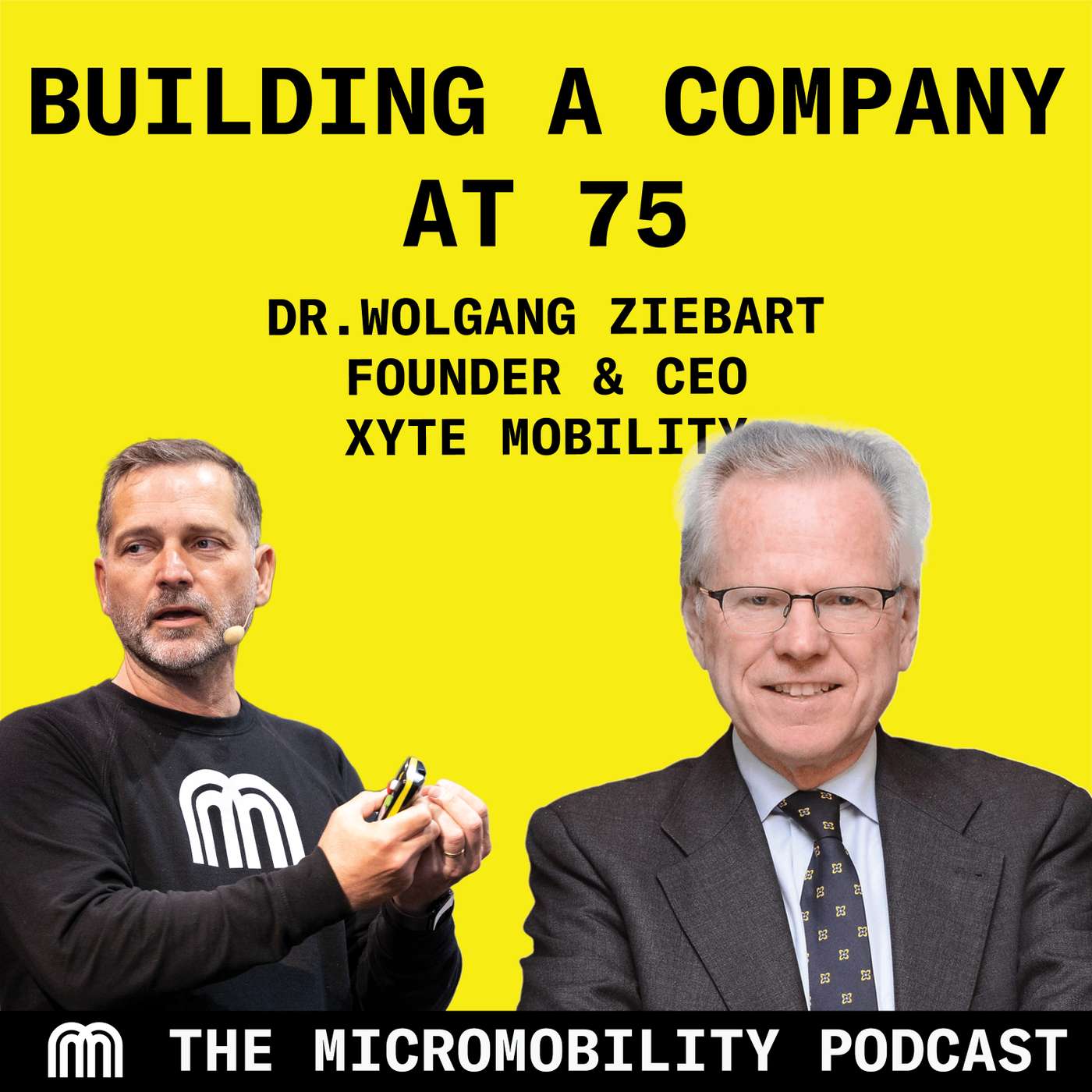
At 75, legendary auto exec Dr. Wolfgang Ziebart is launching a brand-new micromobility category with the XYTE ONE. It is a three-wheel, tilting, seat-belted urban vehicle that blends car-like safety with motorcycle agility. Guest host Horace Dediu digs into design choices, safety, performance, go-to-market, and why this product could unlock a new class of riders, especially safety-conscious non-riders.Host: Horace Dediu, Co-Founder, Micromobility IndustriesGuest: Dr. Wolfgang Ziebart (BMW board alum, led Jaguar I-PACE program, founder of XYTE Mobility)What you’ll learn- Why cars don’t fit cities, and how a 790 mm-wide vehicle changes traffic and parking- How car-grade crash principles (belt, space frame, side protection) work in a motorcycle-sized footprint- Why no doors and a tilting front end matter for stability, wind, and cost- Key specs: 19 kW (~25 hp), 0–50 km/h in 2.7 s, top speed ~109 km/h, ABS, tilt-lock at stops- Weather and comfort: tall glass windscreen with wiper, convertible-like airflow- Storage: ~70 L (carry-on, beer crate, even a violin case)- Price target: €12,900 in Germany (ex-VAT ~€10.7k)- Launch plan: city by city in Europe with local service- Lessons from the BMW C1 and why this time is different- Bootstrapping vs VC and scaling sustainablyMicromobility America 2026 is set for Jan 14–15 at San Francisco’s Palace of Fine Arts. Get your tickets at www.micromobility.io
What’s Next for Voi? Fireside Chat with CEO Fredrik Hjelm | Micromobility Europe 2025In this in-depth fireside chat, Fredrik Hjelm, Co-Founder & CEO of Voi, joins Tech.eu’s Robin Wauters live at Micromobility Europe 2025 to reflect on Voi's 7-year journey from the chaotic early days of scooter wars to becoming a profitable, semi-public micromobility leader operating in 110+ cities across Europe.Fredrik opens up about:Losing and then regaining Paris and why it mattersNavigating the shift from hypergrowth to profitabilityRaising public debt and preparing for a future IPOWhy circularity, not just sustainability, is key to Voi’s 2035 net-zero goalsBuilding a “full stack” mobility company across hardware, software, data, and operationsHow Voi is leveraging AI to drive internal efficiency and improve rider behaviorWith candid insights on regulation, safety, competition, and investor expectations, this is a must-watch for anyone interested in the future of urban mobility.🎤 Speakers:Fredrik Hjelm, CEO & Co-Founder, VoiRobin Wauters, Founder, Tech.eu & ProfoundoRecorded at Micromobility Europe 2025 in Brussels👉 Subscribe for more from Micromobility Europe📧 Get the top stories in micromobility each week: https://micromobility.substack.comCheck more at www.micromobility.ioChapters00:00 The Early Days of Voi02:17 Winning Paris: A Milestone for Voi05:29 Focus and Profitability: The Path to Success08:31 Competition in the Micro-Mobility Space11:21 Navigating Investor Relations and Funding14:27 Safety First: Evolving Perspectives in Micro-Mobility17:15 Influencing Policy and Regulatory Frameworks20:14 Sustainability Goals: Aiming for Net Zero by 203523:12 The Role of AI in Micro-Mobility26:06 Future of Mobility: Trends and Predictions
In this candid fireside chat from Micromobility Europe 2025 in Brussels, Stewart Lyons, Co-CEO of Bird and Spin, sits down with James Gross, Co-Founder of Micromobility Industries, for a wide-ranging conversation on the past, present, and future of shared mobility.Topics covered include:- Bird's journey through bankruptcy and its turnaround strategy- Why "rides" are the ultimate health metric for shared mobility- What went wrong with the early Bird playbook—and how Bird Canada did it differently- The state of the Canadian micromobility market (and why Toronto is still scooter-less)- Consolidation, regulation, and who wins the race for market share- Hardware innovation, e-bike dominance, and what's next for Bird/Spin- The real role of Uber, Lyft, and Waymo in the mobility ecosystem- Is Bird still the "Kleenex" of micromobility?🚲 Stewart shares hard-won lessons, future ambitions, and why Bird believes the best is yet to come.Recorded live at Micromobility Europe 2025 — the premier event for light electric vehicles and future urban transportation.Learn more at www.micromobility.io
At Micromobility Europe 2025 in Brussels, TechCrunch senior reporter Rebecca Bellan sits down with three of the industry’s most influential CEOs to unpack where shared e-scooters and e-bikes are heading next.Panel:- Michael Wahinushi - Co-CEO, Bird/Spin- Fredrik Hjelm - Co-Founder & CEO, Voi- Henri Moissinac - Co-Founder & CEO, Tier-DottThey unpack the current state and future of micromobility, with sharp insights into:- The shift from hype to profitability and disciplined growth- M&A: Who is acquiring Bolt's Micromobility Business? - Why AI is transforming fleet operations and user experience- Commuter adoption trends in North America and Europe- The real safety issues cities must solve (hint: it's not scooters)- How infrastructure and policy decisions shape adoption- Why short-term RFPs hurt long-term investment- The future of hardware, form factors, and consolidationA deep, no-spin conversation about what it really takes to build sustainable micromobility at scale.Subcribe to the Micromobility Newsletter: https://micromobility.substack.com/
In this firesidechat from Micromobility Europe 2025, Maxim, the president and co-founder of Tier-Dott, shares his journey into the micromobility sector, discussing the evolution of bike sharing, the lessons learned from his experience with Ofo, and the strategic decisions that led to the formation of TierDot. He emphasizes the importance of a conservative growth approach, the challenges and synergies of the recent merger with Tier, and the critical role of hardware in the business. Maxim also addresses sustainability, pricing strategies, and the future of micro mobility, highlighting the need for better parking infrastructure and the potential for significant market growth.Guest: Maxim Romain, Co-Founder & President, Tier-DottHost: Prabin Joel Jones, CEO, Micromobility IndustriesChapters00:00 Introduction to Micro Mobility and Personal Journey04:56 Lessons from Ofo and the Birth of TierDot09:42 Strategic Growth: The Slow and Steady Approach14:35 The Merger: Challenges and Opportunities19:51 Hardware Decisions: Building vs. Sourcing24:38 Sustainability and Fleet Management29:01 Market Dynamics: Pricing and User Adoption33:50 Future of Micro Mobility: Trends and Predictions
In this episode of the Micromobility Podcast, host Prabin Joel Jones sits down with Eliott Wertheimer, co-CEO of VanMoof, to explore the bold journey of reviving one of the world’s most recognized e-bike brands. Eliott shares his unique transition from aerospace engineering to the fast-paced world of micromobility, and the intense process behind acquiring VanMoof after its bankruptcy. The conversation dives deep into rebuilding trust with the community, improving product reliability, and making strategic shifts from direct-to-consumer to hybrid retail models.Discover how the new VanMoof is focused on transparency, design excellence, and local retail support to lead the next wave of sustainable urban transportation.Topics Covered:Eliott’s background in aerospace & transition to e-bikesThe decision to acquire VanMoof after its collapseCommunity trust & brand rebuildingChallenges in engineering & product reliabilityShifting sales strategy: DTC vs retailFuture of micromobility & urban transportation
In this episode of the Micromobility Podcast, host Prabin Joel Jones sits down with Paul-Adrien Cormerais, CEO and founder of Pony, the French micromobility company redefining shared transportation. From his early days as a quant in London to launching a hardware-driven, community-funded mobility startup, Paul-Adrien shares the bold decisions behind Pony’s growth, including their pioneering Adopt-a-Pony model that lets everyday riders invest in the fleet.We dive into:Why Pony avoided traditional VC routes and built a rider-funded modelThe challenges (and near disasters) of building hardware in-houseHow e-scooters transformed user growth overnightThe future of micromobility margins, manufacturing, and market consolidationWhy Europe’s small cities might be the real growth frontier
What happens when one of the biggest names in micromobility files for bankruptcy? In this exclusive interview, Bird Co-CEO Michael Washinushi joins host Prabin Joel Jones to break down the company’s dramatic turnaround. From Chapter 11 restructuring to a bold shift in strategy, discover how Bird is rebuilding its position as a leader in sustainable urban transportation.Learn how Michael transitioned from CFO to CEO during a crisis, retained critical city permits, cut operational costs, and set Bird on a new path toward growth. Whether you're in mobility, startups, or urban tech, this conversation is packed with insights on leadership, financial strategy, and navigating tough times.👉 Topics covered:Bird’s Chapter 11 bankruptcy and recovery strategyLeadership transition: CFO to CEOMicromobility business models and revenue optimizationCultural overhaul and operational efficiencyThird-party vehicles and hardware strategyThe future of shared electric scooters and urban mobility📍 Don't forget to like, subscribe, and hit the bell for more interviews on micromobility, sustainability, and innovation in urban transport.00:00 The Birth of Bird: Revolutionizing Urban Mobility01:40 Michael's Journey: From CFO to CEO05:13 Navigating Challenges: The Turnaround Strategy08:34 Cultural Overhaul: Post-Bankruptcy Bird11:58 Motivating the Team: Retention and Transparency15:29 Revenue Resilience: Strategies During Bankruptcy18:49 Tough Decisions: Streamlining Operations22:31 Building Brand Loyalty in Micro Mobility25:50 Metrics that Matter: Revenue and Customer Retention29:43 Understanding User Price Sensitivity32:18 Post-Bankruptcy Metrics and Surprises34:56 Strategies for Reducing G&A Costs39:24 Hardware Strategy and Market Positioning44:21 Geographical Expansion and Market Focus48:43 Future of Shared Micro Mobility
In this episode of the Micromobility Podcast, host Prabin Joel Jones speaks with Tobias W. Balchen, CEO of RYDE, discusses the journey of the company from its founding in Norway to becoming the largest operator in the Nordic micromobility market. He shares insights on the business model, profitability strategies, pricing dynamics, operational challenges, and the importance of software development and customer experience. TakeawaysRide is the largest operator in the Nordics with over 80,000 e-scooters.The company has focused on profitability from day one, avoiding heavy reliance on venture capital.Ride's in-house operating model contributes to quality service and cost management.The lifespan of e-scooters has increased significantly, impacting unit economics positively.Pricing strategies are crucial, with a focus on affordability to attract users.Seasonal adjustments are necessary, with operations varying by city and weather conditions.Software development is key to enhancing user experience and operational efficiency.Regulatory compliance is a significant challenge in the micro mobility industry.Ride is exploring in-house hardware development while currently using off-the-shelf solutions.The future of shared micromobility looks promising with potential for large operators to emerge.Chapters00:00 Introduction to Ride and Its Journey01:57 Founding Story and Business Model04:04 Growth and Expansion in the Nordic Market06:32 Profitability and Cost Management Strategies09:12 Operational Challenges and Seasonal Adjustments11:23 Unit Economics and Asset Lifespan13:36 Technology and Software Development16:00 User Experience and Customer Loyalty18:16 Regulatory Environment and City Partnerships20:27 Future of Shared Micromobility22:35 Conclusion and Vision for the Future
In this episode of the Micro Mobility Podcast, host Prabin Joel Jones speaks with Kristian Brink, CEO of Urban Sharing, about the evolution and future of bike share systems. They discuss the history of bike share, the transition from station-based to dockless systems, the impact of technology, and the various business models that sustain these services. The conversation also touches on the profitability of bike share systems, the tender processes involved, and the ecosystem of providers. Looking ahead, they explore future trends in micro mobility, including the integration of e-bikes and IoT technology.Chapters00:00 Introduction to Micro Mobility Podcast03:12 The Evolution of Bike Share Systems06:15 Generational Changes in Bike Share09:01 The Impact of Technology on Bike Share12:06 Station-Based vs. Dockless Bike Share14:58 Business Models of Bike Share Systems18:07 Tender Processes and City Sponsorship21:05 Profitability in Bike Share Operations24:09 Challenges and Future of Bike Share31:38 The Evolution of Bike Share Systems36:16 Understanding Unit Economics in Bike Share44:04 The Ecosystem of Bike Share51:15 Future Trends in Bike Share Technology
Leading up to Micromobility Europe, James Gross talks about the state of micromobility in Europe with Prabin Joel Jones, Founder and CEO of Mayten, along with Augustin Friedel, Senior Manager, MHP – A Porsche Company, who is sharing his personal views on the podcast. Topics Discussed: Shared and Owned Micromobility Prabin takes us through the Tier and Dott merger: Tier/Dott deal Background of the deal What the deal is Challenges in merging Where can they go from here What does this mean for the industry? Augustin predicts continued consolidation in the shared mobility space, with potential mergers or acquisitions among companies like Bold, Lime, and Voi. Prabin critiques Bolt's strategy and their future as the next Uber. Augustin also spoke about the struggles of owned ebike companies and the shift towards software-defined vehicles (SDVs) and AVs to enhance customer experience and safety. Software Defined Vehicles, AI and Regulation Augustin elaborates on Europe's position on AVs, noting a lag compared to the US and China due to a lack of investment and no existing tech giants. The potential for software-defined vehicles to improve user experience and safety, but recognizing Europe's fragmented approach to AVs and mobility tech. How government and local authorities could play a more significant role in advancing AVs and shared mobility through funding and regulatory support. Augustin speculates about Europe's potential to catch up in the AV space by pooling resources from major automotive players and focusing on local mobility solutions. Safety is discussed as a primary concern for micromobility users, with different European cities showing varying degrees of progress in creating safe infrastructure for cyclists and scooter users. Despite the challenges faced by shared mobility and AVs, there's optimism about the future, with emphasis on the need for innovation, better regulation, and strategic investments. The discussion concludes with a call for continued exploration and improvement in the mobility space, acknowledging the long journey ahead but recognizing the opportunities for impactful change. Trends to watch: - Software-Defined Vehicles and Artificial Intelligence - The Role of Government in Mobility Investments and Regulation - Safety and Infrastructure
Apple is reportedly exiting the car industry, focusing instead on software and mobility services. The company's decision is driven by the challenges and complexities of the automotive industry, including high costs, long product cycles, and difficulty in making significant contributions. Apple's future in mobility may lie in micromobility and smart accessories for vehicles. 🚗 Apple's decision to exit the car industry is not surprising given the challenges and complexities associated with building and selling cars. The company's strengths lie in software and user experience, which may be better applied to mobility services and smart accessories for vehicles.📱 The smartphone is already a powerful tool in the car, with features like Apple CarPlay allowing users to integrate their phone's apps and functions into the vehicle's infotainment system. Apple's focus on privacy and AI could enhance the smartphone's capabilities and create unique mobility experiences.💡 Apple's decision to pivot away from the car industry and explore opportunities in micromobility aligns with the broader trend of urbanization and the growing demand for sustainable transportation options. By focusing on smaller, more agile vehicles, Apple can address the needs of urban dwellers and contribute to the future of mobility.
On this episode of Ride On!, we are talking with Tyson Roehrkasse, the Chief Reviewer at our sister company, Ride Review. Tyson has been with us now for around 4 months and comes from a tremendous background in electric bike reviews, with the majority of his time spent working with Electric Bike Review, the OG of the ebike review space. Highlights: - 🚲 Reviews play a crucial role in the success of small electrical vehicles, with online reviews impacting pre-orders, investments, and revenue.- 🛵 The importance of local dealers and retailers in providing better customer experience and service for e-bike buyers.- 🌐 The rise of influencers in the scooter and one-wheel market, focusing on lifestyle and fun rather than technical attributes and formal reviews. We also use this episode to make some announcements around Ride AI, a platform covering all the technology that moves us. We have started with a newsletter, you can subscribe at http://rideai.org, and very soon we will be launching a Ride AI podcast with Ed Neidemeyer who has tirelessly covered the AV and vehicle tech landscape for over 15 years now. Finally, as part of the new launch, we will also be announcing our Ride AI Conference in Costa Mesa, CA the week of November 11th which will also coincide with Micromobility America. So big news there is a new event Ride AI highlighting all the technology that moves us with our first ever event along with Micromobility America moving from the Bay Area to Southern California. Why Southern California? On top of the being the largest market in the United States for small electric vehicles we also think it represents the renaissance happening in the hard tech world both as it relates to AI and mobility. SoCal is home to incredible mobility history like Hughes AirForce Base, the first west coast refineries from Rockefeller and now home to SpaceX and many startups looking to change the way we move. We hope you buy tickets and join us at the event, go to Micromobility.io to learn more about it.
Arnold Kamler, CEO of Kent International, discusses the evolution of his family's three generations of the bicycle business from its inception in 1906 to the present day. The journey includes the transition from retail to wholesale, adapting to market trends like racing and mountain bikes, overcoming challenges during the financial crisis and COVID-19, manufacturing in the US, moving it to Europe, then to Chin and then back to the US all the while remaining resilient in a dynamic industry that has now gone electric.Timeline: 🚴 1906: Arnold's grandfather arrives in the U.S. and opens up his first bike shop in the Lower East Side. 🛠️ Early 1920s: The family moves the business to New Jersey. 📈 1947: Post-WWII, Arnold's father shifts the business from retail to wholesale. 🌎 1950s-60s: The company adapts to changing markets, beginning to import bikes from Europe and then Asia. 🏁 1970s: Kent International experiences a boom with the popularity of racing/road bikes, starting in California. 🚵♂️ 1990s: The company adapts to the mountain bike craze and faces the challenges of globalization and competition from China. 💸 2008: The financial crisis impacts the business, leading to strategic pricing and inventory adjustments. 🌐 2010s: Kent International focuses on e-commerce and begins exploring the electric bike market. 📉 2020-21: The COVID-19 pandemic causes a surge and then a sudden drop in demand, impacting inventory management. 🌿 Present Day: Kent International remains a resilient player in the bicycle industry, adapting to current market trends and consumer needs.Other Highlights: 🌍 Global Expansion: Kent International's strategic shift to importing and later manufacturing in China. 🚀 Growth: Significant growth in the 1970s, reaching new heights in the 2000s with major retail partnerships. 🛠️ Manufacturing Innovations: Experimentation with different bike designs and materials, adapting to changing consumer preferences. 🛍️ Retail Shifts: Adjusting strategies to cope with the rise of e-commerce and direct-to-consumer sales. 🚲 Industry Trends: Continuous adaptation to industry trends like electric bikes and changing consumer habits.
Rerun: This episode was originally aired on 22 December 2023.In an emergency podcast episode of Ride On!, James Gross and guest Prabin Joel Jones discuss the Chapter 11 bankruptcy of Bird, one of the high flying shared micromobility companies over the last 5 years.. They delve into the financial challenges and strategic missteps of Bird and other companies in the shared micromobility space, considering the broader implications for the industry. They then turn their attention to how you could build a shared micromobility company today and the opportunities that are now present as capital and some of the existing industry heads for the exit.

Comments

Download from Google Play

Download from App Store
 United States