


 Claim Ownership
The Vitality Collective Podcast w/Dr. Jeremy Bettle
Subscribed: 0Played: 8
Subscribe

© 2024
Description
Welcome to The Vitality Collective Podcast—your guide to living a life of strength, resilience, longevity, and vibrant health.
Hosted by Dr. Jeremy Bettle, PhD—an internationally recognized expert in Human Performance with over 20 years of experience working with elite athletes and high performers—this podcast brings world-class expertise straight to you.
Join us as we dive deep into vitality, uncovering groundbreaking insights from leading experts in longevity, performance, nutrition, sleep, brain health, emotional well-being, and proactive medicine. Through engaging conversations and actionable insights, we'll empower you to unlock your potential, push past your limits, and make every day better!
Whether you're looking to prevent illness, enhance performance, or simply feel your best, The Vitality Collective Podcast w/Dr. Jeremy Bettle is here to inspire, educate, and motivate you to thrive.
Thank you for listening.
https://www.vitality-collective.com
IG: https://www.instagram.com/vitalitycollectivemontecito
LI: https://www.linkedin.com/in/vitalitycollective
Hosted by Dr. Jeremy Bettle, PhD—an internationally recognized expert in Human Performance with over 20 years of experience working with elite athletes and high performers—this podcast brings world-class expertise straight to you.
Join us as we dive deep into vitality, uncovering groundbreaking insights from leading experts in longevity, performance, nutrition, sleep, brain health, emotional well-being, and proactive medicine. Through engaging conversations and actionable insights, we'll empower you to unlock your potential, push past your limits, and make every day better!
Whether you're looking to prevent illness, enhance performance, or simply feel your best, The Vitality Collective Podcast w/Dr. Jeremy Bettle is here to inspire, educate, and motivate you to thrive.
Thank you for listening.
https://www.vitality-collective.com
IG: https://www.instagram.com/vitalitycollectivemontecito
LI: https://www.linkedin.com/in/vitalitycollective
52 Episodes
Reverse
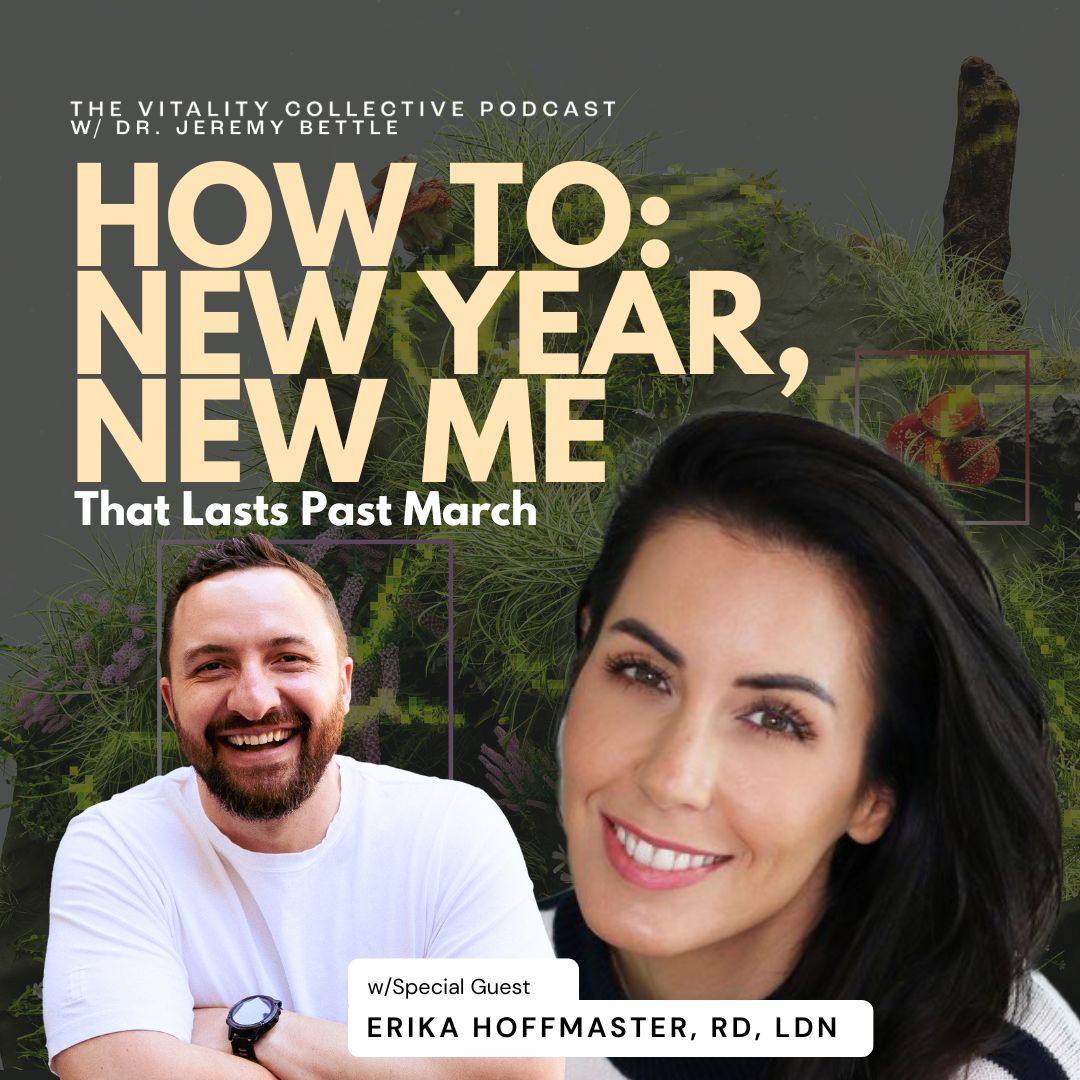
Episode Summary A Conversation Between a Performance Coach and Dietitian. It's January and the gym is packed with people who have no idea where to start. Instead of gatekeeping or complaining about New Year's resolutioners, Jeremy and Erika break down exactly how to walk into a gym for the first time, find your spot, and build a sustainable strength training practice. This conversation emerged from real questions Erika's clients asked about starting in the gym, covering everything from avoiding the all-or-nothing mentality to understanding the difference between soreness and injury. We explore why you need to start way below your capacity, why getting toned won't make you bulky, and the devastating statistics around hip fractures that should have everyone lifting weights. This is about meeting yourself where you are, building one habit at a time, and understanding that behavior change matters more than perfect knowledge. Guest Bio Erika is a registered dietitian specializing in helping women navigate metabolic health, body composition changes, and building sustainable nutrition habits. She works primarily with women in their 40s and 50s who are starting from scratch or coming off years of restrictive dieting, helping them implement what she calls health-promoting body composition change. Erika focuses on meeting clients where they are, identifying limiting factors and friction points that prevent habit formation, and building sustainable practices rather than following rigid diet rules. Links Connect with Erika: www.erikahoffmaster.com Follow Dr. Jeremy Bettle on Instagram and Linkedin: @DrJeremyBettle Follow Vitality Collective on Instagram, LinkedIn, and YouTube: @vitalitycollectiveperformance Three Key Insights Start way below your capacity and focus on building the habit before worrying about intensity. The first two weeks should be about logistics: finding your spot in the gym, stretching, doing basic core work, and getting comfortable in the environment. If you jump in too hard on January 1st, injury or overwhelming soreness will pull you out of the program before you've established the routine. Avoid the all-or-nothing mentality by making small, sustainable changes rather than overhauling everything at once. Whether it's trying one new vegetable per month, adding 15 minutes of sleep, or going to the gym to stretch for the first week, these incremental changes compound over time and lead to lasting transformation that survives past February. The biggest limiting factor to your fitness goals is usually not lack of knowledge but unaddressed logistics and friction points. If you can't get to the morning gym session, the real problem might be staying up too late on social media, not lack of motivation. Working backwards from your goal to identify and eliminate these friction points is how you turn aspirations into sustainable habits. Key Insights from the Conversation Seven out of ten people die within six months of breaking a hip from osteoporosis, and the best-case scenario with surgery is still one out of 5, making bone density the most critical and undertalked health metric Being toned requires both muscle mass and relative leanness, which means you must lift weights consistently for 6 to 12 months, not just do cardio and Pilates Women severely underestimate how hard it is to get bulky, as even bodybuilders struggle to put on significant muscle mass, and the average person won't train hard enough to achieve that look Progressive overload means gradually increasing weight over 8-week blocks as your form improves and the current weight becomes easier, not changing exercises every week The difference between A students and B students in high school is just 15 minutes of sleep, showing how small incremental changes create significant outcomes Most women coming to strength training have only ever been in the cardio section of the gym and find the weight area genuinely intimidating even when they know what they're doing Delayed onset muscle soreness (DOMS) peaks two days after training and follows an arc back to baseline, which is normal, versus sharp, one-sided, or joint pain which signals injury Starting with 8 to 12 weeks of core training focusing on the trunk, hips, ankles, feet, and shoulders creates the foundation that prevents injury when moving to heavier weights Weight training is anaerobic work fueled exclusively by carbohydrates, not fat, meaning you need adequate carb intake to have energy for your program and make progress The goal should be training twice per week even for high-performing individuals, not seven days, as recovery and adaptation happen during rest periods Most people coming to fitness are either chronic under-eaters who need to start at maintenance calories or have never dieted and might benefit from a deficit, making individual assessment critical Fiber acts as fuel for your microbiome, so jumping from low fiber to 50 grams overnight causes digestive distress because you literally don't have enough gut bacteria to process it Trainers with NASM certification have grounding in functional training and core-focused progressions that make them ideal for beginners learning proper movement patterns The first week in the gym should involve walking around, finding where equipment is located, identifying a comfortable space, and doing a basic stretching routine to build the habit Asking gym regulars for help or how to use equipment will generally get positive responses, as most people are excited to see beginners starting their fitness journey
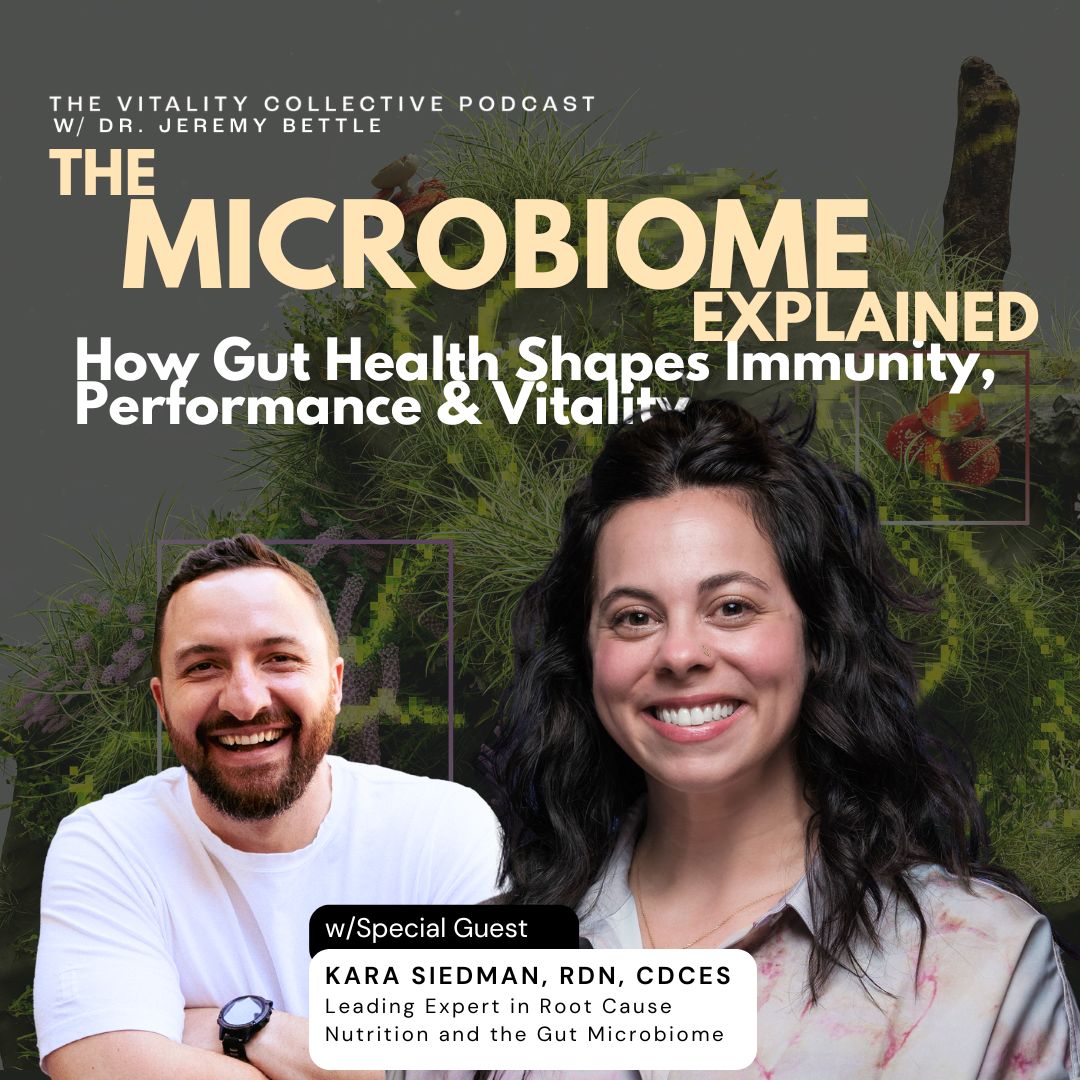
Episode Summary You have one trillion cells in your body and ten trillion bacterial cells that make up your microbiome, meaning you're literally one-tenth human. Kara Siedman, a registered dietitian and diabetes educator working at the intersection of biotech and wellness, explains why the microbiome is the foundation everything else is built on. From the gut X axis connecting your microbiome to every system in your body, to the surprising difference between probiotics and postbiotics, to why 80% of people are walking around with some form of dysbiosis, this conversation breaks down complex science into actionable insights. We explore why coconut oil might be sabotaging your gut health, how chewing your food is more important than any supplement, and what Jeremy's microbiome test revealed about missing keystone species. This is about understanding that when you can't figure out what's wrong, the answer often starts in the gut. Guest Bio Kara Siedman, RDN, CDCES, is a registered dietitian with 15+ years spanning inpatient care, outpatient program development, and integrative/functional nutrition. Her work in a leading gastroenterology practice sparked a root-cause focus and a specialty in the gut microbiome, leading to collaborations with Pendulum and Microbiome Labs and now resbiotic. At resbiotic, Kara serves as Director of Partnerships and Scientific Operations, educating healthcare providers on microbiome science and the clinical use of targeted pre-, pro-, and postbiotics. She's known for translating complex research into clear, actionable guidance that clinicians can use at the point of care. Links Kara Siedman on Instagram: Active with gut health advice and microbiome education Kara Siedman on LinkedIn: Connect for microbiome discussions and professional insights Resbiotic: Company website for precision biotic formulations and research Resbiotic Social Media: Follow for gut health advice and microbiome science Three Actionable Takeaways Think of your microbiome as the central hub and foundation for all aspects of health, not just digestion. The gut X axis influences everything from brain function to immune health to metabolic disease, so when you can't figure out what's wrong with your health, start by looking at the gut. Focus on adding diversity to your diet rather than taking things away, because what you feed your microbiome matters more than trying to seed it perfectly. Sprinkle chia seeds or basil seeds into foods you're already eating, add a second vegetable to your plate, mix half brown rice with your white rice, or throw beans and nuts on your salad to increase the variety of fibers feeding different bacterial strains. Look at your personal or family health history to choose targeted probiotic or prebiotic support rather than taking a generic one-size-fits-all approach. If metabolic disease runs in your family or you're dealing with specific symptoms like poor sleep, anxiety, or skin issues that might signal microbiome dysfunction, seek out strains and formulations studied for those specific outcomes. Key Insights from the Conversation You have one trillion human cells and ten trillion bacterial cells in your body, making you literally one-tenth human and nine-tenths microbial The gut X axis describes the bidirectional communication between your gut microbiome and every other system in your body, not just the brain There is no sterile part of the body except for a very thin mucosal layer protecting your immune system from your microbiome, and unique microbiome neighborhoods exist in your gut, skin, lungs, and eyes The hygiene hypothesis suggests we're living in an antimicrobial world that wasn't made for our microbial ecosystem, and people with more robust microbiomes often live with dogs or work in gardens Not all fiber is prebiotic fiber, and getting your 25 to 50 grams of fiber from a single source like psyllium husk won't provide the diversity your different bacterial strains need Postbiotics are either bioactive compounds produced by probiotics like butyrate, or purposely heat-treated probiotics that retain targeted benefits despite being non-viable, acting like "ghost biotics" The biggest myth about microbiome health is that you have to have GI issues, when poor sleep, anxiety, skin problems, brain fog, and even fatty liver in someone eating well can all be signs of dysbiosis Short-chain fatty acids like butyrate can cross the blood-brain barrier, promote systemic reductions in inflammation, and impact immune system function throughout the body Probiotic strains are like dog breeds where all dogs are the same species but a Yorkshire Terrier and a Pit Bull have completely different characteristics, which is why strain-specific research matters When probiotics die or become heat-treated, they can retain targeted benefits as postbiotics, which explains why fermented foods sitting on shelves still show profound microbiome benefits in studies Seventy percent of your immune system is in your gut, where immune cells determine what's friend or foe, and microbiome dysfunction can lead to loss of oral tolerance and food sensitivities COVID outcomes correlated strongly with microbiome health, where worse microbiome dysfunction led to worse complications regardless of other health markers The mucosal barrier in your large intestine is actually two layers thick with the inner layer being the only truly sterile area of the body Lipopolysaccharides from gram-negative bacteria can drive systemic inflammation if they breach the mucosal barrier, creating low-grade chronic inflammation felt throughout the body Chewing is the first critical step of proper digestion because saliva contains amylases that start breaking down carbohydrates, and if you chew bread long enough it will turn sweet Consuming too much protein in one sitting without adequate stomach acid and digestive enzymes can lead to proteolytic fermentation where unfriendly bacteria produce inflammatory byproducts like ammonia Coconut oil creates a much greater endotoxic response and rise in lipopolysaccharides compared to omega-3 fatty acids or monounsaturated fats Eighty percent of people are walking around with some form of dysbiosis, making it critical to ensure adequate stomach acid and digestive enzymes when consuming high-protein diets Stool testing is just a snapshot in time and your microbiome shifts and changes, which is why newer longitudinal sampling methods taking multiple samples per day provide better insights Missing keystone species like Akkermansia on a test doesn't necessarily mean you don't have it, as you could be making your own strains not detected by the test or it could be on life support needing proper feeding Probiotics are generally tourists or Airbnb guests that come in, provide benefits, and leave rather than colonizing, though we don't understand why some people show colonization and others don't Whole genome sequencing technology shows not just who is present in your microbiome but what functions they're performing, unlike older 16S testing that can identify presence but not activity
Episode Summary Shaun Bemis spent 20 years in Naval intelligence, primarily sitting in front of computers finding the enemy. Late in his career, something shifted during a Thanksgiving run in New York City, and he decided to run the NYC Marathon before turning 40. That simple goal spiraled into ultramarathons, including a 75K race on Mount Kilimanjaro and countless DNFs that taught him more than any finish line ever could. In this conversation, we explore the difference between grind culture and strategic difficulty, why the white belt mentality is essential for growth, and how stacking small consistent efforts beats intensity every time. This is about finding joy in the process of doing hard things, separating your self-worth from achievement, and understanding that hard is deeply personal, whether it's running 100 miles or learning to speak Hebrew with your in-laws. Guest Bio Shaun Bemis joined the Navy right after 9/11 and spent twenty years leading in high-pressure environments, from combat zones in Iraq and East Africa to intelligence centers, SEAL team intelligence operations, and ships at sea. The military taught him how to stay calm under fire, build systems that work when conditions don't, and push past whatever feels comfortable. Near the end of his Navy career he discovered ultramarathons, which became his favorite lab for testing how far we can stretch. His last race was a 75K on Mt. Kilimanjaro. Living in south Florida at sea level with zero elevation, he had to get creative to find solutions to be prepared for that race. His next is an Ironman, even though he doesn't own a bike and hasn't swam seriously in over a decade. He's racing with Team RWB to raise money for veterans and to put purpose behind the effort. He's carried the lessons from both his military career and endurance athletics into startups and executive roles. He's helped companies scale, coached young athletes, provides leadership training, and now works as a Fractional COO for teams that need clarity and execution, not more noise. Links Shaun Bemis on LinkedIn: Primary platform for connection and speaking inquiries Shaun Bemis on Instagram: Follow his ultrarunning journey Shaun's Substack: Weekly articles diving deep into doing hard things and personal growth Relentless Running Three Actionable Takeaways Start where you are and stack those bricks consistently. Don't jump to the end because skipping the white belt portion and those foundational steps means you won't get there at all, and the process will become a miserable grind instead of sustainable progress. Find a hard thing where you genuinely enjoy the process. You're not going to be motivated every day, so if you don't enjoy the actual doing of the thing, you'll burn out before you reach your goals, and discipline won't be enough to carry you through. Look for joy in the journey, not just the achievement. Whether it's finding that bakery in Barcelona, seeing the full moon in the Everglades, or having moments with your kids, the experiences along the way are what create a fulfilled life, and those moments only happen when you're out there doing the thing. Key Insights from the Conversation The doing of hard things is alluring and appears noble, but you must be clear on what you're actually seeking because achievement alone won't give you fulfillment There's a critical distinction between grind culture (making everything as hard as possible all the time) and strategic difficulty (being intentional about when and how you push your limits) The central governor theory suggests your brain has a safety mechanism that limits how far you can push, and you must regularly approach that limit to extend it, but avoiding discomfort will actually cause it to down-regulate your capacity Hard is deeply personal and everyone has their own level of difficulty, meaning doing hard things isn't just for superheroes or elite athletes but for ordinary people at their own edges Difficult easy is pushing limits in areas where you're already comfortable, while difficult difficult is the stuff you don't want to do, and both are necessary for growth The fear that holds people back is often judgment from others or self-judgment rather than the actual difficulty of the task itself The white belt mentality means approaching everything with fresh perspective and vulnerability, accepting that you won't be good at new things immediately Zone 2 running can feel harder than redlining because you have to walk to keep your heart rate low, making you feel judged and slow, but it's essential for building aerobic base Visualizing the bad times and mistakes is just as important as positive visualization because you'll never have a perfect race or performance, and you need tools for when things go wrong Comparing yourself to the old you can be motivating now, but eventually you need to appreciate whatever your current hard is rather than mourning past capabilities Instagram and social media fill your algorithm with elite performers, creating unrealistic comparisons when you're trying to learn something new as a beginner The ultra community has a respect for just completing the distance regardless of time, unlike marathon culture where people immediately ask about your splits Running or doing hard physical things allows you to explore parts of cities and have experiences you'd never find otherwise, from bakeries in Barcelona to moonrises in the Everglades Starting with intensity rather than consistency leads to burnout within a week, but nobody ever got in shape in a week regardless of workout perfection Listening to your body and adjusting your workout when you're not feeling it is smarter than forcing a prescribed grind session and risking burnout
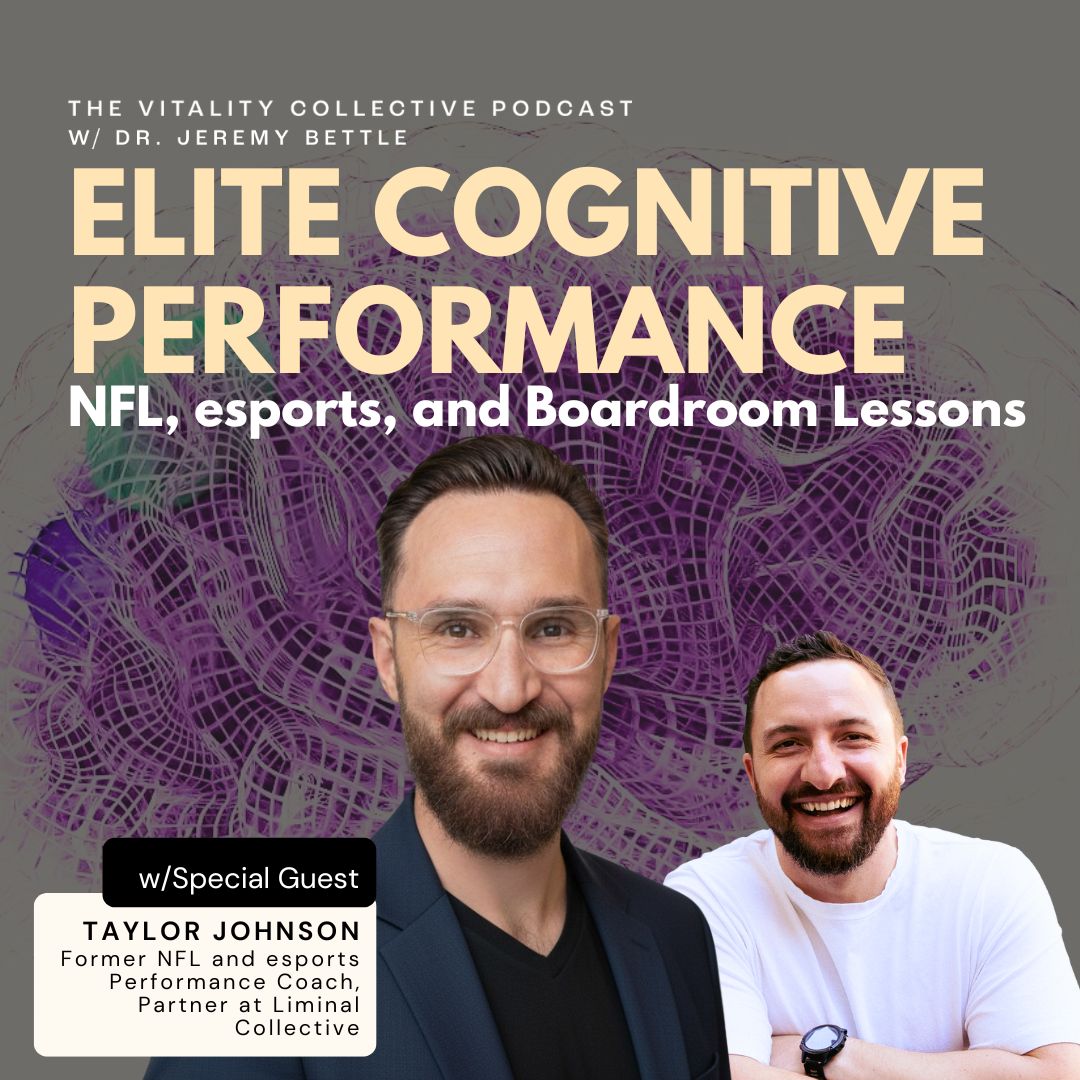
Episode Summary Taylor Johnson made what colleagues called "career suicide" when he left the NFL for esports, but that decision revealed something most people miss: elite performers across all domains face the same cognitive demands. Whether you're a 17-year-old gamer competing for millions or a C-suite executive making high-stakes decisions under pressure, your brain is your moneymaker. In this conversation, we explore how Taylor brought traditional sports performance principles into cognitive domains, why meditation is actually training for real-world pressure, and the specific habits that separate good performers from great ones. This is about treating your brain with the same intentionality athletes treat their bodies, from periodization and recovery to the surprising impact of that nightly drink before your big meeting. Guest Bio Taylor Johnson's diverse background spans performance coaching in the NFL, mentoring elite cognitive athletes in esports and gaming, helping redefine DoD cyber operator development, and partnering with CEOs, sales executives, and leadership teams to unlock their potential. As a Partner at The Liminal Collective, they create bespoke, transformative experiences for high performers across business, sports, military, and the creative arts. Links Taylor Johnson's Website: taylorjohnsonperformance.com Connect with Taylor on LinkedIn Three Actionable Takeaways Self-awareness drives performance. The more you know about yourself, how you think, and how you operate, the better opportunity you're giving yourself to perform when it matters most. Start developing this awareness by paying attention to when you're at your best and what conditions create that state. Play your own game. Life is the most badass game you'll ever play, so you might as well play all out in a way that aligns with your values and allows you to access the best of yourself. Think about the arena you're stepping into and how you can show up authentically rather than copying someone else's playbook. Start small with one meaningful change. It doesn't need to be a massive overhaul. Look at all the factors in your life and ask: what's the one area where spending a little more time might help everything else sort itself out? Whether it's sleep, a cognitive skill, or your weekly routine, pick one thing and run the experiment. Key Insights from the Conversation The transition from NFL to esports revealed that high performance principles transcend physical domains when you ask the right questions about organizational structure, training, practice, and recovery Cognitive burnout in esports athletes happens not from physical breakdown but from sustained cognitive load without proper coping skills, tools, or understanding of baseline regulation Business executives are cognitive athletes playing in high-stakes arenas with long hours under pressure, facing the same demands as esports competitors The similarity between positions in football and roles in esports extends beyond body types to personality characteristics, levels of aggression, communication styles, and how individuals think Dysregulation under stress leads to communication breakdown where everyone talks over each other and floods the comms, missing critical opportunities in both gaming and business contexts Your brain is your moneymaker, and the clearest, calmest thinking happens when you can maintain baseline regulation rather than getting tilted or dysregulated Meditation is only 50% of the equation because reaching calm on your mat means nothing if you can't access that state in real-time when the world demands it Self-awareness is what drives performance, and understanding your durability, resiliency, and capacity allows you to build the right scaffolding for sustained output Periodization applies to cognitive work just as it does to physical training, with intentional variation in volume, density, intensity, and frequency preventing burnout The chaotic schedule can be valuable training for maintaining baseline regulation, similar to how scrimmage days in sports prepare athletes for live game chaos Feeling suboptimal has become normal for most people because the decline happens gradually, and they don't realize how much better they could feel with foundational changes Building foundational habits takes three to six months before layering in supplements and advanced optimization strategies Alcohol eliminates your competitive advantage by degrading sleep quality and cognitive performance the following day, particularly before high-stakes meetings Peak performance is fleeting and unsustainable, while optimal performance focuses on being at your best consistently with what you have Longevity isn't something to think about later in life but rather the sustainability of high performance for as long as you choose to maintain it
Episode Summary Kent Bray was a director at Citibank, an Oxford Blue, and a professional rugby player who had achieved everything society told him would bring happiness. Instead, he found himself consuming 20 to 30 grams of cocaine weekly, spending £80,000 a year on his addiction, and nearly dying before entering rehab at 140 pounds. In this conversation, we explore the dangerous intersection of high achievement and internal collapse, why successful men struggle to ask for help, and the specific tools that created Kent's recovery. This is a raw, honest discussion about people pleasing, external validation, identity dissolution, and the actionable steps that lead from rock bottom to purpose. Guest Bio Kent Bray went from elite rugby fields to the London trading floors as a high performer before everything came to a sudden halt. Originally from Queensland, he earned a place at Oxford University and played rugby at the highest levels with Queensland, Oxford, and Harlequins before building a second career in finance as a Director and FX trader at Citibank London. At the height of outward success, addiction derailed his life. But beneath that, as many high performers recognize, were pressure, burnout, and the slow erosion of self that so often hides behind achievement. Hitting rock bottom forced a reckoning and a complete rebuild. Today, he is a counsellor and mentor who helps high performers navigate adversity, reclaim purpose, and build lives they are proud of. His work turns lived experience into practical guidance for those walking the hard road back. Links Kent Bray's Website: kentbraycounseling.com Connect with Kent on LinkedIn: @Kent Bray Instagram: @kentbraycounseling Three Actionable Takeaways Pick up the phone and speak to someone with complete honesty. The biggest mistake Kent made was not asking for help earlier, and the first step toward liberation is breaking the isolation with one truthful conversation. Reach out to family and friends, even if they're the last people you want to tell. Kent was surprised to receive only love, support, and compassion rather than judgment when he finally opened up about his struggles. Commit fully to the process and give it your best shot. Don't be half-hearted about recovery or change, because if nothing changes, nothing changes, and doing the same thing while expecting different results is the definition of insanity. Key Insights from the Conversation High achievement can become an addiction to external validation and adulation, creating a dangerous gap between your public profile and private reality People pleasing often stems from wanting to repay parents' sacrifices, leading to pursuing careers and paths that don't align with your true desires Professional athletes and high performers often struggle with identity dissolution when their career ends, losing not just their role but their entire social network, daily structure, and sense of purpose The opposite of addiction is connection, and sustainable recovery requires building a support community where you can be seen without your achievements Cocaine addiction becomes more accessible and likely when you have disposable income, energy, and have lost your central purpose or focus Protecting your public profile at all costs creates secretiveness, deceit, and manipulation that accelerates the destructive cycle of addiction The four-step framework for change is awareness (recognizing the problem), acceptance (admitting the truth), seeking a solution (finding help), and taking action (doing the work) Real vulnerability and honesty with a therapist is different from trying to "win at therapy" by being the impressive client who has it all figured out intellectually Recovery requires changing everything, not just stopping the substance, including avoiding triggering environments for the first year Each year of recovery gets easier as you grow and practice spiritual principles like truthfulness, authenticity, compassion, and presence
Episode Summary In this conversation, Dr. Jeremy Bettle sits down with dietitian Erika Hoffmaster to tackle holiday nutrition anxiety head-on. Erika breaks down the math that changes everything: in a 30-day month with 90 eating opportunities, maybe 7 are actual holiday meals, leaving 83 chances to maintain your normal routine. They explore why a single Thanksgiving dinner won't derail your goals, the difference between weight gain and fat gain, and why restriction creates a slingshot effect that leads to overconsumption. The conversation covers full-tank and low-tank habits for maintaining momentum when routines disappear, why maintenance phases are a skill worth practicing, and how to navigate the emotional weight of the season. Erika and Jeremy discuss future-me planning, environmental design, and why being present and enjoying your pumpkin pie with family matters more than making a "healthy" version that nobody wants. This episode reframes the holidays from a period of nutritional stress to an opportunity for connection, flexibility, and practicing sustainable habits. Guest Bio Erika Hoffmaster is a registered dietitian with a passion for helping individuals achieve personalized, sustainable health goals. She specializes in women's health, including nutrition for menopause and perimenopause, and supports clients in optimizing metabolic health, body composition, and long-term vitality. Erika's holistic and practical approach empowers clients to build healthier relationships with food and their bodies. Links Instagram: @ErikaHoffmaster Website: erikahoffmaster.com Three Actionable Takeaways Be realistic about what the next couple of months look like and identify core supportive anchor habits you can maintain even when routines fall apart. These might be as simple as a five-minute walk outside in your pajamas or having frozen meals ready. The goal is to keep momentum and stay connected to your ultimate health goals while still allowing room to enjoy festive time with family. Avoid the all-or-nothing mentality by doing the math on your eating opportunities. Out of 90 meals in November, maybe 7 are actual holiday events. That leaves 83 opportunities to maintain your normal routine. Enjoy those holiday moments fully and intentionally, then simply return to your regular meals the rest of the time without guilt or restriction. Walk after meals, or do any kind of movement that gets you up and active. Whether it's a family walk around the neighborhood or dancing to three songs in the kitchen, movement after eating helps with glucose regulation and digestion while keeping you connected to healthy habits without being restrictive or missing out on family time. 10 Takeaways The weight you see on the scale after a big meal is primarily water weight, increased glycogen storage (carbs stored with water), and literal food mass in your digestive system, not immediate fat gain Food serves multiple purposes beyond fuel: it's connection, culture, and shared experiences. No one will remember the healthy pumpkin pie, but they will remember time spent together Restriction works like a slingshot. The more you pull back (physically or mentally), the harder you'll snap in the opposite direction, often leading to binge episodes or overconsumption Most diet plans are designed for "perfect days" with full energy, stocked fridges, and complete schedule control. Having full-tank and low-tank versions of your habits prepares you for reality Maintenance is a skill that must be practiced, not just a waypoint between diets. Learning to balance your energy budget is essential for sustaining any fat loss you achieve Mental restriction (eating something while thinking "I shouldn't have this" or "I'll have to burn this off") is just as damaging as physical restriction and prevents you from being present Future-me planning takes five minutes the night before to map out meals when you're not hungry, stressed, or decision-fatigued, making it easier to navigate challenging food environments Environmental design matters enormously. Immediately portioning leftovers into meal containers and freezing them prevents mindless grazing and maintains the special occasion nature of holiday foods Your body hates being in a calorie deficit. At maintenance, you're making your cells happy by giving them the energy they need, which often leads to better gym performance and energy levels "Leveling up" meals is more sustainable than pursuing perfection. Adding a vegetable, choosing water over alcohol, or including a protein source makes any meal better without requiring complete transformation
Episode Summary In this conversation, Dr. Jeremy Bettle sits down with Mike Robertson, President of Robertson Training Systems and co-owner of IFAST, one of America's top gyms. Mike shares insights from his career coaching everyone from NBA players to octogenarians, focusing on the often-forgotten elements of speed and power in training programs. They explore why power is the first physical quality that declines with age, the critical difference between slow strength training and adding speed back into movements, and why tissues need careful preparation before jumping into plyometrics. The conversation covers movement phases, impact forces, progression timelines that are much longer than people expect, and real-world applications including an 80-year-old woman's nine-month journey from basic stability work to drop jumps that improved her bone density. Mike explains how his team successfully implements power training across all populations, from professional basketball players to an 87-year-old using a walker, and why maintaining explosive qualities is essential for fall prevention, bone health, brain function, and continuing the activities you love throughout life. Guest Bio Mike Robertson is one of the most highly sought-after coaches, consultants, speakers and writers in the fitness industry today. Known for his "no-nonsense" approach to coaching and program design, Mike has made a name for himself as a go-to resource for professional athletes from every major sport, but especially in the world of basketball. Mike is the President of Robertson Training Systems and the co-owner of Indianapolis Fitness and Sports Training (IFAST) in Indianapolis, Indiana. IFAST has been named one of the Top 10 Gyms in America by Men's Health magazine six times in total. Last but not least, Mike is a devoted husband to his wife Jessica, and father to his children Kendall and Kade, his dog Finn, and his cat Steve. Links Website: robertsontrainingsystems.com Instagram: @RobTrainSystems Three Actionable Takeaways Be honest about where you're starting from and be okay with it. The first step is getting a real baseline of your current capabilities without ego or judgment. If you know where you truly are and where you want to go, you can reverse engineer the right program to get there safely. Start with a smart foundational program that ramps up intensity gradually. If you haven't trained in years, don't test your max effort box jump or sprint time on day one. Build the foundation with slower strength work first, then progress through lower-intensity power activities like jump rope or medicine ball throws before advancing to higher-impact movements. If power training is important for your longevity and vitality, you need to train it forever. Don't let this be a two-week experiment. Find ways to incorporate power work into your program every week for months, years, and decades, because maintaining this quality is essential for doing the activities you love as you age. 10 Takeaways Power, defined as the ability to use strength quickly, is the first physical quality that declines with age, making it every bit as important to train than pure strength for longevity Before adding speed or explosive elements to training, tissues must be prepared through a foundation of slower strength work that builds connective tissues, tendons, ligaments, and joint surfaces The progression from foundational strength to explosive power typically takes much longer than people expect. Double whatever timeline you're thinking, especially if you haven't done elastic explosive activities in 10-20 years Movement phases can be simplified into three components: breaking/loading phase (storing energy, Eccentric), amortization/transfer phase (the zero point, isometric), and propulsive/release phase (expressing force, concentric) Impact forces scale dramatically with jump height and landing distance. Stepping off a 12-inch box creates completely different demands than a 36-inch box, requiring careful progression management Movement competency must be maintained across different speeds and loads. Looking good in a slow bodyweight squat doesn't guarantee safe mechanics when adding a barbell or performing explosive movements Power training doesn't need to look the same for everyone. An 87-year-old throwing a volleyball while seated in a walker and an NBA player doing depth jumps are both doing appropriate power training for their level Reducing gravity (lying down vs. standing) and adding external support (suspension trainers, racks) are two key strategies for regressing exercises to match individual capabilities Power training has neurological benefits for brain health and builds confidence in navigating a reactive world where bumps, trips, and unexpected forces are constant threats The gym isn't the end goal. People train to maintain their ability to do activities they love, whether that's hiking, gardening, playing pickup basketball, or simply not falling down
Episode Summary In this conversation, Dr. Jeremy Bettle sits down with Dr. Nathan Jenkins, a former University of Georgia professor with nearly 100 published research papers who now serves as the labs analyst for RAPID Health Optimization. They explore why so many people are deficient in key micronutrients like magnesium and vitamin D, critical connections between gut health and systemic inflammation, and the difference between primary aging (inevitable cellular changes) and secondary aging (lifestyle-driven decline). Dr. Nathan explains why your standard blood work misses crucial markers, what symptoms might indicate gut dysbiosis, and why eating a variety of colorful vegetables is the most underrated intervention for health. This episode is essential for anyone looking to move from reactive sick care to proactive performance optimization. Guest Bio Dr. Nathan Jenkins is an exercise physiologist and performance coach with nearly two decades of experience in sports nutrition and human performance. A former associate professor at the University of Georgia, he's published nearly 100 research papers examining how the body adapts to exercise and nutrition at the cellular and molecular level. Since leaving academia, Nathan has worked with over 1,500 clients as a sports nutrition coach and now serves as the labs analyst for RAPID Health Optimization. In that role, he integrates deep expertise in physiology, lab interpretation, and coaching to design highly individualized supplementation and nutrition protocols. Links Instagram: @DrNathanJenkins Three Actionable Takeaways If you're not regularly exercising three to four days per week (ideally more) and pushing yourself to some level of discomfort during sessions, you're leaving significant benefits on the table. Your training should include a mix of strength and endurance work, and at times should look somewhat similar to how a real athlete trains to combat the effects of aging. Eat a bunch of different colored vegetables with different types of fiber, targeting 20 to 30 grams of fiber per day. This is the most important thing you can do for gut health, and it will have ripple effects throughout your entire system including inflammation, immune function, and even cognitive performance. Think of every hour of sleep before midnight as counting for two hours, and every hour after midnight as counting for one hour. This mental framework helps prioritize getting to bed earlier and can massively improve both objective and subjective measures of sleep quality, which impacts everything else in your life. 10 Takeaways Standard annual blood work typically includes only a complete blood count and metabolic panel (maybe 10-15 markers), missing critical micronutrient status, detailed hormone panels, and performance-related markers that comprehensive panels assess Seven to nine out of ten active, health-conscious people going through his assessments are deficient in magnesium, omega-3s, vitamin D, and multiple B vitamins despite doing most things right with their training and macronutrients RBC (red blood cell) magnesium is a better indicator of true magnesium status than serum magnesium because serum levels are tightly regulated by the kidneys and can appear normal even when cellular stores are depleted Magnesium is critical for over 500 enzymatic reactions in the body, affecting sleep quality, cognitive function, muscle fatigue, muscle pain, and strength output, making it one of the few "evergreen" supplements almost everyone should take Elevated homocysteine, an inflammatory marker tied to cardiovascular disease, almost always indicates a B vitamin deficiency and is commonly found even in otherwise healthy people Approximately 70% of the body's entire immune system resides in the gut, meaning localized gut inflammation can have significant "spillover" causing systemic inflammation affecting every organ system Dysbiosis (gut microbial imbalance) means too few beneficial commensal bacteria that produce short-chain fatty acids like butyrate, and too many opportunistic or pathogenic bacteria, creating an inflammatory environment Pay attention to bowel movements as a primary indicator of gut health. They should be regular (same time daily), normally formed (not loose diarrhea or hard constipation), and consistent. Accepting irregular GI function as "normal" is a mistake Brain fog, cognitive changes, difficulty recalling words, frequent illness, and persistent fatigue are all potential symptoms of gut dysbiosis and should prompt investigation even without obvious GI distress Primary aging refers to inevitable biological cellular changes over time, while secondary aging is lifestyle-driven decline that can be prevented through proper training, nutrition, sleep, and stress management
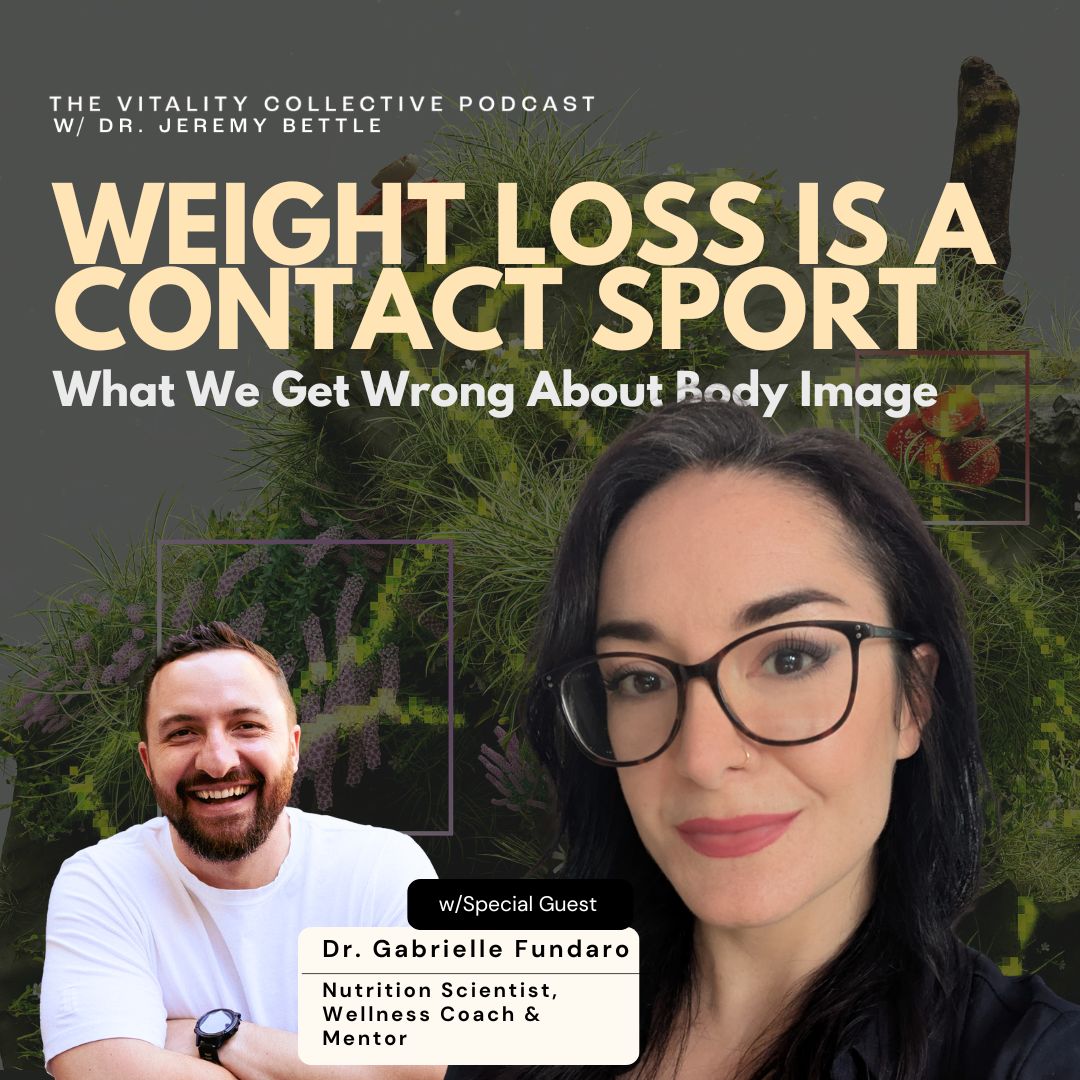
Episode Summary In this deeply insightful conversation, Dr. Jeremy Bettle sits down with Dr. Gabrielle Fundaro, an exercise scientist and coach who specializes in weight-neutral approaches to health and body image. Dr. Fundaro shares her personal journey from chronic dieting and physique competition to recovering from disordered eating while coaching others through similar struggles. They explore why weight loss is like a contact sport with inherent risks, the difference between body image and appearance, and what it means to pursue health without making the scale the centerpiece. This conversation tackles informed consent in coaching weight loss, the psychological factors that increase risk during weight loss attempts, and why liking how you look doesn't necessarily mean you have positive body image. It's an essential episode for coaches, health professionals, and anyone struggling with the relationship between their body, food, and fitness. Guest Bio Dr. Gabrielle Fundaro is a nutrition scientist, wellness coach, and mentor who helps individuals and health professionals build sustainable, values-aligned wellbeing free from diet culture. As the founder of Trust & Nourish, she teaches an evidence-based approach to eating and behavior change that centers self-trust, satisfaction, and long-term wellbeing. She also mentors coaches in ethical, client-centered practice through CEU-approved education on responsible weight loss coaching, weight neutral approaches, and navigating body goals with nuance and care. With a background as an Exercise Science professor and years of experience translating research into practical guidance, she's known for bringing clarity, compassion, and meaningful perspective to complex conversations about health. Links Instagram: @trust_and_nourish Website: trustandnourish.com/start Upcoming Webinar (mid-November): Coaching Weight Loss Responsibly Three Actionable Takeaways Remember that liking the way you look does not mean you have a positive body image. Fortunately, you can focus on training a positive body image, which is about having a flexible perspective toward your appearance and being respectful and trustful of yourself regardless of how you look. An appearance-based weight loss goal isn't necessarily harmful, unethical, or wrong, but it is riskier than other goals. You need to be aware of the risks and realities and get honest with yourself about what you're hoping weight loss will bring you, because nothing is guaranteed except for a smaller body. Establishing a healthy relationship with yourself is a long process, but it's foundational for building a healthy relationship with fitness and food. This relationship needs to come from a place of appreciation and self-care rather than dissatisfaction and striving for unrealistic perfection. 10 Takeaways Weight-neutral approaches decentralize weight loss as the primary outcome and instead focus on modifiable health-promoting behaviors, measuring improvements in blood pressure, strength, psychological markers, and relationship with food rather than the scale Intentional weight loss carries inherent psychological risks that increase based on historical factors like chronic dieting, personality traits like perfectionism, and external pressures from family or coaches The goal people state outwardly often isn't their real goal. Someone saying they want to get healthier may really mean they want to lose weight but know that's not as socially acceptable to say anymore Body image refers to the thoughts and feelings you have about your body internally, while appearance is your external physical form that others can see Positive body image isn't about liking your appearance but about having flexibility toward it and not being preoccupied with controlling how you look When someone expresses beliefs that weight loss will dramatically improve their life quality, relationships, or happiness, that's a sign they've internalized weight stigma and hold unrealistic expectations Tracking macros can create a restrict-binge cycle where people eat perfectly during tracking periods but then overeat significantly during untracked times The psychology of why someone came to you as a coach is inseparable from the work. If you're not addressing emotions and thoughts about body and weight in an informed way, you may be causing harm Even coaches and health professionals with extensive knowledge struggle with behavior change when life circumstances change, proving it's never just about information Taking weeks off from the gym due to life demands doesn't mean you've lost everything. Flexibility and self-compassion across different life seasons is key to long-term consistency
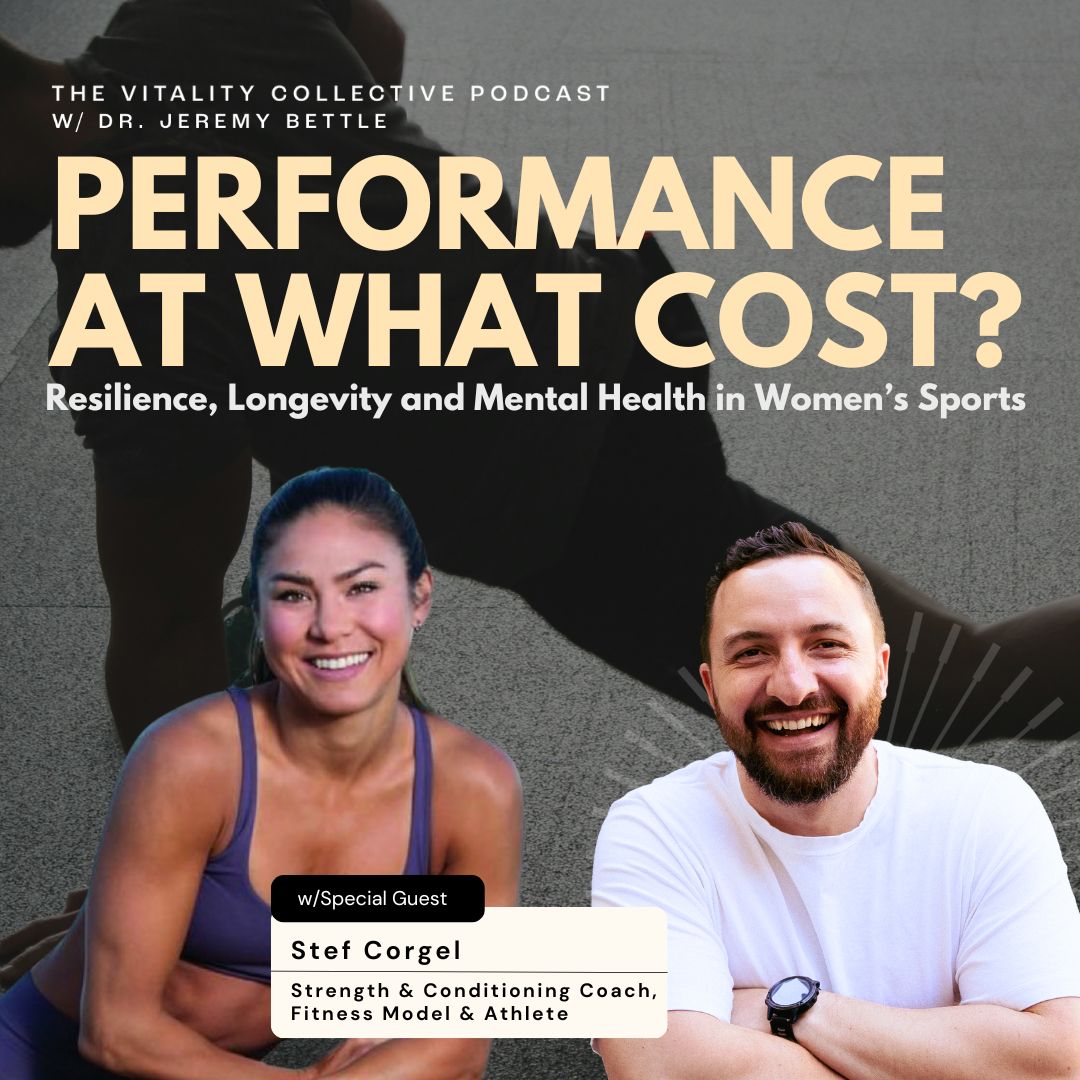
Episode Summary In this deeply personal conversation, Dr. Jeremy Bettle sits down with Strength and Conditioning Coach, athlete and fitness model Stef Corgel to discuss the hidden struggles many female athletes face. Stef opens up about her decade-long battle with eating disorders, including anorexia athletica, and how the pressure to perform combined with societal expectations around body image created a destructive cycle. They explore the transition from college sports to professional fitness modeling, the importance of seeking help early, and how athletic identity can both hurt and heal. This conversation also covers fertility preservation, injury prevention, deconditioning, and why fueling like an athlete matters more than looking like one. It's an essential episode for female athletes, coaches, and anyone navigating the complex relationship between performance and body image. Guest Bio Stef Corgel is a Los Angeles–based Strength and Conditioning Coach, athlete, and fitness model driven by a passion for movement, mindset, and community. A former NCAA basketball player with a degree in Exercise Physiology, she went on to play professionally in La Spezia, Italy before building a multifaceted career in fitness and wellness. Today, Stef is an in-studio and virtual fitness instructor, Los Angeles County Ocean Lifeguard, and digital content creator for leading wellness brands. Blending science, sport, and storytelling, she empowers others to move with confidence and embrace life's challenges. When she's not training or creating, you'll find her chasing World Major Marathons—or enjoying a sunset glass of wine in Manhattan Beach with her fiancé, Pat, and their pup, Miso. Links Centr App Instagram: @stefcorgel Vuori Three Actionable Takeaways If you're stuck in a cycle of low self-worth or struggling with disordered eating patterns, start by confiding in someone you trust. Healing isn't linear and it affects everyone around you, so having people support and cheer you through the process is essential for maintaining good health on the other side. Stay skeptical of what you see on social media, especially content pushing specific supplements or body transformations. None of it tells the full story, so do your own research and consult qualified professionals before making changes based on what influencers promote. If you're a woman in sport, understand that your worth as a teammate, leader, and strong woman will propel you far beyond athletics. The resilience and confidence you build through sport creates a foundation that will help you succeed and make an impact in whatever you choose to do next. 10 Takeaways The transition from being the best on your high school team to a D1 program is an ego death that teaches resilience early, which becomes invaluable in business and relationships later in life Anorexia athletica is over-exercising without adequate calorie intake and is often glorified as dedication or hard work, making it difficult to recognize as disordered behavior Working hard doesn't always guarantee the reward you expect, and that reality can trigger destructive coping mechanisms if you don't have proper support systems in place Female athletes need open communication with coaching staffs about mental health struggles, though this wasn't always the norm and still requires courage to initiate While the basics are similar, proper nutrition for performance is fundamentally different from general population nutrition. Learning this distinction is critical for athletic success and mental health The fitness modeling industry paradoxically helped Stef recognize her eating disorder by showing her other women struggling silently, which motivated her to break the cycle Fertility preservation and egg freezing revealed how eating disorders can affect reproductive health, even when you think you've maintained performance through heavy training Taking extended breaks from training causes deconditioning in all tissues and systems, making ego-driven returns to previous performance levels a primary cause of injuries Even experts in exercise science and coaching struggle with injury rehab in their own training, highlighting how difficult it is to balance ambition with smart progression Dexa scans for bone density should start in your 30s, not wait until insurance covers them at 65 when you've already experienced decades of potential bone loss
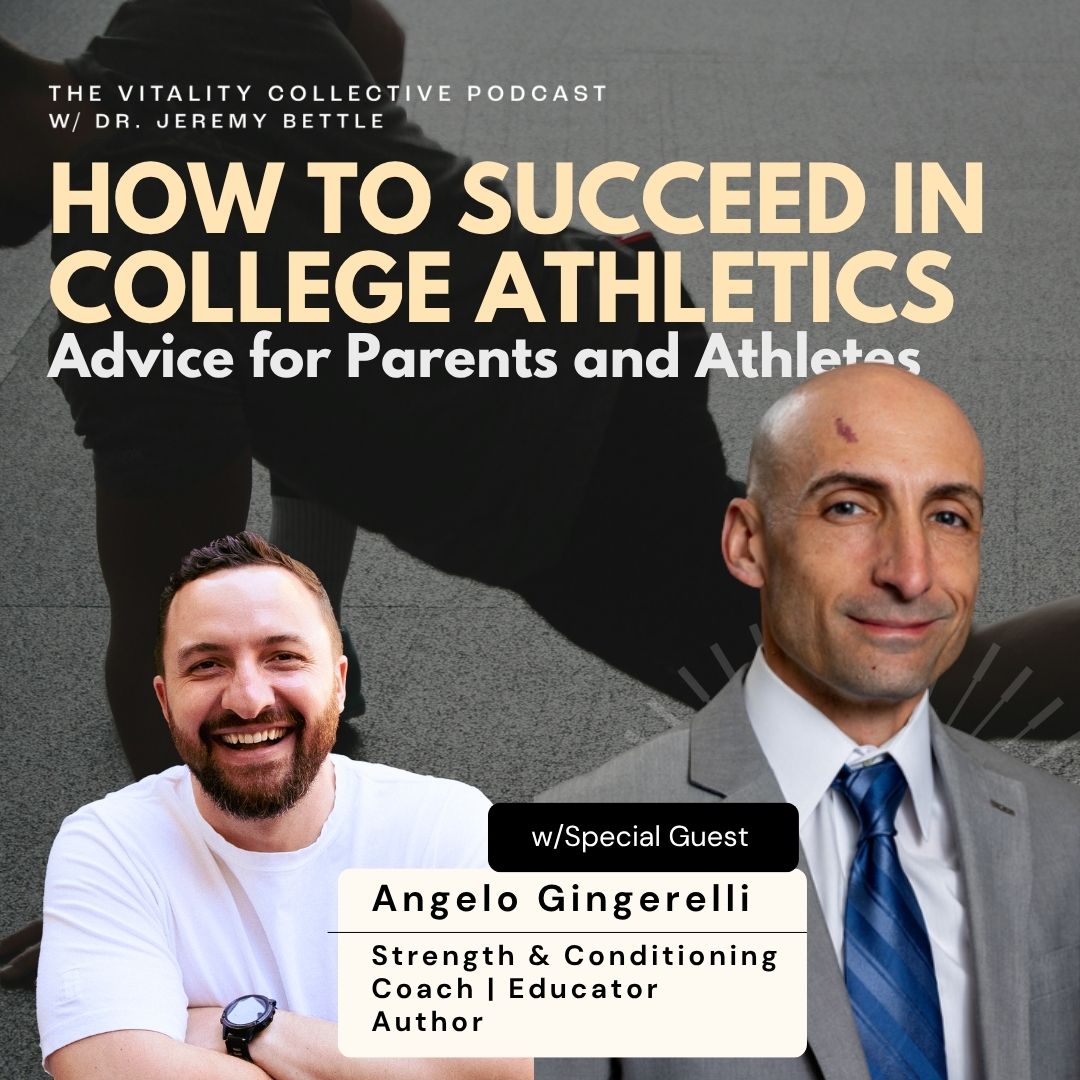
1. Episode Summary In this episode, Dr. Jeremy Bettle talks with longtime Seton Hall strength coach and educator Angelo Gingerelli about how to succeed in the demanding world of college athletics. Drawing on nearly two decades of experience, Angelo shares practical guidance for both athletes and parents—from choosing the right program and managing expectations to building the work capacity needed to thrive. The conversation offers a grounded look at what really drives success in college sports and how families can prepare for the journey ahead. 2. Guest Bio Angelo Gingerelli spent 20 years as a strength and conditioning coach at Seton Hall University before moving into academia as a professor at Kean University. He's the author of The Next Four Years, a guide for families navigating the modern college recruiting landscape, and Finish Strong: Resistance Training for Endurance Athletes. Angelo has worked with thousands of athletes across 12 collegiate sports and now helps parents and players understand how to prepare for college athletics in today's changing environment, including NIL, the transfer portal, and the growing professionalization of youth sports. 3. Links The Next Four Years and Finish Strong by Angelo Gingerelli Instagram: @mr5thround LinkedIn: Angelo Gingerelli Email: angelo.gingerelli@gmail.com Three Actionable Takeaways Go into college thinking long term: Choose a school and program that align with where you want to be at 30, 40, and 50 years old, not just what feels exciting at 18. It's about setting up your future, not just your next season. Do your research: Look beyond the sales pitch of recruiting trips. Ask the hard questions about academics, training expectations, and long-term opportunities so you know exactly what you're signing up for. Increase your work capacity: College is a step up from high school in every way. Prepare your body and mind now so you can handle the demands and stay strong through the season. Ten Takeaways Most families enter college athletics as first-time consumers; understanding the system is essential. Work capacity—physical, mental, and emotional—is the biggest difference between high school and college athletes. Athletes face new academic pressures and must manage larger playbooks, heavier travel, and tighter schedules. The NIL era and transfer portal have completely reshaped the recruiting landscape in just five years. Parents should focus on long-term development and realistic fit rather than chasing elite labels or short-term prestige. Research schools carefully: understand academic restrictions, required summer commitments, and how majors align with athletic schedules. Communicate early with strength and conditioning staff to understand expectations and prepare for conditioning tests. Build time-management skills before college; schedule academics, training, meals, and rest strategically. Create an identity beyond sport—develop relationships, interests, and career skills outside the team environment. Treat your college years as preparation for life after athletics, not just a playing career.
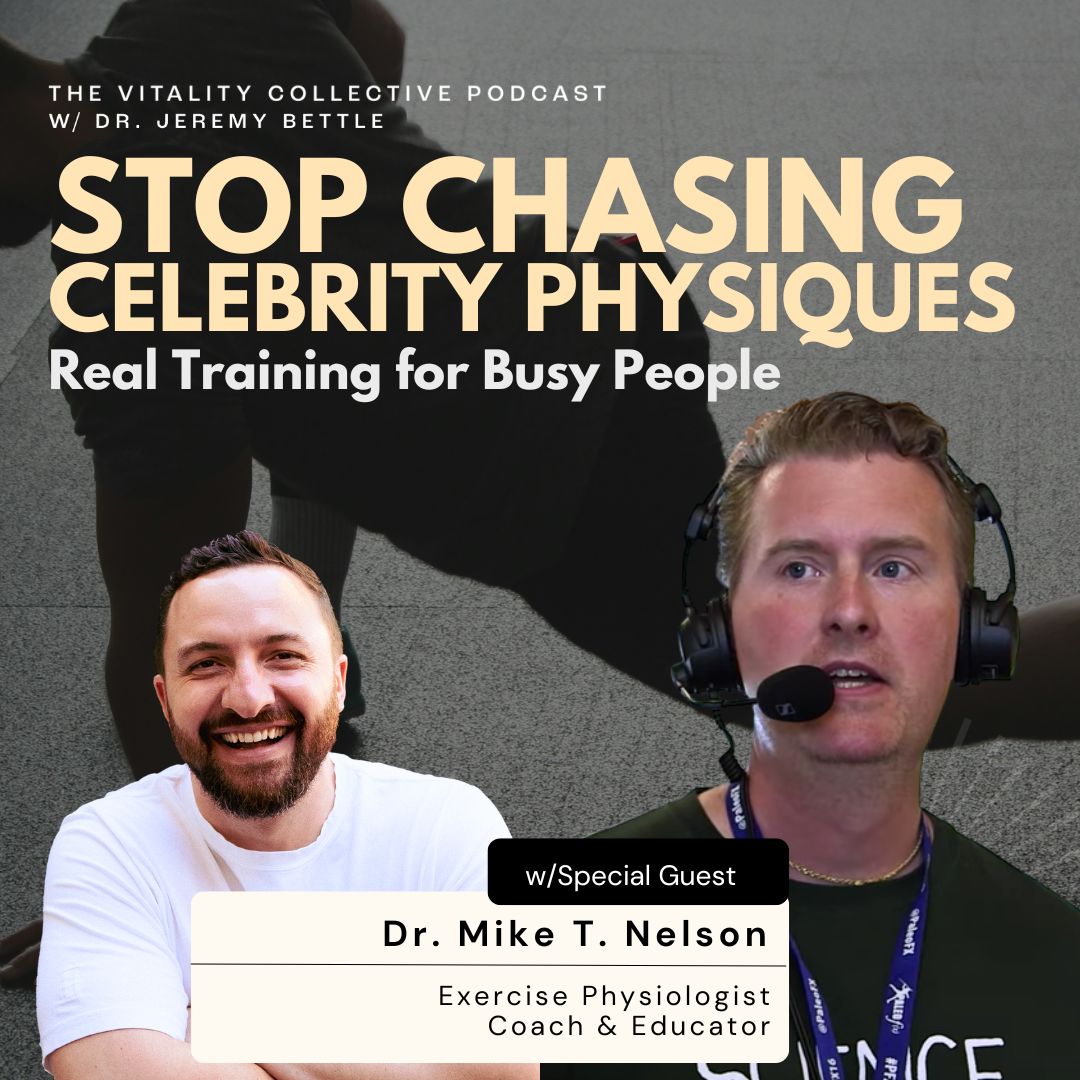
Episode Summary In this episode, Dr. Jeremy Bettle sits down with exercise physiologist Dr. Mike T. Nelson to cut through the noise of fitness tribalism and social media pseudoscience. Together, they unpack why chasing celebrity physiques misses the point, why training stimulus matters more than perfect nutrition, and how to approach progressive overload without getting caught up in dogma. Mike and Jeremy share insights from working with everyone from professional athletes to busy executives, explaining how to balance ambitious goals with real-world constraints. The conversation also tackles unrealistic body standards in media, the importance of finding leverage points for behavior change, and why the best program is always the one you'll actually do. Guest Bio Dr. Mike T. Nelson is an exercise physiologist and educator specializing in metabolic flexibility, heart rate variability, and performance optimization. He works with clients ranging from professional athletes to busy executives, helping them navigate the complexities of training, nutrition, and recovery. Mike teaches through his Flex Diet Certification program and shares daily insights through his newsletter and podcast. Links Mike's Newsletter Instagram Podcast: Flex Diet Podcast Certification: Flex Diet Certification Three Actionable Takeaways Find a qualified expert to guide you rather than trying to figure everything out yourself. Yes, true experts are expensive, but they're far cheaper in the long term than wasting time with someone who doesn't know what they're doing or spinning your wheels alone. Accept that there is no silver bullet solution to your fitness goals. You're going to have to do the work, train consistently, and address multiple factors simultaneously, no matter what supplements or shortcuts are being sold to you. Get clear on your true priorities and goals, not what you think you should want based on social media. By definition, prioritizing something means other things will take longer or receive less attention, and that's completely okay. 10 Takeaways Training stimulus is the foundation that everything else supports. Perfect training with okay nutrition will outperform perfect nutrition with okay training every single time. Heavy lifting doesn't mean one specific rep range. Using rep ranges like 3-5, 5-8, or even 12-15 can all build strength and muscle when you progressively overload within that range. Heart rate variability provides a useful window into your overall stress levels, though it won't tell you the specific type of stressor affecting you. Coaching leverage comes from multiplying physiologic response by the client's ability to actually change. Start with high-impact interventions that clients will actually comply with. Context determines everything in training. What works for a 25-year-old professional athlete won't work for a 55-year-old CEO with different constraints and priorities. The images of celebrities and actors in peak physique condition are incredibly transient, often maintained for just hours during a photo shoot, not sustainable states of health. Pro athletes are just humans with their own preferences and compliance issues. Even at the highest level, behavior change and systems design matter more than perfect knowledge. Eccentric loading and the ability to decelerate your body is one of the most underrated and universally important training adaptations for injury prevention. Environmental design is critical for behavior change. If you have to think about or remember to do something consistently, you've already lost half the battle. The best program is always the one you'll actually execute. A perfect program never done is worth nothing compared to a good program done consistently.
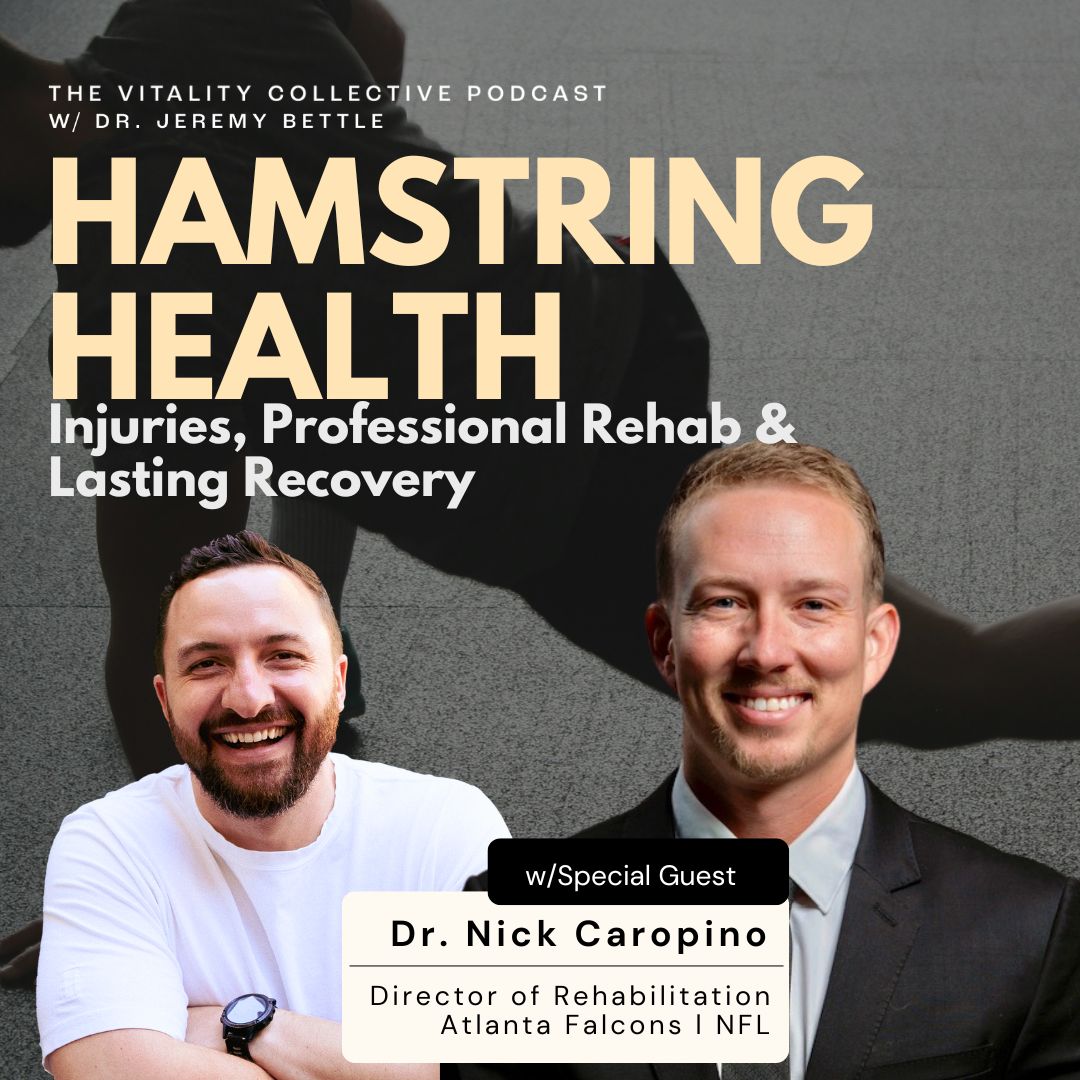
🎧 Episode Summary In this episode of The Vitality Collective Podcast, Dr. Jeremy Bettle is joined by Dr. Nick Caropino, Director of Rehabilitation for the Atlanta Falcons, to dive deep into the world of hamstring health, elite-level rehabilitation, and the systems that support injury prevention and recovery. Drawing from a high-stakes rehab they completed together during the MLS playoffs, the conversation unpacks how early loading, individualized programming, and environmental change are key to sustainable performance and healing. Whether you're a pro athlete or an executive glued to a desk, this episode gives practical wisdom for overcoming chronic hamstring issues and investing in long-term vitality. 👤 Guest Bio – Dr. Nick Caropino Nick Caropino, DPT, is the Director of Rehabilitation for the Atlanta Falcons, where he leads performance, recovery, and return-to-play strategies for elite athletes. His career spans the NFL, MLS, and advanced clinical practice, including leadership roles at New York City FC and Athens Orthopedic Clinic. Known for his ability to integrate clinical excellence with high-performance sport demands, he specializes in building individualized and collaborative rehab programs that support both immediate recovery and long-term durability. 🔗 Guest Links LinkedIn: Nick Caropino ✅ Three Actionable Takeaways You Can Use Today View pain as an opportunity — Treat new pain or injury as a chance to build a better lifestyle, not just something to fix. Use it to open new doors for growth, health, and longevity. Stick to the fundamentals — Whether you're a professional athlete or an executive, the foundation doesn't change. Prioritize strength, mobility, nutrition, and sleep before chasing the next trendy fix. Keep doing the work — Sustainable health comes from consistent effort. Build habits that help you move, recover, and perform well at any age, whether that's lifting your kids or stopping an NFL quarterback. 🔑 Key Takeaways Hamstring rehab at the elite level often begins within 24 hours, even for significant strains. The anatomy of the hamstring (crossing both the hip and knee) makes it uniquely complex — it's a power generator and a decelerator. Tendinopathy is often caused by compression and environment — especially prolonged sitting. Injury prevention isn't the job of one person; it's a system-wide challenge involving coaching, medical, and performance staff. Rehab should continue well beyond when the pain disappears. Insurance may stop, but the work shouldn't. Passive modalities (shockwave, cold/heat, dry needling) play a support role — they aren't the solution, but they can help you feel good enough to do the work. Nerve irritation can mimic hamstring pain — especially if it's vague or migratory. Look for patterns, not just pain points. Rehab is about building new habits and opportunities — not just fixing pain. The best recovery results come from combining strength, nutrition, sleep, and environmental awareness. "Pro" protocols are often the same as general population programs — just with more support and precision. The principles remain the same.
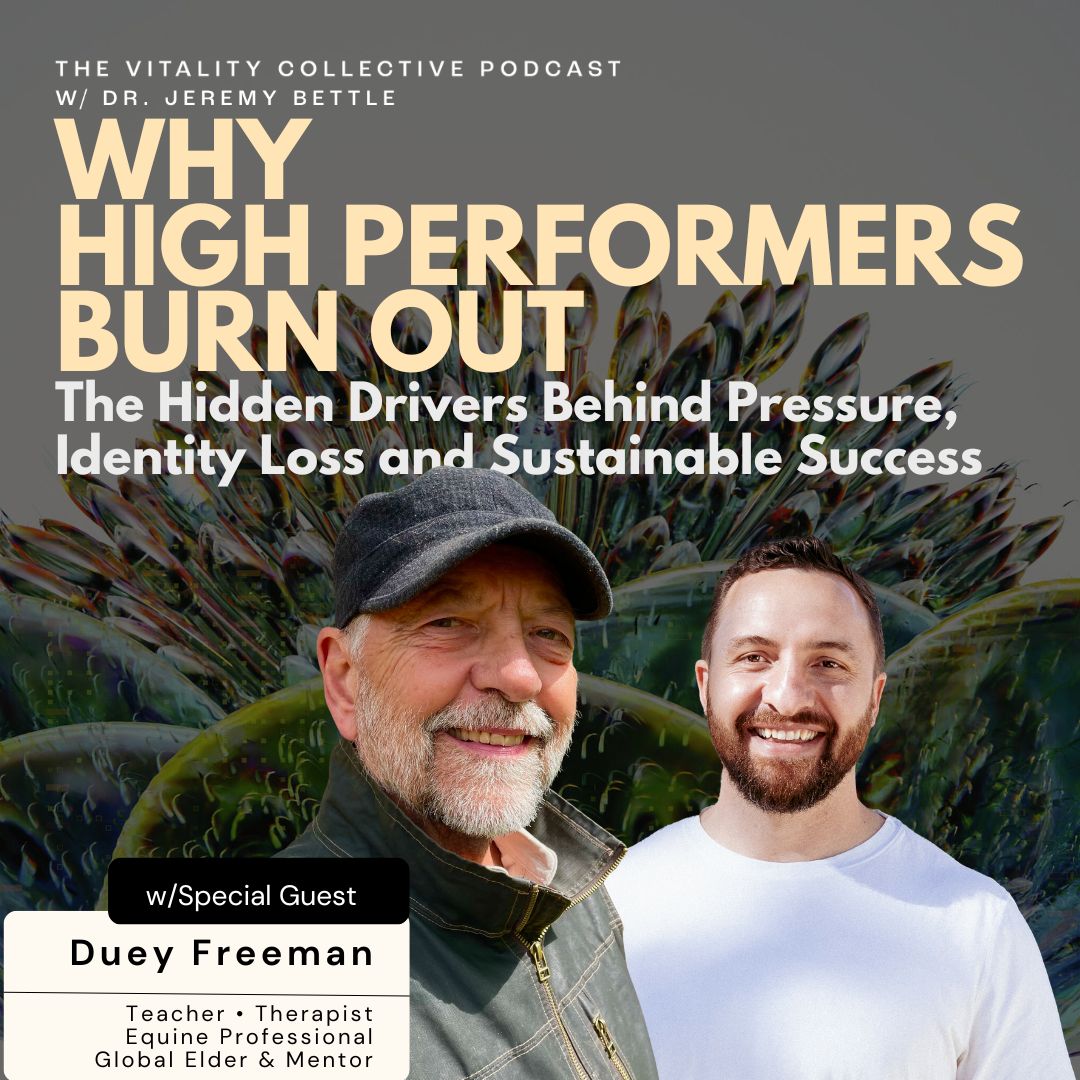
🎧 Episode Summary: In this powerful episode of The Vitality Collective Podcast, Dr. Jeremy Bettle is joined by renowned therapist and educator Duey Freeman for a deep exploration into how early relational experiences shape the way we perform, relate, and lead. Speaking directly to high performers—whether in sport, business, or life—Duey breaks down why unresolved emotional patterns often drive our relentless pursuit of success, and how healing those patterns can unlock sustainable excellence, deeper self-worth, and meaningful relationships. This conversation is a must-listen for anyone who's hit the top—and still felt empty. 👤 Guest Bio: Duey is a sought-after teacher, trainer, licensed therapist, and equine professional worldwide. He has taught internationally and developed a practical attachment theory and human development model taught to thousands of university students. He has nearly 80,000 direct client hours and co-founded the Gestalt Equine Institute and the Gestalt Institute of the Rockies. He supervises therapists and graduate students and does business and land consultations for new equine therapy sites. Duey embodies both tenderness and strength in all his relations and work. His quality of contact and relationship with others is authentic and unique. People come from around the world to study with him. Duey is a true elder and mentor exploring new horizons in facilitating men's growth work. Gestalt and Relational Horsemanship are not just approaches to Duey; they are how he walks through the world. 🔗 Links & Mentions: Gestalt Equine Institute of the Rockies - http://www.gestaltequineinstitute.com/ Instagram: @DueyFreeman Facebook: @DueyFreeman www.DueyFreeman.org www.coloradoecotherapyinstitute.com ✅ Three Actionable Takeaways: Separate personhood from behavior and results — Anchor your worth in who you are, not in the outcomes you produce or how others react. When you remember that your value is not tied to performance, you create freedom to grow, take risks, and recover without shame. Heal relational injuries in relationship with others — Seek a therapist, mentor, coach, or trusted group because we do not heal alone. Healing happens in safe, supportive connections, and giving yourself permission to be witnessed and cared for is a powerful step toward wholeness. Learn and use breath and healthy emotional expression — Be conscious of how you breathe and pair it with the safe expression of emotion to regulate your state under stress. Your breath and your voice can become tools that bring calm, restore balance, and remind you that you have agency even in the hardest moments. 🧠 Key Takeaways: High performers often attach their self-worth to achievement, creating a cycle of burnout and dissatisfaction. Early attachment experiences—and how we felt supported or unseen—often shape our adult performance behavior. Sustainable success comes from internal grounding, not external validation. Without emotional integration, success can feel hollow—even at the top. Many high performers experience a loss of identity after transitioning out of sport or high-level careers. Nervous system states (fight, flight, freeze) impact how we perform under pressure. Awareness of those states is critical. Real confidence is consistency across contexts—not wearing different "hats" for different people. Grieving what we didn't receive in childhood opens the door to deeper relationships and self-trust. Emotional wholeness allows performance to be an expression—not a performance for validation. Therapy, mentorship, or conscious relational work is not optional—it's necessary for high performers who want to thrive.
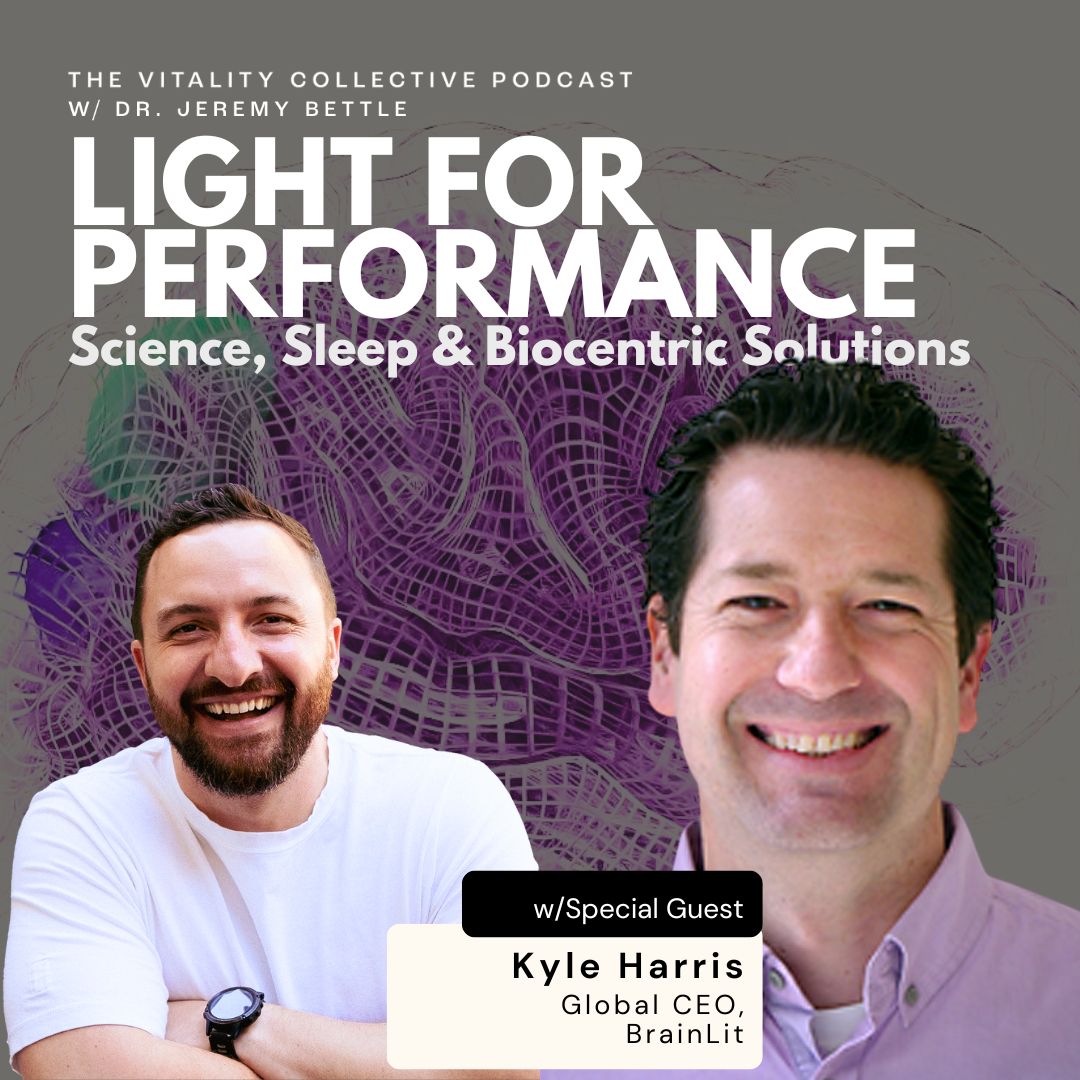
🔎 Episode Summary: In this illuminating episode of The Vitality Collective Podcast, Dr. Jeremy Bettle sits down with Kyle Harris, CEO of BrainLit, to discuss the often-overlooked yet powerful role of light in human health, performance, and recovery. They explore how biocentric lighting systems can optimize circadian rhythms, improve cognitive function, reduce jet lag, and even enhance mood and sleep. From elite athletes to corporate professionals, Kyle explains how everyone can benefit from strategic light exposure—and offers both high-tech and practical solutions for making better light part of your daily routine. 👤 Guest Bio – Kyle Harris: Kyle is an accomplished CEO with over three decades of leadership experience spanning biotech, technology, and digital media. He currently serves as Global CEO of BrainLit AB, headquartered in Lund, Sweden, where he drives international growth, strategic partnerships, and investor engagement for the company's pioneering Biocentric lighting solutions. Previously, he has scaled startups and small-cap companies across sectors—transforming eCommerce platforms, launching biotech products, building retail analytics software, and leading international marketing campaigns. His track record includes delivering significant investor returns, securing high-profile partnerships with teams in the NFL, NBA, MLB, and EPL and guiding companies through operational expansions, funding rounds, and acquisitions. He is also the founder of StrategyPoint, Inc., a technology accelerator advising portfolio companies in eCommerce, CPG, and digital media. His expertise has been featured in the Wall Street Journal, Sports Business Journal, Advertising Age, and Entrepreneur.com, and he has appeared on NBC, Fox, and iHeart Radio. 🔗 Links Mentioned: Promo Code: Vitality-Collective 20% Off The Alven store is: https://shop.brainlit.com/ Our global site is: https://www.brainlit.com/ Instagram: @brainlit_northamerica ✅ 3 Actionable Takeaways: Get Morning Light Daily: The brightness of natural sunlight on a clear day is around 100,000 LUX meaning that just 15 minutes of outdoor light shortly after waking is enough to align your circadian rhythm and boost energy. On a cloudy day 20-30 minutes is sufficient. Limit Afternoon Caffeine: Notice how your body responds to caffeine later in the day, and be mindful of its impact on your sleep. Cutting off caffeine after 2pm ensures that it is out of your system well before it is time to wind down for sleep. Be Consistent with Sleep & Wake Times: Keep your bedtime and wake-up time within an hour every day—even on weekends—to avoid "social jet lag." 🔦 Key Takeaways: 🌞 Light does more than help us see—it's a biological signal that impacts sleep, mood, focus, and hormone regulation. 🧠 Biocentric lighting mimics natural light patterns, modulating spectrum and intensity throughout the day to support optimal circadian health. ⏰ Melatonin and cortisol balance is deeply influenced by light exposure, particularly the timing and spectral quality. 💡 Typical office and indoor lighting is inadequate, often disrupting circadian rhythms and contributing to fatigue and reduced cognitive performance. 🏋️ Light is a powerful but underutilized performance enhancer, especially for cognitive athletes like executives and traders. ✈️ Biocentric lighting can aid in jet lag mitigation by adjusting light spectrum to suit travel patterns and time zone changes. 🏥 In hospitals, schools, and corporate settings, light can support performance, focus, recovery, and well-being without active user input. 🚫 Not all light therapy products are equal—volume, angle, and spectrum matter. Many SAD lamps on the market fall short. 🔬 BrainLit's system is a turnkey platform, future-proofed to adapt with emerging science and changing user needs. ⚖️ Over-correcting (like always wearing blue light blockers) can be counterproductive—timing is everything.
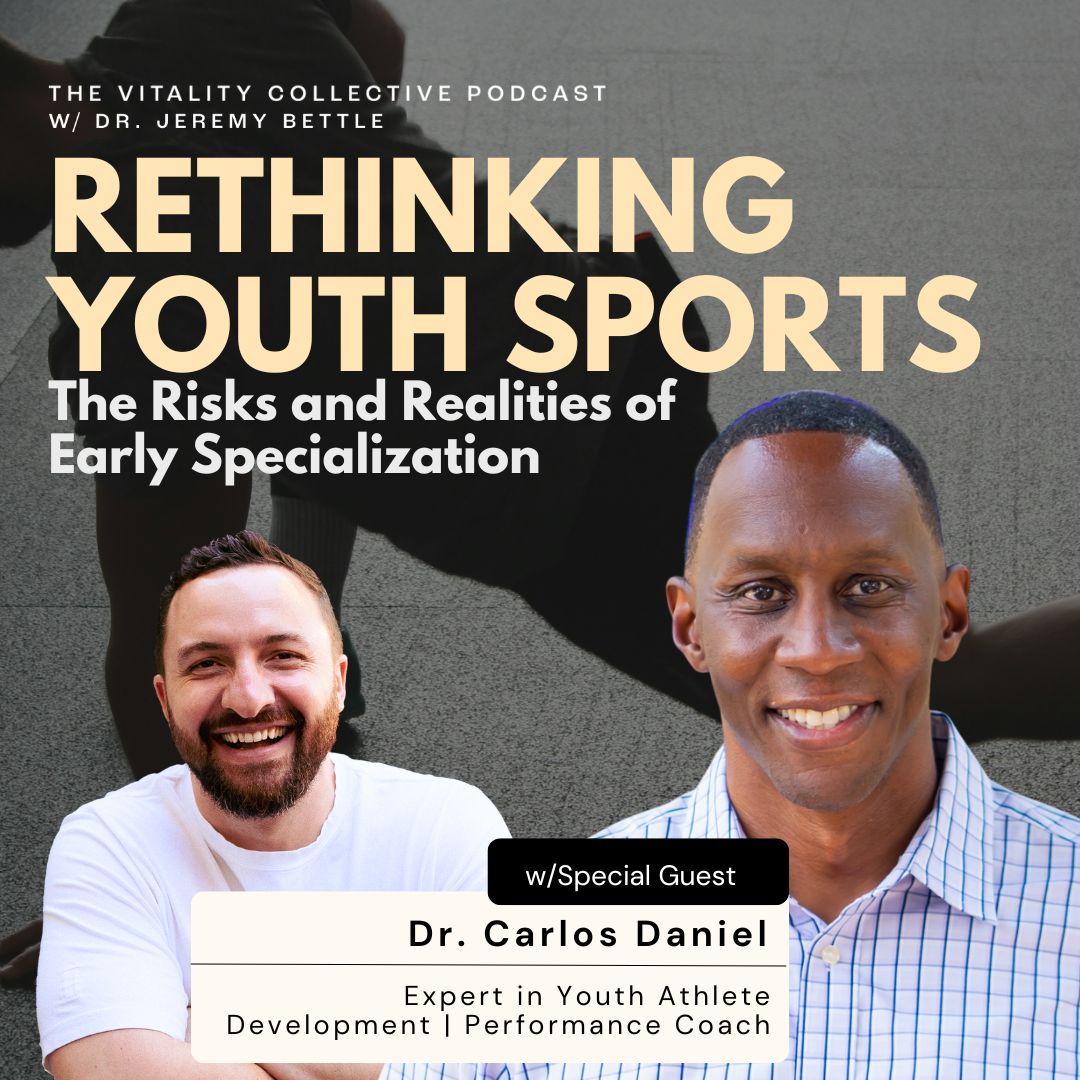
🔍 Episode Summary: In this eye-opening episode, Dr. Jeremy Bettle welcomes Dr. Carlos Daniel for a powerful conversation on the rising crisis of early specialization in youth sports. Drawing from over two decades of experience across the NBA, academia, and youth development, Dr. Daniel unpacks how overuse, burnout, and unrealistic expectations are taking a toll on young athletes—both physically and mentally. From science to strategy, this episode offers practical tools for parents and coaches to help their athletes stay healthy, resilient, and passionate about sport for the long haul. 👤 Guest Bio (Official): Dr. Carlos Daniel brings over 22 years of experience in basketball as a player, coach, and educator. His unique background blends elite on-court expertise with academic research, including coaching roles at both the collegiate and NBA levels, leading youth basketball camps, and founding a youth basketball organization focused on skill development and mentorship for at-risk adolescents. Carlos's academic work is grounded in his lived experience, culminating in a doctoral dissertation exploring the load exposure of elite youth male basketball athletes in relation to NBA recommendations. His programs are designed to improve safety, prevent injury, and enhance long-term athletic performance for young athletes. A former Director of Athletic Development in the NBA, Carlos now serves as Program Chair and Assistant Professor of Kinesiology at Concordia University Texas, where he continues to lead, teach, and advocate for best practices in youth sports and performance science. 🔗 Guest Links: Instagram: @drlos_strong LinkedIn: Dr. Carlos Daniel ✅ 3 Actionable Takeaways: Fight for what is right, not what is comfortable: You have to be willing to have difficult conversations to do what you know is best for your child. Prioritize recovery, sleep, & nutrition: Only during proper recovery & with proper fueling does the body adapt to training load. If you want your kid to improve, they need to recover and fuel appropriately. Find out how to deal with the pressure gauge :How do you help your kid regulate their mental, spiritual, & physical health to deal with the pressure that they are under. 📌 10 Key Takeaways: Early specialization is a system problem, not a talent strategy. Young athletes are playing more than pros, without the same recovery infrastructure. Injuries are happening earlier and careers are getting shorter. Overuse injuries that used to occur in athletes' 30s are now showing up in their early 20s. Most young athletes survive early specialization. They don't thrive through it. Multiple "load streams" stack up fast. Club teams, school programs, and trainers all contribute to one cumulative toll on the body. The 10,000-hour rule is misapplied. It works for finite skills, but not for complex, multidimensional sports like basketball. "Elite" is often misused. Playing 150 games doesn't make an athlete elite—it makes them overexposed and exhausted. Rest is where the gains happen. The body adapts during recovery—not during activity. Recovery is training. Cross-training with other sports builds better movement skills. Parents must advocate for their child's health. Saying "no" to overload is brave—and necessary. Pressure from parents, coaches, and culture can lead to resentment and burnout.Sport should be fun. If it's not, something's broken.
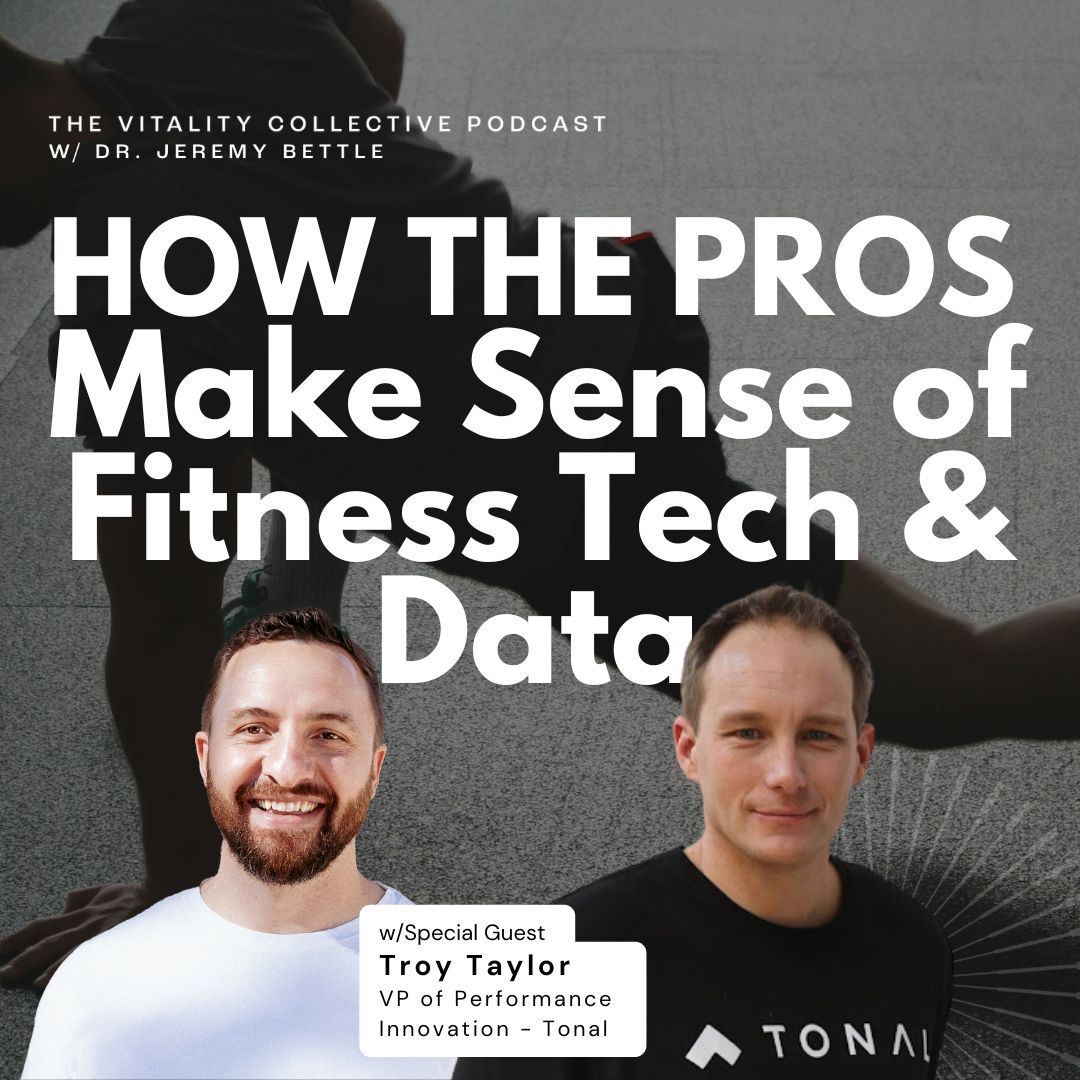
1. Episode Summary In this episode, Dr. Jeremy Bettle sits down with Troy Taylor, Vice President of Performance Innovation at Tonal, to explore the surprising parallels between elite athletic performance and general population health. They discuss how the principles of goal-setting, data-driven training, and behavioral design that once applied to pro athletes are now shaping the future of consumer fitness. Troy shares insights from his experience with elite athletes and explains how Tonal's technology helps people build consistent, effective habits for long-term vitality. 2. Guest Bio Troy Taylor is a globally recognized leader in human performance, with more than 20 years advancing the science of sport and fitness. Over his career, he has guided over 250 Olympic athletes and more than 50 medalists, while directing innovation at organizations like U.S. Ski & Snowboard and the Canadian Sport Institute Ontario. As High Performance Director for U.S. Ski & Snowboard, Troy led the team supporting 15 Olympic medalists; including seven golds, at the 2018 Pyeongchang Winter Games. Today, as Vice President of Performance Innovation at Tonal, Troy launched the Tonal Strength Institute; an industry-first hub for research, thought leadership, and partnerships that push the boundaries of strength training. His career has been defined by pioneering at the intersection of science and product, serving as co-inventor on new fitness technologies and leading initiatives that connect evidence-based research to millions of everyday athletes. Troy has commissioned groundbreaking studies, funded countless PhDs, and shaped global conversations on how physiology, technology, and behavior science combine to fuel human potential. 3. Links Troy Taylor Instagram: @strengthsciencetroy Troy Taylor LinkedIn: https://www.linkedin.com/in/troy-taylor-4577bb38/ 4. Three Actionable Takeaways Be clear on your goals: Determine what you are training for, whether it's to hike or play with your grandkids, and reverse-engineer your training from there. This will help you filter out noise in the wellness space. Learn how to evaluate information: You don't need to be a research scientist, but understanding the basics of reading data and research can help you cut through the noise and avoid misinformation from influencers. Iterate like an engineer: Don't throw out your entire plan when you hear something new. Continuously make small improvements and add new layers to your training over time, just like an engineer refines a product. 5. 10 Bulleted Takeaways The similarities between pro athletes and the general population are far greater than the differences. The "wellness boom" has not translated into better health outcomes, in part because people lack clear goals. Being your own "performance director" in a world of new technology means you have to be an active participant in your fitness journey. Shiny, new technologies often attract people, but it's important to consider if they truly help you reach your goals. More data isn't always better; too much data can be paralyzing and lead to negative self-talk. Consistency is the single most important factor for long-term health and vitality. "Exercise snacks"—short, micro-workouts of one to five minutes—can be a highly effective way to build consistency and improve health. A flexible "Plan B" for your training can help you stay consistent even when life and time get in the way. Many people mistakenly focus on auxiliary details like specific supplements or "hacks" rather than the fundamentals of consistent training. Identity is a powerful motivator; technology and community can help you see yourself as "someone who works out," making consistency easier.
Episode Summary In this powerful episode, Dr. Jeremy Bettle sits down with Sofia Smati, a high-performance coach at the Red Bull Performance Center, to unpack what it actually takes to train female athletes at the highest level. Drawing on her own experience as a former soccer player and her work with everyone from Olympic skaterboarders to e-gamers and 92-year-olds, Sofia challenges one-size-fits-all approaches to training—especially those based purely on gender or cycle timing. She makes a clear case for treating athletes as individuals, training for the demands of the sport, and keeping things simple, consistent, and adaptable. This is a grounded, refreshing conversation that champions women's strength, intelligence, and capacity—without the fluff. Guest Bio: Sofia Smati Sofia Smati is a Performance Coach at the Red Bull Performance Center in Los Angeles, where she works with Olympians and professional athletes through a science-driven, personalized approach that prioritizes measurable results. A former soccer player with a Master's in Sports Science, Sofia brings both academic rigor and firsthand athletic experience to her coaching. Since 2017, she has contributed to the sports performance field through research and publishing, blending evidence-based methods with practical insights. Her mission is clear: to empower athletes to push boundaries, elevate performance, and unlock their full potential. Guest Links Instagram: @smtperformance_ 3 Actionable Items for Listeners You train the person, not the gender. Individual needs, goals, and context matter far more than whether someone is male or female. Consistency is everything. Outcomes in strength, resilience, and longevity come from showing up and progressing week to week—not from chasing trendy protocols. Strong is simple. Whether you're training Olympians or someone in their 60s, the fundamentals—lift, recover, eat well, and move with intent—are what create results. 10 Key Takeaways "I don't coach gender—I coach individuals." Training should be adapted to the athlete, not their gender. Too much information can hinder performance. Simplifying and filtering training advice allows athletes to focus on what truly moves the needle. Reactive strength matters. Measuring your strength gains relative to your body weight gives you a real measure of your strength and not a comparison to somebody else. Even gamers are athletes. Strength training improves focus, posture, and reduces injury risk for e-gamers and cognitive athletes alike. Relate this to life outside of sport which often requires a lot of sitting! Progressive overload is king. No matter the goal—hypertrophy (building muscle), performance, or longevity—consistent progression is non-negotiable. Cycle syncing is ineffective. Currently, there's no evidence that training must be tailored to the menstrual cycle; feedback should be individualized. Bulking fears are largely unfounded. Women lack the testosterone levels and often volume needed for significant hypertrophy without deliberate effort. Women are not fragile. Sofia's athletes, like SailGP's only female grinder, often outperform their male counterparts in relative strength. Confidence is built in the weight room. Strength training transforms how women carry themselves, both in and out of sport. Longevity starts now. What you build in your 20s and 30s sets the foundation for your 60s, 70s, and beyond.
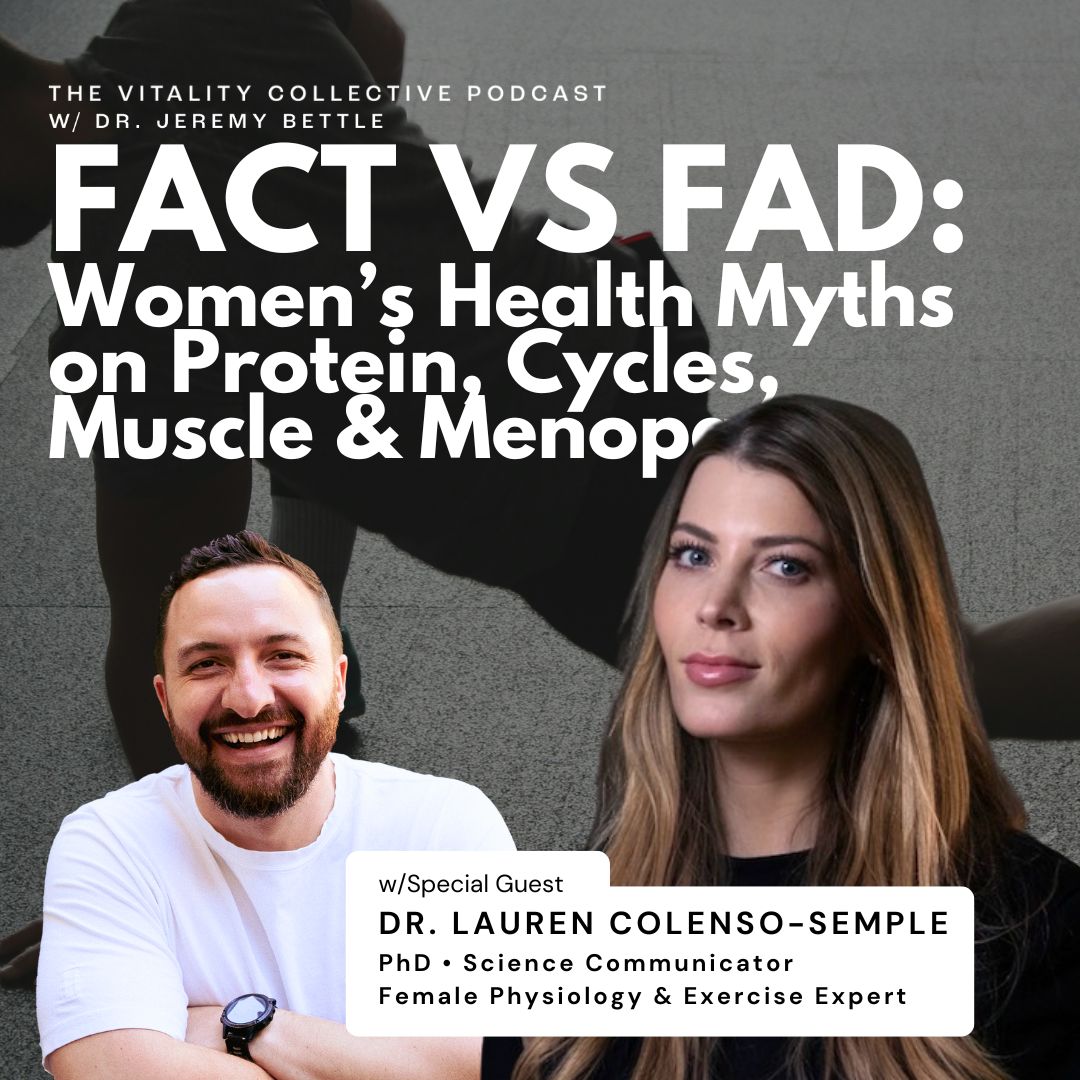
Episode Summary In this episode, Dr. Jeremy Bettle speaks with Dr. Lauren Colenso-Semple, PhD a science communicator with expertise in female physiology and exercise. They dismantle common myths and misinformation surrounding women's fitness and dieting, offering a practical, research-backed framework for building strength, lean mass, and bone health. They discuss how to build a consistent and sustainable fitness routine, why trusting the process is more important than chasing fads, and how to spot red flags from influencers who may be doing more harm than good. Guest Bio Lauren Colenso-Semple, PhD is a science communicator with expertise in female physiology and exercise. Through her research, teaching, public speaking, and online platforms, Dr. Lauren is known for making complex topics accessible—and for calling out the myths that hold women back from reaching their full potential. She is also a seasoned fitness professional with extensive hands-on coaching experience and a co-owner of the MASS Research Review, where she helps bridge the gap between cutting-edge research and practical fitness strategies. Links Dr. Lauren Colenso-Semple Instagram: @drlaurencs1 Mass Research Review: massresearchreview.com Top Three Takeaways Focus on the long game — Be patient and consistent with your training, focusing on long-term goals rather than quick fixes. All meaningful changes take time, but the physiological adaptations you build will be worth the effort . Do what you enjoy — Physical activity of any kind that you enjoy is a key piece of a sustainable plan. You can make your exercise framework flexible by picking exercises you like, using machines, or working with a trainer to find a routine that works for you. Lift weights for longevity — If you are unsure where to start, begin by lifting weights. Strength training provides benefits for muscle, bone, and physical function that will help you set yourself up for better aging and long-term independence. Topics Covered Women are not "small men," but they are also not "large mice". Research in humans, not animals, should be used to inform training and nutrition recommendations. The idea that women should avoid lifting weights because they will get "bulky" is a myth that has historically led to ineffective fitness programs being marketed to women. "Heavy" is a relative term in weightlifting; the goal is to train at an intensity that is challenging and close to failure for you. Progressive overload means continuously challenging yourself by adding more weight or more repetitions over time as you get stronger. Body composition—the ratio of muscle to body fat—is more important for longevity than the number on a scale. Chronically under-fueling your body can interfere with muscle growth because your body will prioritize essential functions over optional goals. There is no evidence to support that fasted training is a waste of time or that it negatively impacts your ability to build muscle or lose fat. There is no scientific basis for syncing your training with your menstrual cycle. Doing so can actually hinder progress by disrupting consistency. Be cautious of influencers who recommend complex protocols based on small-scale studies and remember that there is no "good" or "bad" muscle fiber type distribution. The goal of a workout program should be to prepare your body for the activities you love to do, not to restrict you from them.
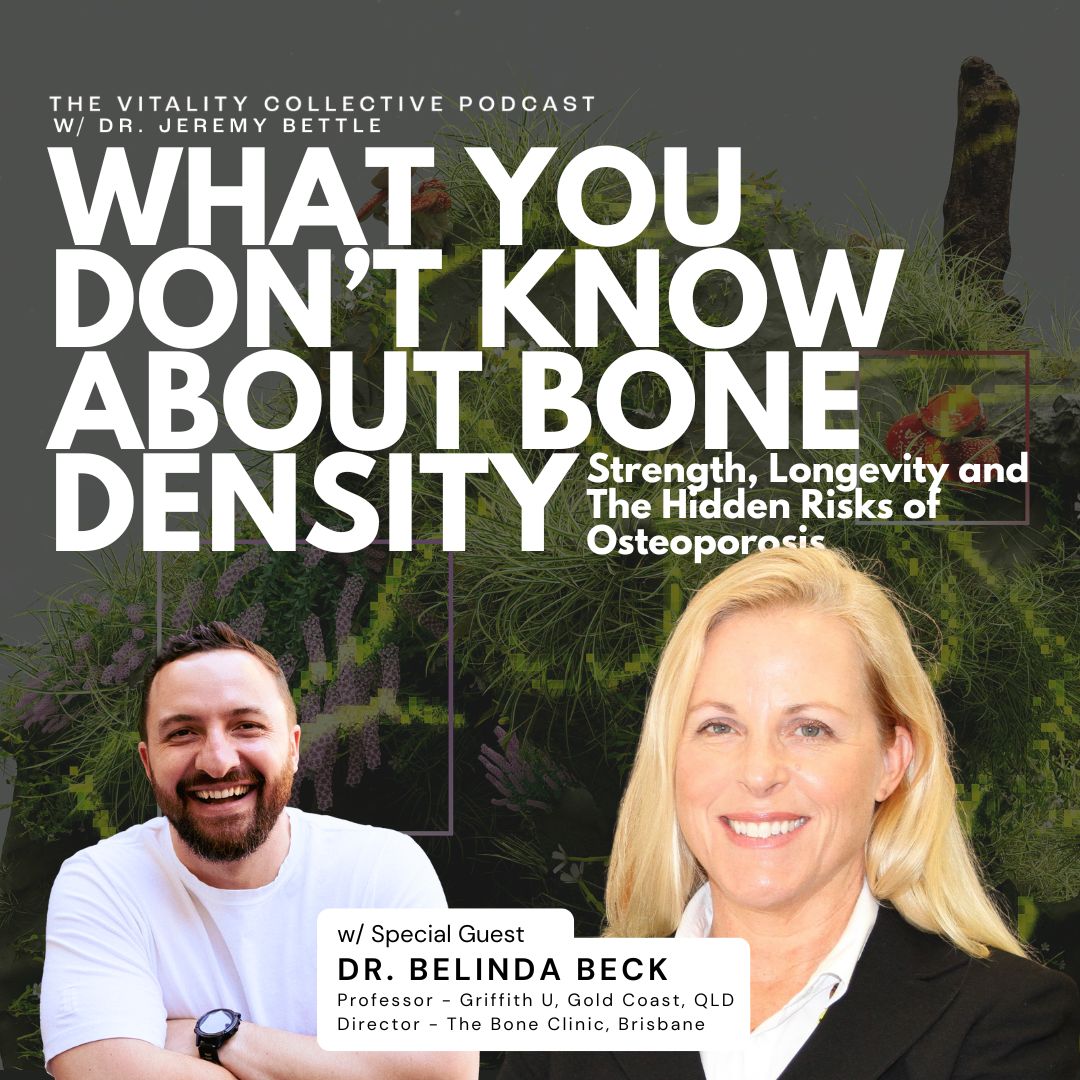
Episode Summary In this episode, Dr. Jeremy Bettle is joined by Dr. Belinda Beck, professor and founder of The Bone Clinic, to explore the often-overlooked world of bone health. They unpack what osteopenia and osteoporosis really mean, why bone density is not just about minerals, and how movement, loading, and nutrition determine resilience across life. From the science of mechanotransduction to the realities of training safely at any age, this conversation provides clarity on how to protect and strengthen your bones for long-term vitality. Guest Bio Belinda Beck is a Professor in Exercise Physiology at Griffith University (Gold Coast, QLD) and Director of The Bone Clinic (Brisbane), a translational research facility and clinical practice providing evidence-based exercise for patients with osteoporosis. She graduated from The University of Queensland (BHMS[Ed]) and the University of Oregon (MSc and PhD) and completed a postdoctoral research fellowship in the Stanford University School of Medicine (CA, USA). Her work, primarily related to the effects of mechanical loading on bone, has involved both animal and human models, from basic to clinical research. Her particular focuses have been exercise interventions across the lifespan for the prevention of osteoporotic fracture, and the management of bone stress injuries in athletes and military recruits. She is a Fellow of the American Society of Bone and Mineral Research (ASBMR), the American College of Sports Medicine (ACSM), Sports Medicine Australia (SMA), and Exercise Sports Science Australia (ESSA). She serves on the Council of the Australian and New Zealand Bone and Mineral Society (ANZBMS), the Board of Sports Medicine Australia, the Governing Committee of the Australian National Alliance for Secondary Fracture Prevention (SOS Fracture Alliance), and the Capture the Fracture® (CTF) Steering Committee of International Osteoporosis Foundation, along with the Medicine and Science Advisory (MSAC) and National Consumer Advisory Committees (NCAC) for Healthy Bones Australia. She has been awarded almost $8M in grant funding and has published over 150 papers and chapters in the field. Links Onero program The Bone Clinic: Facebook – The Bone Clinic Dr. Belinda Beck on LinkedIn Healthy Bones Australia Three Actionable Takeaways Try to do more movement and make that movement more intense than you're used to doing. Progressive overload is essential for bones to adapt and strengthen. Listen to your body. If you feel pain, listen to your body and stop doing what it is that's causing the pain. Pain is a signal, not something to push through when it comes to bone health. Make sure you provide your body with the building blocks to build bone. Nutrition, particularly protein, calcium, and vitamin D, supports the adaptations triggered by exercise. Top Takeaways Bone is a living tissue with cells that remodel in response to load, not an inert structure . Bone adapts only when overloaded: activities like walking or swimming alone are insufficient for improving bone density . High-impact or heavy lifting exercises stimulate bone growth but must be introduced progressively and safely . Fall prevention is as critical as bone density; training balance and plyometric ability reduces fracture risk . Energy availability is essential—calorie deficits and low estrogen states significantly weaken bones . Peak bone mass is reached between ages 18–30, but activity levels largely determine how much is maintained across life . Osteopenia and osteoporosis are defined by T scores from bone density tests, but fracture risk is influenced by more than density . Most fractures occur in people with osteopenia, largely because of population size . DEXA scans are the most widely used tool but have limitations; alternatives like PQCT and trabecular bone score provide more detail . Supplements like high-dose vitamin K2 or magnesium lack strong evidence compared to balanced diets with adequate calcium, vitamin D, and protein .

Comments

Download from Google Play

Download from App Store
 United States