


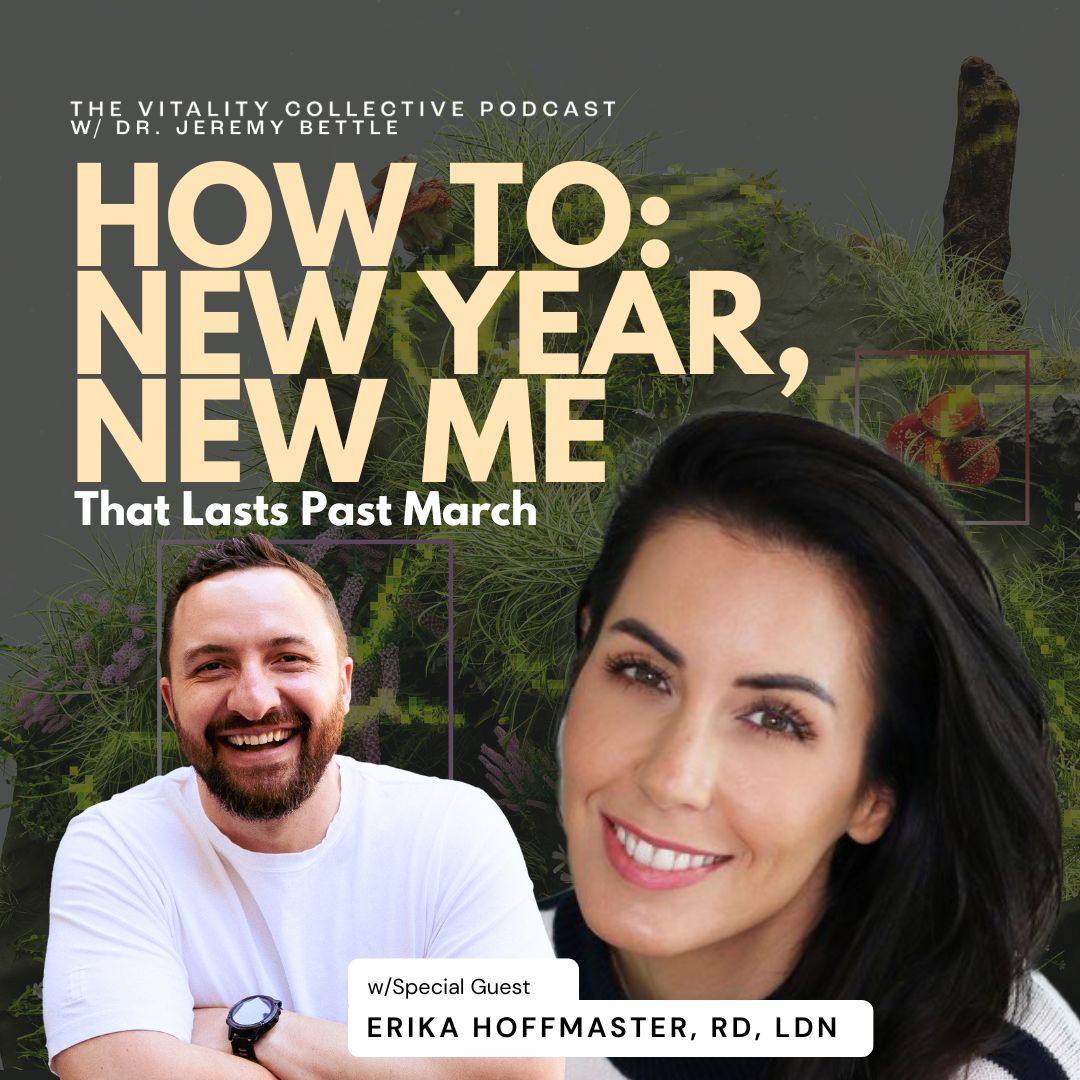
Ep 53: How To: New Year, New Me That Lasts Past March
Description
Episode Summary
A Conversation Between a Performance Coach and Dietitian. It's January and the gym is packed with people who have no idea where to start. Instead of gatekeeping or complaining about New Year's resolutioners, Jeremy and Erika break down exactly how to walk into a gym for the first time, find your spot, and build a sustainable strength training practice. This conversation emerged from real questions Erika's clients asked about starting in the gym, covering everything from avoiding the all-or-nothing mentality to understanding the difference between soreness and injury. We explore why you need to start way below your capacity, why getting toned won't make you bulky, and the devastating statistics around hip fractures that should have everyone lifting weights. This is about meeting yourself where you are, building one habit at a time, and understanding that behavior change matters more than perfect knowledge.
Guest Bio
Erika is a registered dietitian specializing in helping women navigate metabolic health, body composition changes, and building sustainable nutrition habits. She works primarily with women in their 40s and 50s who are starting from scratch or coming off years of restrictive dieting, helping them implement what she calls health-promoting body composition change. Erika focuses on meeting clients where they are, identifying limiting factors and friction points that prevent habit formation, and building sustainable practices rather than following rigid diet rules.
Links
-
Connect with Erika: www.erikahoffmaster.com
-
Follow Dr. Jeremy Bettle on Instagram and Linkedin: @DrJeremyBettle
-
Follow Vitality Collective on Instagram, LinkedIn, and YouTube: @vitalitycollectiveperformance
Three Key Insights
-
Start way below your capacity and focus on building the habit before worrying about intensity. The first two weeks should be about logistics: finding your spot in the gym, stretching, doing basic core work, and getting comfortable in the environment. If you jump in too hard on January 1st, injury or overwhelming soreness will pull you out of the program before you've established the routine.
-
Avoid the all-or-nothing mentality by making small, sustainable changes rather than overhauling everything at once. Whether it's trying one new vegetable per month, adding 15 minutes of sleep, or going to the gym to stretch for the first week, these incremental changes compound over time and lead to lasting transformation that survives past February.
-
The biggest limiting factor to your fitness goals is usually not lack of knowledge but unaddressed logistics and friction points. If you can't get to the morning gym session, the real problem might be staying up too late on social media, not lack of motivation. Working backwards from your goal to identify and eliminate these friction points is how you turn aspirations into sustainable habits.
Key Insights from the Conversation
-
Seven out of ten people die within six months of breaking a hip from osteoporosis, and the best-case scenario with surgery is still one out of 5, making bone density the most critical and undertalked health metric
-
Being toned requires both muscle mass and relative leanness, which means you must lift weights consistently for 6 to 12 months, not just do cardio and Pilates
-
Women severely underestimate how hard it is to get bulky, as even bodybuilders struggle to put on significant muscle mass, and the average person won't train hard enough to achieve that look
-
Progressive overload means gradually increasing weight over 8-week blocks as your form improves and the current weight becomes easier, not changing exercises every week
-
The difference between A students and B students in high school is just 15 minutes of sleep, showing how small incremental changes create significant outcomes
-
Most women coming to strength training have only ever been in the cardio section of the gym and find the weight area genuinely intimidating even when they know what they're doing
-
Delayed onset muscle soreness (DOMS) peaks two days after training and follows an arc back to baseline, which is normal, versus sharp, one-sided, or joint pain which signals injury
-
Starting with 8 to 12 weeks of core training focusing on the trunk, hips, ankles, feet, and shoulders creates the foundation that prevents injury when moving to heavier weights
-
Weight training is anaerobic work fueled exclusively by carbohydrates, not fat, meaning you need adequate carb intake to have energy for your program and make progress
-
The goal should be training twice per week even for high-performing individuals, not seven days, as recovery and adaptation happen during rest periods
-
Most people coming to fitness are either chronic under-eaters who need to start at maintenance calories or have never dieted and might benefit from a deficit, making individual assessment critical
-
Fiber acts as fuel for your microbiome, so jumping from low fiber to 50 grams overnight causes digestive distress because you literally don't have enough gut bacteria to process it
-
Trainers with NASM certification have grounding in functional training and core-focused progressions that make them ideal for beginners learning proper movement patterns
-
The first week in the gym should involve walking around, finding where equipment is located, identifying a comfortable space, and doing a basic stretching routine to build the habit
-
Asking gym regulars for help or how to use equipment will generally get positive responses, as most people are excited to see beginners starting their fitness journey






 United States
