


 Claim Ownership
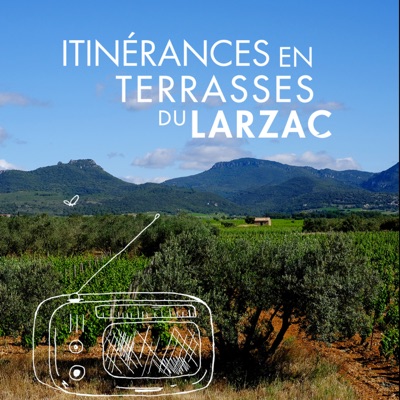
Itinéraires sonores et vin Terrasses du Larzac
Subscribed: 1Played: 6
Subscribe

© Vanessa Méline
Description
Partez à la découverte de l'appellation d'origine contrôlée Terrasses du Larzac, de son environnement et de son vin avec cette émission regroupant 4 itinéraires sonores dans notre vignoble.
Laissez vous guider par les vignerons et nos partenaires, géologues ou naturalistes sur les routes de l'AOC Terrasses du Larzac.
Cette émission vous donnera peut-être envie de visiter et partir à l'aventure dans notre vignoble. Ou encore de goûter un vins pour accompagner votre repas.
4 saisons:
Roches et Paysages en Terrasses du Larzac
Vignes et Biodiversité en Terrasses du Larzac
Terrasses du Larzac : une appellation est née!
Cuvée sonore : comment prend vie un vin Terrasses du Larzac
Hébergé par Ausha. Visitez ausha.co/fr/politique-de-confidentialite pour plus d'informations.
46 Episodes
Reverse

Vines & Biodiversity of the Terrasses du Larzac is the second in a series of podcasts to discover the AOP Terrasses du Larzac (Appellation d'Origine Protégée - Protected Designation of Origin or PDO). The AOP Terrasses du Larzac was born from the strength and determination of a collective of winegrowers believing in their terroir. The name "Terrasses du Larzac" appeared in the late 1990s. It clearly explains the appellation area as the vines are located in the foothills of the Larzac plateau, flourishing on the fluvial and geological terraces of the river Hérault. The terroir of the appellation is first and foremost characterised by its Mediterranean climate, which is tempered by the Larzac plateau.The appellation brings together over a hundred winegrowers, 75% of which cultivate organically. The winegrowers of the Terrasses du Larzac appellation are deeply committed to the environment and to producing their wines by working with (and not against) nature, thus preserving local biodiversity as much as possible. In this podcast of 4 episodes, you are guided by Thomas Michel, Environmental Education Officer from the association Demain la Terre ! (based in Gignac). He accompanies you on a tour of several emblematic sites within the Terrasses du Larzac appellation, such as Les Gorges de l'Hérault (the Hérault Gorges, a national heritage site), as well as those less known but just as illustrative of the area, such as the 'circular' Languedoc village of Puéchabon, a traditional village built in concentric circles. Thomas Michel helps you to interpret the landscape around you. This particular sound route runs alongside the Hérault river, and leads you to the very beautiful source of the river Buèges, and also to Brissac, where we find the source of the river Avèze. Here, the local biodiversity is rich and abundant. We find it nestling in gorges and cliffs, along the rivers, in villages but also in the heart of the vineyards, between the grassy rows, the surrounding woodland, and nestling in the hollow of dry stone walls. Thomas Michel describes and puts a name to some of this exceptional, yet quite ordinary, biodiversity. The words of the AOP Terrasses du Larzac winegrowers bring each podcast to a close. We hear how by working in tandem with nature they get the best out of it. In addition, using their knowledge and experience, they continually strive to create a delicate equilibrium within the ecosystems that they cultivate. Close your eyes and immerse yourself in both the words of the winegrowers and the sounds of nature here in Terrasses du Larzac. «AOP Terrasses du Larzac: Nature is the initial draw, yet we stay for the people» This podcast was directed by Alexandre Héraud, with support from his team at Écran Sonore, in particular Vincent Decque, editor. The podcast was produced for the series Wine Routes, and can be found on our web application "Itinérances en Terrasses du Larzac" : https://visit.terrasses-du-larzac.com/ This web app was developed in partnership with Vinoways, a Montpellier-based start-up. It was financed with the support of Occitanie Region, and European LEADER programme funds administered by Pays Cœur d'Hérault (destination Vineyards and Discoveries "Languedoc Heart of Hérault").Hébergé par Ausha. Visitez ausha.co/politique-de-confidentialite pour plus d'informations.

This first episode of our podcast "Vines & Biodiversity of the Terrasses du Larzac" takes you to Pont du Diable (Devil's Bridge) on the riverbanks of the Hérault, where the Gorges de l'Hérault begin (the Hérault Gorges are a national heritage site). Thomas Michel helps bring alive the richness of both the riverside and cliff ecosystems found here along the river Hérault. The AOP Terrasses du Larzac vineyards are founded upon diverse geological terraces which have been forged by the River Hérault over numerous geological eras. Julien Zernott evokes the beautiful and preserved environment which surrounds the appellation's vines. Vincent Goumard echos this, and also talks of his planting, management and conservation practices implemented in and around the vines, and which help boost their resilience: “..also, there's something really amazing, as all this care and effort, nature gives it back in the wines, that is to say a part of this biodiversity will be absorbed by the grapes (…) this is the effect of the terroir.” Credits, in order of appearanceThomas Michel, Environmental Education Officer, association Demain la Terre!Julien Zernott, winegrower at Domaine du Pas de l'Escalette in Pégairolles de l'EscaletteVincent Goumard, winegrower at Mas Cal Demoura, Jonquières This podcast was directed by Alexandre Héraud, with support from his team at Écran Sonore, in particular Vincent Decque, editor. The podcast was produced for the series Wine Routes, and can be found on our web application "Itinérances en Terrasses du Larzac" : https://visit.terrasses-du-larzac.com/ This web app was developed in partnership with Vinoways, a Montpellier-based start-up. It was financed with the support of Occitanie Region, and European LEADER programme funds administered by Pays Cœur d'Hérault (destination Vineyards and Discoveries "Languedoc Heart of Hérault").Hébergé par Ausha. Visitez ausha.co/politique-de-confidentialite pour plus d'informations.
This is the second stage of the sound itinerary on vines and biodiversity within the AOP Terrasses du Larzac. Here, in the Hérault, at the source of the river Buèges, a natural cathedral inspires an almost religious contemplation. The AOP Terrasses du Larzac extends northwards towards the Cévennes and the Massif de la Séranne, encompassing the pristine environment of the Vallée de la Buèges along the way. Here too, human hands have built the many dry stone wall terraces that are now colonised by vegetation. The wildlife is abundant, be it birds, damselflies or toads... close your eyes and immerse yourself in the heart of this unspoilt nature.The local biodiversity is also a part of the cultural heritage. As Olivier Bellet explains, the olive, almond, fig or other fruit trees are at the origin of the microclimates experienced here in the appellation. A part of this heritage is a cultural, almost psychological, approach of 'letting go', allowing nature to reclaim its rightful place in cultivating the vine. This approach is witnessed through the management practices that are applied across the appellation. Not too far away, Anne-Laure Sicard experiments with different practices to accompany the vines in their development, sowing different plants between the rows, or even letting geese roam! Credits, in order of appearanceThomas Michel, Environmental Education Officer, association Demain la Terre!Olivier Bellet, winegrower at Clos Riviéral, in Loiras du BoscAnne-Laure Sicard, winegrower at Mas Lasta in St Jean de la Blaquière This podcast was directed by Alexandre Héraud, with support from his team at Écran Sonore, in particular Vincent Decque, editor. The podcast was produced for the series Wine Routes, and can be found on our web application "Itinérances en Terrasses du Larzac" : https://visit.terrasses-du-larzac.com/ This web app was developed in partnership with Vinoways, a Montpellier-based start-up. It was financed with the support of Occitanie Region, and European LEADER programme funds administered by Pays Cœur d'Hérault (destination Vineyards and Discoveries "Languedoc Heart of Hérault").Hébergé par Ausha. Visitez ausha.co/politique-de-confidentialite pour plus d'informations.
In the third episode and section number three of this Wine Route, we discover the eastern side of the AOP Terrasses du Larzac, where Thomas Michel recounts that the Larzac was originally a lagoon, and the Massif de la Séranne a coral reef... In the small municipality of Brissac, right up in the north of the appellation, we find the source of the Avèze river, a much-preserved aquatic environment where endemic species are found navigating the waters (such as the chabot d' Hérault - Cottus rondeleti, a freshwater ray-finned fish).But how to preserve this rich biodiversity? According to Jean-Baptiste Granier: “We do not work against nature, we work with nature, [and] we must know how to listen to it; we must know how to accept that, sometimes, it misleads us”… As outlined by Marie Chauffay, this quest for beauty is at the heart of the passionate investment demonstrated by all the winemakers here in AOP Terrasses du Larzac. Credits, in order of appearanceThomas Michel, Environmental Education Officer, association Demain la Terre!Jean-Baptiste Granier, winegrower at Les Vignes Oubliées in St Jean de la BlaquièreMarie Chauffray, winegrower at Domaine de la Réserve d'O, in Arboras. now retired. She was also a former President of the appellation union. Domaine de La Réserve d'O is now owned by Emilie Grill and Arthur Travaux This podcast was directed by Alexandre Héraud, with support from his team at Écran Sonore, in particular Vincent Decque, editor. The podcast was produced for the series Wine Routes, and can be found on our web application "Itinérances en Terrasses du Larzac" : https://visit.terrasses-du-larzac.com/ This web app was developed in partnership with Vinoways, a Montpellier-based start-up. It was financed with the support of Occitanie Region, and European LEADER programme funds administered by Pays Cœur d'Hérault (destination Vineyards and Discoveries "Languedoc Heart of Hérault").Hébergé par Ausha. Visitez ausha.co/politique-de-confidentialite pour plus d'informations.
Here, in this last podcast episode on vines and biodiversity within the AOP Terrasses du Larzac, Thomas Michel invites us to observe and listen to the biodiversity that we uncover in the local villages. We visit Puéchabon, a "village en circulade" (circular village), and which is typical of the Languedoc architecture, where streets wind in concentric circles, almost like a snail shell. It is this local architecture which inspired the name of the gastronomic walk La Circulade vigneronne en Terrasses du Larzac. It is organised each year by the AOP Terrasses du Larzac, and held on the first weekend of July. “We are in a society where we rush about in all directions, we go at full speed and well, here, we stop, take stock, and it's pretty good!” The biodiversity is hidden everywhere... and it is increasingly encouraged, for example, via partnerships between livestock owners and winegrowers, as demonstrated by Géraldine and Xavier Peyraud, where their vines are grazed by sheep in the winter months. For Sébastien Rouve, thanks to the consideration and the preservation of biodiversity in and around the vines "we find in the wines a delicacy, a simplicity and a real interpretation of the region" and "all of that, using the best thing: the plants that are in the vines, that are around the vines". As for Jean-Pierre Venture, who concludes this series of podcasts on biodiversity, he is experimenting with grape varieties from Italy to try to adapt to climate change. Credits, in order of appearanceThomas Michel, Environmental Education Officer, association Demain la Terre!Xavier and Géraldine Peyraud, winegrowers at Mas des Brousses in PuechabonSébastien Rouve, winegrower at Domaine Mon Rêve in Cartel du BoscJean-Pierre Venture, winegrower at Mas de la Seranne, Aniane (now retired) This podcast was directed by Alexandre Héraud, with support from his team at Écran Sonore, in particular Vincent Decque, editor. The podcast was produced for the series Wine Routes, and can be found on our web application "Itinérances en Terrasses du Larzac" : https://visit.terrasses-du-larzac.com/ This web app was developed in partnership with Vinoways, a Montpellier-based start-up. It was financed with the support of Occitanie Region, and European LEADER programme funds administered by Pays Cœur d'Hérault (destination Vineyards and Discoveries "Languedoc Heart of Hérault").Hébergé par Ausha. Visitez ausha.co/politique-de-confidentialite pour plus d'informations.

Comments

Download from Google Play

Download from App Store
 United States