


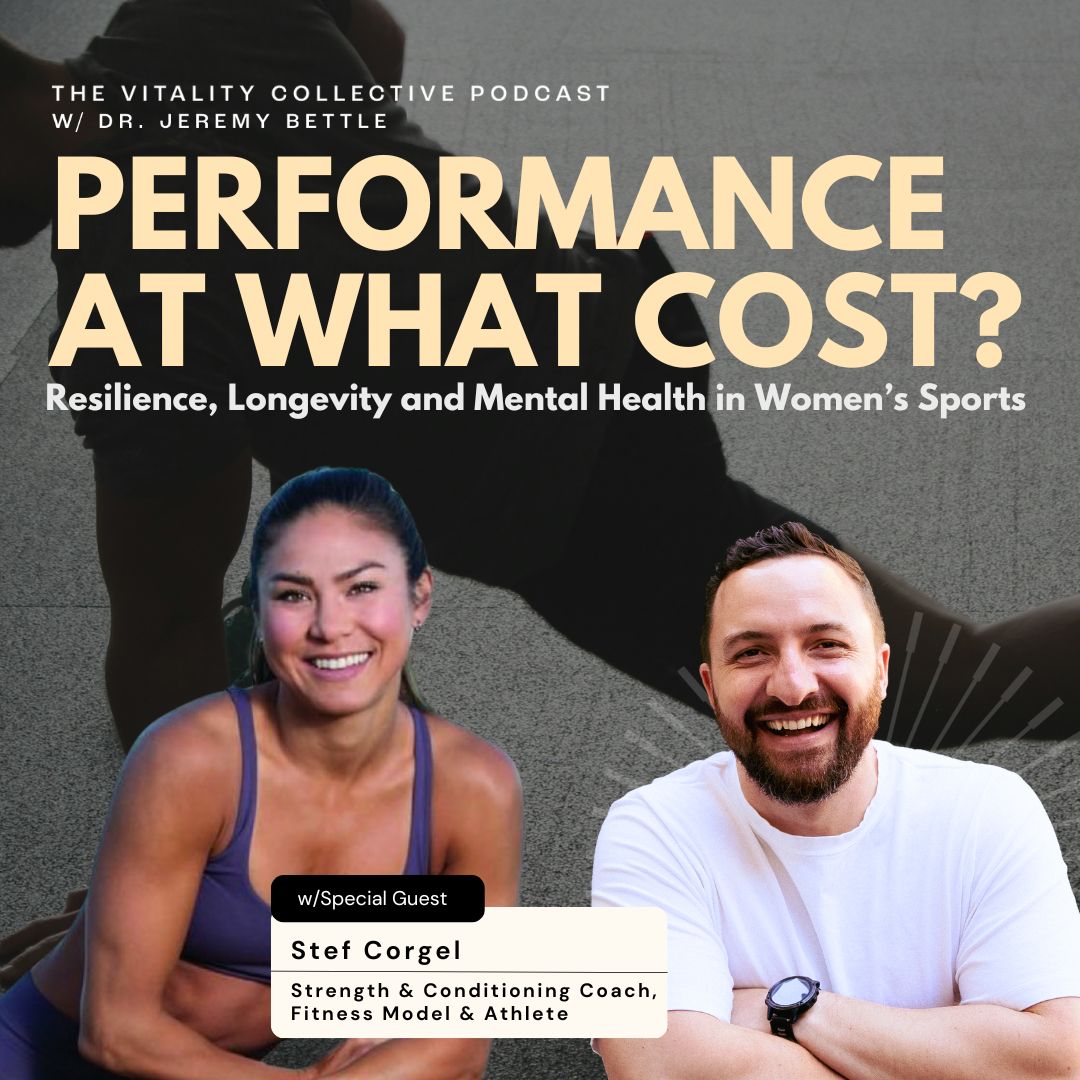
Ep 44 - Performance at What Cost? Resilience, Longevity and Mental Health in Women's Sports with Stefanie Corgel
Description
Episode Summary
In this deeply personal conversation, Dr. Jeremy Bettle sits down with Strength and Conditioning Coach, athlete and fitness model Stef Corgel to discuss the hidden struggles many female athletes face. Stef opens up about her decade-long battle with eating disorders, including anorexia athletica, and how the pressure to perform combined with societal expectations around body image created a destructive cycle. They explore the transition from college sports to professional fitness modeling, the importance of seeking help early, and how athletic identity can both hurt and heal. This conversation also covers fertility preservation, injury prevention, deconditioning, and why fueling like an athlete matters more than looking like one. It's an essential episode for female athletes, coaches, and anyone navigating the complex relationship between performance and body image.
Guest Bio
Stef Corgel is a Los Angeles–based Strength and Conditioning Coach, athlete, and fitness model driven by a passion for movement, mindset, and community. A former NCAA basketball player with a degree in Exercise Physiology, she went on to play professionally in La Spezia, Italy before building a multifaceted career in fitness and wellness. Today, Stef is an in-studio and virtual fitness instructor, Los Angeles County Ocean Lifeguard, and digital content creator for leading wellness brands. Blending science, sport, and storytelling, she empowers others to move with confidence and embrace life's challenges. When she's not training or creating, you'll find her chasing World Major Marathons—or enjoying a sunset glass of wine in Manhattan Beach with her fiancé, Pat, and their pup, Miso.
Links
- Centr App
-
Instagram: @stefcorgel
- Vuori
Three Actionable Takeaways
-
If you're stuck in a cycle of low self-worth or struggling with disordered eating patterns, start by confiding in someone you trust. Healing isn't linear and it affects everyone around you, so having people support and cheer you through the process is essential for maintaining good health on the other side.
-
Stay skeptical of what you see on social media, especially content pushing specific supplements or body transformations. None of it tells the full story, so do your own research and consult qualified professionals before making changes based on what influencers promote.
-
If you're a woman in sport, understand that your worth as a teammate, leader, and strong woman will propel you far beyond athletics. The resilience and confidence you build through sport creates a foundation that will help you succeed and make an impact in whatever you choose to do next.
10 Takeaways
-
The transition from being the best on your high school team to a D1 program is an ego death that teaches resilience early, which becomes invaluable in business and relationships later in life
-
Anorexia athletica is over-exercising without adequate calorie intake and is often glorified as dedication or hard work, making it difficult to recognize as disordered behavior
-
Working hard doesn't always guarantee the reward you expect, and that reality can trigger destructive coping mechanisms if you don't have proper support systems in place
-
Female athletes need open communication with coaching staffs about mental health struggles, though this wasn't always the norm and still requires courage to initiate
-
While the basics are similar, proper nutrition for performance is fundamentally different from general population nutrition. Learning this distinction is critical for athletic success and mental health
-
The fitness modeling industry paradoxically helped Stef recognize her eating disorder by showing her other women struggling silently, which motivated her to break the cycle
-
Fertility preservation and egg freezing revealed how eating disorders can affect reproductive health, even when you think you've maintained performance through heavy training
-
Taking extended breaks from training causes deconditioning in all tissues and systems, making ego-driven returns to previous performance levels a primary cause of injuries
-
Even experts in exercise science and coaching struggle with injury rehab in their own training, highlighting how difficult it is to balance ambition with smart progression
-
Dexa scans for bone density should start in your 30s, not wait until insurance covers them at 65 when you've already experienced decades of potential bone loss





 United States
