


Rethinking Good Governance
Description
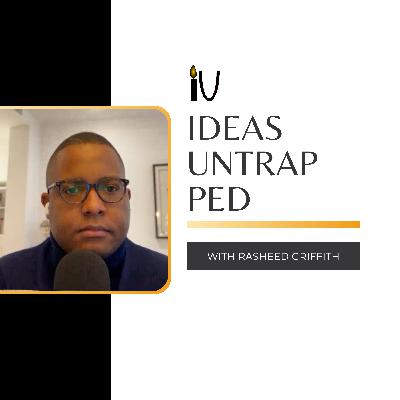
Welcome to another episode of Ideas Untrapped podcast.
In this episode, I spoke to Portia Roelofs who is a Lecturer in Politics at the Department of Political Economy at King's College London, and also a research associate at the African Studies Centre in Oxford. She is the author of a fantastic book titled Good Governance in Nigeria; Rethinking Accountability and Transparency in the Twenty-First Century.
Portia critiques the "good governance" agenda, arguing it's a continuation of structural adjustment programs from the '80s and '90s, which focused on market-driven development, privatization, and state withdrawal. She asserts these reforms didn't consider the social and political realities in African countries, leading to significant challenges, including a narrowed policy scope and "choiceless democracies."
Portia proposes a more socially embedded approach to governance, emphasizing the need for government officials to be accessible and accountable in more culturally resonant ways, beyond just transparency and efficiency. She suggests practical steps like politicians residing in their constituencies and being directly reachable. The conversation also explores the tension between technocratic and populist approaches in Nigerian politics, highlighting the importance of addressing immediate social needs alongside long-term developmental goals.
Despite the critique of current governance models, the conversation acknowledges the complexity of governance in Nigeria and the need for nuanced solutions that consider both the efficiency of the civil service and the broader economic and social goals of the state. The discussion concludes by reflecting on the need for a more comprehensive discussion on the role and aims of the state in Nigeria, beyond just improving civil service efficiency.
Transcript
Tobi;
I'll start with where you started your book. I should say I enjoyed your book very much.
Portia;
Thank you.
Tobi;
It's very interesting, and I really connected with it as a Nigerian. So, what you described as the good governance agenda and its challenges, its failures, and way it has come short in the context of Africa and Nigeria, in this case, is where I’ll like us to really start. So just give me a brief rundown of that, because what you call the good governance agenda or the technocratic World Bank-type description of what good governance is, is still the popular and, I should say, acceptable form of discourse in the popular mind about how we think governance should be. So, just give me a brief rundown of your critique of that.
Portia;
Okay, sure. So, I think to understand a good governance agenda you really have to understand what it was a response to and, kind of, the immediately preceding history. So in the 1980s and the 1990s, you have the structural adjustment programs which are promoted by the World Bank and the IMF and adopted by many, many countries both in Africa and in the global south. And these are programs that take aim at the kind of bloated state and too much state intervention in the economy. And they say the economy needs to be structurally changed to allow market forces to drive development. So you see a kind of consistent pattern of privatization, liberalization, devaluation, removal of capital controls. And that was driven by a strongly ideological belief that the market is the best allocator of resources and the best driver of development.
And Nigeria, in 1986, under Babangida adopted something that was basically the structural adjustment programs, albeit not quite in name. And then by the kind of 1990s, the early 1990s, the late 1980s, people were starting to realize, actually, these structural adjustment programs don't work. They don't achieve what we wanted them to achieve. In many places, they had absolutely disastrous results. And a lot of the critique of that is coming from places like CODESRIA (Council for the Development of Social Science in Africa). So African scholars, from a more heterodox perspective saying: you can't rely on the market to just fix all of Africa's problems. And actually, in doing so, you did things like eliminating much of the middle class, these are hitting a lot of people who were otherwise in the professions. So there are lots of controversy over the structural adjustment, and it's seen as being a very ideological project.
And then in response to this, within the World Bank, there was thinking about, okay, maybe the problem isn't necessarily at the level of the policies, it's at the level of how does government itself operate. And so you see this move - you've got reports from the early 90s like governance and development, this move towards saying, okay, we need to reform how government operates. And this is actually applicable to all governments. All governments should be accountable. All governments should be transparent. All governments should be made more efficient. And if we do this by focusing on how government itself operates, then that's a better route to development. It's kind of like way of answering some of the critiques of structural adjustment.
However, many people say that the good governance agenda was really just a continuation of much of the structural adjustment policies. That the core ideas that you need to withdraw state intervention in many, many areas of the economy, privatize, liberalize, adopt private sector methods of operating and import them into the public sector, kind of lived on. So there's as much continuity as there is rupture. And so in practice, a lot of what the good governance agenda was doing was things like public finance reform or civil service reform and that kind of lives on. But I should also say that the word good governance has been used to cover many, many different things. And so people aren't always talking about the same thing when they use the term.
For example, in the early 90s, you have this, like, third wave of democratization. And in some ways, the good governance agenda was a bit interwoven with this. It was seen as multiparty democracy, elections. So there are definitely different debates to be had. But the one I guess I'm interested in is this one that says good governance is accountability, transparency, and the public-private divide. And the interesting thing there is it really promotes this idea of good government is technocracy. And so that means the people who are making decisions really should be the people with technical knowledge. That's often like public finance experts or economists. And the interesting thing is that that immediately sets up a bit of a tension, not necessarily with politics, which I know we've touched upon already, but with democracy.
Because if you've basically got, like, philosopher kings, wearing suits, with their degrees, then what's the role for the people? What's the role for mass participation? So the Thandika Mkandawire's critique of this was he said that you create choiceless democracies. So at a time when African countries were often opening up to democratic governance, in 1999, in Nigeria, for example, it also came at the same time that the kind of menu of policy options that it was acceptable to pursue and that were permissible within this kind of good governance framework and aid conditionality and increasing controls from the IMF and the World Trade Organization was really narrowing.
So finally people have the vote, but what can they vote for? Actually, quite a narrow set of kind of pro-market policies that pursue development in quite a narrow way as defined by international institutions. So that's kind of what I see as being some of the central tensions of the good governance agenda. And in the book, I kind of explore how does this play out at the level of state government in Oyo State, for example, or how is this playing out in debates in Lagos State government’s new agencies or whatever. So, yeah, I'm really standing on the shoulders of other people like Yusuf Bangura, and other Nigerian political scientists, people who were critiquing the good governance agenda as it was developing in the 90s.
Tobi;
We'll get into your field work in Oyo States, and I'm curious what the Lagos model really is, and I know a lot of people in the audience are curious as well. But I want you to help me contextualize the good governance argument better. So I think where I share your sentiments, especially around the Structural Adjustment Program and other donor driven programs of the like is that they are very antidemocratic, they are not even accountable in the sense that they define accountability to be. And I think we share similar sentiments in that regard.
So let me take one very popular example that sort of intersects with the discourse around governance, which is that in Nigeria we've been talking about corruption for decades, right? There are always stories in the news of bureaucrats, civil servants and even politicians misappropriating public funds, you know, and the way the good governance narrative sort of feeds into that is that if you then have a process of rules that holds people accountable, it then becomes difficult to misappropriate public funds. Funds that should be invested in social programs or infrastructure that then find their way into people's accounts via very clever and, in some cases, not so clever means.
But what we have seen is that despite all the talk of instituting all these frameworks and rules, we haven't really solved the corruption problem. It never really goe












 United States
