


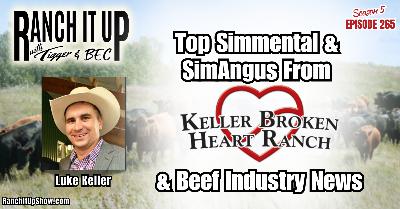
Top Simmental & SimAngus Genetics & Beef Industry News
Description
It’s The Ranch It Up Radio Show! Join Jeff Tigger Erhardt, Rebecca Wanner AKA BEC and their crew as they hear how restructuring and reorganizing the operation can be the best decision made. Plus, updates on beef packing plant closures and beef prices, EHV-1 in horses, market reports and lots more on this all-new episode of The Ranch It Up Radio Show. Be sure to subscribe on your favorite podcasting app or on the Ranch It Up Radio Show YouTube Channel.
Keller Broken Heart Ranch Offers Top Simmental & SimAngus Genetics
Keller Broken Heart Ranch has reached the point of success in the Simmental & SimAngus business that restructuring and reorganizing is in order. As a result, Keller Broken Heart Ranch is offering the top 100 bred heifers at their 1st annual fall heifer and female sale, at the ranch, Mandan, North Dakota, Wednesday, December 10. Find all the information for their 1st annual sale by clicking HERE!
Beef Industry News
Tyson Announced The Closing Of Beef Plant In Nebraska
The beef business has been a buzz this past week when Tyson, one of the Nation’s largest meat packing companies, announced plans to close a large beef plant in Lexington, Nebraska.
The news of the possible closing comes just weeks after President Donald Trump claimed the four largest companies are driving up the prices on purpose, to keep meat prices high for the consumer.
On November 7, Trump took to social media to call for a DOJ investigation into the price fixing claims by saying “I have asked the DOJ to immediately begin an investigation into the Meat Packing Companies who are driving up the price of Beef through Illicit Collusion, Price Fixing, and Price Manipulation. We will always protect our American Ranchers, and they are being blamed for what is being done by Majority Foreign Owned Meat Packers, who artificially inflate prices, and jeopardize the security of our Nation’s food supply.”
Back in October, Tyson and Cargill agreed to pay more than $87.5 million to settle a federal lawsuit for "inflating" beef prices by limiting the supply to the public.
Trump's most recent claims earlier in November call out the foreign owned meat packers, as well as the American-owned ones, like Tyson.
The White House website also posted about how much influence the top four meat companies have over the price of beef saying "The “Big Four” meat packers — JBS (Brazil), Cargill, Tyson Foods, and National Beef — currently dominate 85% of the U.S. beef processing market, up from just 36% in 1980. Two of these companies, including the largest meat packer in the world, are either foreign-owned or have significant foreign ownership and control."
Price Fixing In The Beef Industry
According to agricultural economists and the National News Desk, beef prices at the grocery store aren’t expected to budge, even after Tyson Foods announced it will close one beef plant and scale back another.
Texas A&M economist David Anderson says government investigations into meat-packer collusion are also unlikely to lower prices. He notes that cattle prices are at record highs, and even the big processors are losing money.
“If they had real market power, they wouldn’t be losing money,” Anderson says.
Right now, ground beef averages $6.33 a pound, up more than 11% from last year. The core issue, Anderson says, is tight cattle supply—the smallest U.S. beef-cow herd since the early 1960s.
Anderson explains that every beef-packing plant, not just Tyson, is operating in the red because live cattle prices are rising faster than wholesale beef prices—a normal pattern when herds are low. When cattle are plentiful, the roles reverse: ranchers lose money and packers profit.
Despite concerns about the dominance of a few large meatpackers, Anderson says there’s little evidence they can artificially inflate grocery store prices.
“To push prices higher, you have to control supply,” he says. “And packers don’t own the cattle or the feedlots.”
So what is driving today’s high beef prices? A shrinking cattle herd, shaped by years of drought, rising costs, and previously low prices. And rebuilding that herd takes time.
A calf born last spring won’t have its first calf until 2027, and that next generation won’t reach market weight until late 2029.
“It’s hard to beat biology,” Anderson says. “We can’t speed that up.”
Until then, experts say beef prices at the grocery store will likely stay high—no matter what happens in the packing plants.
Equine Herpes Virus In Horses
The Equine Disease Communication Center is monitoring an outbreak of equine herpesvirus myeloencephalopathy (EHM), the neurologic form of equine herpesvirus-1 (EHV-1), that originated at the Women’s Professional Rodeo Association (WPRA) World Finals and Elite Barrel Race event in Waco, Texas, on Nov. 5-9.
As of November 24, the EDCC has confirmed 29 EHV-1 cases associated with the event. The cases are located in Texas, Oklahoma, Louisiana, Colorado, New Mexico, Washington, Arizona, and South Dakota.
Herpesvirus is highly contagious among horses and can cause a variety of ailments.
In many horses, the first or only sign of EHV-1 infection is fever, which can go undetected. In addition to fever, other common signs of EHV-1 infection in young horses include cough, decreased appetite, depression, and a nasal discharge. Pregnant mares typically show no signs of infection before they abort, and abortions usually occur late in gestation (around eight months) but can be earlier. Abortions can occur anywhere from two weeks to several months following infection with EHV-1.
Herpesvirus is easily spread by nose-to-nose or close contact with an infectious horse; sharing contaminated equipment including bits, buckets, and towels; or clothing, hands, or equipment of people who have recently had contact with an infectious horse. Routine biosecurity measures, including hygiene and basic cleaning and disinfection practices, should be in place at all times to help prevent disease spread.
Already, some equine events have been cancelled or postponed due to EHV-1, while others have been put on high alert, including the Wrangler National Finals Rodeo. If your horses show any concerning signs or abnormalities, especially a fever or neurological symptoms, contact your veterinarian immediately.
References:
https://thehorse.com/1141197/nov-24-update-29-confirmed-ehv-cases-associated-with-wpra-event/
https://www.northernag.net/ehv-outbreak-spreads-across-multiple-states-after-texas-rodeo-event/
Featured Experts in the Cattle Industry
Luke Keller – Keller Broken Heart Ranch
Follow on Facebook: @KBHRSimmental
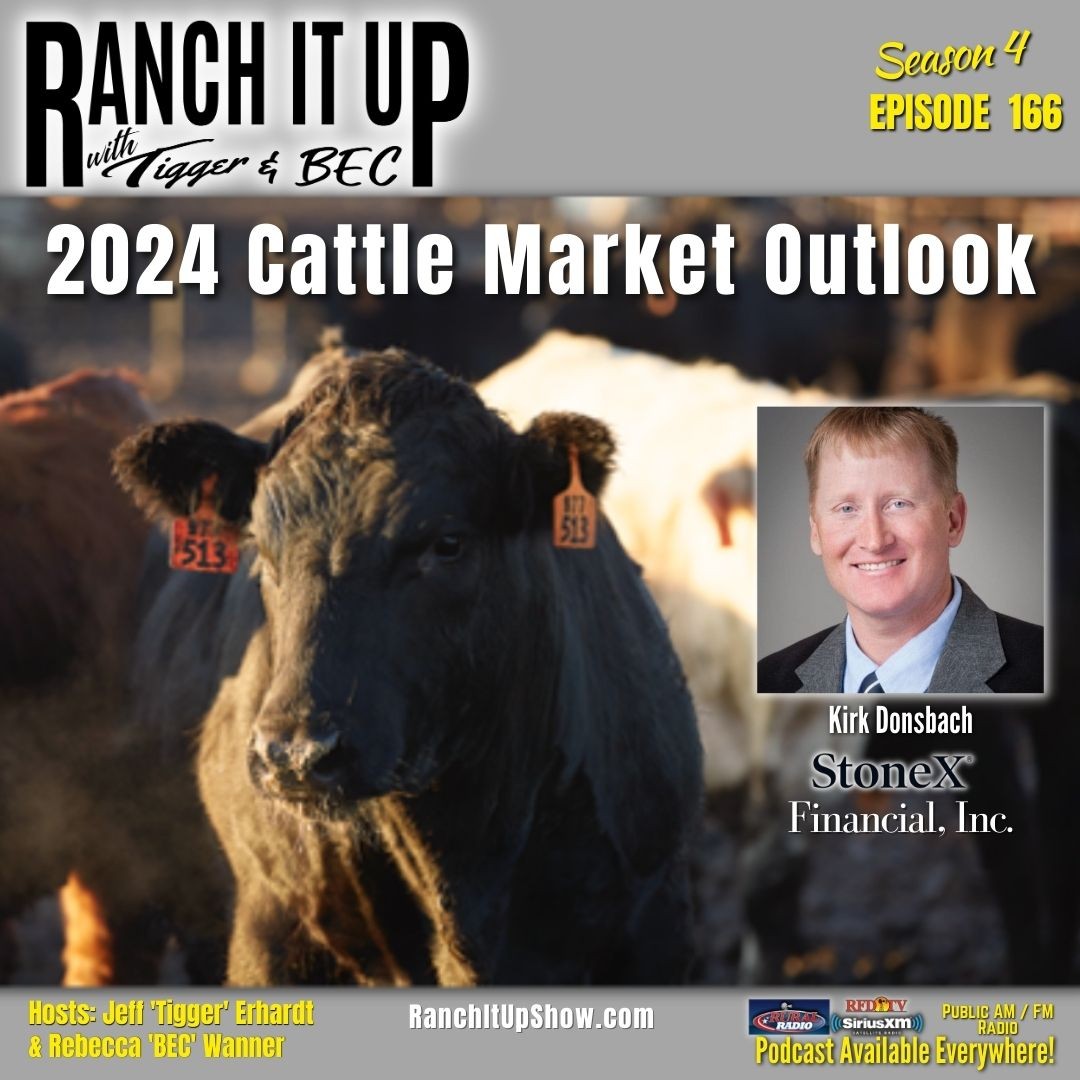
Kirk Donsbach – Financial Analyst at StoneX
https://www.stonex.com/
Follow on Facebook: @StoneXGroupInc
Shaye Wanner – Host of Casual Cattle Conversation
https://www.casualcattleconversations.com/
Follow on Facebook: @cattleconvos
Contact Us with Questions or Concerns
Have questions or feedback? Feel free to reach out via:
- Call/Text: 707-RANCH20 or 707-726-2420
- Email: RanchItUpShow@gmail.com
- Follow us: Facebook/Instagram: @RanchItUpShow
- YouTube: Subscribe to Ranch It Up Channel: https://www.youtube.com/c/RanchItUp
Catch all episodes of the Ranch It Up Podcast available on all major podcasting platforms.
Discover the Heart of Rural America with Tigger & BEC
Ranching, farming, and the Western lifestyle are at the heart of everything we do. Tigger & BEC bring you exclusive insights from the world of working ranches, cattle farming, and sustainable beef production.
Learn more about Jeff 'Tigger' Erhardt & Rebecca Wanner (BEC) and their mission to promote the Western way of life at Tigger and BEC.
Industry References, Partners and Resources
For additional information on industry trends, products, and services, check out these trusted resources:
Allied Genetic Resources: https://alliedgeneticresources.com/
American Gelbvieh





 United States
