


 Claim Ownership
Roxy's Ride & Inspire RAWcast - Mountain Bike & Mindset Podcast
Subscribed: 25Played: 389
Subscribe

© Roxybike
Description
No-bla-bla Podcast about Mountain Biking, MTB Coaching, Mental Training and Mindset Improvement, hosted by Rafaella "Roxy" Wieschollek, Mountain Bike Skills Coach, Graduate Sports Mental Trainer, Neuromentaltrainer and Psychological Counsellor.
Short, but inspiration-dense episodes, raw and real (thus RAWCAST), focusing on debunking mountain bike myths, sharing inspirational ideas, explaining neurological and psychological concepts in simple terms - all with the goal of making mountain biking safer and advancing the global standard of mountain bike instruction.
I focus on quality over quantity. New episodes as often as I feel inspired to share.
52 Episodes
Reverse
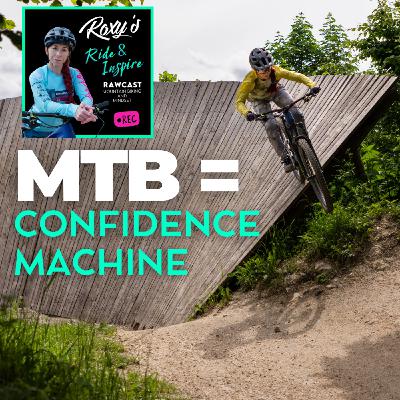
Mountain biking can rewire your brain for deep confidence and self-trust. But if you’re not careful, it can also train self-doubt, fear, and destructive thought patterns. In this episode, I break down the neuroscience behind both. You’ll learn how real confidence is built through motor learning, awareness, and measurable progress — and why many riders unknowingly train the opposite of what they want. I explain how skills training, when done intentionally, becomes a powerful tool to overcome limiting habits and beliefs — based on how the brain actually works.This isn’t motivation fluff. It’s brain science applied to the trail.Because MTB is more than sport. If used consciously, it becomes a laboratory for rewiring belief systems.You’ll also hear the story of Samantha, a rider who went from constant self-doubt to grounded confidence — through understanding cause and effect, and how you can, too! You’ll learn:- Why confidence is a trained neural pattern (not a character trait)- How to build confidence circuits in your brain- Why awareness is the true foundation of self-confidence and what the German word for confidence (Selbstbewusstsein) has to do with it- How the Notice → Accept → Adjust → Repeat loop builds self-trust- Why dopamine from small wins is more powerful than big breakthroughs- Why negative self-talk blocks learning- Why even your posture and body tension directly influence confidence- How familiarity — not difficulty — determines fear- Why safe practice environments accelerate growth- How skills training on the bike transfers into real-life self-beliefLinks mentioned in the episode: Join my once a year LIVE COHORT starting in April: https://roxybike.podia.com/skill-up-2026-your-all-in-one-mtb-skills-programPatreon: https://www.patreon.com/rideandinspireBuy me a coffee: https://buymeacoffee.com/roxyinspiresWork with me with my remote coaching: https://www.roxybike-coaching.comSign up for my FREE newsletter with tips directly to your inbox and get a FREE BALANCE COURSE to start rewiring right on your doorstep: https://roxybike.podia.com/sign-me-up Book MentionedWay of the Peaceful Warrior – Dan Millman
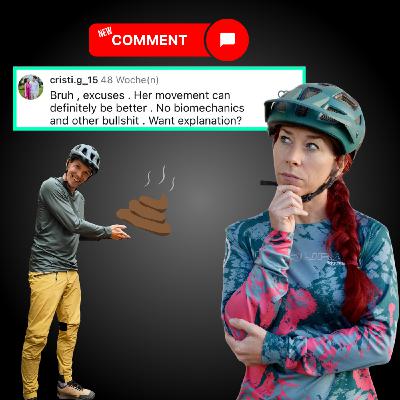
If you're fed up with men telling women that they're just making excuses, or you think “women just need to try harder”… you’re exactly why this episode exists. 🤓 It is based on physics, physiology, bike geometry and hormones: it's a clear explanation of why the same trail and the same skill can cost women more. If you'd like to see some great examples of mansplaining, then just check the comments below this reel, which ironically addresses this topic with FACTS already: https://www.instagram.com/reel/DF2rxqqsb78/?igsh=cm9nbGZobnUzNWti This is not a political statement and not “activism.” I’m NOT here to fight culture wars. I’m here for truth, physics, and better coaching — so more women+ ride bikes, stay motivated in the sport, feel seen and progress faster. In this episode you’ll learn:the difference between relative strength vs absolute strength and why mountain biking doesn't care that women can have more "relative lower body strength" why cues like “just send it”, "stop making excuses", or “just pull up” are NOT helpful when coaching womenhow power production, fatigue, recovery, and threat response can change the learning curvewhere bike geometry and component sizing can quietly reduce control for many womenwhy women often ride closer to their limits on the SAME trail or when performing the SAME movewhy women can't just "make it snappier" as easily as men. One boundary up front:This episode is for women and men. However, it's for genuinely strong men: the kind who can handle facts, respect context, and support women without putting them down to feel superior.If you’re here to learn (regardless of gender): welcome. If you’re here to “correct” women’s experiences, minimize biology, degrade me or others — that’s not a discussion, and it’s not welcome here. Also: That’s not masculinity. That’s insecurity with a keyboard. 🤓This space is for respectful, grounded (wo)men+ who value understanding, empathy, and better solutions.Looking for coaching that’s designed around different biologies and adapts skills training to your age, body, and bike? Sign up for free here:https://roxybike.podia.com/sign-me-upSupport this ads-free podcast: https://www.patreon.com/c/rideandinspire Scientific resources & Citations: Strength & Power differences between women and men: https://pubmed.ncbi.nlm.nih.gov/8477683/ and https://pubmed.ncbi.nlm.nih.gov/37772882/ and https://physoc.onlinelibrary.wiley.com/doi/full/10.1113/JP284198 and https://pmc.ncbi.nlm.nih.gov/articles/PMC7930971/ and https://pmc.ncbi.nlm.nih.gov/articles/PMC7930971/ Physiological differences between genders: Women and men gain strength well relatively, but not absolutely: https://pubmed.ncbi.nlm.nih.gov/3529284/ and why testosterone matters: https://pmc.ncbi.nlm.nih.gov/articles/PMC6391653/Intimidation and Perception: A 2010 Sacred Rides survey showed that 60% of women believed the perception of mountain biking as "hard-core" was deterring women from participating Media Representation: Research about inclusivity by Fiona Spotswood, Bristol University: "media continues to anchor male authority and reinforce hypermasculinity, falling short of its transformative potential. Women disengage and can feel disconnected from mountain biking" Fostering Inclusive Action Sport: "We need a better understanding of the practices that reconstitute, or challenge, the established production of male-dominated content that masculinizes sport." The eye-opening books for all of you saying women are not underrepresented: "Invisible Women" written by Caroline Criado Perez
Why do MTB skills feel amazing right after a clinic… and then “disappear”? In this episode, I break down what’s really happening inside your brain (neuroscience-based, no fluff, in simple terms) when you learn mountain bike skills:Why your brain deletes new MTB skills (unless you do this)The real reason skills fade: you’re stuck in Stage 1 of neuroplasticity Why confidence isn’t magic, it’s actually something called myelination (and it's simple to build!)Why fear blocks learning: the amygdala rule every MTB rider (and MTB skills coach) should knowYou’ll learn how to move from temporary performance to trail-proof skill by understanding the 3 stages of neuroplasticity and how to train in a way that actually sticks.Real progress isn’t about talent or bravery. It’s about wiring the skill deep enough that it shows up when it matters. In this episode you'll find out how to do that! 👉 Start rewiring with:My FREE Balance course → https://roxybike.podia.com/sign-me-upWork with me personally → More info hereSupport me to keep this podcast ads-free and value-driven: By supporting me on Patreon 😍 (Which also unlocks exclusive peaks) By buying me a virtual coffee 😍
Riding alone can feel surprisingly hard, especially for MTB beginners, often more so for women, but sometimes even for experienced mountain bikers. Fear, lack of focus, and constant “what if” thoughts often have a lot to do with how the brain reacts when we lose external support. This episode is especially helpful if you want practical, science-based confidence strategies. In this episode, we break down:why solo MTB rides trigger fear and overthinkinghow self-talk influences confidence and riding performancehow third-person self-talk (Illeism) can calm the nervous system (and why it works based on neuroscience) how to make solo rides safer and more effectivepractical strategies for solo ride safety and preparationYou’ll learn how to:ride alone with more confidencestrategies for guided self-talk reduce fear on solo mountain bike ridesstay focused without external validationbuild trust in yourselfStart my free on-bike balance course designed specifically for mountain bikers 35+: https://roxybike.podia.com/sign-me-up For the Ladies 40+: Sign up for free MTB + Menopause Tips: https://roxybike.podia.com/menopause-tips Train your strength and coordination at home (course specifically for mountain bikers 35+): https://roxybike.podia.com/building-basics-introduction-to-strength-coordinationSupport this podcast by becoming a patron or buying me a coffee 😍 (It's NOT sponsored to keep it value-driven, not algo-driven)☕️ https://buymeacoffee.com/roxyinspires🙏 https://www.patreon.com/c/rideandinspire
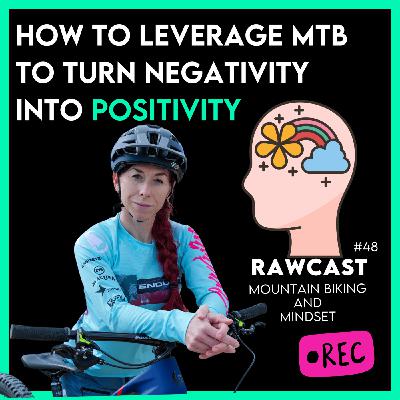
In today’s episode, we dig into one of the most powerful (and most misunderstood) features of the human brain: your built in negativity bias. You'll learn:why your brain holds onto negative experienceswhy “reality” is filtered, not objectivehow the Reticular Activating System (RAS) decides what you noticeand how mountain biking is a surprisingly effective tool for retraining your attentionIf you’ve ever wondered why one bad ride, one mistake, or one negative comment sticks in your mind far longer than all the good stuff combined, this episode will finally help you make sense of it and CHANGE it! You’ll learn practical, science-backed tools to start training your attention today (on the trail and in daily life) so your brain becomes better at noticing possibilities, capabilities, and micro-wins instead of dangers and mistakes to build a more supportive inner environment.We explore:Baumeister et al., “Bad Is Stronger Than Good”the fast subcortical threat pathway that triggers your amygdala before you can thinkwhy positive moments fade unless you consciously reinforce themhow attention literally rewires your neural pathway Hebbian learningand why your RAS acts like a “bouncer,” filtering your world based on what you engage with✨ Patreon Bonus: Patrons get a free downloadable cheat sheet that summarizes all tools and concepts from today’s episode.Join here to get it PLUS other exclusive perks: https://www.patreon.com/c/rideandinspire This episode is not sponsored. It’s made possible by the lovely humans who support my work on Patreon. If you want to help me keep creating science-based, real-talk MTB content, JOIN my Patreon, thank you. 🩵Research, Citations & Sources: All of what I mention in this episode is solid sports psychology:Negativity Bias — “Bad Is Stronger Than Good”: Baumeister, R.F., Bratslavsky, E., Finkenauer, C., & Vohs, K.D. (2001).Review of General Psychology, 5(4), 323–370. DOI: https://doi.org/10.1037/1089-2680.5.4.323Fast Threat Detection, Subcortical “Low Road” Pathway: This is Joseph LeDoux’s foundational fear-circuit research. Emotion circuits in the brain. Annual Review of Neuroscience, 23, 155–184. DOI: https://doi.org/10.1146/annurev.neuro.23.1.155Subcortical fast route via thalamus → amygdala This paper describes how threat cues take a fast shortcut to the amygdala. Morris, J.S., Ohman, A., & Dolan, R.J. (1999).A subcortical pathway to the right amygdala mediating “unseen” fear. PNAS, 96(4), 1680–1685. DOI: https://doi.org/10.1073/pnas.96.4.1680Emotional memory consolidation — why threat sticks more. This is the amygdala → memory research that explains why negative events imprint so strongly. Phelps, E.A., & LeDoux, J.E. (2005). Contributions of the amygdala to emotion processing: From animal models to human behavior. Neuron, 48(2), 175–187. DOI: https://doi.org/10.1016/j.neuron.2005.09.025Cognitive attention networks — why attention shapes perception. This is the Corbetta & Shulman paper: Corbetta, M., & Shulman, G.L. (2002). Control of goal-directed and stimulus-driven attention in the brain. Nature Reviews Neuroscience, 3, 201–215. DOI: https://doi.org/10.1038/nrn755 Hebbian Learning = “Neurons that fire together wire together”. This is the classic foundation for how repeated thoughts build neural pathways. Hebb, D.O. (1949).The Organization of Behavior. New York: Wiley & Sons. https://thedecisionlab.com/reference-guide/neuroscience/hebbian-learning Dopamine, reward learning, and the need for repetition. Wise, R.A. (2004). Dopamine, learning and motivation. Nature Reviews Neuroscience, 5(6), 483–494.DOI: https://doi.org/10.1038/nrn1406Speaking cues aloud improves focus + reduces fear, Research on self-talk regulating attention and performance: Theodorakis, Y., Hatzigeorgiadis, A., & Chroni, S. (2008).Self-talk: Positive impact on sports performance. Journal of Applied Sport Psychology, 20(2), 178–195. https://pubmed.ncbi.nlm.nih.gov/26167788/ Reticular Activating System (RAS): The RAS has decades of neuroanatomical research. A clean modern summary is: Moruzzi, G., & Magoun, H.W. (1949). Brain stem reticular formation and activation of the EEG. Electroencephalography and Clinical Neurophysiology, 1(4), 455–473. DOI: https://www.sciencedirect.com/science/article/pii/0013469449902199?via%3Dihub
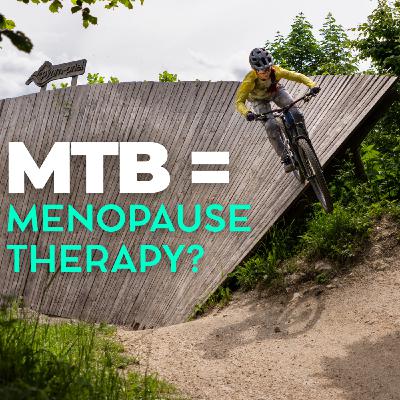
We dive into what’s actually happening in peri- and postmenopause (hormonally, neurologically, and physically) and how those changes show up on the bike. From fear on technical trails, to fatigue, difficulties concentrating, to the “hit by a truck” recovery days… none of this is random. This episode is science-based and NOT only for women 🤓You’ll learn:to understand women deeper and why the transition is not "in their head" how estrogen and progesterone influence fear, focus, coordination and recovery,why everything can suddenly feel harder,why muscle soreness and fatigue stick around longer,why menopause affects balance and timing,why MTB is one of the most powerful tools to feel better during menopauseAs always: This is education, not medical advice. Please speak with a healthcare provider about your individual situation — especially if considering HRT or if you have medical conditions.🩵 want to leave a comment? Find this episode on YouTube here: How Menopause Affects Riding – And How Mountain Biking Helps #47https://www.youtube-nocookie.com/embed/56niS0Ogsng?feature=oembed 💌 Join the MTB Menopause Newsletter:Get science-backed training, fueling, and mindset tools specifically for midlife riders delivered straight to your inbox. Sign up here: https://roxybike.podia.com/menopause-tips Follow my new page on Instagram: https://www.instagram.com/mtbmenopause/ 🐰 Start my BUNNY HOP COURSE with a methodology designed specifically for women & riders 40+ Key Links & Research Mentioned, also, diving a little deeper: Menopause physiology & STRAW+10:STRAW+10 staging system (official reproductive aging framework): https://pmc.ncbi.nlm.nih.gov/articles/PMC3340903/ and https://pmc.ncbi.nlm.nih.gov/articles/PMC3580996/Exercise benefits in peri- and postmenopausal women:Sleep, mood, psychological well-being: Systematic review (exercise & sleep in menopausal women) https://pubmed.ncbi.nlm.nih.gov/39627770/Mind–body exercise & sleep improvement (yoga, stretching, relaxation): https://pubmed.ncbi.nlm.nih.gov/40694785/ Aerobic exercise benefits: Aerobic training improves sleep, mental health, and fatigue in peri/postmenopause: https://pubmed.ncbi.nlm.nih.gov/26382311 and https://pubmed.ncbi.nlm.nih.gov/32993147/ and https://pmc.ncbi.nlm.nih.gov/articles/PMC9730414/Strength training & cognition:Resistance training paired with cognitive training improves cognitive function and slows brain-structure decline in older women (RCT): https://pubmed.ncbi.nlm.nih.gov/36312128/Skipping breakfast & metabolic health:Skipping breakfast linked to higher risk of osteoporosis: https://pubmed.ncbi.nlm.nih.gov/34313618/No benefits of time restricted eating vs. just exercise: https://pubmed.ncbi.nlm.nih.gov/40880914/ Protein for midlife women:Whey protein supplementation helps avoid muscle loss and also builds muscle, if paired with strength training: https://pubmed.ncbi.nlm.nih.gov/36235862/Sleep: Sleeping less related to higher obesity risk: https://pubmed.ncbi.nlm.nih.gov/35730978/Estrogen, why important and why we need to fuel differently: Estrogen’s role in muscle, collagen, tendons, inflammation, neuromuscular control (major review): https://pubmed.ncbi.nlm.nih.gov/23460719/Hormone Therapy: Benefits & risks of HRT: https://pubmed.ncbi.nlm.nih.gov/34432008/Menopause symptoms & prevalenceMenopausal transition symptoms overview (cycle changes, brain fog, vasomotor symptoms, mood): https://pubmed.ncbi.nlm.nih.gov/35525259/ 🩵 Thank you for listeningIf you found this episode helpful, please share it with another midlife rider — it makes a huge difference. And DO rate the podcast, or comment below an episode 🩵
In today’s episode, we dive into something unexpectedly powerful: how a simple, honest video about positivity received 968 positive comments across 4 platforms and just A SINGLE negative comment, and what this reveals about human connection, the social media algorithm, and your brain’s built-in negativity bias. This episode is both personal and deeply science-based. You’ll hear why authentic honesty repels trolls, why your attention shapes your reality, and how you can actively train your feed (and your brain) to give you more of what actually serves you.📹 There’s also a full video version of this episode, where you’ll see the original positivity reel and the comment section that sparked this whole conversation.You can watch it here:👉 https://youtu.be/xdAZGHx8m5E&list=PLwfXYMc609PXOZxbdKKE9i0hFzk8hTip0And here's the original short video I mention in this episode that inspired me to record this full video/pod: https://www.youtube-nocookie.com/embed/zNNIyoh_E10?feature=oembed In this episode you'll learn:What humans seem to crave more than spectacle (deep down)How you can literally rewire your "algorithm" (this goes way deeper than you may expect)The neuroscience behind “look where you want to go”Why your brain remembers the negative moreHow to override negativity with conscious practiceHow this applies both to social media and to mountain biking (especially line choice!)Why positivity is not denial, but deliberate neuroplasticityAnd as always — thank you to my lovely patrons for making this podcast possible. If you want to support it too, You’ll find the link here: Ride & Inspire PATREON CHANNEL
Why perfectionism slows progress, what’s really happening in your brain and body, and how to break the loop — on and off your mountain bike.
In this episode, I dive into one of the biggest hidden blockers in adult MTB learning: perfectionism. If you’ve ever caught yourself thinking, “I should be better by now,” or you get frustrated when a skill doesn’t click instantly — this episode is for you. We’ll explore why perfectionism isn’t just about “high standards” but a protective mechanism of your brain, what happens physiologically when you tense up and over-focus on mistakes, and — most importantly — how to shift out of that loop and back into learning flow.
You’ll walk away with concrete, science-backed tools to calm your nervous system, rewire your brain for real progress, and finally enjoy the process — instead of chasing “perfect.”
🚵♀️ You’ll learn:- Why perfectionism is actually a form of fear and self-protection
- What your dopamine and cortisol systems have to do with frustration and flow
- How tension blocks coordination and confidence
- Simple “in-the-moment” resets to shift from frustration to focus
- Why imperfection is the key to long-term skill growth
- How to literally train your nervous system, not just your muscles
Start working with my trackstand course for free and sign up for science-backed tips: https://roxybike.podia.com/sign-me-up
Start my mental training course: https://roxybike.podia.com/courage-and-confidence-booster
Struggling with fear on technical MTB trails? I certainly did! In this episode, I share my personal story of trying the “just ride scarier trails” method - whether it works for overcoming fear mountain biking, and how I finally built confidence on steeps, rocks and technical trails that once intimidated me.
You'll learn why fear doesn’t actually vanish through random exposure, how your adult brain wires fear and courage differently than you used to as a kid, and the proven step-by-step approach to actually build lasting confidence on the bike.
If you’ve ever thought “maybe I’m just too fearful to mountain bike,” this episode is for you.
Free Trackstand Course & Info letter→ https://roxybike.podia.com/sign-me-up
FUNdamentals Course → https://roxybike.podia.com/mtb-fundamentals-mini-course
Courage & Confidence Booster → https://roxybike.podia.com/courage-and-confidence-booster
Last week I had the honor of giving a keynote speech at the IMBA Europe Summit in Boltaña, in the heart of the Pyrenees in Spain (a GORGEOUS riding area). In this episode, I share my biggest takeaways, how new research shows E-MTBs change riding behavior and keep more people riding longer, and why mountain biking is much more than just “send-it” culture.
From inspiring projects in Nepal, Bhutan, and schools worldwide, to women like Manon Carpenter, Evelyn from Dutch Girls on Wheels, and many others leading the way — this summit left me hopeful and excited about a more inclusive future for MTB.
Fact is: Trails connect us. Skills empower us. And inclusion sustains us.
Here's the "Neuroscience of MTB Skills Practice" Video I talk about in this episode.
Here's my full KEYNOTE SPEECH as a video.
Here are some of the inspiring people and links I mention in this episode - but there were SO many more uplifting connections made! Dutch Girls on Wheels: https://www.instagram.com/dutchgirls_on_wheels
Pinar Pinzuti: https://www.instagram.com/pinarpinzuti
Manon Carpenter: https://www.instagram.com/manoncarpenter
Dr. Lesley Ingram Sills - Research about E-MTB: https://mtbcos.co.uk/dr-lesley-ingram-sills
Mental Health Benefits of Mountain Biking - Research by Edinburg Napier University: https://www.napier.ac.uk/about-us/our-schools/school-of-applied-sciences/mountain-biking/mountain-biking-and-mental-health
Julie Cornelius from Worldride: Changing Women's Lives Through Mountain Biking
Dr. Esther Walker at Outride - Bringing Cycling Programs to Schools
Loren Rowney at IMBA - Meet the IMBA Europe Team here.
Start working on your skills for free and get my tips directly to your inbox:
📧 Sign up for my FREE INFO LETTER here.
In this episode, I’m sharing raw reflections from my current coaching tour across Italy, Germany, and Austria - where I've already worked with over 400 mountain bikers in just a few weeks. You’ll hear stories that fuel my passion: like Raymond, who started riding at 75 and now (at 77!!) navigates trails with more control than many half his age. Or Sarah, whose confidence on and off the bike has transformed her and the way she lives her life. But I’ll also speak honestly about the frustrating side of coaching, about mental blocks, fear and confidence.
This episode is for anyone who wants to understand what really leads to progress - on the trail and beyond. Because skills aren’t just about safety or speed. Skills training can change who you are, how you see yourself and your life.
🎧 Tune in for truth, inspiration, and maybe a little tough love.
Start with my track stand course FOR FREE here: https://roxybike.podia.com/sign-me-up and get tips into your inbox (also free).
Are you a mountain biker (man or woman) over 40 who's interested in finding out how to adapt to your hormonal changes? In this episode, we dive into what really changes after 40 and how to adapt your training, recovery, and nutrition to ride stronger, and with more confidence. Whether you're dealing with slower recovery, declining energy, mood swings, or just want to future-proof your riding, this episode gives you practical, science-backed strategies to stay powerful and resilient on the trail.
Together with performance coach Jen Kates from Shift Human Performance, we break down:
Why strength training is non-negotiable after 40 (especially for women!) - and even more so for mountain bikers
How hormonal shifts affect recovery, body composition and energy in men and women
Why carbs and protein are critical for performance — and how to time them
Practical strategies to improve sleep, reduce fatigue, and stay consistent
What the science says about muscle loss, joint health, and hormonal changes
Foundations of strength training, nutrition & recovery for mountain bikers over 40
Whether you're riding to stay fit, chase flow, or overcome fear on technical terrain — this episode gives you tools to keep progressing in your 40s, 50s and beyond.
🎧 Tune in to learn how to build a body that supports your riding — not one that breaks down because of it.
Work with Jen: https://shifthumanperformance.com/shredstrong/
Work with me, Roxy: https://roxybike.podia.com/sign-me-up (The link will give you access to a free course and tips to your inbox!)
Support my ads-free podcast: https://www.patreon.com/c/rideandinspire or BUY ME A COFFEE 🥰 here: https://buymeacoffee.com/roxyinspires
The two books I mention in this episode: Why we sleep by Dr. Matthew Walker and BREATH by James Nestor
Don’t feed the trolls — let them FUEL you. 🔥 In this episode, I share my 5-step protocol for transforming verbal bullying into mental strength.
You’ll learn how to:- Take hate less personally
- Understand the psychology of bullies and “anger talk”
- Respond with integrity and a growth mindset
- Use neuroscience to understand why hate can hurt — and why it doesn't have to
- Build resilience like resistance training for your nervous system
This is a message for every rider who’s ever been judged, dismissed, or verbally attacked for trying to grow — whether on a trail, online, or in life.
Sign up for my info letter and a free course: https://roxybike.podia.com/sign-me-up
Work with my mental fitness course for more confidence on the trails and in everyday life: https://roxybike.podia.com/courage-and-confidence-booster
Find all my skills courses here: https://roxybike.podia.com/mountain-bike-online-courses
Support my ads free podcast by becoming a patron: https://www.patreon.com/c/rideandinspire
Whether you're struggling with steep trails, feeling stuck in your skills, or just want to train smarter, this episode offers fresh insights from the world of elite music performance — applied directly to mountain biking. In this powerful conversation, Roxy talks with Noa Kageyama, performance psychologist and creator of The Bulletproof Musician, about the fascinating overlap between music and mountain biking, and what both worlds can teach us about motor learning, fear, and practice that truly sticks - not just "in the practice room", but when we actually need to perform.
You’ll learn:
- What separates practice that sticks from performance that fades
- Why your level of fatigue and your strength, but also your skills, directly affects how much fear you feel
- How practice influences line choices
- Why adult learners need different strategies than kids — and how to adjust
- The truth about “muscle memory” and what actually builds confidence
- Why variability in MTB practice improves skill retention
- How to stop chasing perfection and start focusing on sustainable progress
- Why practice needs to be "messy" and how to make mountain biking safer, while still improving!
🎙️ Find Noa's Blog, Podcast and Online Courses here: https://bulletproofmusician.com/blog/
🧠 Work with my courses to build MTB Skills that stick: https://roxybike.podia.com
📥 Start with my free course and get tips to your inbox: https://roxybike.podia.com/sign-me-up
#sportspsychology #performancepsychology #musicandmountainbiking #mountainbiking #practicethatsticks #mtbtraining
Can mountain biking help you recover from burnout - or could it secretly be making overwhelm and exhaustion worse? In this episode, we touch on the neuroscience of burnout and boreout, proven ways to rebuild skills, inner stability, and joy on the bike and how burnout impacts your nervous system, decision-making, and overall well-being. As a full-time mountain bike coach and certified mental trainer, I’ve worked with hundreds of riders—some of whom came to me during or after burnout.
Here’s what you’ll learn in this episode:
What burnout and boreout really are — and how they show up in your body and brain
Why decision fatigue can lead to exhaustion and poor choices
How mountain biking and what type of skills training can support recovery
The ways riding can actually worsen burnout
What warning signs to look out for if your rides are doing more harm than good
A type of coaching that helps riders rebuild confidence, control, and calm - which can reduce burnout symptoms
If you’ve ever wondered:“Why do I feel worse after riding?”
“Is mountain biking helping my mental health—or draining it?”
“How do I get back in control when life and riding feel overwhelming?”
… then this episode is for you.
Work with me on your Mental Fitness, Control, Confidence and Skills: Courage & Confidence Booster: https://roxybike.podia.com/courage-and-confidence-booster
More about me: https://roxybike.podia.com/about-roxy
All home training courses, specifically designed to avoid overwhelm and help gain control, clarity and confidence: https://roxybike.podia.com/mountain-bike-online-courses
🎁 Bonus: Grab my free Trackstand Course (a powerful tool for control + flow) by signing up for tips here: https://roxybike.podia.com/sign-me-up
Support my ads free podcast by becoming a patron: https://www.patreon.com/c/rideandinspire
#Mountainbiking #MountainBikeTraining #BurnoutRecovery #MTBMindset #MTBCoaching #MountainBikeSkills
#MentalHealth #BikeTherapy #MTBOver40 #RideToRecover #Roxybike #WomenWhoRide #DecisionFatigue
Have you ever invested time and money into mountain biking skills clinics, only to find yourself facing the same challenges on the trails weeks later? I've certainly been there! In this episode, we delve into why a certain way of training falls short in delivering lasting improvements, the cause for overthinking on trails and we'll explore the principles of motor learning and what kind of skills training leads to genuine progress. Tune in to discover actionable strategies that will transform your riding experience and help you break through plateaus.
In these video on YouTube I dive deeper:
Goal- vs. Technique Oriented Training: https://youtu.be/IkHH8CEqCBA&list=PLwfXYMc609PVq5RJglo4WNdbZtgc_uN8S
MTB Skills Playlist: Questioning MTB Credos
Want to support my ads-free podcast, my mission to make mountain biking safer, more inclusive and my value-driven content? 🩵 Support me on Patreon AND get access to exclusive content: https://www.patreon.com/c/rideandinspire
Are you riding more than ever, but still not seeing real progress? In this episode, we dive into one of the biggest myths in mountain biking: that riding trails automatically makes you better. Spoiler: if you're an adult mountain biker: It doesn’t. And if you’re only riding you might actually be reinforcing bad habits that lead to plateaus, frustration, or even crashes. Find out why in this episode!
Just to make things clear though: My intention with this episode was definitely not to say that a ride without progress isn’t a valid ride—it was more about raising awareness that only riding, can eventually lead to a plateau. If that plateau is your happy place—AMAZING! But if it starts to feel a bit stale, then that’s the perfect moment to shake things up. That’s really what I wanted to touch on in this episode and to give you hands on tools how to and WHY to do so!
In this episode you'll learn:
How to avoid the illusion of progress
The difference between soft skills and hard skills in MTB
How to actually improve hard skills
One of the biggest MTB mistakes adult riders make that causes skills plateaus
The key for safety, control, and lasting confidence on your mountain bike
Whether you’re new to the sport or have decades of trail time, this episode may shift the way you think about your own progress—and show you how to train smarter.
🎯 Grab your FREE Trackstand Course
🎯 Get MTB Skills Tips directly into your inbox
🎯 Work with me to overcome skills plateaus, learn safely and train smarter (instead of harder)
🎧 Subscribe, share, and leave a review = this will help the podcast reach more riders!
Want to support my ads-free podcast, my mission to make mountain biking safer, more inclusive and my value-driven content? 🩵 Support me on Patreon AND get access to exclusive content: https://www.patreon.com/c/rideandinspire
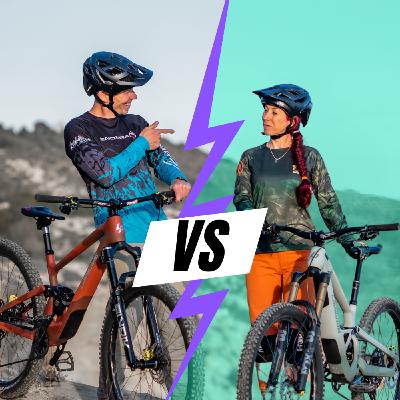
Do comparisons frustrate you more than they fuel you? You're not alone - especially as a woman rider navigating a sport that's often tougher for us physically and mentally. Ever had a male riding buddy muscle through a tricky section (or skill) and then casually tell you, "It's easy"? Yeah, we've all been there. In this episode, I share 3 practical tips on how to turn that envy and frustration into motivation and real progress on the trails. Learn why biology and anatomy makes mountain biking different for women, how to stop unfair comparisons from stealing your confidence, and remember: you can train smarter, not harder with my SKILL UP PROGRAM, starting on March 29th: https://roxybike.podia.com/skill-up-2-0-6-weeks-mtb-skills-program
It's a once-a-year opportunity to work in real-time with me and combines skills training, mental strength, mobility, strength, neuroathletics and coordination drills right on YOUR doorstep and in your living room! It's simple, yet highly efficient and fun!
Want to support my ads-free podcast, my mission to make mountain biking safer, more inclusive and my value-driven content? 🩵 Support me on Patreon AND get access to exclusive content: https://www.patreon.com/c/rideandinspire
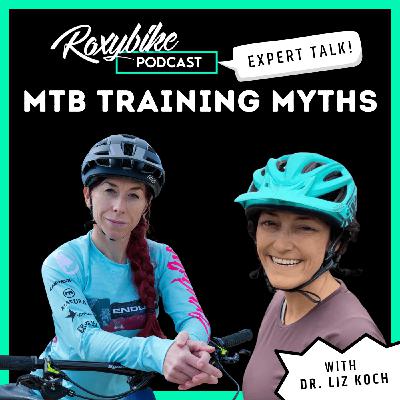
I discuss the importance of personalized training for women in mountain biking with Dr. Liz Koch, Physiotherapist and Strength & Endurance Training Expert. We talk about the significance of understanding movement patterns, biomechanics, and some common misconceptions in coaching and training, address a tailored approach to strength training and skills development, particularly for women and riders aged 40+, and explore how small adjustments in technique can lead to significant improvements in performance. We also touch on the difference between being a skilled rider and an effective coach, advocating for a deeper understanding of biomechanics and movement in sports training and mountain bike instructor certifications and look at some possible causes as to WHY some coaches teach so superficially.
Join my Live-Online Skill Up Program, starting March 29th - an ALL-IN-ONE Program with Skills, Strength Training, Mobility, Mindset, Neuroathletics + Coordination Drills on your doorstep and in your living room to improve your ON TRAIL Skills, Confidence and Control: https://roxybike.podia.com/skill-up-2-0-6-weeks-mtb-skills-program
Video links mentioned in this episode: Why not to drop both heels: https://youtu.be/VgddegvDvzU&list=PLwfXYMc609PXOZxbdKKE9i0hFzk8hTip0
Why not to focus on ELBOWS OUT! https://youtu.be/C8hm9L0BOm4?si=sv1LdMC3BjGp8XO4&list=PLwfXYMc609PXOZxbdKKE9i0hFzk8hTip0
More Info about Dr. Liz Koch and Outdoor Women Strong: Liz's Podcast: https://open.spotify.com/show/2kpgGpDSqdGfZ4zTsJsngC?si=2d23cf0e72eb4dcb
Her Strength Training, Mobility and Endurance Membership: https://theridelife.com/ride-life-membership-1/
Liz's YouTube Channel: https://www.youtube.com/c/TheRideLife
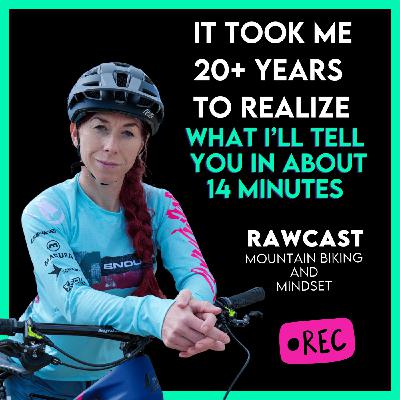
This episode is the audio from my video, "It took me 20+ years to realize what I’ll tell you in about 10 minutes." And honestly? I wish I had heard this pep talk two decades ago. I want to save you YEARS of frustration - those painful moments of feeling like a failure, pushing yourself into rides you THINK you should do, but that actually hold you back. In this episode, I share:
- Why I felt empty chasing the wrong goals - and how you can avoid that trap.
- How to truly enjoy every ride, no matter your level.
- Why you're NEVER too old to improve (and why you should keep evolving until your last ride).
- How I finally found real happiness in biking and life.
- Why I do what I do - and how this realization changed everything.
This is probably THE most important lesson I’ve ever learned—and it took me AGES to figure out. But you can get it all in just 14 minutes.
🎧 Hit play, and let’s talk about the ride that really matters.
Want to watch the video instead? Here it is: https://youtu.be/12iBPxKGHMQ
Want me to guide you every step of the way to GROW? Then let's do this! https://roxybike.podia.com

Comments

Download from Google Play

Download from App Store
 United States