


 Claim Ownership
Beyond Divorce: Embracing Change
Subscribed: 5Played: 9
Subscribe

Description
Welcome to the Beyond Divorce: Embracing Change podcast! We are actual therapists helping clients who sit on our couches every day through their difficulties of divorce. Whether you're contemplating separation, in a divorce, or looking for support post-divorce, our episodes provide expert guidance, stories, and strategies to help you through every step of the process.
64 Episodes
Reverse

In this episode, Jinohn Marr, LMFT, and Armando Martinez, LPC, take over to discuss a topic many parents struggle with: why children often fall apart after transitioning back from the other parent’s home. They explain that these transitions can be emotionally demanding because children are shifting back into a different set of expectations, routines, and emotional needs. Armando reminds us that this adjustment period is normal, and Jinohn describes how it can look different across ages—whether younger kids become clingy, tearful, or overwhelmed, or older kids show sadness, irritability, boundary-testing, or withdrawal. They emphasize that it’s completely typical for children to need time to settle back in as they re-regulate and reconnect with the rhythm of your home.
Jinohn and Armando share practical ways to support smoother transitions, including keeping boundaries and expectations as similar as possible between households, offering a snack to help stabilize mood and energy, and allowing space for a simple, relaxed environment rather than jumping into a full, busy schedule. These small adjustments help children feel steadier, safer, and more connected during the emotional shift between homes.
Taking care of your relationship with your child is especially important during the holiday season. Our Countering Alienation course gives you practical tools to protect and strengthen that bond—even in high-conflict situations. Register here: https://www.beyonddivorcecourses.com/offers/LoSnQoUH/checkout
If this episode was helpful, please share it with someone—maybe even your co-parent—and leave a rating to help more families find the support they need.


In this episode, Michael Flores, LPC-S and Jennifer Blake, LCSW-S, talk about the importance of intentionally planning for your family in the event of divorce. Just like a wedding requires coordination and preparation, a divorce—especially when children are involved—benefits from thoughtful, collaborative planning. Michael and Jennifer discuss how communication between both parties can make all the difference in creating a smoother, healthier transition. They explore the value of discussing the practical pieces early on: where the children will live, how you’ll make decisions moving forward, and what your parenting plan will look like for visits, holidays, and day-to-day routines. They also highlight the importance of outlining how you will co-parent together and what communication will look like so that each person knows what to expect from the other. And of course, they touch on the legal components that will need to be finalized—such as custody agreements, child support, and other court-required decisions. By planning ahead with clarity and child-focused intention, families can navigate divorce with greater stability, predictability, and care.
If you found this episode helpful, please rate and review the show to help more families find this support.

Register for the Countering Alienation course to protect your relationship with your child and gain the tools you need to navigate high-conflict dynamics with clarity and confidence here: https://www.beyonddivorcecourses.com/offers/LoSnQoUH/checkout
In this episode, Michael Flores, LPC-S, and Armando Martinez, LPC, explore what happens with in-laws when a divorce occurs between you and your spouse—an issue that often feels even more present during the holiday season. They discuss how extended family members experience their own grief, confusion, and loyalty binds, and why these dynamics make it important to thoughtfully redefine your relationship with former in-laws. Armando explains how in-laws can unintentionally add to the conflict by overstepping, fueling resentment, or putting children in the middle, while Michael highlights why these patterns can be so harmful for kids. Together, they share ways to avoid these pitfalls by creating boundaries that keep interactions healthy, respectful, and truly child-focused. In-laws can still play a meaningful and positive role when everyone stays clear, grounded, and aligned with what matters most.
If this episode resonated with you, please take a moment to leave a review for the podcast and send this episode to someone who might benefit from it.
Keep moving forward.

In this episode, Michael Flores, LPC-S, and Arrianna Cervantes, LPC-Associate, explore how to truly hear your child during and after divorce—without leading, influencing, or burdening them. They talk about the importance of asking open-ended, neutral questions that create the emotional space children need for genuine honesty. Arrianna reminds us that you don’t have to fix everything your child shares; often, your calm presence is the support they’re really asking for. Michael and Arrianna also discuss how to validate a child’s experience without adding guilt or responsibility, as well as how to acknowledge their truth in a way that feels safe and grounded. Together, they share ways to empower kids with developmentally appropriate choices—options that give a sense of control while still keeping the adult in the role of decision-maker. When children feel heard, they begin to heal, and giving them a voice doesn’t mean handing them the weight of adult problems; it means offering curiosity, compassion, and connection.
If this episode was helpful, please subscribe to the show and share it with someone who might need it.

In this episode, Licensed Marriage and Family Therapist Jinohn Marr sits down with Michael Flores, LPC-S, for an in-depth conversation about one of the most painful challenges parents face during high-conflict divorce: alienation. Jinohn flips the script and interviews Michael about what alienation really is, how to recognize it early, and the emotional impact it has on both children and the targeted parent.
Michael breaks down the subtle and not-so-subtle signs that a child may be feeling pressure, confusion, or loyalty binds — from sudden withdrawal and irritability, to repeating negative narratives, to refusing parenting time altogether. They explore how these behaviors often mask deeper emotions like fear, guilt, and feeling stuck in the middle.
Jinohn also asks Michael about the experience of the parent on the receiving end — the helplessness, grief, frustration, and fear that come when you feel your relationship with your child slipping away. Michael offers insight, validation, and compassion for parents who feel unseen and overwhelmed by the dynamic.
Together, they discuss what parents can do: staying grounded, responding rather than reacting, creating stability, and prioritizing connection over conflict. They explore how parents can protect their relationship with their child without escalating the situation — and without losing themselves in the process.
This episode also highlights Michael’s Countering Alienation Course, a step-by-step program designed to help parents navigate these dynamics with clarity and confidence. The course teaches you how to identify alienating behaviors, respond effectively, rebuild trust with your child, and maintain a stable, connected relationship even in high-conflict circumstances.
If you’ve ever felt confused, dismissed, or deeply worried about your child’s changing behavior during a contentious divorce, this episode will help you feel seen, supported, and equipped with the tools you need to move forward.
You can register for Countering Alienation to begin repairing your relationship with your child and learn how to respond more effectively to your co-parent here: https://www.beyonddivorcecourses.com/offers/LoSnQoUH/checkout
In this episode, Michael Flores, LPC-S, sits down with Jennifer Blake, LCSW-S, to help parents understand how divorce can affect children and when it may be time to seek professional support. They discuss the different ways kids may show that they are struggling — from emotional changes like sadness or irritability, to behavioral shifts, physical symptoms such as stomachaches, or academic decline. Children may also feel responsible for the divorce, feel stuck in the middle of parental conflict, or experience intense pressure navigating shifting family dynamics.
Michael and Jennifer explore what parents need to consider when deciding on therapy, emphasizing the value of early intervention. Having a professional assess your child or family can guide you to the right type of support, whether that’s individual counseling, family therapy, or both. They also highlight the importance of parental agreement whenever possible, as a unified approach helps children feel safer and more supported.
Jennifer shares practical guidance on supporting your child through therapy: respect their privacy, let them reflect on their feelings and sessions at their own pace, and understand that progress can vary — some kids move quickly, while others need more time and patience. Parents are encouraged to trust the process and give themselves grace alongside their child.
Please subscribe to Beyond Divorce: Embracing Change! When you hit that subscribe button, please take a minute to rate the podcast.
If you’re struggling with the distance between you and your child and an ex who keeps undermining you, you need this course — 'Countering Alienation' will help you rebuild trust and respond without feeding the conflict. Get started today: https://www.beyonddivorcecourses.com/offers/LoSnQoUH
Use code POD at checkout for $50 off!
In this episode, Michael Flores, LPC-S and Armando Martinez, LPC unpack one of the most common — yet often misunderstood — emotional experiences during divorce: anxiety. They explore the difference between angst — that sense of restlessness, unease, or tension — and anxiety, which is a more persistent state of fear or dread often focused on the future. Divorce can bring a sudden loss of predictability — new routines, financial worries, custody schedules, and court proceedings — all of which can stir up anxiety in both parents and children.
Armando explains what clinical anxiety looks like from a therapeutic lens, including how it differs from everyday worry, and how it shows up in kids who may not have the words to express what they’re feeling. You’ll learn why irritability, stomachaches, and withdrawal are often anxiety in disguise — and how maintaining consistency and reassurance can help children regain a sense of safety during so much change.
This episode also mentions our Countering Alienation Course, a self-paced program designed to help parents respond effectively to alienating behaviors and protect their relationship with their child. It’s not about proving alienation — it’s about learning how to stay grounded, connected, and resilient when conflict runs high. You can access the course here (use the code POD at checkout for $50 off!): https://www.beyonddivorcecourses.com/offers/LoSnQoUH/checkout
If you’ve ever felt like worry is running the show during or after your divorce, this conversation will help you understand what’s happening beneath the surface — and what you can do to bring calm back to yourself and your family.
Children hear more than our words — they hear our tone, our silence, and the energy we bring into a room. In this episode, Michael Flores, LPC-S and Arrianna Cervantes, LPC-Associate dive into how kids are always listening, even when you’re not directly talking to them about their other parent.
They explore how your nonverbal cues — your calmness, reactions, and overall demeanor — shape your child’s sense of safety. The dynamics they observe between their parents deeply impact how secure they feel, and how they learn to navigate a life between two homes.
💬 In This Episode:
How children pick up on what you don’t say out loud
Why emotional safety starts with how parents treat each other
The roles children fall into when they sense their parents aren’t okay — the distractor, gatekeeper, or avoider
The importance of keeping adult conversations in adult spaces
How to model emotional regulation and respect, even when co-parenting is hard
What it really means to model calm and maturity when facing your ex
🗝️ Key Takeaways:
Kids hear everything. Protect their peace and innocence — let them be children.
Respect your co-parent relationship for the sake of your child’s emotional wellbeing.
Model the behavior you want your child to learn.
🔗 Related Episode:
🎙️ The Roles Children Play in Divorce
https://podcastle.ai/show/beyond-divorce-embracing-change-eKisiArX/the-roles-children-play-in-divorce-7FNMcf6g
🌿 Resource Mentioned:
If you’re struggling with alienation or high-conflict co-parenting, check out our online course:
👉 Countering Alienation: A Parent’s Guide to Reconnecting With Your Child
This course helps you learn how to respond to alienating behaviors — not just react — and includes a 31-page workbook to guide your next steps.
https://www.beyonddivorcecourses.com/offers/LoSnQoUH/checkout
🙏 Support the Show:
If this episode encouraged or helped you, please rate and review the podcast. Your feedback helps other parents find hope and practical help after divorce.
In this episode, we explore why taking a family approach to therapy can be one of the most powerful ways to create lasting change—especially for families navigating divorce.
We talk about how parents often come into therapy hoping the counselor will “see” their perspective or prove the other parent wrong. But real healing begins when we shift the focus toward curiosity, trust, and the bigger picture of family well-being.
We remind parents that growth rarely happens inside our comfort zones. This season of divorce may feel overwhelming, but it won’t last forever. The question to keep in mind is: What kind of future do you want for your child—and how can you help create it, starting now?
Whether you’re in the middle of divorce or finding your footing afterward, this conversation offers encouragement and practical perspective for the road ahead.
Please subscribe to our podcast! Make sure you get all new episodes delivered to you each week.
While you're there, will you leave us a review? Thank you for listening and supporting our mission to help families keep moving forward.
Follow us on Instagram @brighterpossibilitiesfc. Subscribe to our YouTube channel Brighter Possibilities Family Counseling.

Love doesn’t always end when a marriage does—and that leftover love can show up in surprising ways during co-parenting. In this episode, we share some of the things we, as counselors, notice when one or both parents may still be in love with the other. Sometimes it shows up not as affection, but as intense anger. We talk about how people often set you up to feel what they’re feeling, and how holding onto past pain can create even more challenges in your co-parenting relationship.
We also discuss three key practices that not only improve co-parenting but also help you heal: being vulnerable, speaking your truth, and staying flexible. Vulnerability can feel risky—many parents fear their ex will use it against them—but the reality is, if someone wants to use something against you, they will regardless. By choosing to be vulnerable, you create the possibility for deeper healing and may even open the door for your co-parent to soften and be vulnerable, too.
If you’ve ever wondered why it feels so hard to fully move forward after divorce, or if old wounds keep showing up in your co-parenting relationship, this episode will give you clarity and practical steps to begin healing.
If you find this conversation helpful, please take a minute to rate and review the show—it helps us reach and support more families like yours.

Forgiveness is one of the most powerful yet misunderstood parts of healing after divorce. In this episode, we explore what forgiveness truly is—and what it isn’t. Forgiveness is about letting go of anger and hurt, finding peace instead of seeking revenge, and releasing the other person’s power over your emotions. Just as importantly, forgiveness is not about approving of hurtful or harmful behavior, or pretending you weren’t hurt.
Why does forgiveness matter? Because it’s vital for your own healing, your ability to co-parent effectively, and your overall health and wellbeing. We also dive into the “how” of forgiveness: separating the person from the pain, processing the hurt feelings, finding meaning in the experience, creating boundaries that protect your peace, and remembering that forgiveness is for you—not for them.
If you’re ready to loosen the grip of the past and step into more freedom, this episode will guide you toward a better understanding of what forgiveness can look like in your journey.
If you find this conversation meaningful, please take a minute to rate and review the show—it helps us reach and support more families like yours.
Be sure to follow us on Instagram @brighterpossibilitiesfc and on YouTube at Brighter Possibilities Family Counseling.
Keep Moving Forward.
The back-to-school season can feel overwhelming for any family—and even more so when you’re navigating co-parenting. In this episode, we dive into how parents can support their child’s school life while managing life between two homes.
We talk about why school routines matter and how to keep them consistent across households. You’ll hear a simple rule of thumb for when parents don’t agree on rules, and we discuss why it’s so important that both parents have access to school apps, portals, and records. We also share practical ways to approach school staff with co-parenting concerns or court orders, along with tips for communicating with your child about their school day. Finally, we reflect on the importance of thanking and recognizing the educators and school staff who play such an important role in your child’s life.
Whether you’re just starting your co-parenting journey or have been navigating it for years, this episode will give you strategies to help your child feel supported, secure, and ready to thrive in the classroom.
If you find this episode helpful, please take a minute to rate and review the show—it helps us reach and support more families like yours!
Divorce is more than a legal process—it's an emotional rollercoaster. In this powerful episode, we unpack the Top 5 Fears in Divorce that so many parents silently carry.
We explore common emotional fears, including:
Being alone
Regret and doubt
Loneliness and second-guessing yourself ("Could I have saved this?" or "Was this a mistake?")
Anxiety about finding love again
We also dive into financial fears, such as:
Supporting yourself and your children
Adjusting your lifestyle
Managing legal fees and ongoing expenses
These fears can be overwhelming—and if left unaddressed, they may unintentionally impact your child, influence how others perceive you, and lead to judgment, shame, or emotional instability.
In this episode, we offer ways to work through those fears and shift your focus back to what matters most: your child’s well-being. We talk about how fear can show up in parenting, and how to avoid letting it drive your decisions or interactions.
Follow us on Instagram @brighterpossibilitiesfc for more support and real conversations about family court and parenting through separation. You can also watch recorded episodes on YouTube at Brighter Possibilities Family Counseling.
If this episode resonated with you, please rate and review our podcast—your feedback helps others find us and reminds us that we’re in this together.
When you walk into court-ordered counseling expecting support—and find yourself at odds with the therapist’s approach—it can feel like everything is working against your goals. In this episode, This Isn’t What I Asked For, we explore the tension that can arise when a parent’s expectations don’t align with the counselor’s role or the court’s intention.
We dive into the different types of counseling often ordered in family court, including:
Family therapy
Co-parenting counseling
Reunification therapy
Individual therapy
We unpack common misalignments, such as:
Expecting advocacy from the therapist vs. their neutral role
A resistant child vs. the court’s reunification goals
Confusion around blame and responsibility
The financial burden of mandated services
You'll learn how to navigate these challenges by:
Setting clear expectations from the start
Defining the court order in writing
Building rapport with the therapist
Looping in your attorney when needed
Prioritizing transparency and your child’s best interest
Take Action:
Follow us on Instagram @brighterpossibilitiesfc for more tools, support, and real talk about navigating family court.
If this episode helped you, please rate and review our podcast—it helps others find us and reminds us that we’re making a difference.

What does it really mean to win in family court?
In this episode, we dive into what winning looks like—from three unique perspectives: an
internet search engine, a family law attorney, and a therapist. While each viewpoint offers
different strategies and advice, one message is clear across the board: Keep the focus on your
child and what is best for them.
We’re not attorneys or therapists ourselves, and this episode is not intended to provide legal or
mental health advice. Instead, we want to validate what you may already be doing right—and
offer guidance on what to avoid and prioritize as you navigate the court system.
In this episode, we discuss:
• What the internet says it takes to win a family court case (and why you should take it
with a grain of salt)
• A lawyer’s perspective on how judges really evaluate decisions
• How a therapist frames what’s in the best interest of the child—and how that influences
outcomes
• Actions that can help (or hurt) your case emotionally, legally, and personally
Whether you're just beginning your family court journey or deep in the process, this conversation
offers clarity, reassurance, and practical insight to help you center your child’s well-being
through it all.
Follow us on Instagram @brighterpossibilitiesfc for more content, resources, and updates. If you found this episode helpful, please rate and review our podcast—it helps others find us and builds a stronger community for families just like yours.
In this episode, we welcome Dr. Robinson back to the podcast! Together, Dr. Robinson and Armando dive into the emotional landmines of blended families—especially the tension that often arises between biological parents and stepparents. If you've ever heard (or said), "Why does my mom hate my stepmom?"—this one's for you.
We explore the underlying dynamics that make these relationships so complex, including:
Emotional loyalty binds and how kids get caught in the middle
Common reasons why biological parents may resent or distrust a stepparent
How stepparents can build trust without overstepping
The difference between showing up and taking over
Why “staying in your lane” doesn’t mean being uninvolved
Whether you're a stepparent trying to find your footing, a co-parent struggling with resentment, or a young person trying to understand the tension between the adults in your life, this episode offers real talk, compassionate insight, and practical tools for making it work.
Be sure to follow us on Instagram @brighterpossibilitiesfc.
Would you take 2 seconds to leave a review for our podcast! We're so glad you're here! See you next week!
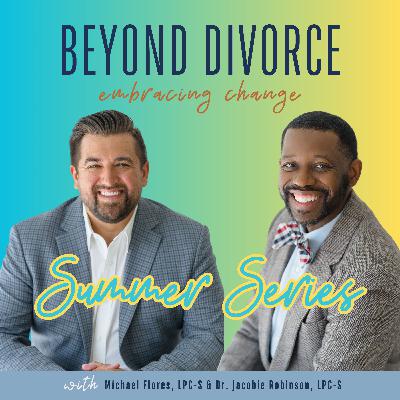
We’re bringing back your #1 favorite episode of all time—and for good reason. This one is packed with practical tools and a step-by-step process to help you have more productive, collaborative conversations with your co-parent—even when things feel tense or communication feels impossible.
In this episode, Michael Flores, LPC-S and Dr. Jacobie Robinson, Ph.D., LPC-S break down how to approach tough conversations with clarity and intention. You’ll learn:
✅ How to manage your emotions so you can respond—not react
✅ The power of “Yes, if…” and how it can shift a stuck dynamic
✅ A simple but effective 4-step conversation starter that works, even in high-conflict situations
Michael’s method includes:
Expressing gratitude
Stating a shared value
Naming where you agree
Asking a “no”-oriented question
Whether it’s your first time hearing this or your fifth, this one is worth every minute.
Hit play—and don’t be afraid to listen twice.
Please leave us a review! Share with us how the episodes have impacted you on your journey!
What do you do when co-parenting requires trust—but you don’t have it? In this episode, we unpack one of the hardest truths of divorce and shared parenting: trust isn’t always present, but collaboration still needs to happen.
We explore the Trust Formula—Consistency + Predictability, Over Time = Trust—and what it means when you're the one who needs to give trust… or the one trying to earn it back. Whether you're feeling hesitant or working to repair the relationship, this conversation gives you tools, language, and clarity for moving forward.
We’ll walk you through:
-The difference between not trusting and being afraid to trust
-Why letting your co-parent solve problems (instead of doing it all yourself) builds trust—and how to say that out loud
-A 3-step process with key questions to help you decide if you’re ready to take a step toward trust
-How to show up consistently if you're working to rebuild the trust you’ve lost
-The role of vulnerability in earning and extending trust
This episode is full of real talk, practical tools, and compassionate guidance to help you rebuild what’s been broken—for the good of your kids and your peace of mind.
Be sure to follow us on Instagram @brighterpossibilitiesfc. We'll see you there!

We're continuing our Most Loved Episode Summer Series, and coming in at number two is a listener favorite that continues to resonate with so many families: True Lies: When Kids Get Conflicting Messages from Their Divorced Parents.
In this powerful episode, Michael Flores, LPC-S, and Jinohn Marr, LMFT, unpack one of the most common—and emotionally charged—issues divorced parents face: what to do when a child hears different versions of the truth from each parent.
Michael and Jinohn share real-world examples of “true lies,” including misconceptions around child support, court involvement, and custody arrangements. They explore how these conflicting messages affect children, why some parents may share information that confuses or distorts the truth, and what therapists can do to support kids in making sense of it all.
You’ll also hear how your own beliefs shape your version of “truth” and why self-awareness is essential for navigating high-conflict parenting dynamics. This episode offers clear guidance for how to respond when your child comes to you with a statement that feels untrue or unfair—and how to protect their emotional well-being in the process.
A must-listen for anyone raising kids through or after divorce. Stay with us until the end—it’s packed with insight, validation, and tools you can use right away.
Don't forget to subscribe to our podcast! While you're there, please leave us a review so we can reach more families just like you!
Leave us a review! Would you take a second to rate our podcast! Your reviews and ratings are so helpful to us and getting the information out to more people, just like you!
In this episode, we dive into the concept of near enemies and far enemies—a psychological and emotional framework originally from Buddhist teachings and explored further through the research of Brené Brown. We break down what this means in the context of divorce, co-parenting, and emotional triggers.
You’ll hear us explore:
Why hate isn't the opposite of love—it’s often born from it.
The difference between love and attachment, especially in parent-child relationships after divorce.
Why being “triggered” often says more about your internal landscape than the actions of others.
How parents sometimes confuse loving their children with controlling them.
Why recognizing near enemies can be the first step toward healing, clarity, and healthier post-divorce relationships.
Follow us on Instagram @brighterpossibilitiesfc for more support, insights, and community resources for navigating divorce and parenting.

Comments

Download from Google Play

Download from App Store
 United States