



Disassembling Crossroads, part 1
Description
Disassembling Crossroads, part 1. Dan’s MEGA65 Digest for November 2024.
<figure>
<figcaption>
Disassembling Crossroads, part 1.
</figcaption>
</figure>
<figure>

<figcaption>
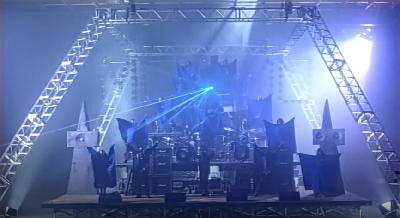
The title illustration for the game Crossroads, published by Compute!'s Gazette, December 1987.
</figcaption>
</figure>
One of my all-time favorite games for the Commodore 64—and I know I’m not alone in this—is Crossroads, the single-screen maze shoot’em’up by Steve Harter, published in Compute!’s Gazette magazine as a type-in program in December 1987. The game features dozens of enemies of a variety of types and colors, all fighting each other in a cacophony of attacks and explosions. You’re dropped into the fray to collect items called “spars,” which provide you some protection against attacks, and which the enemies also consume. The game supports one or two players on joysticks, and both players battle for survival simultaneously.
Some people like to say that typing in programs from magazines and books helped them learn how to write programs of their own. I can see how that might be true for BASIC programs, though I can’t honestly say I learned anything from type-ins when I was in grade school. For programs written in languages other than BASIC, Compute! offered no way to learn. In this interview with Steve Harter by Kirk Israel, Steve says he wrote Crossroads in assembly language, but Compute! never published assembly language listings for full programs in magazines. Instead, Compute! published such programs as columns of numbers, along with a helper program that assisted with keying these values directly into memory. The most you could learn from these type-ins was data entry, and perseverance.
(I’m aware of only two cases where Compute! published full assembly language program listings for the C64, both as books: the LADS assembler and the SpeedScript word processor. Steve wrote Crossroads using LADS. Also, as I mentioned a while back, Compute!’s Gazette did include the assembly language source code for Fast Assembler on the cover disk, just not in the magazine.)
Over the next two issues of this Digest, we’ll crack open the original Crossroads program and see what we can learn, using two modern reverse engineering tools for your PC. This month, we’ll take a look at Retro Debugger, a C64 emulator with real-time memory visualization features. To keep this newsletter to a reasonable length (😬) we’ll discuss just enough to get started, and ask a few specific questions of interest about the game.
As always, let us begin with some MEGA65 news!
New Filehost feature: high score tables
<figure>

<figcaption>
Filehost high score tables.
</figcaption>
</figure>
Filehost has a fun new feature for competitive MEGA65 gaming: high score tables! When you upload your game to Filehost, you can choose to enable “Highscore submission.” This allows players to submit their high scores by clicking the plus ("+") button on your game’s Filehost detail page, uploading a screenshot as evidence. All score submissions must be approved by you before appearing on the page. You will receive a message when a player submits a score for your game.
Check out the high score table on Classy as an example.
Thanks as always to Tayger for the Filehost innovations! Everyone go out and rack up those high scores!
Galaga, Ghosts’n’Goblins, and Xevious now available for R6 boards; TI-99/4A now available for R3 boards
<figure>
<figcaption>
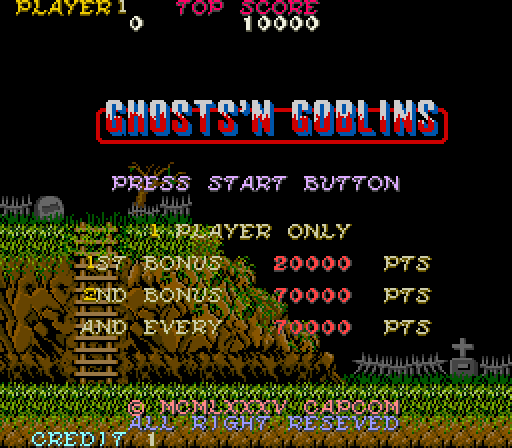
Ghosts’n’Goblins arcade core for the MEGA65, now available for R6 boards.
</figcaption>
</figure>
Over the last year or so, muse has given us alternate cores for the arcade games Galaga, Ghosts’n’Goblins, and Xevious, originally released for the R3 mainboard. Now, thanks to Robert Jaremczak (rjaremczak), there are R6 versions for these cores: Galaga R6, Ghosts’n’Goblins R6, and Xevious R6. See the original installation instructions for the R3 cores, which also apply to the R6 versions.
zeldin has updated the TI-99/4A core several times since its initial release, and as of version 1.3, the core is available for the R3 mainboard as well as R6. Go grab the latest, and be sure to file any bugs you find.
I had a few people respond to last’s month’s Digest to point out that core availability is currently a sticking point with regards to mainboard revisions, with some cores only available for R3 and others only for R6. Core developers must put in additional effort to support both mainboards, and not everybody owns both boards for testing. If you’re working on a core and need assistance building it for a board revision that you do not own, please reach out to the MEGA65 community on Discord or by email. We will eagerly connect you with resources for building and testing your core on both revisions.
Thank you Robert and zeldin for working on cores!
Last call for R3 Real-Time Clock replacements (Grove RTC)
Back in 2022, we noticed that a small but significant percentage of R3 mainboards had faulty Real-Time Clock (RTC) chips. Paul quickly put together a workaround involving a core update and an inexpensive RTC breakout board and Grove connector. This requires a soldering iron to put together, but no expertise: it’s just four wires. Nevertheless, I wanted to make sure that everyone who needed one could get one easily, so I built a bunch of them and made them available for the cost of shipping. The MEGA65 team also supported this effort financially out of their own pockets.
I will be ending my distribution offer at the end of 2024. I have about a dozen units remaining, and am willing to send them out to anyone who needs them. If you have an R3 mainboard and believe your Real-Time Clock is faulty, please follow these instructions for testing your RTC and requesting a unit. I will email you with instructions to send me the shipping cost by PayPal, then get one out to you, while supplies last.
Please do not request one if you don’t need one. Only a fraction of the MEGA65s delivered in 2022 have this issue. Follow the instructions to test your MEGA65 before requesting a replacement. If you discover you need one later than the end of this year, consider ordering the parts and cooking one up yourself. These are easy to build!
The sega-adapter is great actually
<figure>
<figcaption>
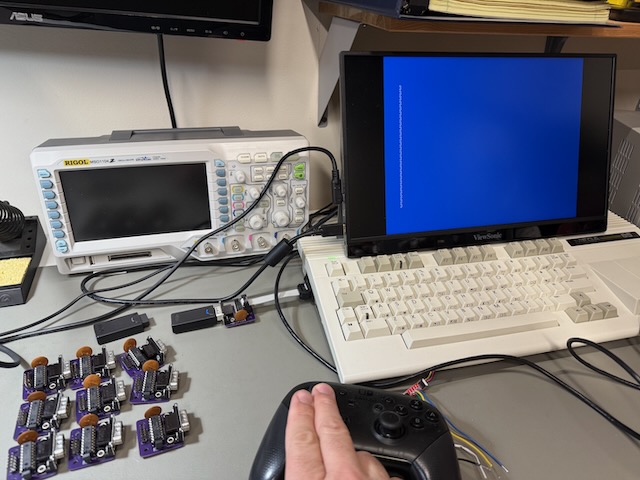
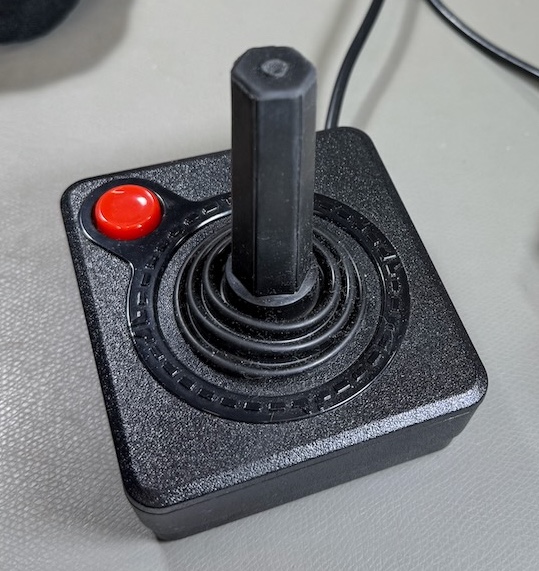
Controlling a ME










 United States
