


Episode 34: Setting Up An Employee Wellness Program
Description
How to retain employees? Setting up a wellness program and encouraging them to learn about health and wellness. Empowering your employees to take care of themselves will improve your business.
Do not miss these highlights:
01:58 The three advantages of giving incentives to your employees.
02:48 The reasons to promote well-being in the workplace - Increase productivity and motivation - Bring teams together and build morale - Decrease work-related stress.
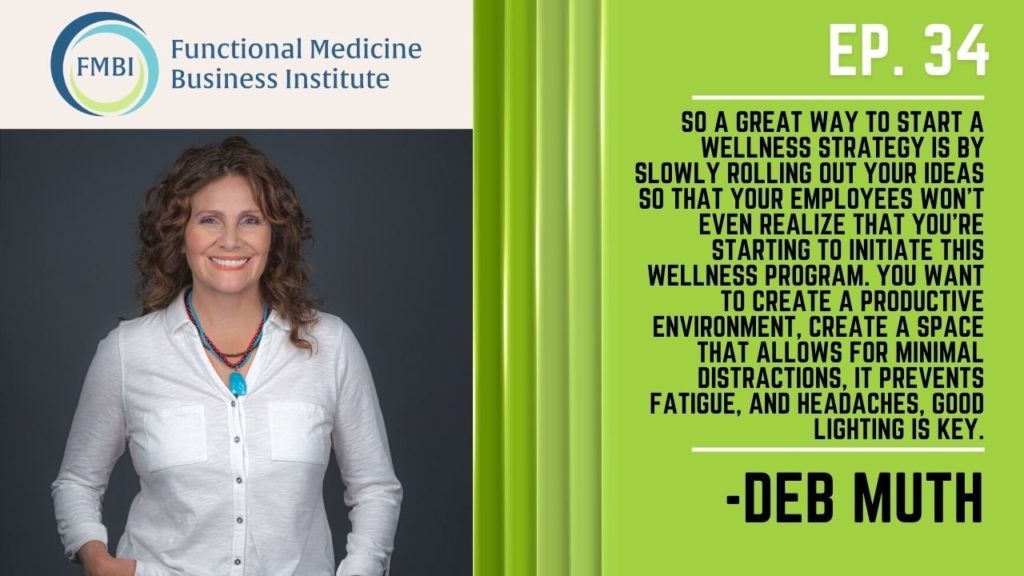
05:53 A great way to start a wellness strategy is by slowly rolling out your ideas so that your employees won't even realize that you're starting to initiate this wellness program.
07:19 Encourage work-life balance- Let them take downtime.
11:31 Encourage your employees to get up from their desks, move around and take breaks - Have them get up, walk around and talk to somebody.
12:45 The ideas of workplace initiatives - You could have an official wellness program, have healthy food be brought in, and allow them to take advantage of any of the things you have in the Office for free.
14:57 How to encourage your employees to exercise.
16:55 Offer them flexible hours - It helps to reduce burnout.
18:46 You could also pay for courses for them. Educate your staff, the more educated your staff is, the less work it actually is for you.
19:16 Look at their nutrition and eating habits.
21:32 Look at their emotional well-being and distress, so your employees can promote health, healthiness and happiness.
Resources Mentioned
Join Us in the FMBI Mastermind Group on Facebook. You can find the Group at https://www.facebook.com/groups/5461914567153276/
<figure class="wp-block-image size-large">
 </figure>
Transcript of Episode #34:
0:01
You're listening to the Functional Medicine Business Podcast featuring Dr. Deb, one of the most creative functional medicine business practitioners in her industry. She shares the wisdom and knowledge that she has gained over 25 years of functional medicine, a pioneer in functional medicine, scheduling, leadership and Practice Management. Dr. Devin has a wealth of knowledge and he's eager to share to help functional medicine become more productive. And for the practitioners and patients to live better lives. Our podcast shares the good and the bad of our industry. Because Dr. Deb knows the pain you live every day building a functional medicine practice with practical tools of how to manage money, taxes and patient care. She will discuss it all with you.
0:54
Welcome back to the FMBI podcast. I'm your host, Dr. Deb. And today I want to share with you wellbeing initiatives for your workplace for 2022. You know, I can't believe that we're halfway through the year already. There's so much time left, but yet there's not so much time left, right. I mean, it's it's crazy how quickly the year goes. And before you know it the years off and half the things we wanted to accomplish in the year for our business we haven't done. So what I want to talk about is investing in workplace wellness. You know, if you've been looking for a employee, and you have been hiring, you totally understand the problem that we're in right now with being able to hire quality employees, people that actually show up and want to work. And everybody wants way more money than what most of us can afford for the positions we're hiring these days. So it's getting harder and harder to find those quality people. So I want to talk a little bit today about incentives that we can do to one encourage people to join your practice to invest in your people so that you create an environment that they don't want to leave. And three, it helps to reduce reduce the stress within your office, which just makes it a really great environment for everybody if there's less stress, your research has shown that there are many reasons why workplace wellness pays back. And of course, we can actually put a number to that. But studies are very clear that there is a good ROI on investment into your team once they gain better performance and general well being. So the three reasons to promote wellbeing in the workplace is it increases productivity and motivation. healthy employees physically perform better, they have more energy, they have better focus and concentration. And they're just in general, healthier. So you know, they're not sick as often they're not staying home as often.
3:12
And when you have healthier employees in your office, there's certainly a lot less drama. It also number two is it brings teams together and builds morale. So when teams engage in wellness activities together, inside and outside the workplace, there's a shared purpose and it builds a network or a team of people that want to work together that work together well and has each other's back. And that's super important. In a small office, you want your team to work cohesively together, you don't want your team pitting one another against another person and creating drama for you. It also decreases work related stress, fitness and healthy eating can reduce the stress. And if your business can implement mindfulness and meditation, this totally helps to reduce the stress level. Healthcare is stressful these days. I've been in health care for 25 years, it's always been stressful. But it certainly feels more stressful now than it has in a while. And part of it is just what's going on in the world around us the changes in health care.
4:26
You know, COVID doesn't help. It's just got everybody on edge. So it is much more stressful. You have sick people out all the time you have sick people coming in all the time. So the stress is getting higher and higher. Not to mention that we're working with fewer people, and the workload is just that much higher. So if we can get our employees to relax a little bit more, this will really help elevate your practice and ensure that the team can be their best selves and can produce the best for you and your clients. So let's talk a little bit about how we encourage wellness goals into a practice. Well, we want more productive and healthier, happier employees, that's the key. So if we don't engage in a health program, then sometimes your money is wasted. But honestly, you could do this on such a limited budget. So I know there's some of you out there that are listening and are thinking I'm just starting out, there's no way I can invest in this program. But I think you can actually, and I'll talk about some ways that you can do this with minimal investment on your side, but with a ton of upside in getting your employees to be healthier, and have them be what you want.
5:52
So a great way to start a wellness strategy is by slowly rolling out your ideas so that your employees won't even realize that you're starting to initiate this wellness program. So you want to create a productive environment, create a space that allows for minimal distractions, it prevents fatigue, and headaches, good lighting is key. You know, most of the buildings have these fluorescent bulbs, which are really hard on the eyes, really hard on a person, we have them in our office too. But we swapped out the fluorescent bulbs for the natural lighting bulbs that you can purchase. And that just makes it so much easier for us to practice all day in the office. And if we need that brighter light, like in our laboratory, we have a little bit different lighting system there. But in the exam rooms where we don't need that really bright light and that harsh light, we just put natural bulbs in. And that has made a huge difference working on the computer every single day. The other thing is you want to have nice colors in your office, you know, have stimulating colors, but they're warm, and they're comforting, and they're inviting. And this really helps to calm not just your employees down, but it also calms your patients down. But in the same token it stimulates their cognitive function. So colors can be really important for you to look at.
7:18
The next thing is to encourage work life balance. Now, why do we want to do this? Well, it actually makes for a more productive day. And I am probably the worst one to talk about this because I work all the time. But it's because I love it. Like I get super excited about doing different tasks and doing different projects. And I'm always working. So if I take some downtime, my staff isn't really happy about that. Because when I take downtime, my mind is quiet and it becomes more creative. And it just kind of gets new ideas. And then I want to implement these things. And so they're cautious about me taking downtime. But honestly, you know, you still need downtime. So this week, I'm on a business retreat week. So once a quarter, I take the last week of every quarter off. And I spent it working on my business instead of in my business. And this is where I work with my office manager and some of my team members to implement new things into the practice, we look a









 United States
