


Episode 36: Accountability and Leadership
Description
What is accountability? Accountability means being responsible and being able to follow through with what one is supposed to do? In business, accountability is important to grow your practice. But the type of accountability is determined by the leader. What type of leader are you? Ignore and hope, the heavy-handed leader or are you genuine and you share goals and ideas with your team so everyone wins?
Do not miss these highlights:
- What is accountability in business and how does it make you feel?
- Heavy-handed approach.
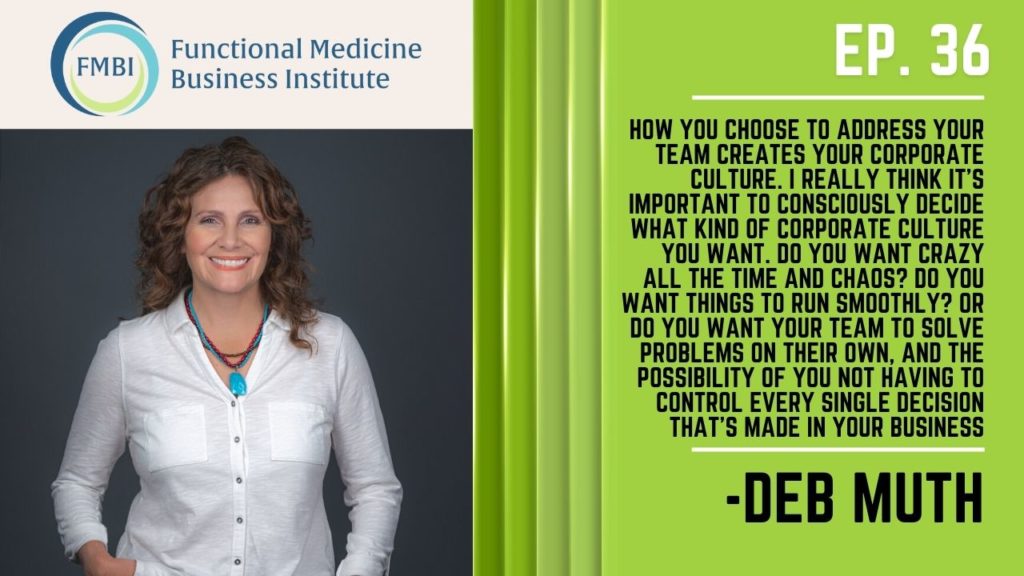
- How you choose to address your team creates your corporate culture, it’s important to consciously decide what kind of corporate culture you want.
- Hands-off model, the leaders just pretend they don't see the problems or the issues going around going on around them or they're just too busy and they don't want to see them.
- How to talk to a team member about a situation that is not going so well.
- Accountability actually starts with the leader sharing their vision for the company and explaining to the team what winning looks like for the business and everyone.
- Opening up this dialogue and conversation, your team can help identify who's the best person to do something, what's the best fit for things? How do we process this? How do we accomplish this?
- You can not do it all, the importance of building a team.
Resources Mentioned
Join Us in the FMBI Mastermind Group on Facebook. You can find the Group at https://www.facebook.com/groups/5461914567153276/
<figure class="wp-block-image size-large">
 </figure>
Transcript of Episode #36:
0:01
You're listening to the Functional Medicine Business podcast featuring Dr. Deb, one of the most creative functional medicine business practitioners in her industry. She shares the wisdom and knowledge that she has gained over 25 years of functional medicine, a pioneer in functional medicine, scheduling, leadership and Practice Management. Dr. Devin has a wealth of knowledge and he's eager to share to help functional medicine become more productive, and for the practitioners and patients to live better lives. Our podcast shares the good and the bad of our industry. Because Dr. Deb knows the pain you live every day building a functional medicine practice with practical tools of how to manage money, taxes and patient care. She will discuss it all with you.
0:54
Hello, welcome back to Functional MBI podcast. I'm your host, Dr. Deb, and I'm really excited to be with you here today. I hope everyone has done their halftime homework from last week. And I would love to hear where you're at with planning your second half of 2022. So if you haven't shared this in our social media, please do that. I'm excited to see what everyone's working on and would love to help in any way that you may need it. Today's show is about accountability. Everyone's favorite topic, right? What is accountability? Anyway, I think there's a lack of clarity around what accountability is, and what it looks like in business. You know, the word accountability is thrown around a lot. And it's used in different ways. And there's lots of emotions that come up with that word accountability, you might feel really excited or nervous about this word, because of what it means for you. And if you have had accountability in your business, or your team before, will completely determine how the word accountability makes you feel. You see from a personal experience, I have felt a little conflict around this word at various times in my life. I need to be accountable to my team, my patients, my family and my business partners. And I also want my team members to be responsible for their duties and accountable in business accountability relates to how we express ourselves how we communicate with our team and successfully get things done in practice.
2:40
There's several different approaches to how to create accountability with your team. One of the approaches is called a heavy-handed approach. And some people say in order to be a good boss, you have to be kind of a jerk. You can't engage with your team, you can't make friends with them, you can't be compassionate for them, or they'll walk all over you. And how you choose to address your team creates your corporate culture. I really think it's important to consciously decide what kind of corporate culture you want. Do you want crazy all the time and chaos? Do you want things to run smoothly? Or do you want your team to solve problems on their own, and the possibility of you not having to control every single decision that's made in your business, when things aren't going the way they're supposed to, you have to address them, how you address them determines how they respond. Now you can be a jerk and you can just call them out and point a finger at them and accuse them of not doing things on purpose and not caring. This is kind of that heavy-handed model of not caring and creating a shaming culture. It creates a unsafe place to work. And if we're not safe, it leaves the team wondering when they're next to be on the chopping block and is their job safe. Psychologically, safety is the number one need for a person in life, not just for work. So it's important to create a model that works to level up you as a leader as well as your business. Now, another way of being a leader is to choose to ignore the situation. Some leaders just pretend they don't see the problems or the issues going around going on around them. Or they're just too busy and they don't want to see them. This is more of a hands off model. They ignore and hope everything will improve and run smoothly without conflict. There's no follow up. There's no deadlines and there's no one supporting the team. When you have a leader that is genuine and their intention is to be kind, your team is not afraid to come to you. They take their responsibilities seriously, they support you. And they want to see the practice grow and be successful. In a team of healthy accountability, the team knows what they're supposed to do, when their deadlines are, in conversations with team members in this type of model leaves them experiencing a positive reaction instead of an abrasive reaction. So when you have to talk to a team member, about a situation that maybe isn't going so great, how I would handle it is to start the conversation by being encouraging and positive, and discussing what is going well with them, then you can discuss what needs to be improved upon. And then at the end of the conversation, you want to end that with something positive as well. This leaves your team member feeling good about themselves while wanting to improve and grow. You see, accountability actually starts with the leader sharing their vision for the company, explaining to the team what winning looks like over the next three, five or 10 years for everyone, not just for the business, but for everyone. And they address why this matters to the company, to the clients and to the employees themselves. They talk about the values that they want to portray in the business. And if you can get clarity on that and begin with that it's a huge starting place, then you can step into the goals and step into some metrics of what's important to the business.
6:54
So maybe it's important for the business to have 300 clients in a two-month period of time, you know, or maybe a metric is we want to grow by 10%, this quarter. When you're explaining those metrics, you always want to tie that back into your team. Why is it important for them? It can't just be important to the company, there has to be a win on the other side for them. Otherwise, why would they do it just to see your company grow, and there's no benefit to them, that doesn't engage them that doesn't make them want to work. So you have to give them that positivity of why it's important for them to help you grow the business, what their part is going to do in the business? How is it going to help the clients? How does it help them grow? How does it help the company grow? And this will engage them and keep them involved in wanting to help you grow your business. When I started out, I was the leader of ignoring and hoping that can only last so long, I was so busy seeing clients that I ignored what was going on around me until my patients started to complain to me about deadlines and things that weren't getting done and falling through the cracks. And then I was frustrated with my team because I didn't understand why why this wasn't happening. Why weren't they getting this done? Instead of going to them and having the conversation about what's happening. I accused them and blamed them. And I would have realized really fast that we were short staffed for the volume of work that we were doing. And that would have fixed the problem. But instead, I chose to ignore it hope my team would do better without teaching them without talking to them without sharing my ideas and thoughts with them. Because when I did do it, I got a little flack from it. Actually, I had team members who said,














 United States
