


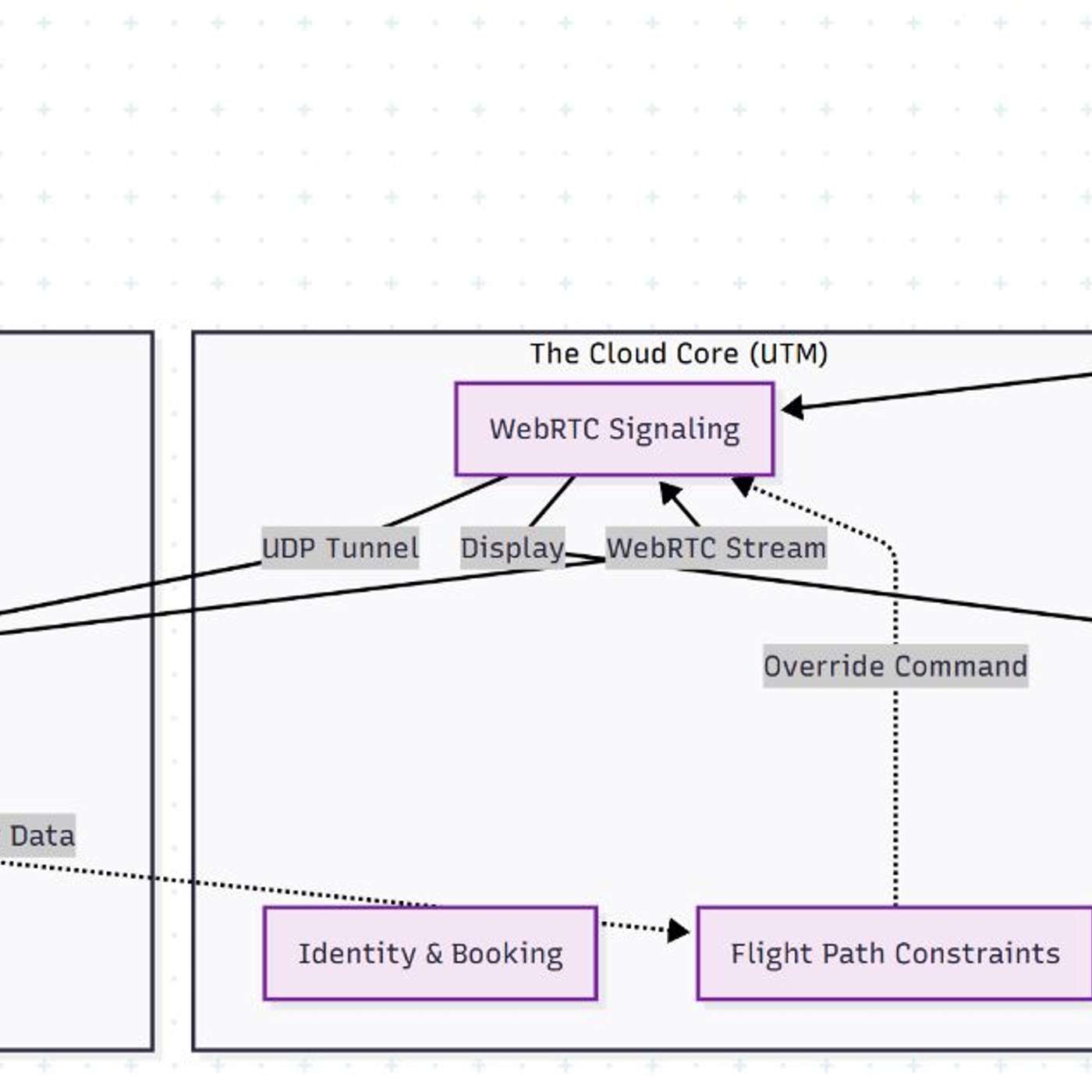
How to Build Real-World Drone Avatars with WebRTC and Python
Description
This story was originally published on HackerNoon at: https://hackernoon.com/how-to-build-real-world-drone-avatars-with-webrtc-and-python.
A technical guide to building drone avatars—covering telemetry, low-latency streaming, and UTM systems for true virtual mobility.
Check more stories related to tech-stories at: https://hackernoon.com/c/tech-stories.
You can also check exclusive content about #webrtc-streaming, #drone-avatars, #edge-computing, #webrtc, #telepresence-technology, #virtual-mobility, #mavlink-protocol, #utm-uas-traffic-management, and more.
This story was written by: @dippusingh. Learn more about this writer by checking @dippusingh's about page,
and for more stories, please visit hackernoon.com.
Drone Avatar is the next evolution of "Telework". The drone Avatar system requires three distinct layers: The Edge (The Drone), The Pipe (The Network), and The Core (The UTM Traffic Management)

















 United States
