


Podcast #187: Vista Map Founder Gary Milliken
Description
This podcast hit paid subscribers’ inboxes on Nov. 5. It dropped for free subscribers on Nov. 12. To receive future episodes as soon as they’re live, and to support independent ski journalism, please consider an upgrade to a paid subscription. You can also subscribe to the free tier below:
Who
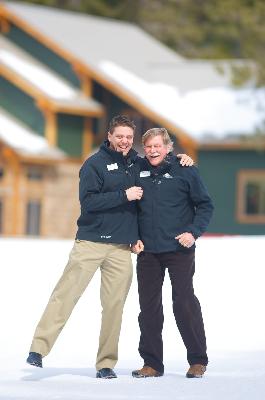
Gary Milliken, Founder of Vista Map
Recorded on
June 13, 2024
About Vista Map
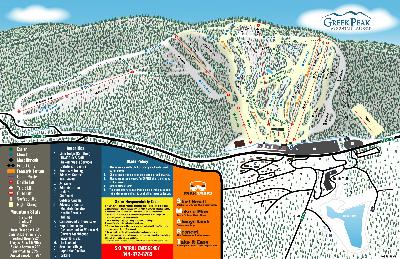
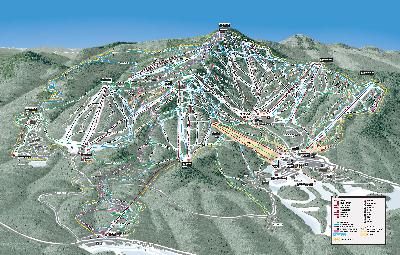
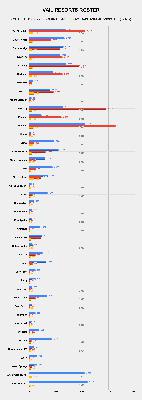
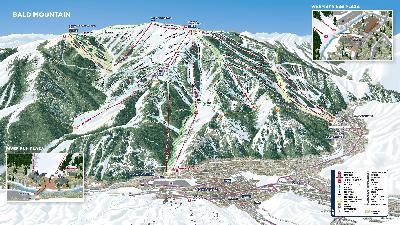
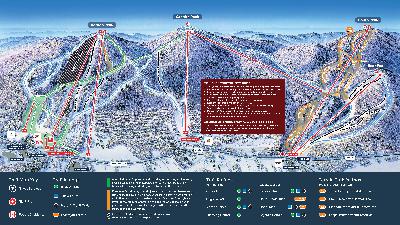
No matter which region of the country you ski in, you’ve probably seen one of Milliken’s maps (A list captures current clients; B list is past clients):
Here’s a little overview video:
Why I interviewed him
The robots are coming. Or so I hear. They will wash our windows and they will build our cars and they will write our novels. They will do all of our mundane things and then they will do all of our special things. And once they can do all of the things that we can do, they will pack us into shipping containers and launch us into space. And we will look back at earth and say dang it we done fucked up.
That future is either five minutes or 500 years away, depending upon whom you ask. But it’s coming and there’s nothing we can do to stop it. OK. But am I the only one still living in a 2024 in which it takes the assistance of at least three humans to complete a purchase at a CVS self-checkout? The little Google hub talky-thingys scattered around our apartment are often stumped by such seering questions as “Hey Google, what’s the weather today?” I believe 19th century wrenchers invented the internal combustion engine and sent it into mass production faster than I can synch our wireless Nintendo Switch controllers with the console. If the robots ever come for me, I’m going to ask them to list the last five presidents of Ohio and watch them short-circuit in a shower of sparks and blown-off sprockets.
We overestimate machines and underestimate humans. No, our brains can’t multiply a sequence of 900-digit numbers in one millisecond or memorize every social security number in America or individually coordinate an army of 10,000 alien assassins to battle a videogame hero. But over a few billion years, we’ve evolved some attributes that are harder to digitally mimic than Bro.AI seems to appreciate. Consider the ridiculous combination of balance, muscle memory, strength, coordination, spatial awareness, and flexibility that it takes to, like, unpack a bag of groceries. If you’ve ever torn an ACL or a rotator cuff, you can appreciate how strong and capable the human body is when it functions normally. Now multiply all of those factors exponentially as you consider how they fuse so that we can navigate a bicycle through a busy city street or build a house or play basketball. Or, for our purposes, load and unload a chairlift, ski down a mogul field, or stomp a FlipDoodle 470 off of the Raging Rhinoceros run at Mt. Sickness.
To which you might say, “who cares? Robots don’t ski. They don’t need to and they never will. And once we install the First Robot Congress, all of us will be free to ski all of the time.” But let’s bring this back to something very simple that it seems as though the robots could do tomorrow, but that they may not be able to do ever: create a ski area trailmap.
This may sound absurd. After all, mountains don’t move around a lot. It’s easy enough to scan one and replicate it in the digital sphere. Everything is then arranged just exactly as it is in reality. With such facsimiles already possible, ski area operators can send these trailmap artists directly into the recycling bin, right?
Probably not anytime soon. And that’s because what robots don’t understand about trailmaps is how humans process mountains. In a ski area trailmap, we don’t need something that exactly recreates the mountain. Rather, we need a guide that converts a landscape that’s hilly and windy and multi-faced and complicated into something as neat and ordered as stocked aisles in a grocery store. We need a three-dimensional environment to make sense in a two-dimensional rendering. And we need it all to work together at a scale shrunken down hundreds of times and stowed in our pocket. Then we need that scale further distorted to make very big things such as ravines and intermountain traverses to look small and to make very small things like complex, multi-trailed beginner areas look big. We need someone to pull the mountain into pieces that work together how we think they work together, understanding that fidelity to our senses matters more than precisely mirroring reality.
But robots don’t get this because robots don’t ski. What data, inherent to the human condition, do we upload to these machines to help them understand how we process the high-speed descent of a snow-covered mountain and how to translate that to a piece of paper? How do we make them understand that this east-facing mountain must appear to face north so that skiers understand how to navigate to and from the adjacent peak, rather than worrying about how tectonic plates arranged the monoliths 60 million years ago? How do the robots know that this lift spanning a two-mile valley between separate ski centers must be represented abstractly, rather than at scale, lest it shrinks the ski trails to incomprehensible minuteness?
It’s worth noting that Milliken has been a leader in digitizing ski trailmaps, and that this grounding in the digital is the entire basis of his business model, which flexes to the seasonal and year-to-year realities of ever-changing ski areas far more fluidly than laboriously hand-painted maps. But Milliken’s trailmaps are not simply topographic maps painted cartoon colors. They are, rather, cartography-inspired art, reality translated to the abstract without losing its anchors in the physical. In recreating sprawling, multi-faced ski centers such as Palisades Tahoe or Vail Mountain, Milliken, a skier and a human who exists in a complex and nuanced world, is applying the strange blend of talents gifted him by eons of natural selection to do something that no robot will be able to replicate anytime soon.
What we talked about
How late is too late in the year to ask for a new trailmap; time management when you juggle a hundred projects at once; how to start a trailmap company; life before the internet; the virtues of skiing at an organized ski center; the process of creating a trailmap; whether you need to ski a ski area to create a trailmap; why Vista Map produces digital, rather than painted, trailmaps; the toughest thing to get right on a trailmap; how the Vista Map system simplifies map updates; converting a winter map to summer; why trailmaps are rarely drawn to real-life scale; creating and modifying trailmaps for complex, sprawling mountains like Vail, Stowe, and Killington; updating Loon’s map for the recent South Peak expansion; making big things look small at Mt. Shasta; Mt. Rose and when insets are necessary; why small ski areas “deserve a great map”; and thoughts on the slow death of the paper trailmap.
Why I thought that now was a good time for this interview
Technology keeps eating things that I love. Some of them – CDs, books, event tickets, magazines, newspapers – are easier to accept. Others – childhood, attention spans, the mainstreaming of fringe viewpoints, a non-apocalyptic social and political environment, not having to listen to videos blaring from passengers’ phones on the subway – are harder. We arrived in the future a while ago, and I’m still trying to decide if I like it.
My pattern with new technology is often the same: scoff, resist, accept, forget. But not always. I am still resisting e-bikes. I tried but did not like wireless headphones and smartwatches (too much crap to charge and/or lose). I still read most books in print and subscribe to whatever quality print magazines remain. I grasp these things while knowing that, like manual transmissions or VCRs, they may eventually become so difficult to find that I’ll just give up.
I’m not at the giving-up point yet on paper trailmaps, which the Digital Bro-O-Sphere insists are relics that belong on our Pet Rectangles. But mountains are big. Phones are small. Right there we have a disconnect. Also paper doesn’t stop working in the cold. Also I like the souvenir. Also we are living through the digital equivalent of the Industrial Revolution and sometimes it’s hard to leave the chickens behind and go to work in the sweatshop for five cents a week. I kind of liked life on the farm and I’m not ready to let go of all of it all at once.
There are some positives. In general I do not like owning things and not acquiring them to begin with is a good way to have fewer of them. But there’s something cool about picking up a trailmap of Nub’s Nob that I snagged at the ticket window 30 years ago and saying “Brah we’ve seen some things.”
Ski areas will always need trailmaps. But the larger ones seem to be accelerating away from offering those maps on sizes larger than a smartphone and smaller than a mountaintop billboard. And I think that’s a drag, even as I slowly accept it.
Podcast Notes
On Highmount Ski Center
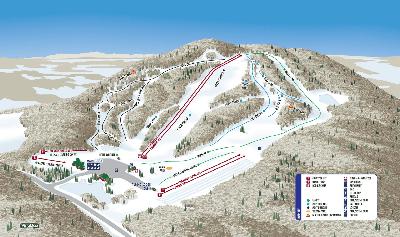
Milliken grew up skiing in the Catskills, including at the now-dormant Highmount Ski Center:
As it happens, the abandoned ski area is directly adjacent to Belleayre, the state-owned ski area that has long planned to incorporate Highmount into its trail network (the Highmount trails are on the far right, in white):
Here’s Belleayre’s current trailmap for context - the Highmount expansion would sit far looker’s right:
That one is not a Vista Ma







 United States
