



 Claim Ownership
I Believe
Subscribed: 13Played: 63
Subscribe

© Joel K. Douglas
Description
127 Episodes
Reverse

Once upon a time, I might have been a Democrat.The theory sounds good. Love your neighbor. Build systems that catch people when they fall. Use the government to do what charity alone can’t. I’ve read the arguments. Listened to the sermons. But the more I pull on the logic threads, the more it comes apart.Not because the compassion is wrong. The compassion is right. After all, rend our hearts, not our garments. We need to dig deeper. I’m listening to James Talarico, the Texas state rep running for Senate. The seminarian. Stephen Colbert wasn’t allowed to put him on television. He gave a sermon in Lubbock, where he said the word “love” three dozen times, and people in the second most conservative city in America didn’t laugh.He says politics is just another word for how we treat our neighbors.He’s right. That’s not a liberal idea. It’s a constitutional idea. The framers called it the General Welfare. It’s one of our six national goals, along with Justice, Liberty, Order, Defense, and Union.So I’m writing this to Democrats. Not as an opponent. You’ve been searching for a path forward because you’re getting pummeled. I think your guy is close to something real. And I don’t want you to waste it.Let’s start with a story. There’s a town in northern Missouri called Chillicothe. It sits where the Grand River gathers its creeks and the hills open into bean fields. I’ve chased big whitetail bucks there. The town is real. The math is real. The people I’m about to describe are not. And there are a thousand towns like this between here and Washington.Act I. ChillicotheThe Grand River comes down out of Iowa in two forks. They run south through Livingston County and meet a few miles west of town. From there, the river carries everything the land gives it. The Thompson comes in from the north. Coon Creek, Blackwell Branch, Shoal Creek. All feed into the same channel. Half a dozen named waterways and a hundred unnamed draws all running to the same low ground.They all flow to the Missouri. The Missouri to the Mississippi. The Mississippi to the Gulf.This is where the country changes. West of here, the hills are closer together and thick with timber. Draws steep and tangled, the kind of ground that breaks equipment and hides cattle. East of here, the land opens. The hills roll longer and lower. The big oaks give way to grass. Bean fields. Corn ground. Fencelines you can see for a mile.Chillicothe sits on this seam. Nine thousand people at the crossroads of 36 and 65, where the water gathers, and the hills let go. Grain elevator on the horizon. A Casey’s, where teenagers get donuts on Sunday mornings. A couple of churches. A bar that does a fish fry on Fridays during Lent.Washington Street runs through the middle of town. There’s a diner called the Grill. A farm supply store. A hardware store that’s been in the same family for three generations.The diner employs six people. The owner is a woman named Pam. She’s had the place eleven years. She’s not getting rich. The margins on a small-town diner are what you’d guess. She clears maybe forty thousand a year after she pays her people, her food costs, her insurance, her rent, and the fryer that breaks every winter.She pays her cooks too little. Her waitstaff get nine plus tips. It’s not enough. She knows it’s not enough. She’d pay more if she could.Then the minimum wage goes up.Not because anyone in Chillicothe asked for it. Because good people in Jefferson City and Washington decided that workers deserve more. And they’re right. Workers do deserve more. Nobody here disagrees with the principle.Pam runs the numbers on a Tuesday night after close. She’s at the same table where the farmers sit in the morning. Calculator, notebook, the grease smell still in the walls.At fifteen dollars an hour, her labor cost goes up thirty-one thousand dollars a year. She doesn’t have thirty-one thousand dollars. She has the diner.She can raise prices. A dollar on every plate. Maybe the regulars stay. Maybe they don’t. The regulars are the farmers and the guys from the MoDOT crew and the women from the school district office. They’re not rich either. A dollar a plate, five days a week, fifty weeks a year. That’s two hundred and fifty dollars a year out of their pockets. Money they would have spent at the hardware store. Or the farm supply. Or the fish fry.Or she can cut hours. She cuts the weekend breakfast shift. That’s Kaylee. Nineteen years old. Single mother. She was making nine dollars an hour plus tips on the weekend morning rush, which came out to about fourteen an hour, and it was the only shift that worked with her kid’s schedule.Kaylee doesn’t get a raise. Kaylee gets a phone call on a Tuesday night.Now Kaylee drives thirty-two miles to Cameron to pick up shifts at a Waffle House off I-35. She spends more on gas. She sees her kid less. The Waffle House pays fifteen. After gas and the extra childcare, she nets less than she made at the Grill.The farm supply store does its own math. Labor costs up. They raise the price on wire, on posts, on mineral tubs. Not a lot. Four percent, maybe five. Enough that the cattle rancher south of town notices when he’s buying supplies for calving season. He doesn’t say anything. He just tightens somewhere else. Doesn’t fix the fence on the north pasture. Puts off the vet check. Skips the bull sale in Trenton.The contractor who was going to build a starter home on the east side of town pencils it out again. Framing crew costs more. Materials cost more because the lumber yard raised prices for the same reason everyone else did. He was going to build two three-bedroom houses and list them at a hundred and eighty thousand. The kind of house a young couple with two incomes could buy. Now the numbers don’t work below two-ten. At two-ten, the young couple doesn’t qualify.He doesn’t build the houses.A year passes. Washington Street looks the same. The Grill is still open. The farm supply is still open. The churches still have Sunday service and the Casey’s still sells donuts.But Kaylee is gone. The houses weren’t built. The rancher’s north fence is sagging and he’s running heifers he should have culled. The hardware store cut its part-time kid. The diner is quieter on weekends.The creeks still run to the Grand. The country still opens east of town. The grain elevator still stands against the sky like it has for sixty years.Nobody did anything wrong.The people who wrote the bill wanted to help. Pam wanted to pay more. Kaylee wanted to work. The contractor wanted to build. The rancher wanted to buy a bull.Everyone loved their neighbor.And the water still runs downhill. Gravity. It doesn’t care what you meant. Act II. The ButterflyHere’s one place we need to keep digging. To raise wages, small businesses have to grow revenue. You can’t pay people with money you don’t have.Pam clears forty thousand a year. She pays federal income tax. Self-employment tax. State tax. After the government takes its share she keeps about thirty. That’s what she lives on. That’s what she runs the business on. Equipment. Repairs. The fryer.The margin between keeping Kaylee and cutting Kaylee’s shift is somewhere in the ten thousand dollars the government took.Cut her taxes. Not to make her rich. To give her room. The difference between forty and forty-six thousand dollars is the weekend shift. It’s Kaylee staying in Chillicothe instead of driving to Cameron. It’s the phone call Pam doesn’t have to make on a Tuesday night.But the cut comes with a condition. You get the break when your filings prove you paid livable wages. Every worker. Enough that none of them qualify for SNAP. Enough that none of them need the Earned Income Tax Credit. Enough that Kaylee can work the weekend shift and take her kid to the doctor without a government program covering the difference.Pam gets the cut and keeps wages flat, she loses it next year. The incentive only runs one direction. Pay your people, keep the break. That’s the deal.I know what this sounds like. Trickle-down. We’ve heard it before. It didn’t work. Talarico is right to say so.Trickle-down doesn’t work because the social responsibility of a business is to increase its profits. That’s not greed. That’s the job. A business that gets a tax cut with no strings will keep the money, because that’s what businesses are supposed to do.This isn’t trickle-down. This is a condition. Pam doesn’t get trusted. She gets verified, every year, in writing.Outside, the morning is coming in through the front glass. The farmers will be here in an hour. Coffee is on. The calculator is still out on the table, but tonight the numbers are different. Six thousand dollars different. Kaylee’s shift is still on the board. The phone stays in Pam’s pocket.Say it works. Pam gets the tax break. Kaylee keeps her shift. Wages in Chillicothe go up ten, fifteen percent. What happens next? People spend it.Kaylee has an extra two hundred dollars a month. She wants a place of her own. So does every other young person in Livingston County who’s been doubling up with family or renting a place they can barely afford.But there are no new houses. There are the same twelve listings in Chillicothe there were last year, and now there are more buyers with more money chasing them. The same house that listed at a hundred and eighty thousand lists at two-ten. Then two-twenty. Kaylee still can’t buy it. She just can’t buy it for a higher price now.You raised wages and accomplished nothing. The butterfly flapped again.The contractor’s name is Dale. He’s been building houses in Livingston County for twenty-two years. He’s not a developer. He’s a man with a truck and a crew of four and a line of credit at the lumber yard.Last spring he drove two stakes into a lot on the east side of town. Walked it off. Sixty feet wide, hundred and ten deep. Good lot. Flat. City water and sewer already stubbed to the property line. He could see the grain elevator from where he stood.He sat on his tailgate and penciled it ou

Western Iraq. The Euphrates River Valley. Flat country. Date palms and canals and dust so fine it gets into the action of a rifle and into the boots and lungs of the men and women who carry them.The enemy buried bombs in the roads. Watched from rooftops. Wore no uniform. Walked among the living like the living until the moment he was not. A man drove a fuel truck and skimmed money from the sale and the money bought wire. The wire connected to a shell and a different man buried the shell in the road. Another man watched from a rooftop. Made a phone call and the convoy passed and the world turned white. That was how the killing worked. One network against another. Men hunting men. You mapped them with sources who whispered in doorways. Signals pulled from the air and things that will not be spoken of here or anywhere. You followed the money from the fuel truck to the market to the man who sold the wire to the man who buried the shell. Patient work. Human. The work of months compressed into a day that could be good or bad depending on whether your analyst got sleep.The night before the mission, they got ten minutes to call home. He made sure everyone else called home first, even if it was just to a friend. He was last. He had bought a cellphone for his daughter so he had someone to call. He didn’t call her mother anymore. Fifty-six months in the sandbox will do that.He called his daughter. Told her he loved her. Said something about school. She asked when he would call again, and he said Tuesday. He didn’t know if he would remember what day was Tuesday, because every day here was Monday. But his junior squad leader would remind him.Next morning in the briefing room. A young Brit stood in front of them and told jokes nobody understood. The Queen’s English. Accent like another language. He kept telling jokes. After a while, one man laughed. Then another. Then the room.He was there to teach them how the British system worked alongside the American ones. The Americans flew an airborne system over the city before patrols left, pre-detonating radio-controlled bombs in the roads. Unpredictable times, so the enemy couldn’t adapt easily. On the ground, both nations ran jammers that blocked the triggerman’s signal. Three allied systems, operating on similar frequencies in the same city. If they didn’t know about each other, the airborne system could detonate a bomb while a patrol was on top of it. A jammer could block the system trying to clear the road ahead. The machines could not sort this out on their own. A man with bad jokes and good patience sorted it out in an hour.He said he knew when they understood his accent because they laughed at his jokes. Even speaking the same language did not mean you understood each other.Then they went out into the dust.The dust came in storms that lasted days. When the storms came, the helicopters did not fly. You waited. Read a terrible book. The war went on without you because you are human and humans wait for weather.It did not call home. It had no one to lie to on Tuesday.Did not wait for dust.And here he was, in the middle of it. Another Monday.Act I. The Hard WayThe systems helped.Electronic jammers on the convoys blocked radio signals that detonated the bombs. They worked. Casualties dropped. The Pentagon spent thirteen billion dollars and fielded thirty thousand jammers.But the jammers also knocked out friendly communications. Drone pilots lost control links because the jammers didn’t know the drones were there. The machines designed to save lives created new ways to get people killed. That was why the Brit was in the briefing room telling jokes. The machines could not sort themselves out. A man in a room could.And the enemy adapted. When the jammers blocked cell phone signals, he switched to pressure plates. When they blocked garage door openers, he switched to command wire. When the armor got thicker, he used explosively formed penetrators smuggled across the Iranian border that could punch through anything the Americans had. The bombs got cheaper. The countermeasures got more expensive. A thirty-dollar bomb against a thirteen-billion-dollar program, and the math never changed.It took four IED attacks to cause a casualty in 2004. By 2007 it took twenty. That was progress. Lives, saved. Mothers who answered the phone on Tuesday and heard their son’s voice.But IEDs still killed more than half the Americans who died in Iraq.The technology improved the odds. It did not change the game.The game changed when Sunni tribesmen in Anbar decided to trust the Americans enough to support them. They wanted no more violence in their backyards. The Awakening. Not a weapon system. Not an algorithm. Men deciding to trust other men. The oldest technology in war.The commander knew all of this. The jammers, the armor, the intelligence on his screens were tools. Good tools. Tools that kept his people breathing, and he made sure they all called home before he did. But he also knew that the kid from Oklahoma driving the lead vehicle was alive because a sergeant who hadn’t slept in thirty hours looked at a route map and said that road doesn’t feel right and they took the other one. He knew the mission went right because he had spent months earning trust from people who didn’t owe him any.Today, though, his patrol was quiet. Date palms and canals and dust. Just another Monday.That night, he went to the legal meeting. Several times per week, the commanders met with the lawyers to review the legality of orders and intent. Deliberate, lawyered, slow. When he arrived, the general’s aide was talking to some senior officers. The aide was always talking. Especially when he should be silent, he was talking.He had heard a rumor of some new tech that would change the game. A machine that could map every network in the province before the morning brief. Process every signal, every transaction, every phone call, every movement pattern. Identify the man who drives the truck and the man who sells the wire and the man who buries the shell and the man on the rooftop with the phone. It prints a confidence interval on a screen while the analyst sleeps and the sergeant finally closes his eyes.It can see what the sergeant felt. It can calculate what took months of whispers in doorways.Maybe someday soon, the kid from Oklahoma is driving the lead vehicle. The road hasn’t been cleared. The sergeant is running on fumes. The source that whispers in doorways hasn’t reported in three days. And the machine says the road is clear. Ninety-one percent confidence.The sergeant, on his best day, is maybe seventy percent. And the sergeant is rarely on his best day.Would you use it?If you chose not to use it, what would you tell the mothers and fathers of your Marines who died? They sent their sons and daughters to you to protect, even if that is not the reality for some.Can you look a mother in the eye and tell her you had a tool that might have saved her son and you chose not to use it?Every commander will make the same choice you just made. He will say yes because he is human. And that is the right answer.The question is what happens after.Act II. The ScreenTwenty years later. The dust was gone, but it wasn’t.It was there in the way he read threat briefings, looking for the thing that wasn’t on the page. It was in his dreams, which he did not discuss. It was in his memory. A young sergeant who didn’t come home from a road that hadn’t been cleared.The commander was a senior officer now. Pentagon. Program manager. He wore a suit some days and a uniform others. Rooms with no windows where people briefed him on capabilities he’d spent twenty years wishing he’d had.He remembered the aide at the legal meeting. Always talking. The rumor of a machine that would change the game. Twenty years ago, it was just a rumor. Now it was a program with a budget and a timeline and a name he couldn’t say outside the room.It could map every network in a province. Process every signal, every transaction, every movement pattern. Identify every node in the kill chain from the man who drove the fuel truck to the man on the rooftop with the phone. It could do in seconds what had taken his analysts months. It could do it without sleep. Without guessing. Without the sergeant’s gut feeling, which was right seventy percent of the time but thirty percent of the time wasn’t.He looked at it and saw every Marine he’d lost.The kid who drove the lead vehicle on a road that hadn’t been cleared because the intelligence was twelve hours old. The staff sergeant on her third deployment, who didn’t make it to a fourth. The names that no one in this windowless room had ever heard. He had spoken to every one of their mothers. If he’d had this tool in the Euphrates valley, some of those names would still be breathing.And fresh in his memory, something else.One day, he had put on his dress uniform and gone to the Senate. Tiny classified briefing room. Fifteen people. No cameras. The Armed Services Committee didn’t just want to hear from his program. They wanted to talk to his program. He had spent every day to that point making sure his service was ready to defeat any adversary when asked. The committee was talking about restraint. A less aggressive posture. Statements that reflected the will of the American people, which was not always the same as the will of the warfighter.He had walked out of that room understanding something he hadn’t understood when he walked in. The weapon doesn’t decide its purpose. The people do. Through their representatives. In small rooms with no cameras where fifteen people can tell a man in a dress uniform that the nation demands something other than what he came prepared to give. That was the design. The military proposes. Congress disposes. The people, through the slow friction of representative government, determine not only whether to fight but how.He thought about that. He thought about the small room and the Senate’s quiet authority and the w
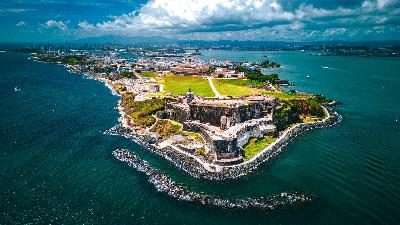
An eternity ago on a Sunday night. But it was never about Sunday night.Unseasonably warm in Dallas. Blue sky, few clouds. February but it doesn’t feel like it. Feels like a gift after the recent ice. The kind of morning where you leave the door propped open and let the air in.It’s gonna be a big day. The biggest day, actually, if you’re in the business of cold beer and television sets. Championship Sunday. Super Bowl Sunday. After tonight, there’s no more football until September. Seven months of nothing. Sure, there’s the draft, and some exhibition games, but those don’t draw eyes. Nobody can fill a Sunday the way the NFL does, and everybody in the bar business knows it.Marco knows it, too.He showed up at noon. Early for a dishwasher, but Super Bowl Sunday isn’t a regular Sunday. Double prep. Endless plates. The noise from the dining room sounds like a stadium even before kickoff, and by halftime, the dish pit looks like something you’d need a building permit to fix.Marco’s been washing dishes at The End Zone for three years. The busboys bring back tubs. They say they scrape the plates, but they don’t. He sorts through the mess and puts the plates and silverware in the slotted trays and sprays them down and feeds them into the machine. They come out smoking hot, and he burns his hands stacking them. The assistant manager tells him to go faster. There are no breaks. There is no time to take out the trash.He’s nineteen years old, and he’s never once called in sick. He doesn’t care who wins. The game matters because it brings the people, and the people bring the money, and the money is the whole point. If the Seahawks win, good. If the Patriots win, good. If the halftime show is in English or Spanish or Mandarin, good. Ray is the owner. He pays Marco time-and-a-half on Super Bowl Sunday. As long as the dining room stays full and the checks stay open and Ray keeps the kitchen running past the fourth quarter, Marco’s good.Ray has owned The End Zone for eleven years. Thirty-two TVs, a smoker out back, and a lease he’d rather not talk about. He got into the bar business the way most people do. He thought it would be fun. It was, for about six months. Then it became a job. Then a religion. Show up early. Stay late. Pray a lot.Ray’s been up since four. Briskets went on at four-thirty. Ice delivery at seven. The produce guy shorted him limes again but that’s a Monday problem. Today is not a day for problems. Today is a day for solutions and the solution is simple: keep the TVs on, the beer cold, the tabs open. The NFL does the rest.He’s expecting three hundred covers tonight. Maybe more. He’s got two extra bartenders, a barback he borrowed from his buddy’s place in Deep Ellum, and enough wings to feed a small army. He’s run the numbers. If tonight goes the way last year went, he’ll clear enough to cover the entire month. The Super Bowl doesn’t just end the season. It pays for the hangover.By four o’clock, the lot’s already filling up. By five, the noise is right. That good noise. People are spending money and feeling good about it. Ray’s behind the bar and he’s moving, and he’s got that feeling that the whole machine is working. The kitchen’s not backed up. The taps are flowing. Nobody’s complaining.Then his phone buzzes. It’s Hutch.Hutch is Ray’s oldest friend. They go back to Plano, to high school, to a time when neither of them had to worry about anything more complicated than Friday night. Hutch is a good man. Loyal. The kind of guy who helps you move and doesn’t even ask for pizza. He’s also the kind of guy who’s been getting his news from places that make him angry.The text says: You better not show that halftime garbage. I’m serious.Ray doesn’t respond. He’s got tables to turn.Act I. PregameHutch doesn’t text again. He just shows up.Five-thirty, first quarter crowd settling in, noise building toward that pitch where you have to lean in to hear the person next to you. He’s wearing his Cowboys jersey. Aikman, now an announcer. Had it since they were kids. He’s got that look on his face. Ray’s seen it before. He’s been in the truck listening to something that got him wound up, and now he needs someone to agree with him.He doesn’t sit at his usual spot. Stands at the end of the bar where Ray’s pouring and waits.Ray sees him. Nods. Pours a Shiner and slides it down without asking.Hutch doesn’t touch it.“You see my text?”“I saw it.”“And?”“And I’ve got three hundred people in here, Hutch.”“That’s what I’m saying. Three hundred people who don’t want to watch some — ““Three hundred people who are buying beer and eating wings and watching the game. That’s what they’re here for.”Hutch leans in. Lowers his voice like he’s being reasonable. Like he’s helping.“All I’m saying is flip it over to the other show during halftime. The real one. American music. Fifteen minutes. Nobody’s gonna complain.”“Half the bar’s gonna complain.”“No they won’t. They’ll thank you.”Ray keeps pouring. A four-top near the window flags him for another pitcher and he fills it without breaking stride. The kitchen bell rings twice. A busboy passes behind him with a tub and heads toward the back. Toward Marco and the machine.“Hutch. I love you. You know I love you. But I’m not turning off the Super Bowl halftime show in a sports bar on Super Bowl Sunday. It’s the show the NFL is broadcasting. What Apple paid for. A hundred and thirty million people are going to watch. And those people in my bar are going to watch it here, on my TVs, with a beer in their hand that I sold them.”Hutch picks up the Shiner. Takes a drink. Sets it down a little too hard.“You sound like a company man, Ray.”“I sound like a man who owns a company.”“You know what they’re doing, right? You know what this is? This is them shoving it down our throats. The whole thing. The Spanish, the flags, the — “Ray cuts him off. “Hutch.”“What?”“Who’s ‘them’?”Hutch doesn’t answer that. He looks up at the nearest TV. Highlights. Graphics. The machine that prints money.“You know what your problem is?” Hutch says. “You don’t care about anything except the register.”Ray almost laughs. Almost. Because that’s the first honest thing either of them has said.“Yeah,” Ray says. “That’s my job. That’s the whole job. I care about the register. The NFL cares about the register. Apple cares about the register. Every business in America cares about the register. That’s how it works. That’s how it’s supposed to work. You taught me that.”“Don’t turn this around on me.”“I’m not turning anything around. I’m telling you what you already know. The NFL isn’t a public service. It’s not the government. It’s not a church. It’s a business. And it made a business decision. The most popular artist on the planet is playing the halftime show and a hundred and thirty million people are going to watch it and my bar is going to be full when they do. You want me to turn that off because you don’t like the guy? Because he sings in Spanish?”“It’s not about the language.”“Then what’s it about?”Hutch finishes the Shiner. He looks at Ray. His eyes turn distant.Act II. The Boardroom We leave the bar for a minute and head to the boardroom.In 1970, an economist named Milton Friedman wrote an essay for the New York Times. Title, eight words long: “The Social Responsibility of Business Is to Increase Its Profits.”Eight words that became the bedrock of American conservatism for the next half-century. They were framed in offices. Quoted in boardrooms. Taught in business schools. Used to justify every decision a corporation ever made that somebody didn’t like.You don’t like that we moved the factory overseas? The social responsibility of business is to make money. You don’t like that we cut your pension? The social responsibility of business is to make money. You don’t like that the CEO makes four hundred times what you make? The social responsibility of business is to make money.It’s a beautiful argument if you’re the one making the money. Brutal if you’re not. For fifty years, conservatives loved it. It was the answer to every question the left ever asked about corporate behavior. You want the company to care about the environment? Diversity? Social justice? That’s not what companies are for. That’s what government is for. Companies are for making money. The market decides. The customer decides. Not the protestor. Milton Friedman has been dead since 2006. Let’s bring him back for a minute. Put him somewhere he never was. In a conference room with Roger Goodell.It’s October. Five months before the Super Bowl. Long table. Too many chairs. A screen on the wall with a presentation somebody spent two weeks building. Marketing people and sponsorship people and content people and executives.Roger’s at the head of the table. Milton is in the corner. Nobody invited him. He just showed up. He’s not here to help. He’s here to observe. He’s got a legal pad and he hasn’t written anything on it yet.The question on the table is simple. Who plays halftime?Someone pulls up a slide. Three or four names. Analytics. Global streaming numbers. Social media reach. Demographic penetration. Sponsor alignment. The usual.One of the names is the most-streamed artist on the planet. Five billion streams in a single year. Sold out stadiums on four continents. Won Album of the Year at the Grammys a week before the game. Young, global audience. The Latino market is the fastest-growing consumer demographic in America, and Apple just wrote a check for fifty million dollars to put their name on whatever this halftime show becomes.The name is Bad Bunny. The Puerto Rican rapper who’s outsold everyone since reggaeton went global.Somebody clears their throat. You can feel it before they say it. The hesitation. The careful language. The words that mean one thing and say another.The group debates. What about the core audience? Milton looks up from his legal pad.“Define core audience,” he says.“Traditional NFL viewership. Older. Domestic. English-speaking.”“And what percentage of yo
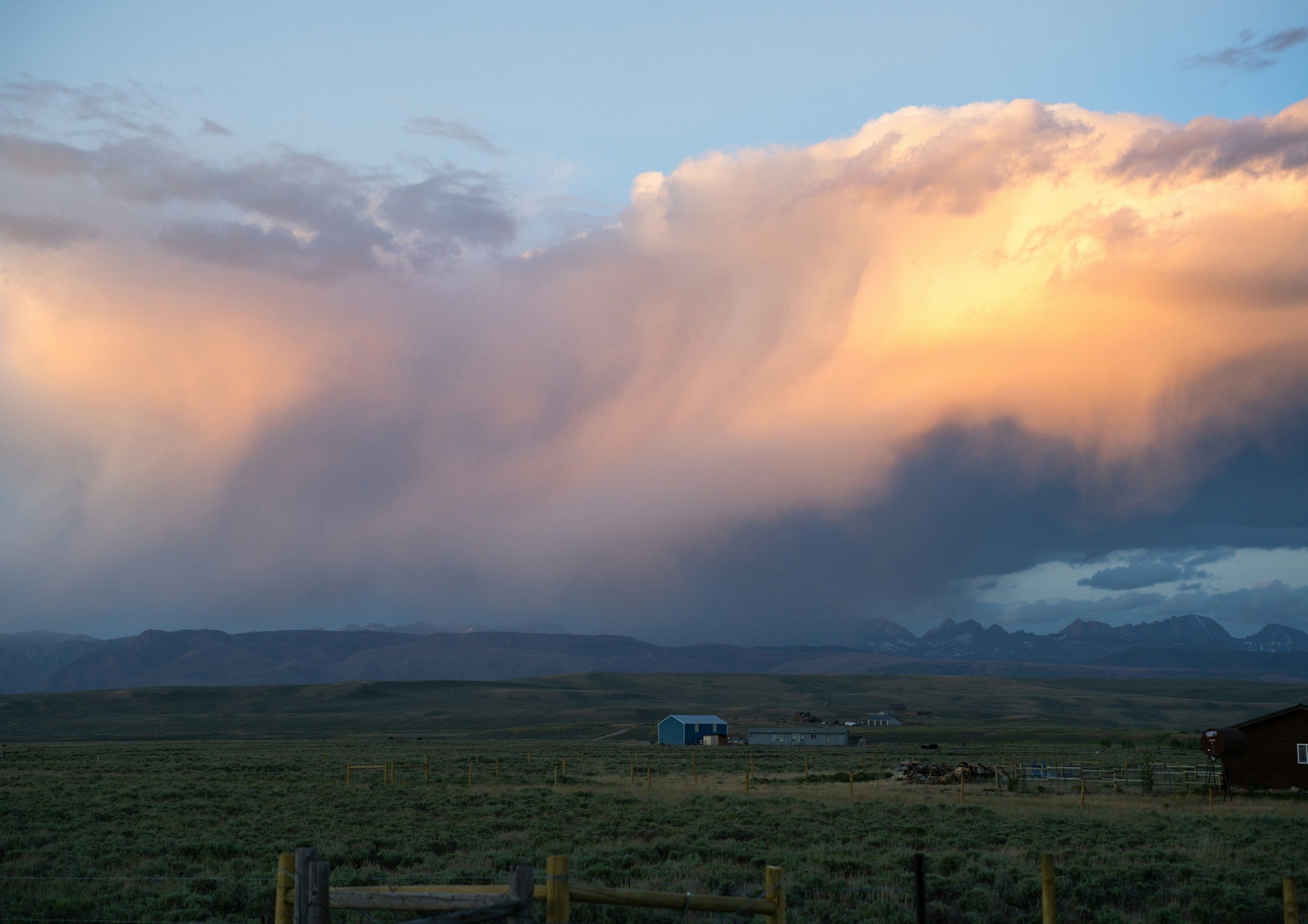
Blue sky, golden grass, tall sagebrush, mountains capped white behind. Chores done. Coffee in the sun room. He looks out across the south pasture. The tips of the tall sage quiver. The wind picks up the flags along the fence line, tugging at the screw lock chain links that hold them to the wire. The Stars and Stripes is up all the time, frayed at the edge. And the other. It’s been up since the election. Inside, a catalog open on the table. Maybe he’ll buy a new bull this year. He needs new genes. The best bulls make small calves that grow fast. Easy on the heifers, good for the pocketbook.Lot 42 has a two-year-old Simmental out of a high-altitude herd near Meeteetse. Good EPDs. Clean trich test. Should sire calves with a good frame and some thickness through the rib.He could go Angus. Tried and true. Good growth, good marbling, the sale barn in Billings knows what to do with a black calf. They’re nervous bulls, though. 2200-lbs and twitchy. His wife likes the Herefords. Red body, white face. She’s the one who has to move them when he’s at work in town, and Herefords are calm. She has made this point before, and she is not wrong.But the Simmental interests him. Supposed to be a good high-altitude cross. He’s never tried Simmental.He takes a sip of coffee. He’ll figure out the bulls later. The books come first.He closes the catalog and pulls the receipts toward him. The manila folder and the stack of printouts from the ranch supply account. He does the books every winter. Coffee, calculator, the table clear of everything except the numbers.He starts with what he knows. What he earned. What he spent. What the government says he owes and what it says it owes him. He’s not fast, but he’s careful. He keeps everything. His wife would tell you he keeps too much. But the numbers should tell a story that makes sense, and every year they do, more or less, and he files the return and writes the check or waits for the refund and keeps up with the work.This year, the numbers don’t.Not the income side. That’s fine. The calves sold. The cattle market was decent. He’s not complaining about what came in.It’s what went out that puzzles him.Act I. The BooksHe pulls the ranch supply printout and starts down the column. Fencing wire. He bought forty rolls in April, just like every spring. Last year, it was eighty-two dollars a roll. This year, one hundred and twelve. He looks at the number again. More than a hundred dollars for a roll of barbed wire.He writes it down. Moves on.The wheat didn't do much this year. It never does much. But he keeps the pivot running on the acres along the creek because his father did, and some years it pays for itself.Fertilizer. He spreads it on the hay meadows every spring. It’s not optional. You either feed the ground or the ground doesn’t feed the cattle. Last year, he paid four-eighteen a ton. This year, six-oh-five. He doesn’t know why. He didn’t ask. He just paid it because it was May and the hay meadows need it.Diesel. Up. Not as bad as the wire, but up. The bulk tank at the co-op, the same co-op his father used, the price on the board was higher every time he filled.Cake. Protein supplement for the cows in winter. Soybean meal and corn and molasses pressed into blocks or poured into troughs. The soybean price is tangled in something he doesn’t follow, something about China buying from Brazil now. He doesn’t get it. If there are more soybeans here, shouldn’t the price go down? And the cake is up twelve percent. The cows don’t eat less because Washington has some trade policy thing going on.Salt and mineral. Up, but not much. Vet supplies. Up. The squeeze chute he’d been pricing, the old one is twenty years old and the headgate sticks. The base model went from eighty-five to ninety-eight hundred between March and September. The better ones double that. He didn’t buy it. He’ll fix the headgate again.He adds the column. Adds it again. He’s careful. The number is right. He just doesn’t like it.He moves on.The calves brought good money. Nearly four ten a hundredweight, last year they only brought three twenty. The expenses ate the money the calves brought. Not all of it. He’s not broke. But wire is one-twelve, and the hydraulic chute is twenty grand. The space between what came in and what went out, where the bull purchase is possible, where a good squeeze chute is possible…the margin got thinner. And he doesn’t know why. If live weight cattle prices are near record highs, and he’s a cattle rancher, his margins should be good. That’s not true. He knows why. Everything cost more. He just doesn’t know why everything cost more.He’s heard the word tariff. He’s not sure how it connects to fencing wire in Wyoming. The president says the tariffs are on China, on Europe, on countries that have been ripping America off for decades. That sounds right to him. He voted for the man, and he’d vote for him again, and he’s not the kind to second-guess a thing just because it costs him. Everything worth doing costs something.But he’s looking at the numbers. One-hundred-twelve dollars for a roll of wire that was eighty-two dollars a year ago. He didn’t buy the wire from China. He bought it at the ranch supply in town. Same place he always buys it. Same wire. Same clerk. Different price.He pulls the form toward him.He knows taxes. He’s paid them his whole life. Income tax, line by line. Property tax on the ranch. Self-employment tax, which he doesn’t love but understands. Sales tax on everything he buys in town. These are visible. They have names. They have lines on the form. He can argue about them if he wants to. He can vote for people who promise to lower them. He knows what he pays and who he pays it to.He looks at the form. There should be a line for what he paid this year that he didn’t pay last year. The wire. The fertilizer. The diesel. The cake. Somewhere between the ranch supply store and the US Treasury, someone added a cost to everything he buys, and he’d like to know where to put it.There is no line.He looks again. Schedule F. Farm income and expenses. He can deduct the wire and the fertilizer as business expenses, sure. He always does. But that’s not what he’s looking for. He’s looking for the tariff tax. The one built into the price of the wire. The one that made one-twelve out of eighty-two for the wire.It isn’t there. There is no line. No box. No schedule. He paid it. He has the receipt, but according to the United States government, the tax does not exist.The president says foreign countries are paying. The rancher doesn’t know what schools say. He knows what the ranch supply store says. The receipt is in his hand.He suspects he paid the taxes and not some merchant in China. If someone in China paid it, why are all his expenses up so much? He could write a letter. To the IRS. To his congressman. To the president. He could ask: if I didn’t pay this tax, who did? And if I did pay it, where do I file for the refund?He won’t write the letter. He knows what would happen. The same thing that happens when he calls the Forest Service about his grazing allotment or the BLM about the lease. Nothing. A recording. A form letter. Silence.He shipped seventy-eight steer calves in October. Around six weight and slick. They had had good feed. The check was north of one hundred and ninety thousand. It was yellow. He left it on the dashboard of the truck for three days before he could get to the bank. For someone who lived in town, it was a lot of money. A winning lottery ticket, enough to buy a life. But the ranch is not a savings account; the ranch is a mouth.He paid the bank. He paid for the diesel and the fertilizer. Then he paid for the wire. When he finished writing the checks, the money was nearly gone.He went out to the barn. The squeeze chute was there in the shadow. It was the old manual one. Same chute his dad ran. He wanted the hydraulic chute, but didn’t buy it. His shoulder hurts when he works this manual one. Sharp pain that did not go away. He would pull the handle anyway. The wire was tight on the posts out in the wind. The cattle in the fields. The work remained.He puts the receipts back in the folder. Closes the form. The books are done. The numbers are the numbers. He’ll file the form and write the check. Get back to the work.He opens the bull catalog again. Lot 42. The Simmental. His wife will say Hereford. She’s probably right. But he’s never tried Simmental, and a man ought to try a thing before he decides against it. Maybe he should wait until next year, though. Outside, the flags pull at the chain links along the fence line. The Stars and Stripes, frayed at the edge. And the other. The wind is stronger now. It’s always stronger by afternoon.Neither one comes down.Act II. The Check A few weeks later, a letter. USDA.He doesn’t get much mail from Washington. The Forest Service, sometimes, about the grazing allotment. The BLM about the lease. Forms and fees and notices that say nothing and require a signature anyway.This one is different. It says he’s eligible for a payment. One-time relief. He reads it twice. Trade disruptions. The letter doesn’t use simple language. Retaliatory tariffs from foreign nations disrupted commodity markets. American farmers and ranchers carried a disproportionate burden. The administration recognizes the sacrifice and intends this bridge assistance to ensure the continued viability of American agriculture.There’s a number at the bottom. Calculated from the crop acreage he reported for the drought assessment in August. What they’ll send if he signs and returns the form.It’s not nothing. Seven thousand dollars. Enough to matter. Not enough to fix anything, but enough to notice. He sets the letter on the table. Walks outside. The wind is up. The flags pull at the chain links. He stands there a while. The tall sage quivers.He wasn’t raised to take government money. The taxpayer shouldn’t have to pay him to ranch.His father never did. His grandfather never did. They made
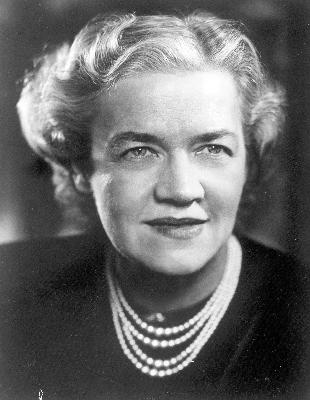
The Founders knew about the Leviathan.They had read their Bibles. Job. Isaiah. Ezekiel. The beast that cannot be bargained with. Cannot be tamed. Cannot be killed. They had lived under a king. They knew what unchecked power looked like when it wore a crown.They did not fear a British king. They had beaten him already.They feared an American one.So they built a cage. Three branches. Separate powers. Ambition made to counter ambition. No single branch could grow so powerful that it swallowed the others.The cage was made of parchment. Ink and argument. Parchment doesn’t hold beasts.Only an oath could do that.Prologue: The Weight of OathsAn oath is an ancient thing.In the old world, to swear was to stake your life on your word. You called God to witness. To lie was to invite destruction from the Almighty I AM.The Hebrews understood this. When God gave Moses the commandments on Mount Sinai, He gave ten. The first: I AM. You will have no other gods before me. And right after: do not swear an oath in my name in vain. The order is striking. Right after idolatry. Before murder. Before theft. Before adultery. Most people think that the commandment means not to curse using God’s name. It does not. It means: do not swear an oath in God’s name and then break it. Do not call the Almighty to witness your word and then make Him witness to a lie. God cared about this enough to put it near the top of the list. Above killing. Above stealing. A man who swears falsely in God’s name profanes the relationship between humanity and the divine. He makes God complicit in his lie.That is an oath sworn in the name of the I AM. Not a formality. A covenant, sworn at the foot of the throne of God.The American oath didn’t start that way. In 1789, the First Congress kept it simple. It was only: I do solemnly swear that I will support the Constitution of the United States.That was it. There were plenty of Founders who did not believe, and they left the Almighty out of it. No enemies. No mental reservations. No “so help me God.” The Founders trusted that men who swore would mean it. They had just fought a revolution alongside each other. They knew who they were.Then came the Civil War.In 1861, Southern officers resigned their commissions. Southern senators walked out of the chamber to join the Confederacy. They had sworn the short, simple oath and broken it before the ink was dry.Abraham Lincoln watched the government tear itself apart from within. He had administered the oath to men who treated it like a formality. A ceremony. Words you say because the occasion requires it, not because you mean them.So, in 1862, Congress rewrote the oath.They added “enemies foreign and domestic” because Lincoln had learned what domestic enemies look like. They look like colleagues. Friends. Men who sit beside you, debate policy, and then choose to burn the country down.They added “without any mental reservation or purpose of evasion” because Lincoln had watched men parse their words, keep their options open, swear with their fingers crossed behind their backs.They added “so help me God” because they wanted everyone who spoke the words to remember who was listening. The oath became:I do solemnly swear that I will support and defend the Constitution of the United States against all enemies, foreign and domestic; that I will bear true faith and allegiance to the same; that I take this obligation freely, without any mental reservation or purpose of evasion; and that I will well and faithfully discharge the duties of the office on which I am about to enter. So help me God.Lincoln’s oath. Forged in betrayal. Designed to smoke out traitors. To make a man say, out loud, that he had no secret loyalties. That he meant what he said. That the Almighty was watching, and would judge.Every Senator since has spoken these words. Hand raised. Voice steady. The chamber, watching. They can choose to affirm rather than swear on the Almighty, but most choose to swear. The oath is not a contract. A contract binds two parties. Breach it, and there are remedies. Damages one can pay and walk away.The oath is a covenant. You are not making a deal with the Senate, or the people, or the Constitution. You are making a promise to God, and the Republic is the subject of that promise. When you break it, you do not answer to voters or courts. You answer to the Almighty.This oath is the bars of the cage. The cage holds only as long as the oath-keepers keep their word.They stopped keeping it.Act I. The CageCongress gave away the power to declare war.In 1941, Franklin Roosevelt stood before Congress and requested a declaration of war against Japan. They voted. That’s how it works. The last time Congress declared war was 1942.Since then, American soldiers in Korea. Vietnam. Grenada. Panama. Iraq. Afghanistan. Libya. Syria. Yemen. January 3, 2026, Venezuela. Congress watched. Congress complained. Congress did not vote.They gave the president permission to do what he wanted so they wouldn’t have to answer for it. Authorization, not declaration. Authorization. A word designed to provide cover. To let them say, if it goes badly, we didn’t decide this. And if it goes well, we supported it all along.The Constitution says Congress declares war because the Founders knew what kings do with armies. They wanted the people’s representatives to look a mother in the eye and say: I voted to send your son. Here is why.Congress doesn’t want to look anyone in the eye.They handed the first key to the president and pretended the cage was still locked.Congress gave away the power of the purse.In 1976, they passed the National Emergencies Act. The idea was simple: a president could declare an emergency, but Congress would review it every six months. Congress would decide if the emergency was real. Congress would hold the purse strings.Now we live under around fifty active national emergencies. Some date back decades. Congress can force the question. Congress rarely does.One of them is from 1979. It’s older than most of the staffers who work in the Capitol. It’s been renewed, automatically, ninety times. Somewhere, a family’s assets are frozen under an emergency declared before their children were born. Congress has reviewed none of them.They discovered that complaining about the president was easier than stopping him. Complaining gets you on television. Stopping him gets you a primary challenger. So they complain. They hold hearings. They write letters. And the emergencies compound, year after year, while the wars keep grinding on under authorizations no one remembers voting for.Another key, handed over. The cage door, rattling.Congress gave away the power to tax.We fought a revolution over this. Taxation without representation. The words are carved into the American memory. The Founders put the taxing power in Congress because they understood: the people who pay should choose the people who decide.In 1930, Congress passed the Smoot-Hawley Tariff Act. Economists blame it for deepening the Great Depression. So Congress decided the problem wasn’t the policy. The problem was having to vote on it. They delegated tariff authority to the president.Ninety-five years later, one man sets tariff rates by tweet. A soybean farmer in Iowa watches the price of his crop collapse overnight. He didn’t vote for tariffs. He voted for a congressman who pretended it wasn’t his problem.Tariffs are taxes on the American people. Every economist knows this. Every member of Congress knows this. And every one of them has decided that fighting the president is harder than letting him do what he wants.A third key. The cage, standing open.Three surrenders. War. Emergencies. Taxes.Not one of them taken by force. Not one of them seized by a tyrant. Congress voted for each surrender. They held hearings, made speeches, and handed over the keys because keeping them meant taking responsibility, and responsibility is heavy, and elections are soon.The Founders built the cage to hold the Leviathan. They knew the beast couldn’t be killed. They gave Congress the power to contain it because they believed the people’s representatives would guard that power jealously.They could not imagine legislators who would volunteer to surrender. Who would unlock the cage because the beast inside might help them win their next election. Who would swear a covenant before God and then act as if God wasn’t watching.The chamber is quiet now. Papers shuffle. No one meets anyone’s eyes. They are all waiting for someone else to speak first. Someone with more seniority. More cover. Someone whose seat is safer.The silence isn’t empty. It’s full of reasonable men, calculating the cost of courage and deciding that today isn’t the day.The cage is open.Beast walks free.And every one of them swore a covenant. On occasion, one might take it seriously.Act II. The Oath KeeperJune 1, 1950.Margaret Chase Smith sat at her desk in the United States Senate, fifteen pages in her hand. She had typed them herself, late at night, in her office, with no staff and no consultation.She was fifty-two years old. Had been a Senator for sixteen months. The only woman in the chamber. Her colleagues reminded her of this in small ways every day. The cloakroom went quiet when she entered. Jokes and laughter when she left. Committee assignments went to men with half her experience.Twenty feet away sat Joseph McCarthy.Four months earlier, McCarthy had stood before a women’s club in Wheeling, West Virginia, and held up a piece of paper. A list, he said. Two hundred and five Communists in the State Department. The next day, the number was fifty-seven. The day after, it was “a lot.” The number didn’t matter. The fear did.McCarthy had discovered something simple: you don’t need evidence. You need volume. Repetition. Accusation. Men who are too afraid to call you a liar because they’re afraid you’ll call them a Communist.The Senate responded to McCarthy the way some men respond to a grease fire. Everyone waiting for s

Kansas. Summer, 1936. The bluffs above the Missouri.The river didn’t look dangerous. Wide and brown and slow. Trees leaning over the banks. A boy could stand on the bluff and think he understood what he was looking at.He was fourteen. Watching a man jump from the railroad bridge.Everyone did it. You climbed the trestle. Leapt. Hit the water. Swam to the bank. He’d done it himself, twice. The shock of cold. Hard swim to the shallows. You came up laughing.The undertow you couldn’t see. The surface looked the same everywhere. Brown and slow and safe.The man jumped. Hit the water clean. Came up once. Twice.Didn’t come up again.People were shouting. Someone ran for a rope. The boy took a step toward the edge. Stopped. His hands were shaking. He didn’t jump.They found the body two miles downstream. Tangled in the roots of a cottonwood, water still pulling at his legs.The man’s face looked surprised.There is the Leviathan.He moves in the deep,in the playground of God.He waits for his foodin its season.God asks,Can you draw him out with a fishhook?Put a cord through his nose?Make a covenant with him?Act I. The FloorboardCopenhagen, spring 1945, three weeks after the Germans left.He talked too much. He knew it.The city was full of people who’d spent four years learning to be silent. How to walk past soldiers without being seen. How to keep their faces empty. Voices low. Thoughts locked behind their teeth.He moved through it like weather. Big hands, loud laugh, American uniform. They’d won. The Germans were gone. What was everyone so quiet about?She was sitting alone at a table in the jazz club. Blonde. Thin in a way that made him look twice. She held her glass like she wasn’t sure she had permission.He sat down without asking.“You speak English?”“A little.”“More than a little, I think.”She didn’t smile. Didn’t leave. Touched her hair.He talked. Couldn’t help it. The silence in the room pressed against him like something physical, and he pushed back the only way he knew how. Words. Noise. The sound of his own voice filling the space.He talked about the war. His unit. The things they’d seen. He talked about Kansas. Bluffs. River. Sky that went on forever. He talked about what he was going to do when he got home. Big plans. She listened. Let him talk. She was good at that. Later, he’d understand. She had learned to be invisible. He had learned to be impossible to ignore. By June, the city remembered itself.The canals turned silver in the long northern light. People sat outside, chairs scraping on cobblestones, glasses catching the sun. She laughed too loud one night and heard herself and didn’t stop.They walked the city. The parts the Germans hadn’t touched and the parts they had. Fresh paint on corner shops. New glass in old windows.She walked close to the buildings. Kept her voice low. Moved like someone who’d learned not to take up space.He walked in the middle of the street. Talked loud enough for people across the canal to hear.She didn’t ask him to be quieter. He didn’t ask her to be louder.One night, by the lakes, he put his arm around her. She let him.It happened the way those things happened. He had cigarettes. Real ones, American tobacco. She had a room with a window that faced the harbor. The city was broken. They were young. Enough reason for anything.He kept talking. Couldn’t stop. She learned to let the noise wash over her like water. Sometimes she’d surface long enough to ask a question, and he’d be off again. Kansas, the river, the bluffs, what he was going to build when he got home.She didn’t talk about the occupation. Didn’t talk about her father, taken in ‘43, who never came back. Didn’t talk about what she’d done to survive. The decisions no one should have to make at nineteen.One night, she showed him the emerald.She kept it in a box beneath a loose floorboard. German boots had walked on those same boards. She pulled back the rug, pried up the board, lifted it out like something holy.It was small. Cold. Cloudy. The color of ice under green water.“Family,” he said. Not a question.“My great-great-grandmother’s.”He turned it over in his palm. Felt the weight of it. If he wanted it, it could be his. Cloudy. Old. Probably not worth much.She was watching him. Waiting. The way people wait at the edge of water.He handed it back. “Nice,” he said.The man came up once. Twice. Not again.He reached for a cigarette. Lit it with the Zippo. Started talking about Kansas.She put the stone back in the box. Back under the floor.He shipped out in September. They stood on the dock. He held her hands. Said the things men say.“Keep that emerald safe,” he said. Trying to smile.“I will.”He kissed her. Walked up the gangway. He saluted the flag, and the Officer of the Deck gave him permission to board. He turned to look for her.She was already walking away.He sent letters. November. December. Snow in Kansas. Frozen river. Winter silence. A long one in January that said he meant it, he’d come back, she should wait for him.She folded it carefully. Put it in a drawer with the others.He waited until June.The silence wasn’t an accident. It was an answer.Once, he was not vast.Once, he was small.He swam among other creatures.He learned hunger.He learned taking.No one remembers when he grew too large.No one remembers the first timeno one could stop him.Act II. The VaultCopenhagen, April 1949. A palace room full of signatures and glassware.Four years since the war ended. The city had rebuilt itself. That’s what people said. Stone by stone, street by street. The canals ran clean. The shops had glass. The streetlights worked.He knew better. He’d seen the ledgers.American steel in the bridges. American wheat in the bakeries. Thirteen billion dollars across sixteen countries.He didn’t resent it. You don’t rebuild a continent because you expect gratitude. The Soviets were already in Berlin and Prague. Pushing their iron curtain further. Reaching for anything that wasn’t nailed down.You rebuild because you’re watching the water, and no one else is.He wasn’t a sergeant anymore. He wore a suit. Good wool. Italian shoes. He had a firm handshake. He expected his calls returned.He didn’t expect to see her.She was standing by the window when he walked in. Blonde. Older. The softness of girlhood gone. She was talking to a Belgian. Something about transit routes. She held herself like a woman who belonged in the room.He stopped. 1941. The Germans. Denmark couldn’t stop them. Couldn’t hide. Couldn’t fight. A small country with a long coastline and not enough friends.The Americans came for the emerald before the Germans could take it. Took it to Washington. Kept it safe.But they didn’t just keep it safe. They used it.Greenland. The rock and ice at the top of the world that everyone forgot about until they needed it. The Americans built runways on the ice. Radar stations in the mountains. Weather posts that tracked the storms. They watched German submarines from the rock. Guided convoys through the North Atlantic.The emerald wasn’t in a drawer. It was in a command center. It won a war.And when the war ended, they gave it back.That was always the deal. Keep it safe. Use it well. Give it back.She turned, mid-sentence, as if she felt it.Four years of silence. No letters. No explanation.She excused herself from the Belgian. Walked toward him. Unhurried.“You came back,” she said.“I wrote.”She didn’t look away. “I know.”They talked. He asked about her work. She was part of the Danish delegation now. Her family had old connections, a name that opened doors even after an occupation.She asked about his. Defense. Contracts. Building things.“You’ve done well,” she said.“I got lucky.”“You got rich.”He laughed. She didn’t.She reached for her glass. Water, not wine. He didn’t know why he noticed.A ring. Gold. Simple. He looked at it too long.“Married,” he said. Not a question.A brief ceremony.Twelve nations. Twelve signatures. Simple language. An attack against one is an attack against all.He signed with a fountain pen. Blue ink. His name, large. Confident.He thought about what America had already done. The Germans were coming. Denmark couldn’t stop them. The Americans came for the emerald before the Germans could take it. Kept it safe. Used it well. Gave it back.That was always the deal.She signed after him. Small letters. Neat. The ring caught the light.Afterward, there was champagne. The murmur of diplomats pretending the world was safe.She stood across the room. Holding a glass she hadn’t touched.Their eyes met. The way they had in the jazz club, in the room with the window. Something passed. The shape of what he didn’t take. And what she didn’t give.She looked away first.He didn’t. He couldn’t.They thought they could build a cage for him. Twelve of them. Stone and iron and promises.The Leviathan watched. Patient. He learned to wait.Act III. The CommitmentCopenhagen, winter 1951. The vault is finished. The paint is still wet.Men in work clothes carried crates through a side door. The air smelled like sawdust and cold stone. Someone tracked snow in. It melted into small dark puddles on the floor.He came back. To see it done. To place his treasure.They moved the table from the palace. The chairs. Hung their photograph on the wall. Twelve faces, young and certain. Put it in a room in the back of the vault. The flag room. Fabric and thread. The original documents, behind glass.He went in first.He carried a torch. Bronze. Heavy. Cast from the same mold as the one in the harbor back home. They gave him the center case. Best glass. Best light.He stood there a moment after they locked it. Hand on the case. She went last.He watched her from across the room. A guard opened a case in the back corner. Furthest from the entrance. Smallest case.She carried the emerald herself. Wrapped in cloth. Cloudy even under good light.She set it down. Adjusted it once. Stepped back.The glass closed. The lock turned.She didn’t look at him to see if he noticed.He noticed. The torch in the
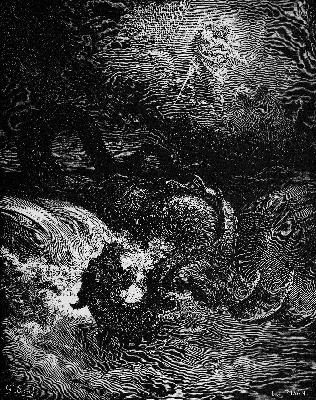
There is the Leviathan.He moves in the deep,in the playground of God.He waits for his foodin its season.God asks,Can you draw him out with a fishhook?Put a cord through his nose?Make a covenant with him?Once, he was not vast.Once, he was small.He swam among other creatures.He learned hunger.He learned taking.No one remembers when he grew too large.No one remembers the first timeno one could stop him.They thought they could build a cage for him.Twelve of them.Stone and iron and promises.The Leviathan watched.Patient.He learned to wait.God asks again,Will he make a covenant with you?Speak to you soft words?Keep his promises?No.He will not.He grows hungry.He forgets the covenantshe made when he was small.He sees what he wants.He takes what he sees.Even the Leviathan owes God a death.We all do.But not yet.Not tonight.The Leviathan does what he wants.Who can subdue the Leviathan?Music byArtist: Jon BjörkSong: Dwell Upon Get full access to I Believe at joelkdouglas.substack.com/subscribe

There is the Leviathan.He moves in the deep,in the playground of God.He waits for his foodin its season.God asks,Can you draw him out with a fishhook?Put a cord through his nose?Make a covenant with him?The Zippo. He ran his thumb across the worn edges. Took it out of his pocket.But I’m getting ahead of myself.Act I. The AffairCopenhagen, spring 1945, three weeks after the Germans left.You could still smell it. Smoke, petrol, something sour underneath. The city was learning how to breathe again. Nobody knew what to do with their hands.She was twenty-three. Blonde. Thin in a way that made people look away. She’d spent four years learning to be invisible. How to walk past soldiers without being seen. To keep her face empty. Make herself small enough to survive.He was American. A sergeant from Kansas. People thought all of Kansas was flat, but not where he was from. Huge houses on the river bluffs, oak trees. Nearly every year, someone drowned. They jumped off the bridge, knowing they could swim out of the great river. They could not. He had a wide smile and big hands and he talked too loud for any room he was in. They met in “Glasshall in Tivoli.” A Danish jazz club. Defiant of German rule to the end. Jazz was Allied music. The Nazis despised it. She was drinking alone. She knew she shouldn’t, but the Germans were gone, and she didn’t feel afraid.He sat down across from her without asking.“You speak English?”“A little.”“More than a little, I think.”She didn’t smile. But she didn’t leave. She touched her hair.By June, the city remembered what it was.The canals turned silver in the long light. Sun sat on the water like a thin sheet of metal. The sun only pretended to set, hovering just below the horizon, turning the sky the color of bruised peaches over slate roofs and church spires. People sat outside again. Chairs scraped on cobblestone. Glasses clinked. Bicycles hummed past in steady lines. They drank beer in Nyhavn. Watched the boats. She laughed too loud. Heard herself. Didn’t stop. She showed him the city. The parts the Germans hadn’t touched and the parts they had. Street corners, the paint still new. Shop windows. Fresh glass that didn’t quite match the old panes. The gardens, gates open again, lights coming on one by one. The fountains, running with joy. Shopkeepers repainting their signs with careful strokes, making the letters bold again. They walked along the lakes at dusk. The air cooled and smelled of water and grass. Swans drifted in the half-dark, white shapes sliding over black glass. He threw bread. She told him not to, said it made them aggressive. He did it anyway, and she didn’t mind. A couple passed, arms linked, moving slow like they had nowhere they had to be.One night, he put his arm around her. She let him.It happened the way those things happened. He had cigarettes. Real ones. American tobacco. She had a room with a window that faced the harbor. The city was broken. They were alive. Enough reason for anything.He talked a lot. She learned this about him early. He talked like he didn’t know the precious silence. It was something to be filled, like the world would forget him if he stopped making noise.He talked about the war. His unit. The things they’d seen. Friends he’d lost. Kansas. The bluffs. The river. The fields. The sky that stretched out forever. He talked about what he was going to do when he got home. Big plans, big dreams. Like he had a key to the future. She listened. He was kind. Happy. Funny. She didn’t talk about the occupation. Didn’t talk about her father, who’d been taken in ‘43 and never came back. Her father had believed in things. Agreements. Treaties. A league of nations. He’d been wrong.She didn’t talk about what she’d done to survive. The humiliations. Decisions no one should have to make at nineteen.Some things you don’t say. Not even to the man in your bed.One night, she showed him the emerald. She kept it in a box beneath a loose floorboard. Her grandmother had given it to her before the war. Before everything. It was small, cloudy, the color of ice under green water. She had hidden it from the German searches. Always worried she would lose it. “Family?” he asked, holding it up to the light.“My great-great-grandmother’s.”He turned it over in his palm. Squinted at it like estimating its value.Then he handed it back.“Nice,” he said. Reached for a cigarette, a Lucky Strike. Lit it with his Zippo. Black crackle metal. Rounded on the edges, where the color of the rubbed metal shown through.She watched him light it. He glanced towards the window. Still talking. He had already forgotten the stone in her hand.She put it back in the box. Back under the floor. Didn’t say anything. He had a pocket full of stones. She’d seen them. Sapphires, rubies, a diamond. He was twenty-four years old, and he’d already had someone’s lifetime.Her emerald was cloudy. Sentimental. Not worth much.He didn’t want it.He shipped out in September.They stood at the dock. He held her hands, looked into her eyes, said what he thought were the right things men say. I’ll write, I’ll come back, this isn’t the end.She nodded.She didn’t believe him. But it cost her nothing to let him say it, and it seemed to cost him something, so she let him.“Keep that emerald safe,” he said, smiling like it was a joke.“I will.”He kissed her. Walked up the gangway. Didn’t look back.The letters came for a while. November. December. A long one in January that talked about home. Snow. Missing her.Then February. Nothing. Nothing again in March.She didn’t write to ask why. She already knew.She wasn’t the kind of woman he’d marry. She’d known it that first night in the club and every night in the room with the window. She was what happened during the war. She had loved him anyway. She went to the floorboard.The emerald was there, where it had always been. Where it hadn’t always been.A flashback. The stone, in her palm. Cloudy green. Cold. Her grandmother’s hands had held it. Her mother’s. Hers.Not only hers.She remembered the day they came. Spring, 1941. Germans had searched her room. They knew about the emerald. They just came in. Moved her aside. Later that week, two Americans on the stairs. Their uniforms didn’t fit the narrow turn. They were polite. Professional. They spoke English to each other, slow Danish to her.For safekeeping, ma’am. Just until things settle down.She was nineteen. The occupation was a year old. Her father was still alive then. He still believed in agreements. He told her to cooperate. He said the Americans were friends.She handed it over.They wrapped it in cloth. Carried her grandmother’s stone down the stairs and out into a street full of German soldiers. The Germans didn’t stop them.Americans were still neutral then. She said thank you. Standing in the doorway. Thank you to the men taking her inheritance because she could not keep it. Four years. The emerald spent the war in a vault in Washington. Safe. Dry. Far from the Germans. Far from the Danes, who couldn’t stop them. She spent the war in Copenhagen. Learning to be invisible. Learning where to look and where not to look.Her father was taken in ’43. She didn’t think about the emerald that night. Or the night after. Later, she did. A small green stone. What it might have bought. Passage. A bribe to the right man at the right time. She told herself there was no chance. The stone couldn’t have saved her father. She would never know.They gave it back in the summer of ’45. A note on American paper about Danish American friendship. They handed her the cloth like a gift. We kept it safe for you.She knew they were right to take it. That was the part she couldn’t forgive.She said thank you again. Smiled. That night she put it under the floorboard. Didn’t look at it for months. Until she showed it to him. The man in her bed.Once, he was not vast.Once, he was small.He swam among other creatures.He learned hunger.He learned taking.Act II. The VaultCopenhagen, April 1949, in a palace room full of signatures and glassware.Four years since the war ended. The city had rebuilt itself. Stone by stone, street by street. Pretended the scars weren’t there. He came back with a delegation. American money rebuilding Europe. He was one of the men who decided where it went. Defense contracts. Airfields. Ports. The stones from his pocket had bought his first contract. The contracts bought everything else.He wasn’t a sergeant anymore. He wore a suit now. Good wool. Italian shoes. He’d learned to shake hands like a man who expected his calls returned.They met at Christiansborg Palace. Twelve of them sent someone. They would build a museum, they called it. A vault. Somewhere to protect what mattered. A symbol that civilization still meant something.He didn’t expect to see her.She was standing by the window when he walked in. Blonde. Older. The softness of girlhood gone. She was talking to a Belgian, something about transit routes. She held herself like a woman who belonged in the room.He stopped.She turned, mid-sentence, as if she felt it.Their eyes met.Four years. No letters. No explanation. Just silence, and now. Her face in a window across a room full of diplomats.She excused herself from the Belgian. Walked toward him. Unhurried. Like she’d known he would come, sooner or later.“You came back,” she said.He tried to smile. The old smile. “I told you I would.”She looked at him. Just looked.“Yes,” she said. “You did.”They talked. Small talk. He asked about her work. She was part of the Danish delegation. Her family had influence, old connections. A name that opened doors even after an occupation.She asked about his. Defense. Contracts. Building things.“You’ve done well,” she said.“I got lucky.”“You got rich.”He laughed. She didn’t.She reached for her glass. Water, not wine. The light from the window caught her hand.A ring. Gold. Simple. The way the sunshine gleamed from it.He looked at it too long. Blinked. “Married,” he said. Not a question.“Three years.”“Kids?”“Two boys

The banana cost forty-seven cents.I got it from the vending machine at work. I grab it on my way out to the parking lot. Fifteen minutes of freedom. The break room smells like microwaved fish. I just need to be outside for a minute.I lean against the wall by the loading dock. Trucks roll past on the 15. The sun’s already down, but the sky is still that burnt orange it gets out here. The smog holds onto the light.I peel the banana without looking at it. Four bites. I toss the peel in the trash on my way back in.I don’t think about where it came from. Nobody does. It’s a banana. Forty-seven cents.Later, I can’t stop thinking about it. Maybe there’s blood in the fruit.Act I. The Racket. Scene 1.My name is Elena. Twenty six. I work at a fulfillment center in Fontana. One of those massive warehouses off the 15 where the trucks run all night. You’ve ordered from us. Even if you don’t think you have. Everyone has.I’m good at my job. Fast. Reliable. Management likes me. I’ve been there four years now, since I dropped out of Cal State San Bernardino. Couldn’t afford to stay.I live with my parents in San Bernardino. A working class town on the outskirts of Los Angeles. Railroad, then steel, then military, now shipping. Hot and dry. The mountains trap the smog from LA, but on a clear winter morning, when the wind comes down the pass, you can see the snow on Mount San Gorgonio.My grandfather bought the house in 1971. He never talked about where he came from before that. None of us asked.He worked the railyards in Barstow. Saved everything. Bought the house outright. Three generations later, we’re still there. We don’t love it, but we own it. The only security that feels real.My parents are citizens. I’m a citizen. Born at St. Bernardine’s. San Bernardino County, California. Seven pounds six ounces. Birth certificate in the safe.But my mother won’t answer the door if she doesn’t recognize the car in the driveway. My father keeps a folder in the fireproof box by the bed. Birth certificates. Naturalization papers. Deed to the house. Just in case.I asked him once. Just in case of what?He didn’t answer.You know what I want. I want to stop living like we’re here on a pass that could get revoked. I want my mother to open the door without checking the driveway first. I want my father to throw that folder away. I want to feel like I belong in my own country, like the word citizen means what it says. I want to be able to drive down my street and not worry about being shot during one of the raids.Three generations. My grandfather built a life here. My parents built a life here. I was born here. I am an American.And still there’s a folder in the safe. Still my mother won’t answer the door. I was home when the news broke. Saturday, January 3rd, 2026. Half watching something, scrolling my phone.My mother had the TV on in the kitchen. Background noise. She doesn’t really watch. She likes the sound of voices.The news broadcast cut in. Urgent.“US special operations forces have successfully captured Venezuelan leader Nicolás Maduro in a predawn raid in Caracas. Maduro, who has been under federal indictment since 2020 on charges of narco terrorism and drug trafficking, was extracted by helicopter and is currently in US custody. President Trump addressed the nation from the White House…”My mother turned it off. Didn’t say anything. Started wiping down the counter. She cleans things that are already clean when she worries.My father was in his chair. I said, “Papá, what do you think?”He didn’t look at me. Pursed his lips. Glanced at my mother. He said, “I think it’s going to be a long year.” Then he went to get a tool from the garage.I could feel something in the room. Old. Something they weren’t saying.That night I can’t sleep. I have homework for my history class at Chaffey College. Latin America. Colonial Period to present. A speech by some old dead guy from the 1930s. I hadn’t started it.I made coffee. Sat at the kitchen table. Opened my laptop.Started reading.Act I. The Racket. Scene 2.Elena: 1935. A Marine Corps general named Smedley Butler. I keep reading.Then…I was there. A folding chair. Wood seat, cold metal frame. Room smells like cigarette smoke and wool coats. A banner on the wall. VFW Post something. American flags on either side of the stage.The man at the podium is old. Sixty, maybe. But he stands like he’s still in uniform. Proud. Shoulders back. Chin up. Two medals on his chest I don’t recognize.He’s looking out at the crowd. Starts to speak. His hands grip the podium. Knuckles, white. Holding on like he might fall if he lets go.Butler: “War is a racket…at the expense of the very many…a few people make huge fortunes…I spent thirty-three years and four months in active military service. And during that period I spent most of my time being a high-class muscle man for Big Business…I helped make Mexico safe for American oil interests in 1914…Haiti and Cuba a decent place for the National City Bank boys to collect revenues...Nicaragua for the international banking house of Brown Brothers in 1909 to 1912…The Dominican Republic for American sugar interests in 1916…Honduras right for American fruit companies in 1903…There are only two things we should fight for. One is the defense of our homes. And the other is the Bill of Rights.War for any other reason is simply a racket.”Elena: He stops. Quiet. Someone coughs. Butler looks at a man in the front row. Old. Maybe his age. Maybe they served together. He doesn’t look away.Marine Corps General Smedley Butler. The most highly decorated Marine in history. The only Marine to earn both the Brevet Medal and two Medals of Honor. A gangster, he said, for Wall Street.He didn’t say we should never fight. He said we shouldn’t lie about why we are fighting.Next morning I go to work. Same shift. Same trucks. Same routine.On my break I go outside. Banana in the vending machine. I stand there looking at it through the glass.Forty-seven cents.I don’t buy it.Act II. The Blood in the Fruit. Scene 1.Narrator: Chaffey College. Health Sciences Building. Anatomy lab.The room smells like formaldehyde and cold air. Fluorescent lights. Steel tables. A skeleton hanging in the corner like it’s waiting for someone to ask it a question.Valentina: My name is Valentina. I left Caracas, Venezuela in 2018 with two suitcases and a pharmacy degree.The suitcases are in my closet. Degree framed on my wall. Neither useful here.I work at CVS in Rancho Cucamonga. Shift supervisor. Not a pharmacist. I wear the red polo and the name tag. I answer questions about where the cough syrup is. Sometimes people ask me for medical advice. I give it because I know the answer, then I tell them to talk to the pharmacist. I’m not allowed to know the answer.Three years I’ve been trying to get my credentials transferred. Forms. Fees. Evaluations. More forms. They want me to retake classes. They want transcripts that don’t exist anymore because the university can’t keep the lights on. They want me to prove I am who I say I am, over and over, in a language that isn’t mine.The bureaucracy isn’t a wall. It’s a maze. It lets you keep walking so you don’t notice there’s no exit. So here I am. Chaffey College. Twenty-eight years old. Anatomy and Physiology. Sitting in a room full of nineteen-year-olds, learning the names of bones I learned six years ago in Spanish.Narrator: She’s at a lab table. Skeleton hand in front of her. Index cards.Valentina: Carpals. Metacarpals. Phalanges.I know this. I knew this before most of these kids had driver’s licenses. But the paper says I don’t know it, so I’m learning it again.My phone buzzes. I should ignore it. Lab policy. Professor’s a hardass about phones.But I see the notification. WhatsApp. Mamá.I grab my bag and walk out.Narrator: Hallway. Cinder block walls. The hum of vending machines.Valentina: I lean against the wall and press play.The connection is bad. Static. Her voice cutting in and out. But I can hear it underneath. Something I haven’t heard in a long time. Hope.She’s talking about the news. Maduro. The Americans. She’s saying maybe, maybe, maybe. Mijita, están diciendo que todo va a cambiar. Que por fin. Baby, they’re saying everything’s going to change. Finally.I play it again.Her voice sounds younger. That’s what hope does. Takes years off. I remember what she sounded like before. Before the lines for bread. Before my brother couldn’t find work. Before the hospitals ran out of everything and people started dying from things that shouldn’t kill anyone.She sounds like that again. Just for a minute. Just in a voice message from eight thousand miles away. I want to believe it. I remember 2019. Guaidó standing in the plaza. Declaring himself president. The crowds. The speeches. The whole world recognizing him, saying this is it, this is the turn.And then. Nothing. Maduro stayed. More sanctions. Hospitals got worse. People kept leaving. People kept dying.I left.I press record. Te quiero, Mamá. Vamos a ver.I love you. We’ll see.I send it before I can say anything else.Narrator: Night. Studio apartment. Rancho Cucamonga.Small. Clean. A bed, a desk, a hot plate. The pharmacy degree on the wall, next to a calendar from a Venezuelan bakery in Panorama City.She’s in bed. Phone in her hand. The only light in the room.Valentina: I open WhatsApp. The family group chat. Familia Caracas.Seventeen members. I scroll through the icons. People I grew up with. People I left behind. My mother. Brother. Tía Rosa. Cousin Diego. Cousin Maria. The photos are old. Everyone frozen in time. My mother’s icon is from 2016. She’s wearing lipstick. Smiling. She doesn’t look like that anymore. I scroll back through the chat.It used to be different. Memes. Birthday messages. Photos of food. My brother posting terrible jokes. Diego sharing fútbol highlights.Now it’s logistics.Does anyone have power? The water’s been out for three days. Mamá found rice at the bodega on Avenida Sur. Expensive, but it’s there. Has anyone heard from
Act I. Tick Tock[SFX: The noise of New York City][Narrator] New York City in December. Manhattan. No snow yet, but the cold sits like it’s waiting for something.A kid walks home from work. Twenty-four years old. Jacket zipped to the throat. Same route he always takes. Down from Midtown, cutting through the side streets. Too many tourists on the main streets.He wants to move through the world without it touching him.It’s 6:12 PM. The sun is already gone. The crosswalk timer across the street blinks 12, then 11, then 10. Tick. Tick.Cars honk. Little beeps, long beeps, the ones that hold down the horn. Trash trucks. Ambulances with sirens blaring. Delivery drivers on bicycles. All stuck.The kid walks by the way he walks by everything. Eyes forward. Keep moving.Cops on almost every corner. Keeping the peace. On the buildings, American flags, lit from below, snapping in the wind that cuts between the towers. Red and white and blue against the black.And the steam.It comes up through the grates, the vents. Somewhere underneath. The water in the gutter catches it, and the whole street looks like it’s breathing. Like the city has lungs.A waist-high stack painted orange and white hisses near the curb. Warm air in cold air.He asked someone once. Why does it do that? Why is there always steam? Like the water is smoking.The subway, they said. The pipes. The heat below. The cold above. The whole city is a machine, and the steam makes it run.[Daniel] I love it. The city breathes. Exhales. Makes it feel alive. Like something’s happening under the surface, even when nothing’s happening at all.I put my headphones on.The noise is still there. I can see it. Mouths moving. Cabs lurching. Cops talking into their radios. But I can’t hear it. I’m inside my own head now.The tourists look up. They stop in the middle of the sidewalk to take pictures. Big coats. Shopping bags. Walking three across, like the city belongs to them.The New Yorkers move like water around rocks. They don’t stop. Just flow toward wherever they’re going.I’m one of them now. Four years in. The headphones that say don’t talk to me, don’t see me, I’m not here.[Narrator] The lights from a bodega spill onto the sidewalk. Red and gold. A pizza place on the corner, line out the door. A woman arguing into her phone in a language he doesn’t recognize.He turns onto his block. Streetlights tinge yellow-orange. A guy smokes on his stoop, looking at nothing. Somewhere above, music loud enough that the bass comes through the walls.Home.He steps inside.[Daniel] There he is. My little brother. Sitting on the couch. Looking at me like he’s got something to say.[Narrator] Daniel stands in the doorway. Doesn’t move. His brother looks up. People call him “K.” Nineteen years old. Named after his great-grandfather. Same face Daniel’s known his whole life, but something’s different now. The way he sits. The way he holds himself. K speaks first.[K] “I tried to call you. A few times.”[Narrator] Daniel pulls off his jacket. Tosses it on the chair. He moves to the kitchen, opens the fridge.[Daniel] He’s right. I never pick up.“You hungry? I’ve got leftover Thai. The good place.” K says he’s not hungry.[Narrator] Daniel grabs two beers. Pops the caps. Sets one on the coffee table in front of his brother and sits down across from him. K has been waiting for him to sit down.[K] “I joined the Navy.”[Narrator] Silence. Daniel’s beer stops halfway to his mouth.[Daniel] “What?”[K] “The Navy. I leave in two days.”[Daniel] I don’t say anything. I’m trying to hear it again. Navy. Two days.“When did you decide this?”[K] “A while ago.”[Daniel] “And you didn’t tell me?”[Narrator] The brother looks at him. Doesn’t flinch. Doesn’t apologize.[K] “I’m telling you now.”[Daniel] “That’s a waste.”[Narrator] It comes out before Daniel can stop it. K’s jaw tightens.[Daniel] “You’re smart. You could do anything. You’re going to swab decks and take orders from guys who peaked in high school?”[Narrator] K doesn’t look away. But something closes behind his eyes.[K] “Great-Grandpa Kenneth was Navy.”[Daniel] “That was different. That was a real war.”[Narrator] The words hang there. K picks up his beer. Sets it back down.[K] “I needed to do something.”[Daniel] “You were doing something. You had a job.”[K] “I was delivering packages.”[Narrator] K stops. Looks down at his hands. Then back up.[K] “I wanted to matter.”[Daniel] He says it like it’s simple. Like that explains everything.And I just told him it was a waste. Told him his war wouldn’t be real enough.[Narrator] K stands up.[K] “I should go. Early flight.”[Daniel] “K—”[K] “It’s fine.”[Narrator] It’s not fine. Daniel can hear it. But K is already at the door.[Daniel] “Be safe. Okay?”[Narrator] K nods once. Doesn’t look back.[Daniel] The door closes. I sit there with two full bottles and the thing I said still in the room.He wanted to matter. So he signed a contract. Raised his right hand. And now he belongs to something I don’t understand.Act II. Duration[SFX: Train wheels on tracks, rhythmic, then slowing. Station announcement muffled.][Narrator] The train pulls into the station. New Jersey suburbs. Christmas Eve.Daniel is on the platform. Cold air. Gray sky. Not cold enough to bite. Just there. He didn’t want to come. His mother called three times. The third time, she didn’t ask. She just said what time dinner was. So. Here he is. The house is twenty minutes from the station. His father picks him up. They don’t talk much. The radio fills the space. Sports. Weather. Traffic.[Daniel] Dad asks how my place is. He asks if work is good. We talk about sports. That’s the whole ride.[Narrator] The house is already full when they arrive. Cars in the driveway. Lights on in every window. A wreath on the door. Same wreath since Daniel was a kid.Inside, the house is warm. The smell of food. Voices overlap. Christmas music competing with a movie playing in the other room.His grandmother finds him first. “There he is. Look at you. So skinny. Are you eating?”[Daniel] “I’m eating.”[Narrator] She doesn’t believe him. She never believes him. She tells him she made a brisket and pulls him toward the kitchen.His mother finds him before he gets there. Hugs him like she’s checking if he’s real.[Daniel] She says I look tired. She asks about work. She asks if I’m seeing anyone.And there it is. I say no.She tells me about a girl. Rachel’s daughter. In law school. Very pretty. She could introduce us.“Mom.”She’s just saying.I need air. Quiet. To be anywhere but in the middle of this.[Narrator] He escapes. The back room. Used to be his grandfather’s study. Now it’s just a room with old books and a chair nobody sits in.Except tonight.Kenneth is there. In his late nineties. A circle of cousins around him, laughing at something he just said. He’s holding a glass of wine like a prop. He won’t drink it. Just likes having something in his hand.[Daniel] Great-Grandpa Kenneth. Everyone’s favorite person. Always has been.He’s the one who remembered every birthday. Sent five dollars in a card until I was ten, then switched to twenties because, in his words, “inflation is a thief and you deserve to keep up.”He’s sharper than anyone expects. Mixes up some names. Thinks my cousin Mike is still in college, even though Mike is thirty-two and sells insurance. But he knows what year it is. Knows who’s President. Has opinions about both.[Narrator] The cousins drift away when someone announces food. Kenneth stays in his chair. Daniel sits down across from him.[Daniel] “Do you think the Jets will make the playoffs next year?”[Narrator] Kenneth laughs. A real laugh. Starts in his chest. [Kenneth] “I’ve been waiting on the Jets since nineteen-seventy. I thought we were going to repeat.”[Narrator] He looks out the window. His fingers tap the arm of the chair. Something shifts behind his eyes.[Kenneth] “You know what waiting really is? I learned it in the Pacific.”[Narrator] Daniel didn’t expect this. But you don’t interrupt Kenneth.[Kenneth] “Picket duty. Small ship. Radar watch. You sit out there and wait. Okinawa, 1945. We were the first thing the kamikazes would see. That was the job. Spot them. Report them. Hope they didn’t get through.”“We were at sea when Roosevelt died. April. Someone came through the ship saying the President was dead.”[Daniel] “What did you think?”[Kenneth] “We didn’t believe it. He’d been President my whole life. Since I was a kid. Didn’t know there could be another one.”“You know what they told us when we signed up? ‘Duration Plus Six.’ That was the contract. You serve for the duration of the war, plus six months. No end date. Just... until it’s over. However long that takes.”[Daniel] “What if you wanted a different deal?”[Kenneth] “Only deal there was. You signed, or you didn’t. I signed. I wanted to matter.”[Narrator] He looks at Daniel. Eyes clear. Present.[Kenneth] “I heard your brother signed up.”[Daniel] “He just started boot camp.”[Kenneth] “I know. Your mother told me. Navy. Like me.”[Narrator] He nods. Proud. But something else crosses his face.[Kenneth] “I enjoyed serving. Proud of it. Still am.”[Narrator] He pauses. Looks at Daniel like he’s deciding whether to finish the thought.[Kenneth] “But the men who send them. The men who decide where they go. What we did was right, but it isn’t always right. Those men should be bound too.”[Daniel] “What do you mean?”[Kenneth] “Limits. A clock on them. Something that says you can’t keep sending boys forever just because you feel like it.”[Narrator] Someone calls from the other room. Dessert. Kenneth waves his hand. He’ll be there in a minute. Daniel waits for more. But Kenneth is looking out the window now. Somewhere else. Sixty years back. Small ship. Radar. Waiting.[Daniel] I sit there another minute. Then I get up. “Thanks, Grandpa. You want me to bring you some food?” I walk back into the noise. The laughter. The questions. But I’m not there. I’m somewhere else.The men who send them. They should be bound, too.[Narrator] Daniel l

[SFX: Solo Guitar playing Auld Lang Syne]Should old acquaintance be forgot, and never brought to mind? Should old acquaintance be forgot, and the days of long ago?We’ve forgotten the meaning of the song playing in the background when we toast on New Year’s Eve.Let’s remember.Back to Ulysses S. Grant. He couldn’t hear music. Not wouldn’t. Couldn’t. And the most important moment of his life would be defined by a song.Act I. The Man Who Couldn’t Hear MusicWashington, D.C., March 8, 1864.Ulysses S. Grant walks into Willard’s Hotel. Forty-one years old. Filthy from four days on a train. He is the most famous man in America, and nobody recognizes him.The hotel is famous. Senators swagger and generals preen across its thick, patterned carpet. Gas lamps throw a yellow light that doesn’t reach the corners, so faces drift in and out of shadow. Furniture packed in tight clusters. Little tables and chairs arranged for waiting, not resting, crowded by hats, gloves, and half-empty whiskey glasses.The desk clerk eyes Grant as he crosses the room. Mud-spattered coat. Rumpled uniform. No entourage. His boots are caked with Tennessee mud, red clay flaking onto the carpet. The clerk judges his station in life and says there’s nothing available but a cramped room in the garret. The attic.Grant takes it. He signs the register in a plain hand: U.S. Grant & Son, Galena, Illinois.The clerk reads the signature. His face goes white. Suddenly, the Presidential Suite, the rooms Abraham Lincoln occupied before his inauguration, is available after all.Grant declines. The garret is fine.This is Grant. No drama. No ceremony. And something even more peculiar.Ulysses S. Grant cannot hear music.It’s not that Grant “doesn’t like music.” Not that he “has no taste for music.”He can’t hear it.When a band plays, Grant hears only noise. A choir sings, Grant hears chaos. Marches. Hymns. Sentimental ballads. They all register the same way. Pots banging. Wagons rattling. Nothing more.He once described it this way: “I know only two tunes. One of them is ‘Yankee Doodle,’ and the other isn’t.”People took this as a joke. A curmudgeon’s quip. But Grant wasn’t joking. He could recognize “Yankee Doodle” because it came wrapped in parades and flags and ritual. He knew it by context, not by sound. Every other tune in the world was the same to him. Noise.Doctors today call it congenital amusia. The brain can’t process pitch. Each note disappears as soon as it sounds. The pattern never forms.In 1864, they had no name for it. Grant just lived with it. He never explained why music meant nothing to him. But other officers noticed he would leave the room when bands played. He didn’t grimace. He didn’t complain.He just drifted away.Back to Willard’s Hotel. That evening, Grant cleans up and goes down to dinner.He and his thirteen-year-old son Fred take a small table in the crowded dining room. He orders. Within minutes, someone recognizes him. A congressman stands and bellows across the room: “Ladies and gentlemen! The hero of Donelson, of Vicksburg, and of Chattanooga is among us! I propose the health of Lieutenant General Grant!”The chant begins. Grant. Grant. Grant.The diners surge toward his table. He stands awkwardly, bows, tries to eat, gives up. The mob presses closer. For three quarters of an hour, he shakes hands with strangers. Finally, he escapes to his room. He never finishes the meal.Later that night, politicians appear at his door. They rush him through the rain to the White House, where President Lincoln is holding his weekly reception. The East Room is packed. Hundreds of Washington society figures, all hoping to glimpse the western hero.The crowd parts. Grant walks through.Abraham Lincoln stands waiting. They have never met, though they are now the two most famous men in the country. Lincoln is a head taller, six foot four. Grant is five eight.Lincoln steps forward, smiling, and extends his hand. “Why, here is General Grant. I am most delighted to see you, General.”Grant answers with a nod and a few words so quiet Lincoln has to lean in.The Union Army of Grant’s time was saturated in music.More than 500 regimental bands. Drummers and fifers at every unit. Bugles structured the entire day. Reveille. Assembly. Mess call. Sick call. Taps. Music lifted spirits. Stiffened resolve. Gave orders.And Grant was deaf to all of it.He understood music strategically. He watched what it did to other people. Saw men weep at certain songs. Stiffen at others. The way someone colorblind might notice how others respond to a sunrise.After West Point, Grant was a young lieutenant in Mexico. His regiment’s band raised morale, but it needed funding. Bands were absurdly expensive, and politicians loved them. Congress would argue over rifles, but bands needed paid.So Grant ordered the unit’s daily rations in flour instead of bread, at significant savings. Then he rented a bakery. Hired bakers. Sold fresh bread through a contract he’d arranged with the army’s chief commissary. The profit went to music he could not hear.This is who Grant was. Practical. Unsentimental. Results-oriented.Sentiment in the Union Army was a liability.The next morning, Lincoln hands Grant his commission. Lieutenant General of the United States Army. The highest rank in the army.Grant is now in command of all Union forces. More than half a million men.The war is in its fourth year. Two hundred and fifty thousand Union soldiers are already dead or wounded, with little progress to show. Every general Lincoln has appointed to fight Robert E. Lee has failed. They engage. Suffer losses. Retreat north to regroup. Then they do it again.The reality is that the Civil War is a war of attrition. Wars of attrition aren’t clever. Force meets force until one side can no longer continue.To achieve the nation’s ends, Lincoln needs someone different. Someone who doesn’t retreat.Days after the ceremony, Lincoln’s assistant asks what kind of general Grant will be. Lincoln thinks for a moment.“Grant is the first general I’ve had. He doesn’t ask me to approve his plans and take responsibility for them. He hasn’t told me what his plans are. I don’t know, and I don’t want to know. I’m glad to find a man who can go ahead without me.”Lincoln pauses, then adds.“Wherever he is, Grant makes things git.”The Army medical corps had made it official. They called it nostalgia.Not nostalgia like we use the word today, a warm feeling about the past. Nostalgia as a diagnosis. A disease. A killer.Union surgeons wrote down thousands of cases. Men who wasted away, moaning for home. The symptoms look like what we would now call severe depression. Insomnia. Loss of appetite. Withdrawal. Despair. In the worst cases, they just stopped. Refused food. Refused nursing. Died.The army identified a trigger. Music.Sentimental songs did it. Ballads about home. Mothers. Sweethearts left behind. The most dangerous song in camp was “Home, Sweet Home.” Men heard it and broke. So officers barred bands from playing it.Songs like “Auld Lang Syne” carried the same danger. Remembering friends from long ago. Remembering home. Memory as a weapon turned inward. The song that made you weep for the past was the song that could kill you in the present.Grant would have understood that logic perfectly.Now Grant is in Washington, his new commission in hand. Culpeper, Virginia waits, his headquarters with the Army of the Potomac. Robert E. Lee waits, fifty miles south.Grant lays out his philosophy in a single sentence: “The art of war is simple enough. Find out where your enemy is. Get at him as soon as you can. Strike him as hard as you can, and keep moving on.”No sentiment. No retreat. Attrition.Act II: The Overland CampaignThe Wilderness, Virginia. May 5, 1864.Grant crosses the Rapidan River at midnight. Sixty thousand men. Pontoon bridges sway in the dark. By dawn, the Army of the Potomac is deep inside a seventy square mile tangle of vines and second growth so dense the soldiers call it, simply, ‘the Wilderness.’The Union Army was routed here one year earlier. Lee’s bold flanking maneuver sent them running. The bones of the dead from that battle lie in the undergrowth. Skulls grin up at passing troops. The new soldiers try not to look.Grant’s plan is simple: move fast and get through the forest before Lee can react. Fight in open country where Union artillery and superior numbers can be decisive.Lee reacts faster.By midmorning, the Wilderness becomes a killing ground that neutralizes every Union advantage.Soldiers couldn’t see twenty yards in any direction. Brush so thick you lose sight of the man next to you. Smoke from musket fire fills the gaps between trees. You only see the enemy by the muzzle flash when he shoots at you.There is no battle line. No coordination. No grand strategy. Only chaos. Small groups of men stumbling through the brush, firing at sounds, bayoneting shapes.Then the forest catches fire.Muzzle flashes ignite the dry leaves. Flames race through the underbrush. Men who are wounded and cannot crawl burn alive. Screams rise above the gunfire. The smoke turns black.The fighting goes on for two days. When it ends, 18,000 Union soldiers are dead, wounded, or missing. Nobody knows how many Confederates. The forest is eerily quiet.To this point, every Union army that faced Robert E. Lee followed the same pattern. Engage. Suffer terrible losses. Retreat north to regroup. Lick wounds. Try again in a few months.Grant’s men expect the same. They’ve been through this before with other commanders. They assume their next march will take them back toward the Rapidan. Back toward Washington. Back toward safety.That night, the army begins to move.The columns form up and start marching. At first, the men don’t know which direction they’re heading. The road winds through the forest. It’s dark. They’re exhausted.Slowly, as the stars wheel overhead, they begin to realize something.They are not marching north.They are marching south.Toward the enemy. Toward Richmond. T
This story is true. Except for the parts with the ghosts. [SFX: Theater applause]Dim the lights.Prologue. London. December, 1776.One lone leaf on the London plane outside the King’s window trembles in the light breeze, like the whole city just let out a quiet breath.It had clung to its branch through the long autumn, through winds that had stripped its companions and sent them spinning across the grounds of Windsor Castle. But now, in the stillness of a December evening, with no wind at all to speak of, it fell. The branch did not shake. The leaf simply let go, as if it had finally grown too tired to hold on, and drifted downward through air that smelled of coal smoke and coming snow.It landed on the stones of the courtyard without a sound. A guardsman’s boot crushed it a moment later, unknowing. The groundskeeper would collect it soon enough.Inside the palace, candles burned against the early dark. Servants moved through corridors with the particular silence of those who have learned that kings prefer not to be reminded of their presence. Fires crackled in grates throughout the residence, and the smell of roasting meat drifted up from kitchens where cooks prepared for the Christmas feast. The King had already declared he would not attend.George William Frederick, by the Grace of God King of Great Britain, France, and Ireland, Defender of the Faith, sat alone in his private study. Most called him King George III. He was not yet forty. His hair had not gone white. His eyes had not drifted to that far-off place that later painters would catch. He blinked once, slow, like the weight of the crown had its own gravity. He was still a young king, or youngish. The rebellion in the American colonies had aged him in ways the mirrors had only begun to report.On the desk before him lay dispatches from America.He had read them twice already. He would read them again before bed. Again, when he woke. Again, mid-morning. Searching for the thing he could not find in them. An explanation. The reason. The sense of it all.The rebels would not break.This was the fact that he could not understand. Would not. By every measure that mattered, this rebellion should be over. The Continental Army had been driven from New York. Their capital had fallen. Their soldiers deserted by the hundreds, slipping away in the night to return to farms and families, to sanity, to submission. Washington’s forces had dwindled to a ragged few thousand, starving and frozen on the Pennsylvania side of the Delaware River.And still they would not break.George set down the dispatch and walked to the window. The courtyard below lay empty save for the guards at their posts, still as statues in the cold. Beyond the palace walls, London prepared for Christmas. He could not see the preparations from here, but he knew them well enough. The garlands and the wassail, the church bells and the charitable distributions. The goose being fattened in every household that could afford one, and many that could not.Christmas. The celebration of a child born in poverty who had somehow overthrown an empire. George did not make this connection consciously. It floated somewhere beneath the surface of his thoughts, unexamined.He touched the back of a couple of fingers against the glass. It was cold. On the other side of that glass, on the other side of an ocean, men wrapped their feet in rags, leaving bloody footprints in the snow. Men were choosing to freeze.Why? What word had reached them that could make men choose cold over comfort?He did not doubt the outcome of this rebellion. He had the strongest Army and Navy the world had ever seen. His generals would see to their submission. But didn’t they understand what he offered? Order. Protection. The steady hand of a Crown that had outlasted plagues and pretenders, fires and mobs. A world where the rules did not change because a crowd felt hot blood in its throat.Obedience, in return. That was all. One plain word, and it was suddenly the only word nobody in America could stand to hear.He had read their pamphlets. Their petitions. Liberty was a thing you could hold in your palm and keep clean. As if “freedom without order” could live out in the open without turning into smoke and shouting.He told himself they would come back. This rebellion was a fever, not a cause. Noise. A few men with printing presses and loud mouths. The larger crowd would quiet down the moment winter did its work.But right now, his eyes refocused from the daydream. The light grew dim. The glass fogged at the edges, as if someone had breathed on it from the other side. Odd, but no matter. It must be the snow coming. George turned from the window and walked to his desk.The candle nearest him flickered, then steadied. The shadows in the room shifted and resettled themselves. Outside, the temperature dropped, the smell of snow in the air. A white Christmas for London, if the clouds obliged.In the fireplace, a log cracked and sent up a shower of sparks. George watched them rise and wink, rise and wink, like small rebellions burning themselves to nothing against the indifferent air.The clock on the mantel struck nine. Somewhere beyond the walls, a watchman sang the hour into the cold.George gathered the dispatches. He placed them in the locked drawer where he kept such things, away from prying eyes and gossiping servants. He would read them again tomorrow. He would search once more for the explanation that was not in the dispatches. The King prepared for bed. His evening routine varied little from one night to the next. He allowed his valet to help him undress. He said his prayers, more habit than devotion. He climbed into the vast bed with its heavy curtains, warming pans, accumulated weight of royal tradition.He closed his eyes.His sleep came and went, shallow and troubled. George tossed in the darkness, talking in his sleep. Words that his attendants, just outside the door, could not quite make out. The fire burned low. The candles, one by one, became a trail of smoke. The room, black.Outside the window, the first flakes of snow began to fall on London. Gentle. Silent. It covered the courtyard where the plane leaf had landed. The city asleep in a blanket of white that looked almost like a fresh page.He heard the clock strike midnight and keep ticking.George, alone in his royal bed, surrounded by luxury and power that brought no comfort, found the wee small hours. The thin place where a man is neither awake nor asleep. Some time later, the room, which had been empty, was suddenly not. A voice spoke out of the dark, as if it had been waiting for him.Act I. The Ghost of Christmas PastThe voice came from nowhere and everywhere, the way a church bell finds you three streets away.(inaudible) “George.”“George.”The King opened his eyes. The room was dark, but had not changed. The same heavy curtains and dying fire. Winter pressing against the windows. But this dark was different. Breath. Presence. “Who’s there?” His voice came out steadier than he felt. A king’s training. “Guards…”“They cannot hear you. Nor you them. We are between the ticks of the clock, you and I. In the space of memory.”“There’s no one here.”“There is,” the voice said, not unkindly. “Come. The night will not wait.”George sat up. His eyes adjusted. There was no figure in the room. Only shadow, and within the shadow, a deeper shadow. Not a person. Breath on the air.“What are you?”“I am what was. The road behind you. The roads behind that road. The choices made before you drew breath.”George felt his feet touch the cold floor, though he hadn’t moved. His hand reached for a robe that was not there, and he found himself in only his nightshirt, shivering slightly. A pale light gathered at the window. The glass, which should have been solid, yielded like water. He passed through it without feeling it pass, and then he was somewhere else entirely.London. But not his London.The streets were narrow and filthy. Choked with mud and offal and crowds that moved with dread. George had seen etchings of this time. He had read the history. But nothing had prepared him for the smell. Blood and smoke and fear. The smell coated his tongue.“Sixteen forty-nine,” the voice said. “The thirtieth of January.”The crowd pressed toward a scaffold erected in front of the Banqueting House at Whitehall. George moved with them, unable to resist. A ghost among ghosts. A woman near him wept openly. Through the crowd, George saw him.King Charles I walked to the scaffold with the careful dignity of a man who had practiced this moment in his mind. His shirt was white. His hair, gray. His eyes found no one in the crowd, as if he had already departed for some place beyond their judgment.“He wore two shirts,” the voice said softly. “So that he would not shiver in the cold. He wanted to look dignified. Strong.”George’s throat tightened. He watched Charles kneel. He could not watch. He looked away.But he heard it. The blade found its mark. Then another sound, a moan rising from the crowd. Thousands of throats releasing something that had no name. Not triumph. Not grief. “Why do you show me this?” George whispered. “I know this story. Every king knows it.”The ghost looked at him but did not speak.Britain had torn itself apart in those years. Men who had been neighbors became enemies. Law vanished. Titles meant nothing. Thinkers had dreamed of a solution, a sovereign so absolute that chaos itself would bow before him. It was a dream born of blood. Control that would not last.Then, George and the ghost in a different London. Cleaner. Calmer. Wider streets, newer buildings. Dawn breaking over the Thames, the water in shades of rose and gold.“Sixteen eighty-eight,” the voice said. “Forty years after the axe.”George watched a procession move through the streets. Not a mob this time. Something orderly, almost festive. A parade. People lined the route, cheering. At the center of the procession rode a man George recognized from portraits: William of Ora
2025. The president fires an FTC commissioner before her term is up. The statute says he can’t without cause. He does it anyway. Now the Supreme Court has to decide whether ninety years of precedent was real law, or a bluff. Act I. The Wager[SFX: casino room, cards dealt, chips stacked, ice clinking in glasses]Players stare at each other across a poker table. Four cards are up. One card is face down. The last card decides everything, but nobody gets to see it until somebody commits.You can stare at the felt and pretend time is on your side. But the cost of waiting goes up anyway. You have to put in a bet to keep playing, and that bet keeps getting bigger. The pot grows. The pressure rises. Sooner or later, you have to act with incomplete information.New York City. Late Spring, 1789.George Washington took the oath on April 30. He is the first President of the United States. He has duties. He has no government.No State Department. No Treasury. No War Department. No one to answer a foreign minister or respond to a crisis. The executive branch exists on paper. In reality, it is one man in a rented house with a small staff and a pile of unanswered letters.The Constitution is eight months old. The ink is barely dry. And the world is not waiting.The British still occupy forts on American soil. Forts they agreed to vacate six years ago. Native attacks keep coming from those regions. Plenty of Americans suspect the British, but Washington has no department to respond with.Spain has closed the Mississippi River to American trade. Western settlers are talking about leaving the union. Diplomacy might help. Threats might help. But there is no one to conduct diplomacy. The president cannot do everything himself.American merchant ships are being seized in the Mediterranean. Algiers declared war on the United States four years ago. Sailors are chained in North African prisons, waiting for a ransom that cannot come because we have no Treasury and no Navy.The pot is already enormous. The blinds are rising. And Congress has a problem.The Constitution gives the president the power to appoint officers “by and with the advice and consent of the Senate.”It says nothing about firing them.Nothing.That silence is not calm. It’s cards sliding out. Sideways glances. Men looking across the table, trying to decide what the other man is holding.Sixty-five men crowd into Federal Hall on Wall Street. A repurposed city building that still smells like fresh paint. May turns to June. The weather thickens. No ventilation worth mentioning. Wool coats. Wigs. Windows that don’t open properly. Paper everywhere. Quills scratching. Men sweating through their shirts while arguing about the shape of executive power.They have to build a working government, but the game is already underway. The cards are on the felt. The pot is growing. And they’re still arguing over who gets to deal, who sets the rules, and who can push a man out of his seat.The question before the House is simple to ask and impossible to answer:Who can fire a cabinet secretary?James Madison rises to make a motion.He is thirty-eight years old. A hundred forty pounds soaking wet. He speaks so softly that reporters lean forward to hear him. He is brilliant, but he has never seen combat. He has never led troops. He spent the Revolution in the Virginia legislature, arguing about paper while other men bled.But Madison wrote the Constitution. He wrote most of The Federalist Papers defending it. He has thought more carefully about the structure of American government than anyone alive. When Madison speaks, the room listens.His motion concerns the Department of Foreign Affairs. A department that does not yet exist. A secretary who has not been named. He is writing the job description for a position that is still an idea on paper.Madison proposes one line:He says that the secretary shall be “appointed by the president, by and with the advice and consent of the Senate; and to be removable by the president.”Four words. Nine syllables. “Removable by the president.”The room erupts in disagreement.They can see the future in that sentence. A future president. A future fight. A future Congress trying to bind a president’s hands. They are not arguing about today. They are arguing about every president and every Congress that will ever follow.And they are terrified. But not of the same thing.To understand why the room erupts, you have to understand the ghost in it. That ghost is King George III. Theodorick Bland commanded cavalry in the Revolution. James Jackson of Georgia fought at Cowpens, Augusta, Savannah. Hand to hand when it came to that. Jackson fought twenty-three duels in his lifetime. He settled disagreements with pistols. When he stood up to speak, men listened because they knew what he was capable of.Elbridge Gerry was asleep at the Menotomy Tavern on the night of April 18, 1775. The night Paul Revere rode. British troops marched past his window toward Concord. The weapons they were marching to seize were weapons Gerry had put there. His roommate during the siege of Boston was Joseph Warren. Warren died at Bunker Hill with a British bullet in his skull.On and on. The room was full of men who bled for independence. They sent their sons to bleed. They watched friends die at Brandywine, at Germantown, at the frozen hell of Valley Forge.The Declaration of Independence was thirteen years old. It was a list of crimes committed by a king who answered to no one. These men had signed it. Some had nearly died for it.Now, James Madison, who spent the war arguing about paper, stands before them and proposes giving one man the power to fire anyone in the executive branch.To some of them, it sounds like the first step toward a throne.Underneath that knife’s edge urgency, they are dueling with words while playing this game of American poker. Uncertainty. Ambiguity. They’re all fearful, but not of the same thing. One man hears “removable by the president” and sees a king. Total loyalty. Total control. Every officer knowing he serves at the president’s pleasure. Every officer afraid to disagree. William Loughton Smith of South Carolina places his bet here. He points to the Constitution: the only removal it mentions is impeachment. If you start inventing powers out of silence, you are training future presidents to do the same.Theodorick Bland of Virginia throws in chips next. He hears “removable by the president” and sees the Senate being erased. The Constitution says the president appoints “by and with the advice and consent of the Senate.” The Senate has a role. Would you let a man hire but not fire? Strip the Senate of removal, and you strip the bridle from the horse.Roger Sherman of Connecticut adds to the pot. He hears “removable by the president” and sees chaos. Drift. Officers who answer to no one because no one has clear authority. He says Congress creates these offices, Congress sets the terms, Congress can decide. The Constitution doesn’t give removal power to anyone specifically. So Congress fills the gap.And then there is Madison.Madison has watched legislatures become tyrants.State assemblies under the Articles of Confederation printed worthless money. Exposed private contracts to public violation. Trampled the rights of minorities, religious dissenters, anyone without the votes to protect themselves. In Rhode Island, the legislature printed currency to pay off debts, and the creditors fled the state.Kings were dangerous. Madison knows that. But legislatures were also dangerous. They claimed to speak for the people. They wrapped their tyranny in democratic legitimacy. And they could do it faster than any king because they did not have to pretend to be anything other than the majority.Madison fears Congress more than he fears the president.He could not foresee a Congress that would voluntarily surrender its power. A Congress that would create agencies to avoid making hard choices. A Congress that would build a government designed to answer to no one.He places a large wager. Madison bets on a weak executive fighting a strong legislature. One man against an assembly. The president needs defensive weapons just to survive. If the president cannot remove officers who defy him, you have no accountability. You get paralysis. You get officers who answer to no one. Not to the president, who cannot fire them. Not to the people, who cannot reach them.Madison says it plainly: “If any power whatsoever is in its nature executive, it is the power of appointing, overseeing, and controlling those who execute the laws.”Article II vests the executive power in the president. Not some of it. All of it. The Senate’s role in appointments is an exception, spelled out explicitly. Removal is not spelled out as an exception. Therefore, removal belongs to the president.The room considers the wager. Each man sees a different future. A king. A runaway Senate. A paralyzed executive. A tyrannical Congress. They are reading each other across the table, trying to guess which fear is the right one, knowing they cannot wait for certainty.They look at Madison’s bet. Call, or fold.The British are not leaving those forts. Spain is not opening the Mississippi. American sailors are not freeing themselves from Algiers. Foreign ministers are waiting for someone to talk to. Crises do not pause for constitutional debate.And the pressure. The government has to start. Someone has to be in charge. Someone has to be able to be fired for failing.Then, a breakthrough. A congressman trying to get the room to move on changes the language. The final bill doesn’t say the president “has” the power to remove. It does not say Congress “grants” the power to remove. It says that when a secretary “shall be removed,” certain things happen.The House votes. Madison’s side wins, but there is no consensus. The Senate splits exactly in half. Vice President John Adams casts the tie-breaking vote. The president will have the power to remove officers.They sidestepped

Act I. The Sky WarSFX: Thunder rolling in the distance. A slow rotor hum. Laos. March 20th, 1967.A C-130 Hercules lifts off from Udon Royal Thai Air Force Base just after sunset. The crew has the cargo bay loaded with canisters. Not bombs, not supplies; canisters of silver iodide mixed with lead iodide and acetone. Command briefed the crew separately from every other unit on base. The flight plan logs say the crew's mission is “weather reconnaissance.”Their actual mission: to make it rain over the Ho Chi Minh Trail.Not to predict rain. Not to wait for rain. To make rain. To pull water from clouds that weren’t ready to give it up yet. We weren’t trying to win the weather. We were trying to weaponize it and choke off the supplies that kept the war alive in the South.This is Operation Popeye. And for the next five years, it will remain the most classified weather experiment in American military history.SFX: C-130 rotor hum. Wyatt: “Hell, son, we weren’t tryin’ to predict the weather. We were tryin’ to break it.”The problem started with a road. Except it wasn’t really a road. A network of trails, footpaths, rivers, tunnels, and jungle passages ran from North Vietnam through Laos and Cambodia into South Vietnam. The Americans called it the Ho Chi Minh Trail. The North Vietnamese called it the Truong Son Road. And no matter what the Air Force threw at it, the damn thing wouldn’t die.We tried bombing it, thousands of sorties under Operation Steel Tiger. The jungle swallowed the craters. We tried napalm. The canopy grew so thick that the fire barely reached the ground. We tried defoliants, including Agent Orange by the truckload, and managed to strip some foliage, but the trail just shifted a hundred yards east or west, braiding through the forest like a living thing.We even considered using nuclear weapons, but decided they wouldn’t end the war and would only invite the enemy to use them back. The North Vietnamese moved at night. They built the trail in sections. Different units maintained each section. They camouflaged each one during the day with cut branches and woven bamboo mats. When American reconnaissance planes flew over, they saw nothing. When the bombs came, the crews scattered into prepared bunkers, waited out the strike, then came back out and filled in the holes.By 1966, as many as 20,000 North Vietnamese troops moved down the trail every month, along with enough supplies to sustain the Viet Cong insurgency in the South. Trucks rolled south. Bicycles carried 500-pound loads. Porters balanced bamboo poles across their shoulders. The trail functioned as the circulatory system of the war. Cut it, and you would bleed the enemy dry. But nothing we tried would work.Bombs couldn’t stop the trail. Fire couldn’t stop it. But water could.During monsoon season, May through October, the trails turned to soup. Trucks bogged down axle-deep in mud. Bicycles were useless. Porters slogged through conditions that turned a day’s march into three days. The North Vietnamese themselves estimated that supply capacity dropped by sixty percent during heavy rains.So someone at the Pentagon had an idea. What if we could extend the monsoon?Aida: “Cloud seeding had existed since 1946. Vincent Schaefer at General Electric discovered that dry ice dropped into supercooled clouds could trigger ice crystal formation. Essentially, you could start the rain process manually. By the 1960s, people used it commercially. Ski resorts, farmers, even some cities experimented with it.”But this was different. Farmers weren’t trying to coax an extra inch of rain onto their fields. The United States military wanted to manipulate weather patterns over a foreign country to gain a tactical advantage in a war.The Pentagon classified the operation at the highest level from the start. So secret the program didn’t officially exist, and only a select few even knew about it. The Joint Chiefs approved it in 1966. Secretary of Defense Robert McNamara signed off. President Johnson knew. But almost no one else did. Someone told the crews that the missions were “weather modification experiments” and that the details exceeded their clearance level. The planes, C-130s and F-4 Phantoms modified with cloud-seeding equipment, flew out of bases in Thailand.Crews ignited the silver iodide canisters at altitude. The canisters released microscopic particles into the clouds. These particles acted like ice crystals. In the right conditions, with supercooled clouds that had plenty of moisture, the crystals would grow, become heavy, and fall as rain. The theory sounded solid. The question remained whether it would work at scale.The first test runs happened over the Laotian panhandle in March 1967. Someone gave the operations pastoral codenames: “Motorpool,” “Intermediary,” “Compatriot.” Publicly, if anyone asked, these were agricultural flights. Crop dusting.And it worked. Quietly, invisibly, and just enough to tempt us into thinking we could control the sky. We increased rainfall in the targeted areas by around twenty-five to thirty percent. Roads that should have dried out stayed muddy. River crossings that should have become fordable stayed swollen. Entire sections of the trail turned into bogs.Wyatt: “We’d fly the pattern they gave us, release what they told us to release. Sometimes a few hours later you’d see weather building that didn’t make sense for the conditions. Made you wonder what the hell was in those canisters.”We expanded the operation. By 1968, Popeye missions flew regularly during the rainy season, focusing on the sections of the trail in Laos and the demilitarized zone. Command mixed the sorties in with regular bombing runs so they wouldn’t stand out. The pilots treated it like any other mission: brief, fly, return, debrief.If cloud seeding could have put the entire Ho Chi Minh Trail underwater for months, cut those 20,000 troops down to zero, and stopped the supply flow completely, we would have seeded clouds until the whole jungle was mud. That was the job. That could have meant winning.But it didn’t do that.It worked, but not well enough. Twenty-five percent more rainfall meant muddier roads and slower convoys. It meant frustrating the enemy. It meant some marginal degradation of their logistics. But it didn’t cut the trail. It didn’t stop the war. It didn’t change the outcome.What it did do was teach the wrong lesson. Not that the tool was weak, but that the temptation was strong.If the United States could make it rain over Laos, even imperfectly, then the Soviet Union could make it rain over West Germany. China could trigger droughts in Taiwan. Weather could become an instrument of policy. Did we want that? If we can turn weather into strategy, then weather becomes politics. SFX: Thunder closer now. Rain beginning to fall.Congress didn’t learn about Operation Popeye until 1971, when investigative journalist Jack Anderson broke the story. Anderson had a reputation as a muckraker, but the hearings that followed made people uncomfortable. Senators asked military officials to explain how the program had been approved and executed in secret for years.The answer always took some version of the same form: “It was necessary. It was effective. It was war.”Except it wasn’t effective enough. We’d spent five years secretly weaponizing the sky for results that barely moved the needle. We’d opened Pandora’s box on weather modification for marginal tactical gains.By 1972, the Pentagon shut down Popeye. By 1977, the United Nations drafted and ratified the Environmental Modification Convention which prohibited military or hostile use of environmental modification techniques. Forty-eight nations signed it. The United States signed first. A done deal, right? No more cloud seeding.But here’s where the story turns.Let’s go back to 1915 and a man who claimed he could make it rain. And it worked!Act II. The RainmakerSan Diego. December 13th, 1915.A man stands before the city council. He’s forty years old, pale-skinned, blue-eyed, dressed in a dark suit. His name is Charles Mallory Hatfield. He sells sewing machines for the New Home Sewing Machine Company. But that’s not why he’s here.He’s here because San Diego is dying of thirst.The Morena Reservoir is only one-third full. The city’s population had doubled in a decade. The Panama-California Exposition is entering its second year, and civic boosters worry the drought will scare off tourists. A group called the San Diego Wide Awake Improvement Club has been pressuring the council to do something. Anything.And so Charles Hatfield makes them an offer.He will fill the Morena Reservoir to overflowing. If he fails, they owe him nothing. If he succeeds, they pay him ten thousand dollars.Councilman Walter Moore explains the logic: “If he fills Morena, he will have put 10 billion gallons into it, which would cost the city one tenth of a cent per thousand gallons; if he fails to fulfill his contract, the city isn’t out anything. It’s heads the city wins, tails Hatfield loses.” The council votes four to one. Only Councilman Herbert Fay objects, calling it “rank foolishness.”No one draws up a written contract. A handshake is enough.SFX: Footsteps on gravel. Wind picking up.Hatfield wasn’t a con man. Not exactly.He was born in Fort Scott, Kansas in 1875. His father moved the family to Southern California in 1886. Although a salesman by trade, Hatfield was no smooth-talking huckster. He had a polite, homespun manner.As a young man, he was inspired by the way a boiling kettle attracted the water vapour rising from an adjacent, steaming pan on his mother’s stove. That got him thinking. By 1902, he had created a mixture of 23 chemicals in tanks that he claimed attracted rain. One news editor remarked that the chemicals smelled so bad that the sky rained in self-defense.But it seemed to work. Hatfield claimed at least 500 successes. Was he a fraud? Maybe. Later commentators would say his success was mainly weather prediction, detailed study

Act I. The Golden Handcuffs(SFX: Blizzard wind.)January 1914. Highland Park, Michigan. Six degrees above zero.Ten thousand men press against the iron gates of the Ford Motor Company. Wool coats thin as paper. Broken boots stamping frozen mud. The guards inside are terrified. The mob is too large, so they turn the fire hoses on them. The water hits. Soaks through. Freezes instantly to ice on their coats.The men don’t leave. They stand there, shivering, because a rumor has spread through the tenements of Detroit. A rumor that sounds like salvation:Henry Ford is going to pay five dollars a day.Understand what this means. At this moment in history, a factory man earns two dollars and thirty cents. He sleeps in a boarding house. Eats cabbage. Works ten hours until his back locks, then drinks away the pain at the saloon.Ford is offering double for eight hours of work. An invitation for a laborer to live like a human being.The men freezing at the gate think Henry Ford is their savior. They don’t know the whole truth. Ford didn’t actually raise wages to five dollars. Base pay stayed at two-thirty-four. The rest, two dollars and sixty-six cents, he classified as “profit sharing.”To get the profits, you had to pass inspection.Ford created something called the Sociological Department. This wasn’t just Human Resources. This was a private intelligence agency. He hired 150 investigators. Gave them badges. Cars. And a mandate:Go to the homes.Here’s how it worked:You finish your shift. Go home. Sit down for dinner.A knock at the door. A man in a suit walks in, doesn’t ask permission. Opens your cupboards. Checks your bankbook. Questions your neighbors.Does he drink? Is the house clean? Is he living with a woman who isn’t his wife?If the investigator didn’t like what he saw, if your wife was working, if you bought a luxury before you bought property, he marked a red check on his clipboard. It tracked half the workforce. It pushed them into ‘Americanization’ classes to scrub away their accents and teach them how to be proper, obedient citizens.Next payday? Two-thirty-four. The “profits” withheld. You’re on probation. Fix your life, or you’re fired.Now imagine you’re one of those men.You’ve been standing at the gate for three hours. Your coat is frozen stiff. Your children are hungry. Your wife is coughing blood because the tenement has no heat.Ford’s man finally opens the gate. He hands you the paperwork. He explains the terms.You read it. You understand it. You know what you’re trading. And you sign.Because what kind of person wouldn’t? You resent the privacy invasion, but your children need a warm house. Your wife needs a doctor. You need to stop drinking yourself to death just to get through the week.Ford is offering you a way out, and all it costs is permission. Permission for a stranger to walk through your door. Permission to judge how you live.That’s the trade. Autonomy for comfort. Privacy for security.And you take it. Who among us wouldn’t? Because we love our children more than we love our pride. We make the deal.What they thought would make their children richer came with a cost they didn’t see yet.The men took the deal. They stopped drinking. Cleaned their houses. Learned English. Bought the Model T. They became “materially better.” They had heat. Meat on the table. Shiny shoes.We judge prosperity in income, consumption, and lifespan. By every measure, Ford’s workers won.Their children grew up in warm houses. Went to school with full bellies. Had shoes without holes.The workers looked at their fathers, men who died at fifty with nothing, and they knew they’d made the right choice. They’d bought their children a better life.Ford’s productivity went up too, just like he planned. In 1913, Ford had to hire 52,000 men just to keep 14,000 on the floor. Turnover was running at 370% a year. Training a new man cost the company roughly $100 in today’s money every time someone quit after a week. The $5 day, even with the strings attached, was still cheaper than that chaos. And it worked.Absenteeism dropped. Turnover collapsed. It used to be 370% annually, but fell to 16%. Workers showed up sober. Worked faster. Made fewer mistakes.Productivity went up. Way up. In 1914, it took 12 hours and 8 minutes to assemble a Model T. By 1920? One hour and 33 minutes.Ford didn’t pay five dollars a day out of charity. He paid it because it was cheaper than chaos. A sober, stable, surveilled workforce was more profitable than a desperate, drunk, transient one. He cut turnover costs and saved $100M annually in today’s dollars. Profits doubled from 1914 to 1916. Every boss in America took notes. They called it ‘Welfare Capitalism.’ It sounded generous. It was actually a leash. The inspections weren’t about morality. They were about profitability. Ford’s workers paid for their own compliance. He didn’t force them. He bought them. He made submission profitable.The men took the deal. They quit the saloons. They scrubbed their floors. They opened savings accounts. They learned English in Ford’s mandatory classes. They bought Model Ts on installment, often from the same company that was watching them. Their kids went to school with shoes that didn’t leak.They didn’t clean their houses because he ordered it. They wanted the money. They didn’t stop drinking because he banned it. They couldn’t afford to lose the profit-share. They invited the inspector in because their children were counting on it.Other companies watched the numbers and copied pieces of it. General Electric, International Harvester, and dozens more launched profit-sharing plans. “Welfare capitalism” became the buzzword of the 1920s. An effort to control workers while, at the same time, giving the state no excuse to cross the property line. But once you accept that the price of a good life is constant inspection, you can’t unmake the deal. It becomes normal. The cost of living well. You trade your autonomy for comfort.Ford called this the Five Dollar Day. He called it profit-sharing. We still call it the birth of the Middle Class. We hold the products of the plans in high regard. Profit-sharing bonuses. Retirement plans. Medical services. What Ford proved, accidentally or not, is that he could get a huge chunk of the population to trade a very specific kind of liberty, the privacy in your own home and freedom from moral judgment by your employer, for material goods. And most of us would consider it a bargain.Pensions, profit-sharing, and the company doctor were born inside a surveillance program. In the 1920s, with no regulation, these tools controlled workers. We still call them benefits. We just stopped noticing the handcuffs. Act II. The Fugitive and The TenantHere’s the question that should bother us: Ford’s workers got the money. The cars. The warm houses. Did they actually get richer?To answer that, we need to go back to the old definition of property. Not the modern one, based on the number in your bank account. The old one. The one that defined what it meant to be free before anyone ever heard of an assembly line.Back to a fugitive on the run.1683. London. Past midnight.A man is packing by candlelight. One candle. Any more would draw attention from the street.His name is John Locke. Fifty-one years old. A philosopher, not a soldier. He’s spent his life in libraries, writing treatises on medicine and education that offended no one. But now his hands won’t stop shaking.He’s deciding what to bring. What to leave. What might get him killed if they search his bags.At the bottom of his trunk, wrapped in oilcloth, sits his life’s crown jewel. A manuscript. Two hundred pages arguing that kings rule by consent, not by God. That when a king becomes a tyrant, the people have the right to remove him. By force if necessary.If the King’s men find it, they won’t need a trial. Because King Charles II remembers.Charles was eighteen years old when Parliament put his father on trial. Eighteen when they declared that the people had the right to judge their king. Eighteen when they marched Charles I to a scaffold outside the Banqueting House in Whitehall, made him kneel, and took his head off with an axe while a crowd watched.Charles II spent the next eleven years in exile, begging foreign courts for money. He watched Oliver Cromwell and then Cromwell’s son sit on his family’s throne. He got it back in 1660, but he never forgot what happens when subjects start believing they can say no.So he kept lists. He paid informants. And when a group of rebels plotted to ambush his carriage at a place called Rye House, he didn’t just hunt down the gunmen. He hunted down everyone who’d ever given them ideas.Algernon Sidney. Beheaded. His crime? A manuscript found in his study arguing that people could resist tyrants. The judge declared that “scribbling is treason.”Lord William Russell. Beheaded. He’d spoken too freely about the rights of Parliament.John Locke watched his friends die. And he knew his manuscript was more dangerous than anything Sidney had written. Sidney argued resistance was sometimes justified. Locke was building a philosophical system that made resistance a duty. He was explaining, in precise and careful prose, exactly why Charles I deserved what he got.It wasn’t philosophy. It was sedition. A manual for revolution. Boots on the cobblestones outside. Voices. He doesn’t know if they’re coming for him or just passing by.He wraps the manuscript tighter. Buries it beneath his shirts. And slips out the back door into the English fog.He made it to the coast, probably a southern port. Locke was careful not to leave any records. He crossed the Channel to Holland and surfaced in Amsterdam before settling in Rotterdam.He changed his name. Called himself Dr. van der Linden. Grew a beard. Lived among a community of English exiles who had backed the wrong side and were waiting for the tide to turn.The English crown knew he was there. They pressured the Dutch government to return him. At one point, the t
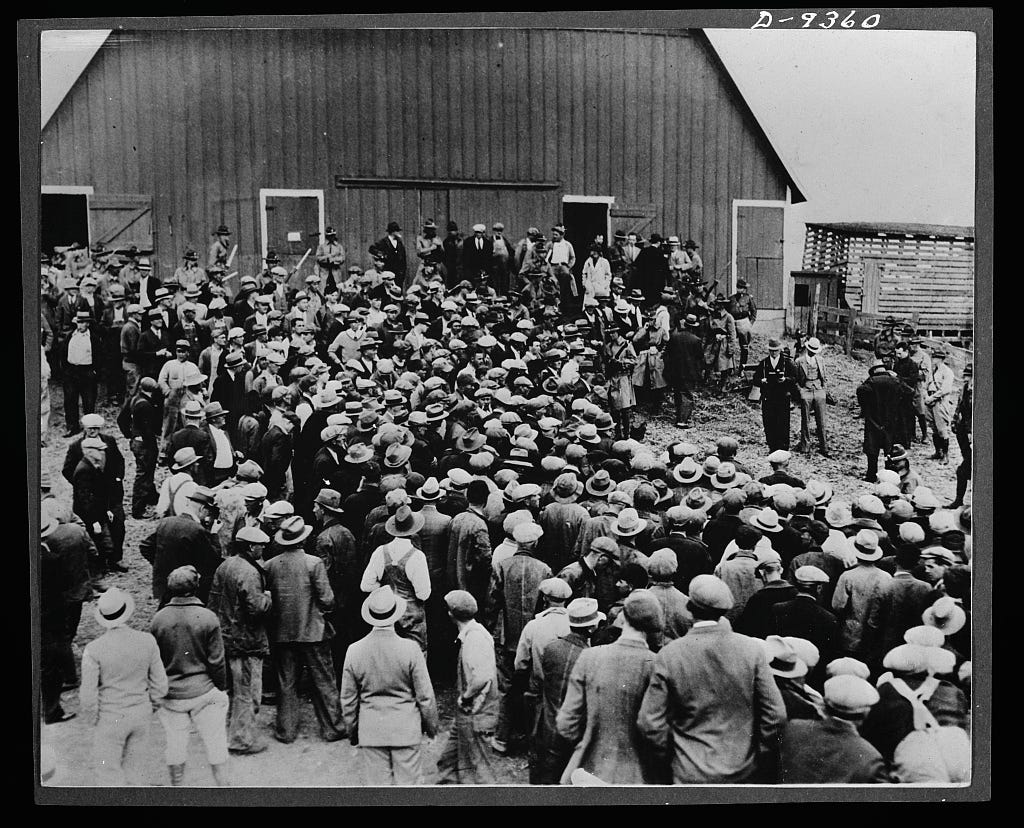
Act One. The Penny AuctionsNebraska, October 6, 1932. Five and a half miles southwest of Elgin, in the middle of farm country. Theresa Von Baum, a widow who worked her 80-acre farm with only the help of her sons after her husband’s death, couldn’t make the payment on her $442 mortgage. The bank moved to foreclose. The bank expected to make hundreds, or even thousands, of dollars for the farm.Nearly 3,000 farmers from Antelope and neighboring counties showed up at the Von Baum farm that day. They stood in silence. Waiting.The receiver, the bank’s man, wanted to reschedule. The farmers didn’t move. After some back and forth, the receiver finally backed down. The auction would proceed.The auctioneer started. Cows went for 35 cents apiece. Six horses sold for a total of $5.60. Plows, a hay binder, and a corn planter all brought just a few cents. Harvey Pickrel remembered it later: “Some of the farmers wouldn’t bid on anything at all - because they were trying to help the man that was being sold out.” When it was over, the farmers passed the hat among themselves. The total came to $101.02. They immediately returned the animals and equipment to Theresa Von Baum. Then the farmers handed the money to the receiver. He looked at the crowd. Probably counted heads. Probably decided that forcing the issue wasn’t likely to get him a cent more, and might get him a broken nose, or worse. He accepted the money as payment in full for the mortgage, got in his car, and drove back to town.People called them “penny auctions.” Others called them “Sears Roebuck sales,” because a penny was what you paid for something in a catalog. A joke price. This wasn’t for just one widow in Nebraska.In 1931, about 150 farmers showed up at another foreclosure auction, the Von Bonn family farm in Madison County, Nebraska. The first bid was five cents. When someone else tried to raise it, he was forcibly requested not to do so. Item after item got only one or two bids. The total proceeds were $5.35. The farmers expected the bank to accept this sum to pay off the loan. In Wood County, Ohio, on January 26, 1933, some 700 to 800 farmers stood out in the cold at Wally Kramp’s farm. Kramp owed $800 on a loan he couldn’t repay. He’d been hospitalized with appendicitis, and crop prices had collapsed. The farmers bid pennies on each item, then returned everything to Kramp on a 99-year lease. They passed the hat. Even the auctioneers donated their take from the sale. In some places, farmers threatened outsiders who might think about bidding with physical harm and death threats. These were not empty threats. This was happening all over the Midwest. There were maybe a dozen auctions a day in early 1933. Iowa, Nebraska, Wisconsin, Minnesota. Farmers who had paid their mortgages for ten, fifteen, twenty years, never missed a payment, were losing everything. The banks had structured the loans to fail when credit dried up.Before the 1930s, most mortgages in America were five to ten years, interest-only, with a huge balloon payment at the end. You paid the bank for years. Then you had to refinance the whole thing all at once. If you couldn’t roll it over, the bank took the farm. Or the house. When the economy crashed in 1929, banks stopped lending. In 1932, 273,000 people lost their homes to foreclosure. By 1933, banks foreclosed on more than 200,000 farms. Between 1930 and 1935, farmers lost a third of all American farms. Some communities didn’t take it quietly. It wouldn’t be the first time that farmers threatened nobles, even if they didn’t use pitchforks. And it wouldn’t be the last.Le Mars, Iowa. April 27, 1933. A Thursday afternoon. Judge Charles Clark Bradley, 54 years old, a bachelor with fifteen years on the bench, looked up from his desk at a rowdy crew shoving their way into his small courtroom. Some were farmers in ragged overalls. Others looked like ruffians from nearby Sioux City. They kept their hats on. Kept smoking. They’d come to demand that Judge Bradley suspend foreclosure proceedings until recently passed state laws could be considered. One farmer remarked that the courtroom wasn’t Bradley’s alone. Farmers had paid for it with their taxes. Judge Bradley refused. He said, “Take off your hats and stop smoking in my court room.”Next thing he knew, dozens of rough hands were mauling him. They yanked him off his bench and dragged him out to the courthouse lawn. “Will you swear you won’t sign no more mortgage foreclosures?” demanded a man with a blue bandana across his face. Judge Bradley’s quiet answer: “I can’t promise any such thing.” Someone struck him in the mouth. “Will you swear now?” The jurist toppled to his knees. His teeth felt loose but he managed to reply: “No, I won’t swear.” A truck rattled up. The men threw Judge Bradley into it. His kidnappers tied a dirty handkerchief across his eyes. The truck drove a mile out of town and stopped at a lonely crossroads. Again they asked the judge to sign no more foreclosures. Again he refused. They slapped and kicked, knocked him to the ground, and jerked him back to his feet. They tied a rope around his neck, the other end thrown over a roadside sign. They tightened the rope. Judge Bradley wheezed, thought they were killing him. “Now will you swear to sign no more foreclosure orders?” A man unscrewed a greasy hubcap from the truck and placed it on his head. Judge Bradley looked at them and said, “I will do the fair thing to all men to the best of my knowledge.” They pulled the noose tight. Just in time, a local newspaper editor arrived in his car and intervened. Judge Bradley refused to identify his assailants or press charges. Iowa Governor Clyde Herring called the attack “a vicious and criminal conspiracy and assault upon a judge while in the discharge of his official duties, endangering his life and threatening a complete breakdown of law and order.” He declared martial law in Plymouth County. He sent in three National Guard companies from Sioux City and a fourth from Sheldon. The case made the front page of the New York Times.Twelve days later, Governor Herring lifted martial law. Seven men were eventually tried for the attempted lynching. They got sentences ranging from one to six months. The penny auctions effectively forced the banks to release the property without an opportunity to be paid the balance of the loan. If the pennies didn’t clear the bank debt, the farmers physically threatened the bank officers. So legally, the farmer still owed. But practically, the system had broken down. With the beginning of Roosevelt’s presidency in 1933, creditors and debtors began to work together to refinance and resolve payment of delinquent debts. Between 1933 and 1935, twenty-five states passed farm foreclosure moratorium laws that temporarily prevented banks from foreclosing. The Federal Farm Bankruptcy Act of 1934 aimed to provide farmers with the opportunity to regain their land even after foreclosure.The penny auctions didn’t erase the debt. But they made normal foreclosure impossible. They created chaos. Mobs dragging judges out of courtrooms. Nooses at farm auctions. Armed farmers blocking highways. This chaos threatened domestic tranquility.That’s one of our six national goals outlined in the Preamble to the Constitution. “Insure domestic tranquility.” When hundreds of farmers are willing to lynch a judge to stop foreclosures, you no longer have domestic tranquility. You have the early stages of revolt.So the federal government had a choice.It could side with the lenders and use force to restore order. Send the National Guard to areas of interest. Arrest citizens. Or it could step in and redesign the system so that foreclosure wasn’t the only option when credit dried up.Roosevelt chose the second path.In 1934, Congress established the Federal Housing Administration (FHA) as part of the New Deal. The idea was simple. The government would insure mortgages for private lenders, which would get banks lending again. But FHA came with a condition. If the government was going to insure a mortgage, that mortgage had to be fair to the borrower. No more interest-only traps. No more time bombs. Every payment would include a portion of the principal. And the term had to be long. Initially, 15 years or more, later extended to 20, and eventually to 30. At the end of the term, the borrower would own the house free and clear. That was the deal. The government would step in to set conditions to make the housing market fair for Americans, and those loans would be designed to end. Designed to turn debt into property within a normal working life. Designed to make the borrower an owner, not just a lender from a bank. Someone with equity and security. Then, in 1938, Congress created Fannie Mae, the Federal National Mortgage Association, to buy those FHA-insured mortgages from banks and create a secondary market. They built the whole system around the principle that mortgages had a finish line achievable by working Americans in their lifetime.When government first stepped into housing finance, it used its power to limit how long the debt could last. Because the alternative, letting the old system grind on, meant more Judge Bradleys with ropes around their necks. More penny auctions. More bricks through windows. More breakdowns of law and order.The government stepped in on behalf of borrowers because not stepping in meant civil unrest.Fast forward to 2025.Today, we have the same basic structure. Now, there’s a new proposal.The White House and housing industry leaders are proposing a 50-year mortgage. It would cut your monthly payment by maybe $150. But because the term is longer, it would add hundreds of thousands in extra interest over the life of the loan. And, if you buy at 40, the current average age of a first-time homebuyer, you’re making your last payment at 90. Only about 25% of those who reach 65 live to be 90. Instead of using government power to shorten the road from debt to ownership, we are proposing to
Act 1. Andrew CarnegieIt’s 1892. Homestead, Pennsylvania.Andrew Carnegie pays his steelworkers an average of $1.68 a day. About $56 in today’s money. Twelve-hour shifts. Six days a week.The workers and their families shared rooms that smelled like smoke and steel dust. The beds were never cold because workers on different shifts all used them. They ate bread, onions, sometimes meat. The lucky ones had shoes that fit. Nutrition, sanitation, and health were poor. Workplace injuries were common.Meanwhile, Carnegie’s personal annual income in 1892 was approximately $25 million. That’s $830 million in today’s dollars. Per year.Here’s a simple question: Why didn’t he just pay the workers more?Not out of charity or kindness. Just pay them enough that they didn’t have to send their children to work at age ten. Pay them enough that they could afford doctors when they got injured. Pay them enough that their widows didn’t end up in poorhouses.Carnegie’s answer, laid out in his 1889 essay The Gospel of Wealth, was surprisingly direct. He argued that giving workers higher wages would be wasteful. Most workers lacked the judgment to use extra money wisely. They’d spend it on alcohol, gambling, and frivolous consumption. He wrote, “It were better for mankind that the millions of the rich were thrown into the sea than spent to encourage the slothful, the drunken, the unworthy.”Better, Carnegie said, to keep wages low, accumulate wealth, and then give it away strategically. To libraries or universities. Institutions that would uplift the deserving poor, not reward the undeserving.Were his workers not deserving? But in the case of Carnegie, it was also something deeper. A theory about the nature of giving. About the difference between waste and virtue.Let’s test the logic.In 1892, Carnegie Steel employed about 40,000 workers across all operations. If Carnegie had taken just $5 million of his $25 million annual income and distributed it evenly among those workers, each one would have received an extra $125 per year, about $4300 today.That’s not life-changing money. But it’s enough to buy winter coats for your kids. Enough to see a doctor instead of dying from an infected cut. Enough to not send your twelve-year-old to work in the mill.But Carnegie didn’t do that.Instead, over his lifetime, he gave away $350 million to build libraries, concert halls, and universities. He gave 2,811 libraries to communities. So here’s the next question: Why did he consider the second option virtuous, but the first wasteful?A worker who needs $2 a day to feed his family needs it whether you hand it to him on Friday or donate it to a library that his grandchildren might use.We all need heat in the house and food on the table. The need doesn’t change. Only the giver’s relationship to it does.There’s an old idea, older than Carnegie, older than America, that we owe two kinds of debts. Give to Ceasar what is Ceasar’s, and to God what is God’s. First, our debt to Ceasar. This debt is civic. What we owe to the state, to the community, to the infrastructure that makes our lives possible. Roads, courts, defense, clean water. We pool our resources to build what none of us can build alone.The other debt is moral. What we owe to each other as human beings. Compassion, dignity, the recognition that suffering is real and we have some responsibility to ease it.The civic debt is the price of civilization. We choose to escape chaos. We pay taxes because without a functioning state, there is no property to protect, no contracts to enforce, no prosperity to enjoy.The moral debt is civic friendship, the sense that we share a common life and therefore share some responsibility for each other’s welfare. Our neighbors. Communities. Churches. For most of human history, these debts lived in separate accounts.We paid taxes to keep the state running. We gave alms to benefit those around us in our communities.One was mandatory. One was voluntary. One was civic duty. One was personal virtue. They didn’t compete with each other.But then something changed.By the late 1800s, charity wasn’t just feeding a beggar on the street corner anymore. It was building hospitals. Funding schools. Running orphanages. Feeding entire cities during economic panics.And government wasn’t just maintaining roads anymore. A series of economic depressions and rapid industrial revolution brought a dramatic increase in individual and community needs. People started to ask: What if the state could do what charity does, but bigger, more reliably, for everyone? Suddenly, the two debts started to overlap. State duty, and civic duty, blended together. Blending the two brought philosophical questions. If the government funds hospitals through taxes, do we still need to donate to hospitals?If the state provides old-age pensions, does that make personal charity for the elderly obsolete?If the government takes care of the poor through mandatory taxes, does that rob us of the opportunity to be virtuous?There’s an argument that an act is only morally praiseworthy if it’s done freely, out of genuine choice, not out of compulsion. That we should voluntarily give in secret. By that logic, paying taxes to fund welfare isn’t a moral act. It’s just compliance.But choosing to donate to a soup kitchen is virtue. Proof of your moral character.Carnegie never framed it in philosophical terms, but his entire worldview rested on keeping those two debts separate.The civic debt, what we owe the state, should be minimal. Low taxes, limited government, just enough to keep order and protect property.The moral debt, what we owe our fellow man, should be voluntary, personal, strategic. We give when and how we see fit. And most importantly: the moral debt is where virtue lives.But there’s a problem with this framework: it only works if we assume that our wealth is our own to begin with.What if our wealth is civic obligation? What if the wages we don’t pay, the safety equipment we don’t buy, the unions we crush, weren’t private business decisions? What if they are civic failures?Then our philanthropy isn’t generosity. We are just hurting our neighbors in the name of virtue. Americans donate about $500 billion to charity every year. That’s 2% of GDP.Meanwhile, we spend about $3.7 trillion on what we call government social programs. These are programs like Social Security, Medicaid, SNAP, and housing assistance. That’s roughly 12% of GDP.Americans prefer smaller government and lower taxes, but at the same time support programs like Social Security and Medicare. So the tension isn’t really about whether government should help people, but about how we want to frame that help, and whether we get credit for it. It’s not because charity is more efficient. Government programs have competitive or lower costs than private charities. Medicare’s administrative costs are competitive or better than private health insurance overhead at 12-18%.It’s not because charity reaches more people. SNAP alone feeds 42 million Americans. Feeding America’s charity network serves about 50 million people annually, including 12 million children and 7 million seniors. One program doesn’t dwarf the other.So is charity better? Some are convinced that only voluntary giving counts as virtue. Paying taxes, even if that money feeds hungry children, is obligation. Donating to a food bank is morality.Same outcome. Different emotional accounting.There’s research on this from blood donation systems. When you compare voluntary donation to paid systems, people value their donated blood more highly.The gift matters because it is a gift. Payment turns a moral act into a transaction.We do the same thing with charity versus taxes. Taxes feel like payment for services. Charity feels like a gift. And we reserve our sense of virtue for the gift.When Carnegie built his libraries, he put his name on them.Not only because he was vain. He sought to demonstrate personal virtue. To show that he, Andrew Carnegie, chose to help. Nobody builds a library with their tax dollars and gets a plaque.June 1892. Carnegie’s workers go on strike. They’re not asking for charity. They’re asking for wages. Enough to live on, enough to not watch their children work twelve-hour shifts in a steel mill.Carnegie refused.We celebrate Carnegie for philanthropy. But paying fair wages wasn’t charity. It was obligation. It’s what he owed workers for their labor. But he thought his workers would just waste their money. He wanted to give, on his terms, in his time, to causes he deemed worthy. Carnegie told himself his wealth was earned purely through genius. His philanthropy let him keep believing that lie. July 6th. Henry Clay Frick, Carnegie’s right-hand man, brought in 300 armed Pinkertons. The battle lasted fourteen hours. Ten men died.He breaks the strike. Destroys the union.And twenty-seven years later, Andrew Carnegie died having given away $350 million to libraries, universities, and concert halls.We remember Carnegie, the philanthropist. We forget Carnegie, the draconian union-buster.Carnegie proved at Homestead that charity alone doesn’t work.When helping people is voluntary, some people simply don’t get help.Carnegie chose libraries over living wages. He chose concert halls over safety equipment. He chose universities over unions.He decided who deserved help, and his workers didn’t make the list. Charity only works when people feel generous, and Carnegie didn’t feel generous toward the men who made him rich.So forty years later, when the Great Depression hit and the soup lines stretched around the block, America made a different choice.We pivoted. If charity fails when it’s voluntary, maybe helping our neighbors needs to be mandatory.Act 2. The New DealIt’s October 28, 1929. The stock market crashes. By mid‑November the market surrendered half its value. It took twenty-five years and twenty-five days, an entire generation, to recover. Only on November 23, 1954, did the Dow Jones Industrial Average climb bac
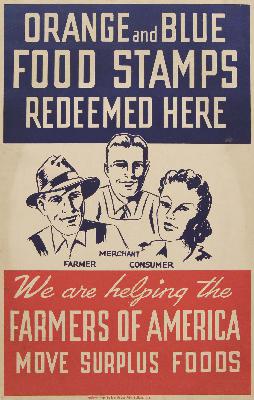
Act 1. The First Food StampScene One: May, 1939. The Machinist and the SurplusOn the morning of May 16, 1939, Ralston Thayer stood first in line at Rochester, New York’s old post office. He was thirty-five years old. A machinist. A veteran of the Great War. He had been out of work for nearly a year. Newspaper reporters crowded around him. Photographers jockeyed for position. Thayer was making history, and they wanted a piece of the action. He walked up to the cashier window and handed over four dollars from his latest unemployment check. The clerk gave him four dollars in orange stamps and two dollars in blue stamps, free. The orange stamps could buy any food. The blue stamps could only buy whatever the Agriculture Department declared surplus. Eggs nobody wanted. Butter that wasn’t selling. The stuff farmers couldn’t move because nobody could afford to buy it. Grocers could exchange the food stamps of both colors at the bank for real dollars. The banks would then redeem the stamps with the US Treasury. Ralston Thayer became the first food stamp recipient in American history.Throughout that day, thousands of Rochester residents did as Thayer had done. They handed over cash and got back more purchasing power than they’d walked in with. That afternoon, they flooded the grocery stores with their crisp new booklets of orange and blue stamps. The grocers couldn’t believe their luck. By December, they were ecstatic. The government had sold more than a million dollars’ worth of orange stamps in Rochester alone. That meant hundreds of thousands in free blue stamps pumped directly into hundreds of grocery stores. It was a welfare program for retailers and banks as much as for families. But the question nobody asked in 1939 was why: Why was Ralston Thayer hungry?It wasn’t because there wasn’t enough food. American farms were producing too much food. The government was purchasing massive amounts of crops, transporting them, storing them, distributing them. The surplus was so large they didn’t know what to do with it. The grocery stores were full. The problem wasn’t scarcity.The problem was that the economic system had stopped working. The Depression had destroyed demand. Thayer had worked as a machinist his entire adult life. He had fought in France. He had skills, experience, discipline. Then the Depression hit, and the work vanished. Not because he was lazy. Not because he lacked ability. The entire circular flow of the economy had frozen solid.Three problems. Farm surpluses nobody could sell. Grocery stores with weak sales. Hungry citizens with seventeen percent unemployment.So the government created a solution. Tax citizens. Use that money to buy surplus crops from farmers. Give stamps to the needy. Let grocery stores profit from the influx of purchasing power. Then, banks could exchange the food stamps of both colors at the Treasury for real dollars. Supporters estimated the program would increase grocery sales by two hundred fifty million dollars a year. The grocers loved it. The banks loved it. The farmers loved it. Congress loved it. The surplus problem was solved.It was a brilliant emergency response. And it was temporary. Everyone knew it was temporary.The first Food Stamp Program lasted four years. From 1939 to 1943, it reached millions of Americans in half the country. Four million people at its peak.Then it ended. Not because Congress acted to end it. Because the conditions that created it disappeared. By 1943, America’s response to World War II had created full employment. Wages rose. People could afford food again.Many vilify President Franklin D. Roosevelt for his social programs. After all, he began food stamps in 1939. But President Franklin D. Roosevelt also ended them in 1943. Not because they didn’t work, and not by executive order. They ended because his administration made them no longer necessary. The economy had recovered. People had work. That work paid enough to buy food. The emergency was over. FDR restored the ancient principle that by the sweat of your face, you shall eat bread. This is the decisive point relevant to today. Ending food stamps is possible when people have jobs that pay enough to buy food. When workers could earn living wages, food stamps weren’t necessary. The government didn’t need to redistribute property through taxation because workers’ labor produced property. They could eat from the sweat of their brow. When we mix our labor with the dirt, what we create becomes ours. The Constitution protects this. Work and eat. Your labor produces your sustenance. It is the most basic property right in human civilization. Scene Two: 1961–1964. The ReturnBut then the food stamp program came back.President Kennedy revived the program in 1961. On May 29, Mr. and Mrs. Alderson Muncy of Paynesville, West Virginia, became the first recipients. They bought ninety-five dollars in food stamps for their fifteen-person household. Their first purchase was a can of pork and beans.Why did food stamps come back? Kennedy had campaigned in West Virginia and Appalachia. He was appalled by what he saw. Children in poverty. Families living on surplus lard and corn meal. But those families weren’t living on lard and corn meal because there was a famine. This wasn’t the Depression. The national economy was growing. Unemployment was falling. The problem wasn’t that the entire economic system had collapsed. The problem was that prosperity wasn’t reaching everyone. Entire regions had been left behind.President Johnson signed the Food Stamp Act of 1964 and declared it would be one of the most valuable weapons for the war on poverty. Johnson’s choice of the word ‘war’ is interesting. War is the continuation of politics with other means. Everything in war is simple, but even the simplest thing is difficult. A simple goal. Eliminate poverty. The challenge is setting conditions for success when you know that success will be fleeting. Victory is temporary. People adapt. Conditions change. So you set limited, measurable, achievable objectives. You define what winning looks like. You establish the conditions that will allow you to declare victory and go home.FDR understood this. His food stamp program had a clear objective: keep people from starving during an economic collapse. The conditions for success were equally clear: full employment and rising wages. When America met those conditions, the program ended. Mission accomplished.Johnson declared a war on poverty but never defined victory. No conditions for winning. No way to know when the war could end. We have never tried to figure it out.If we don’t set conditions for success, temporary relief becomes permanent. If we don’t define victory, emergency becomes normal. If we don’t make and achieve limited objectives, war becomes endless.That’s what happened to Johnson’s war on poverty.Scene Three: Today’s Constitutional FailureMore than sixty years later, we call the food stamp program SNAP. SNAP reaches forty-one million people nationwide. Ten times the peak participation of the original program. Half of American children will rely on food assistance at some point during childhood.Ralston Thayer needed food stamps because unemployment hit seventeen percent and the Depression destroyed the economy. What’s our excuse now?The problem in 1939 was no work. The problem now is work that does not pay.Ralston Thayer could not find a job. Today’s SNAP recipients have jobs. They work forty hours a week. They stock shelves at Walmart. They flip burgers at McDonald’s. They go to work, they sweat, they come home exhausted. But they can’t afford to buy food.A 2020 government report found that 70% of SNAP recipients worked full-time. The government still redistributes property through taxation. Grocery stores still profit. But now corporations benefit from cheap labor subsidized by taxpayers instead of unemployment checks.Businesses are not the villain here. They are doing exactly what businesses are supposed to do. Maximize profits within the rules Congress sets. The problem is the rules Congress set. Let’s follow the money. Businesses pay wages competitive enough to attract workers. Workers apply for SNAP. Taxpayers fund the benefits and support business wages. Workers spend SNAP benefits at businesses.This is not business corruption. This is the system working exactly as Congress designed it. Congress created the conditions where paying low wages and relying on SNAP makes perfect business sense. Any rational business would do the same.This is not a market failure. This is a constitutional failure.When a man works and cannot eat from the sweat of their brow, someone is stealing his property. The question is who.Act 2: The Government’s DutyThe answer begins with an agreement made before there were governments.Even before Adam and Eve, hands blistered from work, and children’s bellies ached for food that depended on that work. When we work, we are entitled to the bread we create. The oldest law of life itself. Older than the Ten Commandments by maybe fifty thousand years. This human condition is the foundation of all property rights. You own yourself. You own your labor. When you mix your labor with the world, what you create belongs to you. The American Founders built this philosophy into the Constitution.The Fifth Amendment says government cannot take your property without due process of law. The Fourteenth Amendment extends this protection against the states. But … what is property?Most people think property means things. Your house. Your car. Your land. The Founders saw it more deeply. James Madison, more responsible for the US Constitution than any other, wrote that a person has property in their opinions, in their religious beliefs, in the safety of their person. And most importantly, they have property in their labor.Your labor is yours. The wages you earn through that labor are your property. This is not a metaphor. It’s constitutional law. When you work, you are exercisin
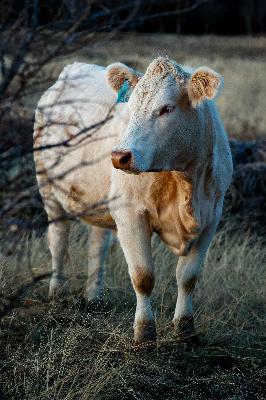
A president offers to buy beef from a country we just bailed out. Argentina. American ranchers call it betrayal. Economists say it won’t lower prices. Everyone calls it stupid.But that same country just sold seven million tons of soybeans to China instead of us. And three-quarters of their beef exports go to China. And we just gave them twenty billion dollars. And their president is our president’s ideological ally.Maybe it’s not about beef. Maybe it’s about China.But the ranchers still get hurt. The consumers still don’t see lower prices. And we don’t know if Argentina will actually pivot away from China, or just take our money and keep selling to Beijing. Maybe we weaken China’s food supply. Or maybe we just weaken our own ranchers.So…Should American cattle ranchers sacrifice for China?Act 1. Nixon and the Beef Freeze: When Politics Meets MarketsMarch 29, 1973.President Richard Nixon had a problem.Actually, he had several problems. The Senate had just voted 77-0 to investigate Watergate. The cover-up was unraveling. John Dean was about to flip. Dean knew he was going to be the scapegoat in the scandal and chose to cooperate with investigators to save himself. But today, right now, the problem was beef.Beef prices were up 20% in three months. Housewives organized boycotts. One woman in Chicago told reporters she was pricing hamburger like filet mignon. Another said her family had switched to beans and rice.Fifty million people joined them. The largest consumer protest in American history.The evening news showed empty shopping carts and angry voters. Walter Cronkite was covering it. Which meant everyone was seeing it.Nixon’s economists told him to let the market work, and it would self-correct. George Shultz at Treasury. Herbert Stein at the Council of Economic Advisers. They said this was a supply problem. Bad weather. Reduced corn harvest. Feed costs up. Drought in the Southwest meant fewer cattle. Higher prices would drive the market to adjust and incentivize production. Give it time.But Nixon wasn’t interested in time. He was interested in the evening news.He’d already broken with Republican orthodoxy in 1971. Imposed wage and price controls. First peacetime controls in American history. Froze wages. Froze prices. Took the dollar off gold. His Treasury Secretary, John Connally, had sold him on it. 5% inflation doesn’t produce great election results. The controls had worked politically. Nixon won 49 states.But by early 1973, the controls were creating problems everywhere. Shortages here. Surpluses there. The price system was breaking down. Nixon didn’t care. Controls were decisive. Presidential. You announce something and prices stop going up. At least for a while. At least long enough.On March 29, Nixon made his decision.He would freeze beef prices. No more increases. Prices were locked at current levels. Which were already at record highs. The freeze would last indefinitely.Shultz and Stein thought it was madness. You can’t freeze one price in a market economy. Everything is connected. Freeze beef and you’ll create chaos.Nixon announced it anyway.The Ranchers RespondThe cattlemen understood the economics immediately.If beef prices were frozen but feed costs kept rising, you lost money every day you fed a steer. The math was simple. The response was simpler.Stop selling cattle.“Ranchers stopped shipping their cattle to the market, farmers drowned their chickens, and consumers emptied the shelves of supermarkets.”Within days, cattle auctions reported volume dropping. Thirty percent. Then forty. Then fifty. Ranchers held cattle off the market. Some waited. Others started culling herds. Selling breeding stock they’d normally keep. Getting out entirely.The packers had fewer cattle to process. They ran plants below capacity. Sent workers home. The cattle they did get, they couldn’t make money on. Frozen prices. Rising costs.Then came the shortages.Empty Meat CasesBy mid-April, grocery stores across the country had no beef.The beef that existed was lower quality. More hamburger. Less steak. Ranchers were liquidating herds instead of finishing premium cattle. Some stores limited purchases. Two pounds per customer. Others had empty display cases.Nixon had promised to solve high beef prices. Instead, he’d created beef shortages.The evening news showed housewives staring at empty meat counters. Before, they could buy beef, even if it was expensive. After the controls, there was no beef to buy at any price.The black market appeared fast. Ranchers who’d held cattle sold directly to restaurants. To butcher shops willing to pay above the frozen price. Cash transactions. Off the books. The official market was frozen. The actual market found a way.Restaurants got squeezed the worst. They couldn’t raise menu prices because of the controls. But their costs kept rising as they competed for scarce beef. Some switched to chicken. Others reduced portions. A few high-end steakhouses closed.Washington ReactsThe American National Cattlemen’s Association flooded Washington with members. Their argument was simple. They called Nixon’s approach “The Wreck.” The freeze was destroying the industry. Ranchers were losing money every day. If it continued, there would be massive liquidation. Breeding stock slaughtered. Herds dispersed. Ranchers bankrupt. Years to rebuild.The National Farmers Union backed them. Farm-state Senators backed them, Republican and Democrat alike.Senate Agriculture Committee Chairman Herman Talmadge of Georgia called it the most short-sighted agricultural policy since Smoot-Hawley.The data supported them. Cattle slaughter was up 15% as ranchers liquidated. But beef production was falling. Ranchers were slaughtering younger, lighter animals instead of finishing them. More cattle killed. Less beef produced.Nixon’s political calculus was failing. The freeze was supposed to show action. Instead, it showed incompetence. Empty meat cases were worse than high prices.The ReversalSeptember 12, 1973. Five months after the freeze.Nixon lifted it.He didn’t call it a reversal. The announcement said the freeze had “served its purpose.” That “market conditions now warrant” flexible pricing.Everyone knew what happened. The policy failed.Beef prices immediately shot up. Higher than before the freeze. Pent-up demand. Disrupted supply chains. Liquidated herds reduced future supply.By year’s end, beef prices were 30% higher than when the freeze began.The freeze hadn’t stopped inflation. It deferred it and made it worse.The Long DamageBut the real damage took years to show.Cattle don’t turn on and off. A cow has one calf a year. That calf takes time to mature. If you’re building your herd, you keep the female calves so they can grow up and have calves of their own. Half your calves don’t go to market.When ranchers liquidated in 1973, they sold breeding stock. Fewer calves in 1974. Fewer yearlings in 1975. Fewer finished cattle in 1976.The hole in the pipeline lasted into the late 1970s. Prices stayed volatile. The cattle industry lost trust in government. They didn’t have much to lose.When Carter’s Agriculture Secretary tried cattle programs in 1977, ranchers told Washington to stay out.What Nixon Was Playing ForNixon froze beef prices for one reason: Political theater. He wanted the evening news to show him taking action on inflation. He wanted housewives to see a president who cared about grocery prices. He wanted voters to stop being angry.There was no strategy beyond that. No long-term economic plan. No foreign policy objective. No national security consideration.Just make the political problem go away before the next election.It didn’t work. Not even politically. The shortages were worse than the high prices. The reversal looked weak. The long-term damage was real.The LessonMarkets work, or they don’t. Agriculture markets are mature and connected.You can’t freeze one price without creating chaos everywhere else. You can’t solve a supply problem by controlling prices. You can’t make political time match cattle cycle time.Nixon sacrificed the cattle industry for short-term politics. He ended up with empty meat cases, angry ranchers, and a disrupted market that took years to fix.Fast Forward to 2025President Trump is proposing to use beef imports to lower prices. American ranchers are furious. Economists say it won’t work. People are calling it Nixon all over again.But there’s a difference.Nixon had no strategic objective beyond the next news cycle. What if Trump does? What if this isn’t about beef prices at all? What if it’s about China?Argentina just sold seven million tons of soybeans to China instead of us. China buys three-quarters of Argentine beef. We just gave Argentina twenty billion dollars. Their president is our ideological ally.What if the beef import offer is really about pulling Argentina out of China’s orbit? What if we’re trying to become their agricultural market so they don’t need Beijing? What if this is an attempt at strategic positioning disguised as price policy?Then it’s different than Nixon’s play. It’s something else.But American ranchers still get hurt, because cattle profits need to be high to rebuild herds. Consumers don’t see lower prices. And we don’t know if Argentina will pivot to America or just take our money and keep selling to China.Nixon sacrificed the rancher for politics and got nothing.Trump might be sacrificing the rancher for strategy. But what if the strategy doesn’t work? What if Argentina takes the bailout, accepts the beef deal, and keeps selling to Beijing anyway?Then we’ve disrupted our own cattle industry. For nothing. Again.The question stands: Should American cattle ranchers sacrifice for China?And the tougher question beneath it: What if they sacrifice and we still lose?Act 2. US Beef MarketsUS beef prices are at record highs. Steak prices are up 17% year-over-year. Ground beef up 13%. Beef roasts up 14%. USDA projects beef and veal prices will rise 12% in 2025, compared to less t
A successful elk season has come and gone. Elk season isn’t just about the harvest, or packing heavy loads out of the mountains, though those activities are often involved.Elk season is communion. With the mountain, and with each other. It’s a time of remembrance. Checking on kids and wives. Eating and drinking together. You might hunt with someone you see often, or someone you haven’t seen in ten years.Nearly every hunter in the camps I frequent is a veteran. We tell old war stories, curse aging, lament losses. We help each other hunt. We carry heavy loads on our backs for each other. We share food, water, motivation.This year, like most years, military service comes up. Every member is proud to have served. Proud of the combat capability we generated for America.But we also talk about what’s changing. Fewer kids can pass a military physical. Fewer towns send their sons and daughters to serve. The gap between those who defend America and those who benefit from it keeps widening.So this week we’re sharing three stories we talked about in camp this year. Stories about opportunity, about standards, about the investment required to maintain both. No old personal war stories though. To hear those, you have to come to camp. The Story of Audie MurphyJune 1925. Hunt County, Texas. Audie Leon Murphy is born in a sharecropper’s shack outside Kingston. And when I say shack, I mean it had a dirt floor. No electricity. No running water. His father, Pat Murphy, was a sharecropper who worked other men’s land for a cut of the cotton crop. His mother, Josie, bore twelve children. Nine survived infancy.The Depression hits Texas like a hammer. Pat Murphy starts disappearing, for days at first, then weeks. He’s drinking, chasing work that doesn’t exist, abandoning his family in slow motion. Audie is the sixth child, small for his age, but he becomes the provider. At age twelve, he’s dropping out of school to pick cotton. A dollar a day if he’s fast. He hunts rabbits and squirrels with a borrowed rifle to keep his siblings fed. He becomes an excellent shot because he has to be. Every missed shot is a missed meal.Audie is sixteen. His mother dies of complications from malnutrition, exhaustion, and poverty. The family disintegrates. The younger children are farmed out to relatives and an orphanage. Audie and his older brother pick cotton and sleep in barns to survive. Pat Murphy is long gone, fully vanished now. Audie weighs maybe 110 pounds. He looks barely fourteen.December 7, 1941. Audie Murphy decides to enlist. He’s seventeen, has a fifth-grade education, and weighs 112 pounds soaking wet. He tries the Marines first. The recruiter takes one look at this skinny kid with hollow cheeks and laughs him out of the office. “Come back when you’ve grown some, son.”He tries the paratroopers. Rejected. Too small.He tries the Navy. Rejected.His sister helps him falsify his birth certificate to prove he’s eighteen. He tries the Army. June 1942. The recruiter is skeptical, but the Army needs bodies. They take him. Private Audie Murphy. 112 pounds. Five-foot-five. Baby-faced. Assigned to the 15th Infantry Regiment, 3rd Infantry Division.They ship him to North Africa in 1943. Then Sicily. Then Italy. The kid can shoot! Everyone notices immediately. He’s calm under fire in a way that unnerves the older soldiers. No hesitation. At Anzio, he kills two Italian officers attempting to escape, drops them both at distance with a carbine. His platoon sergeant gets wounded. Murphy takes over, leads the men through German positions, takes prisoners. He’s nineteen years old.Southern France, 1944. The 3rd Division lands at Saint-Tropez, pushes north. Murphy’s collecting medals now. Bronze Star, then another. Silver Star. His superiors keep promoting him. Corporal. Sergeant. Staff Sergeant. He’s still barely old enough to vote. His friends keep dying. He keeps replacing them, learning their names, watching them die, replacing them again.One night in the Vosges Mountains, Murphy’s best friend, a man named Lattie Tipton, gets killed by German machine gun fire, cut nearly in half. The Germans had been waving a phony white flag of surrender. His death hardens Murphy. By late 1944, Murphy has a Distinguished Service Cross and battlefield commission to Second Lieutenant. The sharecropper’s son from the dirt-floor shack is now an officer. He’s twenty years old and has personally killed approximately 240 enemy soldiers, though he doesn’t brag about it, doesn’t talk about it much at all.January 26, 1945. The Colmar Pocket, Alsace, France. Temperature near zero. Murphy’s company of 128 men gets orders to hold a position near the town of Holtzwihr against a German counterattack. Six Panzer tanks. Over 250 infantry. Murphy has about 40 effective soldiers left; the rest are wounded or dead.The Germans attack. Murphy orders his men to fall back to the woods. He stays forward with his artillery observer to direct fire. A German tank shell hits an American M10 tank destroyer near Murphy’s position. It catches fire, ammunition cooking off. The artillery observer is wounded and runs. Murphy is alone.He climbs onto the burning M10.Understand that the tank destroyer is on fire. Fuel tanks could explode any second. The Germans can see him, one man, silhouetted against burning metal. He grabs the M2 Browning .50 caliber machine gun mounted on the turret. It’s loaded.For the next hour, Audie Murphy stands on a burning tank destroyer and kills Germans.He’s wounded in the leg but ignores it. The radio headset lets him call fire missions to his artillery battery while he’s shooting. German infantry gets within ten yards. He kills them. The Panzers fire at him and miss. He swivels the .50 cal, rakes their supporting infantry, calls in artillery to adjust fire onto the tanks. Rounds are snapping past his head. The tank destroyer is still burning under his feet.Finally, his ammunition gone, Germans retreating, Murphy climbs down. He walks back to his men. Refuses medical attention until he’s reorganized the defensive line. The citation for his Medal of Honor says he killed or wounded approximately 50 German soldiers during that hour. Some historians think it was more.The war ends three months later.Audie Murphy, now Lieutenant Murphy, became the most decorated combat soldier of World War II. Twenty years old, three Purple Hearts, and the Medal of Honor.The Army sends him on a publicity tour. Life Magazine does a spread. In Hollywood, he meets James Cagney, who suggests Murphy try acting. He’s got the face for it, still baby-faced, unthreatening. Universal Pictures offers a contract.Murphy uses his GI Bill benefits to take acting lessons. He’s awkward at first, uncomfortable with the attention. But he works. Makes his first film in 1948. Over the next two decades, he appears in forty-four films, mostly westerns. In 1955, he plays himself in “To Hell and Back,” adapted from his memoir. It becomes Universal’s highest-grossing film until “Jaws” twenty years later.The military gave Audie Murphy what poverty never could. Training, discipline, purpose, opportunity. He buys a house in California. Invests in oil wells and breeding horses. Brings his siblings out of Texas, sets them up, breaks the generational cycle. The sharecropper’s children become middle-class Americans.But Murphy never pretends military service is easy or cost-free.He has nightmares. Sleeps with a loaded pistol under his pillow. His first marriage collapses; his wife says he wakes up screaming and unreachable. He struggles with what we now call PTSD, what they called “battle fatigue” or “shell shock” then. The VA doesn’t know how to treat it. Most veterans don’t talk about it.Murphy talks about it.He testifies before Congress. Uses his celebrity to advocate for veterans with psychological wounds. Pushes for better VA funding, better mental health care, better recognition that war doesn’t end when the shooting stops. He’s open about his own struggles in ways that are radical for the 1950s and ‘60s. A Medal of Honor recipient admitting he’s damaged, that he needs help.May 28, 1971. Murphy is flying from Atlanta to Virginia in a private plane. Bad weather. The plane crashes into Brush Mountain near Roanoke, Virginia. Audie Murphy dies on impact. He’s forty-six years old.They bury him at Arlington National Cemetery with full military honors. His grave: Section 46, Grave 366-11, becomes the second most-visited site at Arlington after President John F. Kennedy’s. People still leave medals, coins, flowers. They leave notes thanking him.From a dirt-floor shack in Hunt County to Arlington. From a dollar a day picking cotton to Captain. From fifth-grade dropout to college courses on the GI Bill. From generational poverty to homeowner, breadwinner, advocate.The military didn’t just give Audie Murphy a paycheck. It gave him a ladder. And he climbed it all the way to the top.Murphy’s story isn’t unique in American history. The military has always been the most reliable ladder out of poverty America offers. Training. Discipline. Purpose. Healthcare. Education benefits. A path to homeownership. A chance to break the cycle.Nearly every veteran has some version of Murphy’s story. Maybe not Medal of Honor level, but the same trajectory: grew up poor, served, came out qualified for something better. The GI Bill. VA home loan. Skills that translate to civilian work. A network of people who’ve supported you along the way.The men around the fire this year talked about this openly. The financial benefits. The medical coverage their families needed. The education they couldn’t have afforded otherwise. The home they were able to buy. None of them are ashamed of it. They earned it. They carried loads, literal and metaphorical, that many Americans will never carry.But there’s a disconnect. We know this ladder works. We are living proof that it works. But back home, many of us see generational poverty, families stuck on social programs for decades,

Comments

Download from Google Play

Download from App Store
 United States