


Are Food Stamps Theft?
Description
Act 1. The First Food Stamp
Scene One: May, 1939. The Machinist and the Surplus
On the morning of May 16, 1939, Ralston Thayer stood first in line at Rochester, New York’s old post office. He was thirty-five years old. A machinist. A veteran of the Great War. He had been out of work for nearly a year.
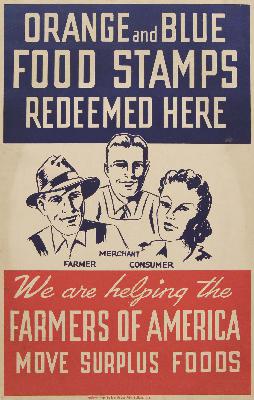
Newspaper reporters crowded around him. Photographers jockeyed for position. Thayer was making history, and they wanted a piece of the action. He walked up to the cashier window and handed over four dollars from his latest unemployment check. The clerk gave him four dollars in orange stamps and two dollars in blue stamps, free.
The orange stamps could buy any food. The blue stamps could only buy whatever the Agriculture Department declared surplus. Eggs nobody wanted. Butter that wasn’t selling. The stuff farmers couldn’t move because nobody could afford to buy it. Grocers could exchange the food stamps of both colors at the bank for real dollars. The banks would then redeem the stamps with the US Treasury.
Ralston Thayer became the first food stamp recipient in American history.
Throughout that day, thousands of Rochester residents did as Thayer had done. They handed over cash and got back more purchasing power than they’d walked in with. That afternoon, they flooded the grocery stores with their crisp new booklets of orange and blue stamps. The grocers couldn’t believe their luck. By December, they were ecstatic. The government had sold more than a million dollars’ worth of orange stamps in Rochester alone. That meant hundreds of thousands in free blue stamps pumped directly into hundreds of grocery stores. It was a welfare program for retailers and banks as much as for families.
But the question nobody asked in 1939 was why: Why was Ralston Thayer hungry?
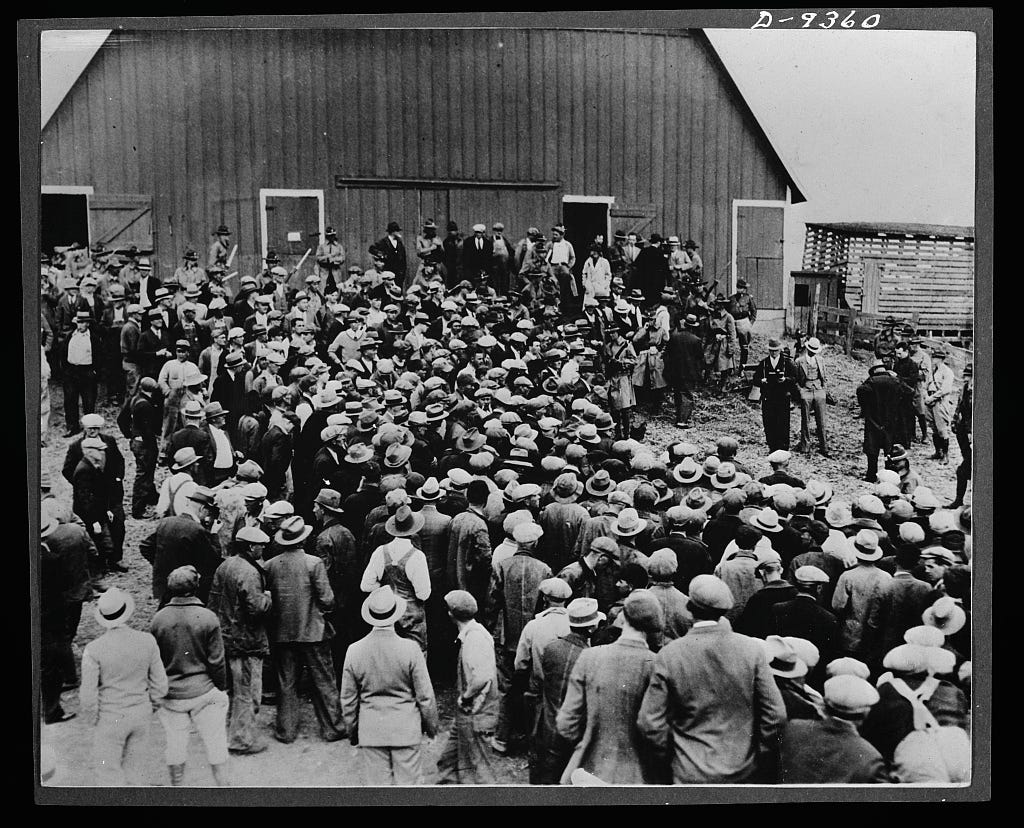
It wasn’t because there wasn’t enough food. American farms were producing too much food. The government was purchasing massive amounts of crops, transporting them, storing them, distributing them. The surplus was so large they didn’t know what to do with it. The grocery stores were full. The problem wasn’t scarcity.
The problem was that the economic system had stopped working. The Depression had destroyed demand. Thayer had worked as a machinist his entire adult life. He had fought in France. He had skills, experience, discipline. Then the Depression hit, and the work vanished. Not because he was lazy. Not because he lacked ability. The entire circular flow of the economy had frozen solid.
Three problems. Farm surpluses nobody could sell. Grocery stores with weak sales. Hungry citizens with seventeen percent unemployment.
So the government created a solution. Tax citizens. Use that money to buy surplus crops from farmers. Give stamps to the needy. Let grocery stores profit from the influx of purchasing power. Then, banks could exchange the food stamps of both colors at the Treasury for real dollars.
Supporters estimated the program would increase grocery sales by two hundred fifty million dollars a year. The grocers loved it. The banks loved it. The farmers loved it. Congress loved it. The surplus problem was solved.
It was a brilliant emergency response. And it was temporary. Everyone knew it was temporary.
The first Food Stamp Program lasted four years. From 1939 to 1943, it reached millions of Americans in half the country. Four million people at its peak.
Then it ended. Not because Congress acted to end it. Because the conditions that created it disappeared. By 1943, America’s response to World War II had created full employment. Wages rose. People could afford food again.
Many vilify President Franklin D. Roosevelt for his social programs. After all, he began food stamps in 1939. But President Franklin D. Roosevelt also ended them in 1943. Not because they didn’t work, and not by executive order. They ended because his administration made them no longer necessary. The economy had recovered. People had work. That work paid enough to buy food. The emergency was over.
FDR restored the ancient principle that by the sweat of your face, you shall eat bread.
This is the decisive point relevant to today. Ending food stamps is possible when people have jobs that pay enough to buy food.
When workers could earn living wages, food stamps weren’t necessary. The government didn’t need to redistribute property through taxation because workers’ labor produced property. They could eat from the sweat of their brow.
When we mix our labor with the dirt, what we create becomes ours. The Constitution protects this. Work and eat. Your labor produces your sustenance. It is the most basic property right in human civilization.
Scene Two: 1961–1964. The Return
But then the food stamp program came back.
President Kennedy revived the program in 1961. On May 29, Mr. and Mrs. Alderson Muncy of Paynesville, West Virginia, became the first recipients. They bought ninety-five dollars in food stamps for their fifteen-person household. Their first purchase was a can of pork and beans.
Why did food stamps come back? Kennedy had campaigned in West Virginia and Appalachia. He was appalled by what he saw. Children in poverty. Families living on surplus lard and corn meal. But those families weren’t living on lard and corn meal because there was a famine.
This wasn’t the Depression. The national economy was growing. Unemployment was falling. The problem wasn’t that the entire economic system had collapsed. The problem was that prosperity wasn’t reaching everyone. Entire regions had been left behind.
President Johnson signed the Food Stamp Act of 1964 and declared it would be one of the most valuable weapons for the war on poverty.
Johnson’s choice of the word ‘war’ is interesting. War is the continuation of politics with other means. Everything in war is simple, but even the simplest thing is difficult.
A simple goal. Eliminate poverty. The challenge is setting conditions for success when you know that success will be fleeting. Victory is temporary. People adapt. Conditions change. So you set limited, measurable, achievable objectives. You define what winning looks like. You establish the conditions that will allow you to declare victory and go home.
FDR understood this. His food stamp program had a clear objective: keep people from starving during an economic collapse. The conditions for success were equally clear: full employment and rising wages. When America met those conditions, the program ended. Mission accomplished.
Johnson declared a war on poverty but never defined victory. No conditions for winning. No way to know when the war could end. We have never tried to figure it out.
If we don’t set conditions for success, temporary relief becomes permanent. If we don’t define victory, emergency becomes normal. If we don’t make and achieve limited objectives, war becomes endless.
That’s what happened to Johnson’s war on poverty.
Scene Three: Today’s Constitutional Failure
More than sixty years later, we call the food stamp program SNAP. SNAP reaches forty-one million people nationwide. Ten times the peak participation of the original program. Half of American children will rely on food assistance at some point during childhood.
Ralston Thayer needed food stamps because unemployment hit seventeen percent and the Depression destroyed the economy. What’s our excuse now?
The problem in 1939 was no work. The problem now is work that does not pay.
Ralston Thayer could not find a job. Today’s SNAP recipients have jobs. They work forty hours a week. They stock shelves at Walmart. They flip burgers at McDonald’s. They go to work, they sweat, they come home exhausted. But they can’t afford to buy food.
A 2020 government report found that 70% of SNAP recipients worked full-time. The government still redistributes property through taxation. Grocery stores still profit. But now corporations benefit from cheap labor subsidized by taxpayers instead of unemployment checks.
Businesses are not the villain here. They are doing exactly what businesses are supposed to do. Maximize profits within the rules Congress sets. The problem is the rules Congress set.
Let’s follow the money. Businesses pay wages competitive enough to attract workers. Workers apply for SNAP. Taxpayers fund the benefits and support business wages. Workers spend SNAP benefits at businesses.
This is not business corruption. This is the system working exactly as Congress designed it. Congress created the conditions where paying low wages and re












 United States
