
This 4
th Episode is titled, “
Martyrs.”Modern marketing tactics
first produced, and
now feed contemporary culture's
obsession for “the latest thing.” The slogan & label "
New & Improved" is a frequent feature in packaging.The
opposite was the case in 1
st Century Rome. That Eternal City, and really
most of the ancient world, was
suspicious of anything new and novel, especially when it came to
ideas. They had tremendous respect for
tradition, believing what was true had
already been discovered and needed to be
preserved. Innovation was grudgingly accepted, but only in so far as it did not substantially
alter tradition.The religion of the Greeks and Romans was sacrosanct precisely because it
was ancient. Judaism, with its fierce devotion to only one God was
incompatible with the Greco-Roman pantheon of gods, but it was
tolerated by the Romans
precisely because it was ancient.Also, while Jews were fiercely loyal to their religion & became violent when attempts were made to convert them to paganism, they were
not, as a rule, engaged in
making converts of others. Judaism is not, by nature, a proselytizing faith.
Christianity's early struggle with Rome began in earnest when Judaism officially denounced the Christians and banish them as a movement
within Judaism. This took place shortly after the destruction of Jerusalem in 70 AD. Until that time, followers of Jesus were considered as a kind of reform movement
within Judaism. But toward the end of the 1
st Century, Rome realized the Jews had
divorced themselves from the Christians. Christianity was something
new; a religious
novelty; so,
under suspicion.And whereas Judaism tended
not to proselytize, Christians
couldn't help winning others to their Faith. This brought Christianity into close scrutiny by the authorities. The more they investigated, the more concerned they grew. Like the Jews, Christians believed in one God. But their God had become a man. Christians had
no idols, practiced
no sacrifices, & built
no temples. These were yet
more religious innovations that fired suspicion. The Christians seem to be
so reductionist in their practice they were suspected of being, get this à
Atheists.As we saw in the previous episode, the paganism practiced by most people of the Empire in the 1
st & 2
nd Centuries wasn't so much a heart-felt devotion to the gods as it was a sense of
civic duty. “Respect the gods by visiting their temples with the proper offerings,
or, suffer their wrath.” à Well, every
new convert to the Christians meant
one less pagan throwing their appeasing bones to the watchful & increasingly upset gods. People began to worry the growing
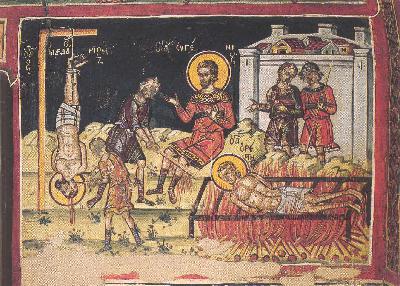
neglect of the gods would lead to trouble. And indeed, whenever a drought, flood, fire, or some other catastrophe ensued it was inevitably blamed on "Those atheists = the Christians."“Christians to the lions,” became a frequent solution to the ills of the world.The concern of the pagans was ill-attributed, but well-founded. Not because their gods were angry, but because in some places
so many had become Christians the pagan temples were nearly empty. Acts 19 tells us this happened in Ephesus and a letter from the Governor of Bithynia in the early 2
nd Century repeats the concern. This led to a growing call for punishment of the Christians. A few would be rounded up and put to death to prove to the gods the earnestness of the pagans to appease them.Other factors that encouraged hostility towards believers was their
secrecy. A description of Christians by Pliny, the Roman governor of Bithynia, to the Emperor Trajan in AD 111 is enlightening. Pliny had already executed some Christians based on little more than their scandalous
reputation. He’d given them an opportunity to recant but when they refused, Pliny saw this rebuff of his mercy as a provocative stubbornness worthy of punishment. But after a flurry of executions, Pliny had 2
nd thoughts: Was the mere
reputation of Christians dangerous enough to warrant their arrest and trial? So he wrote his friend, the Emperor Trajan, asking for advice. Here’s a quote from Pliny's letter. After describing some ex-Christians who recanted their faith, Pliny gives
their report on what their practice had been when they were still Christians."They affirmed the whole of their guilt was that they were in the habit of meeting on a fixed day before it was light, when they sang in alternate verses a hymn to Christ as to a God, and bound themselves by a solemn oath, not to commit any wicked deeds; no fraud, theft or adultery, never to falsify their word, nor deny a trust when they should be called upon to deliver it. After which it was their custom to separate, then reassembled later to partake of food — but food of an ordinary an innocent kind.”A little later in the letter Pliny adds that to
verify this report he secured through the torture of 2 slaves that this was an accurate description of Christian meetings and that nothing more needed to be added. Pliny called Christianity a “depraved and excessive superstition.”Emperor Trajan replied to Pliny’s request for guidance on how he wanted the growing Christian-crisis in Bithynia handled. Trajan replied . . .“You observed proper procedure, my dear Pliny, in sifting the cases of those who had been denounced to you as Christians. For it is not possible to lay down any general rule to serve as a kind of fixed standard. They are not to be sought out. If they are denounced and proved guilty, they are to be punished, with this reservation, that whoever denies that he is a Christian and really proves it--that is, by worshiping our gods--even though he was under suspicion in the past, shall obtain pardon through repentance. But anonymously posted accusations ought to have no place in any prosecution. For this is both a dangerous kind of precedent and out of keeping with the spirit of our age.”Though seemingly harmless to us, it was Pliny’s reference to the Christians “meeting before dawn” that proved a problem. While it looks to us a
commendable reference to their diligence & earnestness, it was highly suspicious to Romans. As a rule, meetings during the dark hours were forbidden.
Day was the time for meetings. To meet at night was
suspect. No good could come of it. You met at night because you had something to hide.So why
DID Christians meet before daylight if it raised suspicions?The answer lies in the composition of their Fellowship; that is,
who attended. For the most part, they were
commoners and the
poor who had jobs they had to begin early. The only time available to meet was
before the workday began.These early meetings of the church were
only open to Christians. Secrecy tends to breed gossip. It didn’t take long till wild rumors were going round about the abominable things the Christians
must be doing. Their communal meal, called the Agape or Love-Feast, was recast by gossip as a
wild and debauched orgy. Communion was said to be
ritual cannibalism. But the
real shocker was that when Christians met, social distinctions like rich and poor, slave and free, male and female, were subsumed under an appalling
equality. Many critics of Christianity saw this as a
dangerous subversion of the natural order. Christians were cast as
radical revolutionaries out to turn the entire world upside down.For a society that lived in constant fear of a slave uprising,
anything seen as encouraging slaves to think independently was deemed perilous. Don’t forget that for the Romans, the 3
Servile Wars, the last & most perilous led by the famous
Spartacus, were still potent in the collective memory, though it had ended over a century before.Another source of trouble for Christians was their
Jewish origin. Even though Judaism worked hard to distance itself from the followers of Christ, in the mind of the average Roman, the Church was a
Jewish thing. In many places, Jews were the main accusers of Christians to the authorities. But this failed to dislodge Christians from their Je










 United States
