
This week’s episode is “
The Daggers Come Out.”The Council of Nicaea dealt with
more than just the Arian controversy over how to understand the nature of Christ. The 300 bishops who gathered in Nicaea also issued a score of rulings on issues of church life that had been subjects of discussion for years. Chief among these was setting the date for the annual celebration of the resurrection of Christ. They also set various rules for organizing the Church & the ministry of deacons and priests.As the Church grew with more congregations being formed, the need for some organization became apparent. So for administrative purposes, the church-world was divided into
provinces with centers at Rome in the West & in the East, four headquarters;
Alexandria,
Antioch,
Jerusalem & Constantinople. It may seem odd to us today that only 1 church was the Western center while the East had
4. Why so many? The answer is that it was in the E the Church had its greatest extent & growth.The bishops at these 5 churches were given oversight of their surrounding regions. This stoked a
major rivalry between Alexandria & Antioch, the Empire’s 2
nd & 3
rd largest cities after Rome. These 2 cities vied with each other for leadership of the entire East. That rivalry became more complex when the church at Constantinople, the new eastern capital of the Empire, was added to the mix. The contest between them at first took place mostly in the realm of
theological debates but later became
sinister when ecclesiastical position equaled power and wealth.But, the amazing unanimity of the bishops at the Council of Nicaea seemed to presage the dawn of an era of peace and tranquility for the Church and Empire. It was not to be. While the bishops
agreed on the word “
homo-ousias” to describe Jesus being
one substance with the Father, many bishops, possibly even
most, left Nicaea feeling the
Emperor Constantine's pressure coerced them into taking a position they weren’t happy with. After Nicea, many of them regretted knuckling under & grew resentful of his pressure to settle the issue.I don't want to get
too technical here, but that's
precisely what this all was; a
highly technical issue of the parsing of words, trying to find an accurate expression of their belief about the humanity
and deity of Christ. It isn't that the bishops didn't believe Jesus was anything less than God. It's just that the
word used in the Nicene Creed, ‘
homo-ousias,’ didn't capture what they thought the truth of Jesus deity
was. Many of the bishops were
uncomfortable with that word because the
Gnostics had used it to describe
their beliefs about Jesus a few decades before.So not long after the Nicean Council, many of those who’d signed the Creed backed away from it. Several alternate creeds were offered, some
close to the Nicene version and others at great distance from it.
None of them repeated the word ‘
homo-ousias.’It was in the
East that the greatest theological turmoil ensued. After Constantine, several of the Emperors were decidedly
hostile to the Nicene position. A few were openly
friendly with the Arianism Nicaea was supposed to have buried.As we saw last time, though Alexandria was a lead church in the East, its Bishop Athanasius was the sole standard-bearer for the Nicene Creed in the East. Though Constantine had sponsored and endorsed Nicaea and enforced its terms by the use of civil authority, his desire to bring unity to the Empire and Church moved him to
press bishops to re-install Arius and his followers; not as
leaders, but simply as church members. When Athanasius and other Nicene-keeping bishops
refused, Constantine punished them with banishment. Then, after a season, he changed his mind and allowed them to return. But when those same church leaders
again proved too principled for Constantine's taste in some
other ruling he wanted adopted, he’d banished them once again. Constantine’s successors followed his lead.For reasons relating more to
politics than doctrinal concerns, the half-century after the Council of Nicaea, saw the
Eastern church effectively taken over by Arians. The Pro-Arian Bishop of
Nicomedia, Eusebius (not the famous church historian) was allowed to return to his post after a 2-year exile. He immediately set about to
undo Nicea. He
persuaded Constantine to
reverse Arius’ exile and when the heretic appeared before the Emperor, he confessed a statement of faith that
appeared to line up with the orthodoxy of Nicaea, but was in fact only a clever piece of verbal gymnastics that
fooled the Emperor.
Athanasius wasn't fooled and refused to affirm Arius as a member in good standing. So Eusebius and his supporters plotted to get rid of him. A council of Eastern bishops was called in 335 at Tyre as they were on their way to Jerusalem to celebrate the dedication of the Church of the Holy Sepulcher Constantine had just had built. At Tyre, the bishops
condemned Athanasius as guilty of conduct unbecoming a Bishop. Which is tragically comical, because Athanasius was about as pious as one could get. What Eusebius and his cronies meant was that a bishop ought to agree with them, “because well, just because. Stop being contentious or we’ll charge you with conduct unbecoming a bishop!” Athanasius recognized the ambush and went to the Emperor to plead his case. Eusebius followed and warned Constantine he'd heard Athanasius had threatened to call a strike of the Alexandrian dock-workers who loaded grain into the barges that fed both Constantinople and Rome. Without Egypt's harvest, the cities would go hungry & vicious riots would ensue. Eusebius's charge was ridiculous but he knew the Emperor couldn’t risk it being true. Constantine was forced to banish Athanasius to Trier (TREE-yer) in Germania.If you’re a subscriber to CS, you know we sometimes breeze over years, even decades of church history with only a brief summary. Other times we slow down & go in depth. The reason for this is because there are moments, seasons, even eras when events occur, trends develop, movements are birthed that have a major impact on the course of following years. We’ve slowed down to focus on the post-Nicaean years because they’re illustrative of how
ruinous the infiltration of political power has been to the Church. Only 20 years passed after Constantine’s conversion and the Edict of Milan, and already church leaders are using their authority, not as
spiritual guides to bless those God entrusted to their charge but to accumulate more power & influence in the political & civil realm. A man like Athanasius, whose sole concern was to glorify God & faithfully discharge his role as a pastor, proved no match for a conniving political operator like Eusebius who
used his office as Bishop to bend the Emperor’s ear & secure civil authority to enforce his will. While the once-persecuted Church
rejoiced that the Emperor was finally one of them, they couldn’t foresee that his merging of church and state would bring about a whole
new set of problems that would turn their leaders into power-hungry competitors. While many bishops
resisted the lure of political power & stayed true to their spiritual task, many others were seduced and plunged into the great game of ecclesiastical politics. The machinations of the contest between Eusebius & Athanasius would likely not have occurred during the persecutions of the previous decades. But when civil authority was lent church leaders, the doctrinal daggers came out and theology became a ruse behind which to plot how to gain political advantage.The
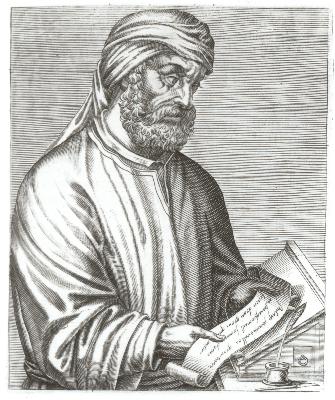
historian Eusebius, not the villain who attacked Athanasius, but the one who wrote the first Church History chronicle, helped blur the lines between church and state. After charting the church’s course from the Apostles to Constantine in his book
Ecclesiastical History, Eusebius presented Constantine as much more than just a ruler kindly disposed toward the Faith. Oh no – Eusebius sketched Constantine as much
more than that. He was God's agent; ordained by God to provide leadership for
both the Church & Empire.Eusebius said that just as the Church was a manifestation of the Kingdom of God on Earth, set to rule in spiritual affairs, so the Empire under Constantine was a manifestation of the Kingdom on Earth to rule in civil affairs. God would use
both</stron











 United States
