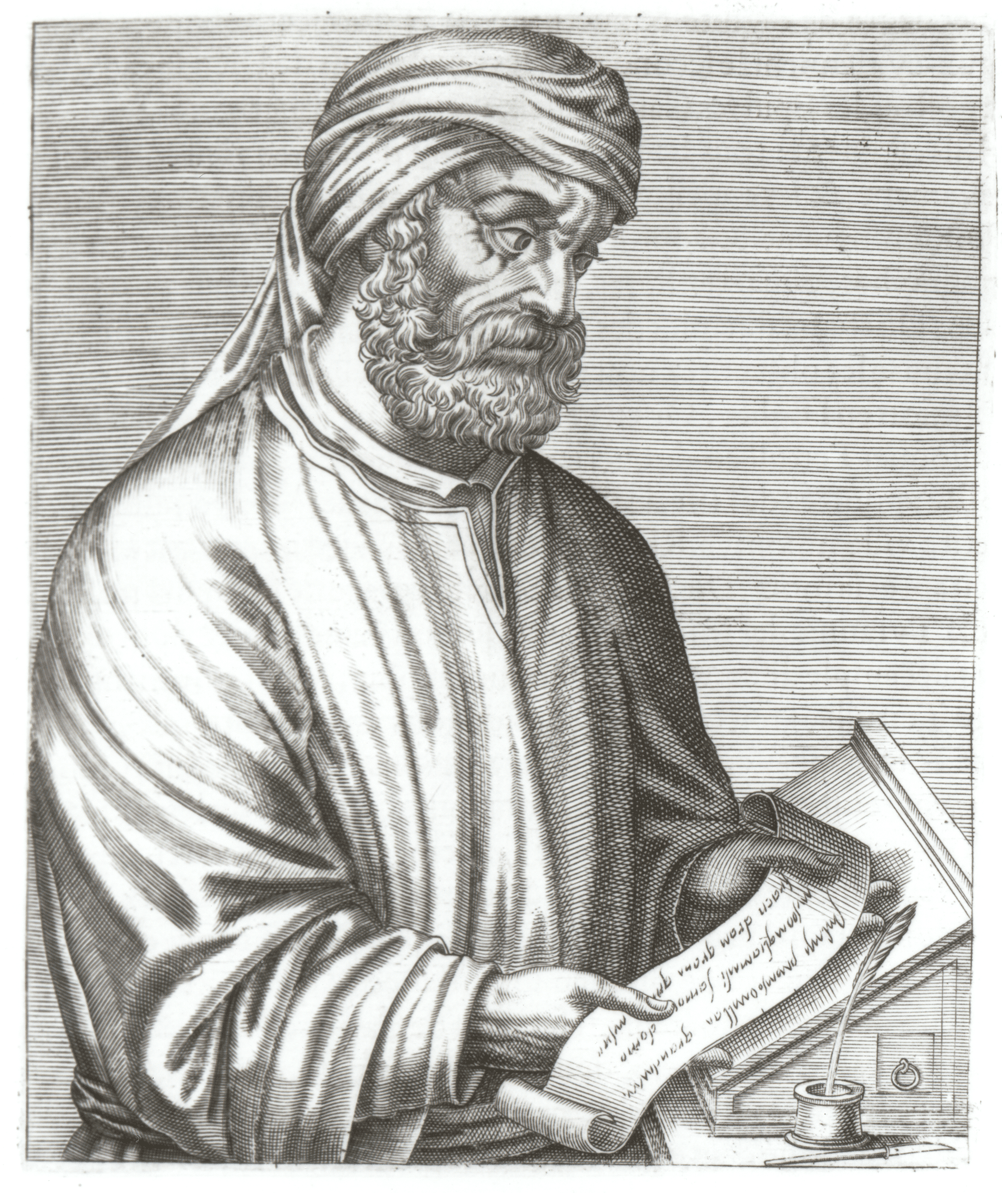
This week’s episode is titled “
Hammering out the Details. ”That group of guys known as the
Early Church Fathers for the most part were pastors. They were leaders of churches who had a pastoral concern for both the Faith & their people.The later 1
st through 3
rd Cs saw the Church expand around the Mediterranean basin, in a few places up into central Europe, across North Africa, across the Middle East and into Mesopotamia and the Persian East. While believers contended with periodic outbursts of persecution in Roman controlled territory, the great threat was that presented by aberrant sects that kept rising up aiming to hijack the Faith.It’s understandable why this was such a problem in these early centuries. Christian theology was still being hammered out. In fact, it was the threat
posed by aberrant groups that forced church leaders to formalize precisely what it was Christians believed. Just as today, some new wind of doctrine blows thru the church and most Christians have little idea what’s wrong with it; they just sense
something is. It doesn’t
sound or
feel right, but they couldn’t say precisely what it is. It takes some astute pastor, Bible student, or theologian to show HOW said doctrine is contrary to Scripture. Then everyone’s clued in and has an idea of why & how that aberration or heresy is off.Multiply that process by many years & lots more of those winds of doctrine, and you can see how a large & detailed body of Christian theology developed. Most times, church leaders turn to the Bible to compare the new idea to what’s already known to be God’s Word & Will. But sometimes what’s needed is some new words – or at least to make sure we know what the words we’re using when we explain something
mean! And we need to make sure
we all mean the same thing by those words. We see how important this is today when dealing with the cults. Two people can say they’re Christians, and both believe in & follow Jesus. But while one person’s “Jesus” is the eternal Son of God, conceived by the Holy Spirit in the womb of a virgin Jewish teenager named Mary, the other person’s “Jesus” is really just a manifestation of the archangel Michael, or à the human son of a god named Elohim who used to be a man on another planet a long time ago who ascended into being a god with a heavenly harem by which he produces spirits looking for human bodies. Believe it or not, that is what a couple prominent pseudo-Christian cults believe today.My point is è we need to make sure we pour the same meaning into the words we use, especially when we’re talking theology, because what we believe about God is the
most important thing about us.We’ll see how complex & what a major deal this all was when we get to the debates about the trinity & the nature of Jesus in the 4
th & 5
th Cs. For now, realize that even earlier, during the latter 1
st thru 3
rd Cs, it was usually
pastors who did
most of the theological work as they dealt with the challenge of goofy teachings about God & Jesus confronting the people they led.Let’s take a brief look at some of the major doctrinal challenges & groups that challenged the early church.We already considered the threat of
Gnosticism. We spent a whole episode on that topic because it was a huge challenge that a few letters of the NT addressed.We considered the challenge
Marcion presented, with his virulent anti-semitism & attempt to separate the God of the OT from the God of the New.We took a brief look at
Montanus and his, what we might call, early Charismatic Movement. Ws saw that while there were indeed some aberrant elements in
Monantism, they did not rise to the level of
heresy the Early Church ended up labeling them with.A group we’ve not looked at yet was a kind of
anti-Marcionist sect called the
Ebionites. They emerged toward the end of the 1
st Century & continued into the 4
th. Their beliefs smack of the error the Apostle Paul deals with in his Galatian Epistle.Ebionites said Jesus
wasn’t the Eternal Son of God; he was just a
successor to Moses whose mission was to enforce a strict legalism. They claimed Jesus was
just a Jew who
kept the law perfectly. And because He did, at his baptism, the Spirit of God descended on him, empowering him to be a prophet. This sounds a lot like one of the many Gnostic sects.Ebionites were ascetics who avoided any & all forms of pleasure, assuming if it was pleasurable, it had to be wrong. They practiced poverty, ultra forms of self-denial, & elaborate religious rituals. They abhorred the Gospel of Grace. Their name, “Ebionites” comes from the Hebrew word meaning “Poor Ones.” They likely took this name to honor their founder,
Ebion, who spurned his given-name in favor of the title “Poor One.”What little we know about the Ebionites comes to us from the accounts of their opponents. The first Christian to write about them was
Irenaeus who mentions them in his work,
Against Heresies. Origen also mentions them, his account matching that of Irenaeus.They rejected the NT in favor of a scroll known as “
The Gospel According to the Hebrews.” Keeping the Jewish flavor of their origins, they met in synagogues. As would be imagined, they considered the Apostle Paul with his emphasis on salvation by grace through faith to be a dangerous heretic. To Ebionites, Jesus wasn’t the Savior; Moses was because he gave the Law. Jesus was nothing but a Solomon-like figure who proved people
COULD obey the law.When the Romans Titus laid siege to Jerusalem, the Ebionites join forces with the Gnostics. And a close reading of Paul’s letter to the Colossians gives a hint that it was this Gnostic-Ebionism that was troubling the church there.Another group that presented a challenge to the Early church were the
Manichaeists. I’m not going to go into a lot of depth here. Suffice it to say Manichaeism was a rather bizarre cousin to Gnosticism. Like the Gnostics, they were
dualist; meaning they considered the spiritual realm to be unalterably good while the material world was hopelessly corrupt.Their founder was the 3
rd C mystic
Mani. He proposed two opposing forces, light & darkness, forever locked in eternal combat. Salvation was defined as the victorious struggle of the Children of Light overcoming the darkness by a life of self-denial and celibacy. If some of this sounds a lot like the
Zoroastrianism of Persia – Give yourself a gold star; you figured out where it came from!Mani was a Parthian who’d grown up in a home that was nominally Christian. He was loath to give up the ancient Zoroastrianism of his peers and homeland, so he decided to
mix the two. And once he’d begun, he decided to go ahead and add a dash of Buddhism, some Hinduism, & a sprinkle of Judaism. Mani’s religion was an ancient version of Baha’i – you know, just snag whatever seems most appealing from a handful of major religions, toss it all in a bowl, mix thoroughly, cook at 350 for 20 minutes, let cool, and serve with a cup of Koolaid.But it’s not hard to understand WHY Manichaeism would
appeal to so many people at that time. The Romans had brought dozens of different people under one political & economic system. Since religion was a crucial part of most people’s lives in that day, the diversity of faiths was a potential stress point that could lead to conflict. A religion that seemed to appeal to everyone because it contained a little bit of them all seemed a good move.Let’s turn now to take a look at another key Church Leader;
Clement of Alexandria.
Titus Flavius Clement was born in Athens to pagan parents. He became a Christian by studying philosophy. He settled in Alexandria in Egypt & attended a school there because he was impressed by the director’s interpretation of Scripture. When that director retired in AD 190, Clement succeeded him as head of the school, the same Origen would later take over.Now, I hope you find this as interesting as I did. This school, while run by Christians & dedicated to Christ, was anything BUT a narrow-minded academy aimed at spitting out mind-numbed followers. The school reflected the cultural mixture of Alexandria. It welcomed Christians, pagans, and Jews who wanted the best education the time could field. The Christian directors of the school believed that the Christian faith, given a fair hearing, would prevail over other ideas. So among others, the non-Christian philosopher,
Ammonius Saccas taught there. Among his students were both
Origen and
Plotinus, founder of
Neoplatonism.During his years as a teacher in Alexandria,
Clement wrote most of his works. He followed the example of Philo, an Alexandrian Jewish scholar who’d used Greek philosophy to interpret the Old Testament. Clement adopted Philo’s allegorical me










 United States
