


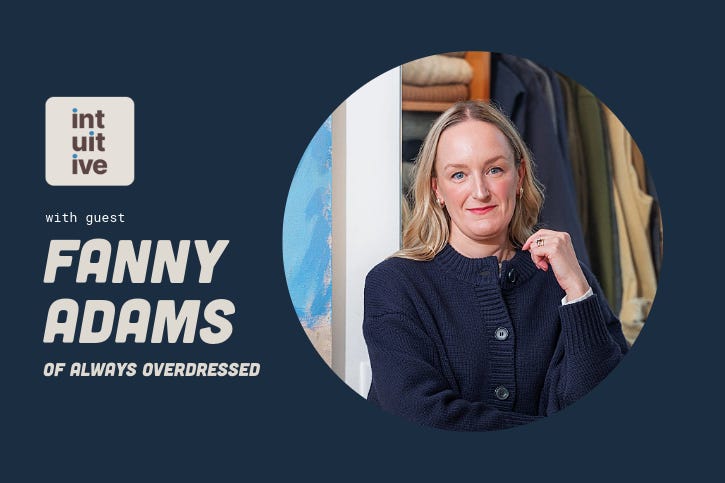
Episode 15. The emotional support outfit, with Fanny Adams
Description
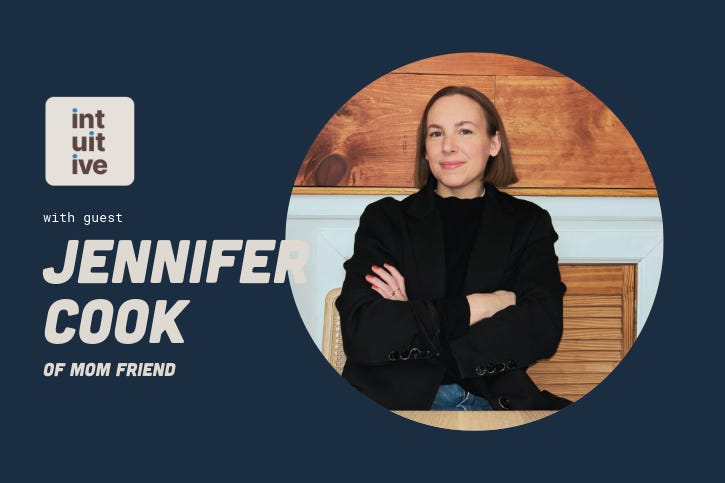
Only a few more episodes in Season 1 of the podcast! Don’t missing upcoming conversations with Calley Dawson— founder of circular fashion brand FXRY, plus Jennifer Cook of mom friend, and one more surprise guest I can’t wait to reveal.
Make sure you're subscribed—you won't want to miss the finale!
Today’s guest is stylist, writer, and creative consultant Fanny Adams of Always Overdressed. We connect over losing touch with our preppy roots while in art school, plus Fanny provides a bit more detail on her concept of the ‘Emotional Support Outfit.’
This episode touches on some tender topics—grief, body changes, and navigating personal style through it all. If you're having a tough week, know that we go there—but we also find some lightness and laughter by the end. Enjoy.
Episode Transcript
This transcript has been edited for clarity.
You're listening to Intuitive Style, where we believe that everyone has style. In conversation with fantastic guests, we explore how to tap into that intuition so we can dress authentically and live fully.
Today's guest is Fanny Adams, a stylist, writer, and creative consultant with nearly twenty years of experience in fashion. She's also an outfit repeater and the brains behind the Substack newsletter Always Overdressed. Fanny, welcome to the show.
Fanny: Thank you so much for having me. I'm excited to be here.
Maureen: It's nice to sit down and talk together. For anyone who hasn’t had a chance to read your column yet, can you share what got you started writing on the platform?
Fanny: It had been in the back of my mind for a few years, but what really prompted it wasn’t a happy reason. My dad died a year and a half ago. I not only lost my sense of self but also my sense of style. I had a lot of thoughts on grief—how it affects you inwardly and how it impacts your outward presentation.
I had this essay in my head for a few months. I was also looking to go out on my own as a stylist, and Substack felt like a nice complement to building my brand. That essay, combined with launching my website, got me out there.
Maureen: I'm genuinely sorry for your loss. How did the process of writing relate to your experience of grief?
Fanny: I had the honor of writing my dad’s obituary. That was my first experience writing to process loss, and it was really sad but meaningful. Last summer, while quietly building my Substack page and thinking about my first post, I made a promise to myself: I would get dressed every day.
Something as simple as putting on real clothes—not just sweats—became a way to work through grief. It gave me a small, manageable goal. Sometimes even the smallest tasks feel enormous when you’re struggling.
I started putting on what I call my "emotional support outfits"—simple, comforting clothes. Then I started documenting them. Some friends encouraged me to post on TikTok, so I did, mostly to hold myself accountable.
At night, I'd think about things I wanted to write about—not just grief, but other style topics. That’s how it all began.
Maureen: I love that. Having a small goal like getting dressed can give you confidence to do other things. Is that how it felt?
Fanny: Definitely. Getting dressed was the first step to getting the day started, then moving on to harder tasks. It also became a form of self-care.
During the year after my dad’s death, I gained weight. So part of the process was giving myself grace—finding clothes that felt and looked good enough for where I was at.
It helped me feel more presentable while also rediscovering pieces I loved. At one point, I realized, "I need new jeans." And that was okay. We’re allowed to gain or lose weight. Our bodies change all the time—monthly even.
So I gave myself permission to buy things that fit. That made the experience much more enjoyable.
Maureen: It can be hard to give ourselves permission to buy clothes that suit where we are now—especially when we’re trying to be mindful consumers. What did it change for you, having clothes that fit?
Fanny: I learned not to immediately get rid of clothes when my size changes, but I’m still guilty of it. Giving yourself permission to buy clothes that fit your current body is self-care and self-acceptance. It’s about meeting yourself where you are.
I’m a millennial. I grew up with specific body ideals, and I’ve worked really hard to unlearn them. But it’s tough when you’ve worked in fashion and retail. That pressure is everywhere. Why make it harder?
At one point, I bought jeans from Zara. I wasn’t sure how long I’d be this size, and they were a good, affordable option. Honestly, I now swear by Zara jeans—they did what I needed them to do. They helped me stay on track with this daily dressing practice.
Maureen: I saw you recently posted that you’d fallen off the dressing routine.
Fanny: Yeah, I’ve slipped a bit. It’s just life—nothing traumatic, just busy.
But last summer, those pieces really helped. They were a bridge. Over time, I’ve invested in higher-quality pieces that fit me now. But Zara jeans were the perfect in-between step. They helped rebuild my confidence.
Maureen: I really resonate with that. We all define mindful shopping differently. For me, my size is changing constantly right now.
My approach is to buy fewer items and wear them to death. That’s how I justify buying from places like Gap. I’ve tried more expensive, more ethical jeans, but they don’t fit the way I need—or they don’t carry my size.
We don’t need to defend our choices. What works at one moment might change in another. Right now, I’m buying Gap jeans. Not too many. I’ll wear them as long as I can, and one pair will become shorts for summer.
The reason I bring it up is because I’ve been feeling tender about some things I’ve read online—posts that unintentionally shame people for shopping certain brands.
When we’re already carrying heavy emotions—like grief or major body changes—we don’t need to add shame on top of that.
Fanny: Absolutely. I think there’s a lot of pressure put on consumers, and I don’t think it’s fair. It’s all about balance. Like, giving up plastic straws isn’t solving the environmental crisis, but it’s something I can do.
The same goes for how we get dressed. “High-low dressing,” for lack of a more current term, is a realistic way to shop. I don’t think it’s feasible—even if you’re a gazillionaire—to wear only designer or fully sustainable brands.
We all make trade-offs. I buy four Uniqlo t-shirts at a time. It’s not the most sustainable choice, and Uniqlo, while more responsible than other fast fashion brands, is still fast fashion. But those are the shirts that fit me best, and I wear them nearly every day.
I’m not going to spend $95 on a sustainable t-shirt that doesn’t fit or hold up the way I need. As consumers, we need to: shop for what fits and feels good, and do the best we can
We’re part of the system, but we’re not the sole cause. Our wallets matter, sure, and it’s important to think about where we shop. But it's unrealistic to expect everyone to wear only organic, sustainable clothes—especially when you factor in size and price point.
We need to be gentler with ourselves and each other, especially when we have a platform. We're already our own worst critics. Adding judgment from peers, writers, or creators only makes things worse.
Maureen: I really appreciated your note on Substack about not feeling the joy of getting dressed right now. I related to that. Sometimes getting dressed is self-care, and sometimes it’s not. Sometimes, it’s the hardest part of the day.
When we’re not distracted—when we’re alone in our room choosing an outfit—that’s when all the feelings we’ve been avoiding can bubble up. It’s not always about the clothes, but they can be the trigger.
So hearing that from someone like you, who’s always overdressed and who works in fashion, helps bring balance. It’s a reminder that it’s okay to not always feel excited about getting dressed.
Fanny: Thank you. Part of why I posted that was to let people know I hadn’t disappeared—I just wasn’t in the right headspace.
I plan to write more about it this week. Going back to the idea of the emotional support outfit—some call it a uniform, but I think it’s either a step before or a step beyond. It’s a formula: something you can throw on without thinking too much, something that feels good enough.
When my dad was sick, that outfit was jean shorts, a t-shirt, and Birkenstocks. I wasn’t working much—just helping my family and caring for my kids. That outfit made me feel comfortable and fine.
Now that I’m consulting and meeting people in person again, I needed an updated version. I found that for me, it’s a button-up shirt, jeans or khakis, and loafers or ballet flats. That’s my current version of an emotional support outfit. I can throw on a sweater or a jacket, but those three pieces make me feel polished and comfortable.
I’m literally wearing it right now—button-up shirt, jeans, and Birkenstocks since I’m at home. It helps me

![Episode 24. Rambling in [Intuitive] Style, with Traci Landy](https://substackcdn.com/feed/podcast/2669400/post/177614968/9bbc5a3f73fab5e46b0a064fb5bff6b4.jpg "Episode 24. Rambling in [Intuitive] Style, with Traci Landy")






 United States
