



Competing With Your Ideal Adversary
Description
Many people spend their lives trying to cross someone else’s finish line. They measure their worth against colleagues, competitors, or strangers on social media. They are always looking outward, never quite measuring up.
If you enjoy the challenge of competition what else could you do? Have you considered competing with your ideal adversary? Who’s that exactly? I suggest this is the person you were yesterday.
Self-competition is a fundamentally different approach to success. Rather than measuring yourself against others, you measure yourself against your own potential. It’s a shift that transforms not just what you achieve but who you become in the process.
Hey there. It’s me, Kore. And you’re listening to Exercising Self-Control: From Fitness To Flourishing.
Why Self-Competition?
Here are 10 reasons why self-competition is the superior path:
* You’ll constantly strive toward a higher standard of personal excellence. This is the essence of personal development: continuous improvement without external limits.
* You live your highest values while realizing your most important goals. When you compete against others, you risk losing sight of what matters to you. Their success can influence you to adopt values that aren’t yours or pursue goals that don’t align with your vision.
* You’ll learn valuable lessons about yourself. You get to explore your interests, drives, and ideas. When you compete with others, they set the agenda.
* You become more independent. You learn to trust your own thinking and gain a confidence that basing your choices on what others think would never provide.
* You’ll maintain healthier relationships more naturally. When you compete against others, you risk experiencing them as opposition instead of inspiration.
* You get to define success. You stay in control of your experience with greater focus and clarity.
* Everyone’s potential is unique to them. Competing against those with higher potential sets you up for disappointment. Competing against those with lower potential may have you resting on your laurels. But you competing against you is a perfectly fair competition. You both have the same potential. You are your ideal competition to draw out your best performance.
* You’ll maintain your equanimity better. External competition leads to being influenced by others’ pace and effort. Self-competition puts you in control of the experience.
* Those you compete against may have different standards than you. You’ll end up selling yourself short on what you’re capable of doing, or conversely, you may get discouraged trying to reach unrealistic standards that aren’t yours. You must set your own standards for what excellence means to you.
* You’ll keep becoming better. When competing against others, you may stop once you’ve surpassed everyone else. But when you reach a new level of achievement competing against yourself, the bar resets. Can you do even better?
A Gym Example
So what might this actually look like in your life?
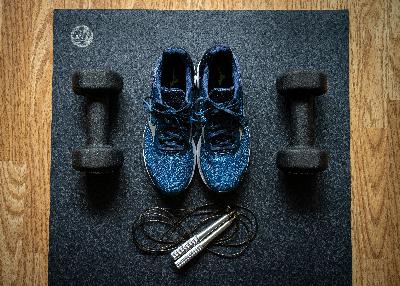
Here’s an example. Imagine you’re training for fitness and you’ve been comparing yourself to someone at your gym. Maybe they’re stronger, leaner, or more disciplined. You measure success by whether you’re “better than them.” But here’s what happens: if they hit a new personal record, you feel defeated. If they skip workouts, you feel temporarily superior, but it’s hollow.
Now flip the script. Instead ask: “Am I stronger than I was six months ago? Can I do more reps with better form? Do I have more energy and endurance?”
Suddenly you have a metric that specifically addresses what you’ve actually done in the past. You’re not waiting for someone else to set the standard. You’re not chasing their trajectory. You’re building your own.
Competing With Others Has Its Place
This isn’t about ignoring others or becoming indifferent to the world around you. External competition has its place. It can motivate, inspire, and push you to grow. But it should be secondary, not primary. Use others as inspiration and as benchmarks for what’s possible. Learn from their achievements but don’t make them your scoreboard. The moment you do, you’ve surrendered control of your own narrative.
That said, self-competition requires honest self-assessment. Without it, you can rationalize mediocrity or use it as an excuse to avoid feedback. The goal isn’t to become isolated or dismissive of outside perspectives. It’s to make your own growth the primary driver, while remaining open to learning from what others are doing.
Photo by Lance Grandahl on Unsplash
A Starting Point
Start where you are. Pick an area where you’re currently measuring yourself against someone else: your career, your fitness, your creative output. Notice it. Acknowledge it. Then ask yourself, “What would excellence look like if I removed that other person from the equation? What standard would I set for myself based on my own values and capabilities?”
Life-Changing Implications
The practical implications are life-changing. You’ll experience less anxiety because you’re no longer subject to someone else’s performance. You’ll make better decisions because they’re rooted in your values, not in reaction to external pressure. You’ll build genuine confidence. This is the confidence that comes from knowing you’re doing your best work, not from arbitrarily exceeding someone else.
Most importantly, you’ll create a sustainable path forward. External competition is exhausting because there’s always someone faster, smarter, or more talented. But competing against yourself? That’s a game you can play your entire life. Every time you level up you have a new starting point. Every milestone raises the bar. You don’t need to try to be the best. You only need to try to be better than you were.
The Real Prize: Peace of Mind
The race against others has a finish line. The race against yourself never does. That can sound intimidating but it’s a good thing.
When you stop measuring yourself against others, something shifts. The constant comparison stops. The envy fades. The sting of someone else’s success diminishes. You’re no longer trapped in a game where the rules keep changing based on what other people do. Instead, you step into a game where you control the rules, the pace, and the outcome.
That’s peace of mind. It’s the psychological freedom that comes from knowing your worth isn’t determined by how you stack up against anyone else. It’s the quiet confidence of someone who’s stopped looking over their shoulder. It’s the ability to celebrate others’ wins without it threatening your own sense of progress.
This is the real benefit of self-competition. Not just better results, though you’ll get those. But a fundamentally different relationship with yourself and your effort. You’ll sleep better. You’ll feel lighter. You’ll move through your days without the constant hum of comparison anxiety in the background.
That’s what happens when you stop racing against the world and start racing toward your own potential. You don’t just achieve more, you experience more peace.
That’s it for today. Catch you next time.
This is a public episode. If you would like to discuss this with other subscribers or get access to bonus episodes, visit stoicstrength.substack.com




















 United States
