


How To Break Free From Emotional Cascades
Description
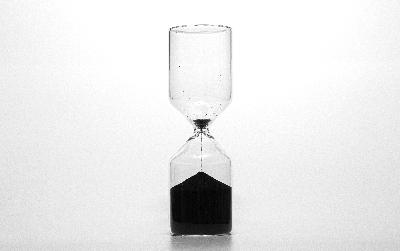
The 90-Second Window
Here’s a scenario: You feel a surge of anger or anxiety wash over you. Circumstances have triggered a lightning quick, non-conscious response that’s beyond your ability to control. The body does what it does. Not a problem in itself. This is part of the human condition.
What makes it a problem is when you find yourself trapped in that emotional cascade for hours.
Here’s what neuroscience reveals: the chemicals fueling that emotion only circulate through your body for about 90 seconds. Everything that happens after that window closes depends entirely on you.
Hey there. It’s me, Kore. And you’re listening to Exercising Self-Control: From Fitness To Flourishing.
How Emotions Take Hold
Emotions trigger a flood of neurochemicals. Adrenaline, cortisol, and others flood your system to prepare you for action. In those first 90 seconds, you have a choice. You can notice the sensation without judgment and employ calming techniques like controlled breathing or cognitive reframing. The intensity naturally subsides as the chemicals clear from your bloodstream.
But most of us don’t stop there. Instead, we construct a narrative around the feeling. We replay the triggering event, question our responses, imagine different outcomes, and spiral into regret. This cycle, which psychologists call rumination, keeps the state alive indefinitely, long after the initial chemical surge has passed.
The chasm between that 90-second window and hours of suffering isn’t mysterious. Your thoughts sustain the emotion. Each time you revisit the story, you reinforce the neural pathways associated with that mood. Essentially reliving it. You become the architect of your own emotional prison.
Photo by Nicolas Solerieu on Unsplash
Two Paths Forward
This understanding opens a door to genuine change. You have two primary levers to pull: your thoughts and your behaviour.
Redirecting Your Attention
The first approach involves redirecting your attention. You can consciously shift focus to something else, interrupting the rumination cycle, and starving the response of the mental fuel it needs. This strategy has merit, especially when you have the space to step back and think consciously about what is happening and how you want to respond.
Choosing Your Behaviour
But there’s a more powerful option: behavioural change. Rather than waiting for your feelings to shift before you act, you reverse the equation. You accept the emotion as present, you don’t deny it or suppress it, and you let your actions lead.
This means moving forward despite the feeling. You show up to work even though you’re anxious. You reach out to a friend even though you’re hurt. You take the next step even though you’re afraid. Your behaviour becomes the catalyst that transforms your emotional state.
You’re not pretending everything is fine. You’re acting with intention despite what you feel. When you behave constructively despite the sensation, you gather evidence that contradicts the story your mind is telling.
You prove to yourself that you’re capable, resilient, and in control. Over time, your feelings follow your actions.
Reclaim Your Power
The 90-second window is your biological inheritance. It’s a brief moment when the chemistry of emotion is at its peak. What you do with this understanding determines whether the feeling fades naturally or remains beyond its usefulness.
You can’t always control what triggers you but you absolutely can direct what happens next. Choose your behaviour. Own your emotional landscape. It takes awareness and training.
Now you know what’s possible. The training is up to you.
That’s it for today. Catch you next time.
This is a public episode. If you would like to discuss this with other subscribers or get access to bonus episodes, visit stoicstrength.substack.com
















 United States
