


 Claim Ownership
Energy Capital Podcast
Subscribed: 28Played: 667
Subscribe

© Texas Energy and Power Newsletter
Description
The Energy Capital podcast focuses on Texas energy and power grid issues, featuring interviews with energy professionals, academics, policymakers, and advocates.
www.douglewin.com
www.douglewin.com
85 Episodes
Reverse
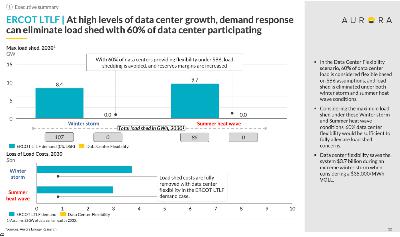
This episode is a little different. As I wrote on Friday: this is both a transition and an expansion. Several folks will be stepping up to use this platform and I couldn’t be more excited to hear what comes next.A platform, now with more places to standArchimedes said: “Give me a place to stand and I will move the Earth.” This podcast will become a platform for more people to stand.The podcast is moving into a multi-host format, and one of those new voices is Matt Boms, Executive Director of the Texas Advanced Energy Business Alliance (TAEBA). Matt has been a leader on some of the most important energy work in Texas: distributed energy resources, affordability, energy waste reduction, grid flexibility, and much more.How I got “bit by the bug”Matt asked how I got into energy. The real answer is, slowly and then all at once.My early work in energy policy was at the Texas Legislature, in a stretch (2005 to 2009) when a lot was happening and the instincts to build and expand were strong. That period mattered because it shaped a belief I still hold today: Texas works best when we put pragmatism above ideology. Texas is a place to build and do big things.The next frontier is the grid edgeOne of the big themes in this conversation with Matt is that the “cheap electrons” story is true on the generation side, but bills keep climbing because transmission and distribution costs keep rising.So if we’re serious about affordability, we have to talk about the distribution grid, and the tools that can help us defer (or avoid) some of the costs associated with building out the grid. We’re still going to spend a lot but can we avoid some of it?That’s where distributed energy resources (DERs) come in, and where Texas has a real opportunity to lead.Matt and TAEBA recently looked at what DERs could do in Oncor’s territory. The numbers are big, but here’s the one that sticks: about $279 per family per year in savings. If you want a sense of how big a difference that would make for many Texans, check out my discussion with Margo Weisz of the Texas Energy Poverty Research Institute:There are two core value buckets behind these savings:* Wholesale market value (DERs competing through aggregation, the work ERCOT is already moving through)* Transmission and distribution deferral or avoidance (often the larger, currently under-valued piece)If we get the policy design right, DERs can help lower system costs, enable load growth, and reduce the pressure that shows up on people’s bills.Final ThoughtsIf you’ve been listening for a while, let the new team (more announcements on that soon) know what topics you want them to cover next. The next chapter is going to be great. I can’t wait to listen!Timestamps* 00:00 – Introduction* 02:30 – Matt asks his first question!* 04:00 – Doug’s first energy experiences* 05:30 – * Beginner’s mind ** 07:00 – Politicization of energy, what brings us together, * 10:00 – The need to look for similarities first* 14:00 – How do we meet Texas’ rapid demand growth? (Here’s the slide I was referring to:)* 16:00 – How do we continue to grow the economy and electric demand?* 18:00 – Distributed energy resources * 20:00 – Matt’s work on demand side * 23:00 – Distributed batteries can last a lot longer than an hour or two!* 25:00 – The TAEBA study showing $2,000 savings per family in DFW from DERs. More on T&D cost avoidance and deferral here:* 29:00 – The potential for Texas leadership* 32:00 – What does Matt want to cover next?* 32:00 – The under-discussed part of the Texas Energy Fund: the Texas Backup Power Package Program for critical facilities* 36:00 – Matt’s thank you, Doug’s excitement to stop talking and start listening!ResourcesGuest & Company* Matt Boms - LinkedIn* Texas Advanced Energy Business Alliance (TAEBA) - LinkedInCompany & Industry News* The Value of Integrating Distributed Energy Resources in Texas’ Oncor Territory* New Study Finds Oncor Customers Could Save $8.5 Billion With DERs* Texas Energy Fund, Backup Power Package ProgramTranscriptDoug Lewin (00:04.526)Welcome back to the Energy Capital podcast. I’m your host, Doug Lewin. Today’s episode is a little different. The platform is expanding into a multi-host format. I’m really excited about these changes. I cannot wait to be a listener to this podcast and hear where it’s going. I’ve been working with your new hosts and there are several on the issues and topics and speakers they’re going to be inviting and I could not be more excited. Doug Lewin (00:33.504)about where this is gonna go. I put out a post this morning at the Texas Energy and Power newsletter called It’s a Transition and an Expansion. And that is exactly what it is. Change can be hard, but change can also be really good. And this is an opportunity for a lot of folks to use the platform that I have helped to build. There’s a famous quote from Archimedes where he says, give me a place to stand and I’ll move the earth. Doug Lewin (01:03.768)You all, dear listener, come on, it’s the Energy Capital podcast. Y’all, dear listeners, have given me a place to stand, given me a voice, and I’m deeply, deeply grateful for that. Now, other folks are gonna have this place to stand to move the Earth. Stand with them, help them through this transition and expansion, and I know you’re gonna be really excited to hear what comes next. So today, again, this is a little different. Doug Lewin (01:31.2)and thrilled to introduce one of the new voices who will be carrying this work forward. That’s Matt Bombs. Matt is the executive director of the Texas Advanced Energy Business Alliance, TABAA for short. They do some great work in Texas and Matt has done some great work, particularly around distributed energy resources. He was part of that aggregated distributed energy resource task force that has had a lot of success in Texas. He’s also part of the advisory committee on the backup power package program I talk a lot about. He was instrumental Doug Lewin (02:00.138)in getting the Texas Energy Waste Advisory Committee established here in Texas. So he’s done a lot of great work. He is an expert in his own right. He is very interested and curious about all this stuff, just like I am. And I’m thrilled that he’s one of the people that is going to be stepping onto this platform. So what you’re here today is me interviewing Matt and Matt interviewing me. A little bit of a retrospective looking back. I hope you enjoy this episode and I hope you enjoy all the episodes going forward. Doug Lewin (02:28.364)I can’t wait to listen myself and I know you’re gonna like what comes next. So with that, thanks for listening and let’s jump in. Matt Boms (02:43.352)Hi everybody, I’m Matt Bombs and I’m here with Doug Lewin on the Energy Capital podcast. Doug, it’s great to have you here on the podcast that you built. And now that I’m hosting the podcast with a few of my very talented and brilliant colleagues, it’s just a great opportunity to pick your brain and to hear more from you. I really do want to hear more about your story and how you first got into energy. What was the key factor that really brought you into this industry and how did you first get started? Doug Lewin (03:11.522)Yeah, Matt, before I jump into that, just want to say how thrilled I am to be able to take this platform that I think really is reaching a lot of people that are really interested in Texas energy. Texas is such a dynamic place and you’re such an important part of that ecosystem. And I’m thrilled that you’re excited to step into this role, like you mentioned with some others. So, you know, we, often joke in the energy world about energy transition and energy expansion. This is both, it’s going to be an energy transition and an expansion. Doug Lewin (03:41.154)You know, with, new hosts coming in and there’ll be multiple of them that’ll allow more exploration. And I’m just so thrilled you’re in that mix. So thanks, Matt. So to answer your question, it’s something I’ve talked about a little bit on the pod over the years, but not a lot. And yeah, look, I can’t even like tell you like, Hey, there was this moment or this, you know, day or week or month or year where it would like all clicked and like, this is what, like what I want to do with my professional life. It kind of happened over time. Matt Boms (03:49.59)Awesome. Thanks so much Doug. Doug Lewin (04:09.614)Certainly some of my first experiences with energy policy were at the legislature. And it was a time at the legislature, there was a really good time to be there. It 2005 to 2009. It was just a very different time over there, particularly related to energy policy. So like a lot of things were happening, right? 2005 Senate bill 20, which had an expansion of global portfolio standard, the big expansion of the transmission system commonly known as CREZ, but really that enabled a lot of the economic growth Texas had over the last 20 years. Doug Lewin (04:39.758)You know, that was passed in 05, 07, there was a major efficiency bill that was passed then. I had the privilege to work on that. That was with Representative Strauss before he was Speaker Strauss. And then, you know, 2000, when 2008, right, people forget this, but you had both Republican and Democratic candidates running on platforms that were extremely pro clean energy, climate action, all that kind of stuff. And obviously 2009, you had... Doug Lewin (05:05.166)President Obama and there was like RF funds and all that kind of stuff. So like, it was just kind of a fascinating time to be in there. Add to that, that like 2005, six Al Gore puts out inconvenient truth and Rick Perry fast tracked 11 coal plants. Now Perry was like, you know, pro wind and solar and pro transmission and pro coal. He’s got to like pro everything, but you know, 11 coal plants, right in the middle of that context of like this dawning awareness around climate change. It was just kind of, it was just a fascinating time. Doug Lewin (05:33.932)to be in it and I’ve always foun
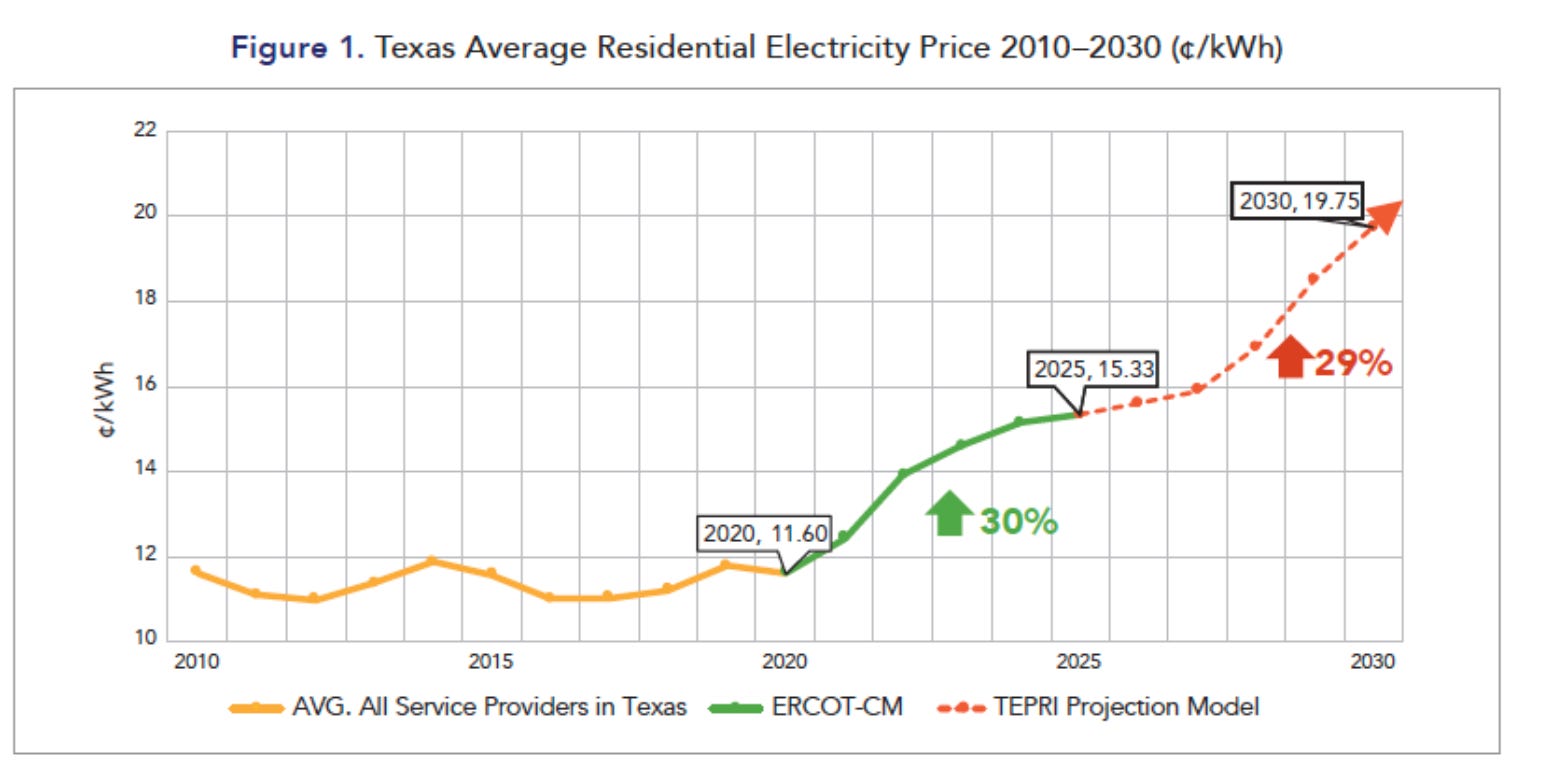
Everyone’s talking about the cost of power lately. But the Texas Energy Poverty Research Institute has been studying, talking, writing, and working to do something about it, for over a decade. In recent research, TEPRI found that 65 percent of low and moderate income Texans are cutting back on essential energy use, often turning off AC in extreme heat. But their demand reductions aren’t necessarily saving them much money or supporting the grid. Affordability is now a very high salience issue and there’s no one better to help us understand than TEPRI Executive Director, Margo Weisz. She talked about energy burden and affordability in Texas and the clearest paths to ratepayer relief.TEPRI’s latest research shows bills increasing sharply over the last five years and again in the next five years: TEPRI Releases ERCOT Electricity Affordability Outlook: Forecasting Residential Electricity Prices and Burdens (2025-2030)Energy burden is rising sharplyEnergy burden is the share of income spent on electricity. In Texas:* ~4.5 million households are low or moderate income.* Their average electricity burden for a low income Texan is nearing 7% — that is, they pay 7% of their income for their power costs alone — and expected to be 9% by 2030.* TEPRI’s modeling shows about a 29 percent increase in the cost of power over the last five years, with another 29 percent projected for the next 5 years.* The biggest increases are coming from transmission and distribution utilities.Wages are not keeping pace, leaving an average affordability gap of roughly $850 per year.Because of this, households are taking risky steps — or getting shut offAs TEPRI’s survey shows, they are turning off or limiting AC in dangerous heat, skipping essentials to pay the bill, and accumulating arrears until shutoff notices arrive. And 12% were actually shut off. But Texas does not track disconnects so we don’t know if this survey matches actual shut-offs.These actions point to system-level strain. They increase health risks and make reconnection more expensive for everyone.Efficiency and distributed energy are long term solutionsEfficiency is the fastest, cheapest way to cut bills and peak demand. Weatherization and efficient HVAC could reduce load and permanently lower costs for the households who feel the most pain.Distributed energy goes one step further. Community solar, batteries, and virtual power plants at homes and apartments can lower bills, reduce peak load and improve resilience. Final ThoughtsEnergy burden is the lived reality of the Texas grid. Millions of Texans are paying nearly 9 percent of their income for electricity, and many are already taking unsafe steps to stay connected.But we have real options. Smarter enrollment for bill help. Scalable efficiency. Community solar and virtual power plants that lower costs and support ERCOT.If this work matters to you, share it with someone who cares about Texas energy, and consider subscribing so we can keep tracking what works and where Texas can lead.Timestamps* 00:00 – Intro and why energy burden matters* 02:00 – Margo’s background and TEPRI’s mission* 04:00 – “energy limiting behaviors” often aren’t saving much money* 05:00 – Community Voices Energy Survey and behaviors* 06:30 – How Bandera Electric Co-op is helping their customers* 08:30 – Texas does not track disconnect data* 10:00 – “Sexy energy efficiency” and heat pumps; the split incentive problem* 12:00 – TEPRI’s approach to applied research* 13:30 – Defining and measuring energy burden* 17:00 – the potential for energy abundance and what that means for low-income Texans * 19:00 – Texas rates are lower but rising faster than the national average. Why?* 22:00 – How do we allocate costs for socialized grid upgrades and storm recovery? (SB 6 implementation)* 27:00 – What’s going to happen to bills in the next 5 years?* 30:00 – Where some downward pressure for prices could come from* 32:00 – What do we do about all this?* 35:00 – Bill assistance and the future of LIHEAP* 36:00 – Scaling efficiency and demand response in Texas* 39:00 – Virtual power plants in low-income communities* 41:00 – Enlightened self interest: helping those in need helps everyone* 43:00 – Margo’s closing thoughtsResourcesGuest & Company* Margo Weisz – LinkedIn* Texas Energy Poverty Research Institute (TEPRI) - LinkedIn Company & Industry News* TEPRI New Report: “ERCOT Electricity Forecast Outlook”* TEPRI Receives Outstanding Non-Profit Award at Texas Energy Summit* TEPRI 10-Year Anniversary Celebration and Future of Energy in Texas * Community Voices Energy Survey* E4-TX Geo-Eligibility Tool* Low Income Energy Assistance Program on TX System Benefits ChargeRelated Podcasts by Doug* Why Your Utility Bill Keeps Rising YouTube* Creating a Distributed Battery Network with Zach Dell YouTube* How Data Centers Can Strengthen the Texas Grid with Astrid Atkinson YouTubeRelated Substack Posts by Doug* The Affordability Crisis Deepens: Reading & Podcast Picks, August 31, 2025 * An Expensive and Unnecessary Capacity Market* Energy Inflation* Texas Has Never Had a Summer Blackout — Here’s Why That May ChangeTranscriptDoug Lewin (00:05.548)Welcome to the Energy Capital Podcast. I’m your host, Doug Lewin. And my guest this week is Margo Weisz. She is the executive director of the Texas Energy Poverty Research Institute or TEPRI. Everybody these days is talking about affordability, and rightfully so. Affordability played a very important role in the recent elections in New Jersey, Virginia, and Georgia. And we are seeing increasing numbers of Americans and of Texans that are struggling to pay their bills, that are making that terrible choice between food, medicine, and their power bills. As high as 30 and sometimes 40% of Texans making those choices. TEPRI has done incredible work with their Community Energy Voices survey, where they surveyed 6,500 low-income Texans and found that more than 60% of them were engaged in energy-limiting behaviors. Translation of energy-limiting behaviors is, in some cases, particularly with medically vulnerable populations, extremely medically risky. This is a problem we’ve got to solve together. And as I talked about with Margo, who’s just a fantastic leader in this space in Texas, the solutions actually can help across the grid. One of the things TEPRI is working on is distributed energy resources at multifamily facilities. And one of the things we talked about there is how all of us benefit from implementing those kinds of solutions. It’s what I’ve referred to—I didn’t come up with this term; I’ve heard it in a lot of different places—but enlightened self-interest. If we are getting solar and storage and energy efficiency out widely, particularly to low-income Texans, that strengthens the grid for all of us while it lowers their energy bills. So looking for those win-win-wins is what Margo and TEPRI are all about. I hope you enjoyed this episode and, as always, if you did, please share it with a friend, family member, or colleague and please leave us a five-star review wherever you listen. And with that, here’s my conversation with Margo Weisz.Margo Weisz, welcome to the Energy Capital Podcast.Margo Weisz (02:11.64)Thank you, Doug. It is awesome to be here with you. Yeah.Doug Lewin (02:15.662)We’ve been talking about this for a while, but this is timely because you guys have a really important paper coming out that we’re going to talk through a little bit. But before we get into all that, can you just share with the audience a little bit about the Texas Energy Poverty Research Institute? What do you guys do? What’s it all about?Margo Weisz (02:29.486)Right, we’re a statewide nonprofit and we address the acute energy needs of people with low incomes. And we do it in a variety of different ways. As our name says, we do some research and we’re going to talk a little bit about that today. And the cornerstone of our research is a survey of low-income households throughout the state. And I know we’re going to get to that. We also do some pilot projects. So we take what we learn in that research and then we try to figure out some strategies to solve some of the challenges that low-income households face by doing a variety of different pilot projects on the ground. We also have some web-based tools that we use, that we’ve created, and we do a little bit of education as well.Doug Lewin (03:09.134)Great. Thanks for that. We’ll have information on the organization in the show notes. So folks that want to learn more about TEPRI, I encourage you to go check out their website. You just mentioned the Community Voices Energy Survey. You all surveyed 6,500 Texans who are low or moderate income. Can you talk a little bit about what are some of the key takeaways from that for you? What a fantastic exercise. Yeah. So what did you guys learn?Margo Weisz (03:32.626)Right. I mean, it’s so important for us to really have our work guided very much by the experience and the priorities of the people that we serve. So we focus on affordability, reliability, and clean energy. What are their behaviors around it? What are their priorities? What are their concerns? So that’s kind of—we just ask a whole variety of questions about their experience in a day-to-day environment with energy. It’s very illuminating for us.Doug Lewin (03:59.756)Yeah, and one of the things that really stuck out to me out of that was 65% of the low and moderate income Texans you surveyed said they engage in, quote unquote, energy-limiting behaviors. I mean, that to me was sort of an eye-popping figure. Can you talk about why that’s so important?Margo Weisz (04:16.649)Yes. So I think these are the ways that people try to lower their bills. So they think to themselves, “How can I lower my bills? I can turn off my air conditioning when it’s, you know, a hundred degrees outside, because it’s probably really expensive if it’s a hundred degrees outside,” or “I can turn off my heat or turn down my heat.” You kno
Thanksgiving Week RepostThis episode originally aired in June 2024. We’re resurfacing it because the core idea discussed here were timely then and even more timely now.We’ve also refreshed the audio, with improved mixing and mastering for a clearer, smoother listen.Crusoe has scaled dramatically since this conversation, including major new funding and new projects in Texas. With so much energy news focused on problems, it felt right this week to highlight solutions in action.When most people see flares in the Permian, they wonder why all that energy is being wasted. Crusoe’s co-founders figured out how to put that wasted energy to good use. They started with cryptocurrency mining and have steadily moved to AI data centers. Over the last few years, they have found themselves perfectly positioned to grow as the AI boom took hold. They’ve recently completed the 8th building at Stargate in Abilene for Open AI and Oracle. They’re also building facilities for Google near Amarillo. In this conversation from May 2024, Crusoe Co-Founder, President, and COO Cully Cavness and I talked about the rapidly growing size of data centers, the flexibility of different kinds of data centers, and how large loads can increase grid reliability. This was one of the earlier podcasts on these topics and I think it holds up really well. For those looking for more on the topic, here are some other Energy Capital Podcasts covering similar ground:What Has Changed Since ThenWhen this episode first aired in mid-2024, Crusoe was already shifting from “flare mitigation plus computing” to a broader energy-first AI infrastructure model.In the time since:* Crusoe has become one of the most aggressive builders of AI data centers in the country. It is now described as an “AI factory company” with a vertically integrated cloud platform built around stranded and low-cost energy.* Abilene, Texas moved from concept to centerpiece. Crusoe is building a 1.2 gigawatt data center at the Lancium Clean Campus outside Abilene — Stargate — as the first phase of a planned 5 GW campus. * The company’s capital and pipeline exploded. Since 2024, Crusoe has raised hundreds of millions of dollars to scale “clean energy data centers,” then a further $1.3 billion in Series E financing, bringing total funding close to $4 billion and valuing the company around $10 billion.In other words, the approach Cully describes in this episode has scaled — rapidly. Why The Core Idea Still Matters For TexasThe heart of the episode is simple:* Methane mitigation is still some of the lowest-hanging fruit in climate policy. Crusoe’s digital flare mitigation aims for 99 percent plus combustion efficiency, cutting the climate impact of flaring while turning waste into power.* Curtailment and congestion are still big problems in West Texas. A “go to the energy” model lets data centers soak up low-priced or stranded wind and solar instead of forcing renewable operators to shut down when prices go negative.* AI loads can be designed to help rather than hurt the grid. Some training workloads can be paused or shifted toward hours when renewables are plentiful. That kind of flexibility is exactly what ERCOT needs as large loads and renewables grow together.Texas sits at the center of all three issues. We flare and vent more than we should. We waste clean power when transmission is full. We are a magnet for AI and industrial loads.Crusoe’s solutions help with all of these challenges. Final ThoughtsThis episode is worth revisiting because it offers a concrete picture of one possible future for Texas: fewer wasted molecules, less wasted renewable power, and more large loads designed with the grid in mind.If you listen again with today’s headlines in mind, I would be interested to hear what stands out for you. If you know someone working in oil and gas, renewables, or AI infrastructure in Texas, feel free to share it with them.We will not get every siting decision right. But we do have choices about whether AI growth deepens our problems or helps solve them.Timestamps* 00:00 – Introduction* 01:30 – Cully’s background and the origin story of Crusoe* 08:00 – How digital flare mitigation works and why it cuts methane emissions* 15:00 – Digital renewables optimization, negative pricing, & stranded wind power* 21:00 – Data center and AI demand growth and what it means for the grid* 28:00– Flexibility of AI workloads and how data centers can act as flexible loads* 38:00 – Efficiency gains in AI chips and power density in modern racks* 41:00 – Location-based versus market-based carbon accounting* 43:00 – “Tally’s Law” and what it tells us about the energy transition* 50:00 – Policy and regulatory changes that could accelerate this kind of solutionShow NotesHost, Guest, & Company• Cully Cavness - LinkedIn, Twitter/X• Crusoe Energy - Crusoe Careers Page - LinkedIn, Twitter/X• Doug Lewin - LinkedIn, Twitter(X), Bluesky, & YouTubeMentions in the Podcast:• Tally’s Law and the Energy Transition by Cully Cavness• The Extraction State by Charles Blanchard (book)• AI, Data Centers & Energy, Interview w/ Michael Terrell - Redefining Energy Podcast• AI is poised to drive 160% increase in data center power demand - Report from Goldman Sachs• Nuclear? Perhaps! - Interview with Jigar Shah on the Volts Podcast• Texas Advanced Nuclear Reactor Working Group at the Texas Public Utility CommissionRelated Energy Capital Podcast episodes:• The Energy Capital Podcast with Former PUC Commissioner Will McAdams• “The Name of the Game is Flexibility,” a Conversation with ERCOT’s Pablo VegasTranscriptDoug LewinCully Cavness, welcome to the Energy Capital Podcast.Cully CavnessThank you so much for having me.Doug LewinReally looking forward to this conversation. Crusoe is really a fascinating company. You guys are doing some really innovative, interesting, and different things. So why don’t we start with you, Cully? Tell us a little bit about your background and about Crusoe. Explain to the audience a little bit who you guys are as a company, if you would.Cully CavnessGreat. I’m excited to be here and share a little bit about what we’re doing at Crusoe, where we came from, where we’re going. In terms of my personal background, I grew up in Denver, Colorado. I went to Middlebury College in Vermont to study and I studied geology and economics thinking I was gonna go into oil and gas. But at Middlebury, anybody who’s familiar with the school will know that the climate conversation was a huge theme and a huge focus in that student body. And it made a big impact on me.And so I actually, right after I graduated from college, I was awarded a Thomas Watson Fellowship, which is a program where you’re sort of banished from your home country for a year and you get to go study whatever subject you really want to study for that year. And I wanted to think about this sort of morality of energy and the balance between energy and the economy and the environment. And so I was really fortunate to be able to go to Iceland where I worked with a lot of geothermal power and hydro producers. I went to China where I was much closer to coal. And then I went to Spain. I worked with wind and solar developers for the CFO of a large renewables group there. And then I went to Argentina and I worked with a hydroelectric engineer.And I got to really see a pretty broad survey of the global energy system, everything from finance to project development and management to engineering and operations. I saw power plants that had broken and were in stages of repair and learned a lot from that experience.And from that, I ended up going into the geothermal energy industry. I had a mentor who was the CEO of a company called Global Geothermal, and he took me under his wing. And for the first few years of my career, I was developing geothermal power plants, mostly internationally. And then sort of long story short, I ended up doing an MBA over at Oxford in England and came back to an oil and gas focused investment bank here in Denver. It was sort of the one energy focused investment banking role in Denver, primarily oil and gas clients. And that brought me back into the oil industry. I ended up being a Vice President of Finance for a private equity backed oil and gas company after that. And we were drilling some exploratory oil and gas wells in Eastern Colorado. That was sort of a step out from the core shale play, the Niobrara. We were miles away from the core of the activity. We drilled some wells that ended up being good oil wells, but there was no natural gas pipeline infrastructure in that area. And so the default then is, at least at the time was, all right, if you can’t get the gas into a pipe, you put the oil into a truck and you send the truck to the refinery. That’s how you sell the oil. And you can’t do that with the gas, so you just light it on fire and you burn it. It’s called a flare. And I thought that was pretty insane. And I was frankly, I was embarrassed about it. You know, just considering the path that I’d gone through and that I had really wrestled with that intersection of climate and environment on one side, but then the economic and human benefits of energy access on the other.Wasting the energy the uncombusted methane emissions. I had a big problem with that and I’ve been you know, I’ve been playing around with mining Bitcoin as a hobby in my basement and my wife was observing that you know, the there’s like hot wind coming out of the basement and our power bill had dribbled and that’s also a commercial problem related to energy and an environmental problem related to energy. And the insight was basically maybe one of these problems can solve the other. What if we could package a modular data center that could go to the oil field, actually sit on pad next to a flaring well site, capture that gas that was being flared, turn it into electricity, use the electricity to power the modular data center and basically new way to, we called it the digital pipel

“Everyone hates data centers.”That was the subject line on the email newsletter from Heatmap Daily the day before I sat down with Dr. Varun Sivaram, co-founder and CEO of Emerald AI. Communities see huge new loads coming onto the grid, hear about billions in new infrastructure, and worry that their bills will go up.It doesn’t have to work that way.Varun argues there are two paths. On the villain path, AI data centers drive up power bills and increase the likelihood of outages. On the hero path, they become flexible grid assets that help us use existing capacity better, absorb much of the cost of new grid infrastructure, and help residential and small commercial customers pay for distributed batteries, heat pumps, and more.Texas and ERCOT are at that fork in the road.Two futures for AI data centersVarun calls this a “critical juncture.” If ratepayers have to pay more and grid reliability takes a hit, communities start pushing projects away and the U.S. falls behind in the global AI raceThe alternative is the hero path, where data centers show up as flexible partners:Data centers in this hero path are going to contribute to grid reliability and help us to avoid rolling blackouts. I think we can get there, but we’re not on that path right now and folks are right to worry. And this is the moment where we switch from the villain to the hero.Texas has a chance to innovate — both technologically and with policy. Regulatory innovation is as important as technological innovation — maybe more so.Turning AI load into flexibilityEmerald AI is a software layer that makes AI workloads flexible. Varun breaks it down into four kinds of flexibility:* Temporal. Once you know what can move, you can shift it in time. Training a big model at 6 p.m., when ERCOT is tight, is very different than running it at 2 a.m. when prices are low and resources are abundant.* Spatial. Many jobs can move across locations. If a Texas node is stressed and another region is fine, traffic can be shifted without changing the user experience.* Resource. Some tasks truly need instant answers, others can wait minutes, hours, or days. Emerald deploys and optimizes onsite resources when necessary.* Adjacent. Data centers can purchase flexibility — putting money into the pockets of residential and small commercial customers — from distributed batteries, HVAC systems, and other controllable equipment. Put together, these layers make a data center behave less like a rigid block of demand and more like a flexible grid asset when conditions require it.The Energy Capital Podcast is a reader-supported publication. To receive new posts and support my work, consider becoming a free or paid subscriber.ERCOT’s stakes and the Texas choiceVarun shared a conversation with ERCOT CEO Pablo Vegas. Vegas said he did not just want a tool that jumps in during emergencies. He wanted something that keeps the grid from getting to an emergency. Don’t want for the flashing red lights; have data centers contribute flexibility when the lights are flashing yellow.That is the heart of the hero path.ERCOT was already dealing with intense load growth from industrial projects, crypto-miners, traditional data centers, increasing population, hotter temperatures, and now AI data centers. Texans will not accept anything less than high reliability and lower bills. If the PUC and ERCOT treat AI as inflexible, we will need to build a lot more capacity and infrastructure than we might otherwise need.If we require and reward flexibility, we can serve more load at lower cost, then add new infrastructure when truly needed.Final ThoughtsThe hardware and software inside AI data centers means they are already some of the most controllable loads connected to the system. With the right tools, incentives, and market structures, AI factories can act as shock absorbers instead of stress multipliers.Texas leads on gas. Texas leads on wind. Texas leads on solar and storage. We can also lead on making AI an ally to the grid, not a villain. That will take work but it is possible. It’s a choice we can make.If you enjoyed this podcast, please share it with a friend or colleague or family member or neighbor. The more Texans engage with these decisions, the better chance we have for a grid that is reliable, affordable, and cleaner for everyone.Timestamps:* 00:00 – Intro, Varun bio, Emerald AI* 02:15 – The villain and hero paths for AI data centers* 05:30 – Phoenix pilot as a tangible example of the hero path* 09:00 – California simulation of 2020 outages* 10:00 – Possibility of doing a pilot in ERCOT, Pablo Vegas’s comments* 12:00 – What exactly does EmeraldAI do?* 14:00 – Breaking down four flexibilities: temporal, spatial, onsite resource flexibility, adjacent* 20:00 – Emerald AI’s focus is on onsite flexibility* 24:00 – Real-world stress test results* 27:00 – What excites Varun about AI* 32:00 – How AI can help lower power bills: the central tenet of the hero path* 36:00 – Why ERCOT is potentially the global model for speed to power* 40:00 – Connect-and-manage for loads* 43:00 – A reference design for AI factories from a pilot in Virginia* 46:30 – The hero and villain path for AI and emissions* 49:00 – Optimizing the system to buy time until nuclear, geothermal, etc. are ready* 51:30 – Getting a win-win-win: on affordability, on AI innovation, and sustainable, reliable systems* 52:30 – Final thoughts: the Emerald AI teamResources:Host, Guest & Company• Varun Sivaram - Linkedin • EmeraldAI - LinkedIn• Doug Lewin - LinkedIn, Twitter(X), Bluesky, & YouTubeCompany News• Sharing Our Seed Extension - Press Release• National Grid and Emerald AI announce strategic partnership - Press Release• How AI Factories Can Help Relieve Grid Stress - Press Release Books & Articles •The Worlds I See: Curiosity, Exploration, and Discovery at the Dawn of AI by Dr. Fei-Fei Li•The Country’s Biggest Grid Has a Plan to Manage Data Centers’ Power Use. Everyone Hates It. - Heatmap News •The mechanics of data center flexibility - Catalyst Podcast (Latitude Media) •How the world’s first flexible AI factory will work in tandem with the grid by Arushi Sharma Frank in Latitude MediaPolicy & Reports • Report on disorganized integration of data centers - Texas Reliability Entity • 2025 State of Reliability - NERC• The Worlds I See - Dr. Fei-Fei Li• Arushi Sharma Frank’s ERCOT Planning Guide Revision Request• Retail Electricity Price and Cost Trends: 2024 - Lawrence Berkeley Labs• Rethinking Load Growth - Tyler Norris and Duke University• ANOPR on Large Load Interconnection - FERC• Emerald AI: presentation to ERCOT Large Flexible Load Task Force • PGGR 135: Large Load Interconnection Queue Process RevisionRelated Podcasts by Doug• How Data centers Strengthen the Grid - Astrid Atkinson• Texas’ Load Growth Challenges – And Opportunities, with Arushi Sharma Frank• How Load Flexibility Could Unlock Energy Abundance with Tyler NorrisRelated Substack Posts by Doug• AI Data Centers Aren’t Causing Higher Prices • Demand Side Resources Could Enable Load Growth• Can AI Data Centers Lower Costs for Residential Consumers?Transcript:Doug Lewin (00:05.154)Welcome to the Energy Capital Podcast. I’m your host, Doug Lewin. My guest this week is Dr. Varun Sivaram. Varun is one of the most interesting guests I’ve had in the three years now I’ve been doing podcasts, both the Energy Capital Podcast and going back to the Texas Power Podcast. He is the founder of Emerald AI, a company which is transforming energy-intensive data centers into grid assets and grid allies. We talked about all the different ways that data centers, if integrated right... The Texas reliability entity brought this up in a report: the possible disorganized integration of data centers into the grid is one of the biggest reliability risks. I would argue, and clearly Dr. Sivaram argues, the counter is true as well. The organized integration of data centers can actually make grids more reliable and spread costs out to more customers.We got into all of that. Just a couple of notes on Varun: He was formerly the chief strategy and innovation officer at Ørsted. He was the chief technology officer of India’s largest clean energy company, ReNew Power. He was a diplomat at the US State Department. He is currently a senior fellow at the Council on Foreign Relations. He was named as one of Time Magazine’s Time 100 Next for the next 100 most influential people in the world. MIT Technology Review named him one of the top 35 innovators under 35. You get the idea. He also has a PhD in condensed matter physics from Oxford. This bio is kind of ridiculous. Clearly one of the smartest people out there in this space, and this company, Emerald AI, is really doing some super innovative things with some really high-level partners, including NVIDIA and others. I think you’ll enjoy this conversation as much as I did. Please leave us a five-star review wherever you listen.And most importantly, if you are not already a subscriber at douglewin.com, please go there and become a subscriber today. Your support for the podcast really makes it possible. And with that, here is my conversation with Dr. Varun Sivaram.Varun Sivaram, welcome to the Energy Capital Podcast.Varun Sivaram (02:19.256)Thanks so much for having me. It’s an honor.Doug Lewin (02:21.514)Hey, it’s great to talk with you. I have been reading article after article about Emerald AI. I saw your presentation to the large load task force a couple of months ago in Texas and have been meaning to do this for a while. So thanks so much for taking the time. We’re going to obviously talk about Emerald AI. We’re going to talk about Texas and data center growth. We’re going to talk about all of these things, but I just want to start from a very high level, Varun. We are recording here on November 7th. Yesterday, Heatmap News had a very provocative headline: “Everyone hates data centers.” I don’t know that that’s actually true, but I know what they’re trying to say. Th
This is part 2 of my conversation with Nat Bullard. Check out Part 1 here:We talk a lot about the grid of the future. The truth is, that future is already showing up in Texas.Batteries are being built at record pace, data centers are chasing cheap and reliable power, and Texans are adding gigawatts worth of backup systems in homes, schools, and factories.I sat down with energy analyst Nat Bullard to ask a simple question: if we look at what is actually being built — not the rhetorical arguments happening online, but what is actually happening around the world — where are energy systems headed?We started with a comparison of batteries and gas peakers. Batteries respond in milliseconds, don’t rely on fuel deliveries during a freeze, and can make money all day providing grid services between scarcity events. Increasingly, duration is less of an issue as prices fall. As Nat reminded us, during Winter Storm Uri it was “largely things in the thermal fleet” that failed. Winterizing batteries is likely much less onerous and complicated than winterizing gas plants.Behind-the-meter systems are also booming. One- to ten-megawatt batteries can turn schools or factories into mini-resilience hubs. If Texas keeps adding storage at this pace, we could end up with the equivalent of dozens of peaker plants—only more responsive and decentralized. Nat concluded with a description of his family as a mix of, a ground source heat heat pump, a mini split, and a Franklin stove. A small hybrid system built to ride out different conditions. That is a good picture of where ERCOT is headed: a mix of gas and batteries, large wires and local resources, data centers and smart devices. The question is whether we design structures to speed up that hybrid grid on purpose or stumble along and end up there eventually anyway. The first path costs a lot less. The more we learn from what’s actually happening — the focus of Nat’s excellent annual decarbonization presentation — the more cost effective our decisions will be for Texas.Timestamps:* 00:00 – Introduction* 01:30 – Price and attributes of batteries compared to gas peakers* 03:45 – The optimal generation stack; a portfolio approach* 07:00 – “Ruthlessly practical” developers* 09:00 – Distributed batteries and community resilience* 12:00 – Australia’s rapid installation of distributed storage* 15:00 – Texas Energy Fund’s viability* 16:30 – Global solar scale and trends* 21:00 – Electrifying countries without electricity * 23:00 – The absurdity of arguments against distributed energy* 25:00 – Automated flexible demand; using buildings as thermal batteries* 30:00 – Winter problems in ERCOT* 31:30 – Primary energy is a deeply flawed metric* 35:00 – Looking ahead to Nat’s 2026 Decarbonization slideshowResources:Guest & Company* Nat Bullard - LinkedIn* Halcyon - Company Website + LinkedIn* Nat Bullard’s Famous 200-Slide Presentation* Nat’s NY Climate Week Presentation (From Disparity to Data)Referenced in this Episode:* Energy Capital Podcast with Bill McKibben* The Energy Capital Podcast with Zach Dell* The Energy Capital Podcast with Bret Biggart:* The more recent podcast with Zach Dell et al. Studies & Policy Documents* GridStrategies Report on Data Center Demand* International Energy Agency Solar ProjectionsDoug’s Platforms* LinkedIn* YouTube* X (Twitter)Transcript:Doug Lewin (00:06.422)Welcome to the Energy Capital podcast. I’m your host, Doug Lewin, and welcome to part two of my conversation with Nat Bullard. Nat, as you heard last week, is the co-founder of Halcyon. He is also the one who puts together a fantastic energy transition and decarbonization presentation that comes out every January, which we talked about in this podcast. All around, one of the great experts on all things energy transition and decarbonization. I learned a ton from talking to Nat. I couldn’t let him go after the usual 45 to 50 minutes. We ended up going long, so we split it into two parts. This is part two.As usual, please go to douglewin.com and subscribe. Please become a paid subscriber if you are not already. This is a free episode, but it is not free to produce, and your support is extremely important to us. And you’ll get all kinds of benefits: access to the entire archives, grid roundups, reading and podcast picks, special episodes of the Energy Capital podcast that are paid only, like those with John Arnold and Dan Barcelo from T1, Rudy Garza from CPS Energy, et cetera. And please leave us a five-star review wherever you listen to your podcasts. Please enjoy part two with Nat Bullard. Thanks for listening.So that kind of leads me to where I wanted to go next. You obviously do a whole lot of tracking of batteries. We’ve been talking about electric vehicles a lot. Obviously batteries first started their performance improvement and cost declines because of their use in computers and phones. But now we’re seeing them go into cars on a mass scale and now onto the grid in a really mass scale. I mean, how do you think about that as far as the price comparisons for batteries, particularly gas peakers? Combined cycle, I would almost put in a little bit of a different category because you’re talking more about something that’s going to have a much higher utilization. These days, I think there weren’t a lot being built. There were very few being built, particularly in Texas, but I think just about anywhere with data centers, I think we’ll see some more built.But still in Texas, for instance, in the Texas Energy Fund—this is obviously the subsidy program the Texas legislature put in place a couple of years ago, $7.2 billion in subsidies for gas plants—something like 80% of the projects that applied and were chosen, I think it actually is closer to 85%, were peaker plants. And that’s because we do have an energy-only market. Like you said, in a market, people respond to incentives. The incentives are for short bursts of very high prices. And when you start to stack the peakers up against batteries, and of course the old thing was, you can only go an hour or two, an hour or two is enough for 90, 95% of the high prices in the market. And for the rest, now we’re starting to get to where batteries are going to four or five, six, even longer hour durations. So how do you think about both the price comparison and then the attributes? How do you think differently about the attributes of a peaker versus a battery? Are they really doing the same thing?Nat Bullard (03:13.294)What’s so funny—we had this four-hour standard, more or less. And what’s fascinating about that to me is that is largely an artifact of regulation, not of anything technical. In California back in the day, all you would get paid for was four hours worth of storage. So guess what? Everybody optimizes around this artificially binding constraint that I think we’re starting to see people move past. Again, energy-only market—if there was any place that is going to be ready to do more, or for that matter, to do less, it would be Texas. And also to combine things. When I talk to the biggest of the developers, what their view is, is to meet, let’s say a 500-megawatt load for a data center, the quickest path, the critical path is probably going to be mostly renewable electrons. And within that almost entirely, probably solar, a bunch of batteries. And then you have a combustion turbine to serve the rest of the purpose, but it comes in kind of after the purpose served, obviously, by the generation, but also by the storage.And that kind of stack is the one that seems to be moving the quickest, probably at the lowest cost, and probably the best fit for anybody who’s out there operating. It’s also the one in the future that, if you want to think about future-proofing it, you’re not talking about having to rip out 600 megawatts of solar and 3,000 megawatt-hours of batteries or whatever you might be doing. You’re talking about keeping those, improving them with software, with new hardware, and then altering the final step at the end. If you were to make this a zero-carbon or zero-net-emissions in the long run, maybe the combustion turbine is running on hydrogen. Maybe you’re doing some kind of durable binding, verified carbon removal to cover the cost of the emissions that are there.So I guess my way of thinking is to be a bit more ecumenical about all of this and also watch what the smartest people who build stuff are already doing, watch how they’re going about it and thinking about doing this and viewing these things as generally part of a portfolio approach as opposed to either “if this then that” or an “either/or” approach. Not like if I’m doing this I therefore have to do that, but I’m doing that because it makes the most sense and not I’m doing this or I’m doing only that. Now there are constraints elsewhere. Again, Texas is a unique market where if you have the land and the wherewithal to go build a 500-megawatt data center, you probably can locate the land and have the wherewithal to do a similar amount of power generation. It is less the case in, say, Pennsylvania or in Maryland. So it’s going to be different elsewhere, but you all have a unique market down there for this kind of thing.Doug Lewin (05:51.948)Yeah, it’s incredibly challenging here too, but I think it is more doable than in those other places. I also think that there is too much kind of either/or. I think there’s actually benefits to having both on the system—gas peakers and batteries. Obviously batteries, whatever the duration is, they are duration-limited at some point. They’re going to run out. Now the sun will come back up and charge them or wind blows and charges them or turn the gas plant on and charge them, if you have enough power to do that. And we also get times when the gas plants aren’t working, particularly in extreme cold. We’ve had severe problems with that. Having a battery that can operate while you’re getting people to the site to figure out what’s going on with the gas plant to get i
This is Part 1 of my conversation with Nat. Part 2 will be out next Wednesday. The Video is Live on YouTubeTexas has plenty of energy stories. The harder part is finding the signal through the noise of endless filings. That is why Nat Bullard’s new venture, Halcyon, matters. It turns piles of ERCOT and PUC dockets into something manageable. It’s AI that makes dense regulatory filings sortable and understandable.Meanwhile, Nat’s annual presentation has become must-read material for anyone trying to understand what’s happening in the world of energy: the market forces, capital shifts, and technologies driving global change. He looks at macro trends like EV adoption, clean-tech capital flows, global cost curves. We talked about one of the main takeaways from this year’s edition: China’s dominance in EV manufacturing and exports The Texas Energy and Power Newsletter is a reader-supported publication. To receive new posts and support my work, consider becoming a free or paid subscriber.We also talked a lot about a recent study Halcyon did with GridLab to quantify the rapidly escalating costs of gas turbines. I asked what his biggest takeaway from compiling that research:“The biggest one for me being at a $2,500 a kilowatt cost for a combined cycle gas plant. What other competing options are there for providing power?”At that cost, there are many better options, including re-using older turbines as many of the data center developers are doing. Storage that can be sited quickly. Demand flexibility can meet much of the need. Solar is still going onto the grid at about a gigawatt per month. Targeted wires upgrades and fast local capacity can bridge the gap while long-lead assets work their way through the process.I left this conversation thinking about how information itself is infrastructure. If we can see what’s changing — if the opaque can become more transparent — we can make better, more informed decisions. Please share this episode with someone who will get something out of it and subscribe to keep the conversation going.Timestamps:* 00:00 – Introduction* 02:00 – Guest welcome, Nat Bullard* 03:00 – How Halcyon can find needles in large regulatory haystacks* 06:00 – Relevance to the Oncor rate case* 09:00 – Tracking changes in gas plant costs and across filings* 10:00 – ERCOT vs. utility load growth projections* 14:00 – Queue reality vs capacity* 16:00 – Regulators’ role to align incentives and process* 18:30 – Nat’s annual presentation* 20:00 – How Nat builds his presentation* 23:30 – China is the dominant EV manufacturer* 26:00 – Will America ever import Chinese EVs?* 27:00 – American manufacturing partnerships* 31:00 – Can Tesla keep up?* 33:00 – Permeability between EVs and power sector* 34:30 – Gas turbine supply limitations and costs* 38:51 – Closing note, turbine askResources:Guest & Company* Nat Bullard - LinkedIn* Halcyon - Company Website + LinkedIn* Nat Bullard’s Famous 200-Slide Presentation* Nat’s NY Climate Week Presentation (From Disparity to Data) * GridLab White Paper with Halcyon on Natural Gas TurbinesIndustry News & Podcasts* Oncor Rate Case* Odd Lots Stargate PodcastStudies & Policy Documents * Texas Senate Bill 6* PUC Load Forecasting Docket 58480 * PUC Financial Assurance Docket 58481Doug’s Platforms* LinkedIn* YouTube* X (Twitter)Transcript:Doug Lewin (00:05.42)Welcome to the Energy Capital podcast. I’m your host, Doug Lewin. My guest this week is Nat Bullard. Nat is and has been for a long time one of the smartest guys on energy issues. I know I have been reading his stuff long before I knew him. He does a now famous slideshow, highly anticipated by folks in the energy space that comes out every January. The last one, as many of the ones before, 200 slides long. We talked a little bit about his process for pulling all that together. He was at New Energy Finance before it was acquired by Bloomberg, wrote a newsletter that was read by hundreds of thousands of folks. He is more currently the co-founder of Halcyon, an AI-assisted research and information platform focused on energy transition. I have started using it a lot. It is great for those of us that are tracking regulatory dockets, sometimes with their many hundreds or even thousands of filings within a single docket. It is a great way to quickly summarize some of those documents. Highly recommend folks check that out. We will have a link to that as well as his famous slideshow presentation in the show notes. This conversation did go long. I love talking to Nat. And so we split this one into two. In this first one, you’ll hear a whole lot of discussion of China. He’s based in Singapore, including a whole lot on EVs and the future of the automotive industry, a whole lot more. I think you’re really going to enjoy this and then come back next week to listen to the other one. Also, please don’t forget to give us a five-star review wherever you listen to the podcast and also to subscribe to the Texas Energy and Power newsletter and to the Energy Capital podcast. This is a free episode. It is not free to produce. Becoming a paid member at Substack really helps support our activity. So please do that today if you haven’t already. And with nothing further, please enjoy the Energy Capital podcast with Nat.Nat Bullard (02:05.634)Doug Lewin, thank you for having me. What a treat. I was just listening to you on the treadmill yesterday, and here we are in the flesh, so to speak.Doug Lewin (02:14.868)It is, I can’t tell you Nat how gratifying it was to get an email from you. I can’t remember when you sent it a couple months ago, six months ago or something saying, really enjoying the newsletter. I said to my wife, I’m like, I got a note from Nat Bullard today. Of course she’s not in the energy world. So she’s like, who? And I told her, you’re a big deal. She needs to know who you are. Nat, for anybody in the audience that doesn’t know, Nat does this, I think everybody probably will, but this amazing annual presentation. I’m sometimes asked by people, Hey, you seem to know a thing or two. Like what are some of the sources you learn from? And you’re one I always name, especially for folks that kind of want to get a global perspective. So we’re going to talk about that. What you’re doing with the presentation, some of the major takeaways, what you’re looking at for next year. But first you’ve got this new venture, which sounds super exciting to me as somebody who spends a lot of time reading regulatory filings and trying to dig through regulatory filings, ERCOT, NPRRs and all that kind of stuff. Let everybody know what you’re up to with Halcyon before we jump into the rest.Nat Bullard (03:19.662)With pleasure, Doug. So I spent a long time in the energy and the decarbonization research business. I was 15 years at the startup and then a company that got acquired by Bloomberg, New Energy Finance that became Bloomberg New Energy Finance became BNEF. And when I finished and took some time out on my own, I realized that I still have a real yen for the information business and the information in and around energy and changes in the system. And I also realized that it was a moment where technology allows us to do things that are different. And there are teams of people that are willing to deploy it and interested in building something new around it that viewed all of the stuff that you just described, you know, ERCOT, NPRR, or thousands of large generator interconnection agreements as a feature input for large language model and AI-driven capabilities, as opposed to a bug of people having to just read stuff by hand, so to speak, over and over and over again. And so about two years ago now, my lead investor, Andrew Beebe at Obvious Ventures, connected me with my co-founders, Bruce Falk and Alex Shuris, who are both veterans of building and operating companies and information systems at real scale, like really, really big. Billion dollar company revenue lines. Who only knows how big an information system in terms of that size, but real platforms. And we said to each other, like, what can we do with today’s new technology to answer questions and solve information challenges that we know exist? And what we settled on is that actually it’s all of that stuff. It’s everything that exists in an unstructured, as the saying would go, fashion that is all text, that is all public, at least at the initial phases, but is, as we joke about internally, a denial of service attack on getting your work done. You want to read everything in ERCOT? It’s public. Go for it. Here you go. Here’s a fire hose of tens of thousands of pages a week per institution. And there’s 50 of them plus one if you include the District of Columbia. Start including all the other things you need to include. The federal layers, the other state layers. We’re talking about on the order of probably hundreds of thousands of pages a week of information. And within those hills, there’s gold. It’s just that it’s not often conveyed in a way that is readable by machine in our old classical way of thinking about it. But with today’s technology, with AI in particular, you know, we move from computers that can compute, that can add and subtract and multiply to machines that can read and can allow us to start extracting information that we really need. If you want to find the price of something, if you want to find a change to a forecast, if you want to find how did this number turn into that number. It often exists. It’s just that you would find it in say the third response to a request for information in this part of a proceeding in that state without any change log.Doug Lewin (06:22.048)Nat, I am so into that right now. So Oncor is in the middle of its rate case and there’s exactly that going on. Environmental Defense Fund and Google and a coalition of cities in their third and fourth requests for information. And within those long questions and long replies, there’s so much good information, but man, it is hard to
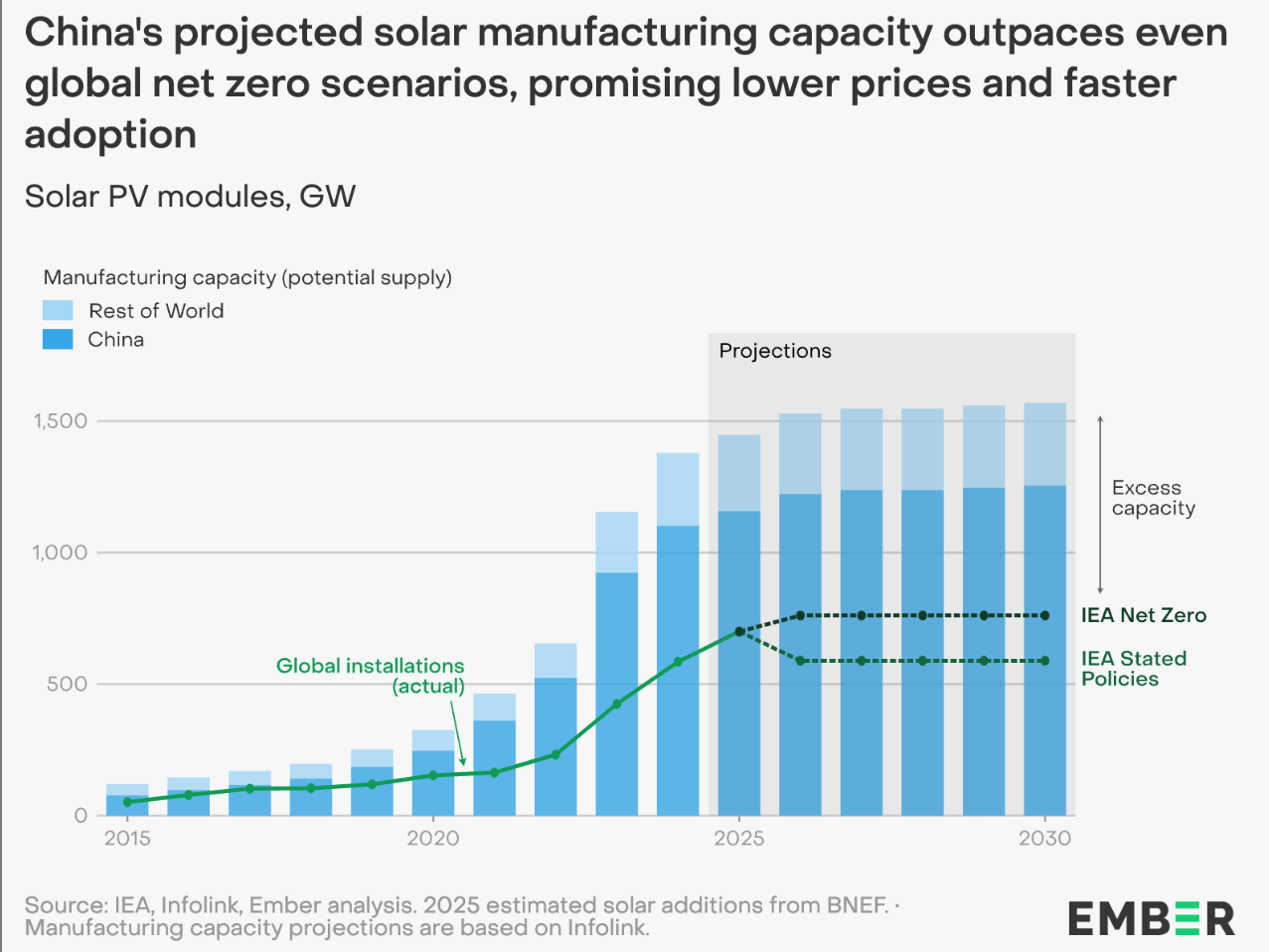
This is a free preview of a paid episode. To hear more, visit www.douglewin.comMost solar panels are imported from China which now has the ability to manufacture over a terawatt (1,000 gigawatts) of solar modules every year — roughly equal to the entire installed base of generation in the US inclusive from every energy source.America makes less than 1/20 of that amount and even less when it comes to the more difficult task of manufacturing cells. But Texas is known for manufacturing and T1 — short for Type 1 civilization — is building solar manufacturing in Texas that could change the game. This is about energy abundance that is reliable, local, and affordable. As T1 CEO Daniel Barcelo told me:“I’ve been working in oil and gas and I am an old oil and gas guy who has run oil and gas companies globally. At the end of the day, it’s really about providing the lowest cost energy in whatever form it is and delivering that energy at a cost-competitive basis to the customer. That drives the philosophy at T1.”T1’s plan is straightforward and ambitious: a multi-site Texas footprint that connects a domestic solar manufacturing chain from materials to finished modules. The company has a module assembly plant in Wilmer in the Dallas area, and is developing cell manufacturing in Rockdale in Central Texas. Upstream, they’ve lined up domestic polysilicon supply from Corning to feed those lines.While T1 scales up supply, demand for power is surging. Texas electricity use is rising rapidly, driven mostly by oil and gas demand, cryptocurrency mining, industrial electrification, and data centers. Texas demand is up 23% in the last four years; most of that new demand is being met by solar power. When more of the equipment is made here, projects move faster and carry less supply-chain risk. And solar can be scaled very quickly to meet near-term needs.“AI needs energy. Data centers need energy. They need it now. It’s great to build nuclear plants in 2030. That’s awesome. But the world’s not waiting. And the big tech companies are not waiting. And right now, solar and storage can deliver it.”This is not either-or. Texas has long succeeded by adding the next tool that works. Solar plus storage are tools for growth and we should use them. Domestic manufacturing creates jobs and strengthens our energy security and global competitiveness.Texas has never waited for someone else to build our future. If companies like T1 can stand up the full stack here, we get more than panels. We get speed, security, control, and the ability to match ERCOT’s needs with Texas-made solutions.If you found this episode useful, share it with a colleague. If you want more Texas-first, reality-based energy coverage, subscribe and join the conversation.The Texas Energy and Power Newsletter is a reader-supported publication. To receive new posts and support my work, consider becoming a free or paid subscriber.Timestamps* 00:00 – Introduction * 02:00 – T1’s Texas footprint overview* 04:00 – U.S. solar chain, Corning partnership* 05:30 – Jobs and polysilicon-to-module flow* 07:00 – Building U.S. cell capacity* 09:00 – Timelines and receptivity of Texas political leaders* 11:00 – Demand growth requires gigawatts per month* 13:00 – Competitive advantages of building in Texas* 15:30 – Oil and gas demand growth met by solar and wind, saving $1/barrel* 20:30 – When King Coal tried to kill natural gas and why gas won* 23:00 – Political economy of varying energy sources* 25:30 – Can the US build enough solar to meet domestic need and export?* 31:00 – Solar trade investigations, tariffs, anti-dumping rules, FEOC* 35:00 – Solar and manufacturing tax credits under OBBBA, “stackability”* 38:00 – How and why tax policy benefits all energy, including oil and gas* 42:00 – Will Texas continue to blaze trails and attract new energy companies?* 45:00 – Distributed power is “sovereign energy”ResourcesGuest & Company• Daniel Barcelo — LinkedIn • T1 Energy — Company Website + LinkedInCompany & Industry News• Reuters: T1 Energy and Corning agree to fully U.S.-made solar supply chain• PV Tech: T1 Energy–Corning “landmark” U.S.-made poly/wafer/cell deal• Manufacturing Dive: T1 to establish $850M solar cell facility in Texas• T1 Energy IR: Corning deal accelerates ‘Made in America’ solar • T1 Energy IR: Strategic investment in Talon PV Related Articles & Podcasts• How Batteries Are Reshaping the Texas Grid (with Suzanne Leta) • Beyond the Tax Credit Cliff (with Freedom Solar CEO Bret Biggart) • Creating a Distributed Battery Network (with Zach Dell)• The End of Solar & Battery Manufacturing in America? Studies & Policy Documents
• S&P Platts 2022 Study On Electrification of the Permian Basin
• Rystad Study on $/barrel savings
• FERC Order 636
• Section 232 Investigations
• Foreign Entity of Concern Guidance | Dept. of EnergyDoug’s Platforms• LinkedIn • YouTube• X (Twitter)TranscriptDoug Lewin (00:05.25)Welcome to the Energy Capital Podcast. I’m your host, Doug Lewin. My guest this week was Daniel Barcelo, the CEO and chairman of the board of T1 Energy. We talked about how they got their name in this episode. I think you’ll enjoy that. This is a fascinating company, headquartered in Texas. They are building out a full end-to-end manufacturing of solar in Texas. They started with the acquisition of a manufacturing plant, five gigawatts of solar module assembly in Wilmer, Texas, just south of Dallas. They are currently building in Rockdale, Texas, about 60 miles north of Austin, a cell manufacturing facility. So obviously cells are much more complicated to manufacture, much more complex than the module manufacturing. They are also in partnership with Owens Corning to get the raw materials actually sourced here in America. So that when they are done with that process in a year or two, they will have end-to-end American solar manufacturing. So we talked a lot about the potential for American manufacturing of solar, how big it is now, what its potential is to maybe counterbalance China, which is really dominating electricity supply chains throughout a whole number of different components, including all parts of the solar supply chain. They’re dominating that globally. Can America be a counterbalance? One of the things I really enjoyed about this conversation is Daniel has a great perspective, having worked in oil and gas for much of his career, really at the broad spectrum of energy. So I think that really comes through in the interview. I think you’re going to enjoy that. This is a paid episode. If you’re not already a paid subscriber, please become one today. You’ll get access to all sorts of things, roundups, reading your podcast picks, other paid episodes of the Energy Capital Podcast. Most importantly, you will be supporting the work of this podcast, the Texas Energy and Power Newsletter. They are not cheap to produce, and your six bucks a month or five bucks a month if you do an annual subscription is incredibly important, deeply appreciated. With that, let’s jump into the episode with Daniel Barcelo of T1.Daniel Barcelo, welcome to the Energy Capital Podcast. I am very excited to talk to you. T1 is making a whole lot of waves, people in Texas talking about the company a lot. Why don’t we just start from the beginning. What is T1 and tell us about the Texas operations you guys are standing up.Dan Barcelo (02:31.8)Great. First of all, Doug, thank you very much for having us. We’re always excited to talk about the T1 story, something we’re really passionate about as energy operators, managers, investors, historically. T1 Energy is building a domestic solar and battery supply chain that we want to invigorate America with clean, scalable, reliable, and low-cost energy. This is all about advanced manufacturing. This is about how do we bring advanced manufacturing capacity to unlock the most scalable resources we have. That’s what we’re doing. We’re doing this with our core foundational assets. We own and operate our five-gigawatt solar module plant just south of Dallas. That’s called G1 Dallas. And we are also building our five-gigawatt solar cell plant north of Austin called G2 Austin. Those two assets are foundational. The other part of the investments we’ve made is we also own a supply chain of polysilicon from Hemlock. Coupling that polysilicon supply chain coupled with the cell plant, coupled with the module side, we have a tremendous capacity to unlock what we think is a very scalable, renewable power asset we have available right now.Doug Lewin (03:42.39)Yeah, it’s pretty exciting because I see the vision of what you’re trying to do here, right? Because what we have in the United States right now, if I’m not mistaken, and you correct me on any of this I get wrong. This is your world. But my understanding is we’ve got something like 50 to 60 gigawatts of capacity of solar module manufacturing. So that’s sort of the last phase where you’re bringing the assembly, kind of bringing it all together. But you guys are going way upstream to raw materials. And you mentioned something just there. I’m not sure I heard what you said, but I do want to get more into this. I think you guys announced a deal with Corning, right? For some of the raw materials. Not sure if that goes through to the wafers, but I do kind of want to break that down a little bit, Dan, because I think the audience will really appreciate it. It’s very important. I think it’s very important that the United States have the full end-to-end capability for manufacturing. And it looks to me like you guys are doing that with the partnership of Corning upstream, then actually making the cells, correct, in Rockdale, which is what you’re calling the G2 Austin plant, close enough, like 50 miles or so from Austin. I believe near the old Alcoa site, we could talk some about that. And then putting it together in Wilmer, south of Dallas. So you’re really kind of doing that like soup to nuts end-to-end, full supply chain, no?Dan Barcelo (05:04.

The full video is on YoutubeTexas isn’t just projecting future load growth; it’s happening now. Maura Yates of Mothership Innovations set the stage for our discussion at GCPA’s Fall conference earlier this month in Austin. “We are looking at meters that are 800 megawatts on a single meter… that’s crazy. We used to think 10 megawatts was a big deal…” She also cut through the headline noise: “The next three years are really critical… This is the them we are hearing at this conference: it’s a near term discussion… We have a big, urgent discussion ahead of us.”How much of the 200 gigawatt large load queue is real and how much will actually come in the next few years?Hayden Stanley of Good Peak brought the developer’s eye to the near term. He sees a “whole new layer of infrastructure” coming as the grid gets smarter and more coordinated, but warned that SB6 complexity and behind-the-meter buildouts can slow timelines.Tom McGinn with EnergyWell focused on “lifting the system load factor” with tools people don’t have to think about, built on “optimizing interval-level usage to respond to price signals.” He added a sober note: in the next few years, mass-market customers could get squeezed by rising load in the short term, though he thinks in the longer term, Texas will have continued investment in the grid and new technologies and abundance for consumers.Zach Dell of Base Power Company reframed things taking a much longer view:You’ve got to make large investments with a long-term time horizon. And I think there are really strong precedents for this kind of orientation in other parts of technology. You saw Uber do it in transportation, Amazon in commerce, SpaceX in aerospace. We’re taking a similar approach to energy where we’re making 10, 20 year investments, both in terms of the technology that we’re developing, but also in terms of how we think about policy. Base has added 100 megawatt-hours in the short time it’s been in business and is now adding 20 megawatt-hours per month. Large loads are coming but so is innovation across the grid.Timestamps* 00:00 – Opening* 01:00 – Guest introductions* 03:30 – Load growth happening now much faster than expected* 04:30 – Critical discussions are about the next 2-3 years* 07:00 – Smarter grid, higher load factors, new infrastructure layers* 09:00 – Potential bearish load growth over the next few years* 10:30 – Thinking long term about resiliency and costs * 12:00 – Is ERCOT still working to remove roadblocks? Are process changes needed?* 17:00 – Smart meters enable design innovation and response to price signals* 19:30 – Demand-side flexibility from batteries: “price down, reliability up”* 22:00 – Base Power’s scale, the new factory in Austin* 24:00 – Gigawatt scale virtual power plants (VPPs)* 25:00 – Inflation Reduction Act repeal* 26:30 – The advantage of distributed, smaller scale (<10MW) battery projects* 28:00 – Senate Bill 6 and the case for a more bearish demand growth case* 30:00 – What could slow down load growth* 33:00 – Data problems with large load demand response* 34:00 – Audience question: Data center water use, closed loop design* 36:30 – Audience question: Doug’s one top policy change, would it be a carbon tax?* 37:30 – Audience question: Zach- when will you expand to California?* 38:30 – Audience question: Will grid tech still advance if there’s not load growth?* 40:30 – Closing ResourcesPanelists & Company* Maura Yates LinkedIn, Company Page & LinkedIn* Hayden Stanley - Bio, Company Page & LinkedIn* Zach Dell - LinkedIn, Company Page & LinkedIn* Tom McGinn - Linkedin, Company Page & LinkedIn* Doug Lewin - LinkedIn, YouTube, Twitter, Bluesky, and ThreadsBooks, Articles & Podcasts Discussed* Load Growth: What States Are Doing to Accommodate Increasing Electric Demand (EPRI) PDF (Clean Energy States Alliance)* NRG’s Gigawatt VPP in Texas with Travis Kavulla (Energy Capital Podcast) * Shape Load Perfectly, Inject Energy Optimally with Sonnen’s Blake Richetta (Energy Capital Podcast)* The Year the Texas Legislature Changed the Energy Game Forever by Russell Gold (Texas Monthly)* ERCOT CEO Pablo Vegas Board Presentation:TranscriptDoug Lewin (00:06.464)It’s great to be here this morning. Hope everybody’s doing great. It’s been a great couple of days. Really want to thank Gulf Coast Power for again putting together such a great event. I think my first Gulf Coast Power was like 15, 16 years ago. This is the 40th anniversary. It’s amazing to see you guys still going so strong. This has been a great conference. I’ve learned a ton, caught up with a lot of people. I am Doug Lewin. I do a couple of different things, but one of the things I do is I host the Energy Capital podcast. We are recording this today and we’ll release it as an episode. For those that are listening later, we are in Austin at the AT&T Conference Center at the Gulf Coast Power Conference. So I have four amazing panelists here. I can’t wait to get into this discussion. We’ve got a lot to talk about, but would each of you just briefly introduce yourselves and your companies so folks kind of know who you are. You want to start at the end? Go ahead, Zach.Zach Dell (00:58.366)Hey everybody, I’m Zach Dell. I’m co-founder and CEO of BASE Power. BASE is a retail energy provider and battery developer based here in Austin. Started the company about three years ago. Our mission is to lower the cost of electricity for all. And we do that by developing technology solutions, hardware, software, and the like to help rebuild the infrastructure here on the power grid in Texas and beyond.Doug Lewin (01:20.458)And I’ll just say I did record a podcast with Zach. It was like a year ago, more than a year ago now. Two years ago. Was it really that long ago? Wild. So for those that want to know more about BASE, you can go back, whether you’re in the room or listening later, you can go back and listen to that one. Go ahead.Tom McGinn (01:35.16)Hi, I’m Tom McGinn. I’m Senior Vice President of Energy Trading at EnergyWell. EnergyWell operates a few different load-serving entities in competitive markets in the US, along with offering software and consulting services to other market participants. I’ve been working in competitive markets for almost 20 years now across all the competitive ISOs in the US, kind of at the intersection of the wholesale and retail functions in those companies. So yeah, happy to be here with everyone.Doug Lewin (02:03.694)Thanks Tom. Hayden.Hayden Stanley (02:05.486)How’s it going? My name is Hayden Stanley. I’m the co-founder and COO of GoodPeak. We’re involved with building out distributed generation assets in ERCOT. We’re vertically integrated. And we’ve recently also entered the digital realm with data centers. So excited to be here today.Maura Yates (02:22.466)Maura Yates, the co-founder and CEO at Mothership Energy and Mothership Innovations. We are a retail electricity provider and ERCOT market service provider to large loads and load-serving entities across ERCOT. So everything from billing and operating services to QSE services, but again, really focusing on large complex loads across ERCOT.Doug Lewin (02:44.61)Such a great panel, so much knowledge and experience and lots of different experiences and different businesses represented here. So let’s just start at a very high level with a question I like to ask on the podcast. Zach, I don’t remember if I asked you this one two years ago. I probably did, but it’d be interesting to compare and contrast your answers if I did. It’s one of my favorite questions, which is just to kind of look ahead four or five years. You know, sometimes I think 10 and 20 years is like too far. Who knows? It’s anybody’s guess, but four or five years far enough away that we’re not talking about tomorrow or next week or even next year. You’re looking like a 2030 kind of view. What do you think is really going to change in this Texas market? What are the technologies you’re kind of most excited about? And I think even let’s talk a little bit about what are some of the roadblocks and obstacles to getting to that vision. You want to start?Maura Yates (03:32.526)Sure. So for those who know me in the room, they know that I’ve participated in the market for a while and done everything from resi in the kilowatts all the way up to now megawatts and gigawatts. So we’ve seen this really crazy, interesting evolution, especially the integration of renewables into ERCOT. And I was reflecting with somebody last night about where we saw the market in 2013. 2025 was so far out. And did we see where we were, you know, 12 years ago? And I think in general, we kind of had a sense, yeah, this is where we were going to see a lot of renewables come online. We had a good idea of where generation was going, but I don’t think we had a good idea of where load was going. Obviously the latest incentives to move business to the state have really helped drive that. And not only did we not see where load was going, we didn’t see the scale at which load was going there. Like we are looking at meters that are 800 megawatts on a single meter. That’s crazy. That’s insane. We used to think 10 megawatts was a big deal. Now 10 megawatts is like, I don’t know if we have time for 10 megs. That feels really small. So I mean, we’ve seen this really, really rapid shift and this change in trajectory in terms of where we’re seeing this market go. And so when we talk about the next five years, it’s really interesting. It’s going to be, I think, much faster the rate of change than what we’ve seen perhaps the last five years. We saw the last five years coming. I don’t know if we saw the next five years coming. So when I think about what’s going to happen, I think the next three years are super critical. The next three years will dictate what happens in five years. So when I really think about what I’m focusing on or where Mothership is focusing, we are focusing on the next two to three years and say, what is going to

Watch the Conversation on YouTubeHeadlines warn that data centers are straining the Texas grid. The reality is more interesting: data centers — through their own flexibility and by supporting distributed flexibility markets — can strengthen the grid.I explored that topic and a lot more with Astrid Atkinson, CEO and co-founder of Camus Energy and former senior reliability engineer at Google. At Google, she led teams responsible for keeping the world’s search engine online, matching computing load to available capacity across continents. Her lessons from that experience translates well to the grid: reliability doesn’t come from scale alone. Reliability comes from flexibility and orchestration.Astrid calls it “grid orchestration” which means coordinating and optimizing both supply and demand in real time all the way down to homes and businesses, but starting with better data and better management of the distribution grid. We’re moving toward a more decentralized network of flexible resources: batteries, EVs, thermostats, and yes, data centers. We’re going to need a much smarter, much better orchestrated grid.Texas already has the raw material for this shift.Rooftop solar, batteries, and EVs are scaling faster than ever. We now have over 6 gigawatts of distributed resources in ERCOT, roughly the size of six large power plants.But they’re not well coordinated and that disorganized integration means we’re leaving cost savings and reliability benefits on the table. Part of the problem is that market signals aren’t flowing to distributed resources at a level near their actual value.That’s where data centers could potentially come in.If data center developers fund load flexibility, they could potentially put money into consumers’ pockets and increase their speed to interconnection. [D]ata centers fundamentally are not really budget constrained for getting these things built. They’re really time constrained. And so, I think in there is the opportunity to start thinking about off-market or kind of secondary market opportunities to get value for flexibility, both from the site itself, but also from you, me, batteries [and other DERs]… Astrid’s experience offers two key lessons for Texas:* Automation must be simple and local. The best systems don’t depend on constant central control. * The biggest savings aren’t in wholesale prices, they’re in avoided infrastructure. Flexible demand can defer costly upgrades to poles and wires, easing pressure on bills.We’re seeing movement in the right direction, ERCOT’s efforts to integrate distributed energy resources, electric cooperatives piloting new demand response tools, and increasing talk of creating distribution-level markets where buyers and sellers can trade flexibility directly.Texas has always led by embracing what’s next before anyone else believed it could work. This is the next frontier: flexibility, orchestration, and coordination of DERs.“There’s never been a more exciting time to work in this industry,” Astrid said. She’s right. We have the tools, the data, and the entrepreneurial spirit. What we need now is the will to connect them.The path forward isn’t about choosing between growth, affordability, and reliability. If we build smart, Texas can have it all.If this perspective resonates, share it with someone who cares about where Texas energy goes next and subscribe to stay part of that conversation.Watch the Interview Here:Timestamps:* 00:00 – Intro* 02:30 – Astrid’s background and Camus* 05:00 – Google reliability lessons* 06:30 – Texas load growth reality* 11:00 – Contracting flexibility, framing the problem* 12:30 – Internet-scale orchestration parallels* 14:30 – Major reliability event takeaways* 18:00 – What a flexible grid requires* 20:00 – Paying Texans for household flexibility* 27:30 – Visibility before control (DSO layer)* 31:30 – Intelligent automation, local control* 34:00 – Value is in avoided T&D spend* 38:00 – Co-ops and munis as testbeds* 46:30 – Edge markets and price signals* 56:30 – Bills down, capacity up, resilience* 58:30 – Closing thoughts Resources:Guest & Company* Astrid Atkinson (LinkedIn)* Camus Energy, (LinkedIn)Company & Industry News* “So What Does Camus Do Exactly?” (Camus Energy blog)* Camus wins Innovation Challenge Award at Data Center World (Camus Energy)* Access “Getting ahead of the EV tipping point” AES and Camus White Paper (Camus Energy)* Voltus “Bring Your Own Capacity” Announcement (Voltus)* ERCOT Selects GE Vernova to Help Drive Innovation in DERs Announcement (ERCOT)* ERCOT Grid Research, Innovation, and Transformation Announcement (ERCOT)* Community pressure mounts against CPS disconnection policy, rate structures (San Antonio Express News) * National Energy Assistance Directors Association. Energy Hardship Report.* Google’s new plan to keep its data centers from stressing the grid (Canary Media)* Texas law gives ERCOT authority to disconnect data centers in emergencies (Utility Dive)* Texas data center buildout, stranded-cost risks and planning challenges (Utility Dive)* MIT: Data center flexibility can cut costs, emissions vary by region (Utility Dive)Related Podcasts by Doug* How Load Flexibility Could Unlock Energy Abundance (with Tyler Norris)* Why the Old Utility Business Model Doesn’t Fit Anymore with Lynne Kiesling (Part 1)* AI, Outage Risks, and Market Opportunities with Lynne Kiesling (Part 2)* YouTube clip — Texas Grid Growth Depends on Data Center Flexibility: Related Substack Posts:* ERCOT and Texas Need a Different Kind of Growth * Demand-Side Resources Could Enable Load Growth* March 4, 2025: Data Centers, Nukes, VPPs, and MoreTranscript:Doug Lewin (00:05.356)Welcome to the Energy Capital Podcast. I’m your host, Doug Lewin. My guest this week is Astrid Atkinson. She is the CEO and co-founder of Camu Energy. The conversation was a really great one. We got into one of my favorite topics these days, which is how can data centers coming onto the grid actually increase the reliability of the grid and improve affordability for customers? So we talked a lot about data centers potentially actually creating funds to get demand reductions and demand flexibility in people’s homes and businesses that would put money back into their pockets while strengthening the grid, giving data centers speed to power. We talked about particularly the DSO model, distribution system operator model, and what that might mean in the United States. These are common in other parts of the world, but we really don’t have designated entities in the US that are DSOs. We talked about intelligent automation and how processes being automated can actually make it easier for human operators. The economics of DERs, distributed energy resources, so much of the value of DERs is the potential reduction in cost in the distribution system. Transmission distribution utilities have so many different investment opportunities, but how do you prioritize those to make sure that you are rate-basing the most important for reliability and expansion and all of the things that we need while also ensuring that where distributed energy resources might defer or even make unnecessary the need for additional investment that you are tapping those distributed resources. We even got into ERCOT’s demand response proposal, which is live right now at ERCOT, the ADER pilot in Texas. We covered a whole lot. Astrid is incredibly smart, brings a wealth of experience to this area and really enjoyed spending this hour with her. I hope you’ll enjoy it as well. Please like, rate, and review this wherever you listen to your podcast. Share it with friends, family, and colleagues. And thank you so much for listening.Astrid Atkinson, welcome to the Energy Capital Podcast. So excited to have you here. So excited to learn from you. You are a wealth of knowledge on so many of the issues I love to talk about and work on. Why don’t we just start, if you would, just tell the audience a little bit about yourself and Camu and also your background coming out of Google and how your work there kind of informed what you’re doing now.Astrid Atkinson (02:22.046)Hi, it’s great to be here. Yeah, absolutely. So I’m CEO and one of the co-founders for a company called Camu Energy. And we provide grid software primarily for grid operators, but also we work with folks that are developing assets that need to get connected to the grid as well. So thinking both about how we manage the grid, but also about how we plug people into it. My background prior to co-founding this company about six years ago was on the big tech side. I was at Google for a really formative period from about 2004 until I started the company in 2019. And that was a period of time during which Google and the tech industry went through a really massive period of growth and just a fundamental change in how we think about software, the role of software in the world, and also the physical infrastructure that we use to provide that. So I was really fortunate to be part of the original push towards data center scale computing and cloud scale computing when that was being invented. I was part of the team that helped build the internal cloud that powers all of Google’s public facing products today. And in particular, I spent the majority of my career there on a team called Site Reliability Engineering, which deals with basically the interface between physical and built infrastructure. So data centers, networks, et cetera, the computers and servers that actually do work for software systems, and then the software and data infrastructure that we use to operate and manage those. My team was responsible for about five years for Google’s public-facing web presence, Google’s homepage. If you went to google.com to see if your internet was working between about 2007 and 2012, I was running the pager-carrying team, carrying a pager myself, which was responsible for maintaining five nines of uptime for that service. And, you know, we’d get woken up at three
The federal 30% solar tax credit has driven demand for solar but it’s about to expire. And when it does, some worry the bottom will fall out of the market. But what’s actually emerging looks less like a collapse and more like a shift which could lead to bigger growth down the road.In this episode, Bret Biggart, CEO of Freedom Solar, offers a grounded look at how a major Texas-based installer is adapting in these uncertain times. Freedom Solar began in Austin and now operates across Texas, one of the fastest-growing residential markets in the country.The Texas Energy and Power Newsletter is a reader-supported publication. To receive new posts and support my work, consider becoming a free or paid subscriber.Biggart notes that while the tax credit’s end will make sales more difficult, other forces like rising power prices and better financing tools are keeping solar within reach. New third-party ownership models are allowing companies to use commercial incentives to maintain homeowner savings, smoothing out the post-credit transition.That’s not the only shift underway. Consumer protection has become a growing focus for regulators after years of aggressive door-to-door sales and subcontracting issues. A recent Texas bill aims to bring more transparency to the process, ensuring buyers know who is selling, installing, and servicing their system. The Texas Legislature also made it easier to build with faster permitting. And storage is quickly moving from luxury to standard: 67% of Texans get storage with solar from Bret’s company now. The number is 90% in Houston. Freedom Solar is also expanding into efficient HVAC systems like heat pumps, which cut energy use and increase comfort.There are still challenges ahead. Equipment costs, tariffs, and permitting inconsistencies remain barriers and the ending of the tax credit is an undeniable headwind. But after Winter Storm Uri and Hurricane Beryl, Texans put a high value on resilience and the flexibility of distributed systems has massive value for the grid. Even as incentives fade, technology keeps improving, and Texans want reliable, resilient, and affordable power.That’s what this moment represents, not the end of the solar story, but its maturation.If you found this perspective useful, share it with a neighbor and subscribe for more grounded insights on Texas energy and policy each week.Timestamps* 00:00 – Introduction* 01:45 – Guest intro and background, origin of Freedom Solar* 05:00 – Importance of in-house salespeople and customer-first processes* 07:30 – Impacts of federal budget bill, end of tax credits* 11:00 – Long term implications for solar, rethinking the business * 13:30 – Third party ownership, pre-pay PPAs and other structures to lower costs* 17:30 – Transferring solar and solar payments when selling a house* 20:00 – Consumer protections and stopping bad sales practices* 25:00 – Some Texas bills that make it easier to build and install solar + storage, problems with implementation* 31:00 – Attachment rates of storage is up to 67% statewide and 90% in Houston * 33:30 – An integrated demand side: solar + storage + heat pumps* 39:30 – Difficulties for customers trying to get heat pumps* 43:30 – Heat pump cost differential from minimum performance HVAC* 46:30 – Supply chain, tariffs, domestic content* 51:00 – Two main variables for solar economics: cost to install and cost of electricity * 53:00 – The value of resilience* 56:00 – ClosingResourcesGuest & Company• Bret Biggart - LinkedIn• Freedom Solar Power + LinkedInReferenced During the Show• Solar legislation passed in Texas’s 89th Session (summary)• New law cuts red tape for rooftop solar and batteries (SB 1202) + Bill Text• TDLR: Residential Solar Retailers program (SB 1036) overview• Texas Legislature passes Residential Solar Retailer Regulatory Act (SB 1036)• Do Solar Panels Increase a Home’s Value? | The Wall Street Journal • Texas Energy Poverty Research Institute’s Community Voices survey• Sara DiNatale’s award-winning series on solar sales | San Antonio Express News• Heat pumps, heat pumps, heat pumps! NoahpinionRelated Podcasts by Doug• Resistance is Still Futile: Exploring Heat Pumps with Eric Wilson• How Load Flexibility Could Unlock Energy Abundance with Tyler Norris• Know Before You Go Solar with Sara DiNataleRelated Substack Posts by Doug• The End of Solar & Battery Manufacturing in America?• Rapid Demand Growth Outpaced by New Supply in Texas• Energy Scarcity• Helping the Grid by Helping CustomersDoug’s Platforms• LinkedIn• YouTube• X (Twitter)TranscriptDoug Lewin (00:05.87)Welcome to the Energy Capital Podcast. I’m your host, Doug Lewin. My guest this week is Brett Biggart. He is the chief executive officer of Freedom Solar Power. Freedom is one of the largest solar companies in the country, top 10 by size, around 500 employees, and probably the largest or among the largest within the state of Texas. I thought it was a good time to do an interview with a solar entrepreneur, given all the changes going on with the tax credits. But here’s somebody who’s employing a whole lot of people, is worried about the future of the industry, partially because of some of the changes made in DC, but is determined to innovate and is in fact doing that around financing where there are tax credits that can continue for leased systems for the next couple of years. Also innovating by starting up Freedom HVAC to complement Freedom Solar because HVAC is by far the largest use inside Texas homes. So linking that with the power generation for his business made a lot of sense. So we talked a lot about how companies can innovate. We also talked about some of the legislation that was passed during the session to remove permitting barriers, a bill that was passed to increase consumer protection, which Brett actually advocated for. We covered a whole lot of ground. I hope you enjoy the show. Please give us a five-star review wherever you listen, and please share the recording with anybody who you think might want to listen. That is one of the ways we grow fastest is through organic growth and sharing. So please like and share the podcast with anyone you know. With that, enjoy the show.Brett Biggart, welcome to the Energy Capital Podcast. Excited to have you here. Been reading your tweets and posts and seeing your name in news stories for quite a while. You guys are a pretty big deal in the solar space in Texas. You built quite a business over the last decade or so, a little longer than a decade. At this point, why don’t you just start by telling us a little about yourself, just briefly about Freedom Solar, origin story, size, scope, all that kind of stuff.Brett Biggart (01:47.704)Thank you for having me.Sure. I guess the short version of this is Adrian Buck and I started Freedom Solar probably around 15 years ago. And I had kind of come out of the sort of professional finance world after business school. I actually got sober—that was sort of the catalyst thing in full transparency. And I got sober and I was trying to figure out what to do with my life, as many of us come to those junctions. And I moved back to Austin where I’m from, where I grew up, and the idea of starting a solar company kind of came to me and I started to do some research and try to figure out sort of as a customer, what’s the value proposition for a customer trying to go solar. And I couldn’t figure out the answer to that question. You know, I couldn’t get people to call me back. I was sort of doing the math, you know, there were tax credits and there were local rebates and trying to think about kilowatt hours. It took me about two weeks to sort of get to the answer of like, what does this cost and what is the sort of payback, the economics of it.That was sort of a light bulb moment. Like, wow, there’s got to be other people out there that have a similar situation that are just trying to quickly understand the economics to make a decision. Does it work or not? And so Adrian and I—I met him and we sat at a Mexican food restaurant and I sort of said, look, I think I’m going to start a solar company and here’s why. Sort of fragmented. People don’t really explain it very well. Don’t know how to finance it, sell it. And I’ll never forget this. He sat across from me and he says, “Okay, I get that. Like I’ve been doing this for—I was the first NABCEP certified guy in Texas and I’ve been running installation crews and doing installs and designing systems for a while now, but I don’t even like people.” Okay. So this sort of behind the scenes, you know, profile of a guy who’s very technical and very detail oriented, doesn’t quite frankly like to deal with people. And so we sort of got together at that moment and started out of his garage.And so that was whatever it was 15 years ago.Doug Lewin (04:08.152)So him more on the technical side, you more on the people side, basically.Brett Biggart (04:11.852)Yeah, clearly. And so we were like, let me see if we can go put together a way to explain this to customers in a way that wasn’t explained to me, which is a clear kind of quick way to get to a yes or no, it either works or it doesn’t. And then his skill set to go install the solar and do a great job and sort of bend over backwards on the quality side. You know, we started building the business in the first year. We were like, okay, wait a minute. We just did a million dollars. Whoa. High five. Unbelievable. And then the next year we sort of did $8 million and we kind of high-fived and said, whoa, this is sort of growing.And Austin has always been sort of a leader, certainly in Texas, I would say, as it relates to renewable energy. And so they had a good program here. So it was a good place to start. And then we sort of expanded across Texas, San Antonio, Dallas, Houston, and then just grew the business and sort of realized what we did that was unique was everybody that works still at Freedom Solar is an employee. So we don’t subcontract the work. We manage the qu
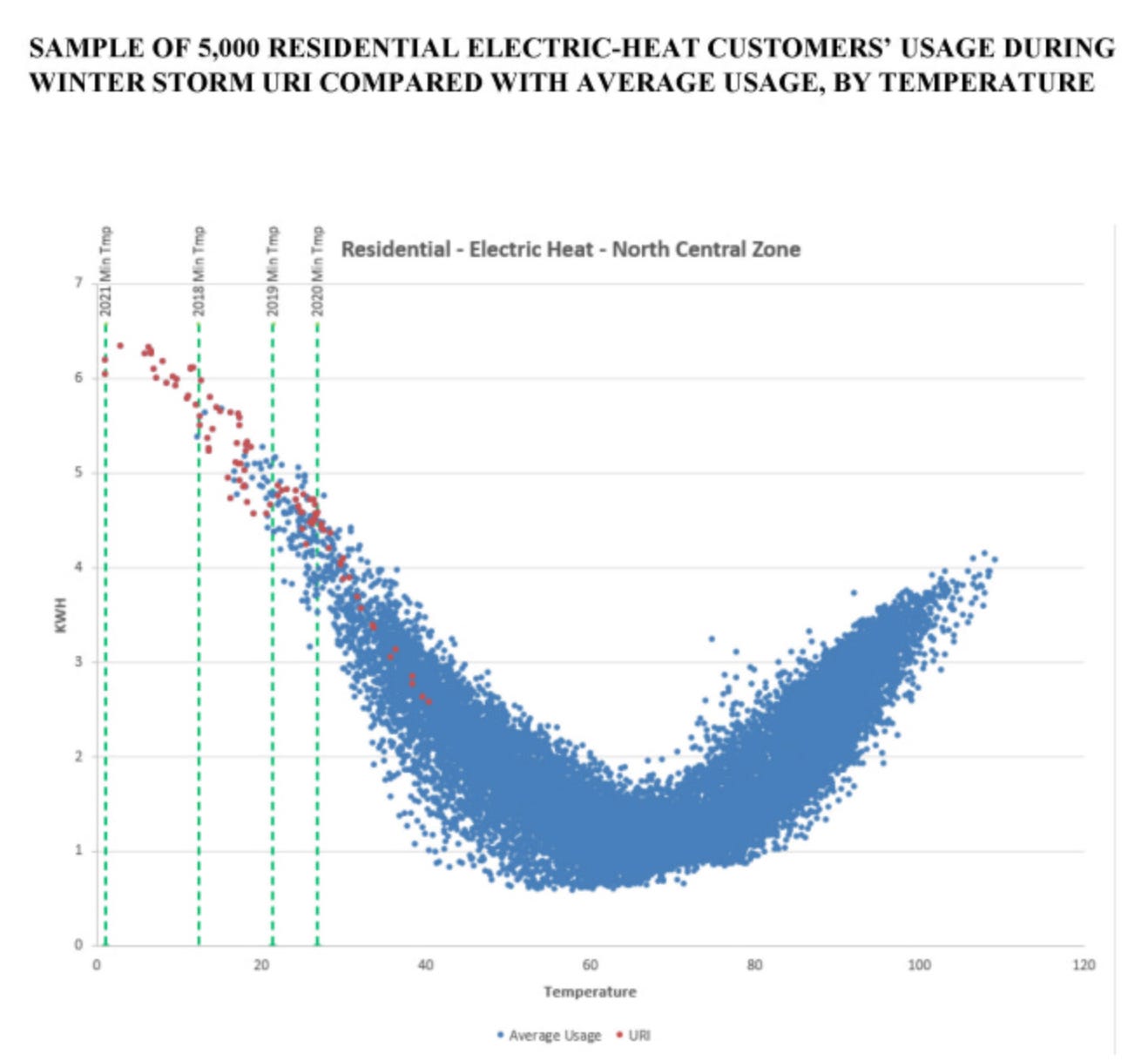
Texas load is rising fast, supply chains are tight, and the cheapest near-term resource is demand we shape intentionally. But are the right economic signals there to bring this resource to scale?Texas has a highly competitive power supply market, but the demand side is severely underdeveloped. In my conversation with Travis Kavulla, former Montana PSC Chairman and current leader in retail innovation, we explored how Texas can unlock the cheapest near-term resource by shaping demand on purpose.Retailers now have both the data and tools to automate flexibility in homes and small businesses. That’s the fastest way to keep bills in check and the lights on during tight hours.“The incentives are there for sure… when spot prices rise above a flat retail rate, the incentive flips, and it’s valuable for both the retailer and the customer to reduce.”Smart Meter Texas enables interval settlement, and connected devices like thermostats, EVs, and batteries can now respond automatically. This is finally real.Retailers are competing not just on price, but on automation. NRG has moved its virtual power plant strategy to the center of its retail offering, pairing Vivint installations with demand response.“We announced a one-gigawatt goal… and hit 150 megawatts this year.”That flexibility hedges against the most expensive hours and brings value directly into customers’ homes. ERCOT has also proposed a program, capped at 500 MW, that pays households for reducing use in the tightest hours. It helps offset hardware costs and puts residential customers on more even footing with large industry.Our system should reward shifting, not just saving — using more when power is plentiful, less when it’s scarce. That avoids overbuilding while meeting growth from data centers, electrification, and hotter summers. Winter risk is just as much a demand issue as supply. Resistance heating drove massive spikes during Uri. Heat pump retrofits can improve reliability and affordability, but without targeted support, private markets may underinvest.Transmission costs are another sticking point. Large customers can avoid charges by guessing peaks, shifting costs onto everyone else. Residential customers use about a third of the energy but pay half of transmission, which rose more than 120% in a decade. Reforming 4CP so costs align with who drives grid build-out would be fairer.Texas can build a true two-sided market. Let competition automate flexibility in millions of homes, fix cost signals, and target winter risk directly. That’s how we keep bills manageable, stay reliable, and grow with confidence.If this breakdown was useful, share it with a friend or colleague, and subscribe so you don’t miss the next Texas-focused grid update.Timestamps* 00:00 – Introduction to Travis Kavulla* 02:00 – Introduction to NRG* 04:00 – ERCOT competition and demand side incentives* 06:30 – The importance of Smart Meter Texas* 09:00 – Innovation from competition, telecom and airlines analogies* 12:00 – Importance of demand flexibility both from AI and residential sectors* 15:00 – Rate design for shifting use* 17:00 – Increasing load factors, how using more energy can be energy efficient* 19:00 – NRG’s VPP with Google / Renew Home and their progress toward their 1 GW goal* 23:00 – Integration with smart home technologies* 25:00 – The potential for customers to lower prices* 28:00 – Sponsor: Aurora Energy Transition Forum* 28:45 – ERCOT’s residential DR proposal, why ERS doesn’t work for small customers* 32:00 – Why NRG has broken from other generators to support residential DR* 34:00 – REPs in Texas’ energy efficiency programs * 38:00 – Can we leverage markets to reduce wintertime outage risk through energy efficiency?* 41:00 – Part of the cause of Uri outages was extremely high demand, difficulty * 44:00 – Lack of focus from Utility Commissions on demand side* 46:00 — Sponsor: Intersolar and Energy Storage North America* 47:00 — Utilities are incentivized to spend on capital but not on operations* 52:00 – Why and how transmission cost allocation and 4CP should change* 57:00 – ClosingResourcesGuest & Company• Travis Kavulla: LinkedIn• NRG Energy: Website, LinkedInReferenced in the Conversation• Travis’ University of Chicago Syllabus: Utilities and Electricity Markets: Regulation in the United States • Book: Prophets of Regulation• Travis’ ESIG Whitepaper: Why is the Smart Grid So Dumb?An Audit Report on Critical Infrastructure Activities at the Railroad CommissionNRG’s filing post-Uri on wintertime demand with resistance heat 100% higher than summertime demand, referenced in my very first Substack article: 2022 Cold Snap Shows Resistance is FutileCompany & Industry News• NRG, Renew Home, and Google Cloud announce plan for a 1 GW Texas VPP • NRG to buy 18 gas plants from LS Power in $12B deal (Reuters)• NRG wins nearly $800M in Texas Energy Fund loans for gas plants (Houston Chronicle)Related Podcasts by Doug• The Name of the Game is Flexibility• Creating a Distributed Battery Network with Zach Dell📄 Related Substack Posts by Doug• Texas Load Growth, Challenges and Opportunities• ERCOT CEO says we need all resources• New Residential Demand Response Proposal in Texas (Grid Roundup #74)• Solar, Storage, Gas, and VPPs in Texas (Reading & Podcast Picks)🌐 Doug’s Platforms• LinkedIn• YouTube• X (Twitter)📅 Upcoming Events / Sponsor Information• October 21: Aurora Energy Transition Forum• November 18-19: Intersolar and Energy Storage North AmericaTranscriptDoug Lewin (00:05.656)Thanks everybody for being here and thanks Travis for doing this, really appreciative to SPEER for putting on this great event. As Liz said, I was director of the organization for—I was going to say several years. I think it was many years, five years. It’s great to see the organization growing and thriving and see all of you involved. For those that are listening to the podcast later, we are at the SPEER Industry and Policy Workshop in Austin, Texas. And I’m really thrilled today to have Travis Kavulla here. Travis, I’ve been meaning to interview you for the pod for a while anyway, and I think this is a great setting and crowd to have this conversation because I don’t think there’s anybody better to sort of talk about how retail electric providers, right? A really dynamic market here in Texas with how many different retailers are there?Travis Kavulla (00:51.534)80, 100? Many. Many. We love all of our competitors, we love competition, but there are a lot.Doug Lewin (00:56.682)Exactly. It’s a very thriving market. There’s a lot of different choice for customers, particularly in the Houston, Dallas, Fort Worth, Corpus Christi, Laredo, et cetera, parts of the state that are served by competition. And to really get into how energy efficiency and distributed energy resources can be advanced using competition and using retail electric providers, I think there’s nobody better than Travis for this. So Travis is vice president of regulatory affairs at NRG. He was commissioner and chair of the Montana—you guys call it the PSC there, ours obviously would be the PUC. He was also president, I believe was the title, of NARUC, National Association of Regulatory Utility Commissioners. So truly a thought leader in this space. Please join me in welcoming Travis Kavulla to the SPEER Workshop.Travis Kavulla (01:43.822)Thank you, Doug. Thank you, audience. We need those little things that say, “applaud” up here, I feel.Doug Lewin (01:50.318)I’ll just ask. We’ll just do that. It’ll be fine. All right. So first of all, anything before I get into some of the questions I’ve got for you, anything else you want to say by way of intro? As far as your background, maybe actually just like a brief word on NRG. I don’t want to assume folks know necessarily what NRG is. You guys are obviously a very big company, most probably do, but maybe give a little more background of yourself if you like and NRG.Travis Kavulla (02:11.342)Sure. So NRG is a retail electric provider in the state of Texas and all other states that allow customers of electricity and in some places gas, though not Texas, a choice in their provider. We’re also a power generator in the state. We sign a lot of power purchase agreements with third parties. And then we have a large natural gas marketing business. And relevant to this conversation, a smart home company that’s one of our most recent acquisitions called Vivint. So we operate basically across the United States, mostly in the competitive markets for power and gas. We have about 8 million customers across North America and a sizable chunk of generation as well. And then you got my bio down, Doug, but one of my passions is teaching. I teach, I’m a lecturer at University of Chicago as well, where I teach on—my syllabus is available for all of you to download for free. It’s a course on utility regulation and the design of electric power markets, which is sometimes not always intuitive. So that keeps me fresh with the youths, I’ll have to think.Doug Lewin (03:11.278)Clearly. You know, it’s funny you say that because I actually taught a semester at the LBJ School and I leaned pretty heavily on your syllabus, which is excellent. And anybody wanting to understand the history of regulation of the electric industry and how competition came about, like there’s probably no better place to look than your University of Chicago syllabus.Travis Kavulla (03:29.866)I’m pretty great, but I’m wearing the orange socks in your and the venue’s honor today rather than maroon.Doug Lewin (03:35.394)We much appreciate that. Thank you. All the Longhorns in the room want to clap for that? There’s only a couple of Longhorns. We’re at the University of Texas campus. Maybe they’re Aggies. So by the way, in the syllabus I used, your “Why is the Smart Grid So Dumb?” was in my syllabus. We’re going to talk about that paper you wrote, which is one of the best papers on this topic. But okay, but before we get into all that, and before we get into NRG’s
In Part 1 of my conversation with economist Lynne Kiesling, we traced how monopoly utilities and central planning helped electrify the country. That model worked. Economies of scale and guaranteed returns brought capital into the system, and within a few decades, nearly every home had electricity.But the world has changed. Technologies are smaller, decentralized, and more flexible. Risks are more complex. Consumers expect more than just “the light turns on.” In some areas, the old model now creates perverse incentives: rewarding capital spending over performance, insulating utilities from risk, and slowing innovation.So the question is: what comes next?In Part 2, we explore how markets can evolve beyond wholesale and retail competition to tackle the next frontier: risk allocation, demand-side flexibility, and performance-based regulation. And we look at how AI-driven data centers are testing the limits of the old model while creating new opportunities for Texas to lead.Markets as Error CorrectionMarkets don’t just allocate resources, they correct errors.As Lynne explained:“If someone has made an investment and… we’ve built too many gas power plants, and we’re not earning profits on that, that’s a signal to me that I need to take my money and put it somewhere else.”That’s how we avoid repeating mistakes. Yet in the utility model, many risks never reach shareholders. After Hurricane Beryl, for example, CenterPoint admitted its failures but still posted a billion dollars in profits. Consumers bore the outage costs, while investors stayed insulated.The missing piece: markets for risk. Today, outage risk, rate risk, and weather risk aren’t fully priced or traded. Post-Uri, some generators took huge hits while others profited. That’s markets working. But for regulated utilities, risk rarely lands where it should.Of course, markets don’t solve everything on their own. Consumers need protection against fraud and market manipulation, and regulators still have a vital role in setting guardrails. The goal isn’t to remove oversight, but to let markets do what they do best, deliver solutions faster than central planning.Demand FlexibilityFor decades, demand seemed inelastic. People flipped a switch, the light came on, and rates averaged out costs. But digital automation has changed the game. Devices from EV chargers to air conditioners to fridges can now respond to prices automatically.“We could find that there is a lot more latent flexibility on the demand side that would not inconvenience or discomfort consumers.” - Lynne KieslingImagine refrigerators with backup batteries. When the grid is stressed, those batteries could keep food cold without drawing power, creating resilience for the household and flexibility for the grid.Markets can unlock this value. Today, no one pays you for your fridge’s flexibility. But if performance-based regulation and transactive energy systems take hold, millions of small, automated actions could add up to major resilience.Performance Over SpendingRate-of-return regulation rewards utilities for spending capital, not necessarily for delivering better outcomes. Lynne contrasted that with price-cap or performance-based systems:* Rate-of-return: utilities get a guaranteed return, no matter the outcome.* Price-cap: utilities must meet quality requirements under a certain cost* Performance-based regulation: rewards improvements in reliability, efficiency, or customer service, usually removes incentives for capital spending and removes disincentives for operational expenses“If I were rewriting utility regulation, there would be a penalty structure on your ROE depending on your [reliability] scores.”- Lynne KieslingAligning incentives with performance instead of capital spending could drive innovation from transmission and distribution utilities.AI and Data Centers: The Demand TsunamiPerhaps the most urgent shift is the rise of AI and hyperscale data centers. The International Energy Agency projects global data center demand will double by 2030.In the U.S., McKinsey forecasts a 23% compound annual growth rate through 2030, adding 400 terawatt hours of new demand, the equivalent of adding another Texas in just a few years.Utilities, designed for less dramatic acceleration, can’t match that pace. Data centers are already seeking alternatives: onsite solar + storage, natural gas peakers, geothermal pilots, and even small modular reactors.Texas has a leg up. In many states, large customers are captive even for their generating resources to the monopoly utility. In ERCOT, they can contract directly with generators. That flexibility is why AI companies are flocking here and why Texas can continue to lead.The Texas Energy and Power Newsletter is a reader-supported publication. To receive new posts and support my work, consider becoming a free or paid subscriber.From Capacity to CapabilitiesThe old system was built on capacity: how many megawatts you could generate or consume at peak. But AI and automation are shifting the paradigm.Most data centers won’t run at full tilt 24/7. Their true value — and the value of generation — lies in capabilities, how much load (or supply) they can flex, when, and where.“Capability and flexibility, with that intersection with time and location, that is kind of everything going forward.” - Doug LewinTexas must evolve its mindset. It’s not just about building more capacity. It’s about enabling capabilities: flexibility, automation, and responsiveness that can balance reliability and cost in real time.Final ThoughtsTexas built a world-class wholesale market by letting price signals communicate. The next step is to let that principle flow into risk markets, demand-side markets, and distribution markets.Markets, as Lynne Kiesling reminded us, are a discovery process. If we reward performance, enable innovation, and let capabilities speak louder than capacity, Texas can not only handle the AI and data center surge — we can do so while increasing reliability and lowering costs for residential and small commercial customers.That’s how we keep build out the grid and meet the challenges of the 21st century.If this resonated, share it with a colleague who cares about Texas energy. And if you haven’t yet, subscribe for more conversations and insights on the future of the grid.Sponsored by Aurora Energy ResearchAurora Energy Research provides leading analysis of global electricity markets. Explore their insights on the Energy Unplugged podcast and join their Energy Transition Forum in New York on October 21. Details at auroraer.comTimestamps* 00:00 – Welcome and Part 2 overview* 01:30 – Why central planning doesn’t work; next frontier: demand side* 04:30 – Markets as error correction, markets for risk including for fully regulated monopoly utilities* 08:30 – Demand flexibility via automation vs. customer actions* 12:00 – Transactive energy and user-friendly customer interfaces* 14:00 – Price cap regulation and performance-based regulation* 17:00 – Metrics for price cap and performance-based regulation* 20:30 – Sponsor: Aurora Energy Transition Forum* 22:30 – How AI data centers are reshaping demand* 25:30 – Make-or-buy decisions for AI infrastructure companies* 30:00 – Contracting for power in Texas* 32:00 – Crusoe, flare gas to power* 34:00 – Data center flexibility: reducing peak while overall energy use increases* 35:45 – Why we should talk about capabilities not capacity* 37:00 – Closing, where to find Lynne* 38:00 – Credits and thanksResourcesGuest• Lynne Kiesling - LinkedIn, Knowledge Problem (Substack)Company & Industry News• Google, Kairos Power, TVA collaborate on advanced nuclear• Reuters, Google to buy power from Kairos SMRs• Google, Fervo geothermal project operational• Crusoe secures 4.5 GW for AI data centersBooks & Articles Discussed• Alfred Kahn – The Economics of Regulation (two volumes)• IEA report on data center energy consumption • McKinsey report estimating 23% CAGR in U.S. data center electricity demandRelated Energy Capital PodcastsRelated Substack Posts by Doug• Why Are Utility Bills Rising So Fast?• Large Load Queue Has Tripled in Texas (Grid Roundup #76)• Solar and Storage Help Reliability (Grid Roundup #68)• Rapid Demand Growth Outpaced by New Supply in Texas (Grid Round #70)• Energy Pragmatism, A Path to Abundance🌐 Doug’s Platforms• Substack• LinkedIn• YouTube• X (Twitter)TranscriptDoug Lewin (00:06.05)Welcome to the Energy Capital Podcast. I’m your host, Doug Lewin. This is part two of my interview with Lynne Kiesling. She is a professor and historian of economics at Northwestern University and a non-resident fellow at the American Enterprise Institute. She is one of the smartest people on markets, particularly electric markets, anywhere. If you haven’t listened to part one, go back and listen to that first, because we get into some of the history, kind of bringing us up to the present. And then in this conversation, we talk a whole lot about the state of current electric markets, data centers and AI demand, risk allocation, and why that really matters for the grid of the future. You know, obviously this is a discussion going on all around the United States and around the world. And a lot of folks think that it doesn’t apply to Texas because we do have competitive generation and retail, but there is the potential for markets and price discovery on the distribution grid. And that is, as I talked about in the previous podcast with Charles Hua, the fastest rising part of the cost of the grid is on the distribution side. And even in a state as competitive as Texas is, there is no competition on that side. And there is a really important set of questions which we get into here as to whether or not that should remain the case. So with nothing further, enjoy part two of my discussion with Lynne Kiesling. And as always, please, please like and share the Texas Energy and Power Newsletter, the Energy Capital podcast. Please become a paid subscriber if you aren’t a
Over a hundred years ago, the monopoly business utility model emerged as the one that could attract sufficient capital to electrify everything.The monopoly utility business was championed by Thomas Edison’s protégé and early leader of ComEd in Chicago, Sam Insull.It worked. By mid-century, most Americans had power.But today, competition for generation and retail have shown that monopolies are not necessary. Texas is a poster child for for competition but even Texas has little competition on the distribution side — and the cost of distribution is skyrocketing with no ability for competitors to offer alternatives that could save consumers money.The monopoly model literally rewards utilities for spending more capital, even when smarter, cheaper options exist.In my conversation with economist Lynne Kiesling, we traced the arc from Insull’s vision to today, and talked about where the system is showing serious signs of distress. And we discussed how that could change…How We Got Here: Edison’s MachineEdison designed complete systems, from generators to the lamp in JP Morgan’s house. Insull scaled that model in Chicago, betting on economies of scale (bigger plants) and scope (serving factoreis, homes and electric trolleys together to increase system utilization and load factors).That became the vertically integrated monopoly: a single company, fully integrated, would keep costs low. Legislatures around the country formalized it, spreading the monopoly-utility model far and wide.It was the right model for the time. America needed electrification, and investors needed stable returns.“Economies of scale and scope… that’s your natural monopoly right there.” - Lynne KieslingWhy It Worked Then and Why It Doesn’t NowThe framework assumed three things:* Bigger plants are always cheaper.* Vertical integration and central planning are essential.* Utilities should earn guaranteed returns on new capital.That fit a world that wasn’t yet electrified and needed massive centralized power plants. But two revolutions were disruptive to the monopoly model:* Gas turbines: By the 1980s, combined-cycle plants made smaller, flexible generation competitive and lower cost than bigger centralized plants. The “dash to gas” in the 2000s proved it.* Digitalization: Sensors, controls, and standards cut transaction costs. Coordination no longer required vertical integration.Price Discovery: The LinchpinEconomist Friedrich Hayek described prices as a “system of telecommunications.” ERCOT proves it daily. When scarcity prices spike, batteries discharge, generators ramp up, demand response kicks in. Investors see those signals and commit capital for more resources.“Markets are a discovery procedure… trial and error with your own capital is how we get the most benefit.” - Lynne KieslingEvery bet on future conditions shapes tomorrow’s incentives. That’s why Texas leads in storage growth, retail innovation, and is attracting new gas peaker plants, too.But here’s the catch: we don’t allow price discovery work at the distribution level.The Last Monopoly MileTransmission and distribution remain monopoly domains. Under today’s rules, utilities earn more by spending more. Propose a $50 million substation, get it approved, earn a return. But what if a portfolio of distributed resources (e.g. batteries, EV charging, demand response) solved the same problem for half the cost?In most states, including Texas, that option isn’t tested. Regulators just green-light the $50 million.That’s why Lynne calls for “quarantining the monopoly”: keep exclusive rights to the poles and wires, but open competition for solutions at the grid edge.Final ThoughtsTexas already showed the world that wholesale competition works. Volatility spurs investment, spreads risk to investors, and drives down long-term costs.The next frontier is distribution. If we quarantine the monopoly to the wires while opening structured competition for everything else, we’ll see faster innovation, more reliability per dollar, and lower bills.That’s the Texas way: pragmatic, innovative, and willing to lead.This is just Part 1 of my conversation with Lynne Kiesling. Next week in Part 2, we’ll dive into data centers, AI demand, and why risk allocation will define the grid’s future.Timestamps* 00:00 – Introduction* 02:30 – Why history matters today* 05:00 – Edison’s vision for a fully integrated electric system* 07:30 – Insull’s bargain: regulate us but grant a monopoly & don’t municipalize* 10:30 – Was monopoly the right solution then?* 16:30 – Natural monopolies: economies of scale and scope* 20:00– Outdated assumptions, Texas competition* 22:00 – Rate-of-return regulation, capital bias, and technology innovation* 26:30 – The changes brought by combined-cycle gas plants and digitalization* 30:00 – Quarantine the monopoly, price signals* 31:30 – Do conservatives still support competitive markets?* 33:00 – How and why arbitrage lower prices* 34:30 – Distribution system efficiency and utility incentives* 37:00 – “Markets are a discovery procedure”* 40:00 – Let volatility speak, Texas choices* 42:00 – What’s the next frontier of competitionResourcesGuest & Company• Knowledge Problem (Lynne’s Substack) • Lynne Kiesling (Northwestern, Personal site, Santa Fe Institute, Books & Articles Discussed• The Merchant of Power: Sam Insull, Thomas Edison, and the Creation of the Modern Metropolis• Power Loss: The Origins of Deregulation and Restructuring in the American Electric Utility System by Richard F. Hirsh• Hayek: A Life, 1899-1950 by Caldwell and Klausinger• Competition as a Discovery Procedure, F. A. Hayek (QJAE translation)Related Substack Posts by Doug•Why Are Energy Bills Rising So Fast? A Conversation with Charles Hua • Creating a Distributed Battery Network with Zach Dell• The Energy Capital Podcast, Episode 1 with Will McAdams• Texas’ Load Growth Challenges and Opportunities, with Arushi Sharma FrankThe Texas Energy and Power Newsletter is a reader-supported publication. To receive new posts and support my work, consider becoming a paid subscriber.Doug’s Platforms• LinkedIn• YouTube• X (Twitter)TranscriptDoug Lewin (00:05.356)Welcome to the Energy Capital Podcast. I'm your host, Doug Lewin. My guest this week is Lynn Kiesling. There are few people in the electric industry I like reading and listening to more than Lynn. I'm kind of ashamed it took me this long to have her on the podcast, but better late than never. She is the director of the Institute for Regulatory Law and Economics at Northwestern University. She is a non-resident senior fellow at AEI, the American Enterprise Institute.The reason I wanted to have her on the podcast is I think she is sort of the academic expert par excellence on markets. She really understands markets inside and out. She has been as influential talking about transactive energy, talking about distributed energy resources and how they can participate in markets. She's been talking about these things more than just about anybody, talking about them eloquently.and really kind of pushing the envelope on what needs to happen in electric grids and electric markets for innovation. Obviously, with a focus on Texas and the electric market there, we split this into two parts. In the second part, which you'll hear next week, we got into all kinds of different stuff about data centers and their impact on electric grids, what they'll mean for competition. This was a ton of fun and a very wonky, deep conversation that I think you're going to enjoy. And more importantly,learn a lot from. Lynn is just a fantastic teacher and it was great to spend this 90 minutes with her. So you'll have 45 minutes today, another 45 next week as we go deep into the roots of electric competition and what it means for energy transition, affordability, reliability and all of that. So with nothing further, here's Dr. Kiesling.Doug Lewin (01:51.82)Lynn Kiesling, welcome to the Energy Capital Podcast.Thank you for having me, I'm glad to be here.I love reading your articles on Substack and knowledge problem. You obviously are an economist par excellence. are doing just great work on electricity systems and the evolution of electricity systems, competition, technology. You hit on all the things. Before we get into all that though, I think it helps to kind of ground people in like the, some of the history of all this and you're, you're an economist.but you're also a bit of a historian. So before we start talking about data centers and DRs and electric vehicles and all these cool technologies, you've written a lot, and I think just really eloquently and clearly, and I think you've done a great public service with that, about how the system of regulation we have, which is now well over 100 years old, is kind of showing some of the signs of its age. And is it quite keeping up with the technology and maybe needs to evolve?So can you talk a little bit about where we came from, sort of how we got that system, what defines that system, and where it's just kind of not fitting with where we're at right now?Lynne Kiesling (03:06.52)Well, thank you. I appreciate that. And I like the metaphor, you know, feeling like as I get older, my joints are creakier. And I think that's true about our institutional framework. Yeah. It's not just bodies. It's, know, the, kind of organic metaphor is relevant here. And for folks who, and especially maybe for students who are thinking about career paths, you know, I'm an academic by temperament and by career choice. So.You know, my fields in graduate school were industrial organization, because I went to graduate school to study electricity and with John Panzer at Northwestern. But then I got there and just got gripped by the love of economic history. And so I kept studying technology, but I actually worked in economic history. And then my other field is mechanism design, which is where the market design stuff comes in. So yeah, I have a love of history andand it's been part of my professional wor
Watch the Full Conversation with Graphs on YouTube (Updated)Utility bills are rising faster than ever. In the first half of 2025 alone, utilities requested $29 billion in rate increases, already a record for any full year, with months still to go. That’s more than double the pace of 2024.If you’re wondering why, you’re not alone. I hear this question constantly: “If renewables lower costs, why is my bill going up?”The answer: transmission and distribution. The costs of poles, wires, substations, and local infrastructure that move electricity from plants to homes is rising quickly, while the cost of generation is flat or declining in most places.To unpack why — and what can be done to help struggling consumers — I sat down with Charles Hua, Director of Powerlines, a new national consumer advocacy group focused on modernizing the regulatory system. The Real Reason Bills Are Rising“Generation is not what’s driving up bills. It’s really the transmission and distribution piece.” – Charles HuaUtilities are pouring capital into poles, wires, and substations. Much of it is necessary, but some isn’t. And because utilities earn profits on capital expenditures, they’re incentivized to build more; they are not incentivized to find cheaper alternatives.The data is striking: wholesale electricity prices have been flat, or even declined, over the past 15 years. Nationally, retail prices for households, meanwhile, have jumped from about 12¢ to 16–17¢ per kWh. And gas utility bills have been rising faster than electric bills. Those gaps are revealing.All Regulation Is Incentive RegulationUtilities make money by earning a rate of return on capital projects. But operational expenses, like vegetation management that could prevent outages, or cloud-based outage trackers, do not generate profits. The result is a bias toward big builds instead of low-cost, reliability-focused fixes.This is the system we have created and that needs reform. Consumers know something’s broken. Powerlines’ survey shows 4 in 5 Americans feel powerless over their utility bills, across Democrats, Republicans, and independents alike. Many don’t know what’s driving costs, and rate cases remain opaque and inaccessible.Short-Term Fixes: Squeezing More Juice from the GridWe don’t have to accept runaway bills as inevitable. There are proven tools available now:* Grid-enhancing technologies (GETs): Sensors and software that increase the capacity of existing lines. Charles calls them “ibuprofen for the grid.”* Distributed energy resources (DERs) and virtual power plants (VPPs): Solar, batteries, and smart devices coordinated to reduce peak demand and defer new builds.* Energy efficiency: Still the cheapest, fastest way to cut bills, though underutilized in Texas compared to other states.Each of these solutions stretches the grid we already have, reducing the need for constant billion-dollar expansions.Long-Term Reforms: Aligning Incentives with OutcomesFixing incentives is key. Options include:* Performance-based regulation (PBR): Tying utility profits to outcomes like affordability and reliability, not just capital spending.* Distribution system planning: Opening the “black box” of utility investment so alternatives like DERs can compete with substation expansions.* Return on equity reforms: Expanding utility profit opportunities to operational solutions, not just capital-intensive projects.None of this is simple, but without it, the trajectory is clear: higher bills and growing consumer backlash.Why Texas MattersTexas is ground zero for this debate. Utilities like Oncor have outlined multi-decade capital plans that could quadruple spending by the 2030s. If nothing changes, those costs land squarely on customers.At the same time, Texas leads the nation in renewables, is building out batteries faster than any other state, and has the independent streak to pioneer smarter utility models. As Charles put it, “Now is the time for consumers to get engaged.”Final ThoughtsUtility bills do not have to keep spiraling upward. We need investment in the grid, yes, but smart, efficient investment that maximizes resiliency while protecting affordability.This is where public utility commissions come in. Their decisions determine how much we pay, how reliable our grid is, and how fast we can adapt to rising demand.The challenge is real. So is the opportunity. If we get this right, Texas and the U.S. can build a grid that is stronger, smarter, and more affordable.Let’s make sure consumers have a voice in shaping it.Timestamps* 00:00 – Introduction * 02:00 – Meet Charles Hua, Powerlines* 05:00 – Why bills are rising* 09:30 – Different types of utilities* 12:00 – Profits and business model of T&D utilities* 13:30 – Alternatives to rate-based infrastructure* 15:00 – Why rates keep going up even as generation costs go down* 17:00 – Texas rates are low but our bills are high* 19:30 – Why 80% of consumers feel powerless over their electric bills* 22:30 – How ratemaking works, difference between OpEx and CapEx* 30:00 – All regulation is incentive regulation: moving toward paying for performance* 34:30 – The coming CapEx wave as evidenced by Sempra/Oncor* 39:30 – PUC engagement of the public; public interest in electricity and energy* 46:00 – Near term solutions, including Grid Enhancing Technologies (GETs) as “ibuprofen for the grid”; time-of-use rates, distribution system planning, etc.* 52:00 – Consumers aren’t represented at PUC’s now* 54:00 – How the public can engage in Texas* 57:00 – Different “win-win” business models that benefit utilities and consumersResourcesFeatured Guest & Organization* Charles Hua – Director of Powerlines, a national consumer advocacy group focused on modernizing utility regulation.* Charles Hua on LinkedIn* Powerlines.org – Reports, resources, and ways to get involved in utility regulationMentioned in this Episode:* Tyler Norris et al., Rethinking Load Growth (Duke University)* Powerlines Report: Utility Bills Are Rising – Q1 and Q2 2025 Data on Utility Rate Increase Requests* For help shopping for better rates, see Power to Choose* Excellent Volts Podcast with Charles Hua* Senate Bill 1664* PUC Office of Public Engagement* Office of Public Utility Counsel of TexasRelated Energy Capital Podcasts* Octopus Energy US with Nick Chaset – discussion of EV rates and flexible load* Zach Dell with Base Power Company* Tyler Norris (Duke University) – deep dive on ERCOT load factor and grid efficiency* More episodes on utility regulation, affordability, and grid planning are available in the Energy Capital archives.Find More on Social* Doug Lewin on LinkedIn* Doug Lewin on Twitter/X* Doug Lewin on YouTubeTranscriptDoug Lewin (00:04.78): Welcome to the Energy Capital podcast. I'm your host, Doug Lewin. My guest this week is Charles Hua, the director of Powerlines. Powerlines is a fairly new organization now, a little over a year old, that is focused on helping people understand the critical and important job that public utility commissions do day in, day out to increase reliability and hopefully keep electricity prices lower. I really enjoyed this conversation. Charles is incredibly smart and insightful. And we got into what I think is probably the most common question I get on Twitter and LinkedIn. Sometimes questions, sometimes arguments about why electricity prices are going higher. Spoiler alert, it is not because of renewable energy. It's because of the increased costs on the transmission distribution system, particularly on the distribution side. We did get into a lot of charts and figures and things like that. So if you're not already watching on YouTube, you might want to switch over there or if on Spotify you can see the video there, you should be able to see those charts, which I think really do tell a story and the graphs, which really do tell a story. If you want to watch it on YouTube, Doug Lewin Energy is the channel. You can find me there. This is a free episode of the Energy Capital Podcast. It is not free to produce. We really, really appreciate our paid subscribers. If you're already a paid subscriber, thank you. If you are not, please go to douglewin.com and become one today. You'll have access to the entire archives of articles of the Texas Energy and Power newsletter, all the paid episodes of the Energy Capital podcast, grid roundups, reading and podcast picks, special presentations, chats during ERCOT board meetings and most PUC open meetings. Public utility commissions, as Charles talks about, are incredibly important and I do follow them here at the newsletter and you can join and follow along. douglewin.com is where you do that. And last but not least, please do leave a five-star review wherever you listen. And with that, here is my interview with Charles Hua.Charles Hua, welcome to the Energy Capital Podcast. Let's start from the beginning. What is Power Lines? And tell us a little bit in that intro to Power Lines about this fantastic report you guys have out. Utility bills are rising, an analysis of utility bills and how they're affecting American energy consumers and who determines them. So what is Power Lines? And tell us a little about this fantastic report on utility bills.Charles Hua (02:35.95): Sure. Well, thanks again, Doug. So Powerlines, we're about a year old actually, a national organization, a national consumer advocacy group focused on modernizing the utility regulatory system, really with two key objectives in mind. One is to lower utility bills and second, hand in hand, is to advance economic development and growth. You and I actually met in August of 2024 in Houston during a very hot and humid summer. So that was a month before we had launched. And I think the topics that we had discussed then very much, if anything, have only intensified in the national discussion since, which is the confluence of load growth and affordability challenges and how that's playing out both in Texas, but also nationally. This issue clearly isn't
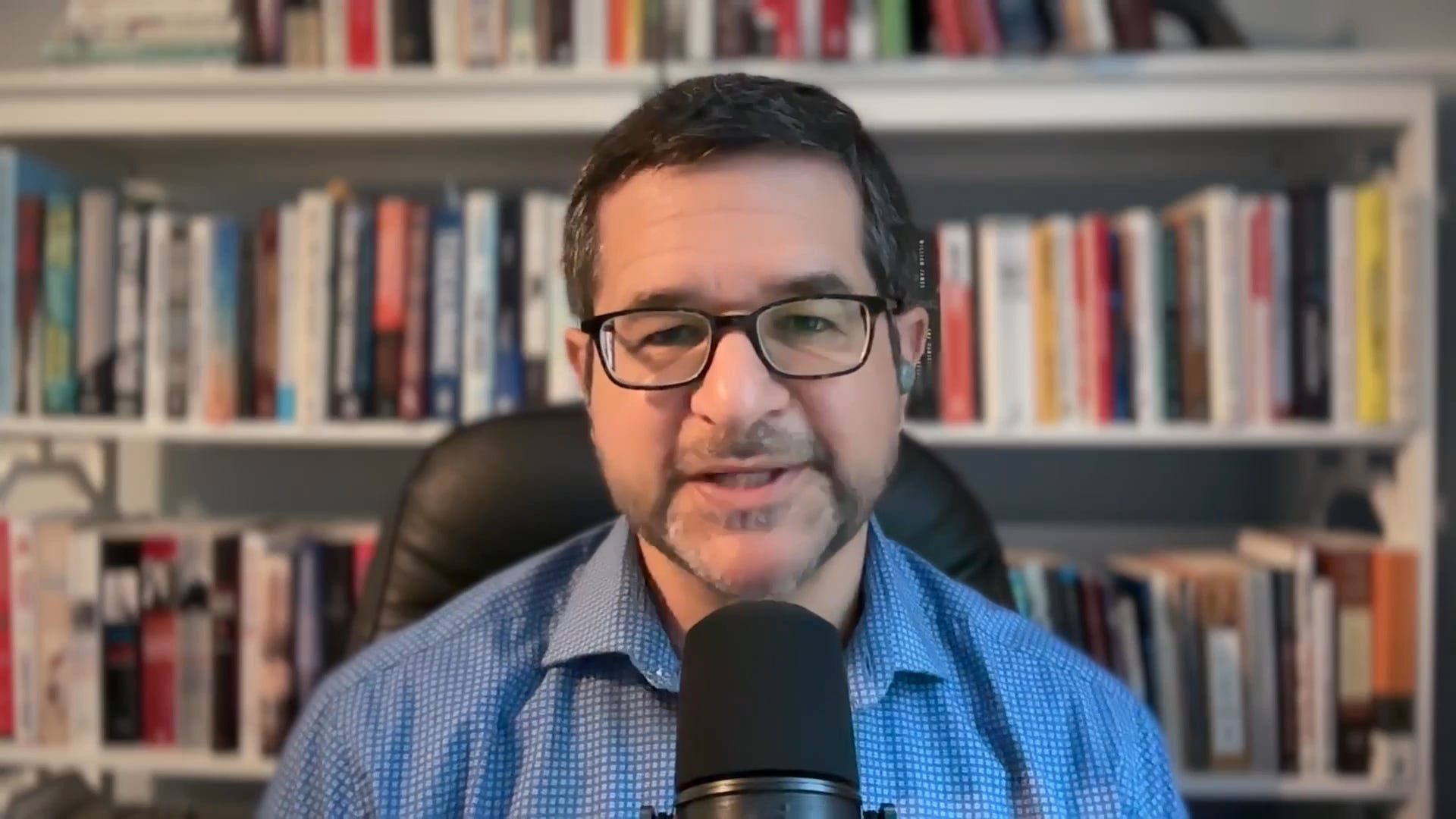
This is a free preview of a paid episode. To hear more, visit www.douglewin.comThis is my recent presentation on the latest trends in Texas energy and power for subscribers called the “Texas Power Rush,” followed by a Q&A.
This is a free preview of a paid episode. To hear more, visit www.douglewin.comSan Antonio is one of the fastest growing cities in the country and have requests to interconnect AI infrastructure and data centers that would triple their size. With that growth comes a simple but daunting challenge: how do you keep the air conditioning on while growing the economy and keeping bills affordable?CPS Energy, the nation’s fifth largest municipally owned utility, sits at the center of this challenge. Rudy Garza, CPS’s president and CEO, has spent the last two decades in Texas energy. In this episode, we talked through retiring old coal units, acquiring 1.7 gigawatts of gas plants, adding renewables and batteries, leveraging demand side resources, and preparing for a wave of new demand from AI data centers.As Rudy put it, Texas needs it all right now. The question is how to balance affordability, reliability, and growth in a rapidly changing landscape.A Utility in TransitionCPS Energy serves 1.4 million customers and maintains some of the lowest combined electric and gas rates in Texas. They return hundreds of millions of dollars each year to the city budget, while also managing 6,000 MW of peak demand and a portfolio of about 10,000 MW of generation.That portfolio is shifting fast. CPS retired its Deely coal units in 2018, is converting one of the Spruce coal units to gas by 2028 while closing the other, and has plans to retire the aging Braunig and Sommers units within five years. These changes create both opportunity and risk. As Rudy said, you cannot run 1960s-era plants forever and expect reliability.By the numbers* Customers: ~1.4 million total; ~1.0 million electric, ~0.4 million gas* Peak demand: roughly 6,000 MW, growing ~150 to 190 MW per year* Portfolio today: ~8,000 MW dispatchable plus ~2,500 MW renewables* Recent acquisition: 1,700 MW of gas at roughly $500 per kW versus $2,400 to $2,700 per kW to build new* Solar: 730 MW contracted or in construction, with another 500 to 600 MW in the pipeline* Storage: 520 MW secured, tracking toward more than 1,000 MW* Wind: 400 MW request for proposals in market* Demand response: about 250 MW per event, split roughly half residential and half commercial* Customer reality: about 60 percent low to moderate income; CPS targets modest, occasional asks near 5 percent when neededIf this was useful, share it with a colleague or neighbor. It helps more Texans find practical solutions.
Sometimes I get to bring you a conversation that really feels like a turning point.This week, I sat down with Bill McKibben, one of the most respected voices in climate and energy. His new book, Here Comes the Sun (out today! order it here), is different from his earlier work. Bill has long been known for sounding the alarm. But this time, he’s bringing something else: optimism.Why? Because solar and other clean technologies are no longer “someday.” They are scaling now — all around the world — faster than anyone predicted.Solar’s Exponential TakeoffIn 2009, The Economist predicted it would take 20 years for solar to scale up by an order of magnitude.It took six.Today, the world installs 230–240 gigawatts of solar every six months. That’s two massive coal plants’ worth of clean energy every single day.This isn’t fringe. This isn’t boutique. It’s mainstream power.Think Costco, not Whole Foods. Bulk, cheap, ready-to-go.Everywhere from Pakistan to Texas: A Global StoryThe shift is happening everywhere.* In Pakistan, rooftop solar grew so fast that in just 8 months, citizens built the equivalent of half their national grid. Farmers led the way, cutting diesel use by 35 percent in a single year.* In Texas, oil and gas operators in the Permian are connecting to the grid or tapping wind and solar because it is cheaper than running diesel generators.When energy is more affordable, more reliable, and easier to deploy, people adopt it. That is true from Karachi to the Concho Valley.The Texas Energy and Power Newsletter is a reader-supported publication. To receive new posts and support my work, consider becoming a free or paid subscriber.No Longer “Alternative Energy”We’ve used the phrase “alternative energy” for wind and solar for decades. Now it means something different: natural gas and coal are the alternatives and renewables + storage are the most common, even dominant, resources.Last year, 90% of new power plants built worldwide were clean energy.Oil and gas remain vital and will continue to play an important role, but the growth is in clean energy.Leading With People’s Needs, Not Just ClimateHere’s the pivot that excites me most.If we lead with “climate crisis,” people shut down. Either they don’t agree it’s happening and check out, or they get it and feel depressed and stressed out.But if we lead with better lives and lower bills, people listen:* Half of Texans report they are choosing between food, medicine, and electricity. Renewables lower costs.* EVs aren’t sacrifices. They are smoother, faster, and cheaper to fuel.* Heat pumps aren’t compromises. They reduce stress on the grid, make homes more comfortable, and lower consumers’ energy bills.When we talk about clean energy in terms of savings and resilience, people connect. And those benefits also happen to reduce emissions.This is not about jerseys or tribes. It’s about abundance.Land, Liberty, and Local BenefitsOpponents often argue renewables take up too much land. But the math tells a different story:* 1 acre of corn for ethanol → fuels an F-150 for ~25,000 miles.* 1 acre of solar panels → powers an F-150 Lightning for 700,000 miles.That’s not even close.And the benefits are tangible:* Ranchers and farmers are keeping land in the family thanks to wind and solar leases.* Rural schools are funded by clean energy tax revenue.* Cattle graze happily under turbines, even using them for shade.This is energy independence at the community level — red state, blue state, doesn’t matter.A Race Between Challenge and OpportunityWe’re living two stories at once:* Bad News: By June 2023, Earth had entered the hottest 12-month stretch in 125,000 years.* Good News: That same month, humanity began installing over a gigawatt of solar per day.The race is on. The question is not if we transition. It’s how fast.The outcome depends on how quickly we build. We now have the tools to create cleaner, cheaper, and more reliable power. The question is whether we will use them fast enough.Bill put it bluntly: “We can’t stop global warming. But we can stop it short of breaking civilization.”Why Policy Still MattersThe economics are overwhelming, but politics can slow things down.* Texas became a leader in wind power because of transmission investments made two decades ago.* The oil and gas industry poured $500 million into lobbying and ads last year.* Rooftop solar in the U.S. still takes months to permit, compared to days in places like Australia.* And yet, local politics in Texas are shifting as communities fight for renewables that pay their bills.This is where action, at the state and local level, can accelerate the inevitable.The lesson is clear: smart policy can clear barriers so Texans can benefit sooner.The MomentAfter 700,000 years of burning things for fuel, humanity is finally learning to power itself directly from the sun.That’s not just about climate. It’s about freedom, prosperity, and better technology.Bill McKibben’s new book, Here Comes the Sun, captures this moment with story after story of how fast change is happening. It’s out now, and I can’t recommend it highly enough. He’s also helping organize a national day of action called Sunday on September 21st. Learn more at sunday.earth.If you got value from this, please share it with a friend, colleague, or family member and consider subscribing. The more people who see clean energy for what it is, the future, the faster we’ll build it.Transcript* 00:00 – Introduction * 02:30 – Why Bill is uncharacteristically optimistic* 04:30 – Very few people understand how much progress has been made: renewables are no longer “alternative”* 8:00 – The story of Pakistan’s solar surge* 11:00 – We’re in a different world because from steep learning curves for renewables and storage* 14:00 – Energy as a service instead of a commodity* 17:00 – Is the oil and gas industry getting what they wanted out of President Trump?* 20:00 – China is adopting clean energy and dominating those industries* 23:00 – Why leading with climate change is not a leading strategy* 26:00 – Leading with benefits of new technologies in this “epochal moment”* 29:00 – Not everyone can strike oil, but everyone can strike wind or sun (or both)* 30:00 – Agrivoltaics: “shade is a valuable commodity” * 34:00 – Sun Day: September 21* 37:30 – June 2023: hottest month on record to that point AND first month when world installed one gigawatt per day* 39:30 – Is it time for progressives to embrace permitting reform?* 43:00 – Is progress more likely at federal or state & local levels?* 48:30 – Closing Thoughts & Call to ActionResourcesBill McKibben’s Work* Book: Here Comes the Sun by Bill McKibben - (new release on the global solar revolution, packed with stories and stats).* Substack: The Crucial Years: Bill’s ongoing essays on climate, energy, and activism.* Sun Day! On the equinox: September 21Articles and Essays Referenced* The New Yorker (2025): Published an excerpt from Here Comes the Sun, surprising even seasoned climate experts with how fast solar is scaling.* Telegraph article on Texas, including John Davis, former Texas Republican legislator, who said he “struck wind” on his Menard ranch — wind leases now account for 40% of his income.* Mother Jones. Yes in Our Backyards — why it takes months in the U.S. but days in Australia.* Dallas Federal Reserve Quarterly Survey: Candid insights from Texas oil and gas executives on drilling economics and policy.Global and National Examples* Pakistan rooftop solar boom: Citizens added the equivalent of half the national grid in just 8 months (Google Earth images showed rooftops filling with panels). Diesel sales dropped 35% in one year.* California: Used 40% less natural gas for electricity than it did two years ago in summer 2023, evidence of rapid scaling of renewables.* China: 1/2+ of all cars sold last month came with plugs. EVs there now cost as little as $12,000, far below U.S. prices.* Australia: Rooftop solar installed as low as ~50 cents per watt vs. $1.50-3 or more in the U.S. due to faster, simpler permitting.* Vatican City: Building a solar farm outside Rome to become the first fully solar-powered nation.Concepts and Data Points* “Costco vs. Whole Foods” analogy: Solar has shifted from being a premium product to being the cheapest and most abundant option.* Agrivoltaics: Using solar arrays alongside farming. Examples include:* Cattle grazing under turbines and sheep around solar panels.* French vineyards report 60% higher grape yields with panels providing shade and moisture retention (pv magazine).* Corn ethanol vs. solar comparison:* 1 acre of corn for ethanol = ~25,000 miles of fuel for a Ford F-150.* 1 acre of solar panels = ~700,000 miles in an F-150 Lightning EV.* Balcony solar in Europe: Millions of apartment dwellers in Germany have adopted “plug-and-play” solar panels. Legal in Utah as of 2024 thanks to bipartisan legislation.Organizations and Initiatives* Texas Energy Poverty Research Institute (TEPRI) — Community Voices Survey found half of Texans are choosing between food, medicine, and power.* Sunday: National Day of Action — September 21, 2025 (Fall Equinox). Learn more at sunday.earth.* Conservatives for Clean Energy (Southeast U.S.): Helped persuade Florida Gov. Ron DeSantis not to block rooftop solar.Podcasts and Media Recommendations* Ezra Klein Show: Episode with Jesse Jenkins and Jane Flegal on energy transition and permitting reform (highly recommended).* Energy Capital Podcast: Previous episode with Octopus Energy CEO on new utility business models.TimestampsDoug Lewin (00:06.722): Welcome to the Energy Capital Podcast. I'm your host, Doug Lewin. My guest this week, I'm very excited to tell you, is Bill McKibben. I've been reading things that Bill has written for literally decades. One of the smartest guys out there talking about issues related to energy, the environment, and climate literally for 40 years. And he has written a great book called Here Comes the Sun. By the time this comes out, the b
This is a free preview of a paid episode. To hear more, visit www.douglewin.com🎧 Listen to the first 15+ minutes for free, and if you’re a paid subscriber and want to listen in Apple Podcasts or Spotify, just connect your private Substack feed. Here is the a link with step-by-step instructions. You can also hear the full episode in Substack; just make sure you’re logged in with the email linked to your subscription.Texas’ retail electricity market was built to be a model for the world. When the state restructured its power sector in 1999, the idea was straightforward: unleash innovation, empower customers, and let competition drive costs down.More than two decades later, the reality is mixed. Texans enjoy more choice than anywhere else in the US — and some of those choices are great — but too often, customers are steered toward gimmicky plans with hidden fees instead of real value.On this episode of the Energy Capital Podcast, I talk with Nick Chaset, CEO of Octopus Energy US, about why the market isn’t reaching its full potential, how Octopus is trying to change that, and what policymakers can do to deliver a system that actually works for people. The Stakes for TexasElectricity consumption has gone from 400 terawatt-hours four years ago to nearly 500 TWh this year, a 25% jump. Peak demand hit 85 gigawatts in 2023 and 2024, up from 75 GW just a few years ago.We’ve built new generation to meet that growth, mostly solar and storage, but the way we price and sell electricity hasn’t kept pace. Most Texans are still on outdated plans that don’t reflect when power is abundant or scarce, driving up costs for everyone.
In this week’s Energy Capital Podcast, I revisit my recent article, None of the Above, with added commentary. Please give it a listen and let me know what you think in the comments.All of the Above vs. None of the AboveFor years, U.S. energy policy has been framed as “all of the above.” No red or blue electrons, just building what works.The new budget bill flips that script and is leaving closer to none of the above. The administration’s preferred resources aren’t available at scale:* Nuclear? Promising, but still 5-7 years, at least, from scaling* Gas? Facing massive supply chain bottlenecks, the world’s biggest turbine manufacturer only produces ~20 GW per year, globally.* Coal? No amount of weird nostalgia will changes its costs and health impacts.* Renewables and storage? The only sources growing fast enough to meet demand if they’re not strangled by new red tape.Blocking wind, solar, and batteries takes away most of what’s getting built. So where will the new power for AI come from if not from renewables and storage?AI’s Power Hunger Meets a Grid BottleneckThe White House’s own AI Action Plan says it plainly: “We must harness the full power of American innovation.” But there’s no details on how to harness enough electricity to make it happen.Meanwhile, AI developers are already building massive projects like Stargate in Abilene, a facility that will need 1.2 GW of power at launch and grow to 5 GW. For perspective: that’s more than the peak load of Austin, the 11th largest city in the U.S.How are they powering it? With a mix of wind, storage, and “incremental gas.” It’s pictured below.The market is showing us the path forward. Will policymakers follow?The Clock Is TickingEIA projects Texas demand will grow 14% in 2026 (see below). Nationally, data centers and electrification are set to drive historic load growth. Without new renewables and storage, we face higher prices, weaker reliability, and missed economic opportunities… just as China adds 400 GW of clean energy in a single year.We don’t have 5–7 years to wait for next-gen nuclear. We don’t have a supply chain ready to churn out additional gigawatts of gas turbines overnight. We have renewables and storage. Or we will not have enough to win the AI race.There’s Still a Way ForwardHere’s the good news: Developers can still add a lot of power in the next few years — if Treasury issues clear guidance and lets projects use existing credits before they expire. Congress already wrote this into law. The administration just needs to get out of the way.And yes, we should plan for what happens after credits expire. Permitting reform. Smarter integration of flexible loads. More diversified generation. But first, we have to stop kneecapping the solutions that are already working. This is a public episode. If you'd like to discuss this with other subscribers or get access to bonus episodes, visit www.douglewin.com/subscribe
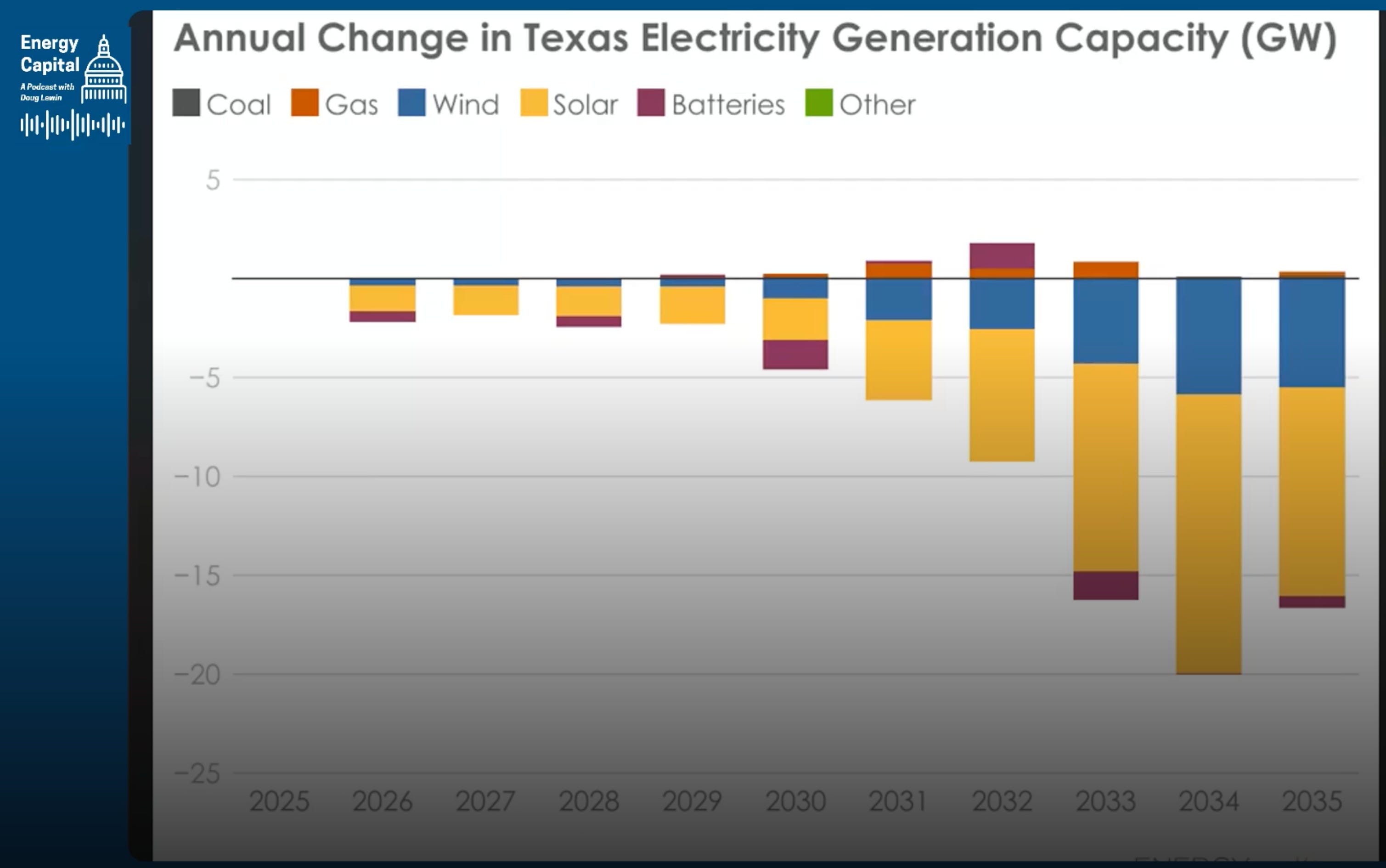
This podcast is on YouTube with Graphs Congress’ new budget bill is an energy earthquake. It could wipe out tens of gigawatts of energy production, just as we’re experiencing load growth unlike anything since the 1960’s. It will drive power bills higher for families and factories, and give China the upper hand in the race for 21st century economic supremacy.To understand in more detail the impacts of the federal budget bill, this week on the Energy Capital Podcast, I talked with Dan O’Brien, senior modeling analyst at Energy Innovation. His team modeled what this bill really means for Texas and the numbers should stop us in our tracks.If you’ve been reading this newsletter, you know I’ve warned about this moment for months. Now, the data is here. It’s worse than we thought. We were on a path to energy abundance and we’re about to get energy scarcity including increased risk of blackouts and much higher electric bills.From Ramp to Cliff: What This Bill Actually DoesHere’s what Congress passed:* Ends clean energy tax credits abruptly. No glide path, no transition, just a cliff.* Imposes impossible project timelines that most developers can’t meet.I’ve written before about how this creates scarcity, not abundance (Energy Scarcity). We’re pulling the cheapest, fastest-growing resources off the table while demand is surging. That’s a recipe for higher prices and weaker reliability.And make no mistake: this isn’t happening in a vacuum. It’s happening right when Texas has proven that solar and storage are great for reliability and affordability.The Modeling: 77 GW GoneDan’s modeling tells the story:* 77 gigawatts of lost clean energy in Texas, including over 50 gigawatts of solar and over 20 gigawatts of wind)* Only 2 gigawatts of additional gas* Household power bills up $400–$500 a year* Industrial energy costs up 50%* Tens of billions in lost rural tax revenuePut that in perspective: ERCOT’s entire summer peak is about 85 gigawatts. This bill wipes out nearly that much future clean power before it’s even built.These numbers aren’t isolated. Princeton’s REPEAT Project and Columbia’s Climate Knowledge Initiative show the same trend: abruptly ending credits doesn’t save money. It costs money—because you’re replacing cheap renewables with expensive alternatives, or worse, with nothing at all.Demand Is Exploding, So Why Are We Pulling Back?At the same time, Texas demand is skyrocketing. From 2021 to 2025, Texas has experience 6% year-over-year growth, the fastest since the 1960s. AI data centers, crypto, and industrial electrification are all plugging in at once.And here’s the kicker: the resources meeting that demand surge aren’t gas or coal. They’re wind, solar, and batteries. They’re 92% of what’s been added since 2021. In the first half of 2025, wind and solar made up 40% of ERCOT’s generation mix. Batteries are breaking records almost monthly, keeping the grid balanced during extreme heat and sudden shifts.ERCOT calculated summer energy emergency risk dropped from 16% to under 1% in one year, because of solar and storage. We have the data. We have the results. So why are we sabotaging it?The Human Side: Jobs and Rural TexasThe energy sector is one of the largest drivers of job growth in Texas. These are real people—60,000 Texans working in wind, solar, and storage, including 6,000 veterans. It’s rural school districts balancing their budgets with wind and solar tax base and farmers and ranchers keeping their land in their families for another generation. It’s welders, electricians, and manufacturers in counties that haven’t seen this level of investment in decades.Global Stakes: China’s Electrostate MomentZoom out. While we’re cutting our legs out from under us, China is sprinting ahead. Last year, they added 400 GW of clean energy, several Texases worth of power. Last month, they put in 90 gigawatts of solar. The Financial Times calls them the first “electrostate.”The U.S.? We added 60 GW in 2024. And now we’re debating LNG power plants that don’t exist. As I wrote in Energy Submission: this isn’t energy dominance. It’s energy surrender.If we abandon clean energy leadership now, we’re not just risking higher bills—we’re giving away the 21st century.There’s Still Time: Ramp, Don’t CliffI’m not arguing for permanent subsidies. We should phase them out, but smartly, with predictability. A ramp-down avoids price shocks, keeps manufacturing momentum, and protects rural tax bases while we scale what’s next.We’ve already proven the formula: reliability up, prices down, emissions falling. It’s not theoretical. It’s working. And throwing it away overnight isn’t policy, it’s ideology.The Bottom LineThe Texas grid is stronger than it’s ever been, because of solar and storage. That’s not my opinion; that’s ERCOT’s own data. Reliability is improving, costs are falling, and we’re finally catching up to the energy future the rest of the world is racing toward.This bill reverses that progress. It’s a choice between abundance and scarcity, between leadership and surrender. And the clock is ticking.Timestamps* 00:00 – Introduction* 02:00 – What is the federal budget bill and why is it important?* 04:30 – Impact on Texas power* 07:00 – Why is there only a tiny increase in new gas capacity * 10:00 – Modeling Assumptions and Safe Harbor Provisions* 12:30 – Demand forecasts and modeling variables* 14:00 – Residential energy cost increases: $480/year* 16:00 – Why that could be worse if Treasury’s guidance is restrictive* 19:00 – Why are power prices high if renewables are lowering costs?* 21:00 – 54% increase in power costs for large commercial & industrial customers* 25:00 – Job losses from the federal bill* 29:00 – Rural community impacts and manufacturing losses* 30:00 – Policymakers could revisit this policy as the impacts take hold* 32:00 – Phasing out credits would protect consumers and end them permanentlyResourcesEnergy Innovation - Linkedin* Daniel (Dan) O’Brien - LinkedIn * Updated: Economic Impacts of the U.S. “One Big Beautiful Bill Act” Energy Provisions — Energy Innovation* Impacts of the One Big Beautiful Bill on Texas Energy Costs, Jobs & Emissions (PDF) — Energy Innovation* Texas Reliability Entity 2024 Reliability Performance & Regional Risk Assessment — Texas RERelated: Writing * TRE: Solar and Storage Help Reliability; Texas Grid Roundup #68 - Doug Lewin* Clean Energy Development Slows Without Tax Credits — Texas Tribune* Boom Fades for U.S. Clean Energy as Trump Guts Subsidies — Reuters* What the ‘Big Beautiful Bill’ Would Mean for Renewable Energy — Governing MagazineTranscriptDoug Lewin (00:05.922): Welcome to the Energy Capital Podcast. I'm your host, Doug Lewin. My guest this week is Dan O'Brien, senior modeling analyst at Energy Innovation. Dan has spent a lot of time working on a model to show the impacts of the federal budget bill that passed the Senate on July 3rd, signed by the president on July 4th. This episode is a shorter one. Quick note to the listener, there were some charts and graphs. You can see all of that on the YouTube channel, Doug Lewin Energy.But if you are listening to the podcast version, we made sure to describe all the charts and graphs so you'd be able to follow along. The stuff that we got into in this particular podcast, the change in capacity that will be coming from the federal budget bill, which was a massive loss for Texas, 77 gigawatts of capacity. In the next 10 years, we talked about which sources that comes from and what might fill the gap and what doesn't fill the gap. We don't see a whole lot of gas. So we talked about all of that. We talked about the change in cost, both for households and businesses, a massive rise for both, but much bigger for businesses, about a 20% increase for residential consumers. That's $500 per year per family, but a 50% increase compared to had current policy stayed in place for businesses. We also talked about job losses, the loss of investment impacts on rural communities.Compare Texas to the impacts of other states. This is a short but very dense, very full episode. Hope you learned a lot from it. As always, please give a five-star review wherever you listen to your podcast. Please follow along, become a subscriber at YouTube, the channel's Doug Lewin Energy. And to subscribe to Texas Energy and Power Newsletter and the Energy Capital Podcast, go to douglewin.com. And with nothing further, let's jump in to this podcast on the impacts of the federal budget bill on Texas. Thanks for listening.Dan O'Brien, welcome to the Energy Capital Podcast.Dan O'Brien (02:07.694): Thank you for having me.Doug Lewin (02:09.389): So let's start with you've spent a lot of time obviously modeling the federal budget bill. Let's just start from the highest level. Why? Why spend time modeling this bill? What is the bill and why is it so important that you want to spend time modeling?Dan O'Brien (02:25.166): Well, energy is everything, Republicans got that right in campaigning last year. And one thing that this big, beautiful bill does is really changes how energy will be produced and transformed and consumed in the US in the next decade. And this happens a few different ways. So the biggest one being changing the tax credit structure around energy in the United States. So the big bill repeals a number of different tax credits that are offered to companies to incentivize development of new energy facilities like power plants in the US. It also increases the amount of oil and gas leasing in the US through running more auctions and lowering the royalty rates for these projects. It delays conservation funding that was passed in 2022. So it's kind of all consuming and touches a number of different areas. And my organization is one that tries to focus on producing quantitative analyses of bills like this. So we've definitely put a lot of time into it and happy to chat through it.Doug Lewin (03:34.612): Awesome. And you guys at Energy Innovation have done a great job and a

Comments

Download from Google Play

Download from App Store
 United States