


Flexibility Driving Reliability and Affordability with Matt Boms
Description
This episode is a little different.
As I wrote on Friday: this is both a transition and an expansion. Several folks will be stepping up to use this platform and I couldn’t be more excited to hear what comes next.
A platform, now with more places to stand
Archimedes said: “Give me a place to stand and I will move the Earth.” This podcast will become a platform for more people to stand.
The podcast is moving into a multi-host format, and one of those new voices is Matt Boms, Executive Director of the Texas Advanced Energy Business Alliance (TAEBA). Matt has been a leader on some of the most important energy work in Texas: distributed energy resources, affordability, energy waste reduction, grid flexibility, and much more.
How I got “bit by the bug”
Matt asked how I got into energy. The real answer is, slowly and then all at once.
My early work in energy policy was at the Texas Legislature, in a stretch (2005 to 2009) when a lot was happening and the instincts to build and expand were strong.
That period mattered because it shaped a belief I still hold today: Texas works best when we put pragmatism above ideology. Texas is a place to build and do big things.
The next frontier is the grid edge
One of the big themes in this conversation with Matt is that the “cheap electrons” story is true on the generation side, but bills keep climbing because transmission and distribution costs keep rising.
So if we’re serious about affordability, we have to talk about the distribution grid, and the tools that can help us defer (or avoid) some of the costs associated with building out the grid. We’re still going to spend a lot but can we avoid some of it?
That’s where distributed energy resources (DERs) come in, and where Texas has a real opportunity to lead.
Matt and TAEBA recently looked at what DERs could do in Oncor’s territory. The numbers are big, but here’s the one that sticks: about $279 per family per year in savings. If you want a sense of how big a difference that would make for many Texans, check out my discussion with Margo Weisz of the Texas Energy Poverty Research Institute:
There are two core value buckets behind these savings:
* Wholesale market value (DERs competing through aggregation, the work ERCOT is already moving through)
* Transmission and distribution deferral or avoidance (often the larger, currently under-valued piece)
If we get the policy design right, DERs can help lower system costs, enable load growth, and reduce the pressure that shows up on people’s bills.
Final Thoughts
If you’ve been listening for a while, let the new team (more announcements on that soon) know what topics you want them to cover next.
The next chapter is going to be great. I can’t wait to listen!
Timestamps
* 00:00 – Introduction
* 02:30 – Matt asks his first question!
* 04:00 – Doug’s first energy experiences
* 05:30 – * Beginner’s mind *
* 07:00 – Politicization of energy, what brings us together,
* 10:00 – The need to look for similarities first
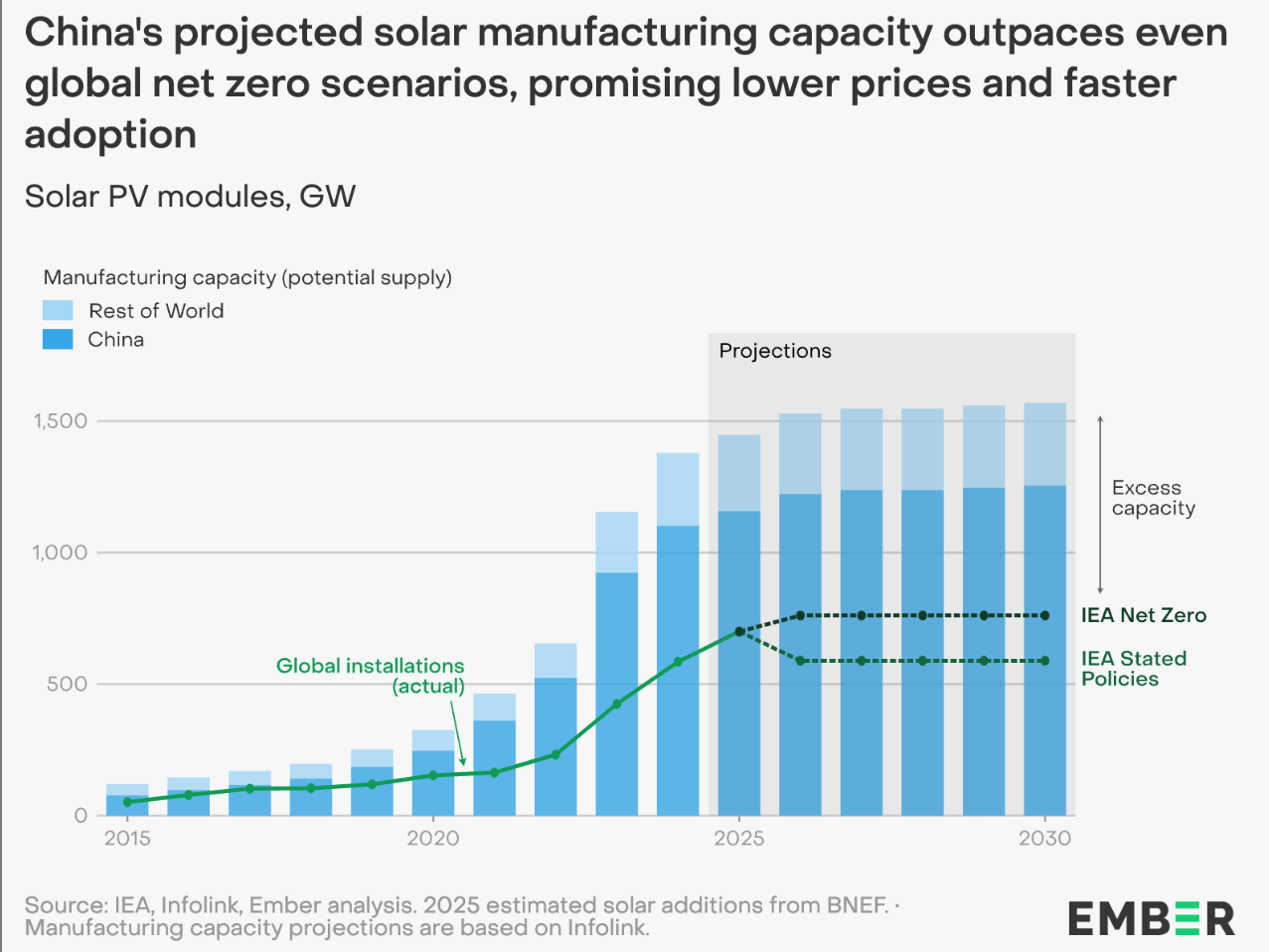
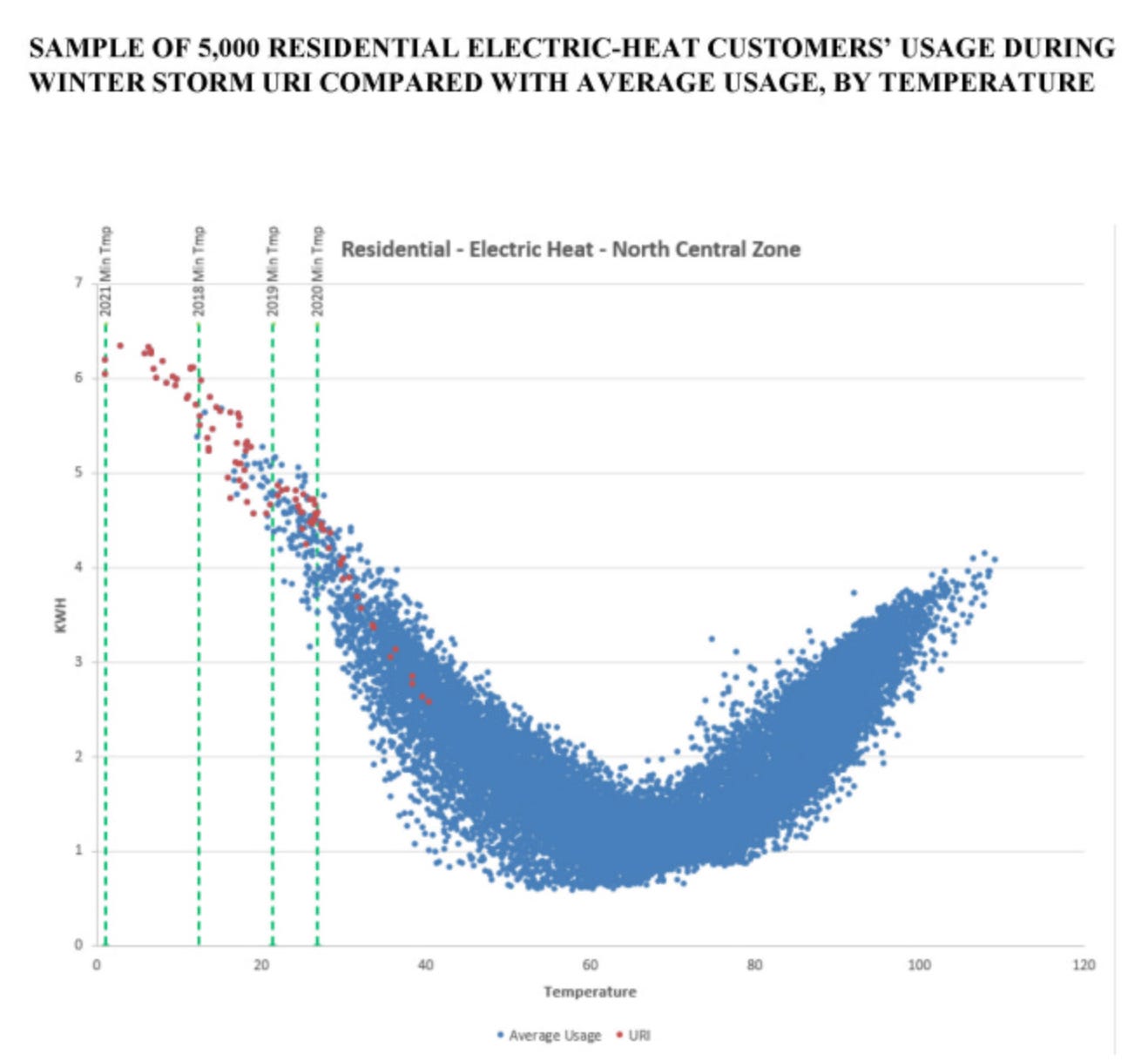
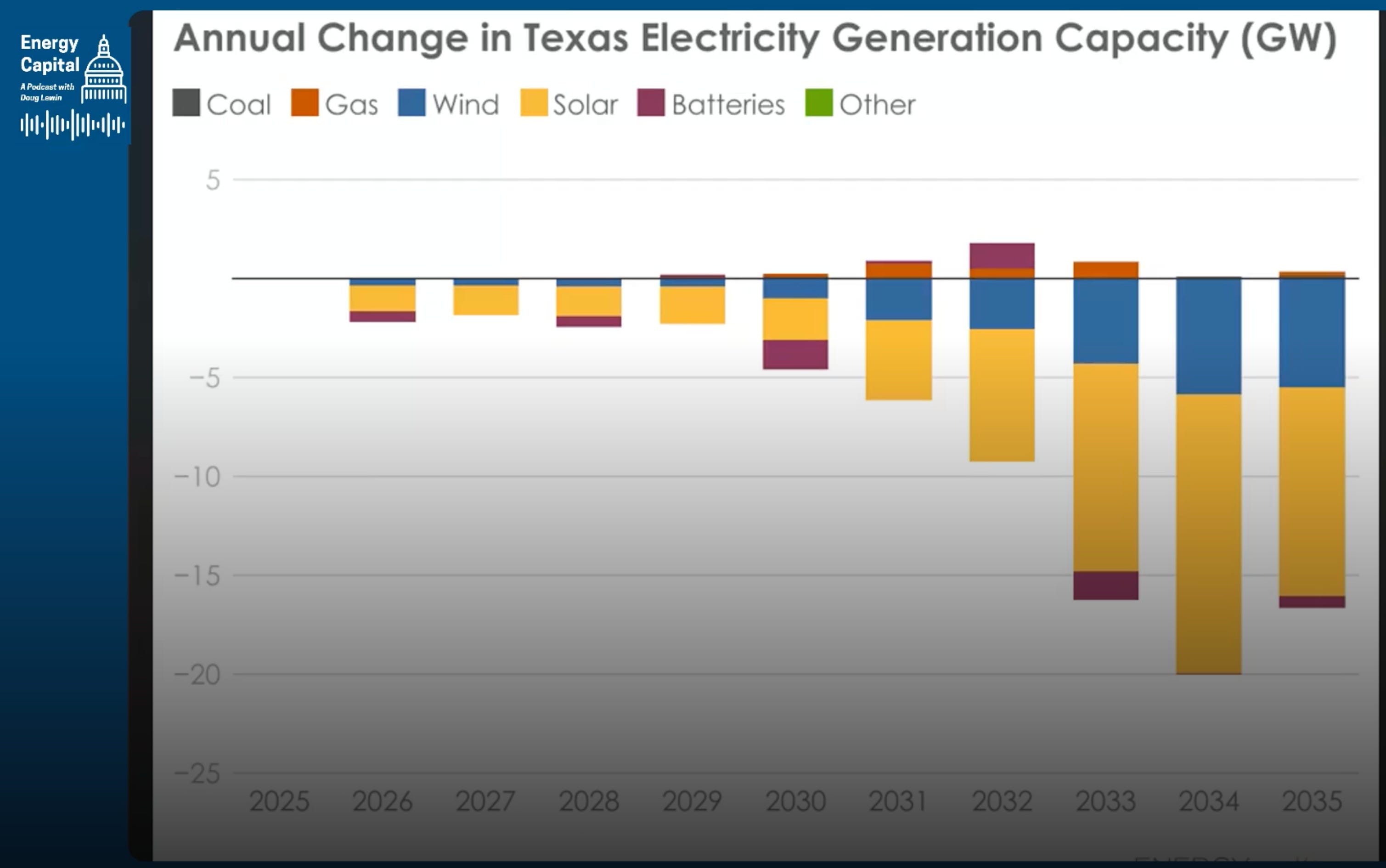
* 14:00 – How do we meet Texas’ rapid demand growth? (Here’s the slide I was referring to:)
* 16:00 – How do we continue to grow the economy and electric demand?
* 18:00 – Distributed energy resources
* 20:00 – Matt’s work on demand side
* 23:00 – Distributed batteries can last a lot longer than an hour or two!
* 25:00 – The TAEBA study showing $2,000 savings per family in DFW from DERs. More on T&D cost avoidance and deferral here:
* 29:00 – The potential for Texas leadership
* 32:00 – What does Matt want to cover next?
* 32:00 – The under-discussed part of the Texas Energy Fund: the Texas Backup Power Package Program for critical facilities
* 36:00 – Matt’s thank you, Doug’s excitement to stop talking and start listening!
Resources
Guest & Company
* Matt Boms - LinkedIn
* Texas Advanced Energy Business Alliance (TAEBA) - LinkedIn
Company & Industry News
* The Value of Integrating Distributed Energy Resources in Texas’ Oncor Territory
* New Study Finds Oncor Customers Could Save $8.5 Billion With DERs
* Texas Energy Fund, Backup Power Package Program
Transcript
Doug Lewin (00:04 .526)
Welcome back to the Energy Capital podcast. I’m your host, Doug Lewin. Today’s episode is a little different. The platform is expanding into a multi-host format. I’m really excited about these changes. I cannot wait to be a listener to this podcast and hear where it’s going. I’ve been working with your new hosts and there are several on the issues and topics and speakers they’re going to be inviting and I could not be more excited.
Doug Lewin (00:33 .504)
about where this is gonna go. I put out a post this morning at the Texas Energy and Power newsletter called It’s a Transition and an Expansion. And that is exactly what it is. Change can be hard, but change can also be really good. And this is an opportunity for a lot of folks to use the platform that I have helped to build. There’s a famous quote from Archimedes where he says, give me a place to stand and I’ll move the earth.
Doug Lewin (01:03 .768)
You all, dear listener, come on, it’s the Energy Capital podcast. Y’all, dear listeners, have given me a place to stand, given me a voice, and I’m deeply, deeply grateful for that. Now, other folks are gonna have this place to stand to move the Earth. Stand with them, help them through this transition and expansion, and I know you’re gonna be really excited to hear what comes next. So today, again, this is a little different.
Doug Lewin (01:31 .2)
and thrilled to introduce one of the new voices who will be carrying this work forward. That’s Matt Bombs. Matt is the executive director of the Texas Advanced Energy Business Alliance, TABAA for short. They do some great work in Texas and Matt has done some great work, particularly around distributed energy resources. He was part of that aggregated distributed energy resource task force that has had a lot of success in Texas. He’s also part of the advisory committee on the backup power package program I talk a lot about. He was instrumental
Doug Lewin (02:00 .138)
in getting the Texas Energy Waste Advisory Committee established here in Texas. So he’s done a lot of great work. He is an expert in his own right. He is very interested and curious about all this stuff, just like I am. And I’m thrilled that he’s one of the people that is going to be stepping onto this platform. So what you’re here today is me interviewing Matt and Matt interviewing me. A little bit of a retrospective looking back. I hope you enjoy this episode and I hope you enjoy all the episodes going forward.
Doug Lewin (02:28 .364)
I can’t wait to listen myself and I know you’re gonna like what comes next. So with that, thanks for listening and let’s jump in.
Matt Boms (02:43 .352)
Hi everybody, I’m Matt Bombs and I’m here with Doug Lewin on the Energy Capital podcast. Doug, it’s great to have you here on the podcast that you built. And now that I’m hosting the podcast with a few of my very talented and brilliant colleagues, it’s just a great opportunity to pick your brain and to hear more from you. I really do want to hear more about your story and how you first got into energy. What was the key factor that really brought you into this industry and how did you first get started?
Doug Lewin (03:11 .522)
Yeah, Matt, before I jump into that, just want to say how thrilled I am to be able to take this platform that I think really is reaching a lot of people that are really interested in Texas energy. Texas is such a dynamic place and you’re such an important part of that ecosystem. And I’m thrilled that you’re excited to step into this role, like you mentioned with some others. So, you know, we, often joke in the energy world about energy transition and energy expansion. This is both, it’s going to be an energy transition and an expansion.
Doug Lewin (03:41 .154)
You know, with, new hosts coming in and there’ll be multiple of them that’ll allow more exploration. And I’m just so thrilled you’re in that mix. So thanks, Matt. So to answer your question, it’s something I’ve talked about a little bit on the pod over the years, but not a lot. And yeah, look, I can’t even like tell you like, Hey, there was this moment or this, you know, day or week or month or year where it would like all clicked and like, this is what, like what I want to do with m




 United States
